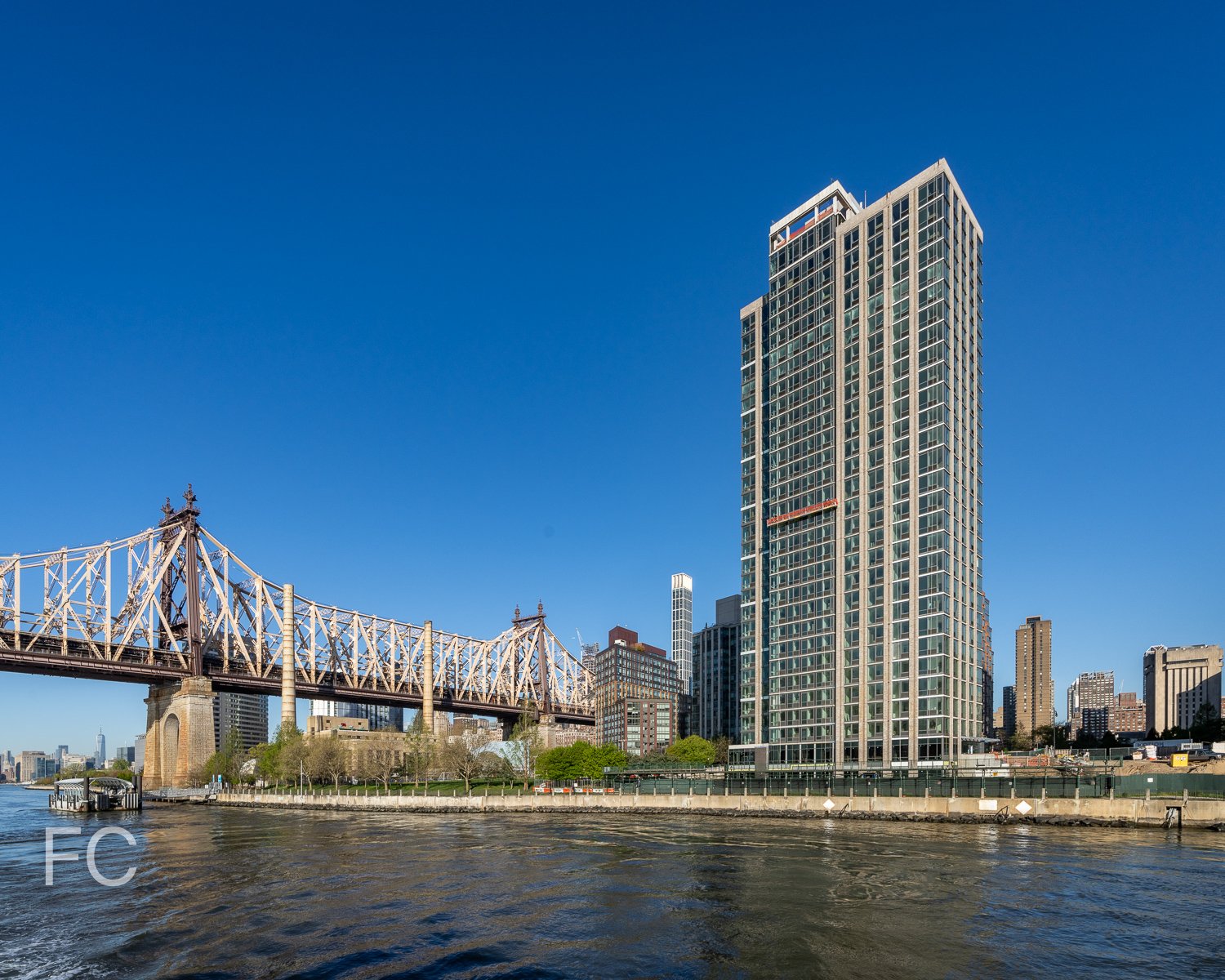
430 Main Street - Riverwalk Heights
Handel Architects · Roosevelt Island · 2025
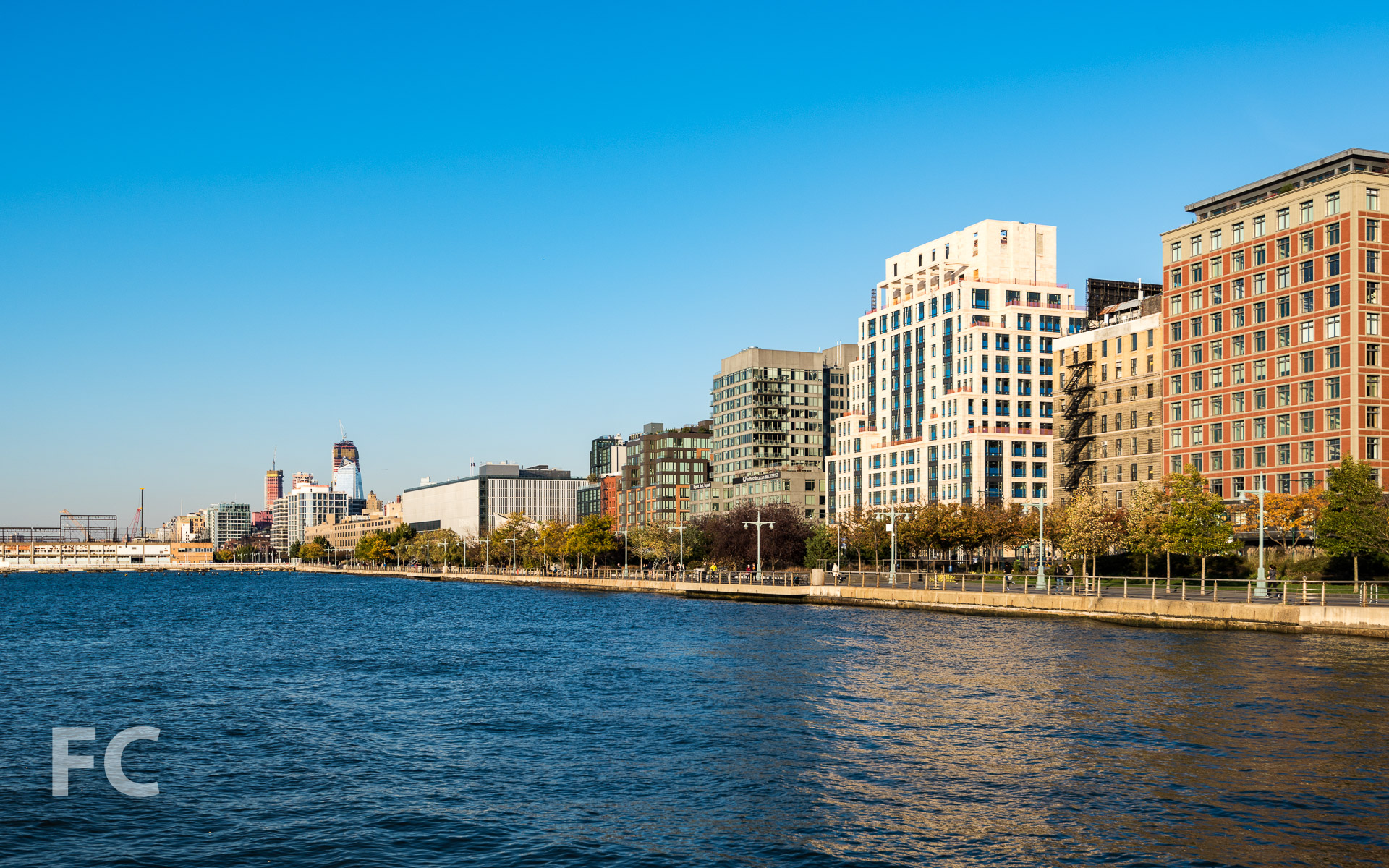
Southeast corner.
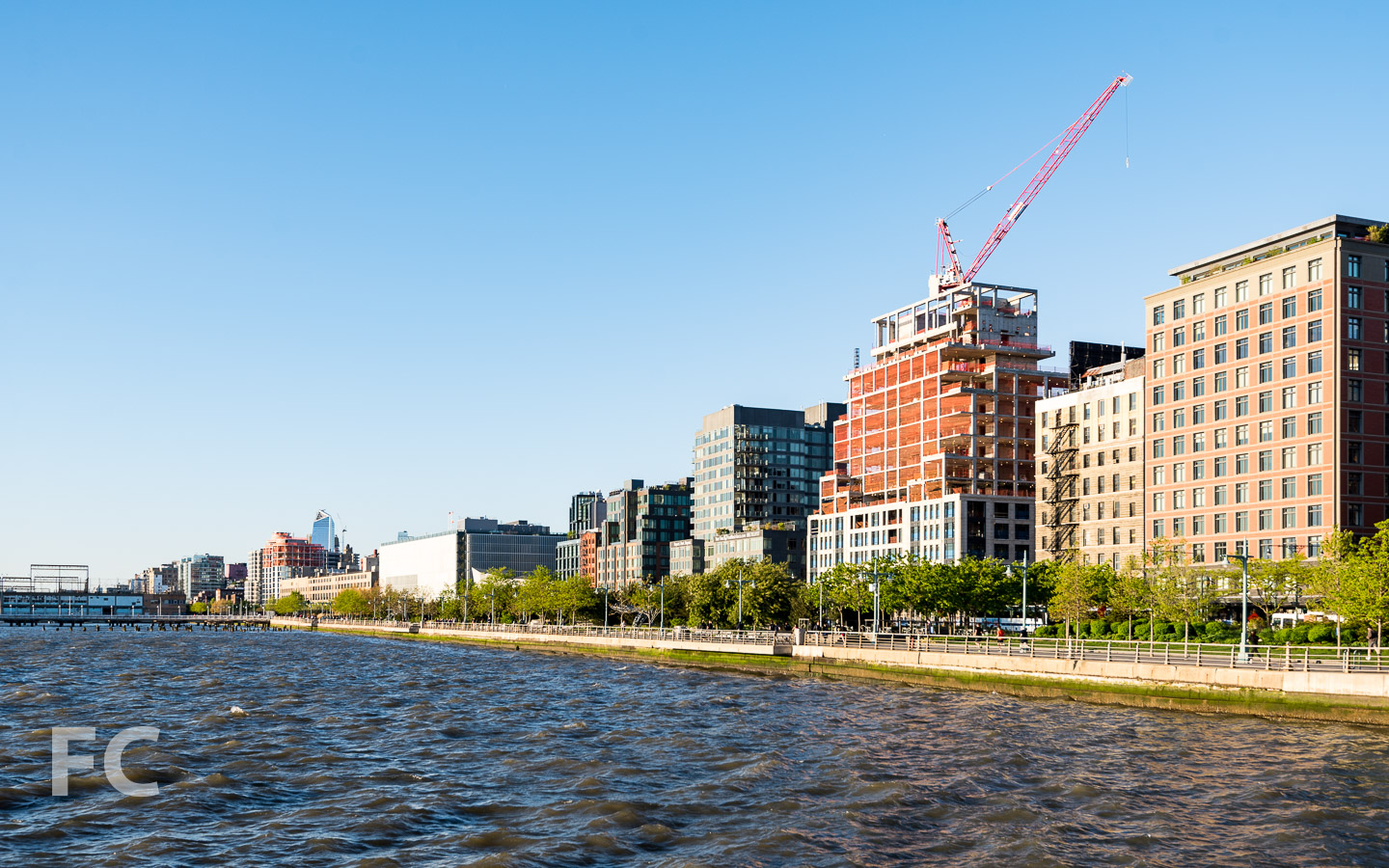
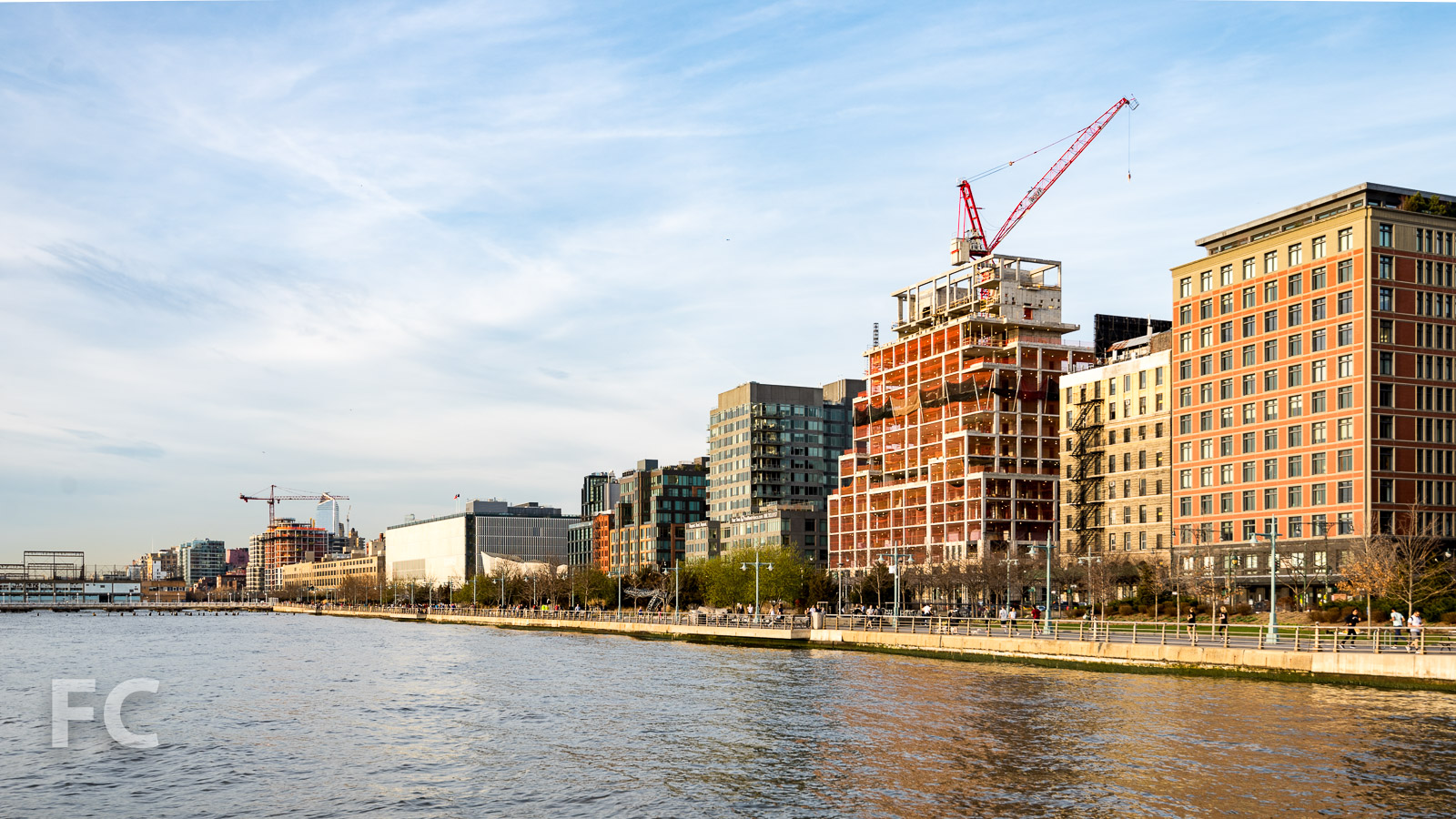
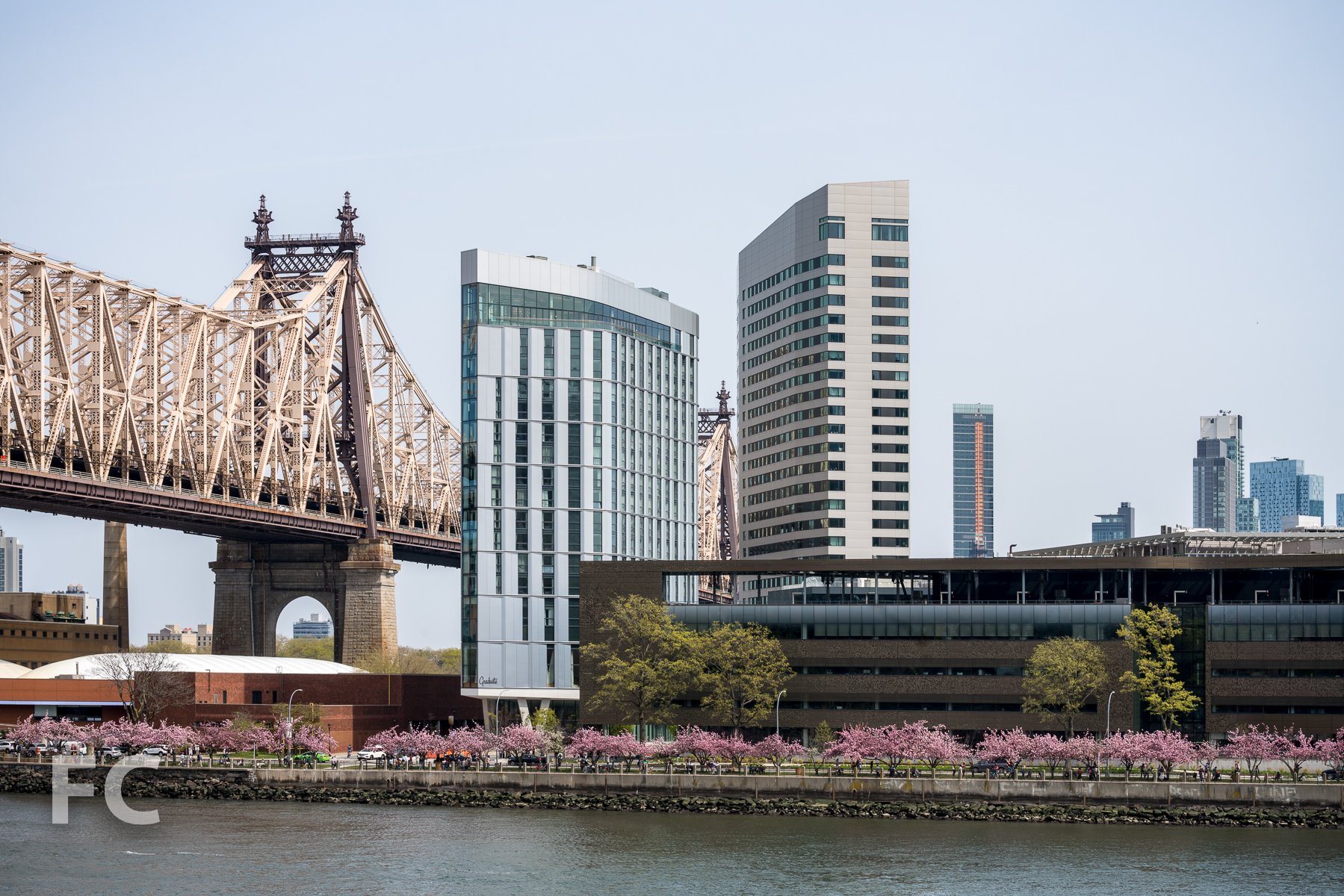
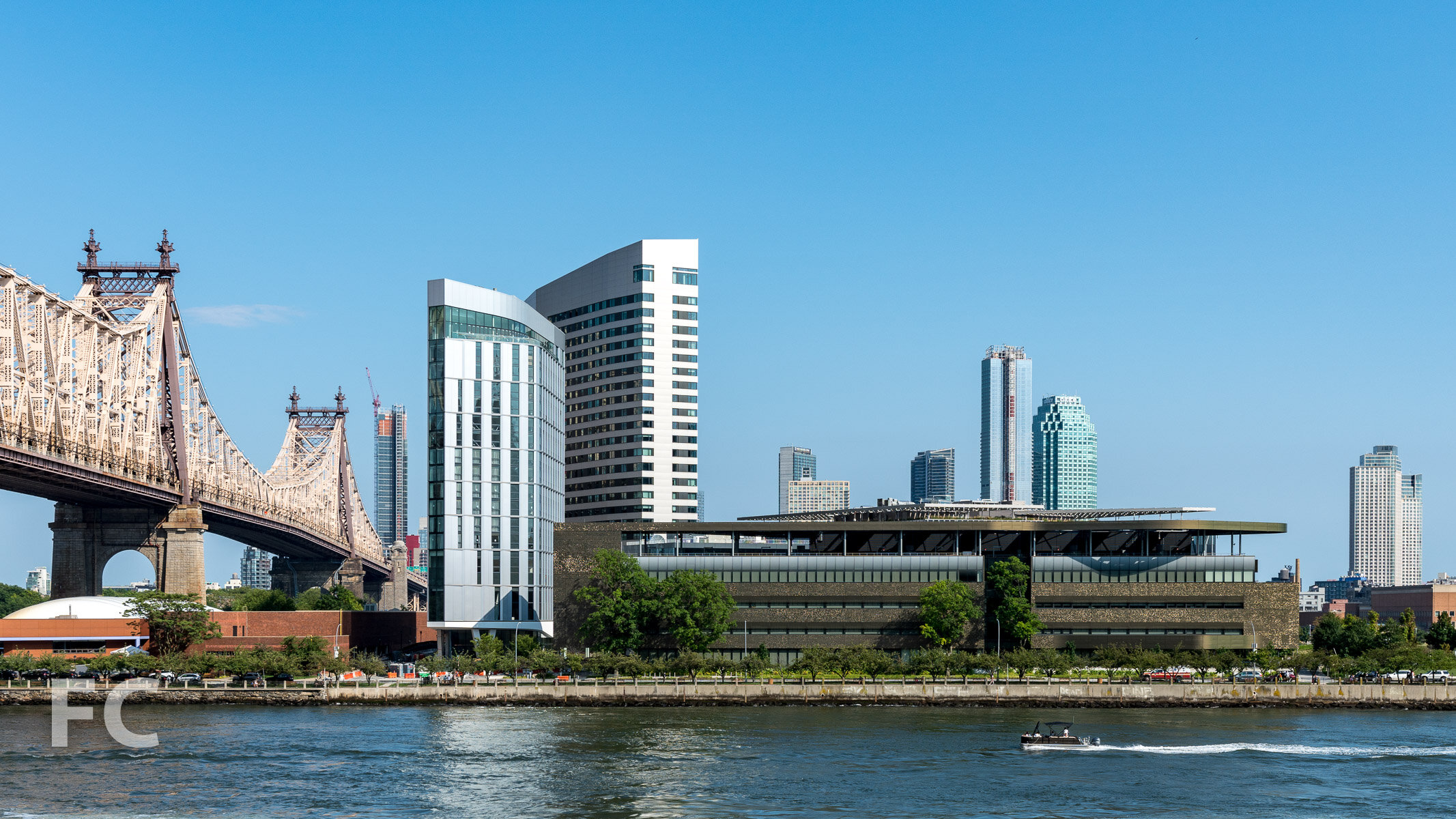
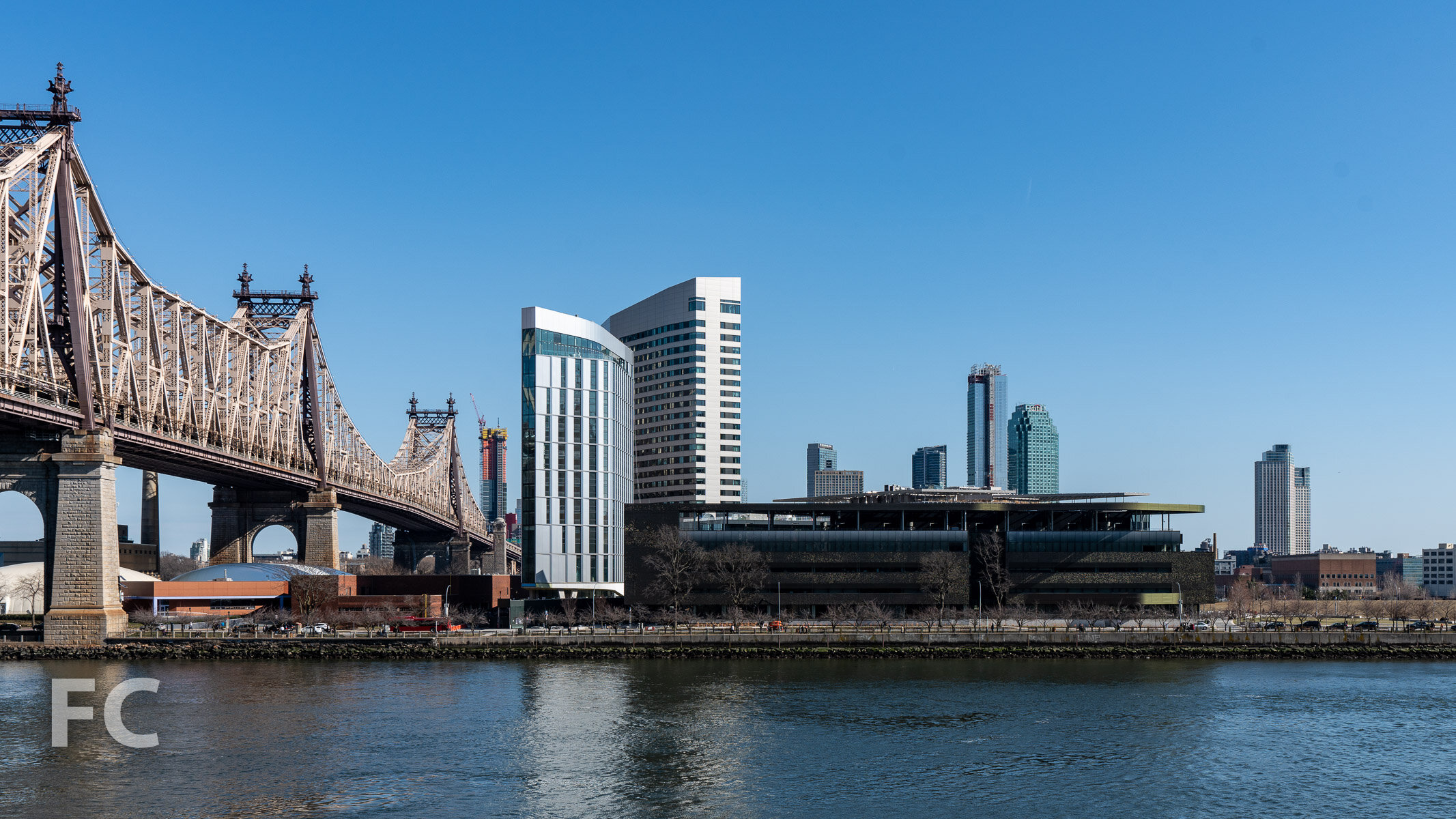
Facade installation is nearing completion at Related Companies and the Hudson Companies’ Riverwalk 9 residential rental tower on Roosevelt Island. Designed by Handel Architects, the 28-story tower is the last of the nine towers in the Riverwalk masterplan. The facade features brick and window wall with metal panel slab caps.
When completed, the tower will offer 253 residential rental units ranging in size from studios to three-bedrooms. Residents will have access to amenities that include an event space, VR game room, and a fitness center with basketball court. An open space with a dog run, grilling areas, and a lawn will be located between Riverwalk 9 and the eighth tower to the north.
East facade.
East facade of Riverwalk 9 (left), Riverwalk Park (center), and Riverwalk Point (right).
Northeast corner.
Northeast corner of Riverwalk 9 (left), Riverwalk Park (center), and Riverwalk Point (right).

North facade of the tower.
Southeast corner of the tower.
Close-up of the south facade.
South facade.

Southwest corner of the tower.
South facade.
Architect: Handel Architects; Developer: Related Companies and The Hudson Companies ; General Contractor: Monadnock Construction; Program: Residential Rental; Location: Roosevelt Island, New York, NY; Completion: 2024.

Construction Update: The Grand LA
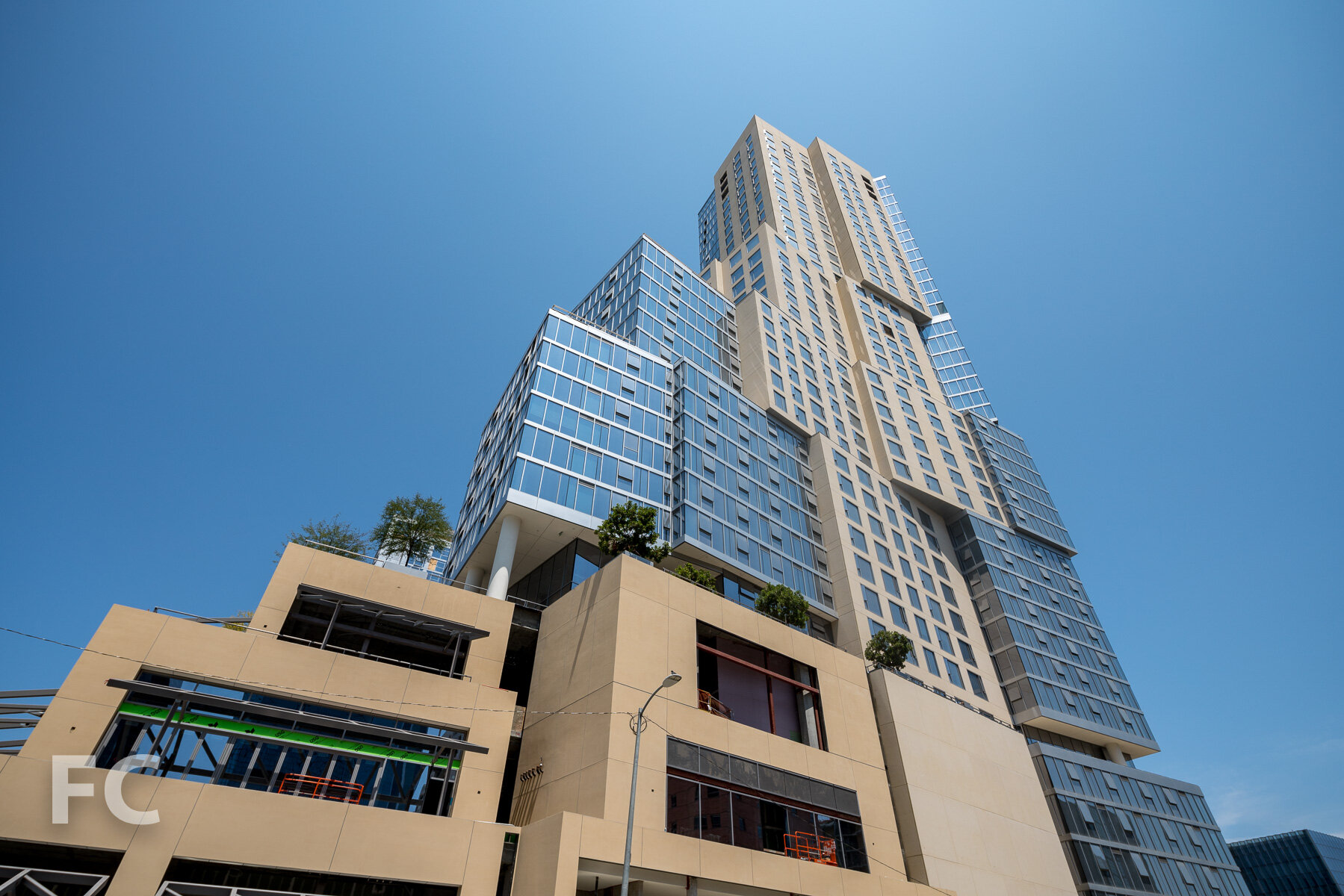
Southwest corner from South Grand Avenue.
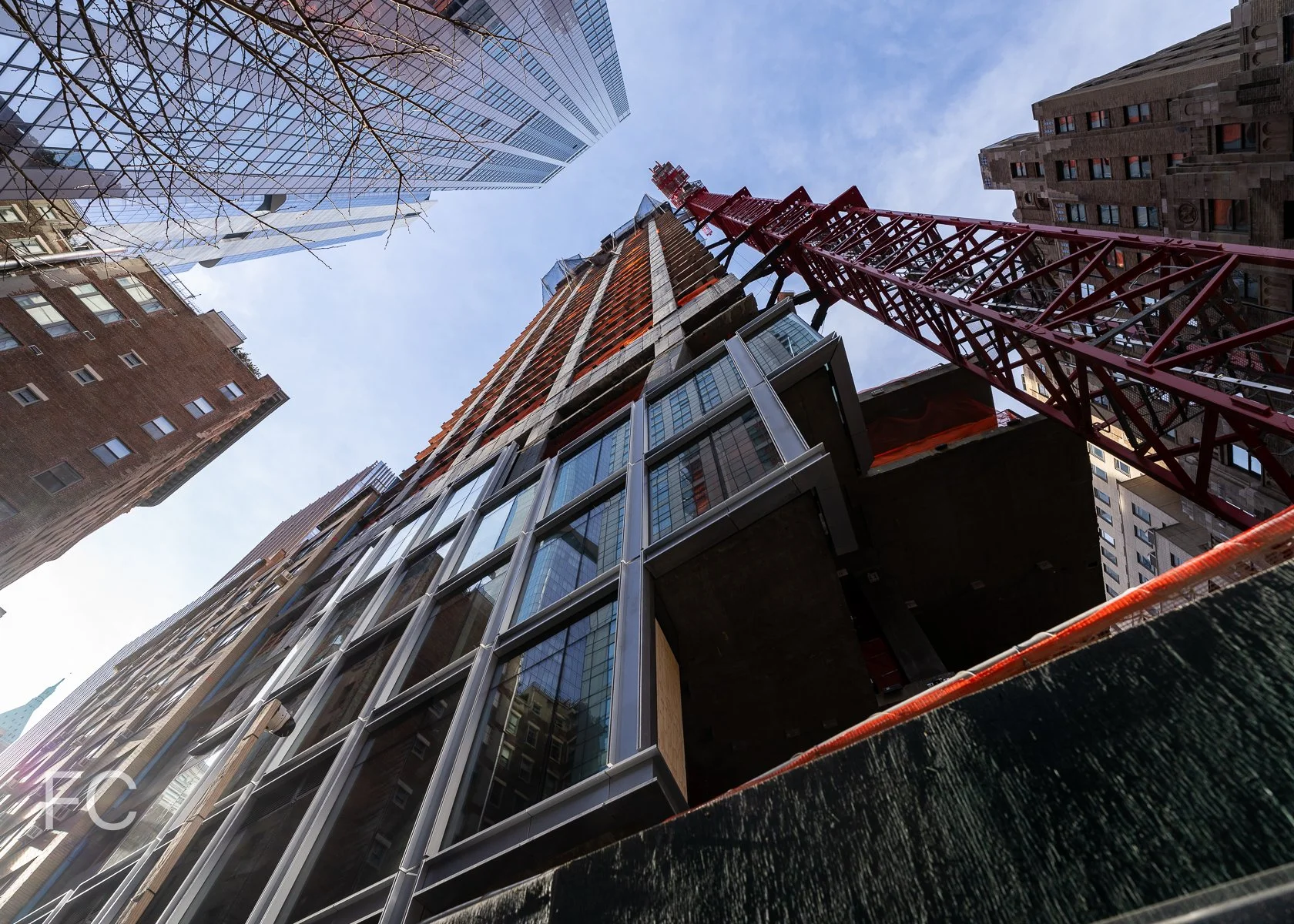
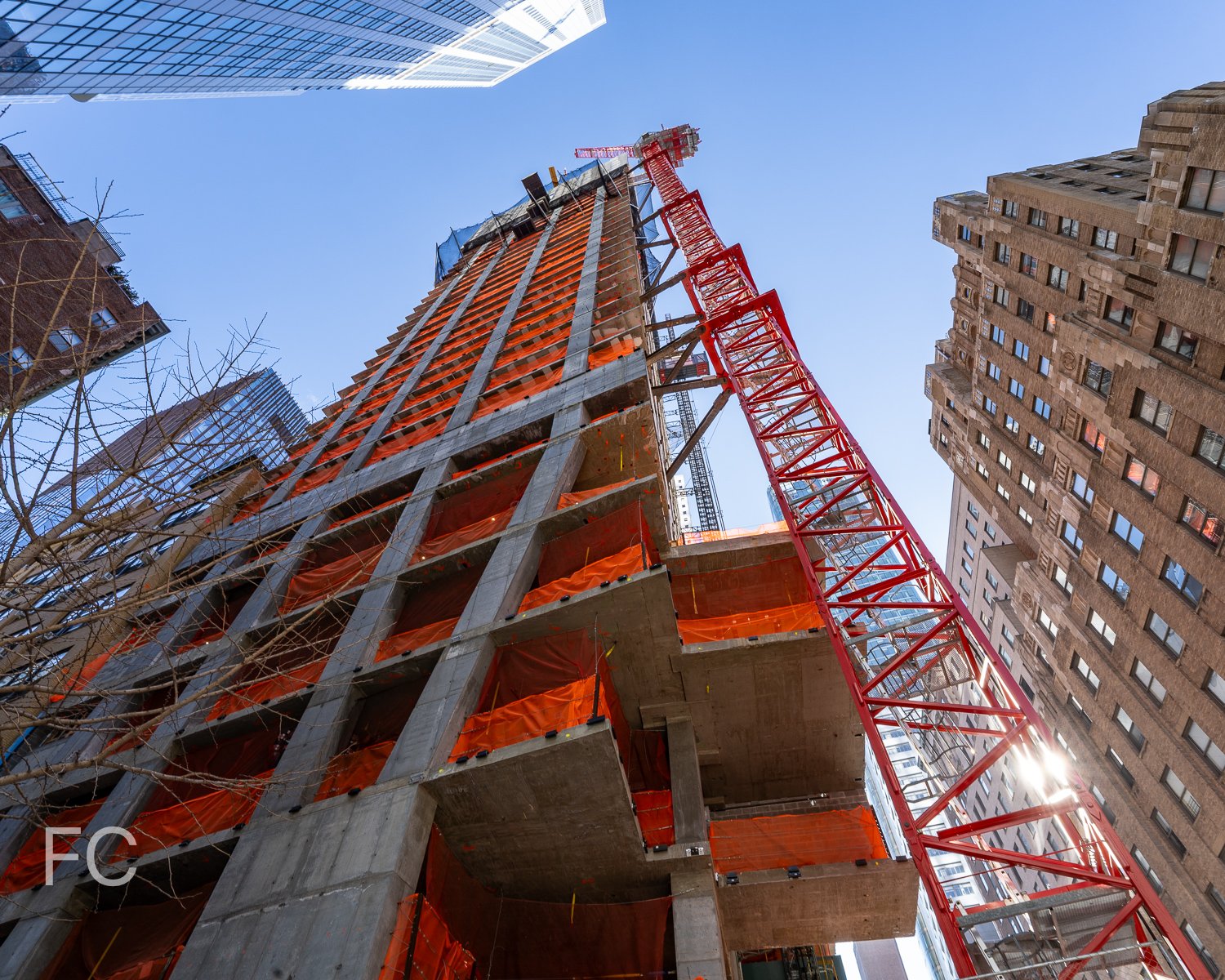
Facade installation is nearing completion at the Related Companies and China Harbour Engineering Company Ltd.’s two-tower multi-use development The Grand LA in Downtown Los Angeles. Designed by Frank Gehry of Gehry Partners, the development sits across the street from Gehry’s Walt Disney Concert Hall and includes two towers that rise to 45- and 28-stories. The project will offer 400 residences, including 89 units of affordable housing, and a 309-key luxury hotel. Retail will occupy the base of the two towers, with 176,000 square feet of shopping and restaurants on three levels of landscaped open terraces.
Looking up at the south facade of the residential tower.
Looking up at the southwest corner of the residential tower.
Southwest corner of the residential tower (right) and the hotel tower (left) from South Grand Avenue.
West facade of the residential tower.
Close-up of the residential tower.
Close-up of the residential tower.
Southwest corner of the hotel tower from South Grand Avenue.
Close-up of the hotel tower.
Close-up of the hotel tower.
West facades of the residential tower (right) and the hotel tower (left) from the Walt Disney Concert Hall.
Northwest corner of the residential tower from South Grand Avenue.
Looking up at the southeast corner of the residential tower.
Southeast corner of the residential tower (left) and the hotel tower (right) from South Hill Street.
Architect: Gehry Partners, LLP (Design Architect), AECOM (Architect of Record); Interior Design: Ingrao Inc. (Residences), Tara Bernerd & Partners (Hotel), Rockwell Group (Restaurants); Landscape Designer: OJB Landscape Architecture; Developers: Related Companies with China Harbour Engineering Company Ltd.; Program: Residential, Hotel, Retail; Location: Downtown, Los Angeles, CA; Completion: 2022.




Construction Update: 515 W 18
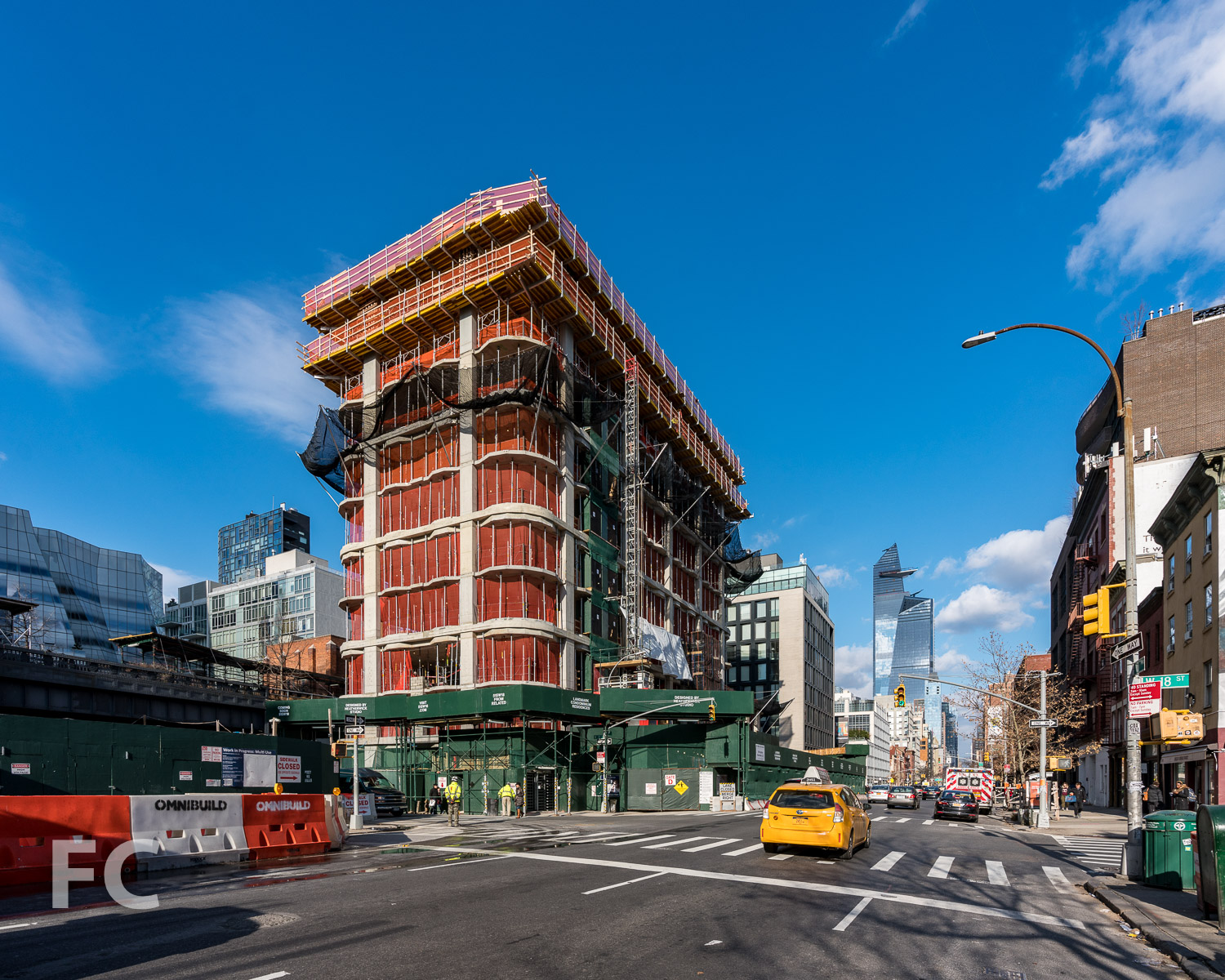
Southeast corner from 10th Avenue.
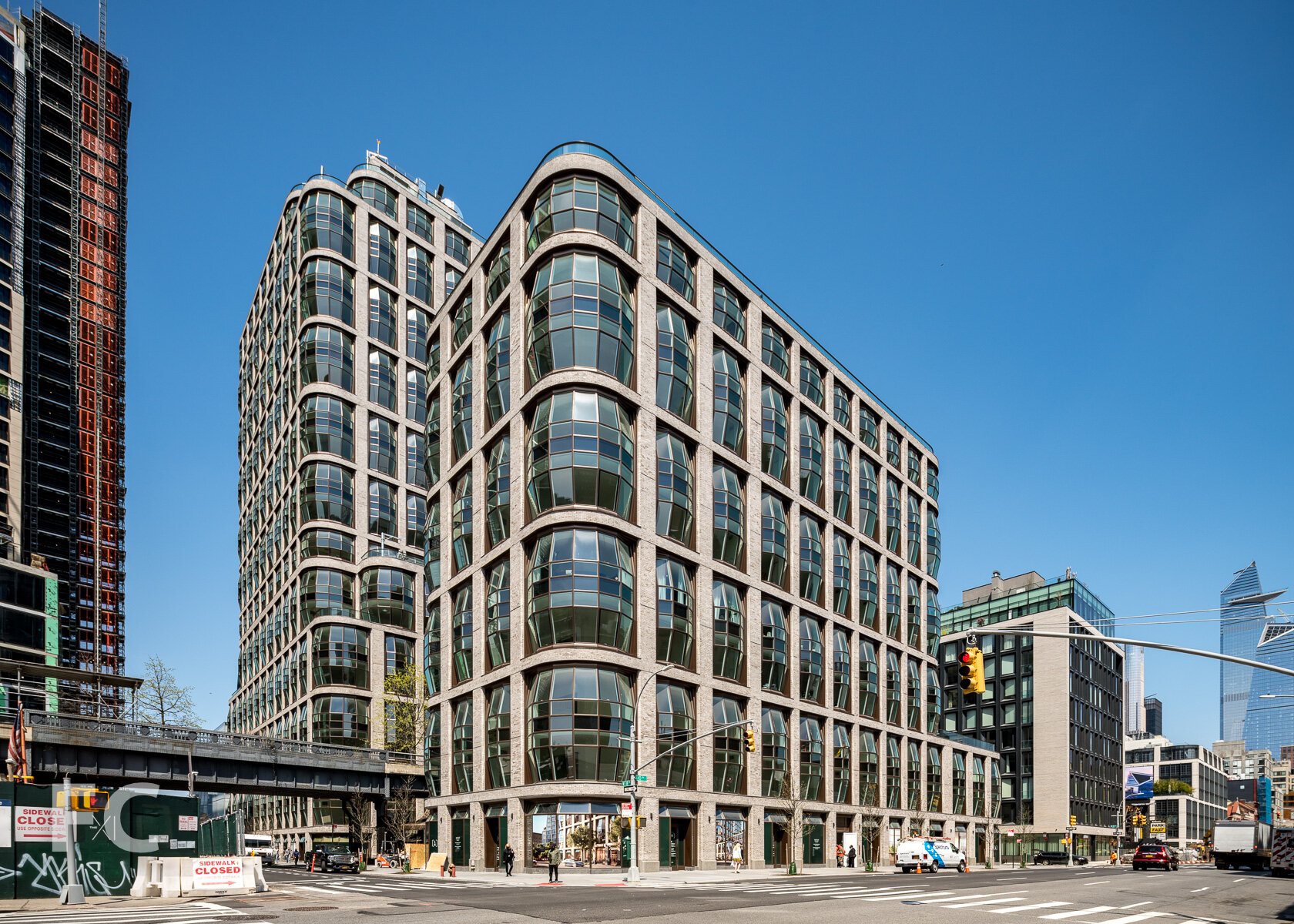
Construction is wrapping up at the east tower of Related’s two-tower residential development at the High Line in Chelsea. Designed by Thomas Heatherwick’s Heatherwick Studio, the 22-story west tower and 10-story east tower flank the High Line and connect to each other underneath the park’s elevated railroad structure. The facade features custom masonry and Heatherwick’s modern take on the bay window.
Close-up of the east facade of the east tower.
Southeast corner of the east tower (right) and the Eleventh (left).
Southeast corner of the storefront at the west building.
Residential entry underneath the High Line.
Amenities
Residents have access to a collection of amenities that include a residential lobby with High Line columns, a garden by Hollander Design, library lounge, co-working lounge, private dining room and bar, game room, screening lounge, fitness center, 75-foot long saline-system swimming pool, spa, children’s playroom, and rooftop terrace.

Residential lobby.

Fitness center.
Swimming pool with adjacent cold plunge pool, hot tub, and experiential shower.

Library lounge.
Private dining room.
Private bar adjacent to the private dining room.
Game room.
Looking south from a rooftop terrace.
Looking west towards the west tower (right) and The Eleventh (left).

Looking down on the High Line and the residential lobby located underneath.
Looking northeast towards Midtown from a rooftop terrace on the east tower.
Looking north towards Hudson Yards and Midtown from a rooftop terrace on the east tower.
Looking north along the High Line towards Hudson Yards from a rooftop terrace on the east tower.
Looking up at the east facade of the west building.
Model Residence
Lantern House will offer 180 residences across two towers, ranging in size from one-to-four bedrooms with average ceiling heights of ten-foot, nine-inches. March and White Design has overseen the design of the residential interiors. Kitchens feature convex fluted-oak cabinetry, polished Calacatta Venato and Nordic Grey marble slab countertops and backsplash, and a Waterworks faucet. Master baths feature Nestos Beige marble slab flooring/walls with polished marble countertops in Opal White or Emperador Grey, custom vanities with fluted-oak cabinetry with caramel or cocoa stain, undercounted Laufen sink, medicine cabinet with bronze metal and fluted mirror panels, and Waterworks fixtures.
Living room.
Kitchen.
Convex fluted-oak cabinetry with a caramel stain and upper cabinets with back-painted ribbed glass doors.
Close-up of the kitchen cabinets with custom-designed bronze finish hardware.
Master bedroom.
Custom vanity with fluted-oak cabinetry in a caramel stain, polished marble countertop and mirror/medicine cabinet.
Bedroom.
Architect: Heatherwick Studio (Design Architect), SLCE (Architect of Record); Interiors: March and White Design; Landscape: Hollander Design Landscape Architects; Developer: Related Companies; Program: Residential, Retail; Location: Chelsea, New York, NY; Completion: 2021.


Construction Update: The Cortland - 555 W 22
West facade from 12th Avenue.
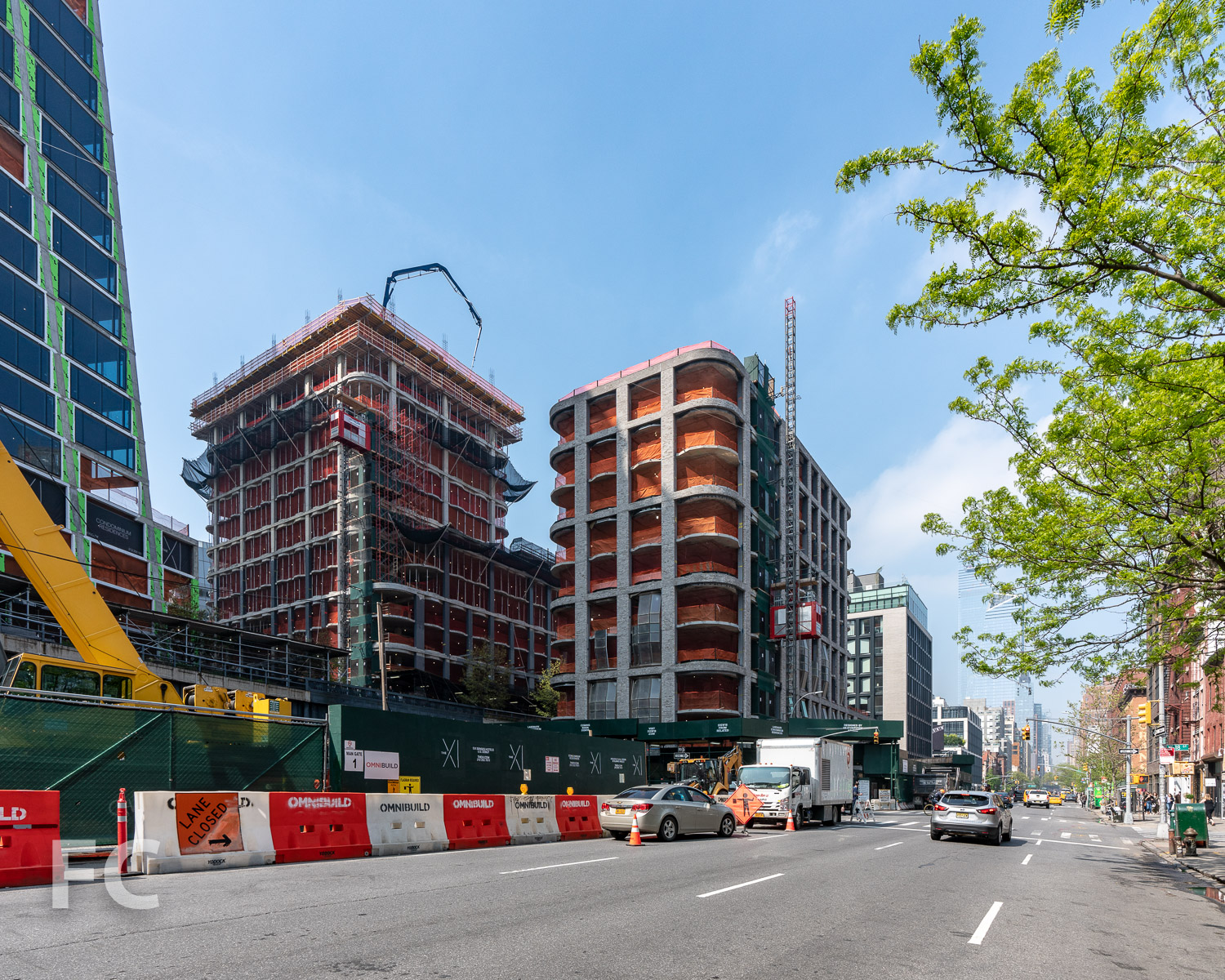
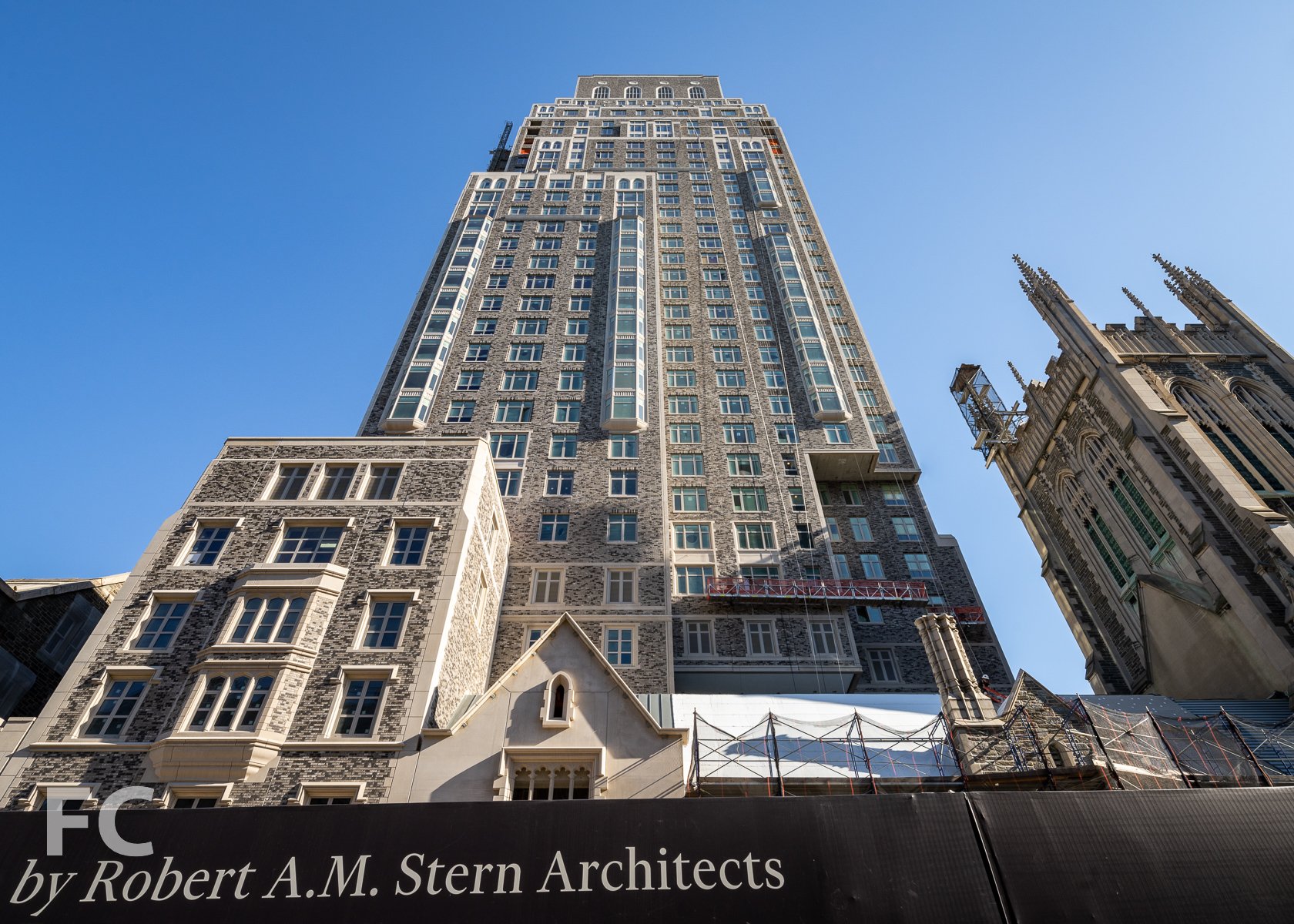
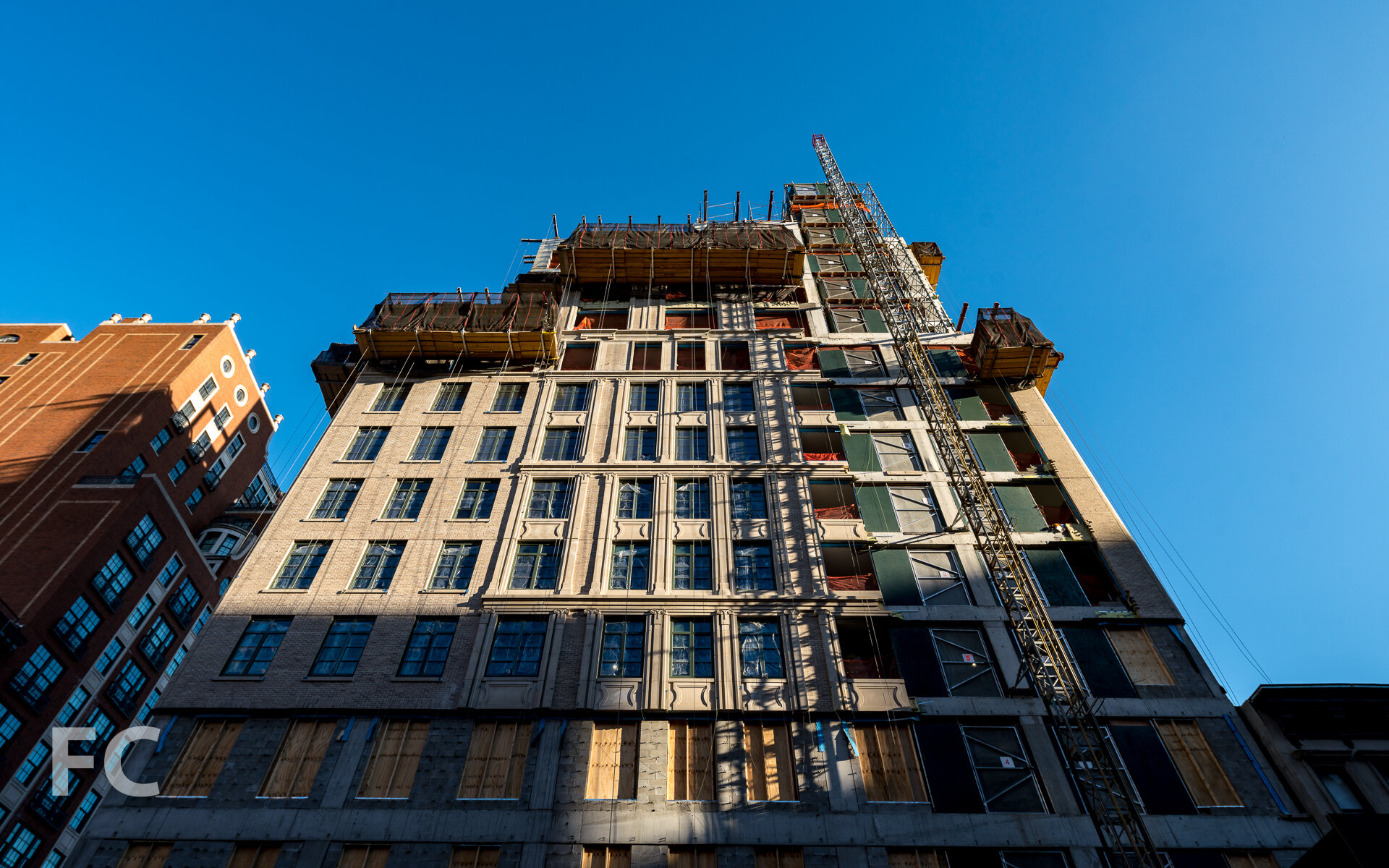
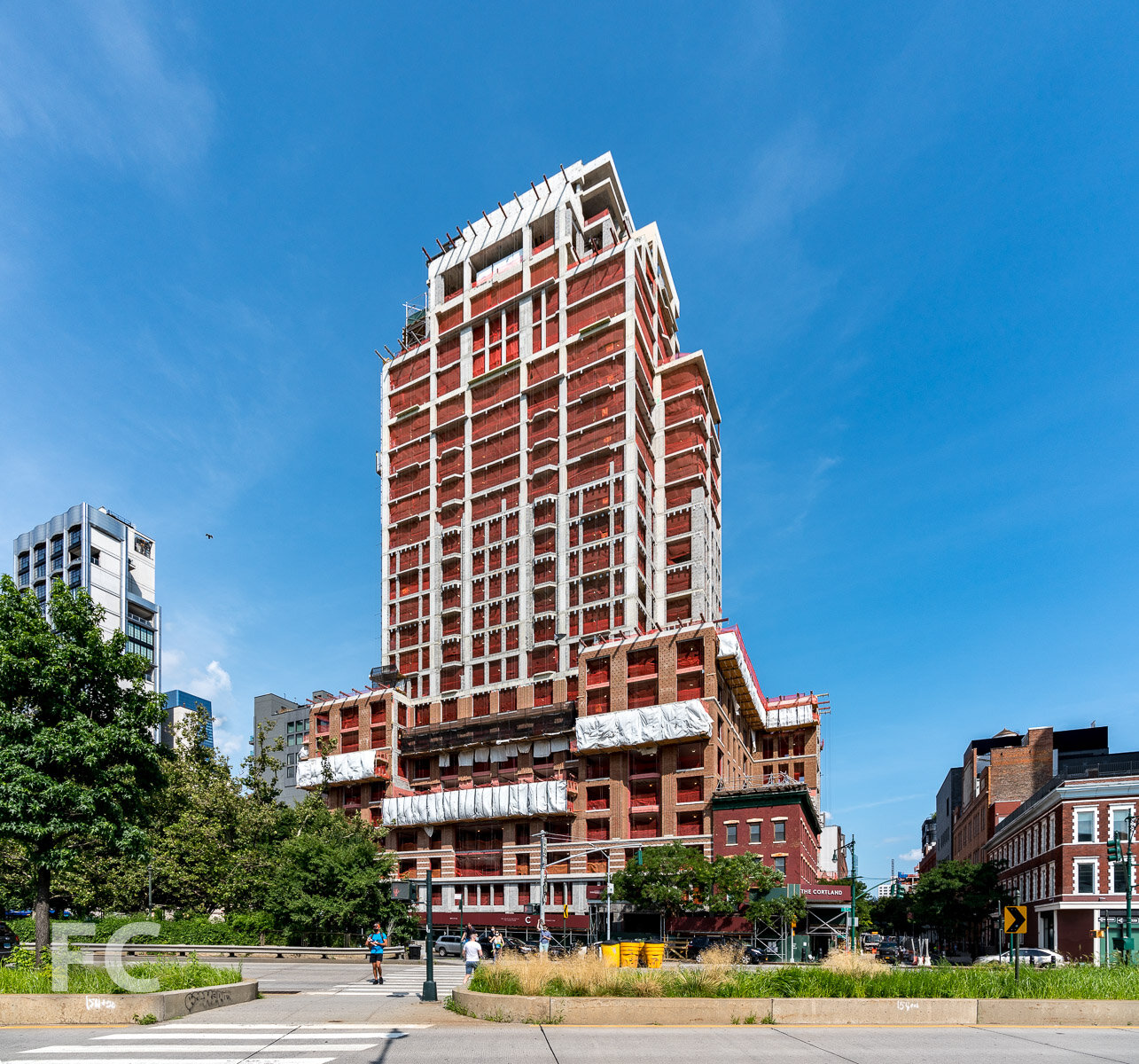
Facade installation is ongoing at the Related Companies’ 26-story residential condo tower The Cortland at 522 West 22nd Street in the Chelsea neighborhood of Manhattan. Designed by Robert A.M. Stern Architects, the tower’s facade is currently being clad in red brick and feature Stern’s signature traditional details like bay windows and a rusticated podium. Installation of the brick facade has now reached the half way mark. When completed, the nearly 300-foot-tall tower will offer 141 condo units.
Southwest corner from 11th Avenue.
Looking up at the west facade.
Looking up at the west facade from 11th Avenue.
Northwest corner of the podium.
Northwest corner from 11th Avenue.
Architect: Robert A.M. Stern Architects; Interiors: Olson Kundig; Developer: Related Companies; Program: Residential Condo; Location: Chelsea, New York, NY; Completion: 2023.

488 Folsom Street - The Avery
Northeast corner.
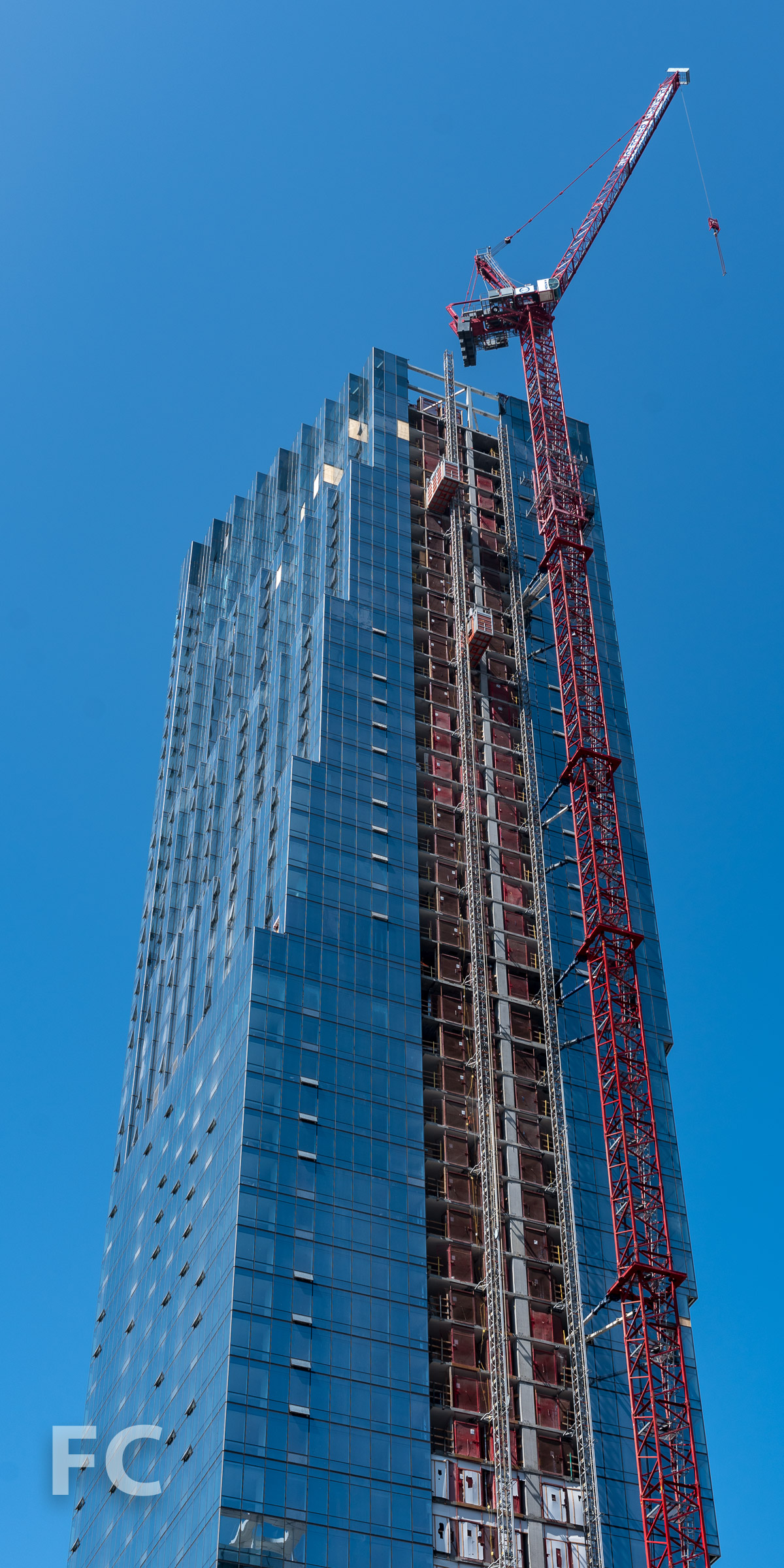
Facade installation is wrapping up at Related California's The Avery, a 56-story, 548-unit residential tower near the recently opened Transbay Transit Center in downtown San Francisco. Designed by Office of Metropolitan Architecture's New York office, the tower features an extruded tower massing shaped by facade setbacks and serrations. The serrations allow for an exponentially greater amount of corner units while also creating opportunities for dramatic moments of sunlight reflections at sunrise and sunset. Local firm Fougeron Architecture are responsible for the podium buildings at the base of the tower.
Closeup of the northeast corner of the tower.
When completed, the complex will offer 118 luxury condominiums on the upper floors and 280 luxury rental apartments and 150 affordable rental apartments on the lower floors.
Closeup of the northwest corner of the tower.
Looking up at the east facade of the tower.
East facade of the base of the tower.
West facade of the tower from the Transbay Transit Center's rooftop park.
Closeup of the southwest corner of the tower.
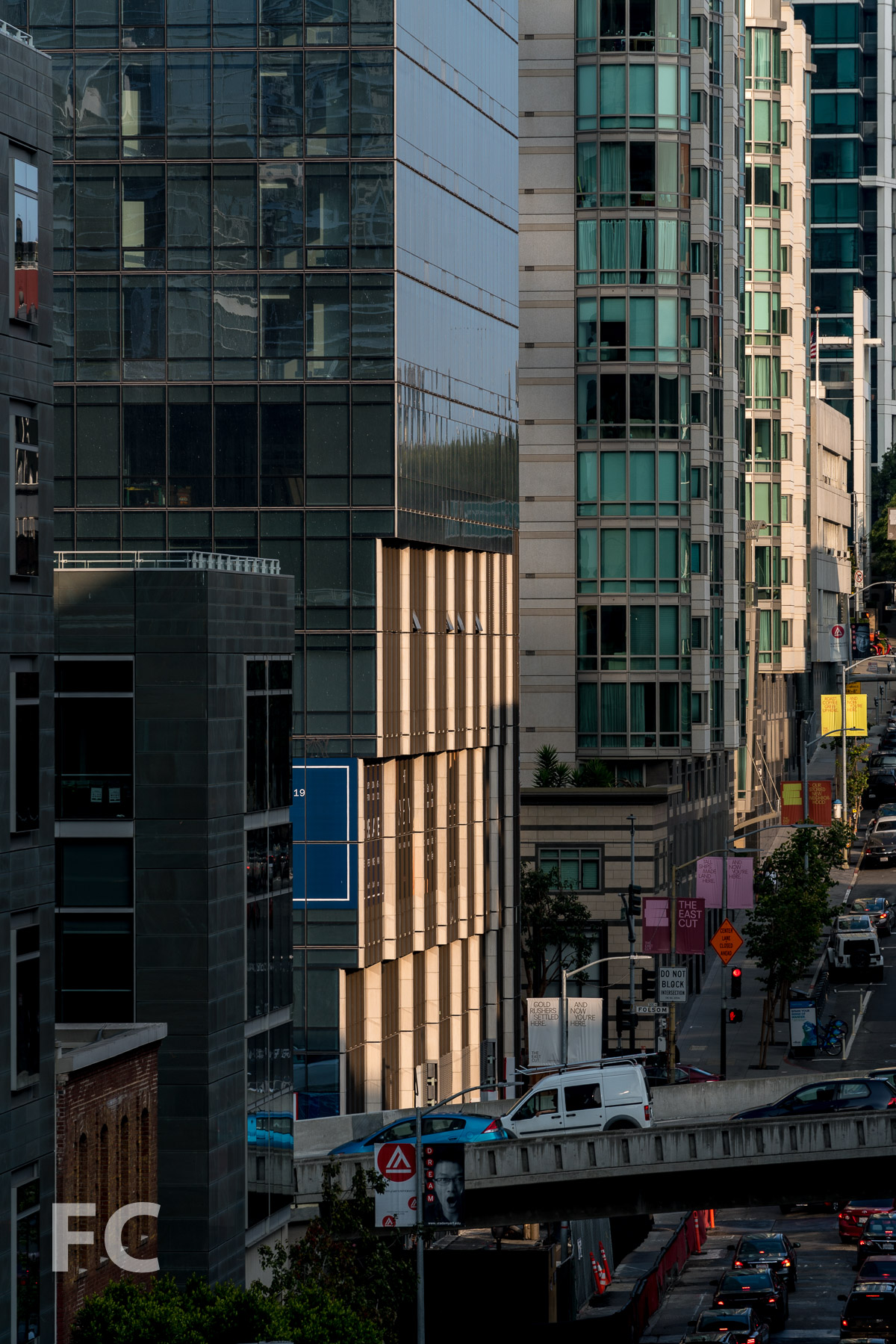
Sunset reflects off of the south facade.
Southwest corner of the tower from the Transbay Transit Center's rooftop park.
Architect: Office of Metropolitan Architecture (OMA NY) with Fougeron Architecture ; Developer: Related California with Tenderloin Neighborhood Development Corporation; Program: Residential Condo and Rental, Commercial; Location: San Francisco, CA; Completion: 2019.


Construction Tour: 15 Hudson Yards and The Shed
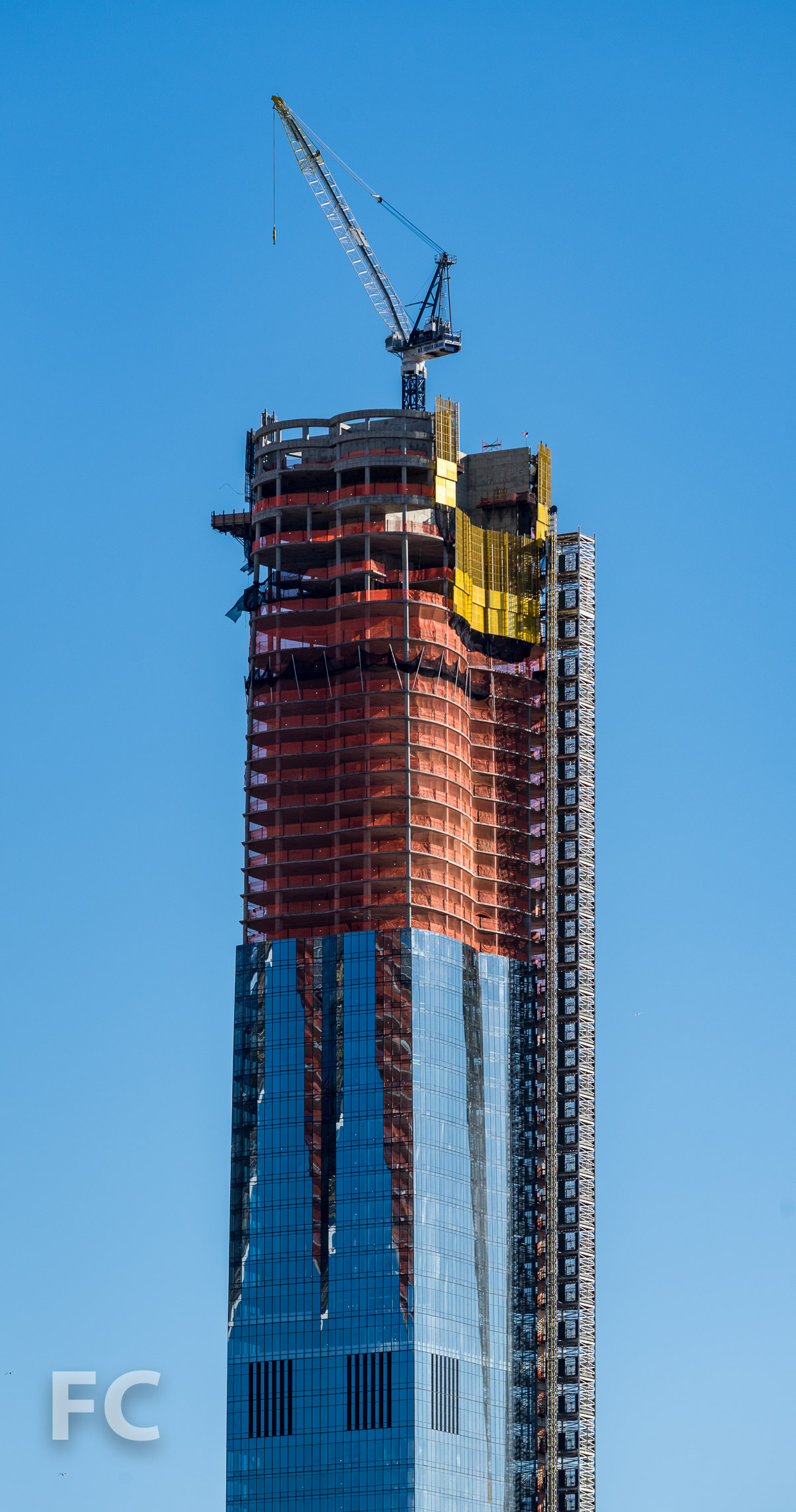
Northwest corner of 15 Hudson Yards.
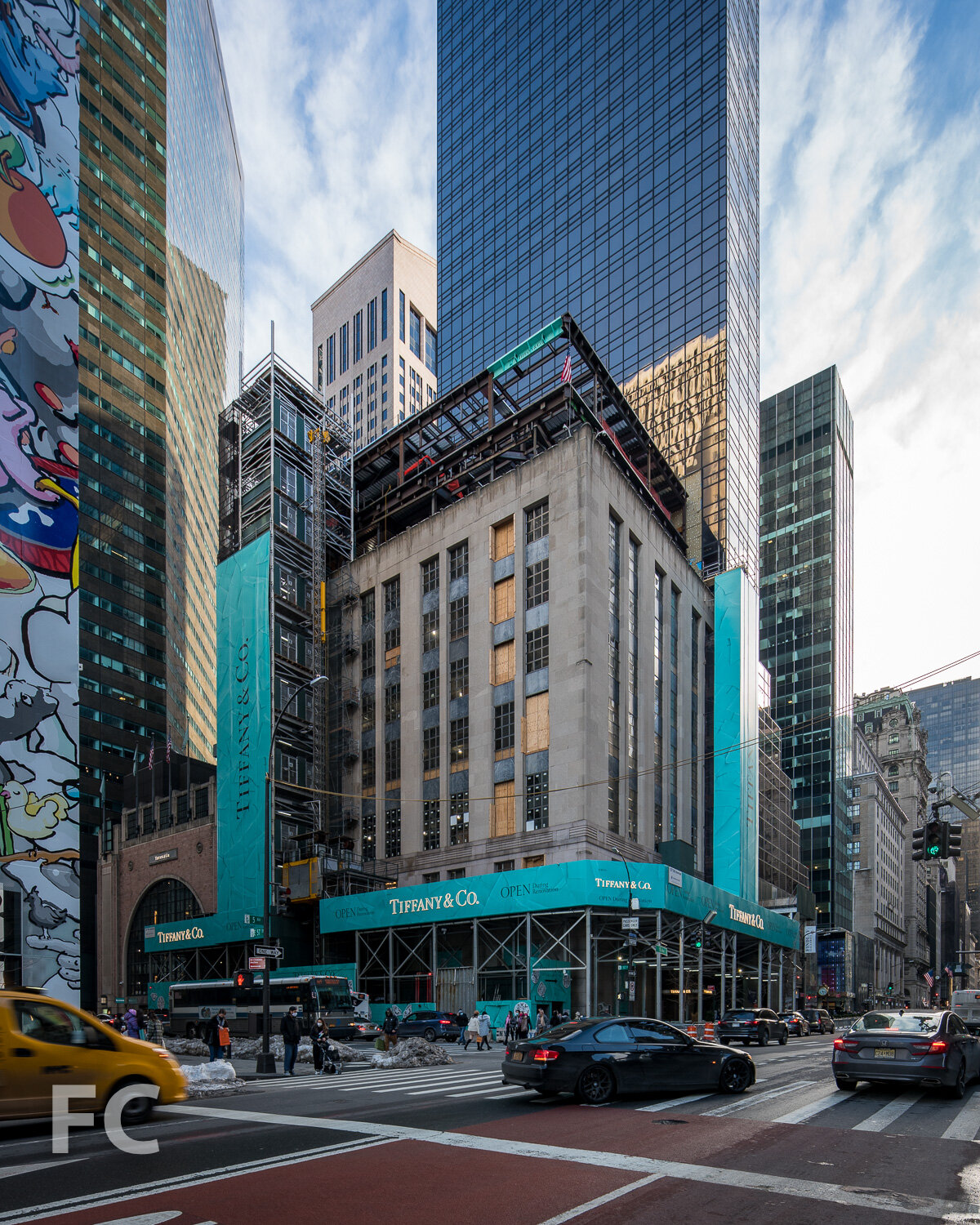
Superstructure has topped out at 15 Hudson Yards, the 900-foot-tall residential tower at Related Companies and Oxford Development Group's Hudson Yards mega development on the Far West Side. Designed by Diller Scofidio + Renfro in collaboration with Rockwell Group, the 88-story tower will offer both condo and rental units. Sales for the 285 one- to four-bedroom condo units are underway and have already surpassed 50 percent sold.
The view south towards Lower Manhattan from 15 Hudson Yards.
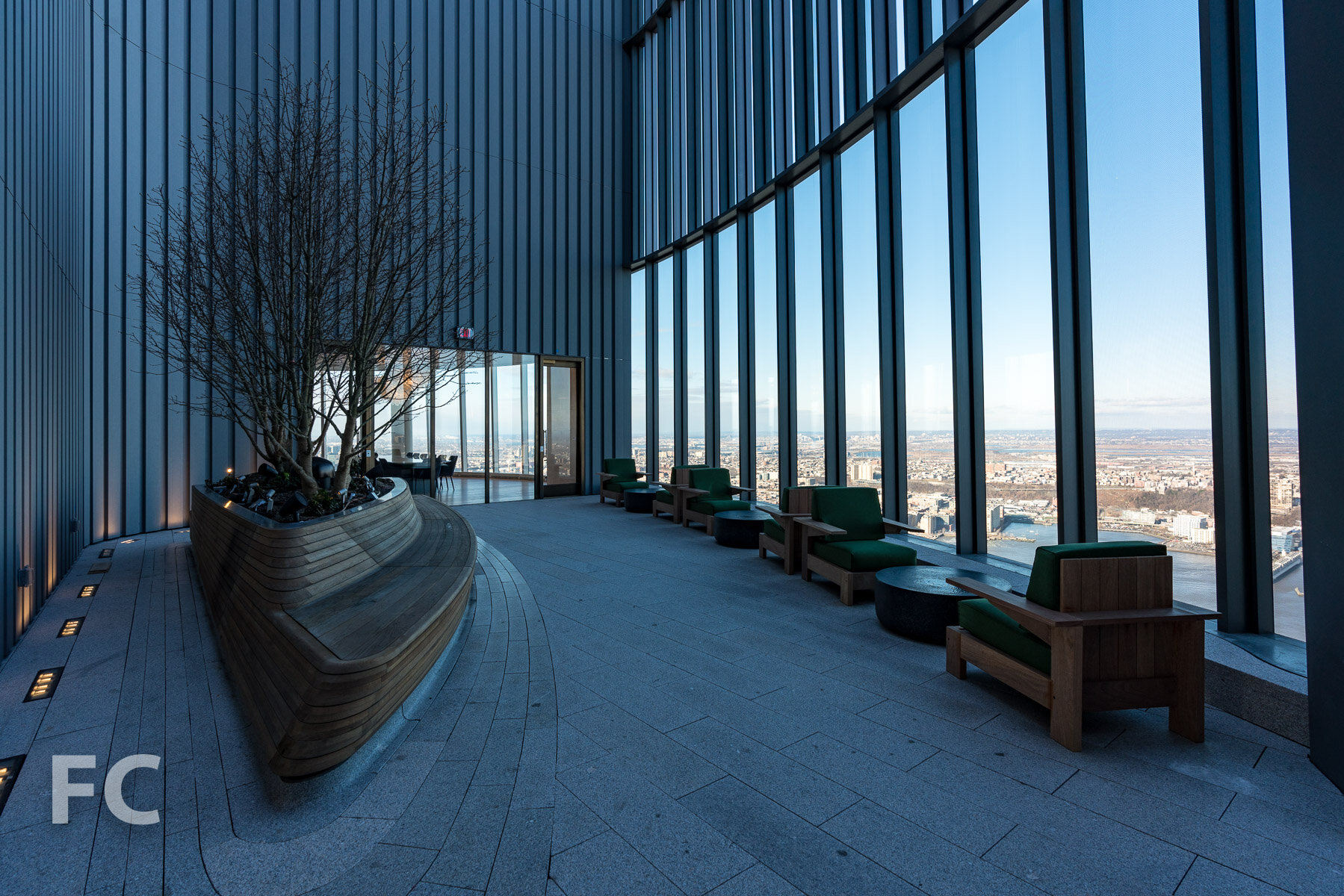
The tower will offer 40,000-square-feet of amenities spread across multiple floors. A fitness center, spa, and 75-foot pool occupy the 50th floor. On the 51st floor residents will have access to a club room, two corner private dining suites, screening and performance room, wine storage and tasting room, business center, and work spaces. At the top floor, residents will enjoy panoramic views from additional amenity spaces for relaxing and dining.
The view east towards 10 Hudson Yards from 15 Hudson Yards.
The view north towards 35 Hudson Yards from 15 Hudson Yards.
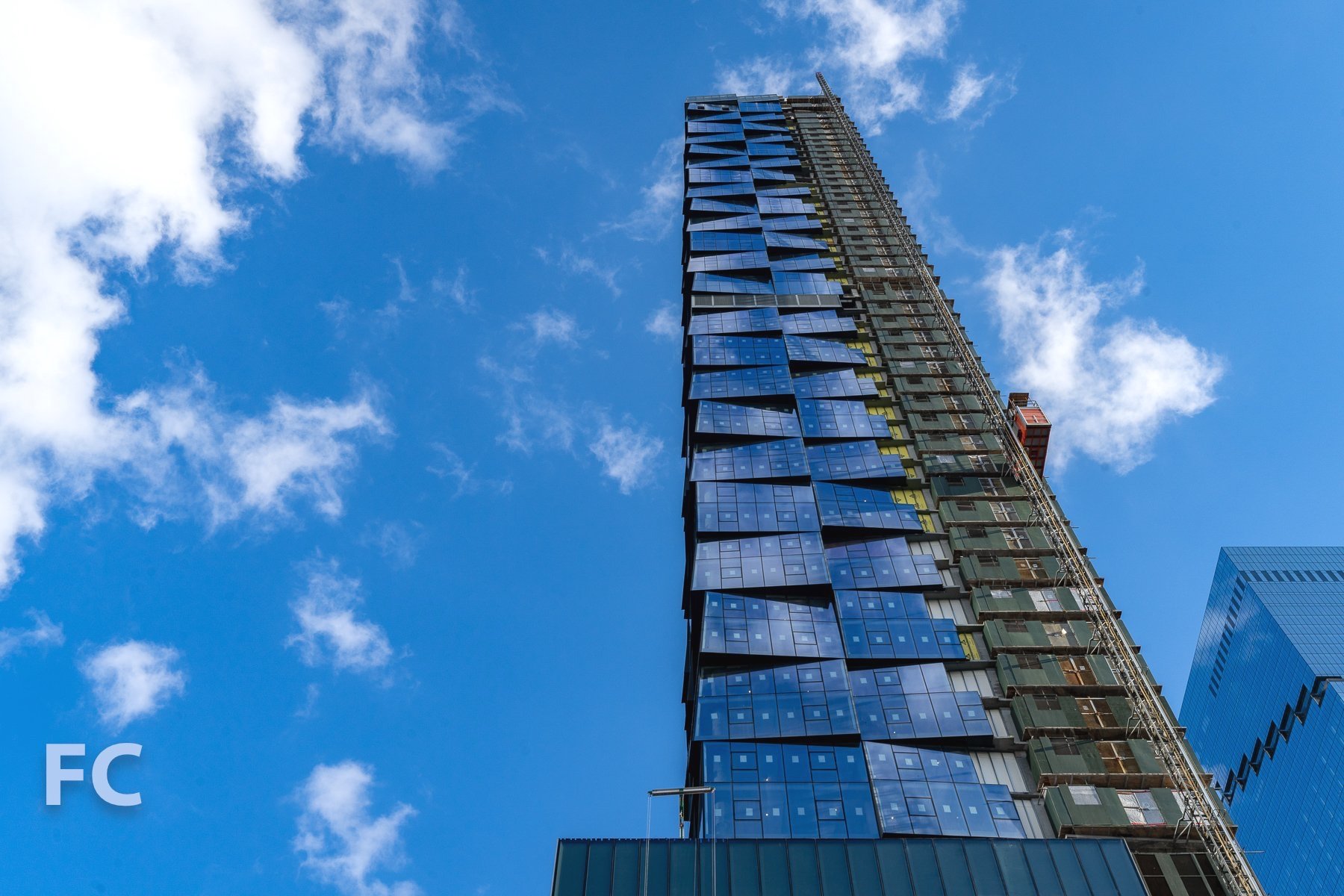
Curtain wall installation at 15 Hudson Yards.
Looking up at the north facade of 15 Hudson Yards.
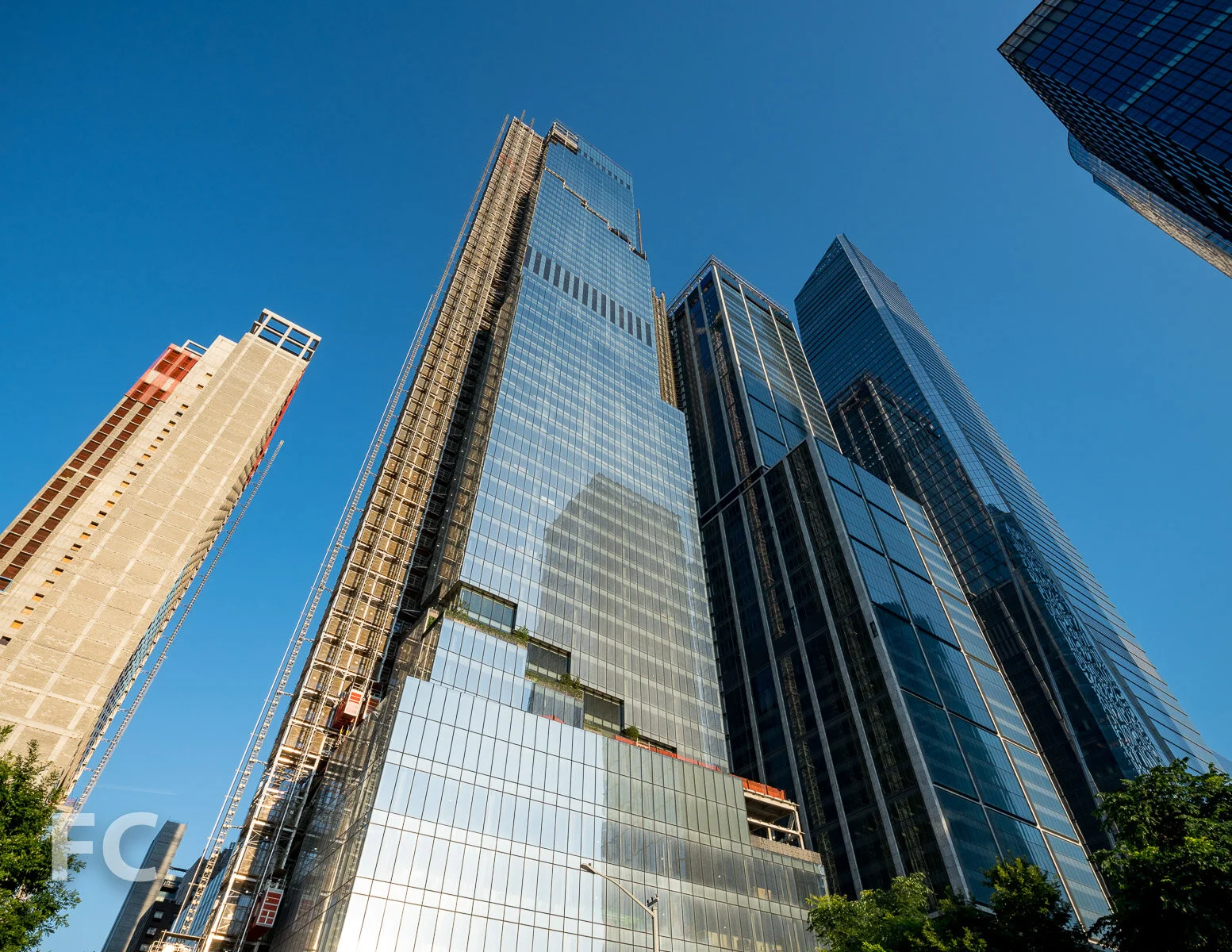
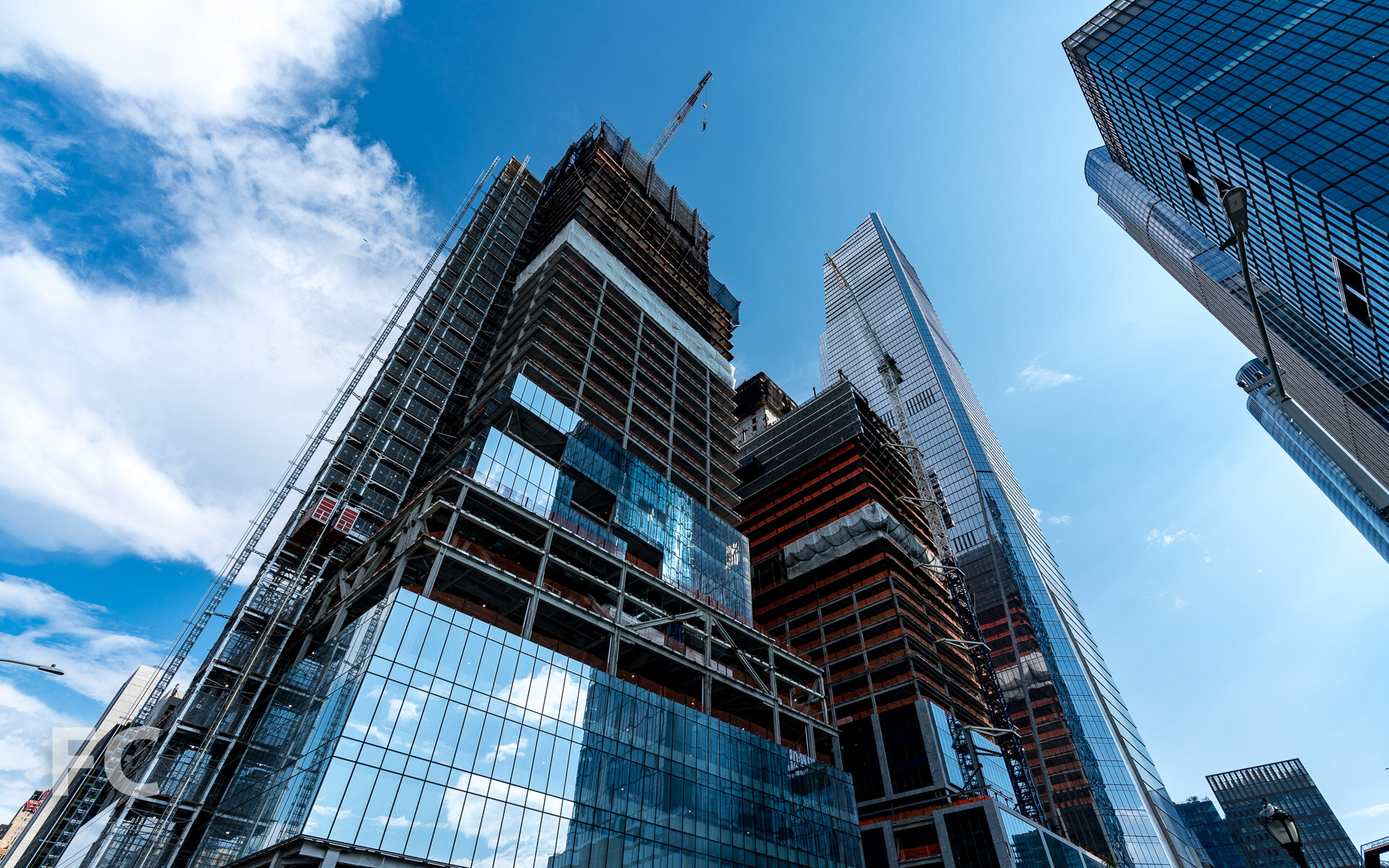
Looking up at 30 Hudson Yards (left), 15 Hudson Yards (center), 35 Hudson Yards (right), and 55 Hudson Yards (far right).

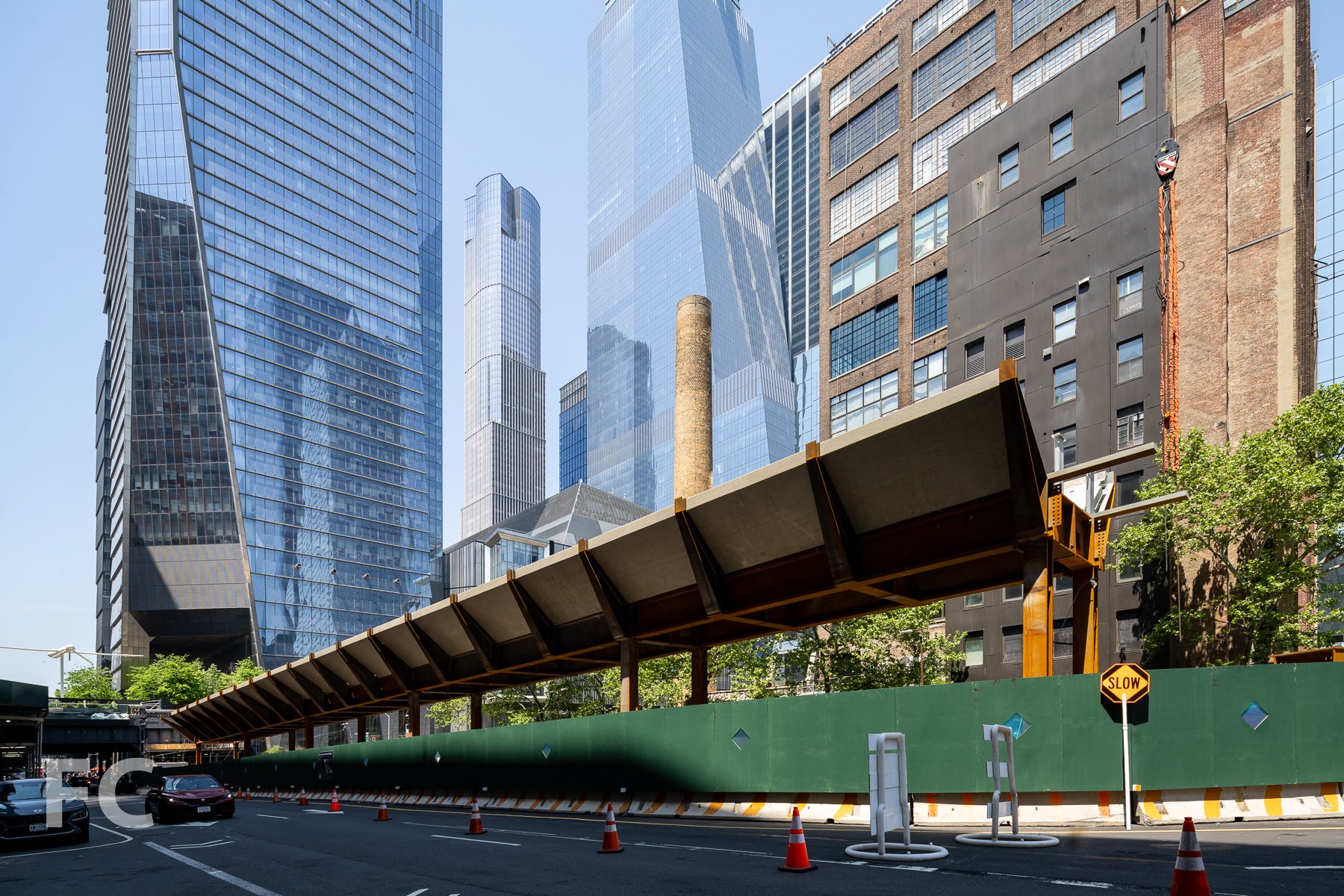
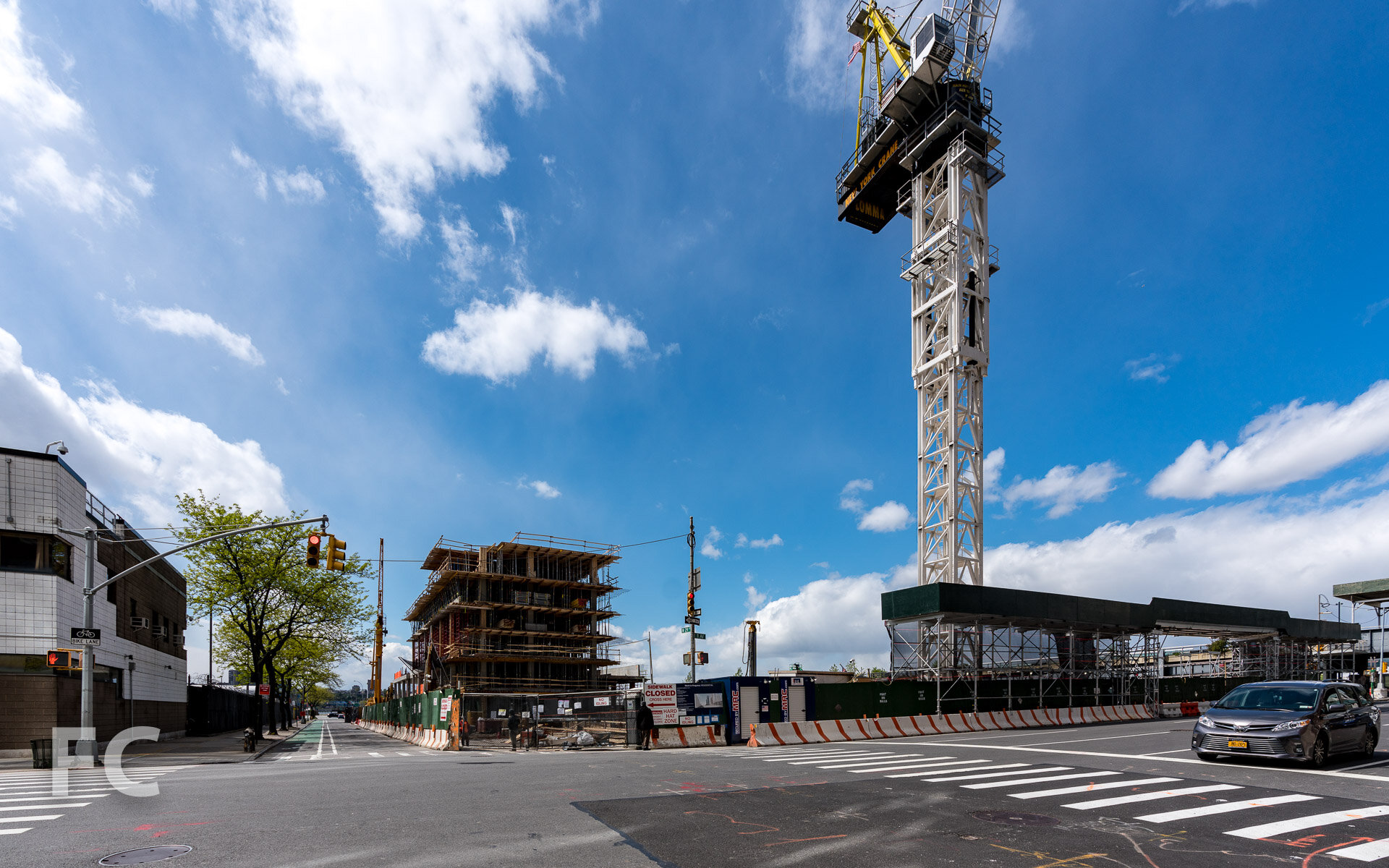
Looking north along 11th Avenue.
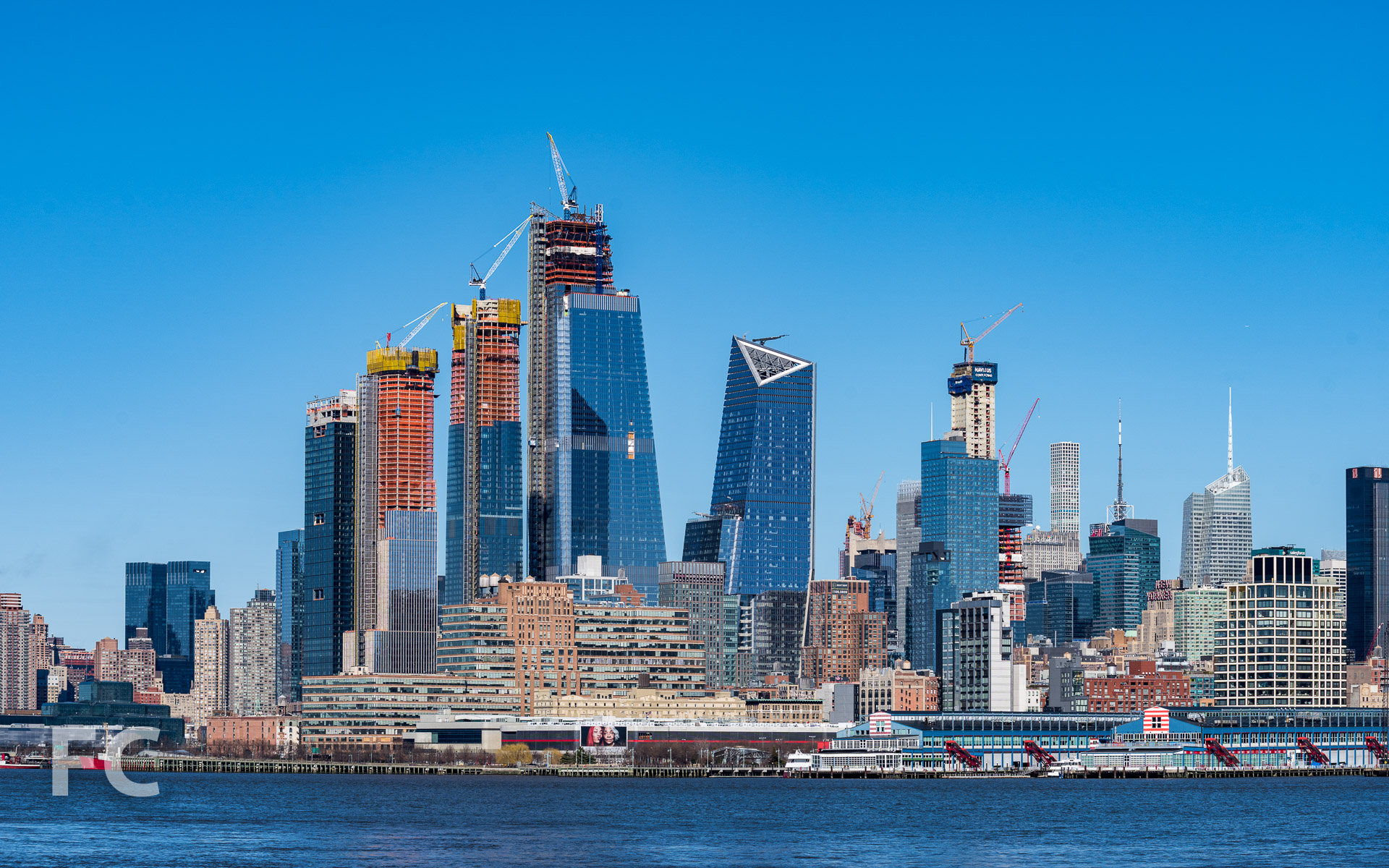
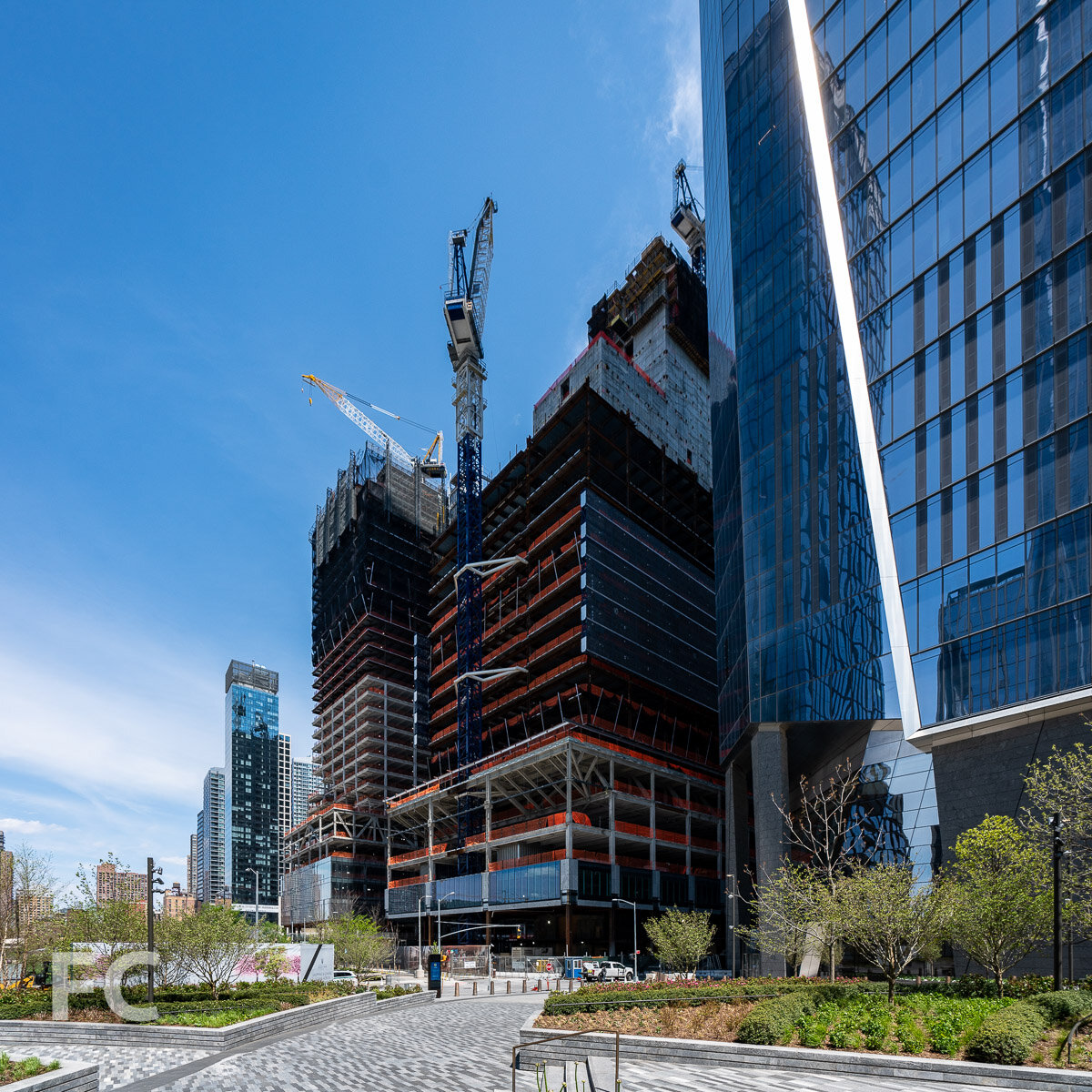
Hudson Yards rising on the Hudson River waterfront.
View of Hudson Yards from 12th Avenue.
Architects: Diller Scofidio + Renfro in collaboration with Rockwell Group (Design Architects), Ismael Leyva Architects (Architect of Record); Developers: Related Companies, Oxford Properties Group; Program: Residential, Retail; Location: Hudson Yards, New York, NY; Completion: 2018.



Building Tour: 520 West 28th Street
East facade from 10th Avenue.
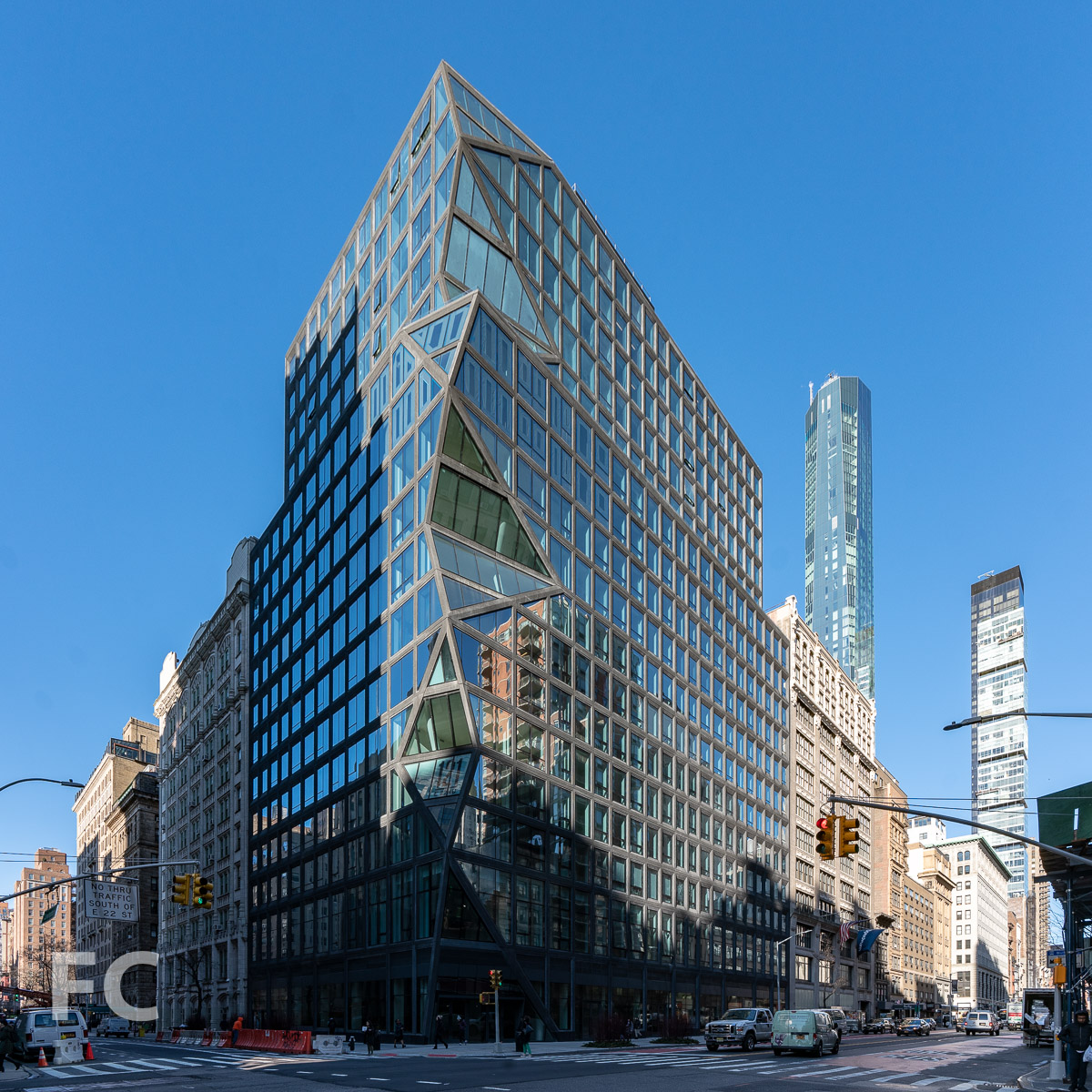
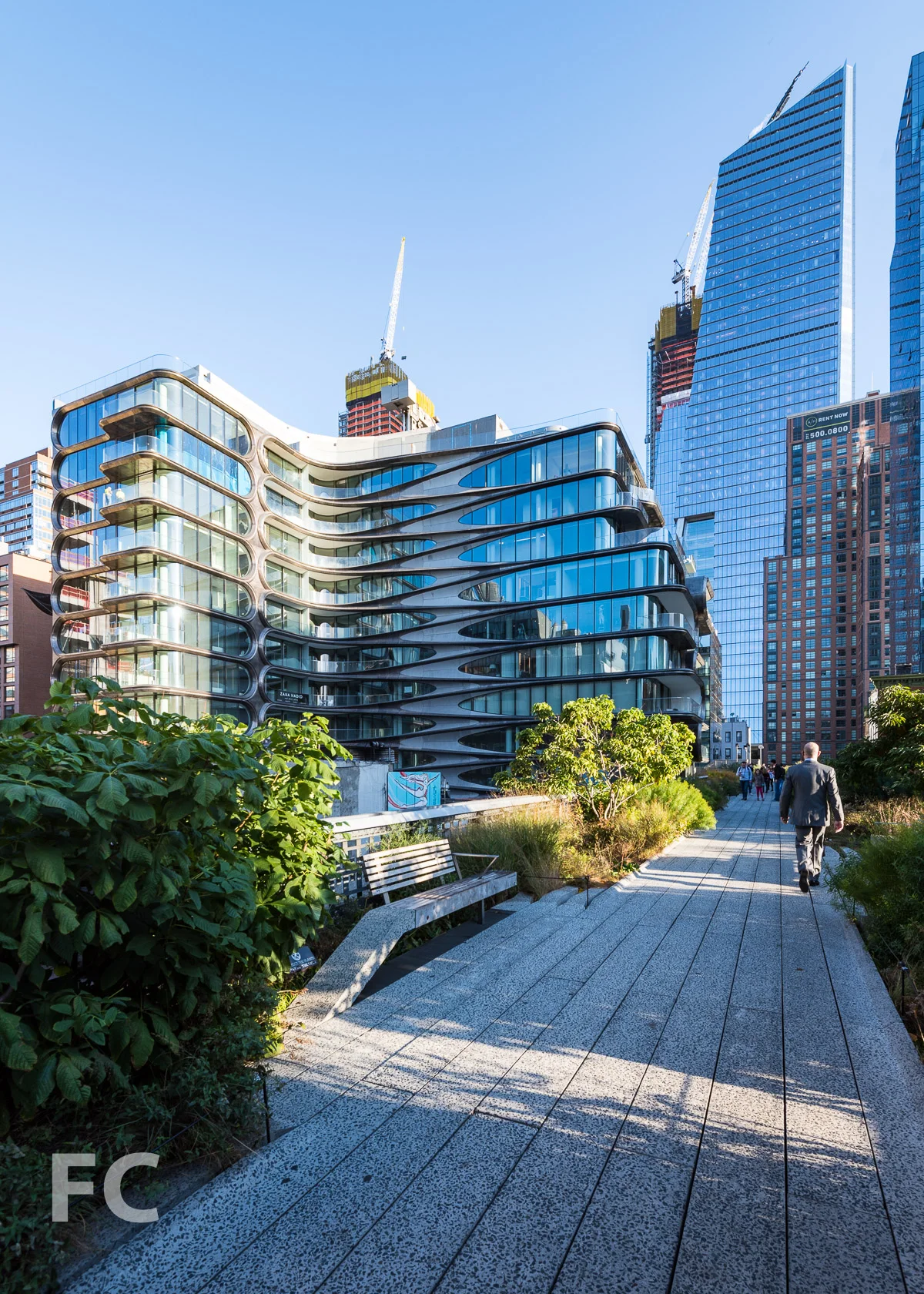
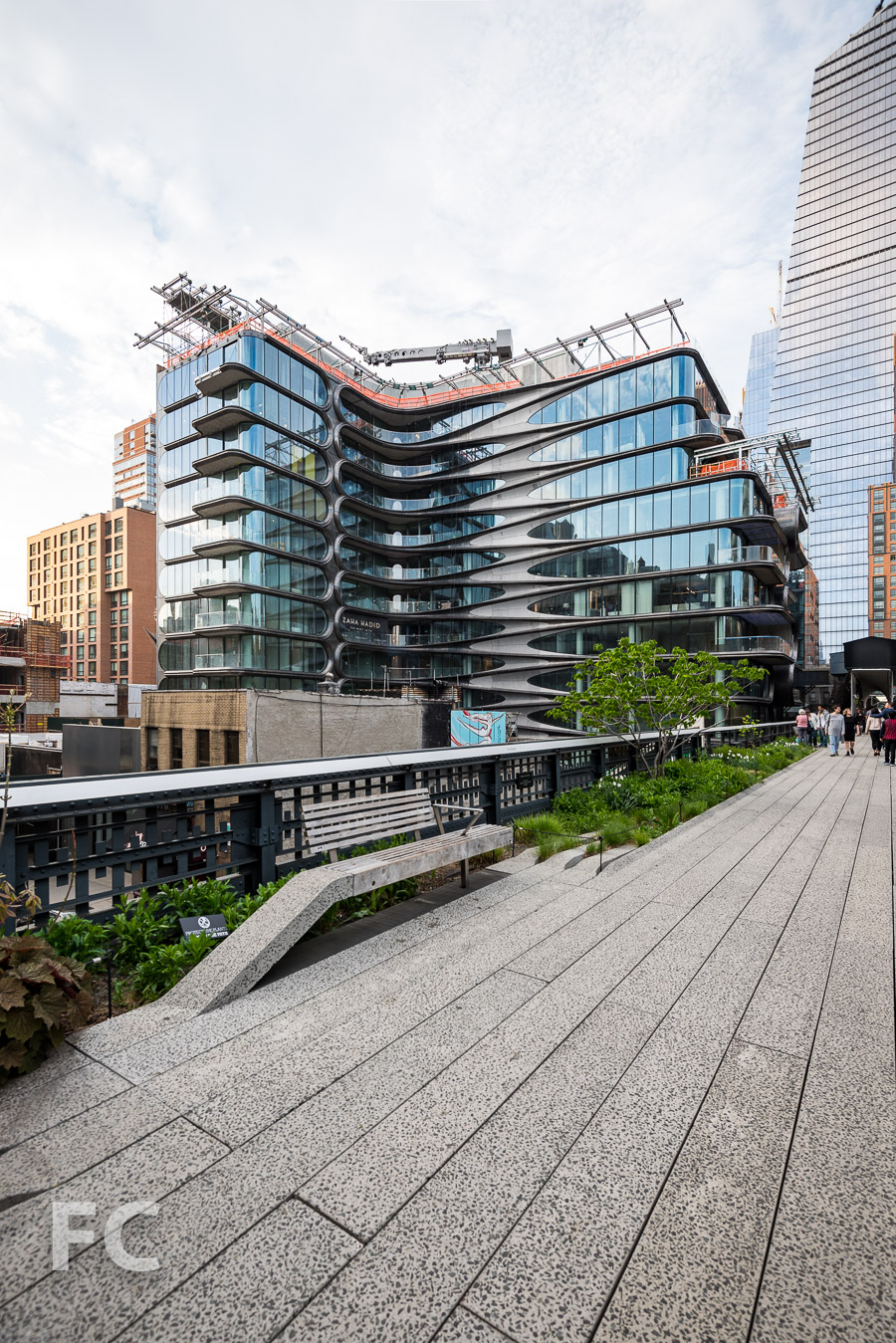
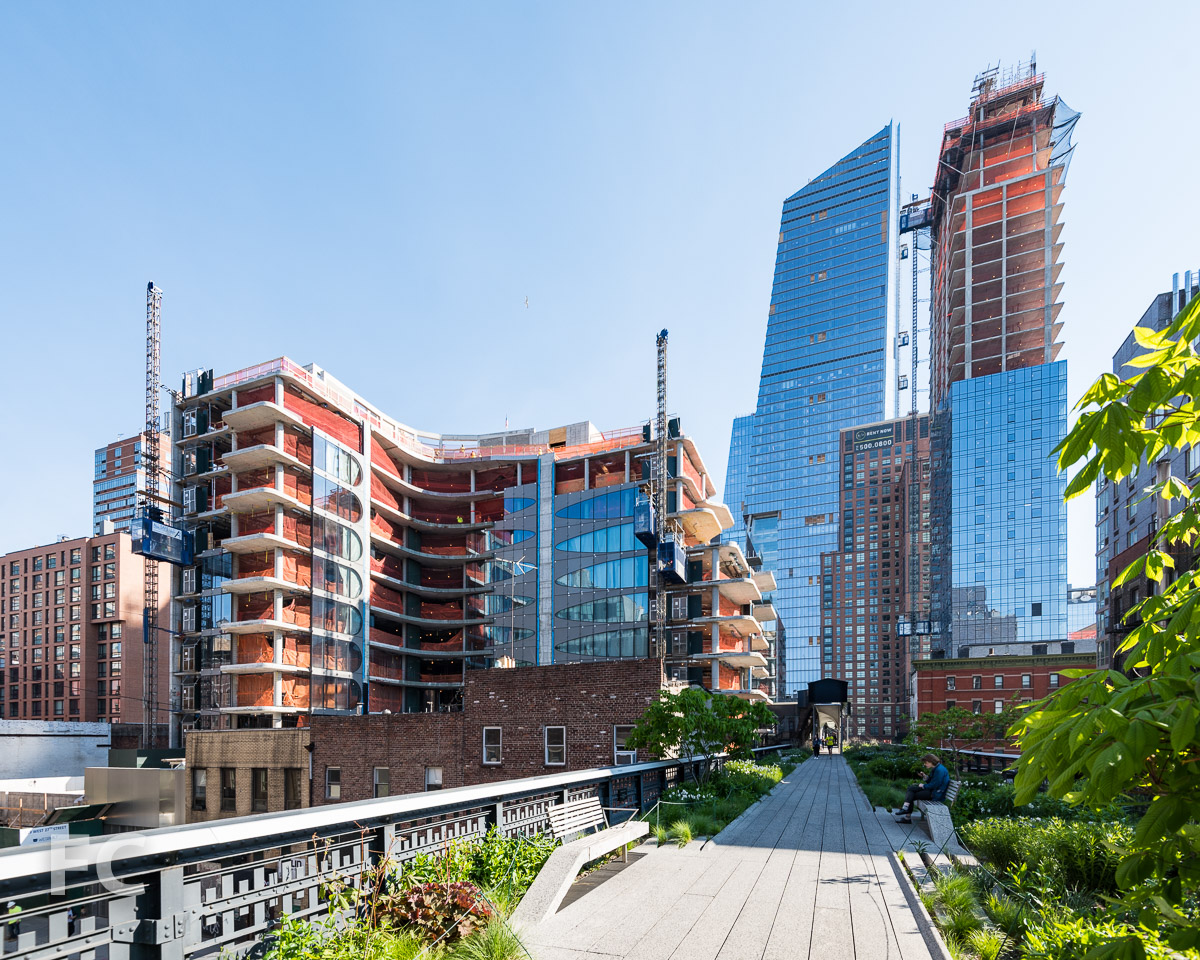
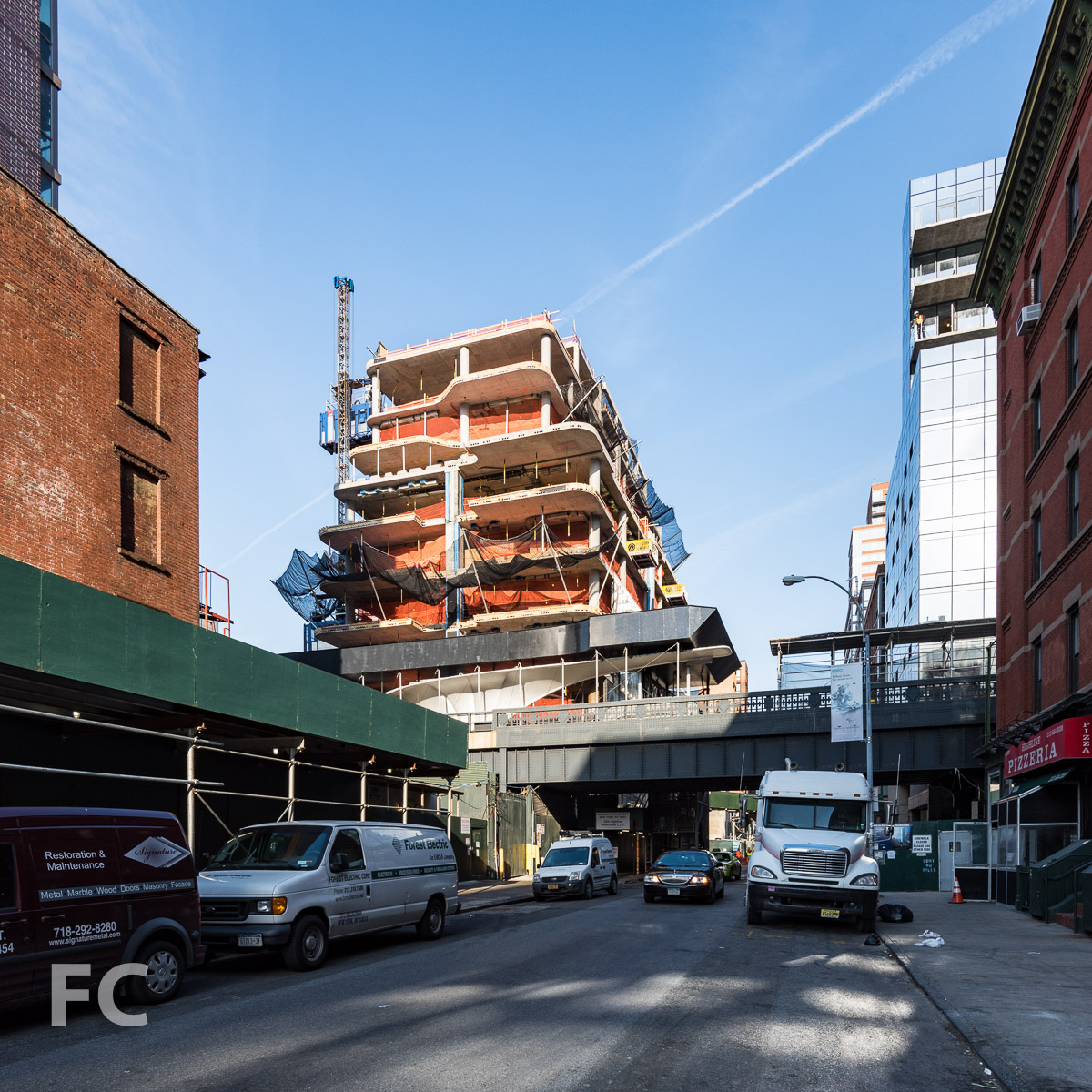
Construction nears completion at Related's 520 W 28 residential condo tower. Designed by Zaha Hadid Architects, the 11-story, 40-unit condo flanks the western edge of the High Line at 28th Street.
Close-up of the northeast corner of the facade.
The façade features a hand-rubbed metal screen that functions as a finished cover for the concrete slabs and the spandrel glass portions of the window wall. Hadid uses the slab covering as an opportunity to express and emphasize the softened edges at the corners and create the building's signature element of floors that meld with walls. The intricacy of their shapes require a technological artisanry, as they are formed by unique, laser cut pieces.
Northeast corner from the High Line.
Southeast corner from the High Line.
South facade from West 27th Street.
Close-up of the facade at the southwest corner.
Residential lobby.
Residential lobby lounge.
Model Residence 28
The 4,200 square foot residence 28 offers 4 bedrooms and 4 baths, with an additional powder room housed in a free standing enclosure. Hadid's design style is evident throughout the interiors, including the kitchen which features an island of sculpted white marble and high gloss formed millwork and Boffi cabinetry. Along with a master bedroom suite with two walk-in closets, each of the three secondary bedrooms offer en-suite bathrooms. A 257 square foot balcony off of the east facing family room and kitchen offers views north and south along the High Line.
Gallery with great room beyond.
Great room.
Great room.
Great room.
View south along the High Line from the great room.
Family room.
Looking southeast from the balcony.
Looking south along the High Line from the balcony.
Looking northeast along the High Line from the balcony.
Kitchen.
Kitchen.
Close-up of the kitchen/living room divider wall.
Hallway leading to the secondary bedrooms.
Powder room.
Powder room door handle.
Master bedroom.
Master bedroom.
Window detail in the master bedroom.
Vanity in the master bathroom.
Soaking tub in the master bathroom.
Shower and toilet enclosure in the master bathroom.
Secondary bedroom.
Window detail in the secondary bedroom.
Tub in the secondary bathroom.
Amenities
Zaha Hadid's signature style is also evident throughout the building's amenity spaces as well. The residential lobby includes a 34-foot feature wall with Hadid's sculptural forms serving as artwork, along with a sculptural concierge desk and furniture designed by the architect. A lounge and entertainment suite open onto a High Line facing terrace. Hadid's signature curves carve openings into the walls of the wellness level amenities, providing glazed entries and views into the 75-foot saline-system swimming pool, private spa, and fitness center.
Lounge.
High Line terrace.
Pool entry.
Pool.
Gym.
IMAX Theater.
Architects: Zaha Hadid Architects (Design Architect), Ismael Leyva Architects (Executive Architect); Structural Engineer: DeSimone Consulting Engineers; MEP Engineer: AKF Group; Facade Consultant: Gilsanz Murray Steficek; Landscape Architect: Future Green Studio; Developer: Related Companies; Program: Residential; Location: Chelsea, New York, NY; Completion: 2017.


Tour: Cornell Tech Campus
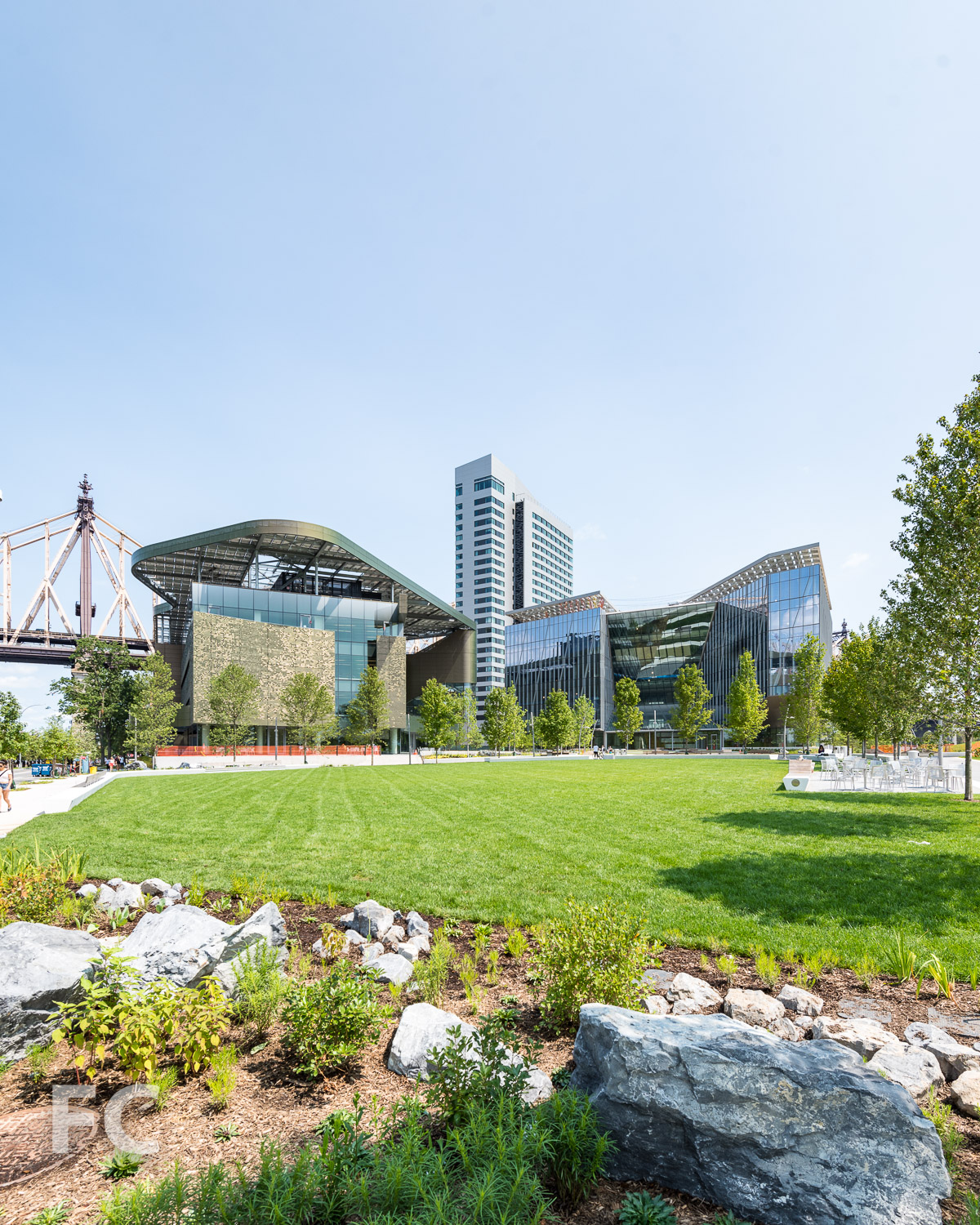
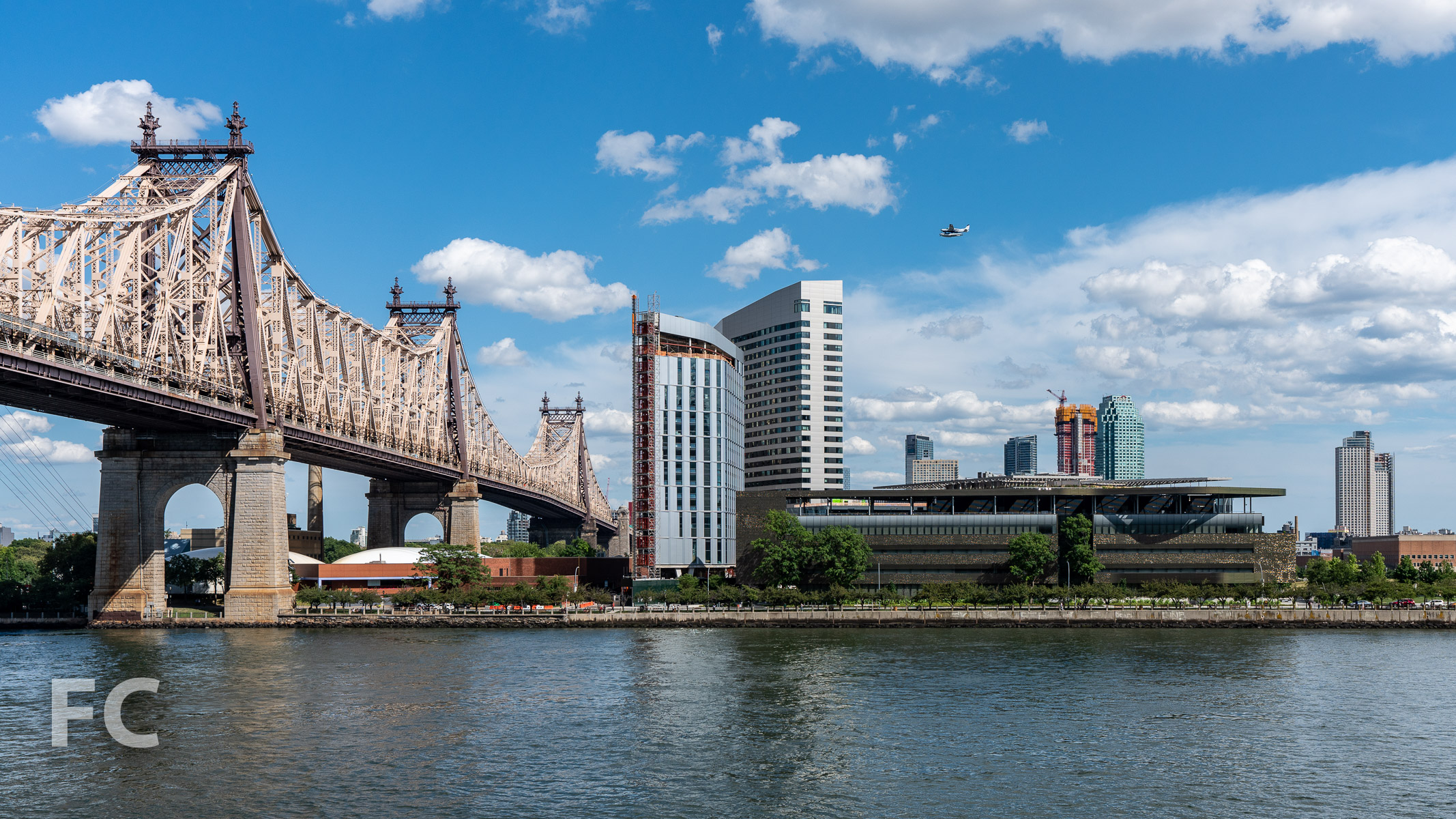
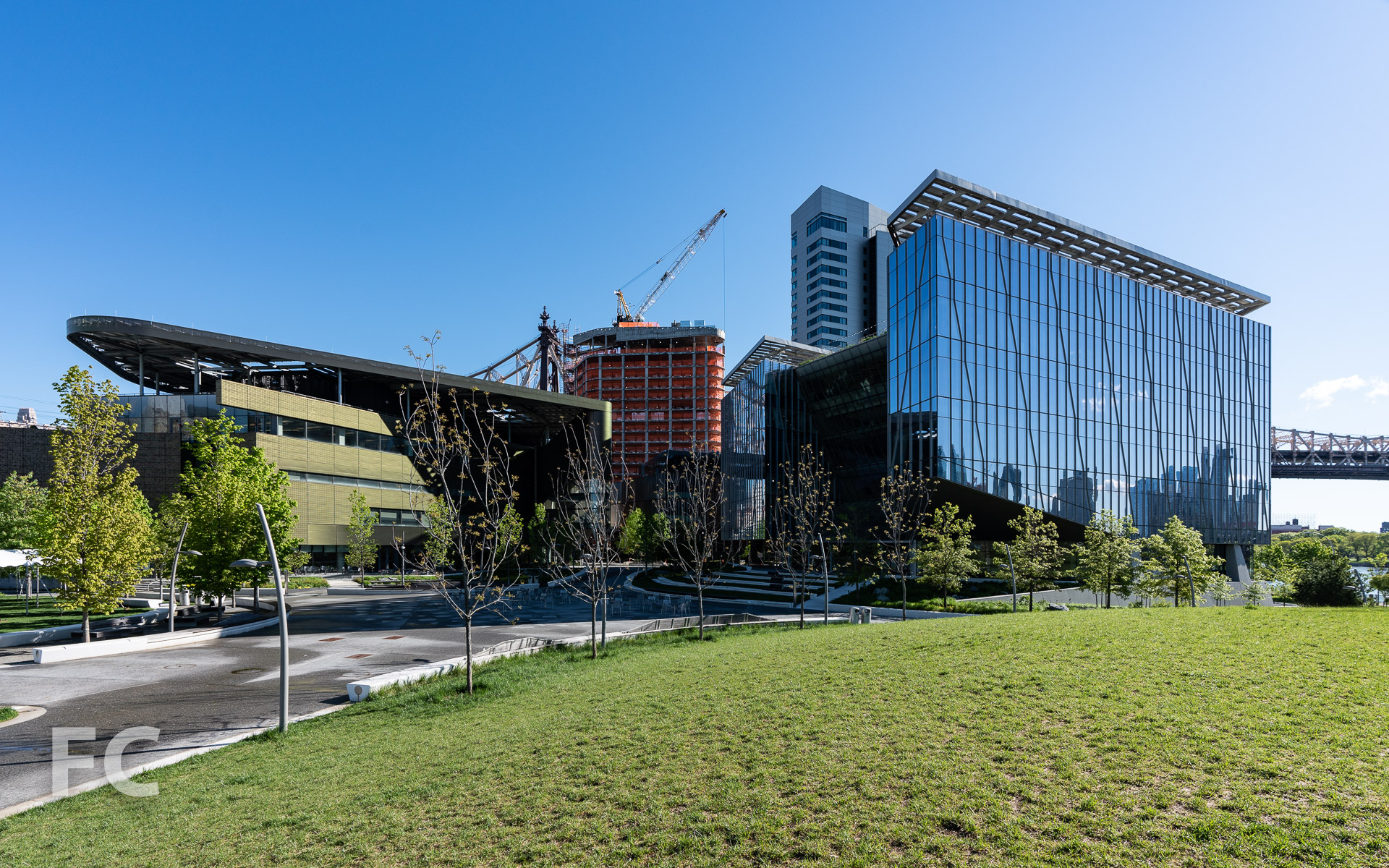
Northwest corner of the Cornell Tech campus.
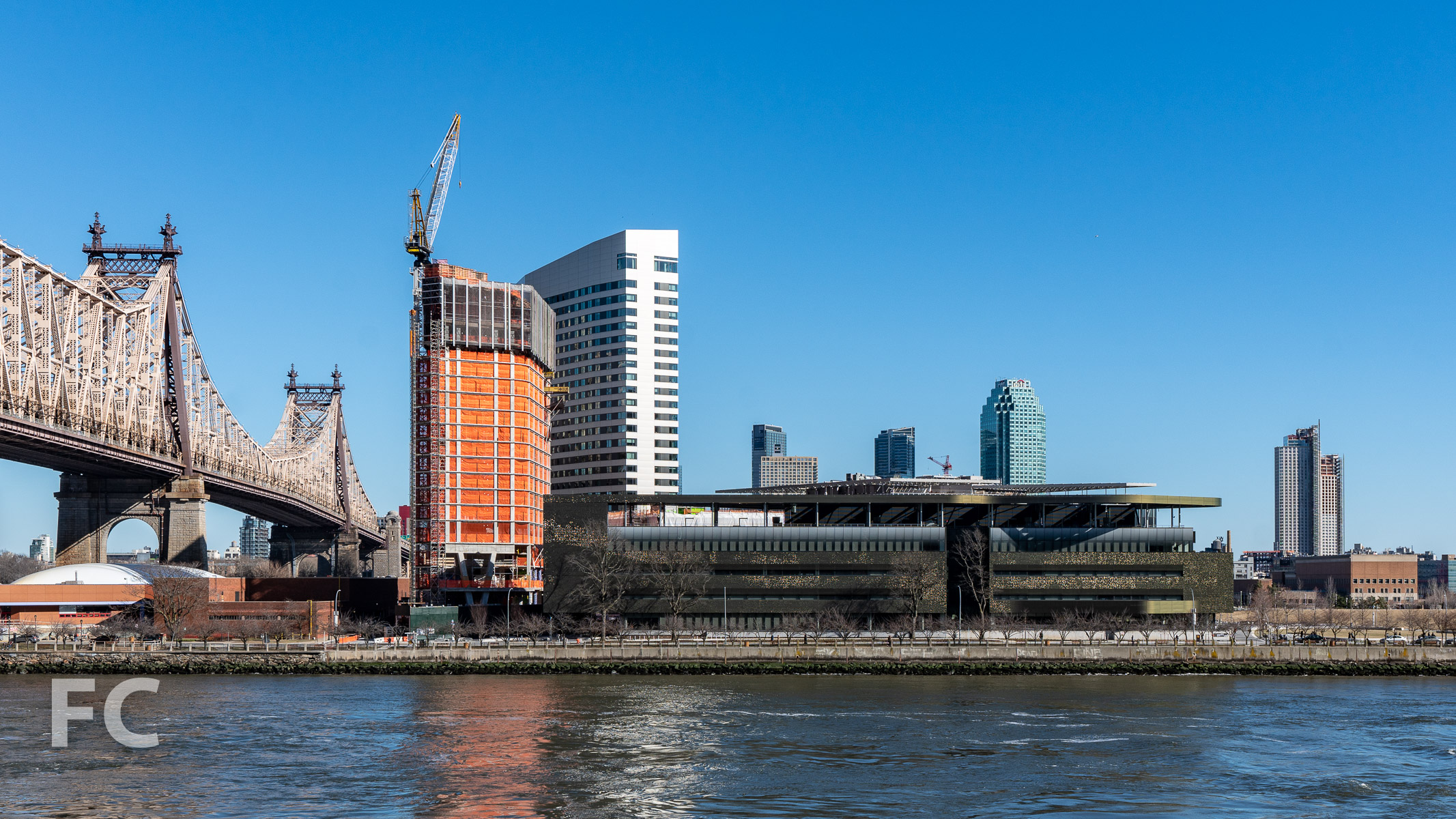
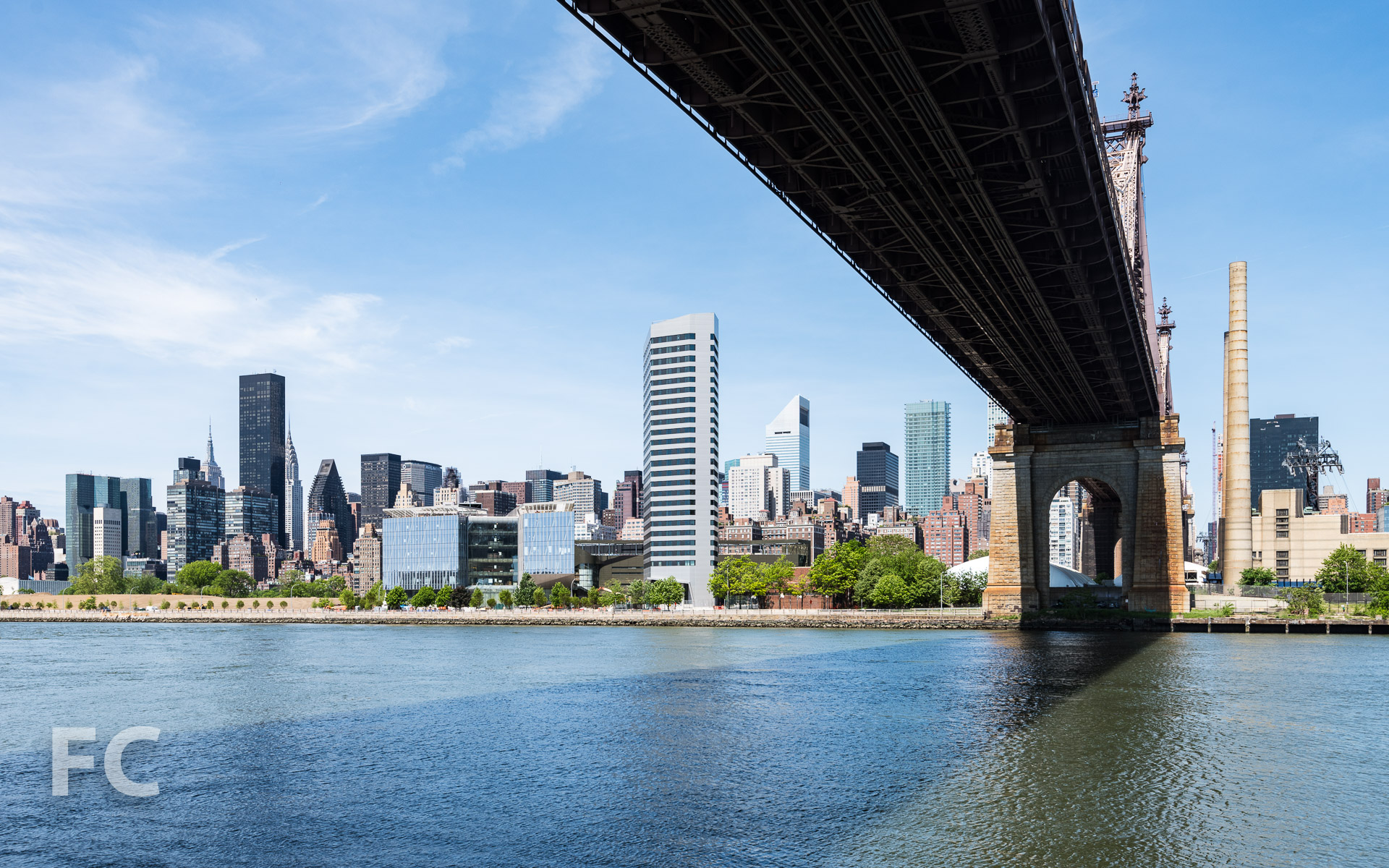
The first phase of the new campus for Cornell Tech on Roosevelt Island has officially for the fall semester. Established under a partnership between Cornell University and the Israel Institute of Technology, Cornell Tech serves as a graduate school for applied sciences that hopes to nurture the future of New York's growing tech industry. When the full master plan is realized in 2043, the completed campus will house 2 million square feet of space and 12 acres of open space for approximately 2,500 occupants.
Campus signage.
The Bloomberg Center
The Bloomberg Center, designed by Morphosis, serves as the main academic building for the first phase of the Cornell Tech campus. Faculty and students will be able to work independently and collaboratively in the building’s flexible space. Interaction with the public will be facilitated through the café and terrace. As with the other buildings on campus, The Bloomberg Center will pursue aggressive sustainability standards as it sets a goal of being the largest Net Zero energy use building in the United States. All of its energy will be generated on site through the use of geothermal wells for heating and cooling and a canopy of solar panels at the roof.
North façade of The Bloomberg Center.
Looking up at the east façade of The Bloomberg Center.
Southeast corner of The Bloomberg Center.
Morphosis has designed an iconic metal panel façade to cover the unitized, continuously insulated rainscreen wall system. A system of perforations in the panels catches the sunlight to create an organic pattern visible on campus and from afar.
Looking up at the south façade of The Bloomberg Center.
Southwest corner of The Bloomberg Center.
Close-up of the perforated metal panel façade of The Bloomberg Center.

The Bridge at Cornell Tech
The Bridge at Cornell Tech, designed by Weiss/Manfredi and developed by Forest City Ratner Companies, will serve as a corporate co-location facility to bring together established tech companies, startups, and academic researchers to accelerate the introduction of new technologies to the market. The 230,000 square foot building will pursue a minimum of LEED Silver with sustainable features such as 16,500 square feet of rooftop solar panels, efficient water fixtures, stormwater capture, and a ground floor elevated 10 feet above the 100 year flood plane. A glass curtain wall with a vertical frit pattern clads the steel structure, offering expansive light and views to the 14 foot floor to floor height work spaces.
Northeast corner of The Bridge.
Southwest corner of The Bridge.
Close-up of the façade of The Bridge.
Lobby of The Bridge.
The House at Cornell Tech
The House at Cornell Tech, designed by Handel Architects and developed in partnership with The Hudson Companies and The Related Companies, will offer 350 residential units for students and faculty of the college. Rising to a height of 270 feet, the tower is the tallest building on campus and will be the world’s tallest Passive House designed structure at completion. The Passive House energy standard was developed in Germany and is considered the most rigorous energy efficiency standard in the world. Buildings designed to this standard typically achieve energy consumption reduction of 60% to 80% that of a similar code building.
Northwest corner of The House.
Looking up at the south façade of The House.
As part of the energy efficient design of the building, the façade is clad in unitized mega panels of metal panel and punched windows that are designed and prefabricated for better control of air infiltration, reducing heating and cooling loss. A special color changing paint is employed on the metal panels that will shift from silver to warm champagne in the natural light. The southwest corner of the façade features a vertical strip of louvers that act as the building’s “gills”, concealing the outdoor space where the heating and cooling equipment are housed.
Residential entry at The House.

Amenities will include furnished common spaces, fitness center, landscaped ground floor porch and rooftop terraces, rooftop party room, and bicycle storage.
Southwest corner of The House.
Architects: SOM (Master Plan, Central Utility Plant), Landscape Architects: Field Operations (Open Space Master Plan, Campus Open Space); Location: Roosevelt Island, New York, NY; Completion: 2017.
BLOOMBERG CENTER:
Architect: Morphosis; Structural Engineer: Arup; MEP Engineer: Arup; Facade Consultant: Arup; Client: Cornell University; Program: Education.
THE BRIDGE AT CORNELL TECH:
Architect: Weiss/Manfredi; Program: Office.
THE HOUSE AT CORNELL TECH:
Architect: Handel Architects; Structural Engineer: Buro Happold; MEP Engineer: Buro Happold; Facade Consultant: Socotec; Sustainability and Passive House Consultant: Steven Winter Associates; General Contractor: Monadnock Construction; Client: Cornell University, Related Companies, Hudson Companies; Program: Residential.

205 East 92nd Street
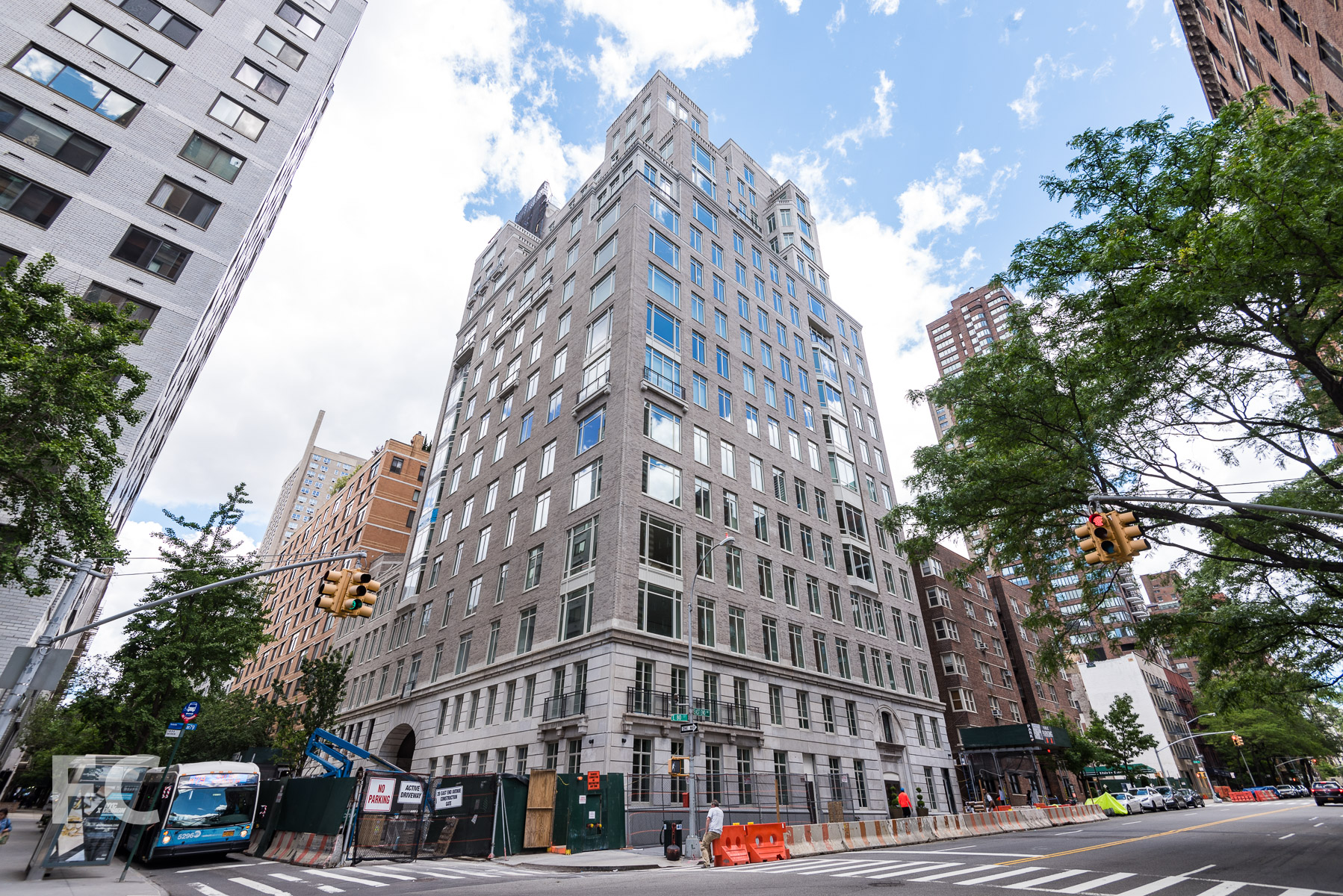
Installation of the exterior wall has reached substantial completion at Related's residential tower, 205 East 92nd Street, on the Upper East Side of Manhattan. The tower's facade is composed of a light beige brick, denser at the podium then transitioning to pier elements in the tower, and glass window wall in both large horizontal bands and two-story elements that punch through the brick façade. Designed by Handel Architects, the tower accommodates 230 residential units while the podium houses amenities for the residents, 33,000 square-feet of retail, and an outpost of the Winward School. Completion is expected sometime in 2016.
Northwest corner from Third Avenue and East 93rd Street.
Northwest corner from East 93rd Street.
West façade from Third Avenue.
Southwest corner from Third Avenue and East 92nd Street.
Southeast corner from East 92nd Street.
Residential entry on East 92nd Street.
Looking up at the east façade of the tower.
The school entry on East 93rd Street.
The fins of the school's north façade on East 93rd Street.
Northwest corner of the tower from Samuel Seabury Playground.
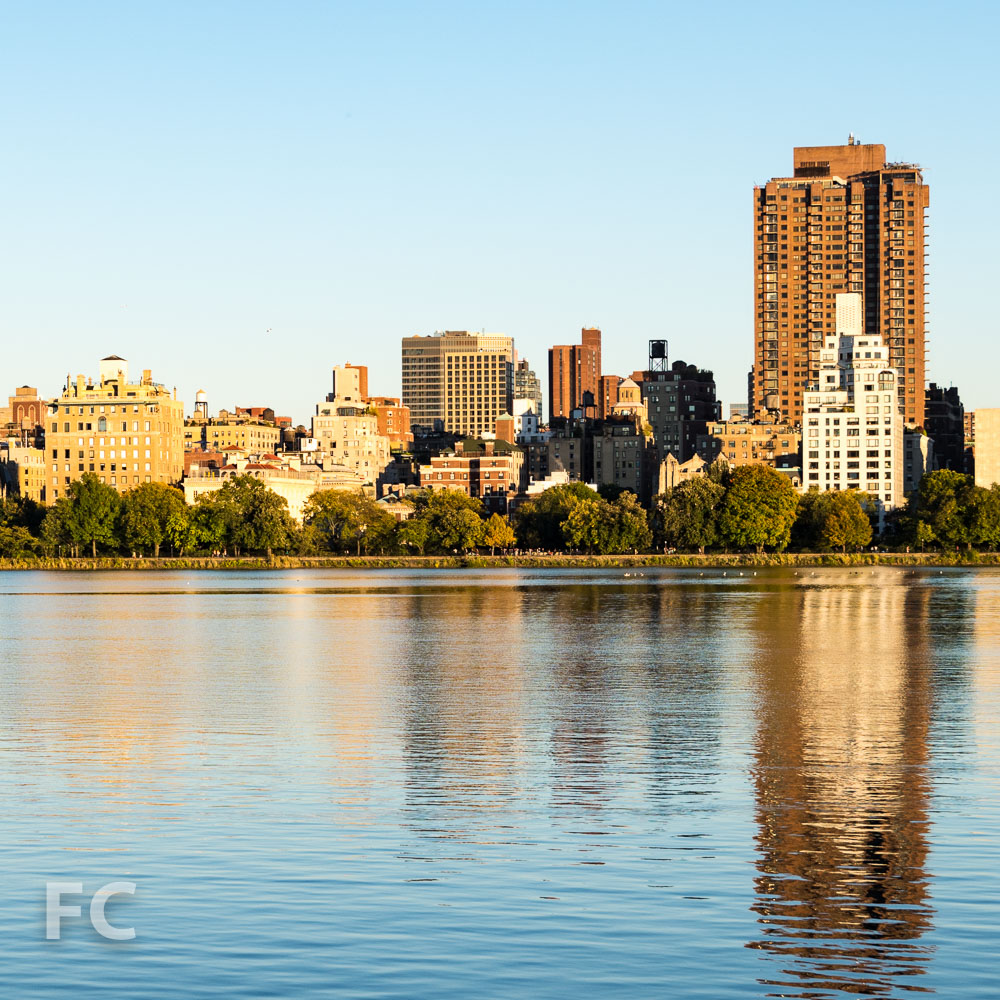
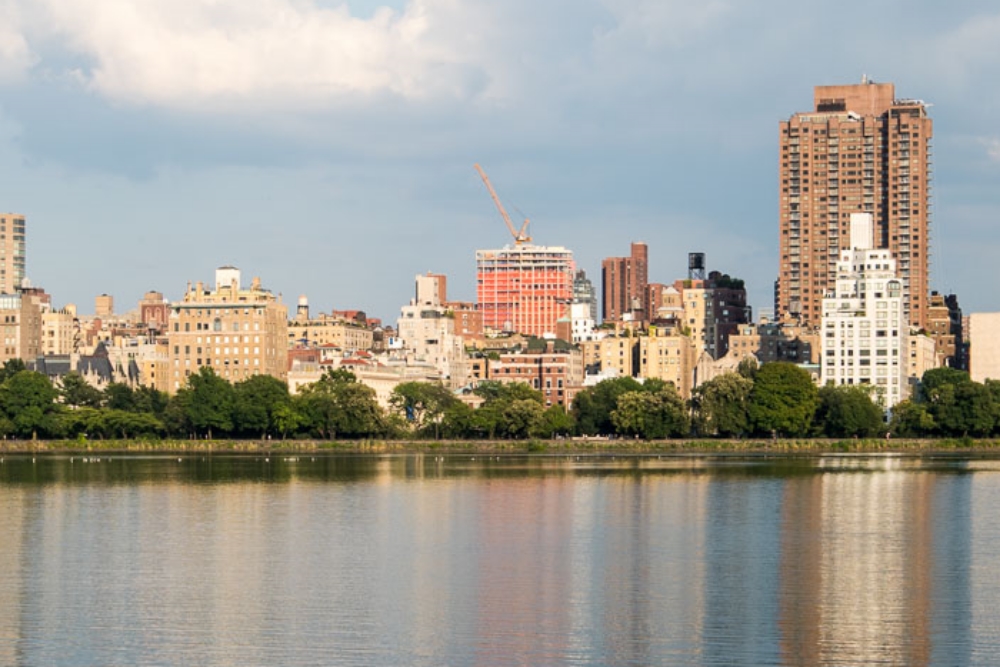
205 East 92nd Street in the Upper East Side skyline from the Central Park Reservoir.
Architect: Handel Architects; Developer: Related Companies; Program: Residential Rental, School; Location: Upper East Side, New York, NY; Completion: 2016.
Field Update: 500 West 30th Street - Abington House
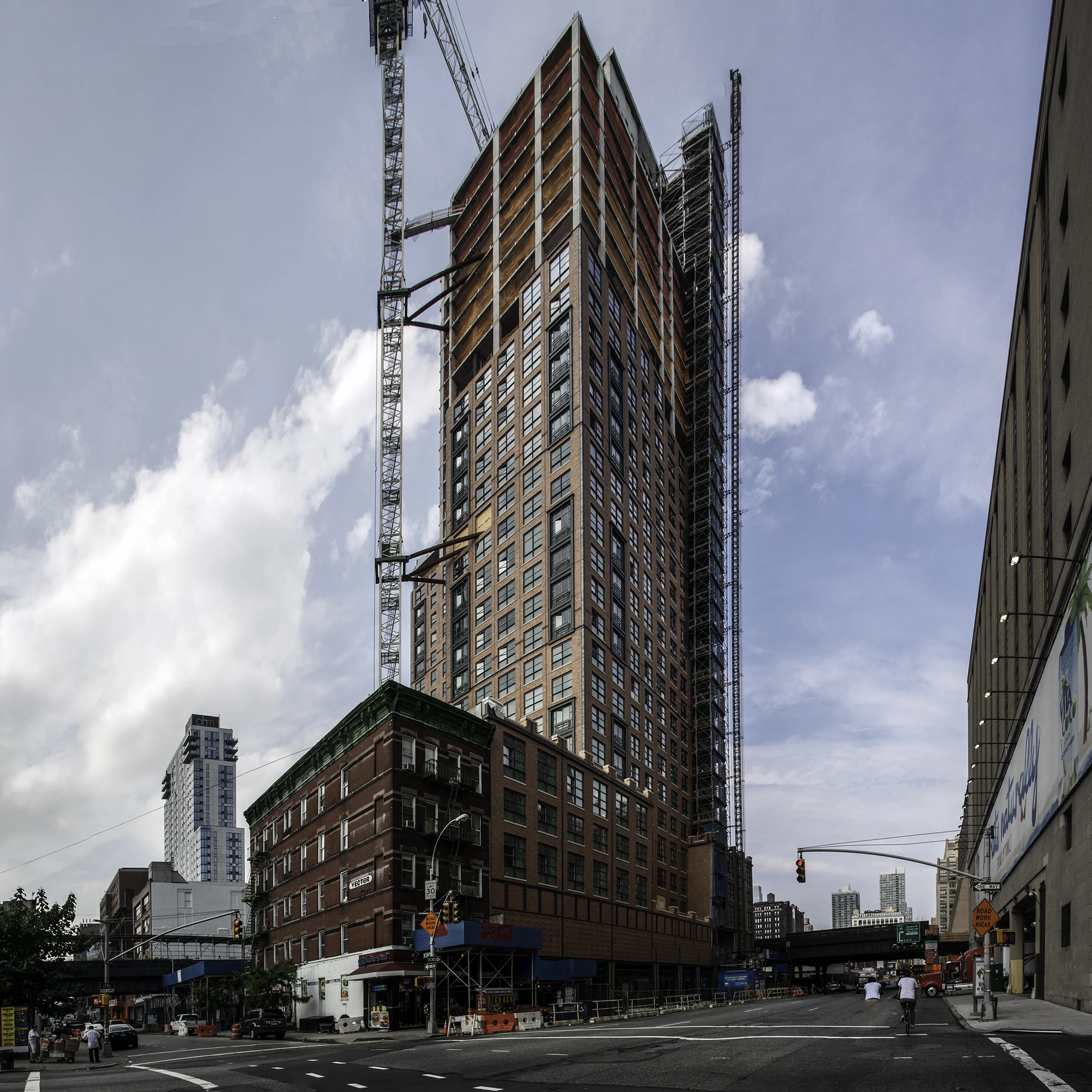
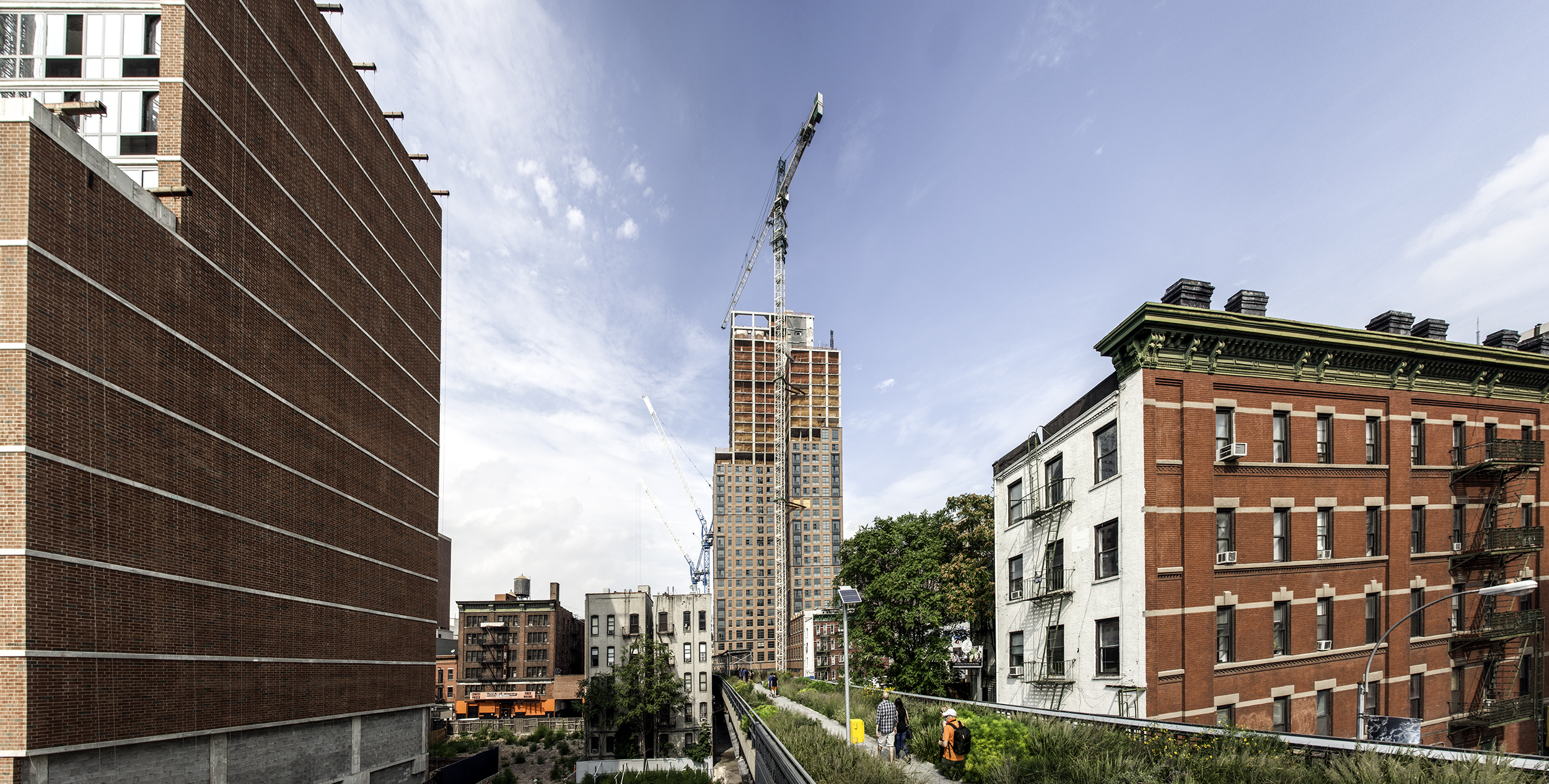
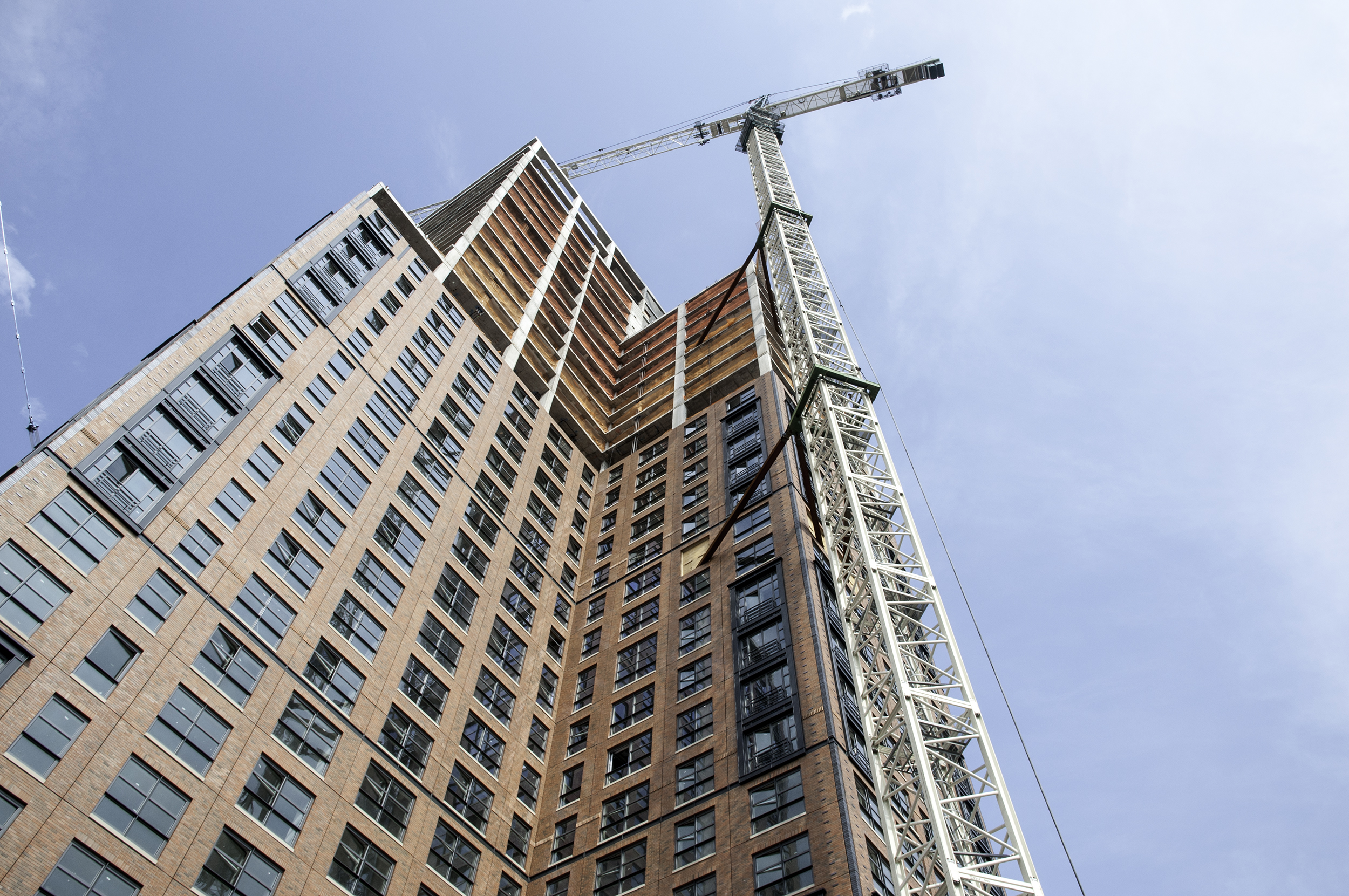
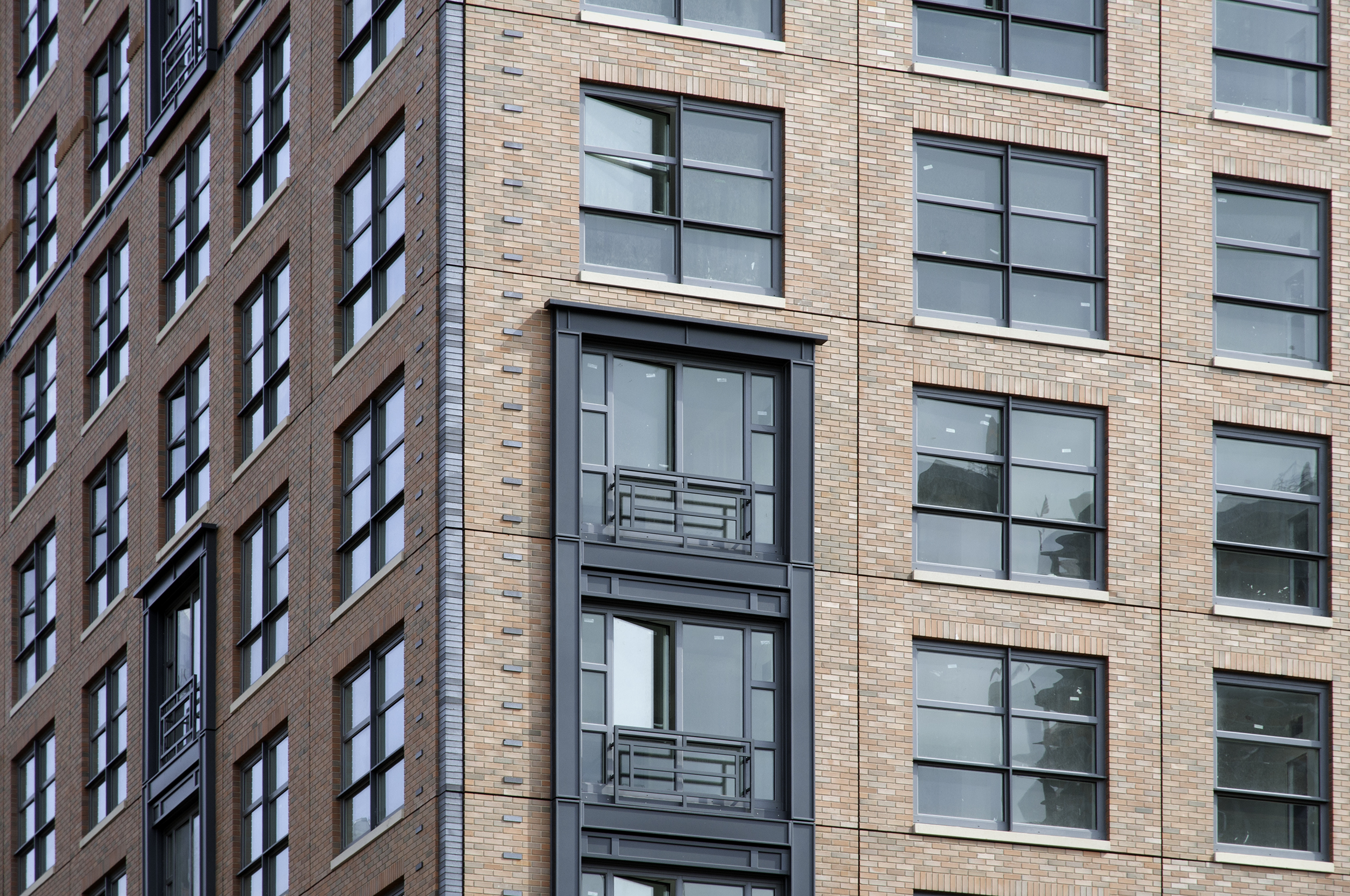
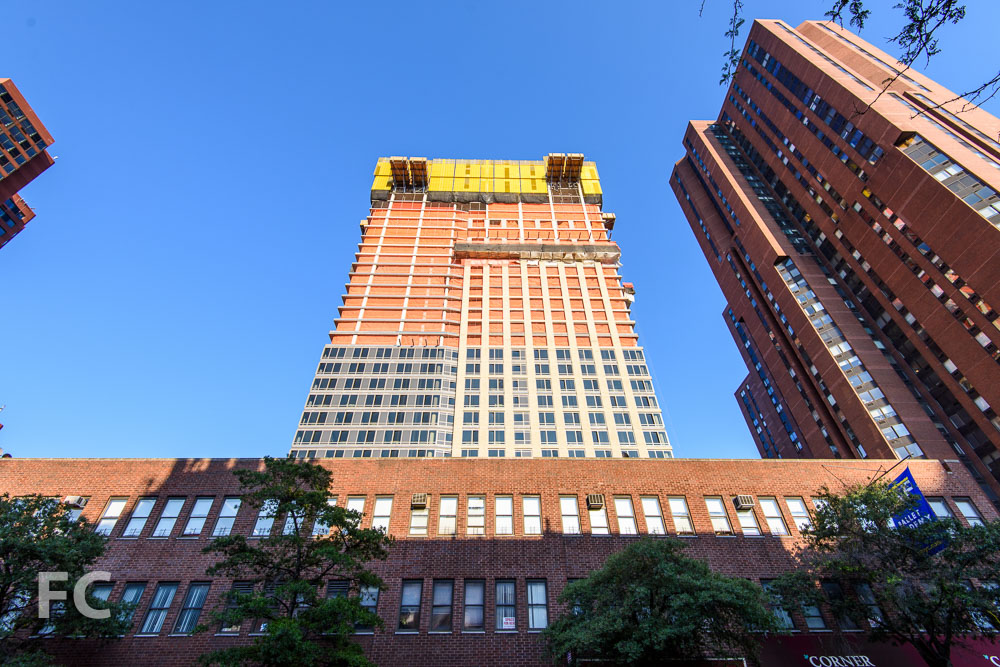
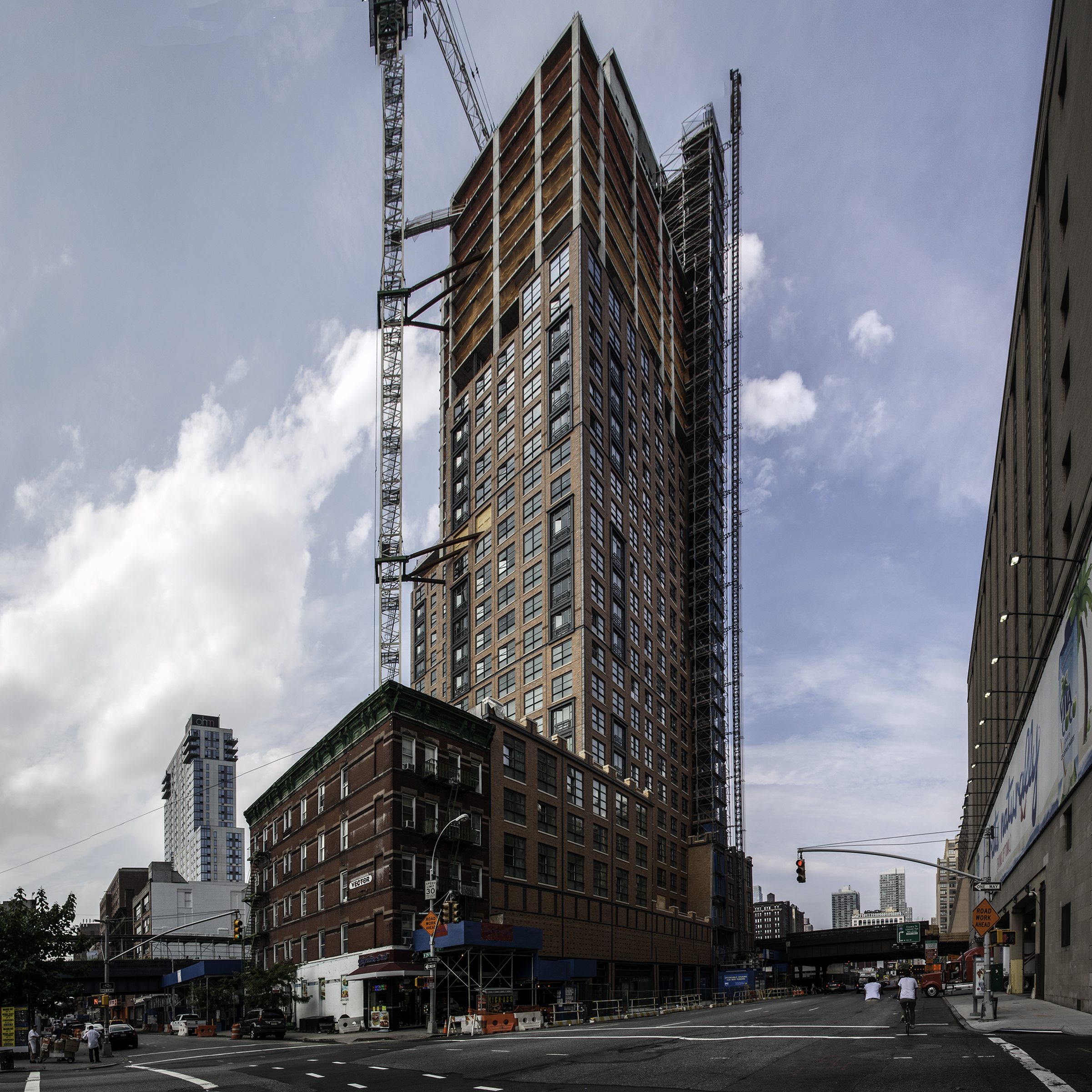
The exterior envelope of brick precast panels is approximately two thirds installed at Robert Stern's residential condo adjacent to the Hudson Yards megaproject and the High Line. Following a recent trend in residential projects in New York, the tower's exterior design draws inspiration from the city's industrial past with its brick and black metal framed windows with divided lights. When the Hudson Yards district is fully developed this project will provide a much needed material contrast to the dominant glass towers from KPF, David Childs and DS+R across the street.