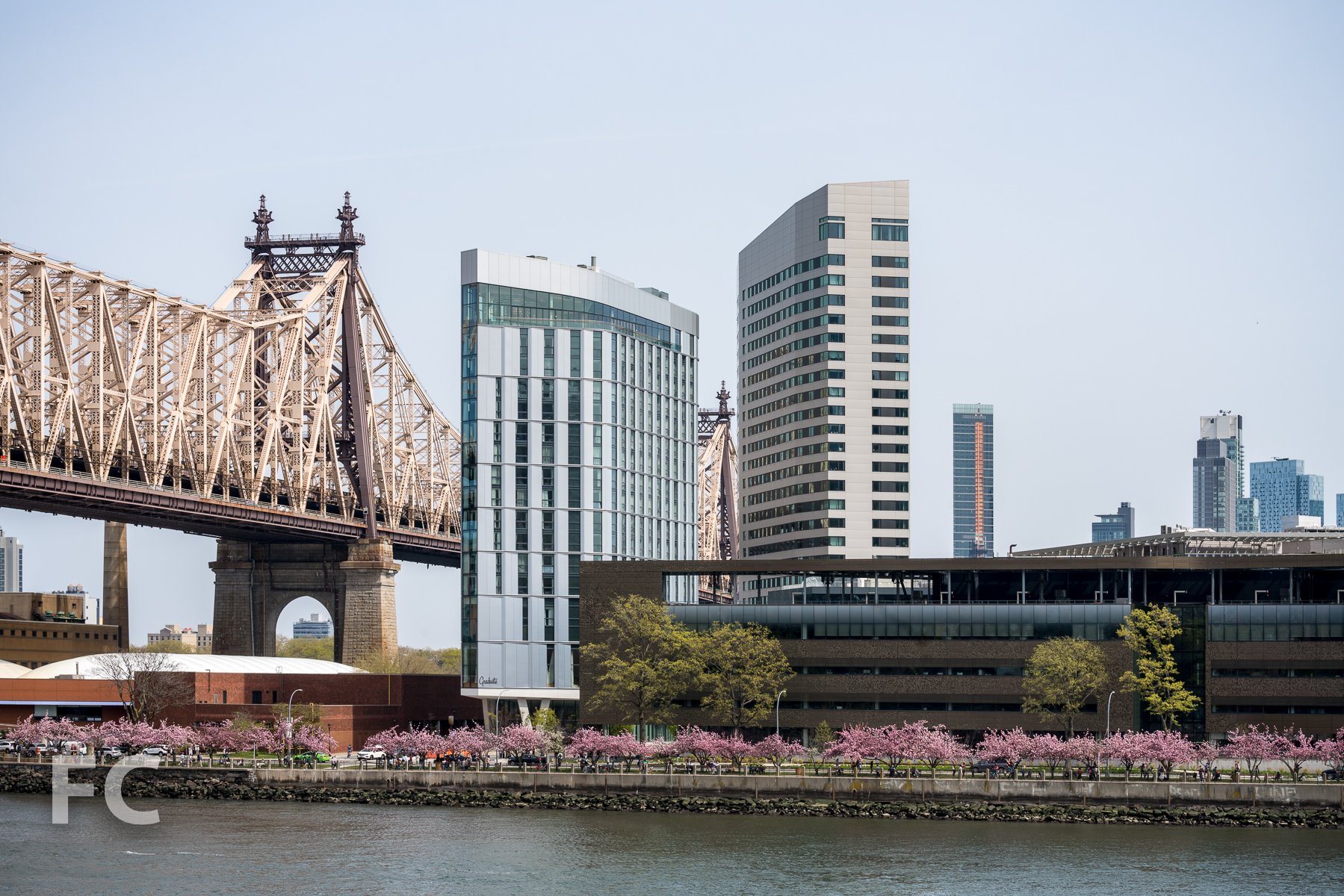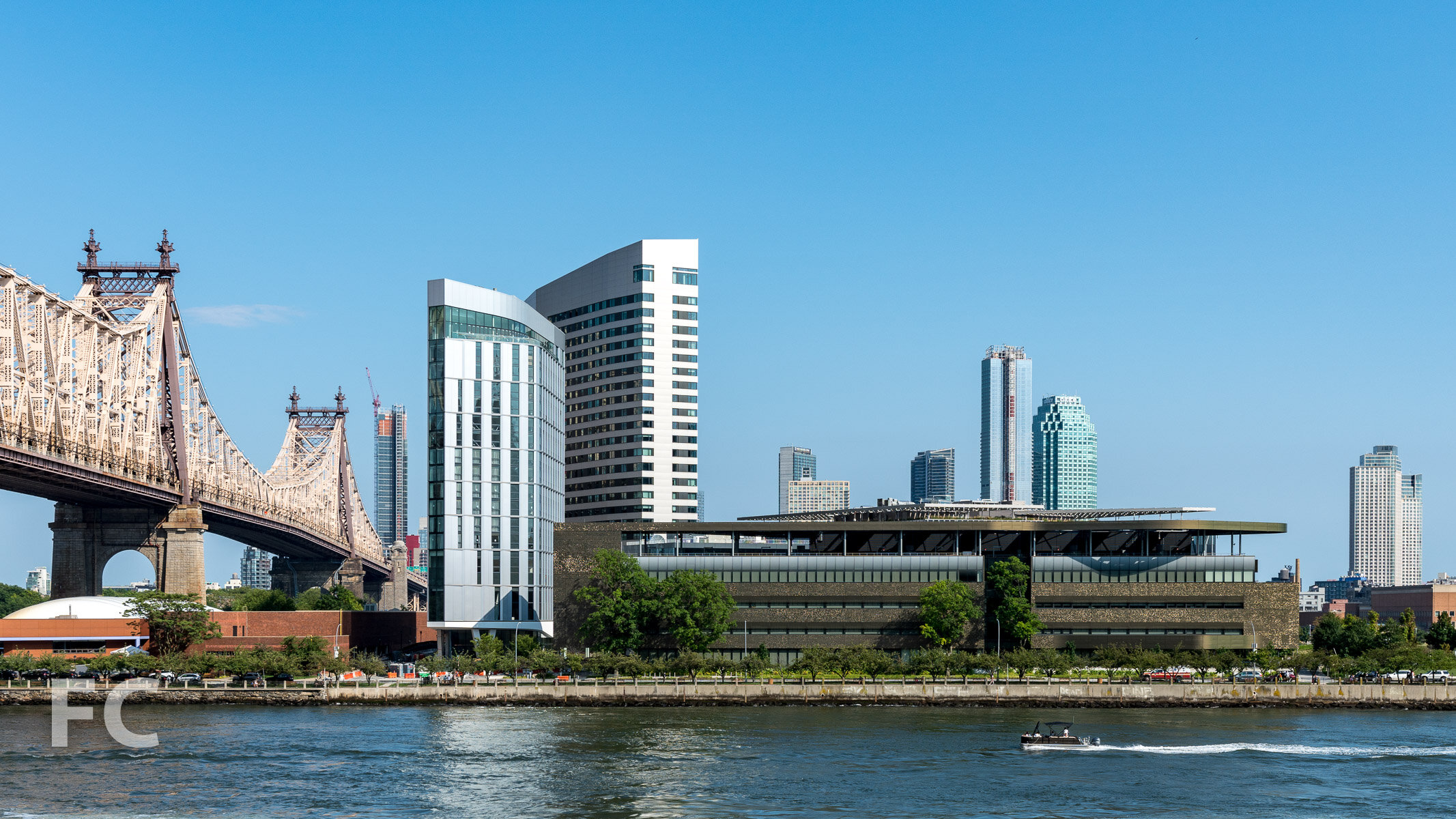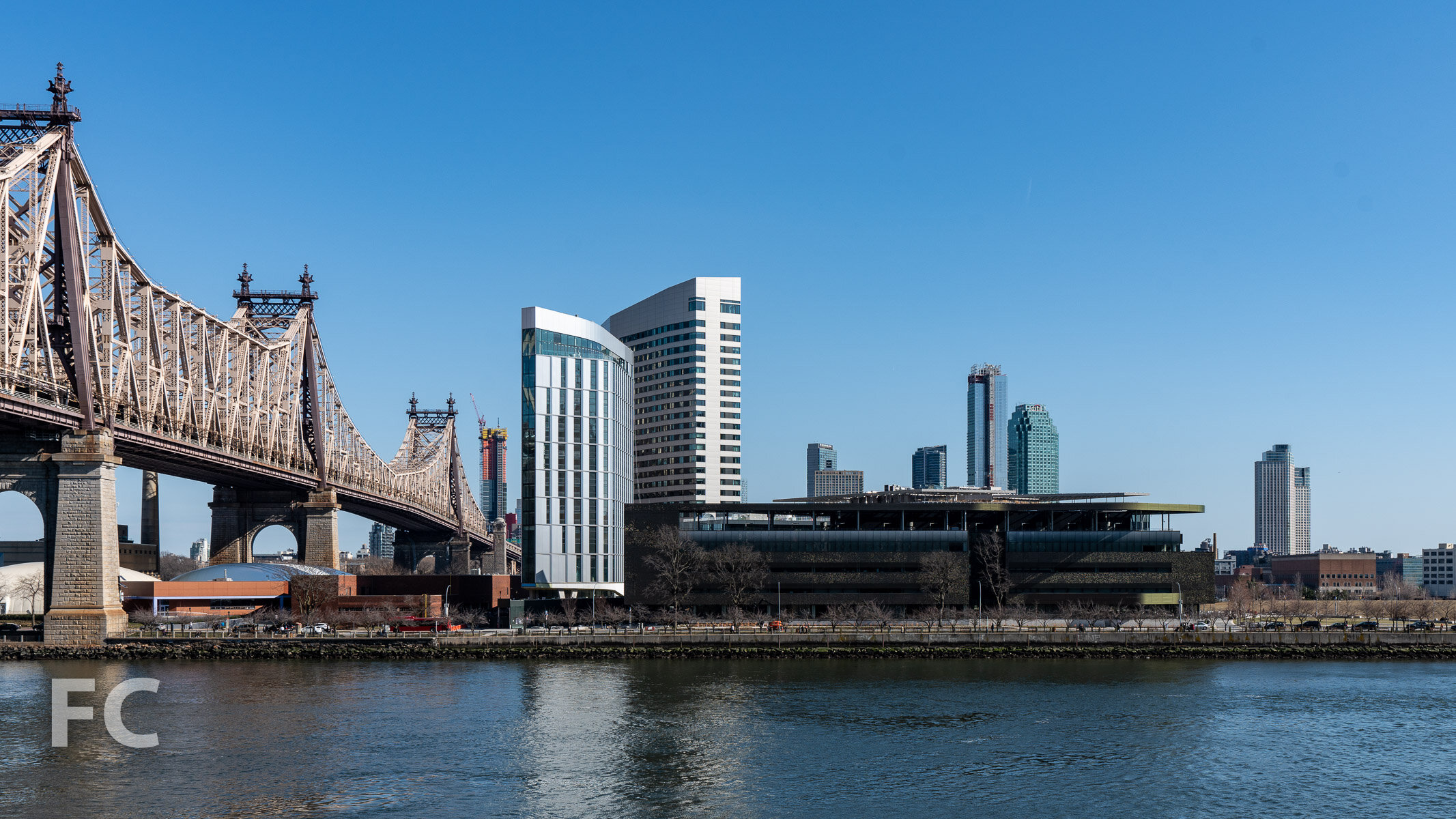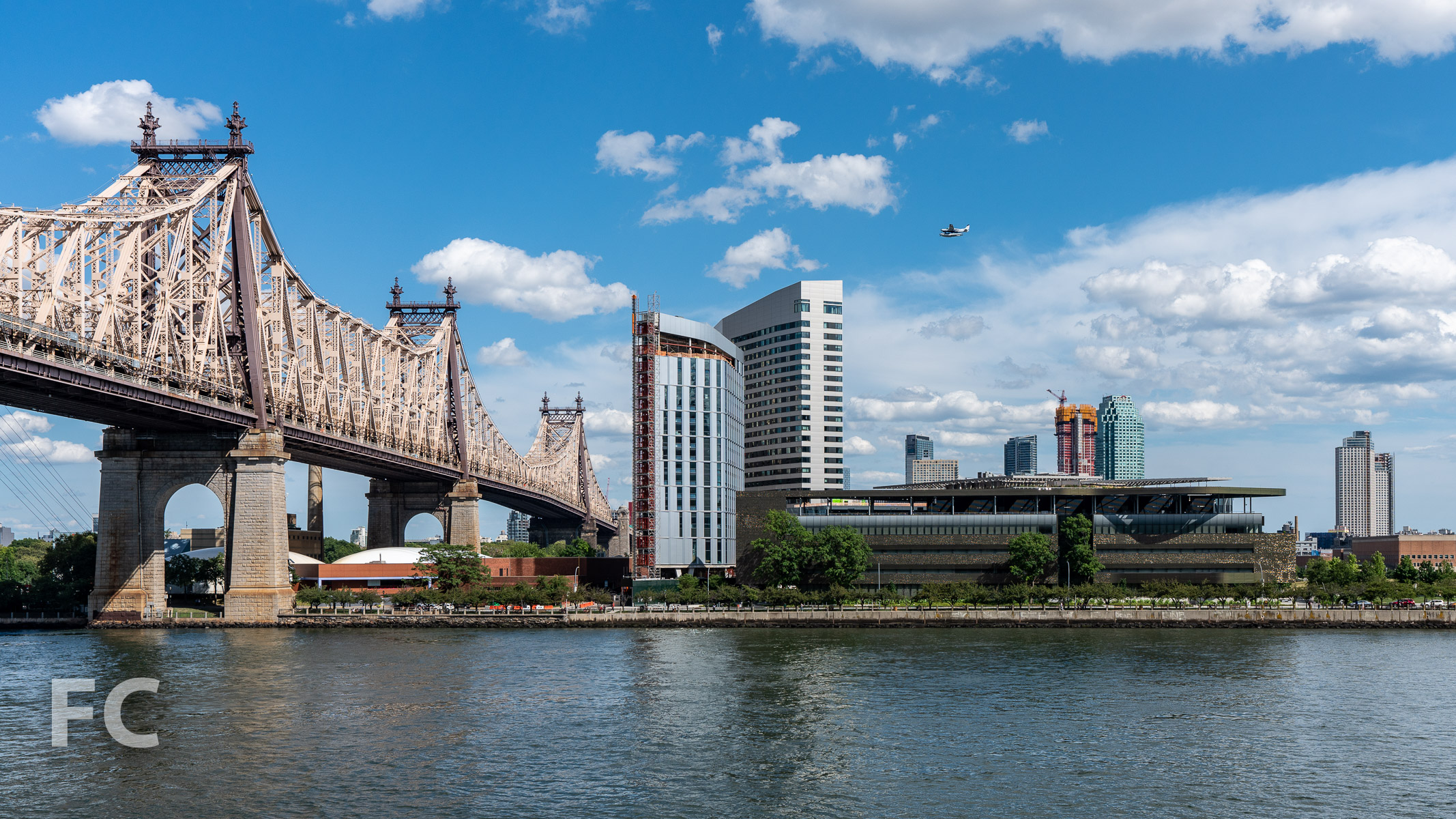
Construction Tour: 77 Greenwich Street - Jolie
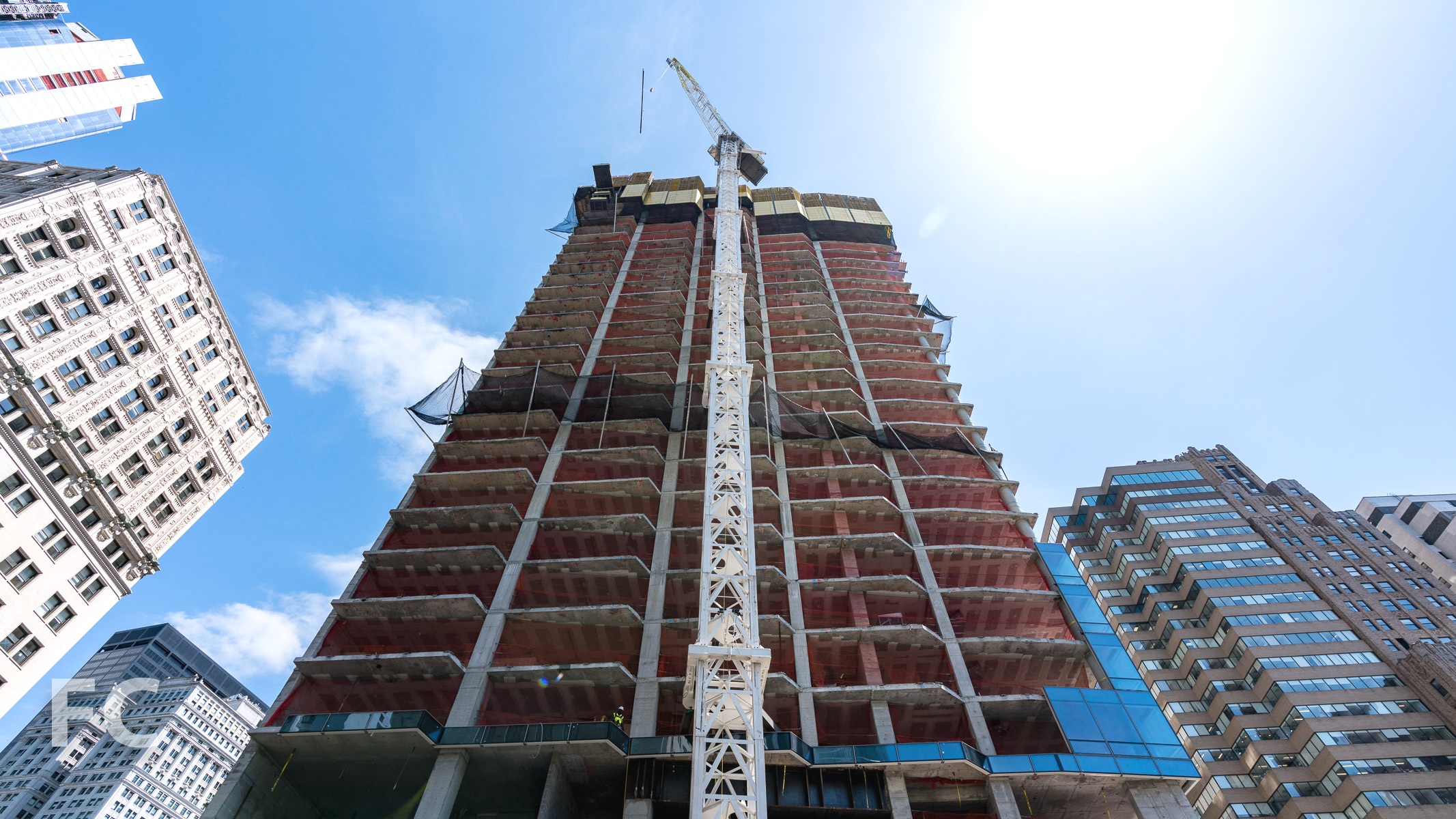
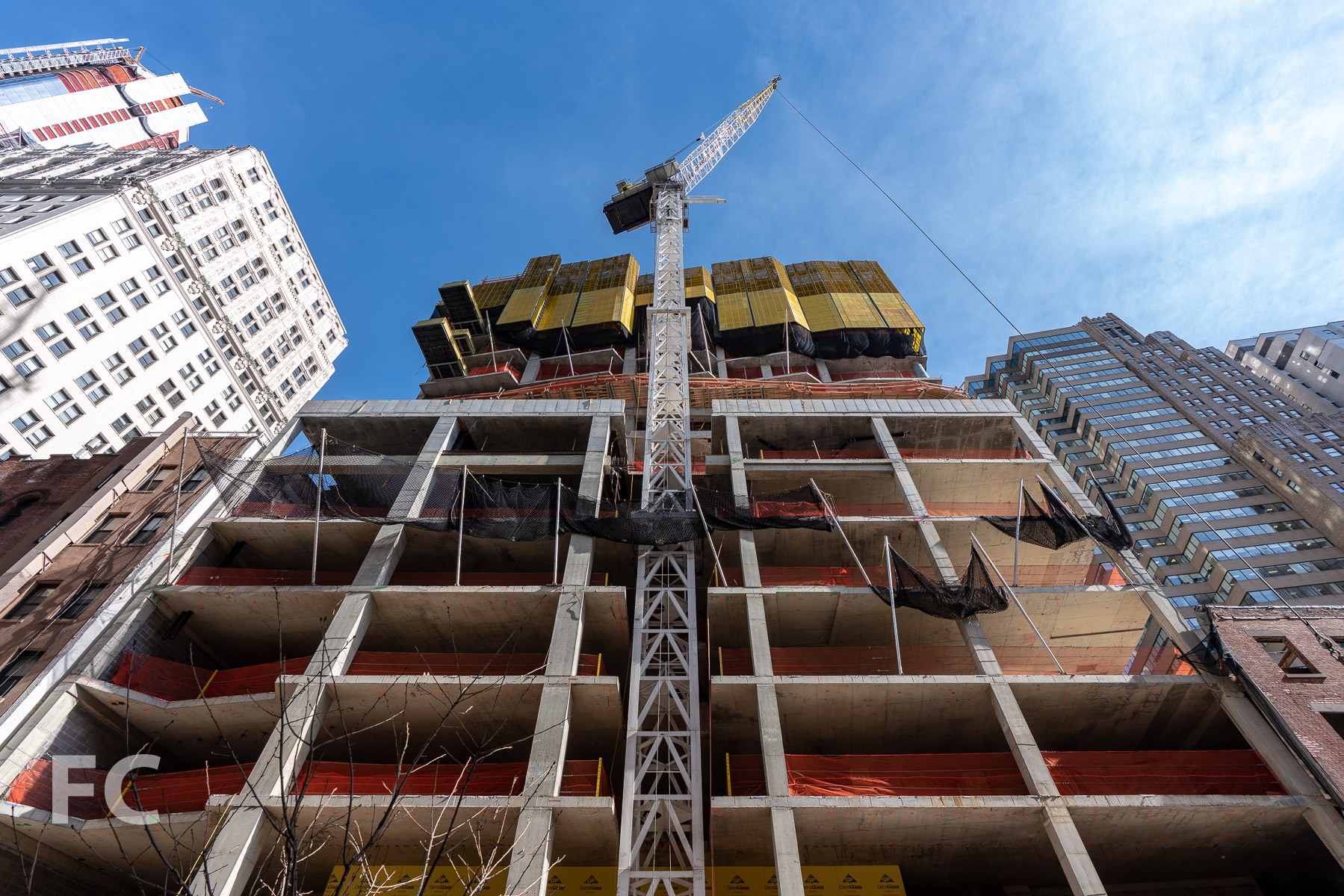
Amenity spaces have completed at Trinity Place Holdings’ 77 Greenwich, a 42-story residential condo tower in the Financial District. FXCollaborative led the exterior design of the 500-foot tall tower, with interiors by Deborah Berke Partners. The base of the tower houses a new elementary school that incorporates the renovated Robert and Anne Dickey House, a landmark structure built in 1810.
Starting 150 feet above street level, the residential portion of the tower offers 90 residences ranging from 1 to 4 bedrooms. A pleated glass curtain wall clads the tower and offer views of Lower Manhattan and the harbor.
Rooftop Amenities and Views
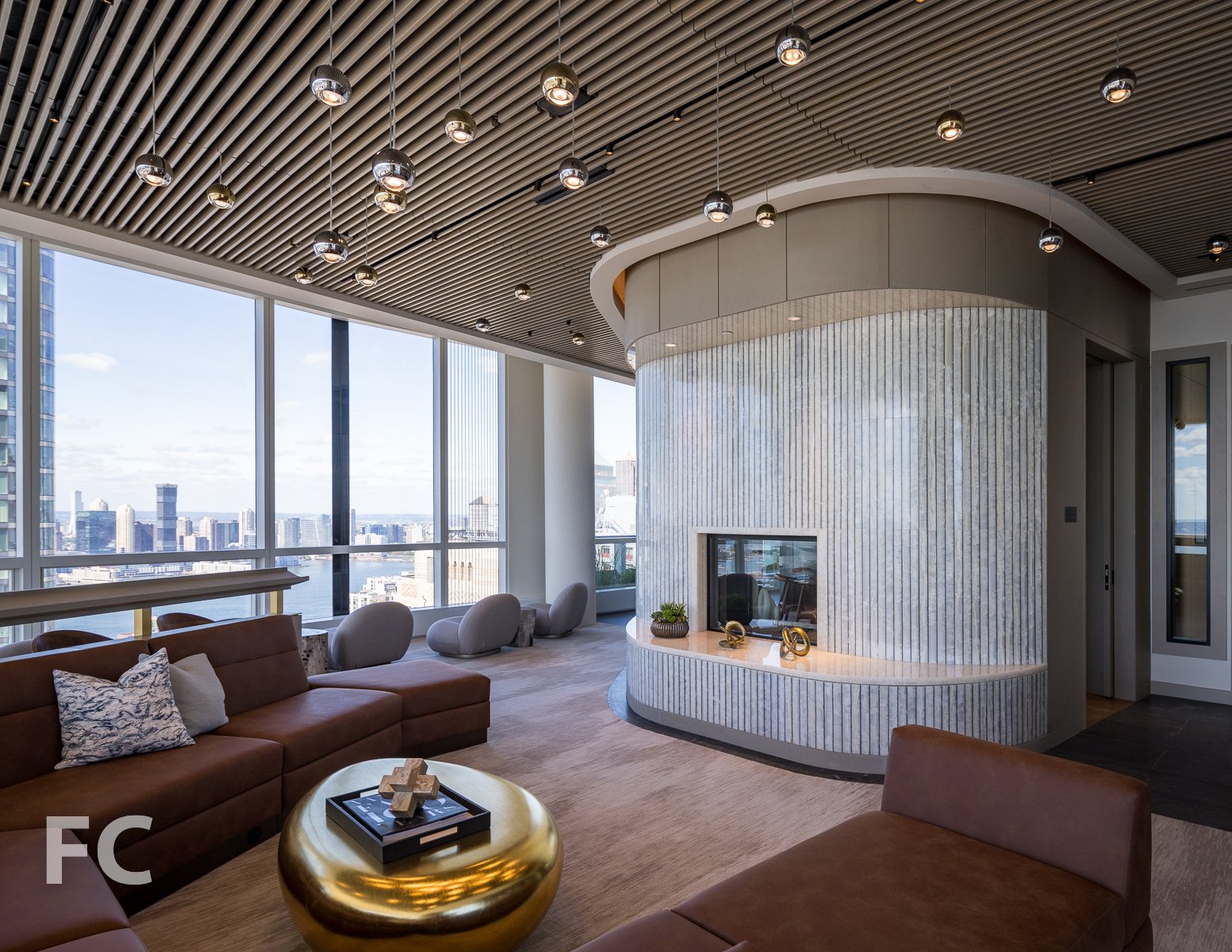
Residents have access to Cloud Club 77, an amenity package that includes a penthouse club level, residents lounge and private dining room with a catering kitchen, children’s playroom, a double height fitness center, and two outdoor terraces.
View west towards Battery Park City and Jersey City from the top floor.
View south towards Battery Park and the New York harbor from the top floor.
Architect: FXCollaborative; Interiors: Deborah Berke Partners; Developer: Trinity Place Holdings; Program: Residential, School, Retail; Location: Financial District, New York, NY; Completion: 2021.
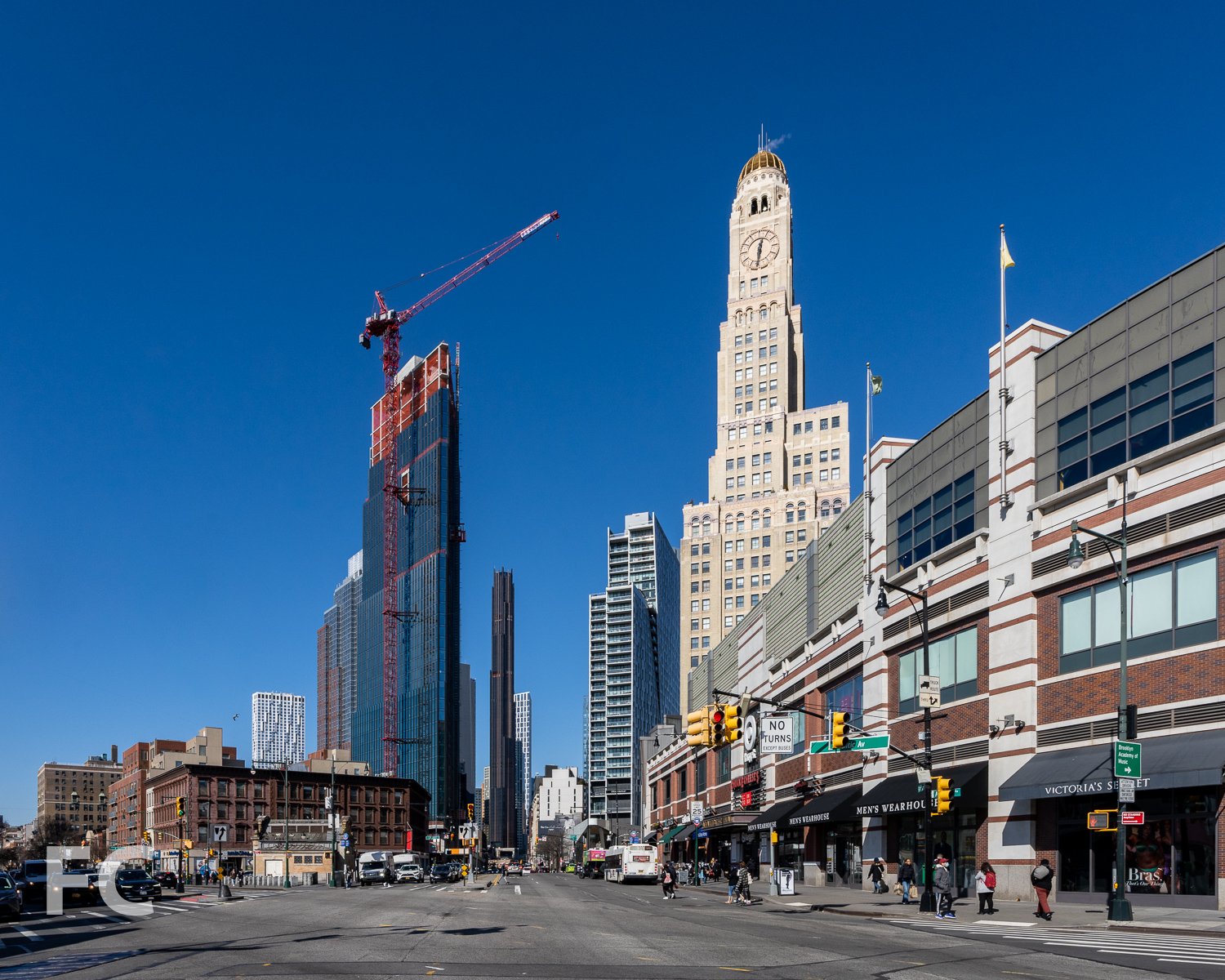
Construction Update: 505 State Street
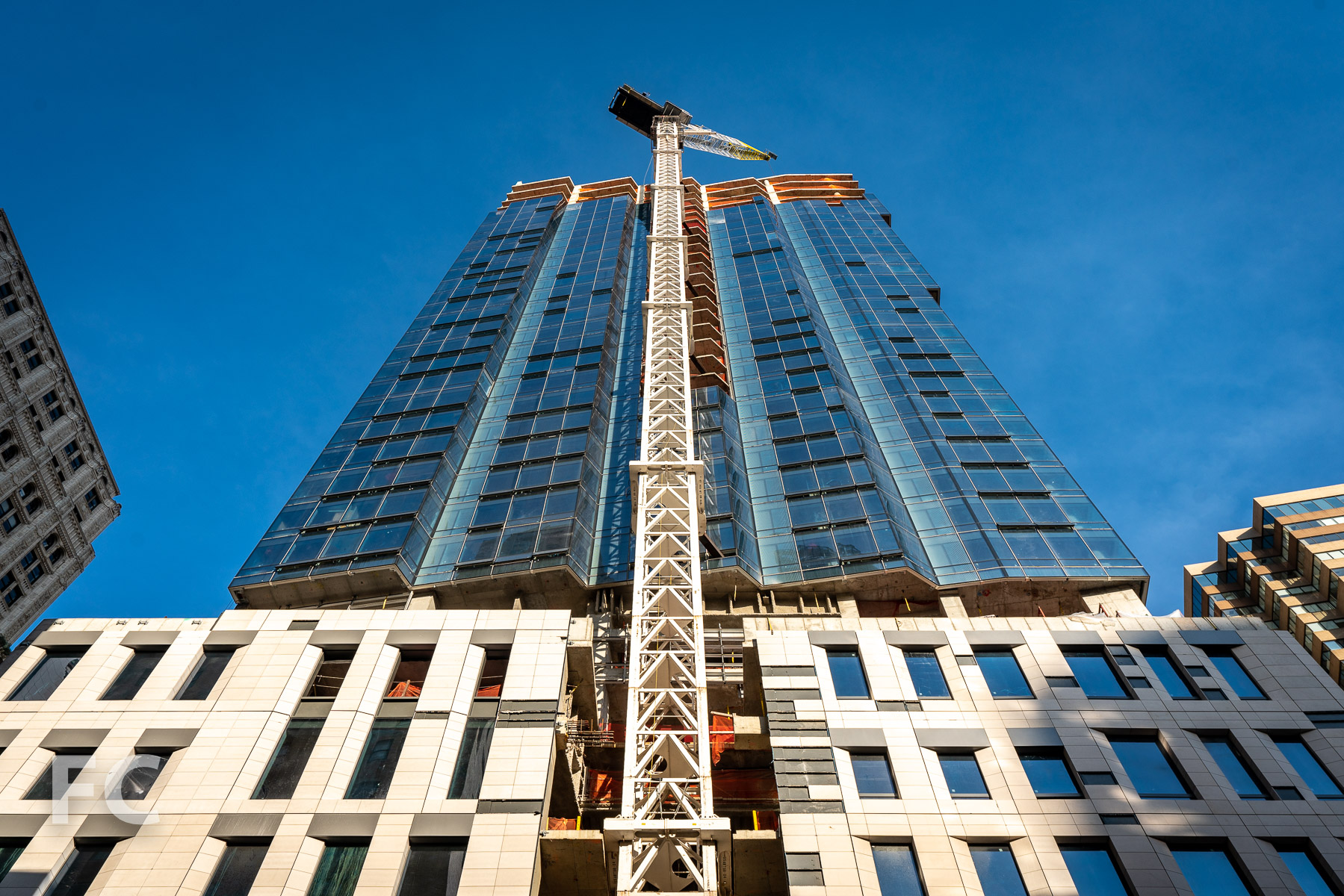
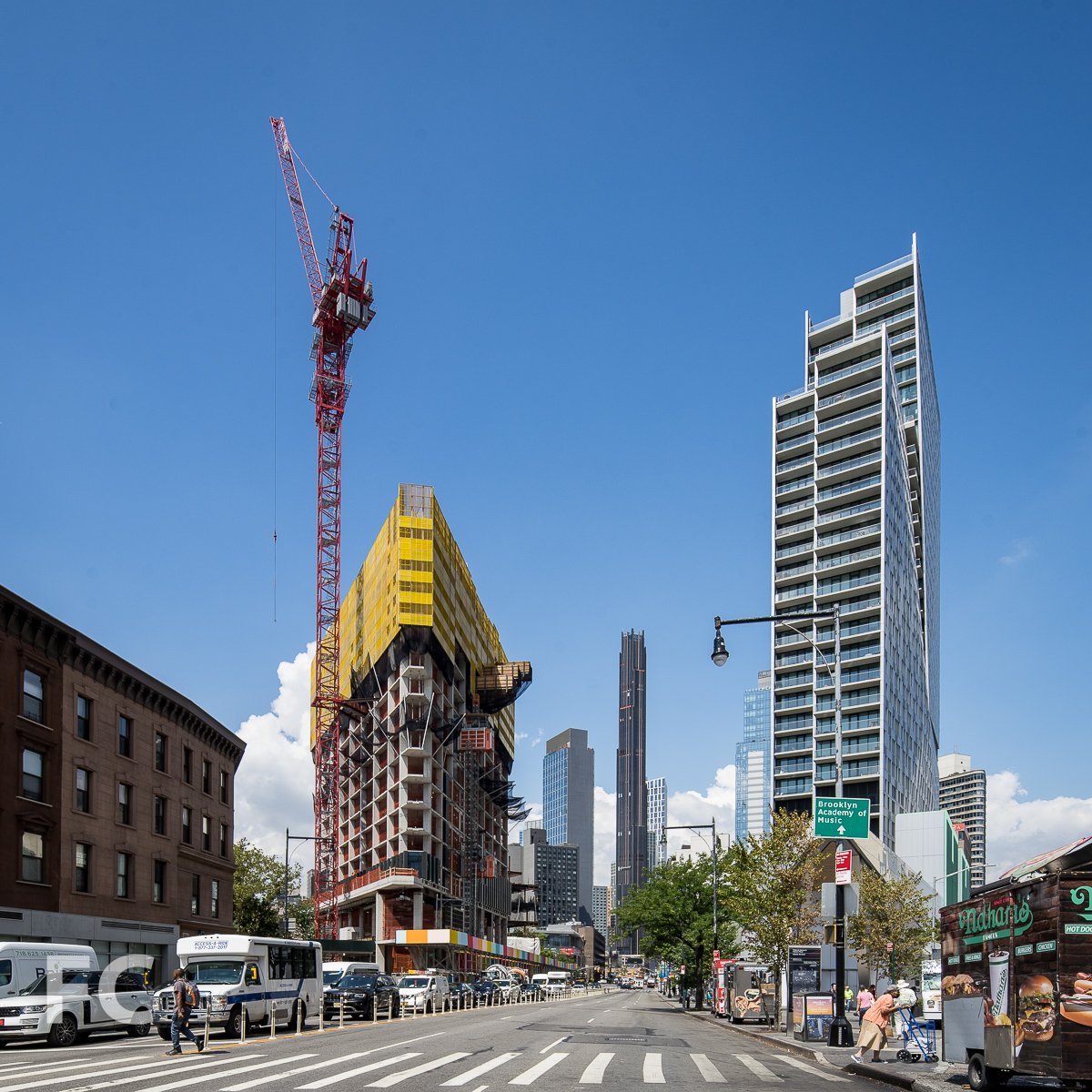
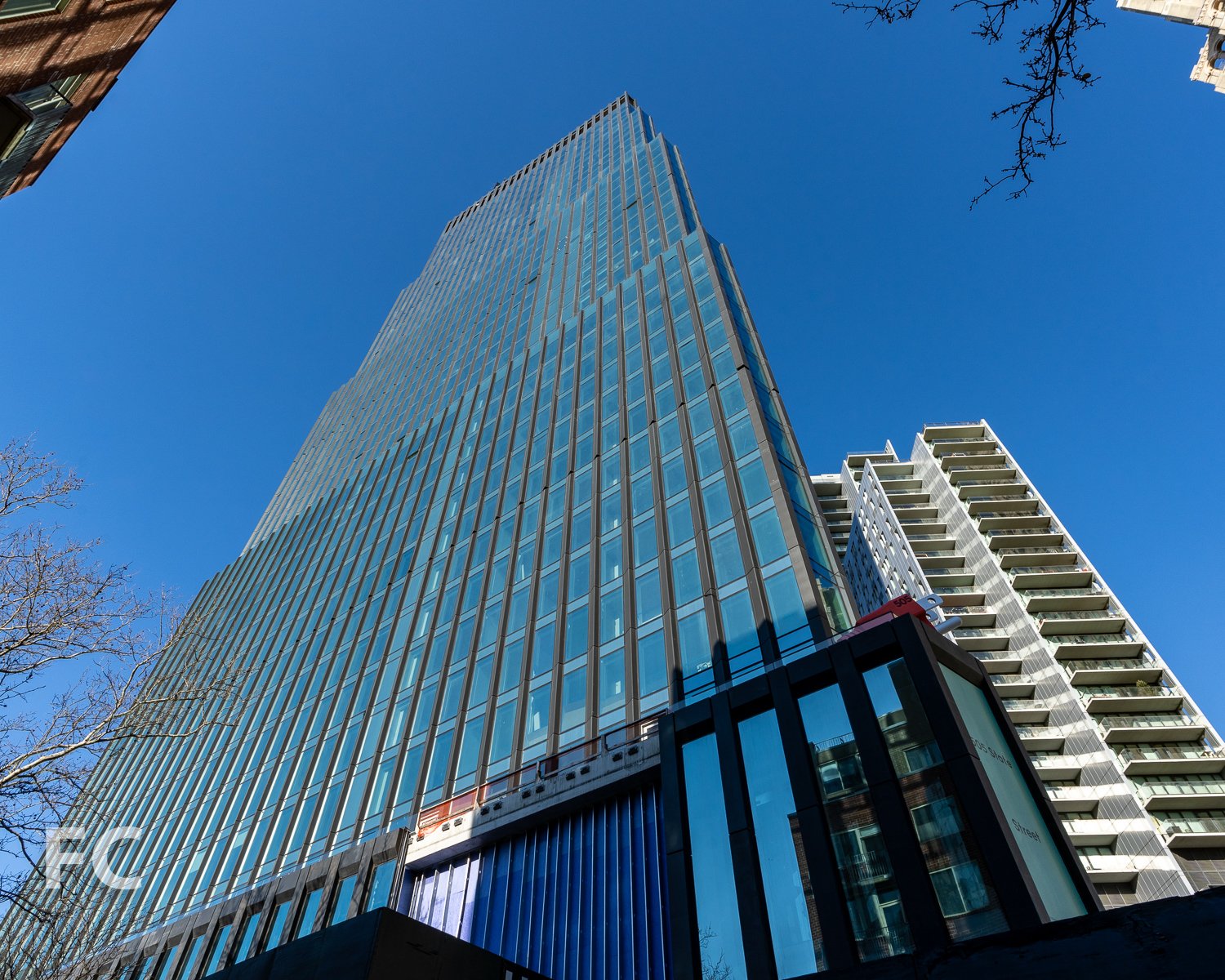
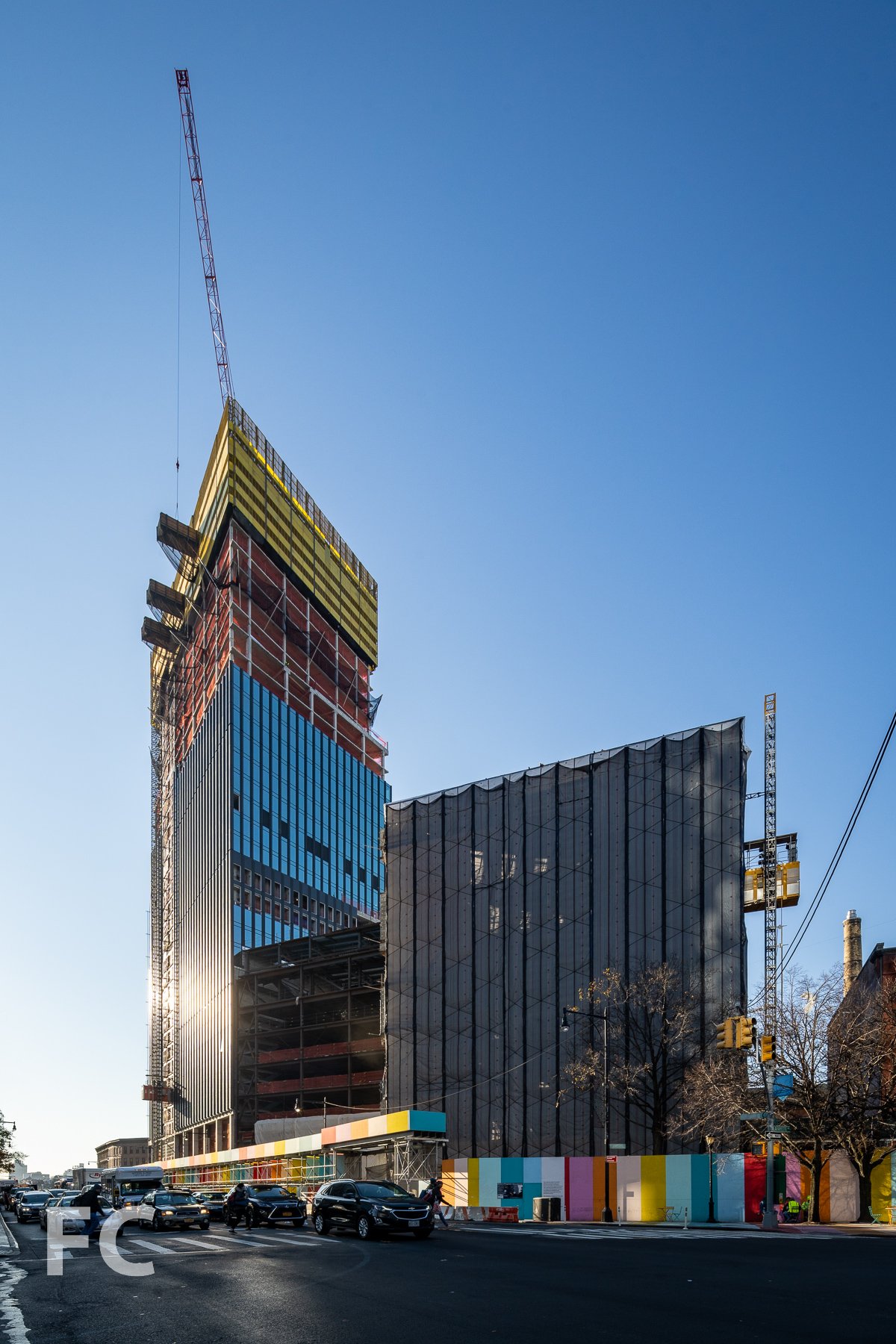
Curtain wall installation is underway at Alloy’s 505 State Street residential tower in Downtown Brooklyn. Designed and developed by Alloy, the tower is the first of two that will rise on the block. It will be the city’s first all-electric tower, using electricity instead of oil or gas to power, heat, and cool the 440 residential rental units.
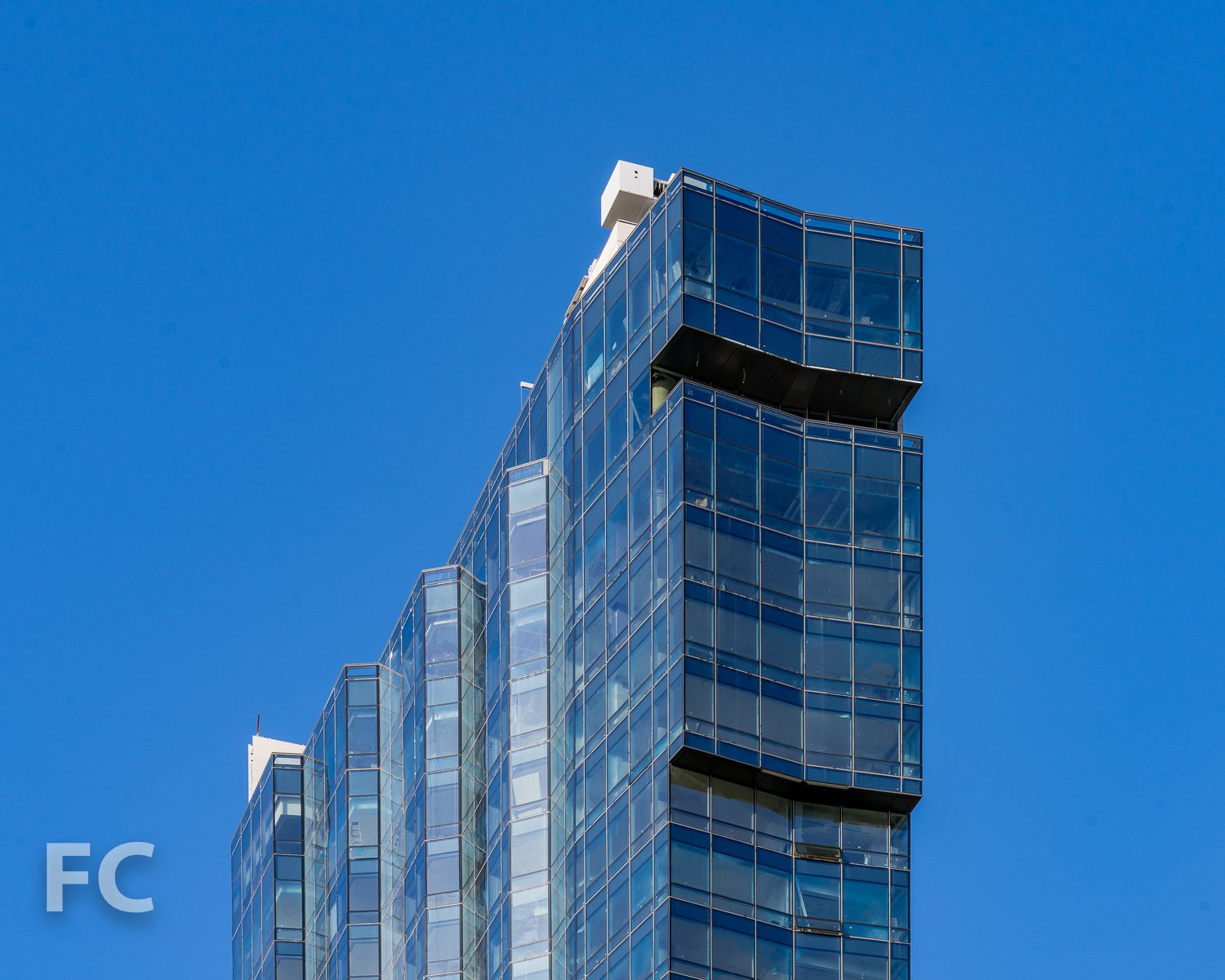
The first tower, 505 State Street, sits at the southern end of the triangular block and takes its flatiron massing form from the block’s shape. Curtain wall clad’s the tower with panels that include a large glass pane and a vertical shaped pier.
Alloy is also developing two public schools, the city’s first to be designed to Passive House standards, at the center of the site. ARO is leading the design of the two schools, which will be clad in brick. Steel superstructure is rising for the first of the two schools.
Design Architect: Alloy, ARO (Schools); Executive Architect: Ismael Leyva Architects (Schools); Structural Engineers: Silman (Residential Tower, Schools), MKA (Residential Tower); MEP Engineer: Cosentini (Residential Tower, Schools); Interiors: INC Architecture (Residential Tower); Developer: Alloy; Program: Residential, Retail, Public Schools; Location: Boerum Hill, New York; Completion: 2024 (First Residential Tower).
Columbia University Business School
Diller Scofidio + Renfro / FXCollaborative · Morningside Heights · 2022
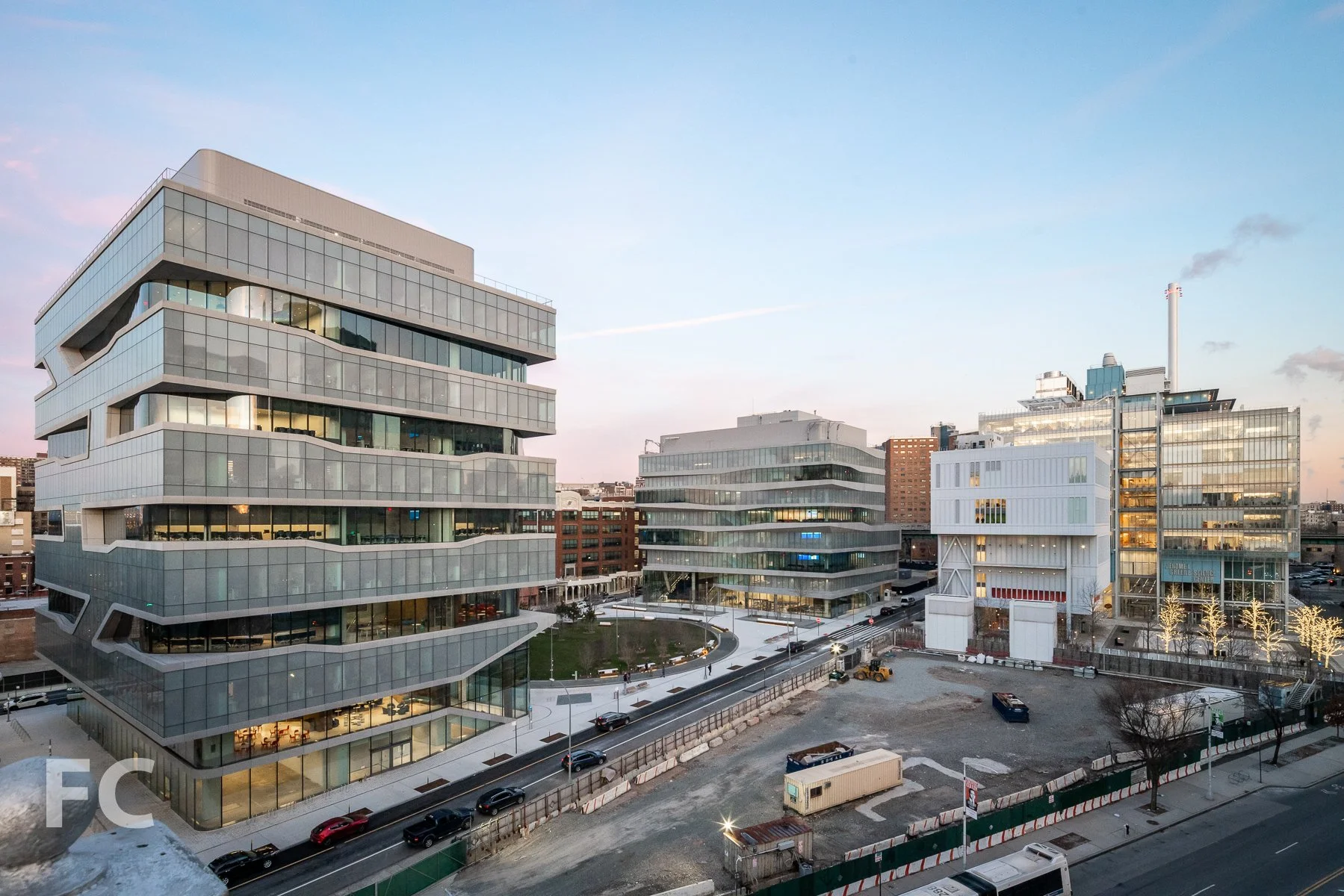
Southwest corner of Kravis Hall (left) and Geffen Hall (right).
A new home for the Columbia Business School has opened at the university’s Manhattanville campus in West Harlem. The Business School’s two new structures, the 8-story David Geffen Hall and 11-story Henry R. Kravis Hall, are located on a site to the north of the first phase buildings by Renzo Piano. Totaling approximately 492,00 square feet, the two new buildings double the school’s current square footage. Design on the two buildings is led by Diller Scofidio + Renfro with FXCollaborative and associate architects Aaris Design Architects.
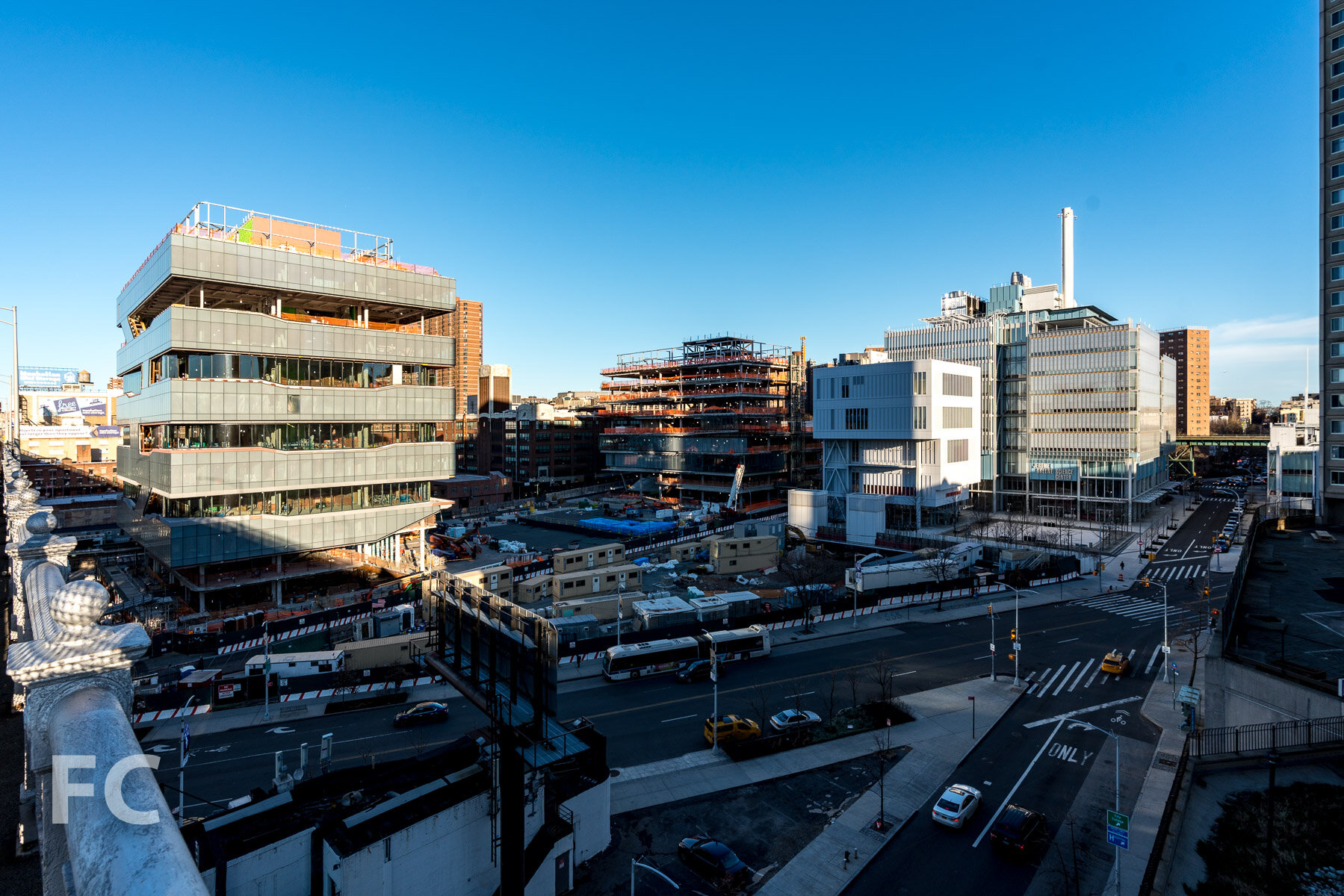
Looking northeast towards the Manhattanville campus, including the Business School (left), the Lenfest Center for the Arts (right), and the Jerome L. Greene Science Center (far right).
James Corner Field Operations have designed a 40,000 square foot central open space which the two buildings bookend.

Northwest corner of Geffen Hall (center) and Kravis Hall (right).
Henry R. Kravis Hall
East facade of Kravis Hall at sunset.
Kravis Hall features two generous circulation stairs, located at the east and west facades, which link together alternating floors of faculty offices and teaching spaces. Known as The Network, these stairs link lounges, seminar spaces, open-breakout, tiered seating, carrels and informal hang-out spaces at the east facade. A faculty version of The Network is located along the west facade and offers views of the Hudson River. Both circulation stairs also act as vertical structure elements.
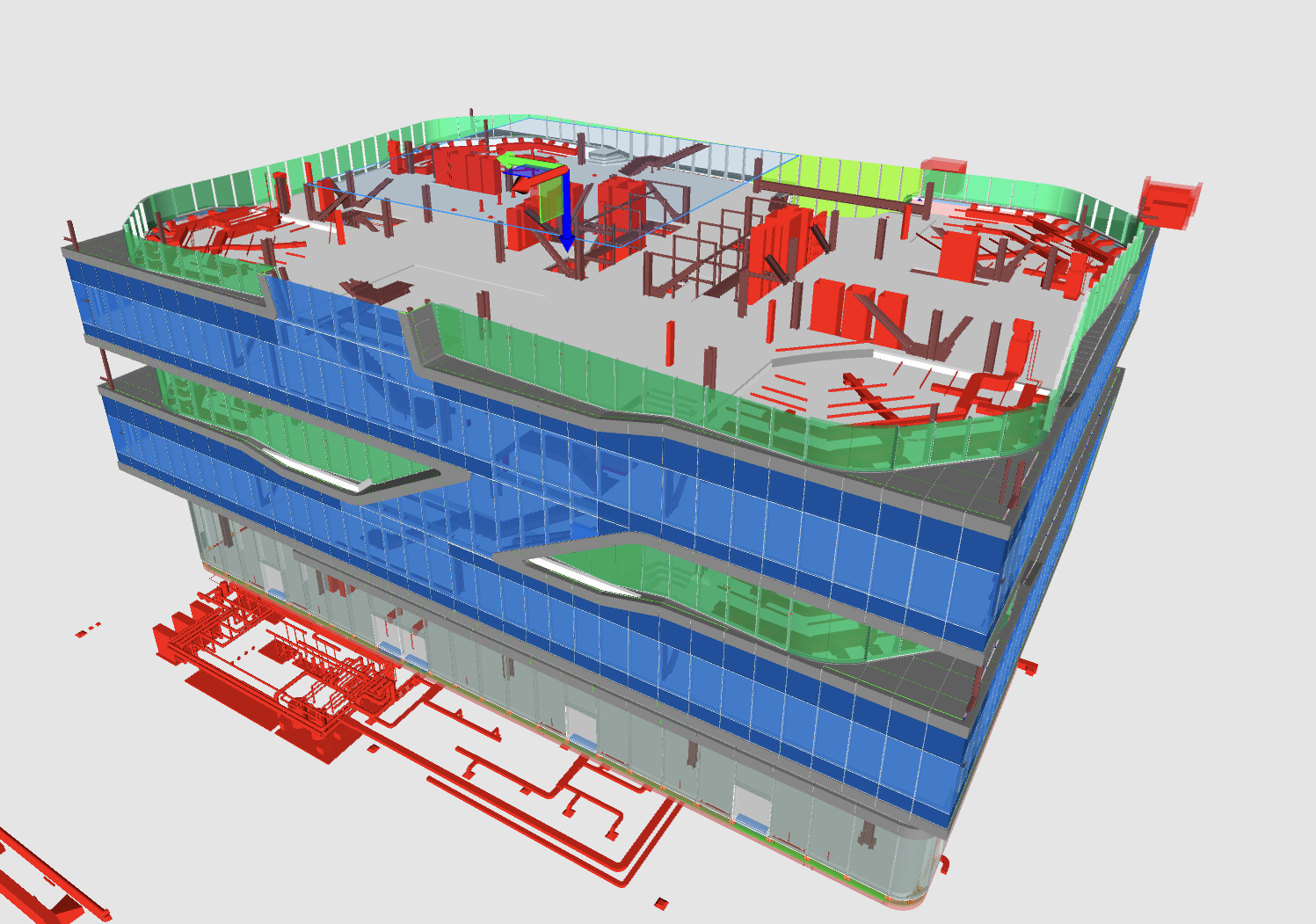
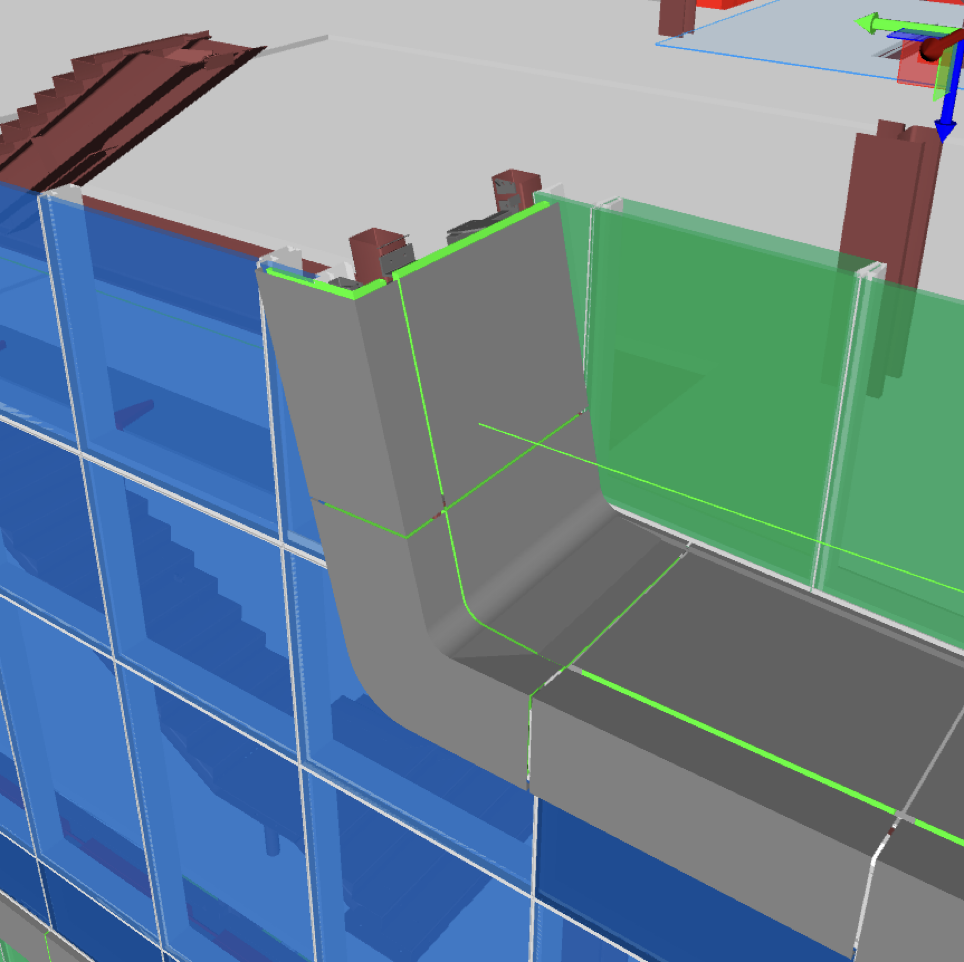
The exterior wall, fabricated by Intercom Facades and AZA US (Former AZA-INTERCOM Corporation) with W&W Glass, is designed to express the interweaving of student, faculty, and administrative program. Transparent glass encloses student floors, the Network circulation spaces, and ground floor program. Faculty floors are clad in GFRC (glass fiber reinforced concrete) slab covers and fritted glass that contrasts with the more transparent student spaces. The building’s structure uses “skip truss” steel framing on alternating faculty floors to achieve nearly column-free classrooms.
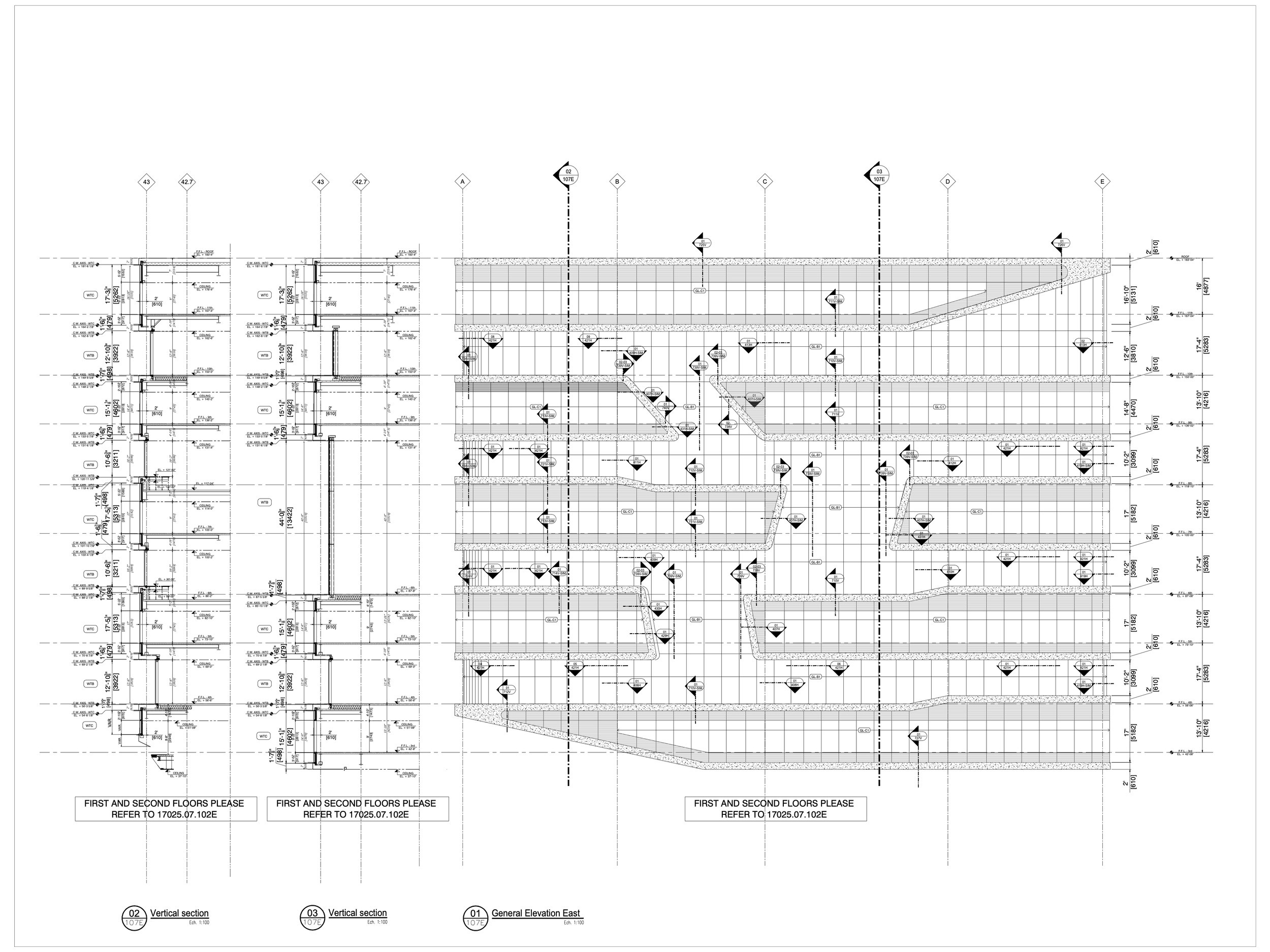
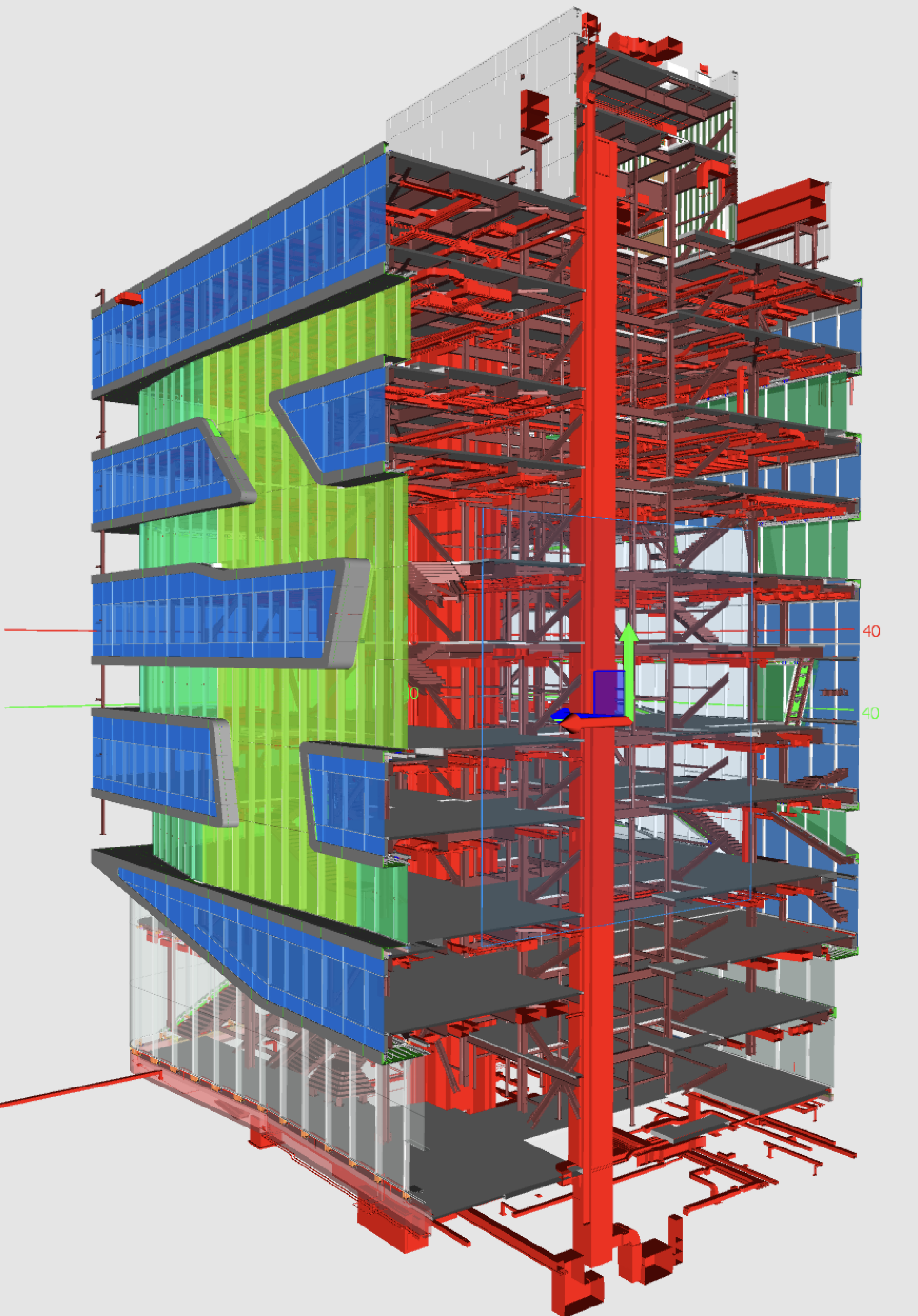
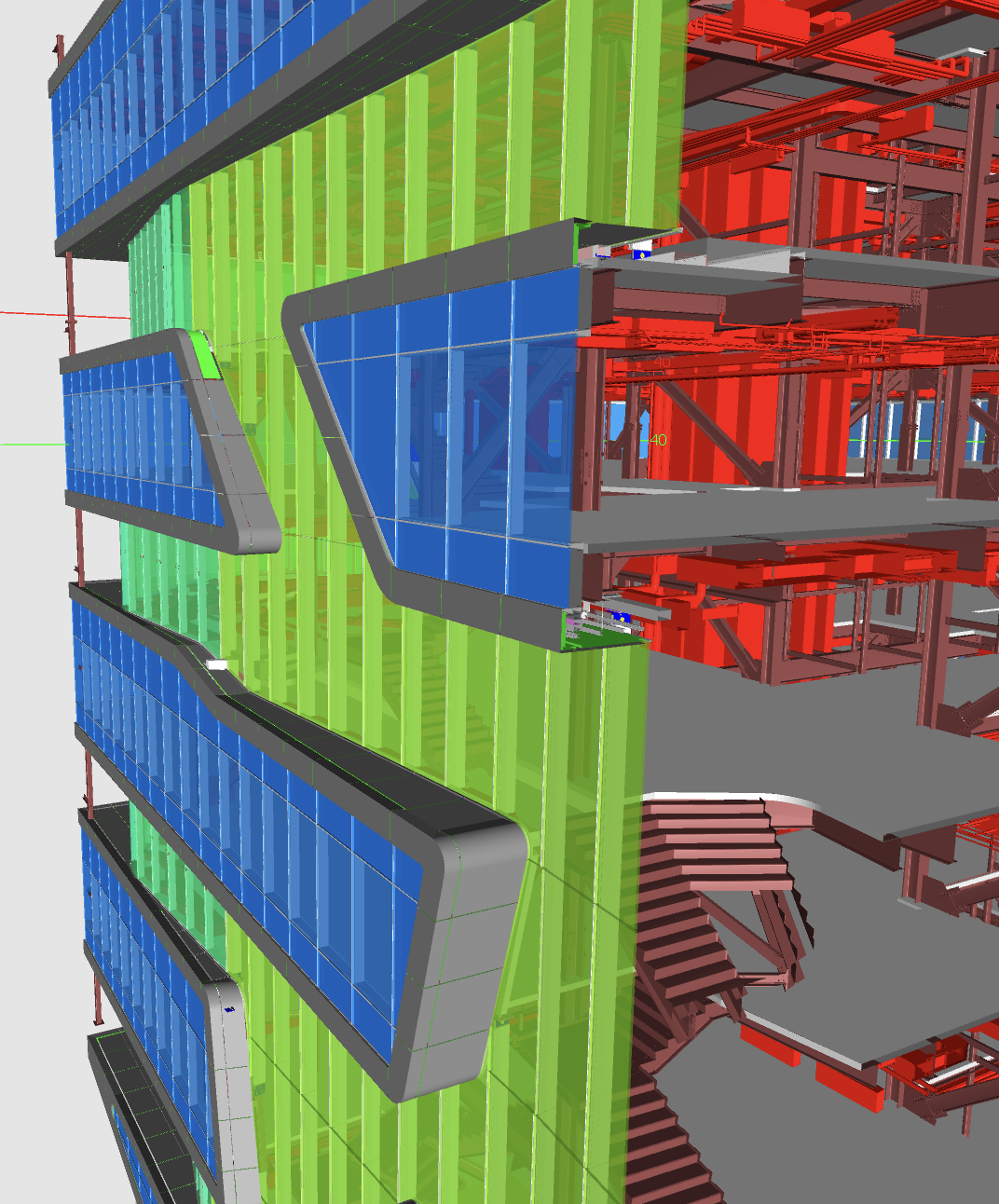
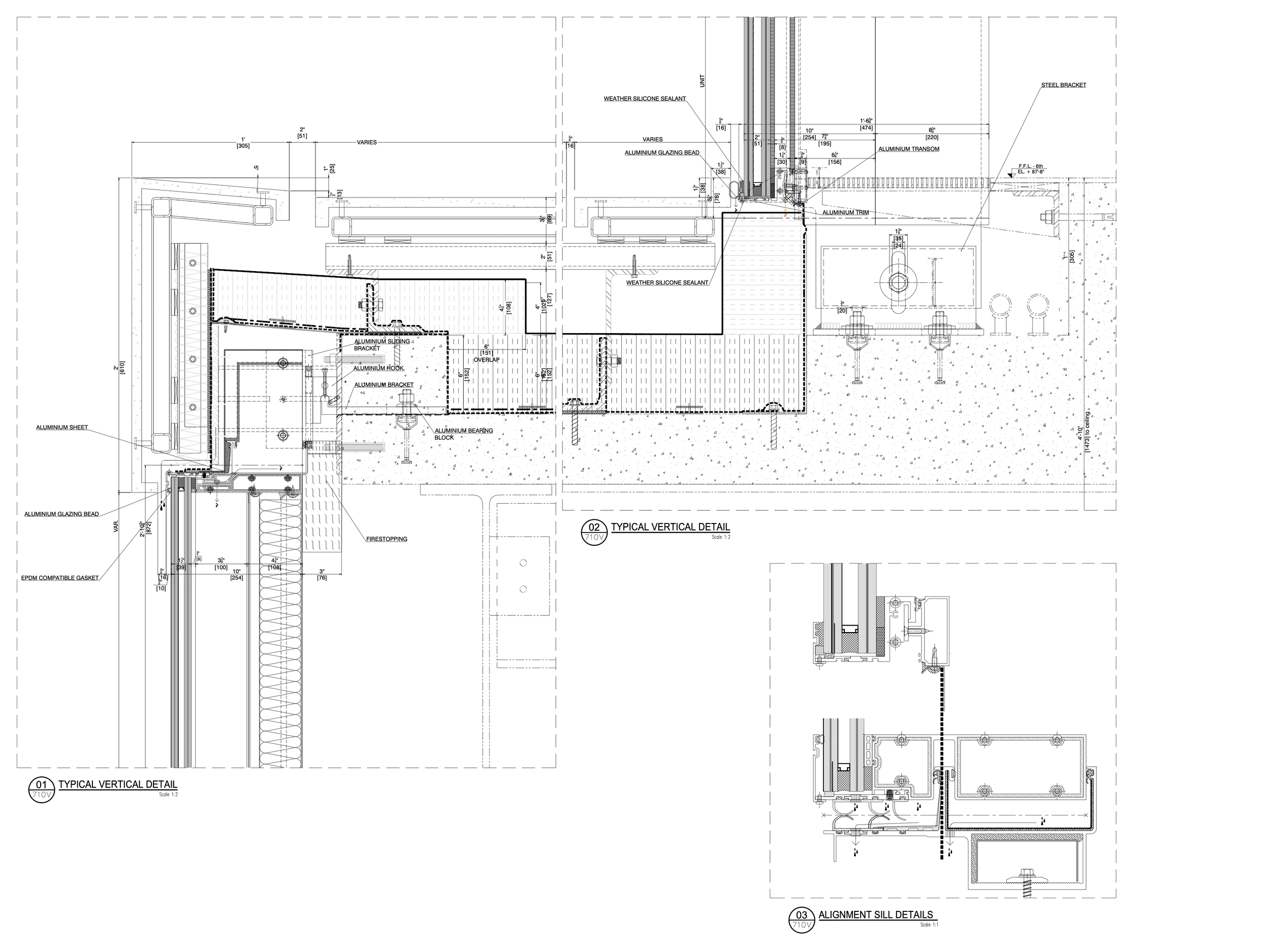
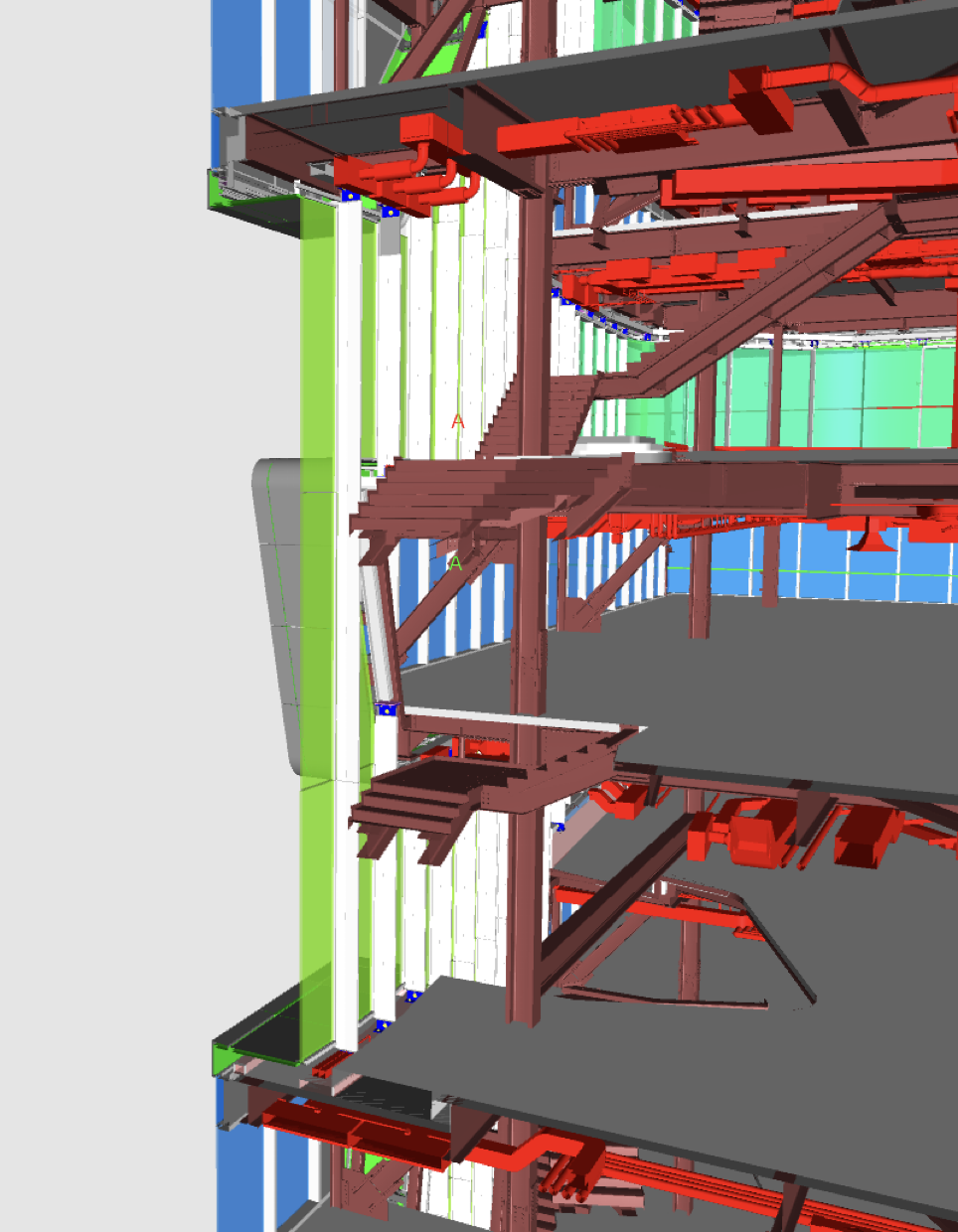
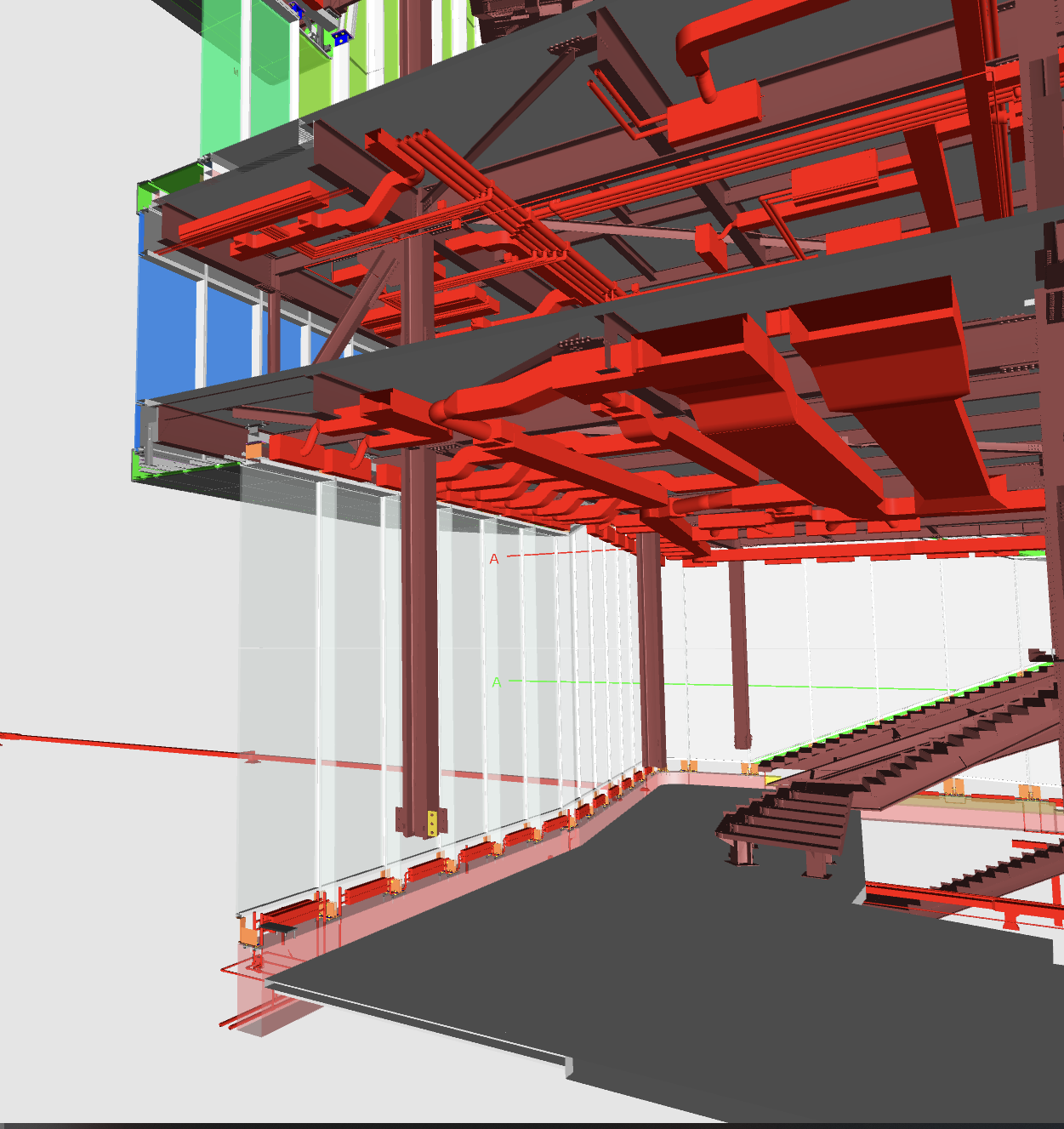
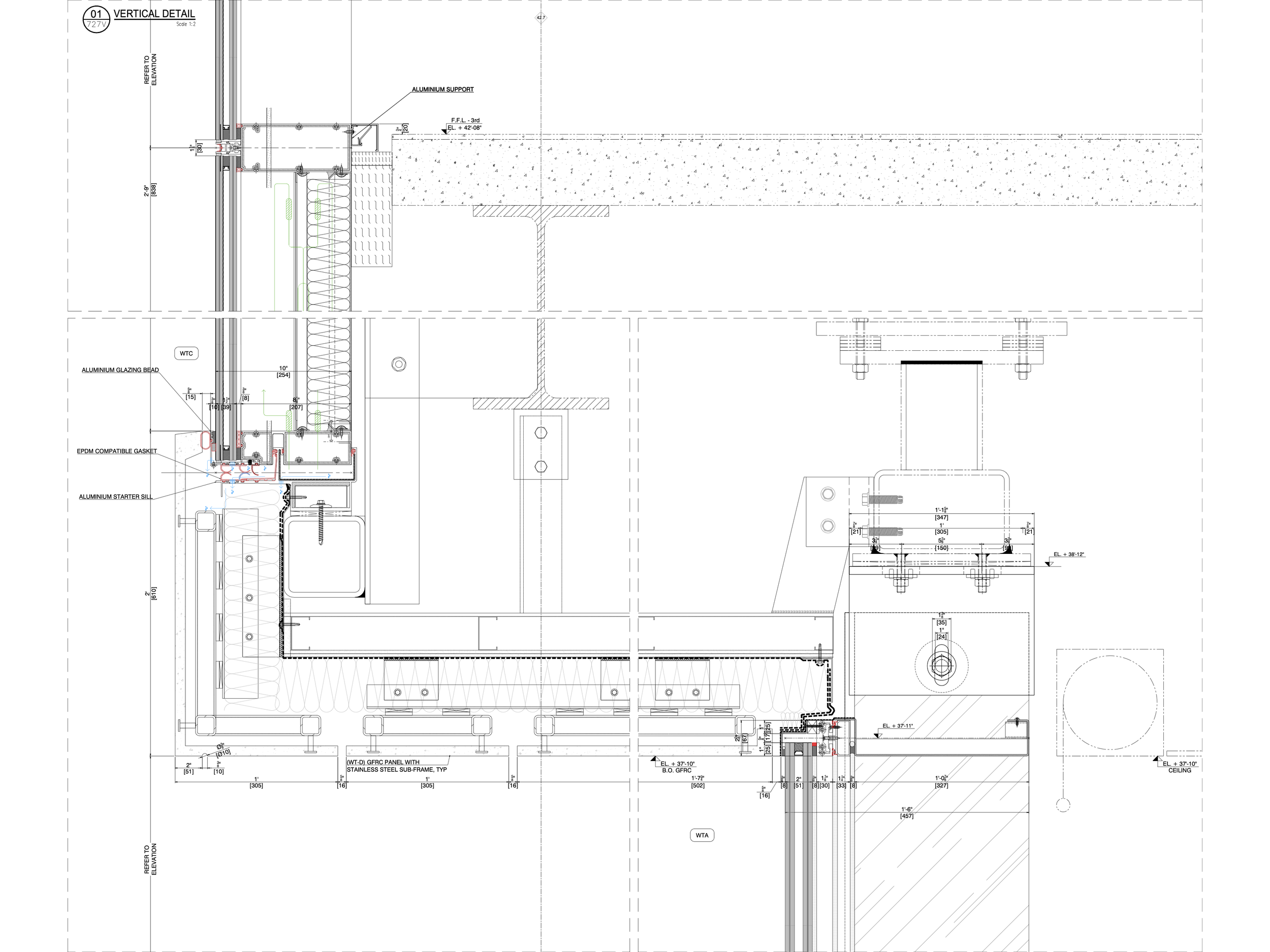
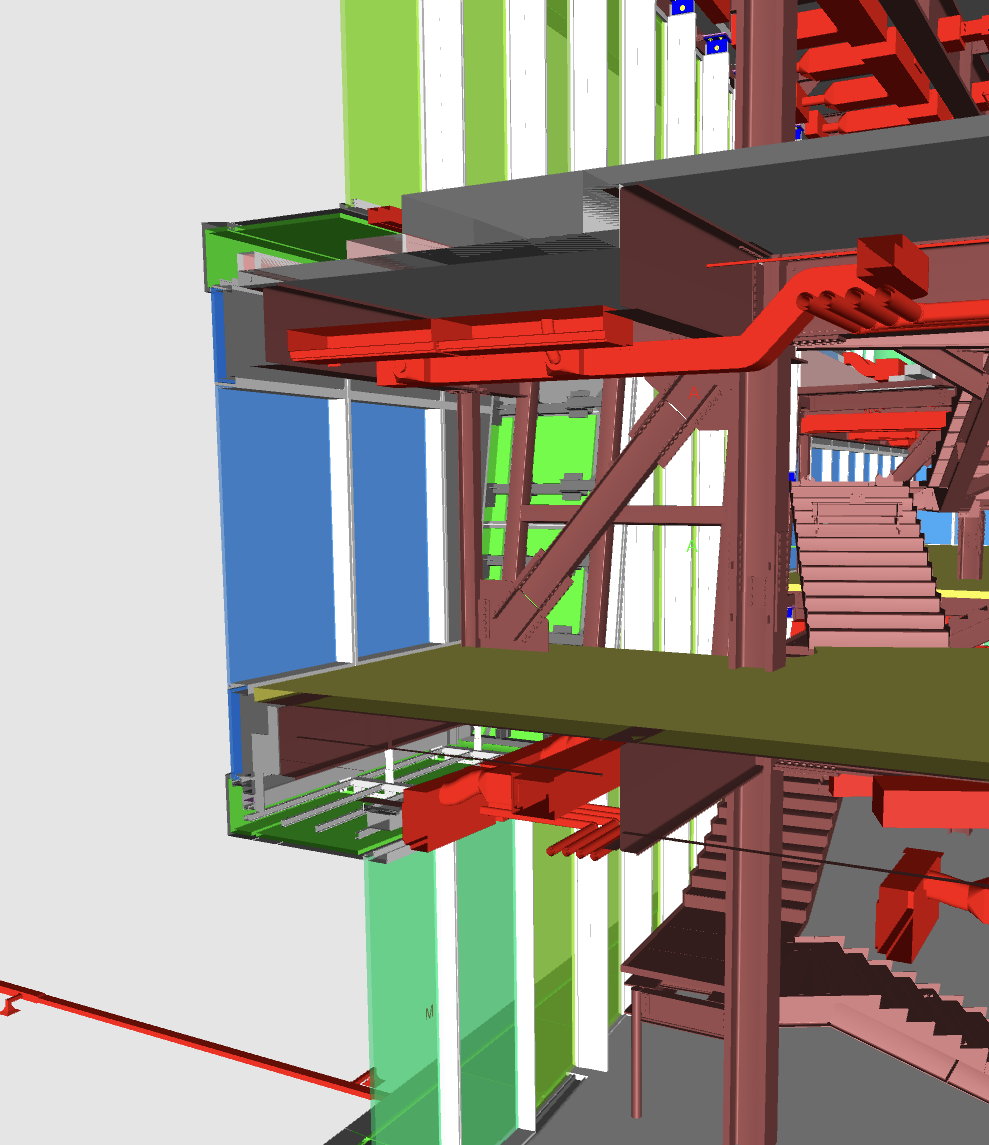

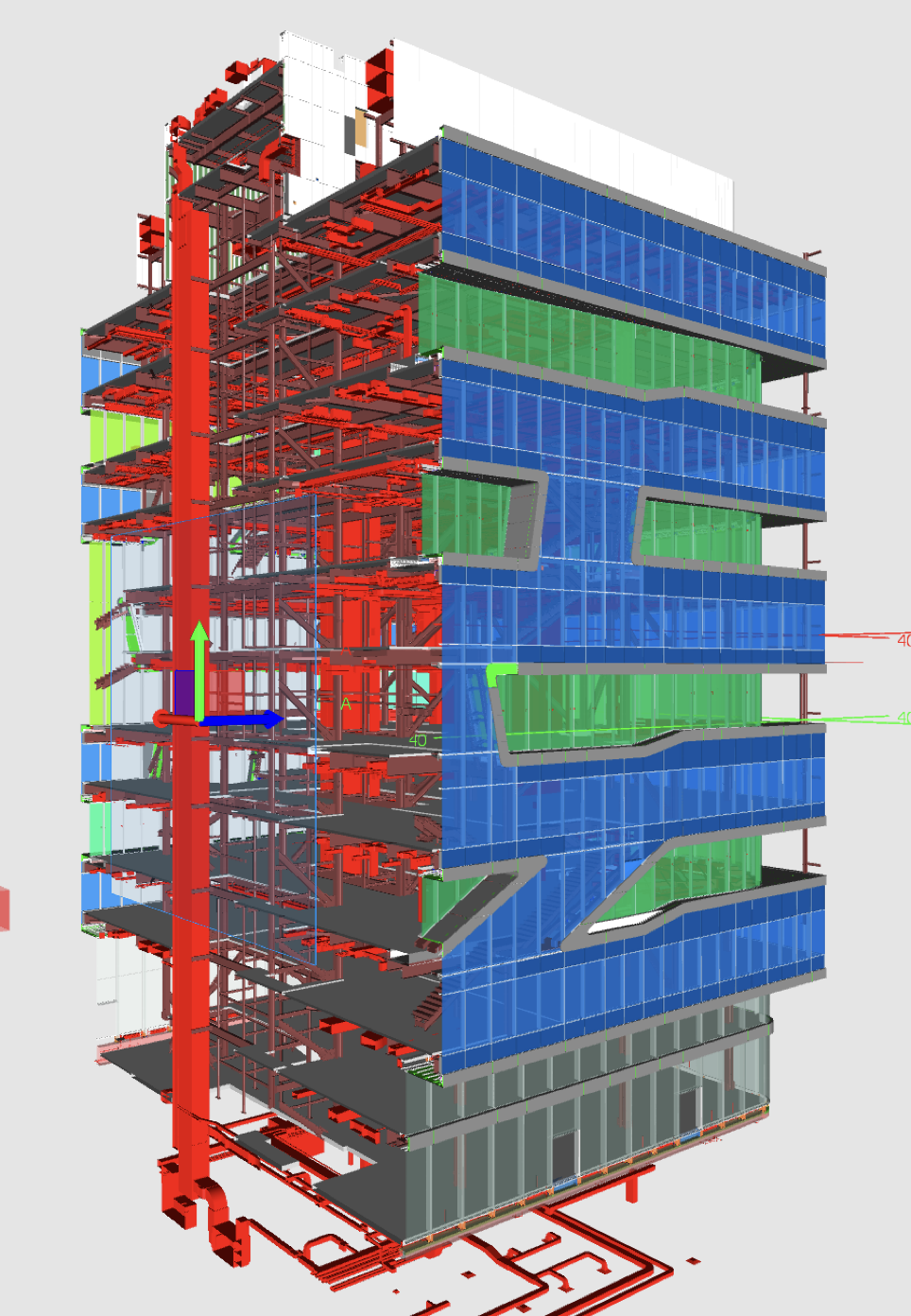
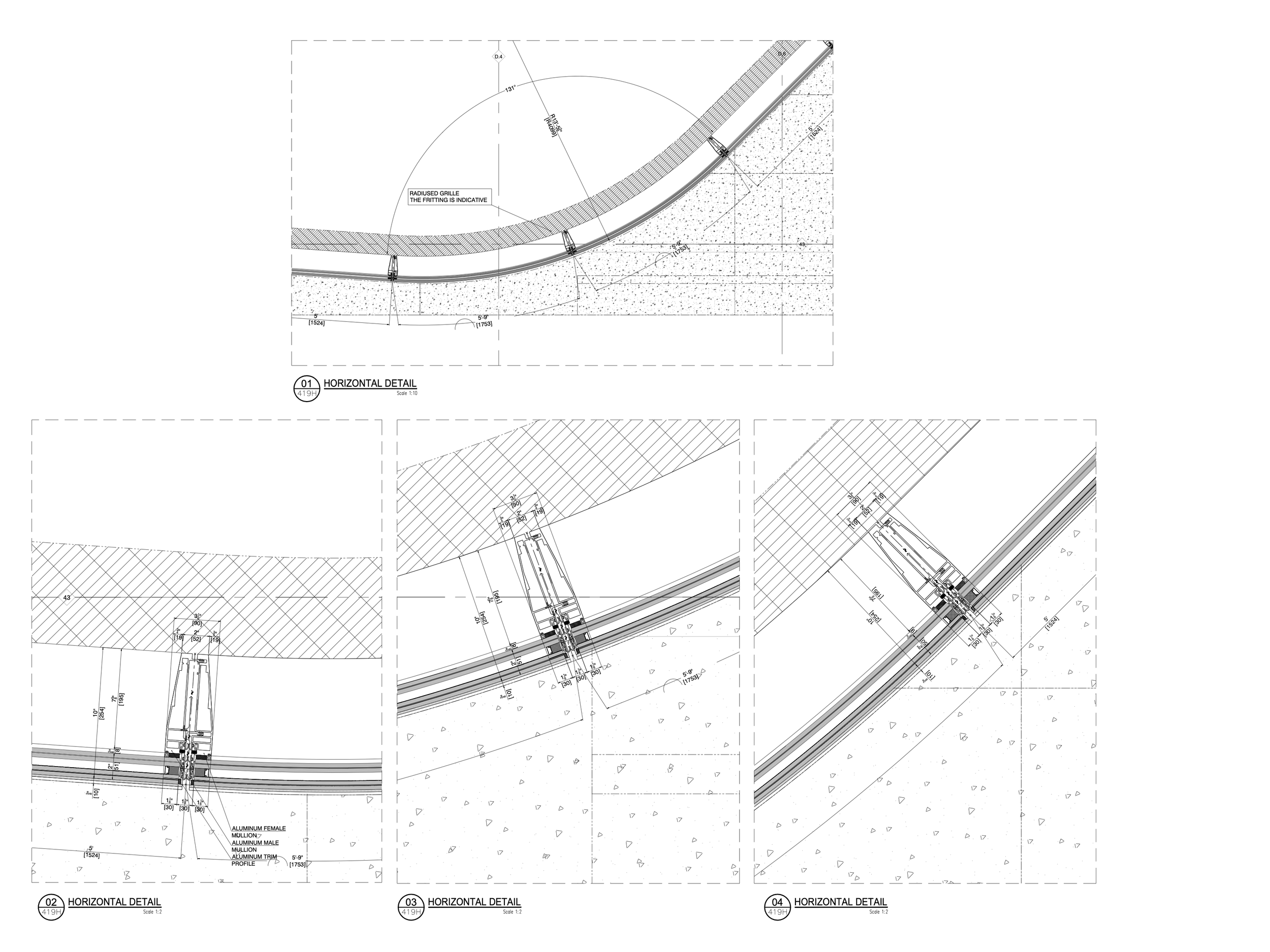
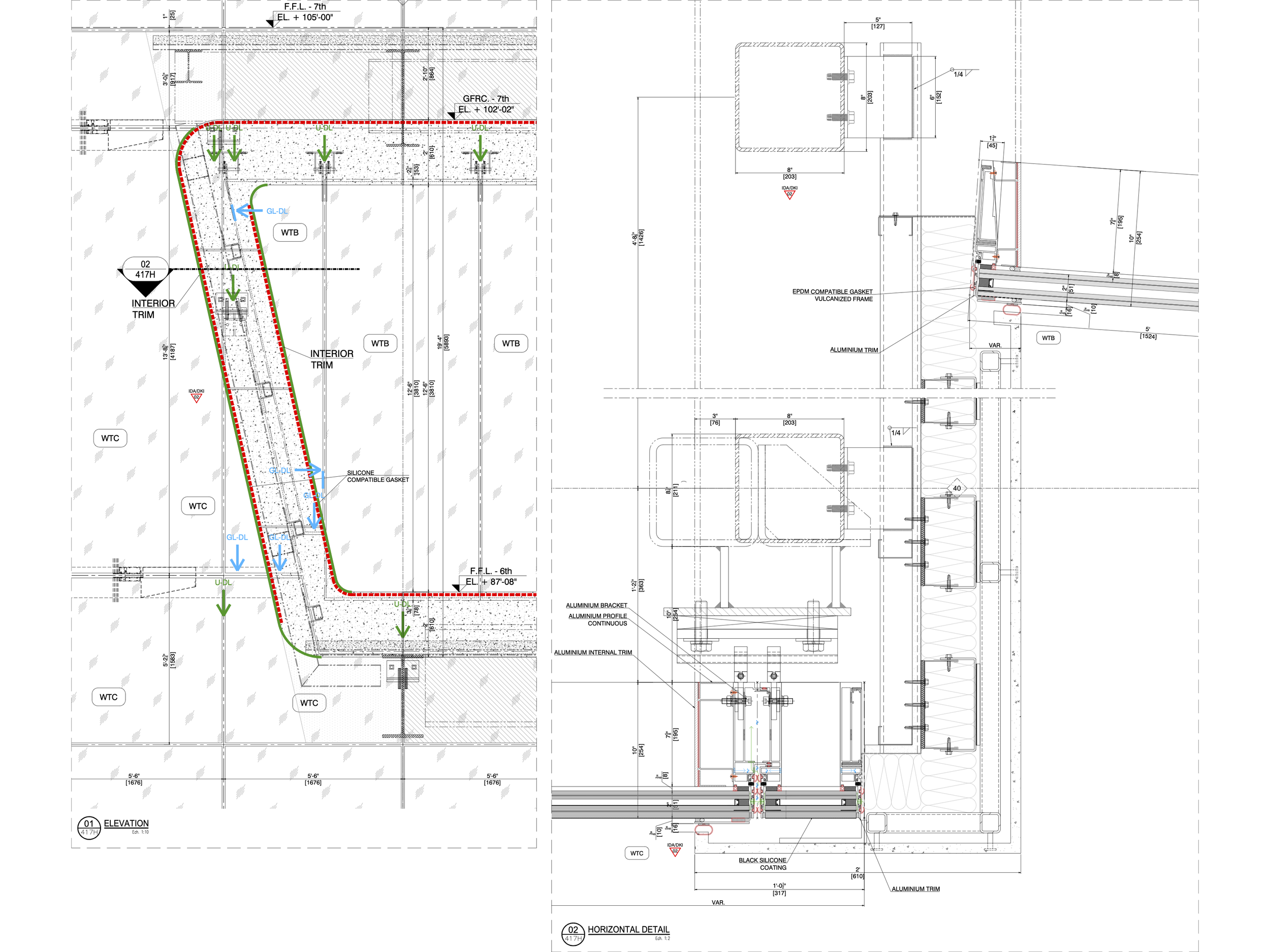
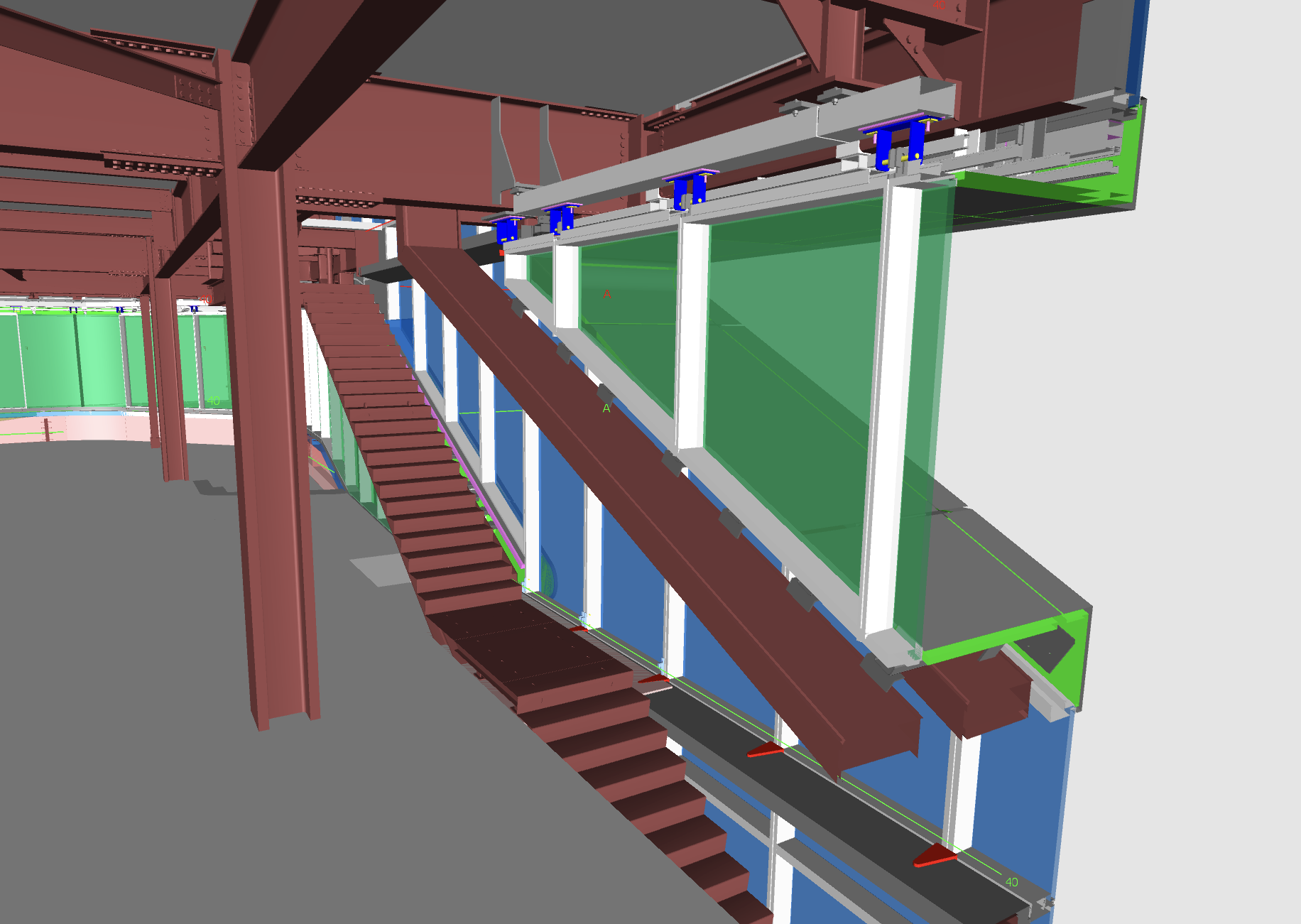
Exterior wall details courtesy of Intercom Facades and AZA US.
Southeast corner of Kravis Hall.
South facade of Kravis Hall.
Looking up at the south facade of Kravis Hall.
East facade of Kravis Hall.
East facade of Kravis Hall.
Southeast corner of Kravis Hall.
Looking up at the east facade of Kravis Hall.
Close-up of the northeast corner of Kravis Hall.
Close-up of the east facade of Kravis Hall.
At the ground floor, the Samberg Commons offers seating for 201 on tiered, undulating seating made of American oak. This space can be transformed to connect with a 199-person dining space on the second floor. The ground floor of Kravis Hall also offers retail space along the building’s 12th Avenue frontage.
Samberg Commons at the southeast corner of Kravis Hall.
West facade of Kravis Hall with ground floor retail frontage.
Southwest corner of Kravis Hall.
Southwest corner of Kravis Hall (left) and Geffen Hall (center).
West facade of Kravis Hall.
David Geffen Hall
Southwest corner of Geffen Hall.
Mirroring Kravis Hall, the eight-story Geffen Hall also features a perimeter circulation element at the west facade that connects alternating floors for administrative offices and teaching spaces. A skin of GFRC and fritted glass in a gradient from transparent to opaque clads the facade the fronts the commons and Kravis Hall. Along with MBA teaching spaces, Geffen Hall also houses the Executive MBA program. At the northwest corner of the ground floor, the Cooperman Commons 274-person auditorium space accommodates student and faculty gatherings. The Columbia-Harlem Small Business Development Center on the second floor offers support resources and services to local businesses and entrepreneurs.
West facade of Geffen Hall.
Southwest corner of Geffen Hall.
Northwest corner of Geffen Hall.
Northwest corner of Cooperman Commons.
Cooperman Commons and lobby.
Ground floor cafe at Geffen Hall.
Architects: Diller Scofidio + Renfro with FXCollaborative; Structural Engineer, Exterior Envelope and Facade Consultant: Arup; Mechanical Engineer: Buro Happold; Associate Architect: AARRIS ATEPA Architects (Dedicated Dining, Multi-Function Room); Sustainability/ LEED Consultant: FXCollaborative; Landscape Architect: James Corner Field Operations; Exterior Wall Fabricator: Intercom Facades and AZA US (Former AZA-INTERCOM Corporation) with W&W Glass; Program: Education; Location: Manhattanville, New York, NY; Completion: 2022.




Construction Tour: 662 Pacific Street
Southwest corner from Dean Street.
Facade installation is wrapping up at the Brodsky Organization’s 27-story residential rental tower at 662 Pacific Street in Prospect Heights, Brooklyn. The tower is part of the Pacific Park development and will offer 312 rental units and a 616-seat public middle school at the five-story base. Marvel Architects has led the design, which features a massing of stacked rectangular volumes clad in hand laid brick and large punch windows. A light tan brick clads the upper residential volumes, while a dark gray brick and larger windows clad the school volume below.
Looking up at the west facade from 6th Avenue.
North facade from 6th Avenue.
Looking up at the south facade from Dean Street.
Southeast corner from Dean Street.
East facade from Dean Street.
Residents will have access to a gym, residential lounges, an outdoor terrace, and a children’s playroom.
View northwest towards Downtown Brooklyn from the rooftop terrace.
View north towards 18 6th Avenue and Midtown from the rooftop terrace.
View north towards Midtown from the rooftop terrace.
View west towards the Statue of Liberty from the rooftop terrace.
View northeast towards Long Island City from the rooftop terrace.
Looking up at the south facade from the rooftop terrace.
View south towards Park Slope from a residential unit.
Architect: Marvel Architects; Developer: Brodsky Organization; Program: Residential Rental, Public School; Location: Prospect Heights, Brooklyn, NY; Completion: Late 2021.
Construction Update: 412 East 90th Street - Spence Athletic and Educational Facility
North facade from East 90th Street.
Construction is wrapping up at The Spence School’s new six-story athletic athletic and ecology center Spence 412 on the Upper East Side. Designed by Rogers Architects, the 58,000 SF structure houses a regulation-size gymnasium for volleyball and basketball with seating for 450 spectators, nine squash courts, student center, multipurpose room for the performing arts, an ecology center with teaching lab and kitchen, greenhouse, and outdoor rooftop space. Due to COVID, the school has temporarily converted the building into classroom space for grades 6-8.
Entry.
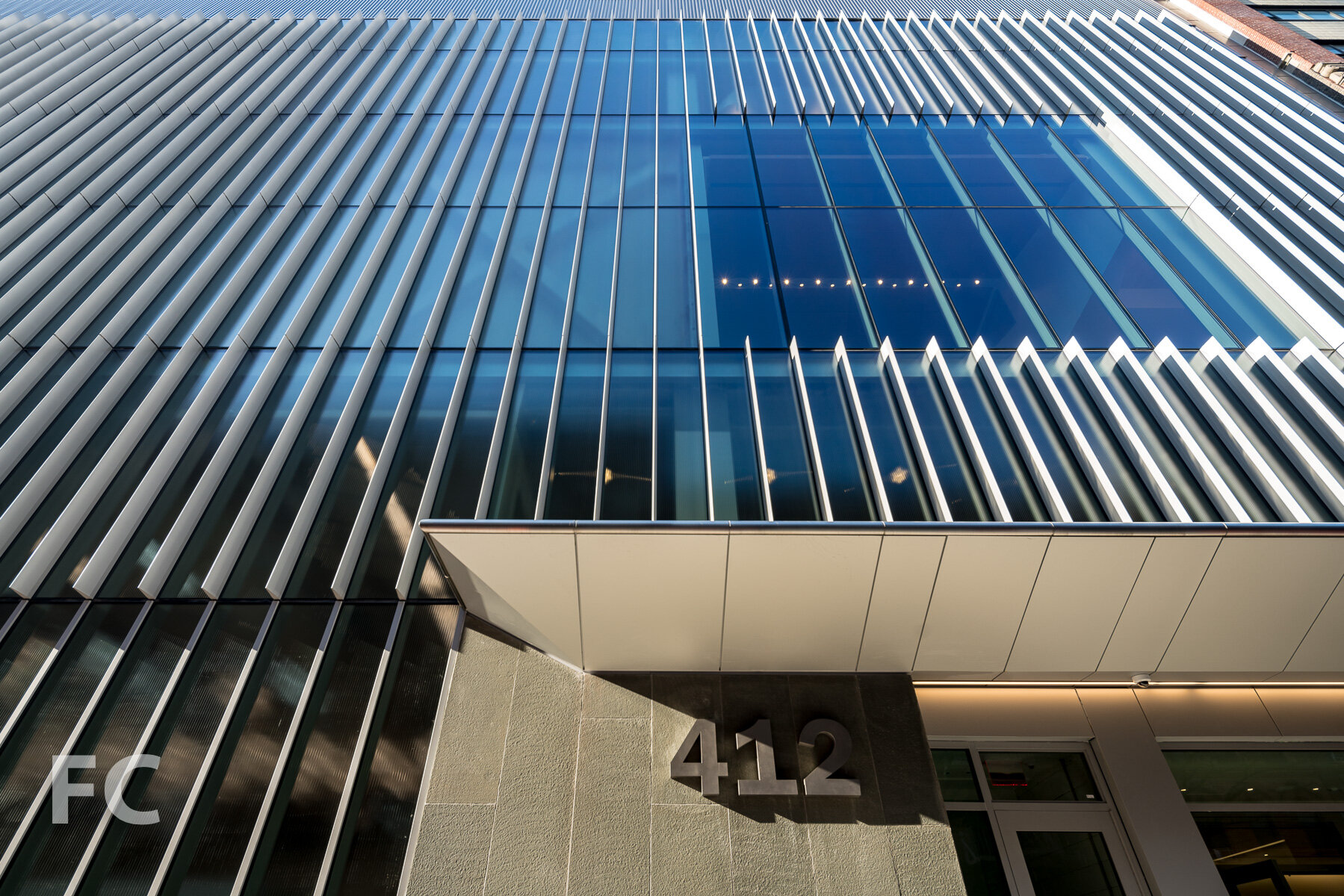
The north facade features a glass curtain wall, most of which is textured to allow for daylight in the interiors while offering privacy from the exterior. Additional daylight control and privacy comes from the vertical metal fins.
Entry canopy.
Looking up at the north facade at the entry.
Northeast corner.
Facade detail.
Facade detail.
Architect: Rogers Architects; Client: The Spence School; Program: Education; Location: Upper East Side, New York, NY; Completion: 2021.
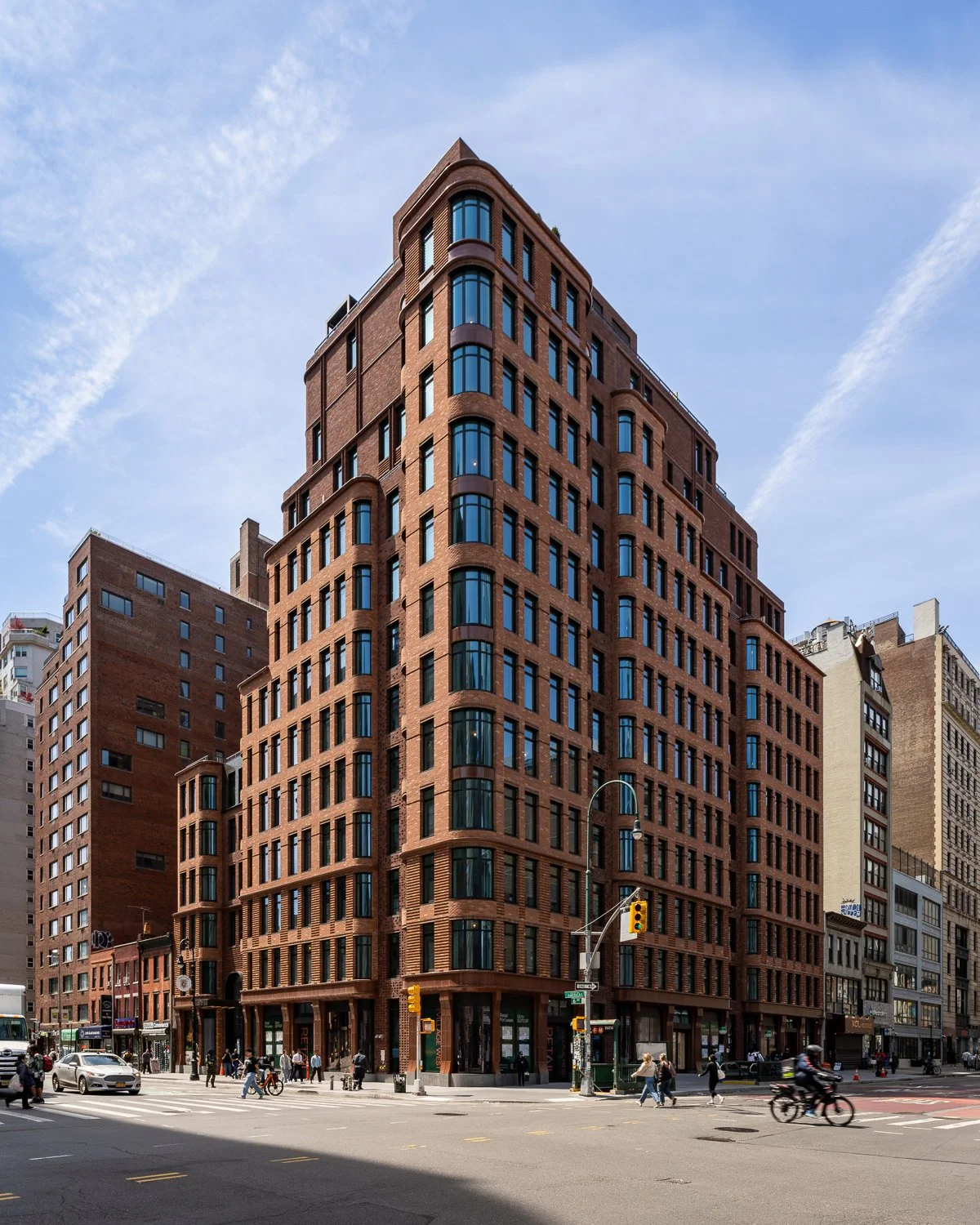
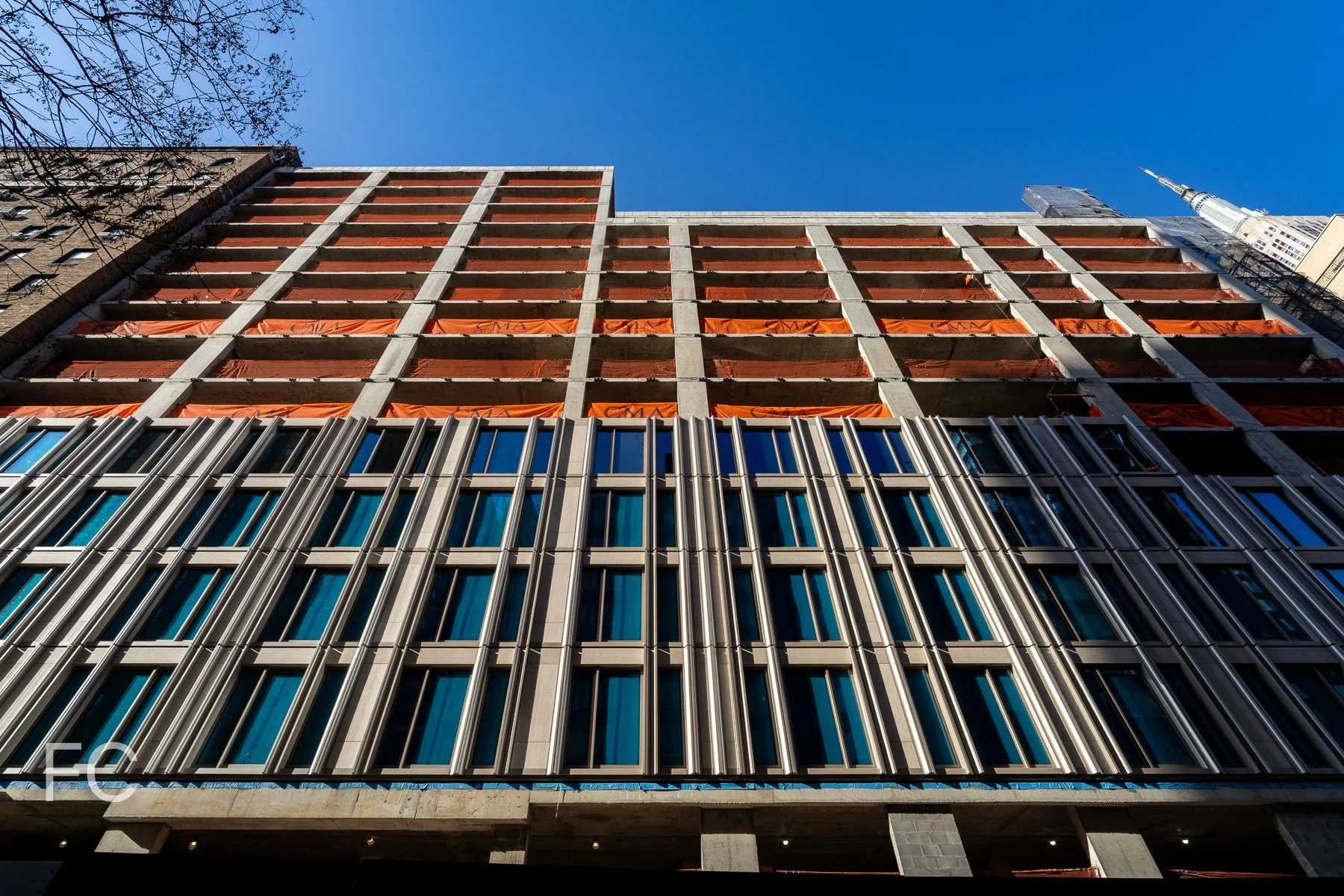
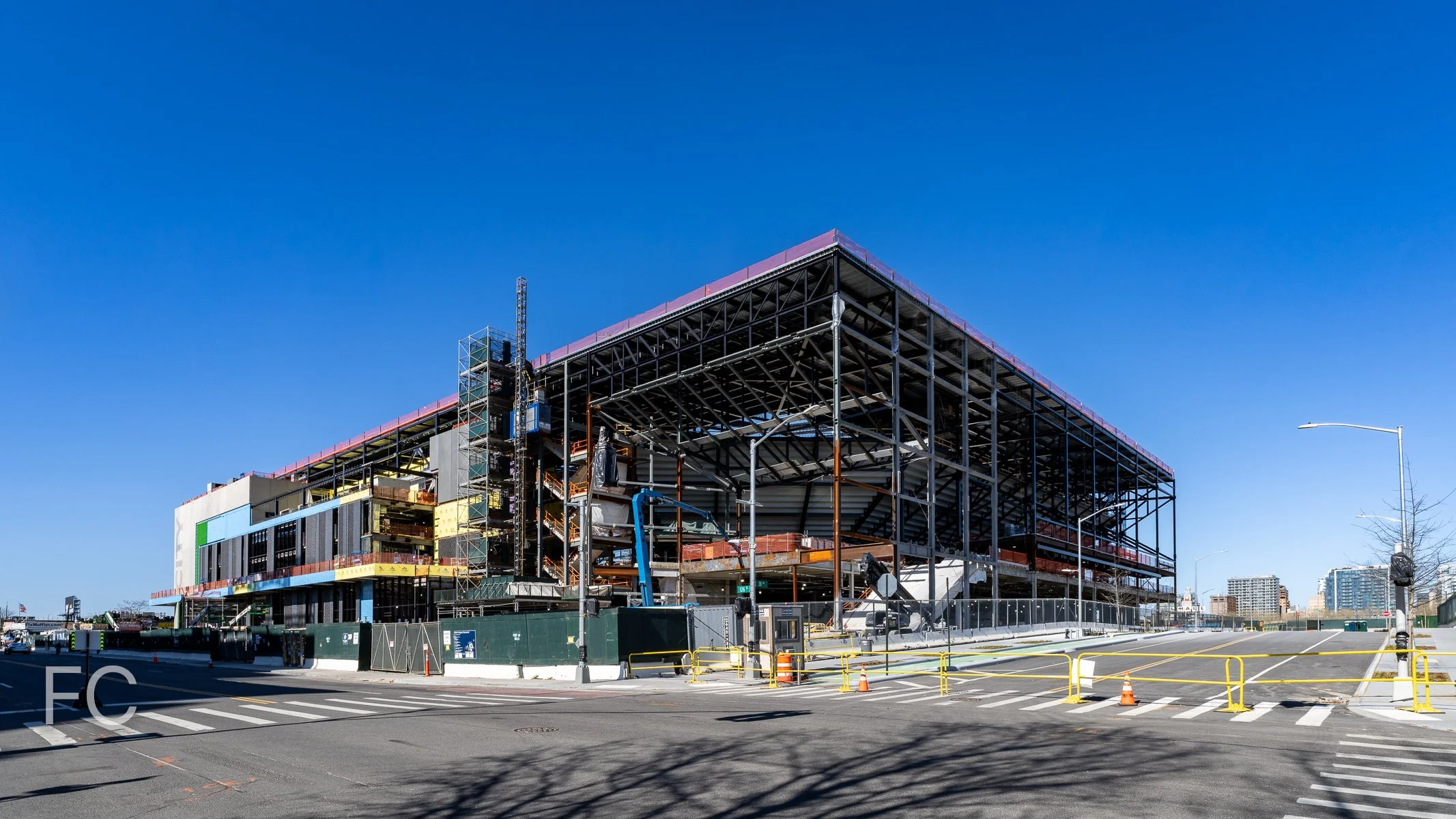
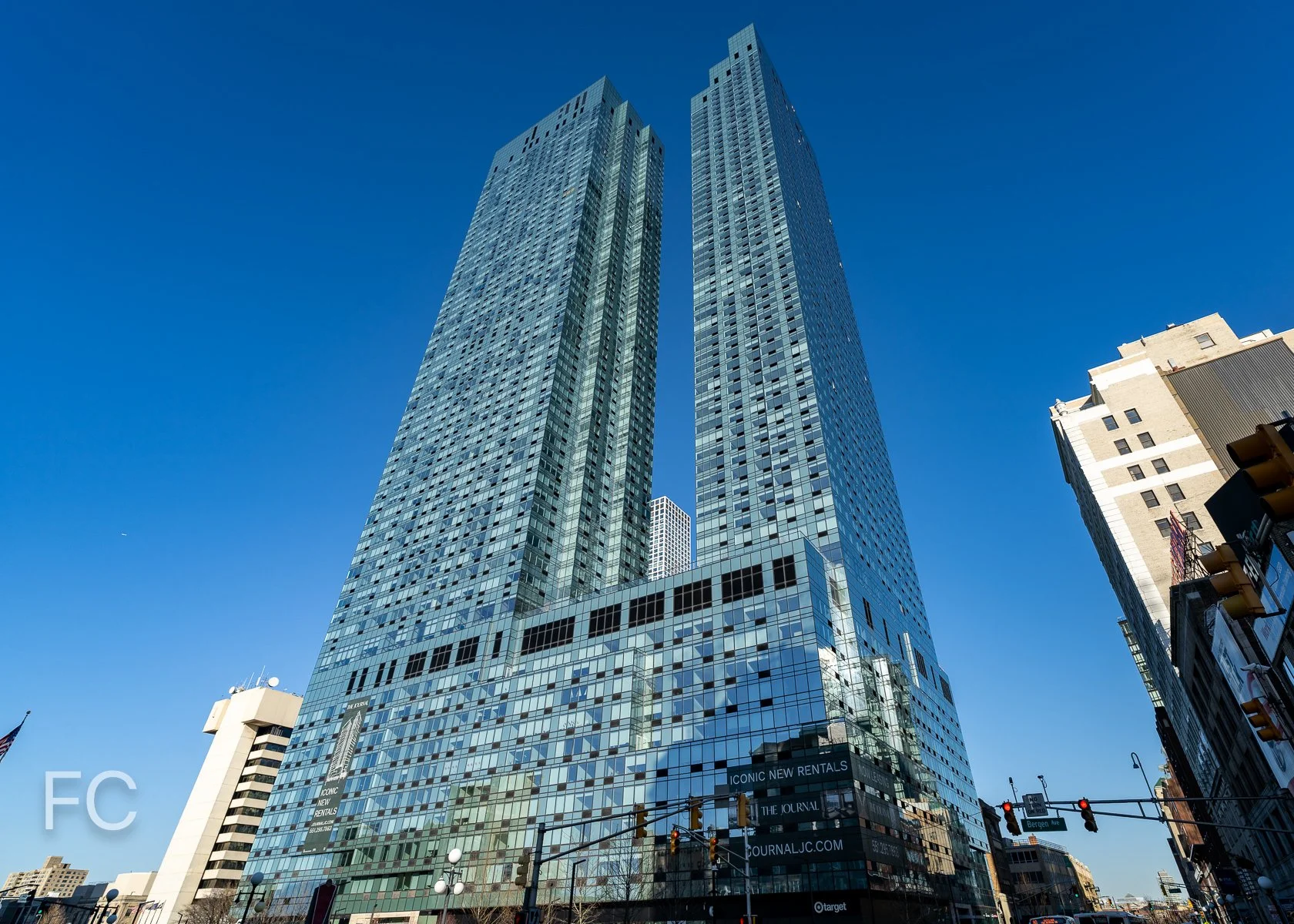
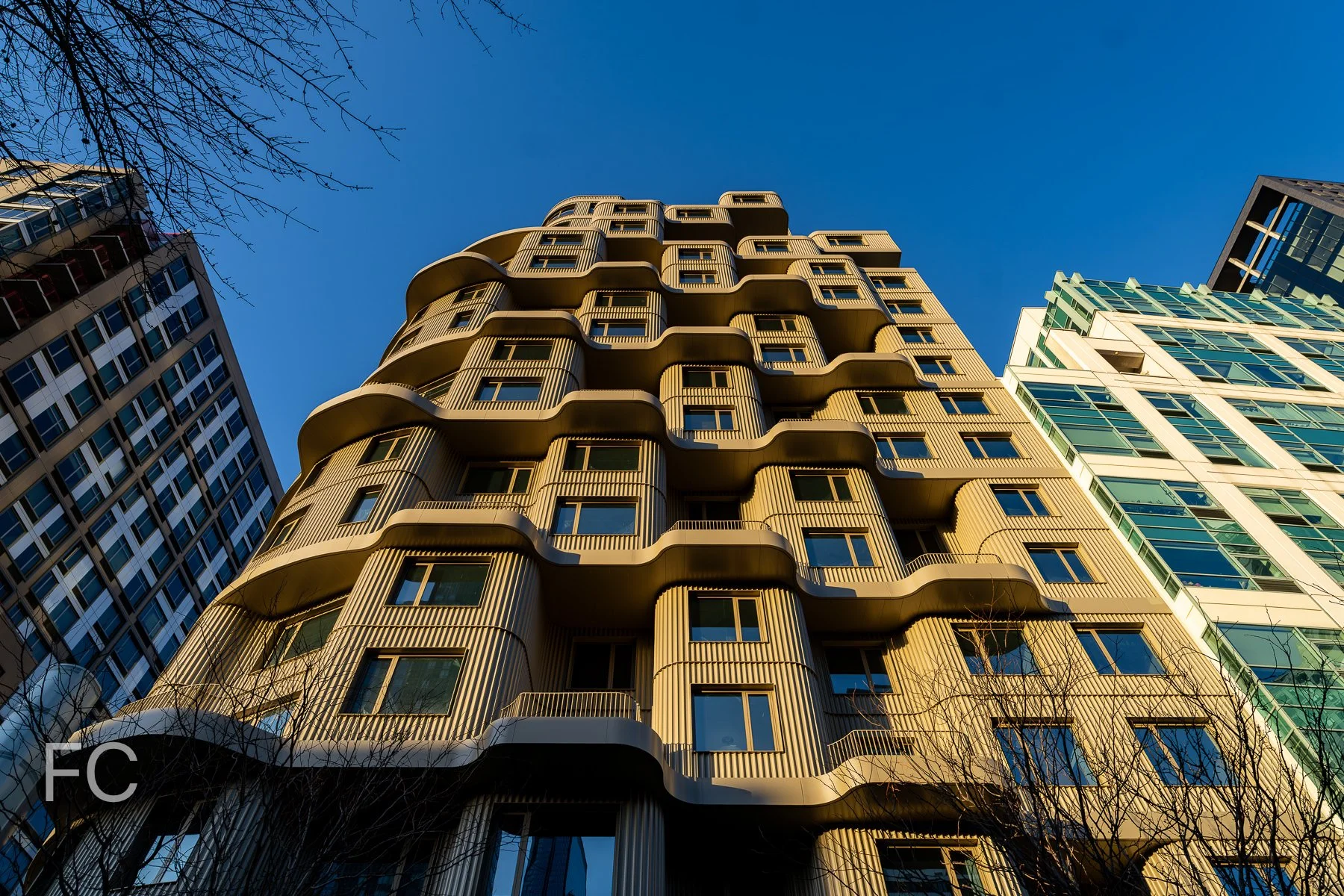
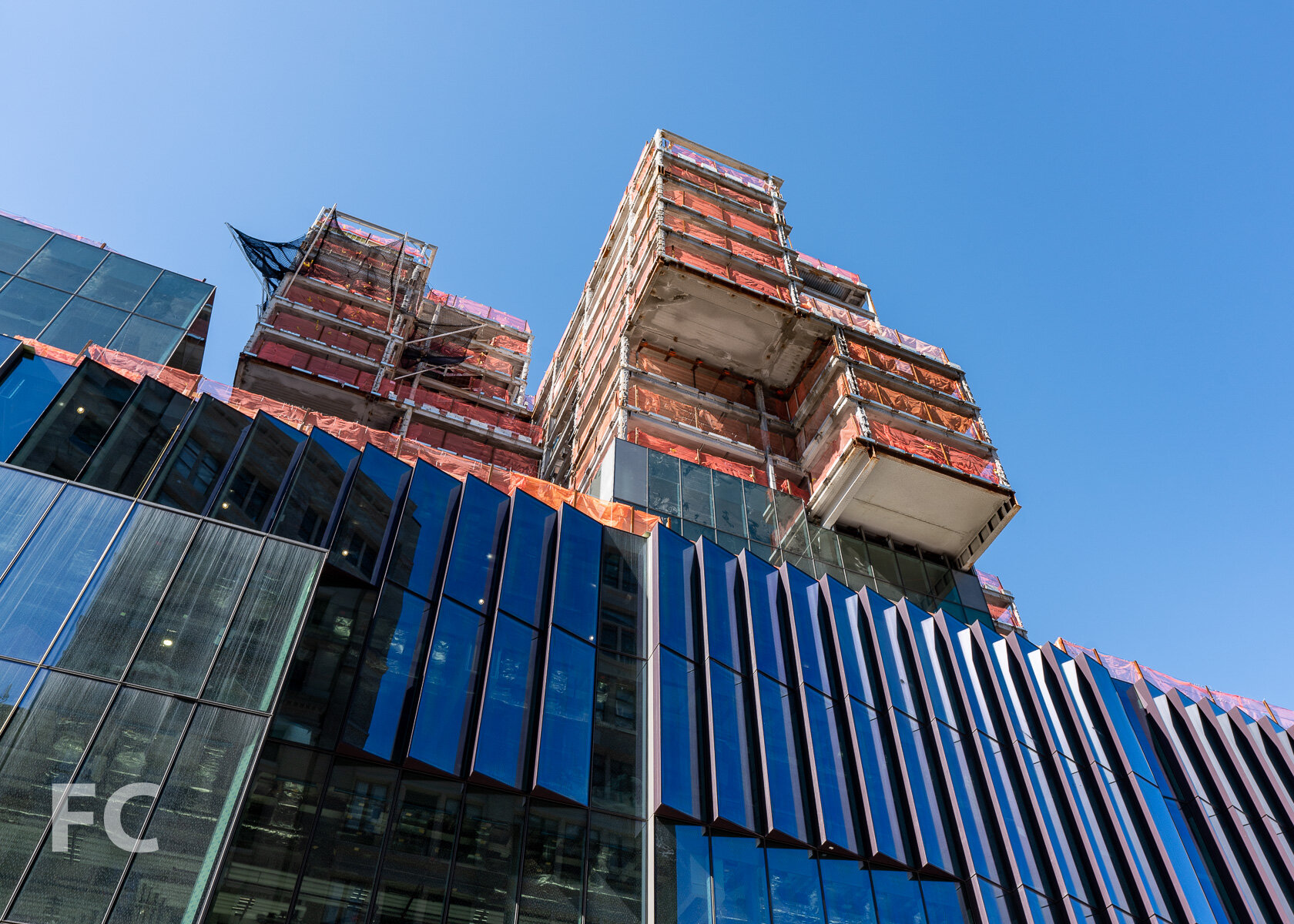
Construction Update: 181 Mercer Street
Southeast corner from Houston Street.
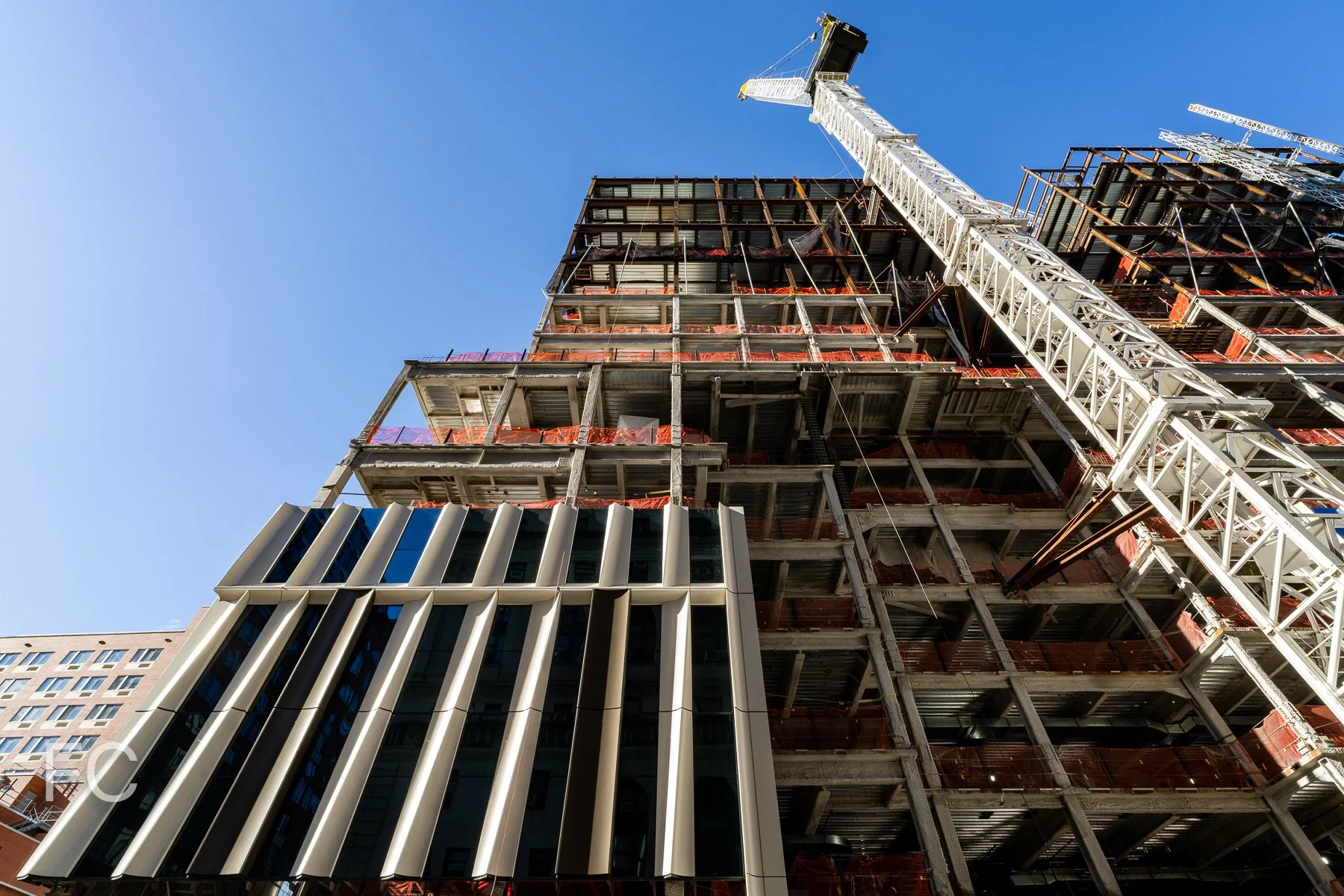
Facade installation is ongoing at NYU’s 23-story mixed use building 181 Mercer at the northern edge of SoHo. Designed by KieranTimberlake and Davis Brody Bond, the full block structure features faculty and student housing, 58 classrooms, performing arts spaces including a 350-seat theater, a student commons space on the second floor, and athletic facilities at the base. Installation of the pleated glass curtain wall with glare reducing frit patterns is nearly finished at the podium and panels are going up on the towers.
Northeast corner.
Looking up at the south facade from Houston Street.
Southwest corner from Houston Street.
Close-up of the south podium facade.
Southwest corner from Houston Street.
Southwest corner from Houston Street.
West facade of 181 Mercer (right) and Picasso’s Bust of Sylvette (left) from NYU’s Silver Towers.
Architects: KieranTimberlake and Davis Brody Bond; Client: New York University (NYU); Program: Faculty and Student Housing, Classrooms, Performing Arts, Athletic Facility, and Commons; Location: SoHo, New York, NY; Completion: 2021.

Columbia University Manhattanville Campus
Southeast corner of the Science Center.
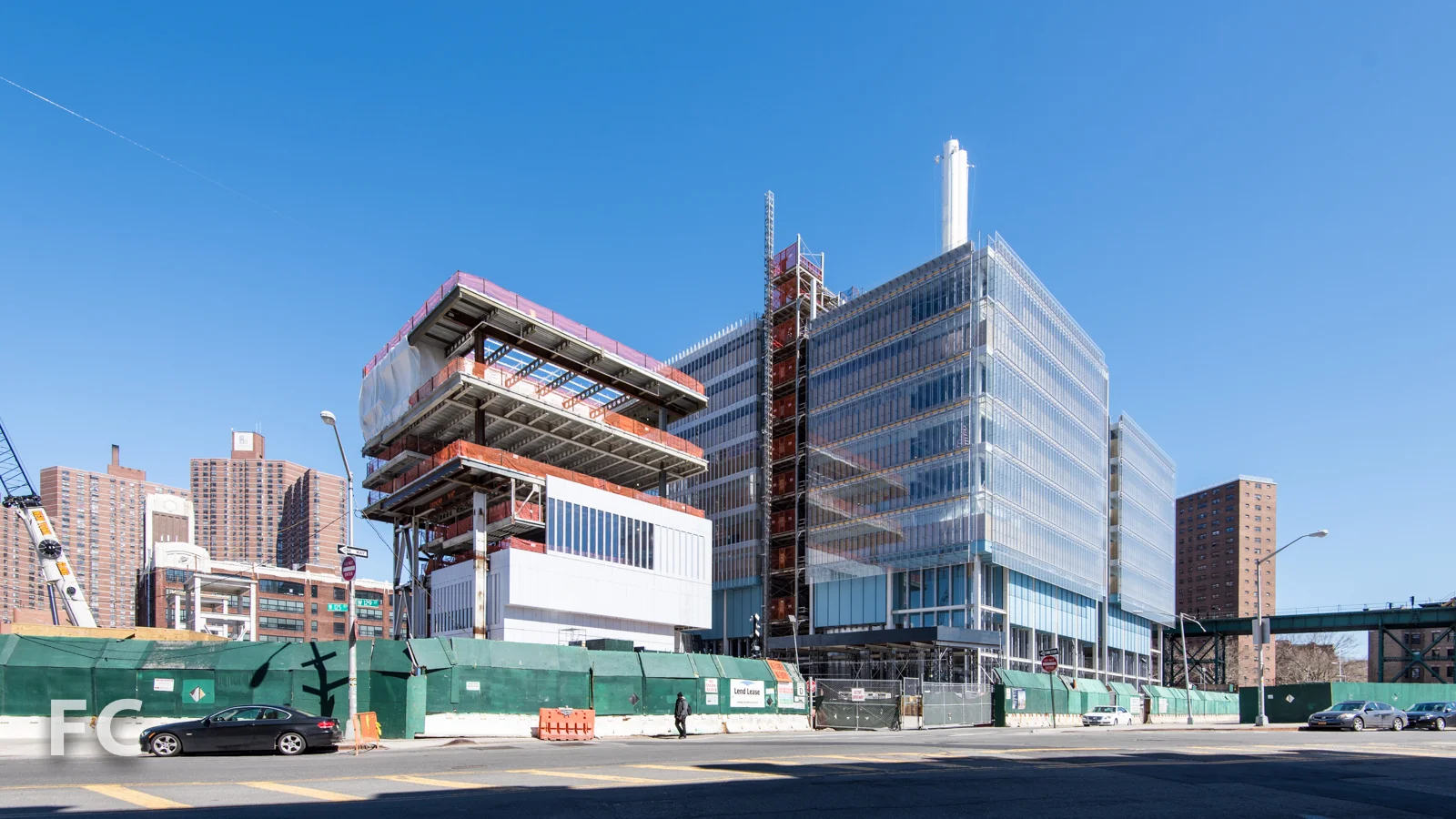
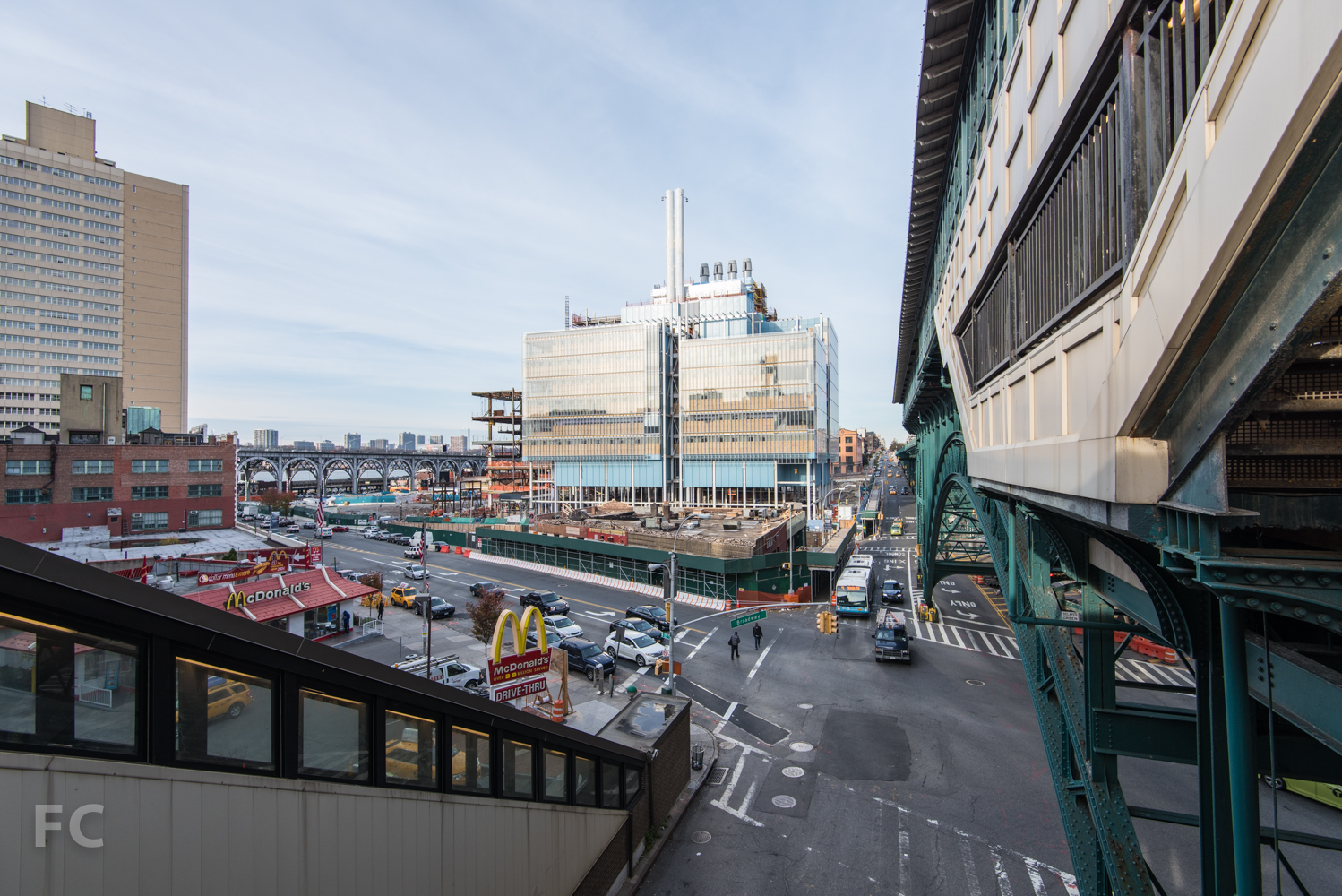
Construction is wrapping up at Renzo Piano's Jerome L. Greene Science Center, the first building for Columbia University's Manhattanville Campus expansion. Set to open Spring 2017, the 9-story, 450,000 square-foot building will bring together researchers from across the University including the Columbia University Medical Center, the Faculty of Arts and Sciences, and the Fu Foundation School of Engineering and Applied Science. The ground floor will house the Center for Education and Outreach, a public education center focused on brain science that will serve the general public and K-12 schools.
Looking east towards the Manhattanville Expansion campus.
Work is also wrapping up on the Lenfest Center for the Arts, the smaller structure located adjacent to the Science Center. Also designed by the Renzo Piano Building Workshop (RPBW), the Center for the Arts houses galleries, performance spaces, a screening room, and offices in an eight-story structure. A unitized panel system of white metal and glass clads the exterior, a similar look to the firm's new Whitney Museum at the High Line.
Southeast corner of the Science Center.
The third RPBW building in Columbia University's master plan for the Manhattanville campus, the Academic Conference Center, has reached ground level. Located south of the Science Center, it will house a 400-seat auditorium and state-of-the-art seminar and meeting rooms inside a five-story structure.
The site of the Academic Conference Center (center) and the Science Center (right).
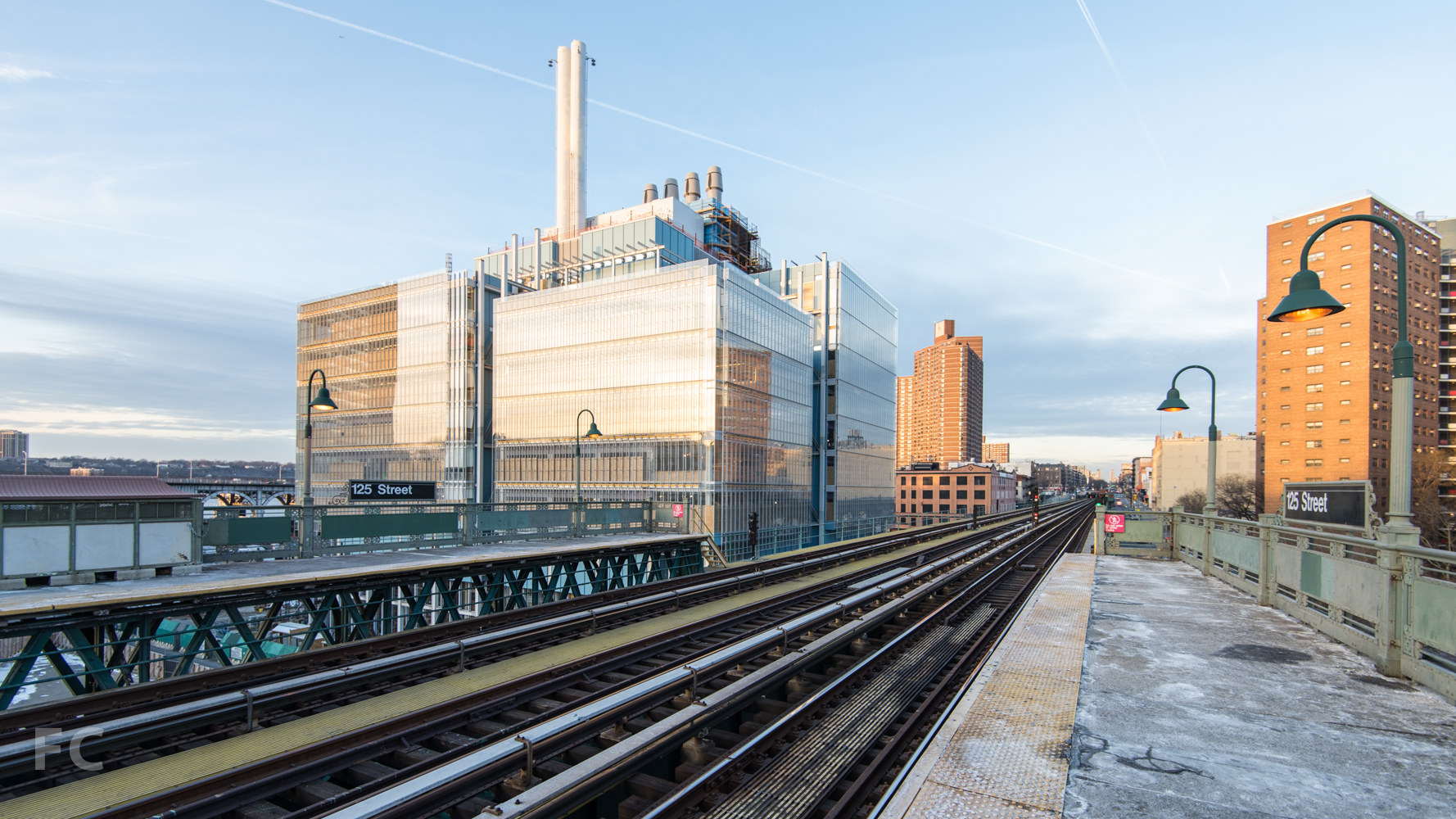
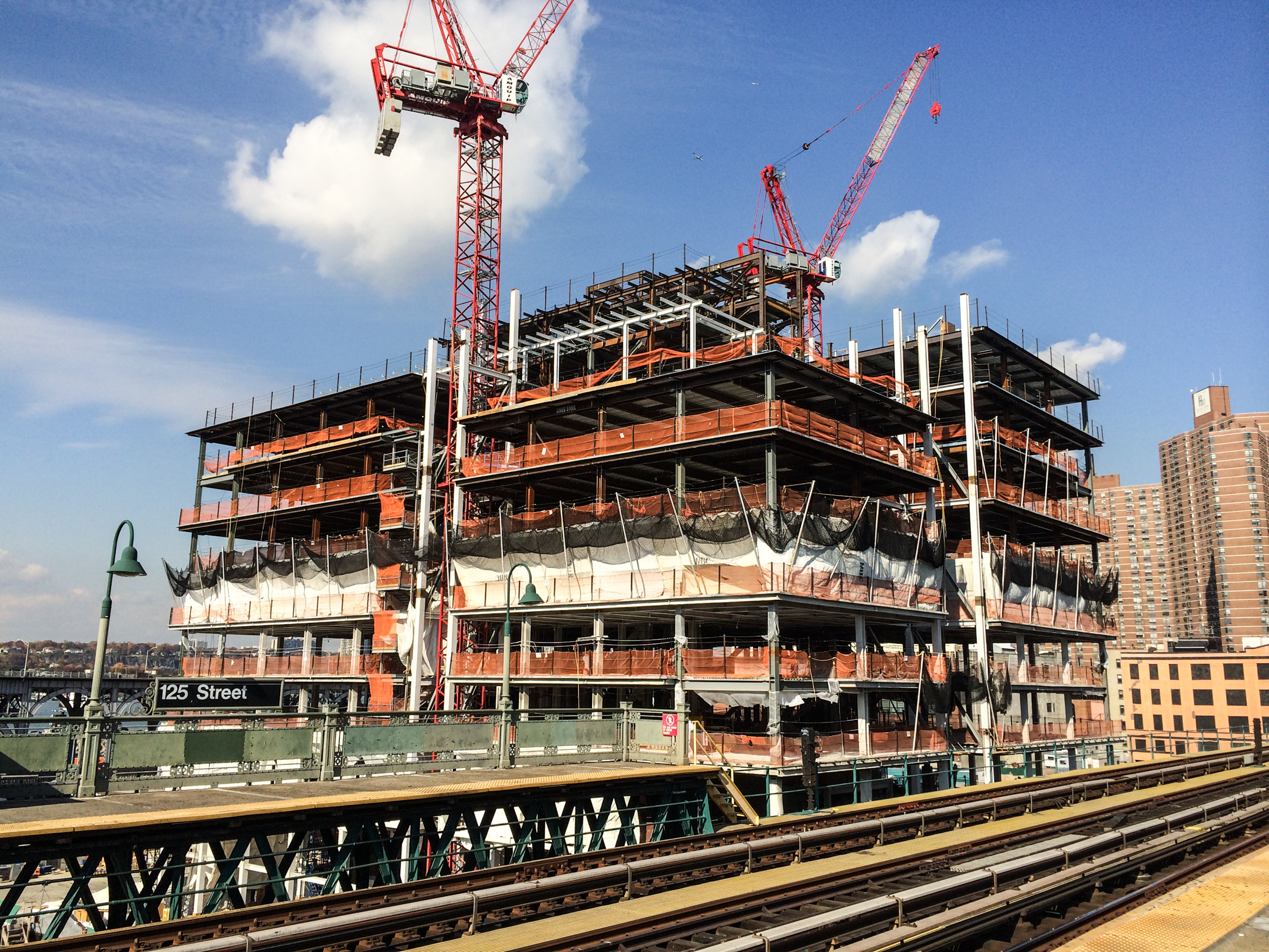
South facade of the Science Center(center) and Center for the Arts (left) from the 125th Street subway station.
Southeast corner of the Science Center at West 129th Street.
Ground floor façade of the Science Center.
Architects: Renzo Piano Building Workshop with Davis Brody Bond LLP (Science Center and Center for the Arts), RPBW with Dattner Architects (Academic Conference Center); Structure: WSP; MEP Engineer: Jaros, Baum & Bolles; Facade Consultant: IBA; Landscape Architect: James Corner Field Operations; Program: Education; Location: Manhattanville, New York, NY; Completion: 2017 (Science Center and Center for the Arts), 2018 (Academic Conference Center).



CUMC Vagelos Education Center
Looking west on West 171st Street.
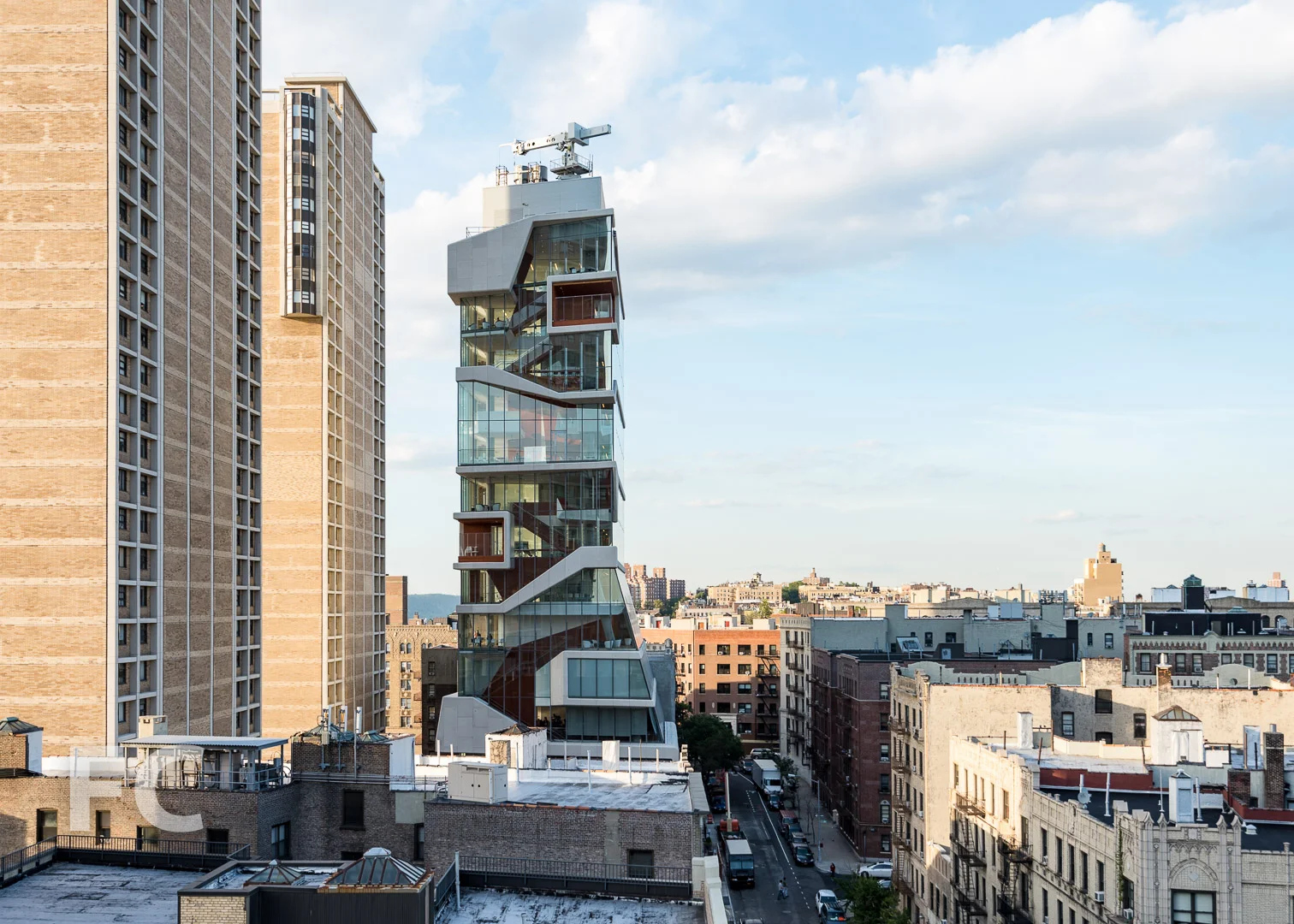
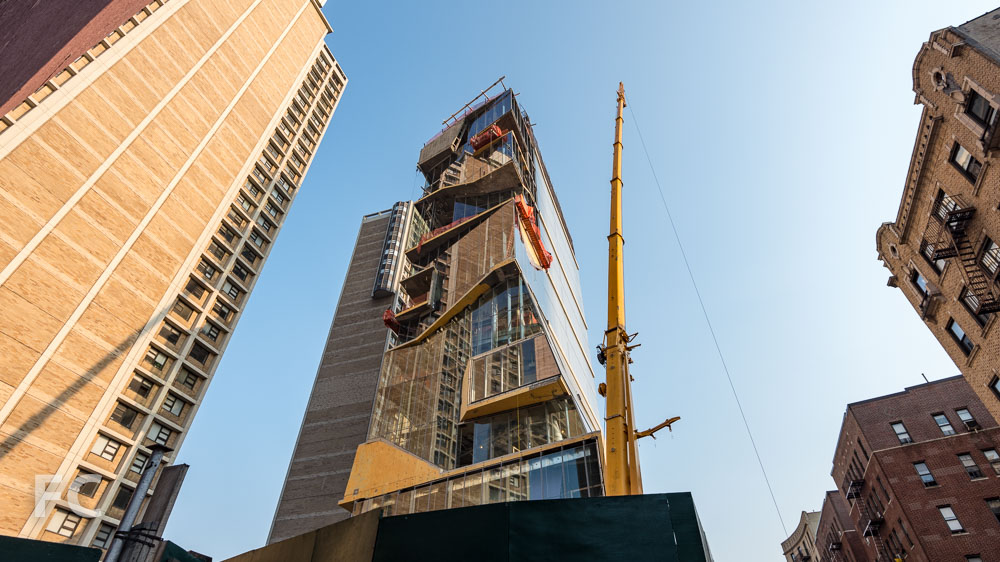
New York's latest, high-profile education building has opened on the campus of Columbia University Medical College in Washington Heights. Designed by Diller Scofidio + Renfro with Gensler, the 14-story Roy and Diana Vagelos Education Center houses classroom, simulation and training facilities for the college.
Close-up of the "Study Cascade" at the southeast corner.
Southeast corner from Haven Avenue.
Looking up at the east facade from Haven Avenue.
The building's iconic feature is the "Study Cascade," a south facing 14-story space, connected by a grand stair, with a variety of indoor spaces for individual and group interaction, outdoor rooms and terraces that foster collaborative learning amongst students and faculty. With the "Study Cascade" DS+R has sought to subvert the normative medical building typology by rethinking its circulation strategy, which the studio has focused on in a wide range of projects over the past few decades.
The "Study Cascade" at the south facade.
Southwest corner of the "Study Cascade."
GFRC paneling and Douglas fir wood clad the solid forms of the "Study Cascade," while the transparency of floor-to-ceiling glass with glass fin supports allows for open views of Manhattan and the Hudson River.
Close-up of the "Study Cascade" at the south facade.
West facade.
Looking up at the west facade.
Looking southeast from an outdoor terrace on the 13th floor.
View south from an outdoor terrace.
Grand stair at the lobby.
Architects: Diller Scofidio + Renfro with Gensler; Structural Engineer: Leslie E. Robertson Associates (LERA); Program: Education; Location: Washington Heights, New York, NY; Completion: 2016.

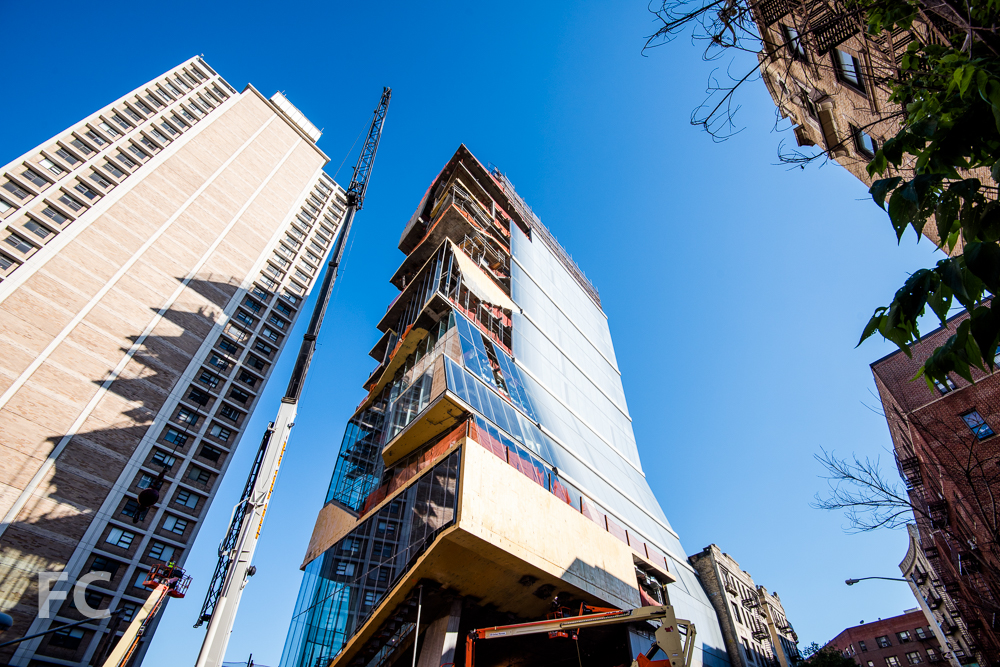
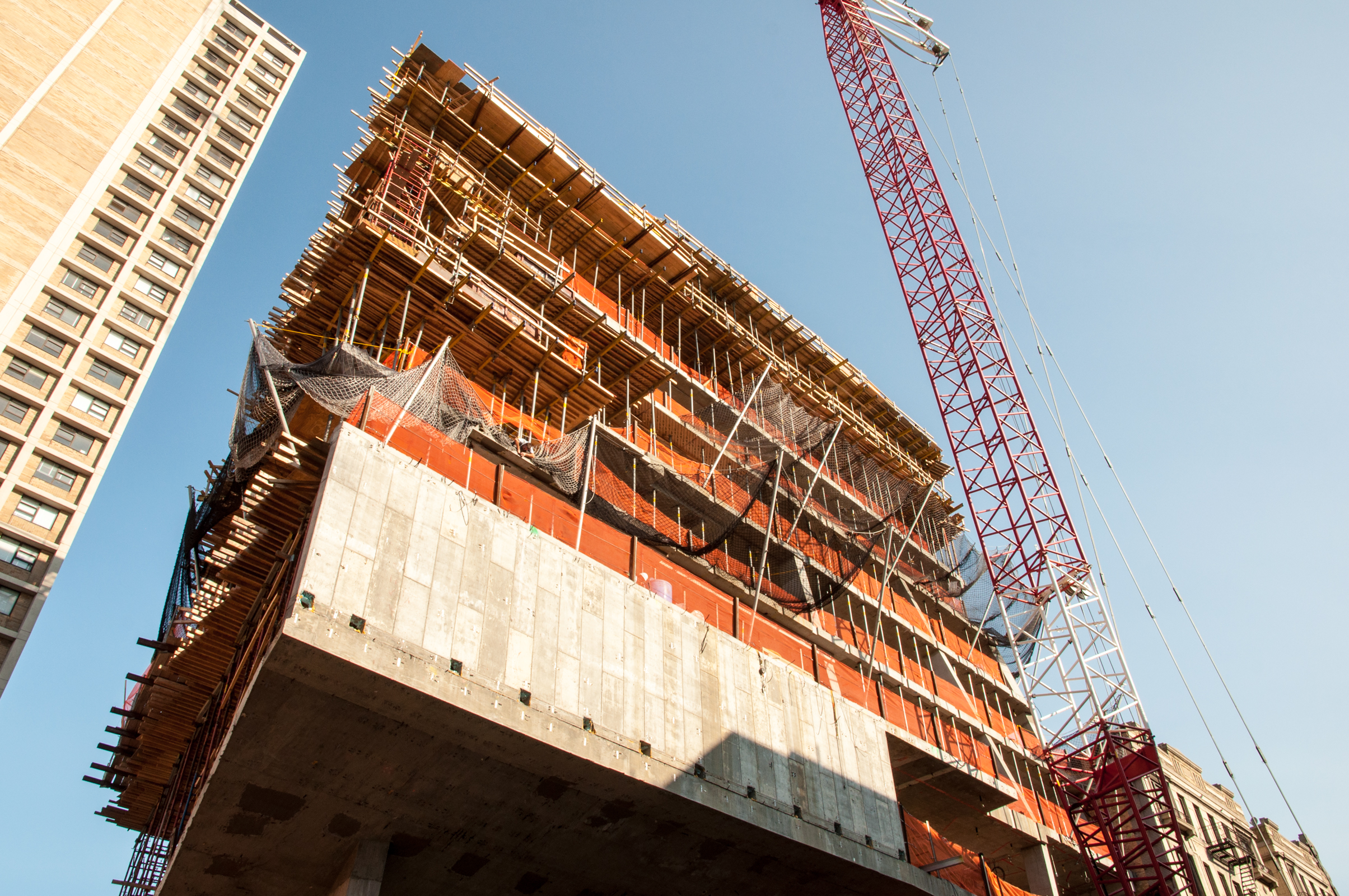

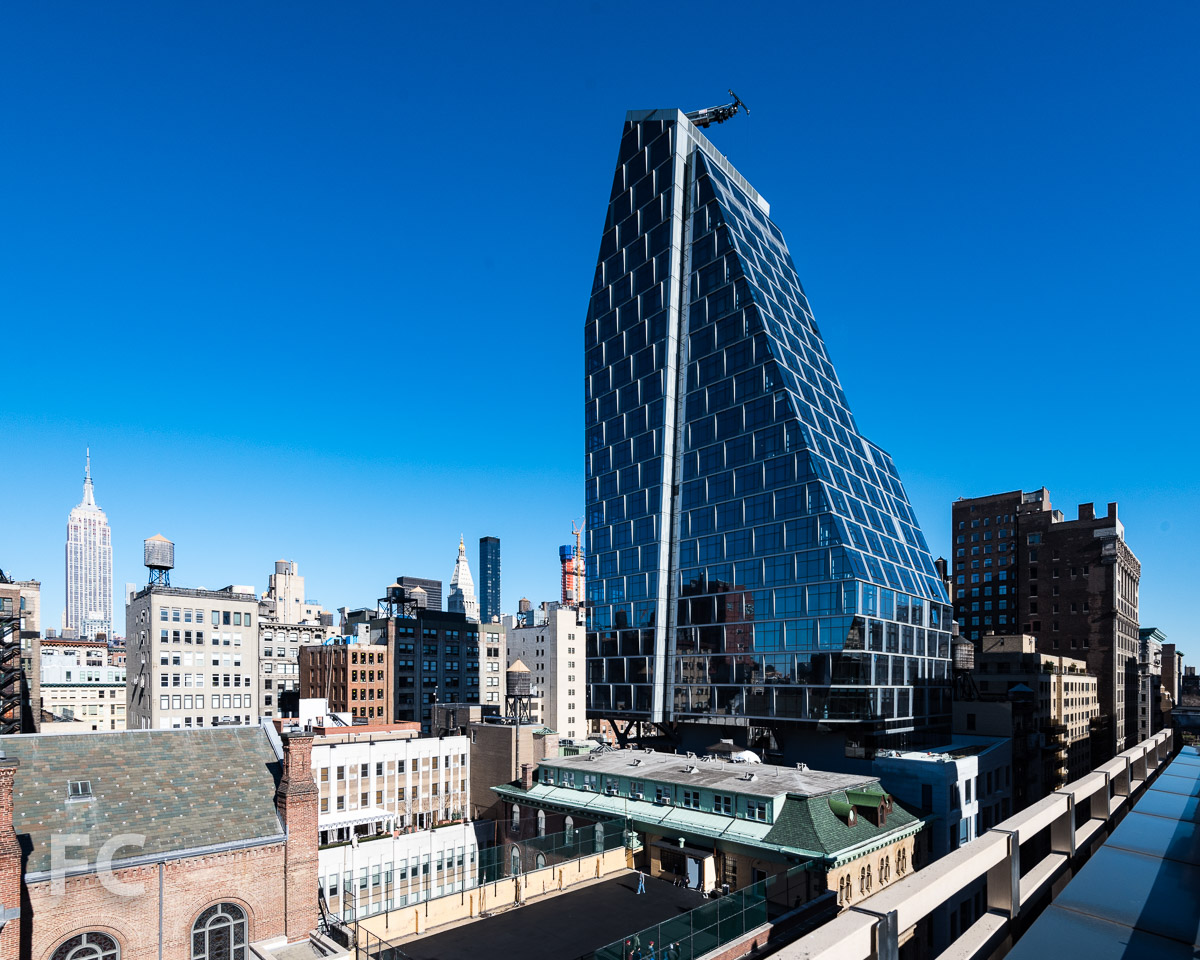
35 West 15th Street - 35 XV
Tour the recently completed 35XV tower from Alchemy Properties and FXFOWLE in Chelsea.
Construction is wrapping up at Alchemy Properties' 35 XV, a 25-story residential tower and school addition that occupies a mid-block site in Chelsea. Designed by FXFOWLE, the project includes a six-story podium that houses an expansion of Xavier High School and a 55-unit residential tower above.
Southwest corner.
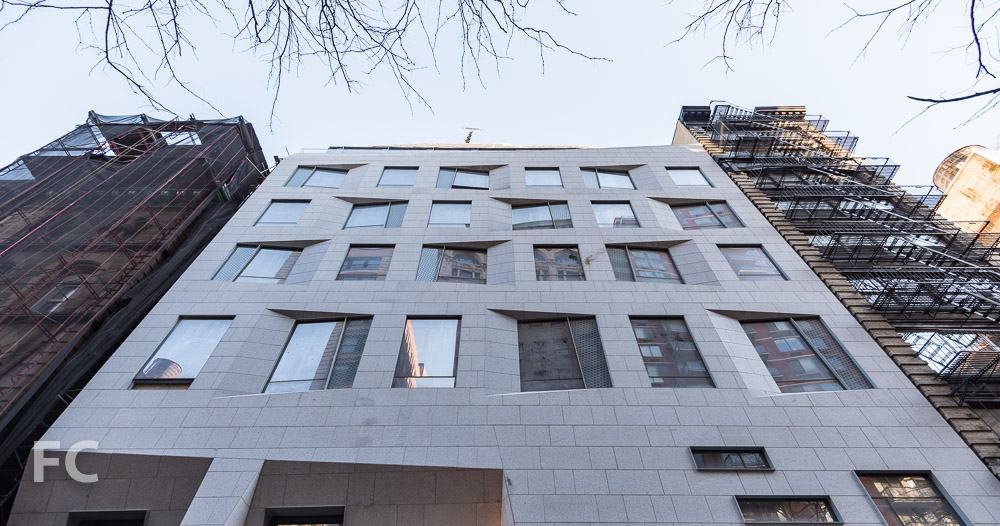
The podium is clad in granite which helps to tie it in with the surrounding context of mostly brick structures. A residential lobby at ground floor welcomes residents arriving from 15th Street, while above there are classrooms and a half court gym for the school.
Southwest corner of the podium and tower.
In contrast to the solid base, the residential tower rises above its surroundings in a sculpted glass volume that is prominent on the skyline from afar but less intrusive when experienced from the street. The glass curtain wall features integrated metal fins for solar shading on the east and west facades and patterned frit spandrels throughout that tie its facade in with the podium below.
Southwest corner of the tower.

Close-up of the southwest corner.
Residence 12C
While most of the units have sold, there are a handful of units left in the tower, of which I toured two. The first residence faces south, with amazing views of the neighborhood and Lower Manhattan from the floor-to-ceiling Italian glass curtain wall. There are views south and west from the 10 foot tall spaces of the living/dining area at the southwest corner of the tower. An adjacent breakfast/den off of the kitchen gets a southern view as well. Mechanized shades in the living area offer relief from the sun without fully obscuring the view.
Living/Dining with views to the south and west.
Living/Dining with mechanized shades deployed.
Living/Dining.
Living/Dining.
Southwest corner of the Living/Dining.
The kitchen features marble countertops, Poggenpohl cabinetry, and luxury appliances from Miele and Sub Zero.
Kitchen.
Breakfast/Den.
Master Bedroom.
Residence 17A
The second unit faces the north with dramatic views of the Midtown skyline, including prominent icons like the Empire State Building and new additions like Hudson Yards. The living/dining area feature views north and west, while the master bedroom faces north and east.
Living/Dining with views to the north and west.
Northwest corner of the Living/Dining.
View north towards Midtown.
Kitchen.
Master Bedroom with views toward the north and east.
Benjamin Noriega Ortiz has designed bespoke master bathrooms featuring Calacatta Gold Marble countertops and backsplashes, along with Gaudi Marble radiant heated floors.
Master Bath vanity.
Master Bath soaking tub.
Master Bath steam shower.
Bedroom with a view to the north.
Architect: FXFOWLE; Interiors: BNOdesign; Developer: Alchemy Properties Inc.;Program: Residential, Education; Location: Chelsea, New York, NY; Completion: 2016.

Cornell Tech Campus
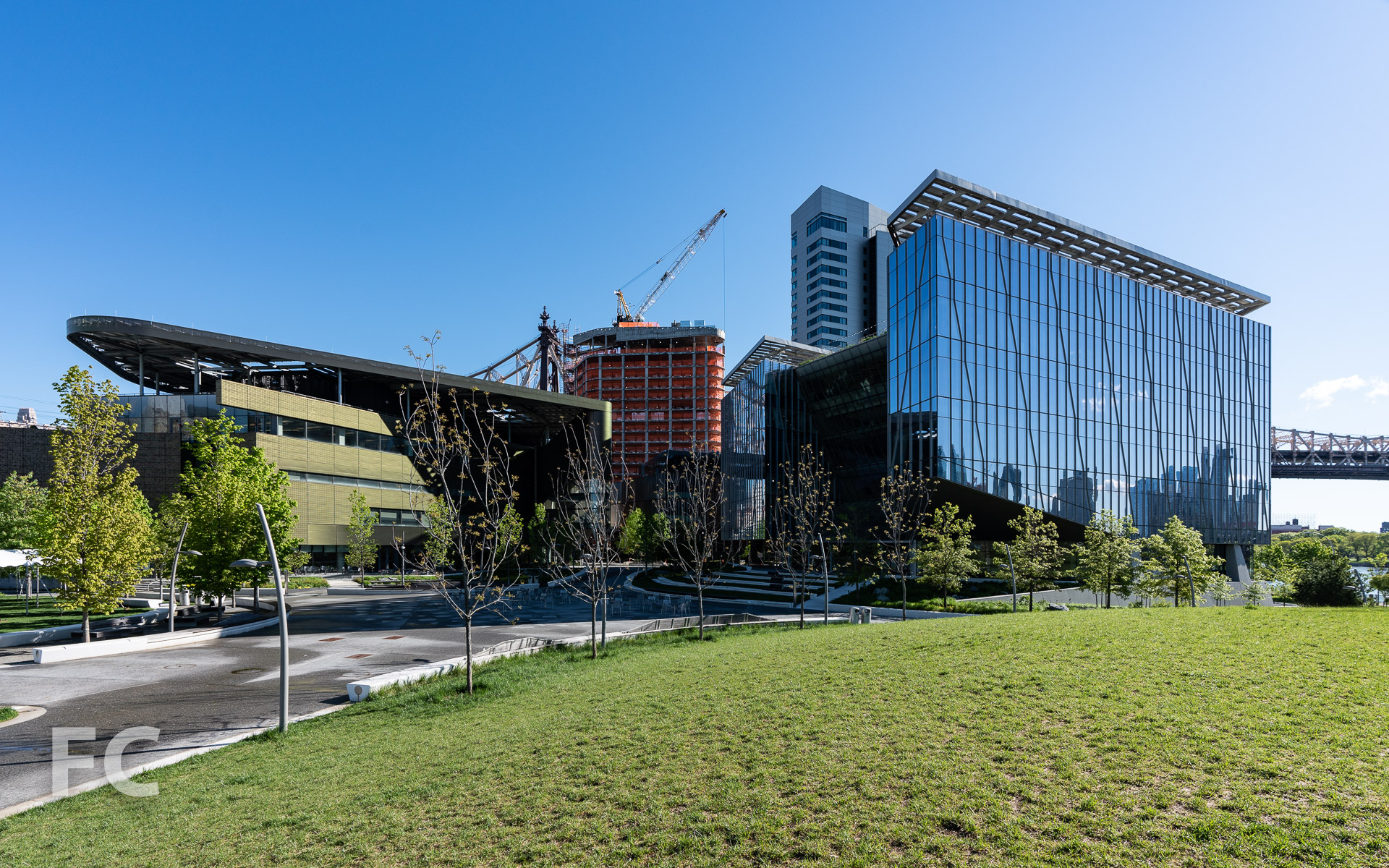
Superstructure rises at all building sites in the first phase of Cornell University's tech-focused new campus on Roosevelt Island in New York.
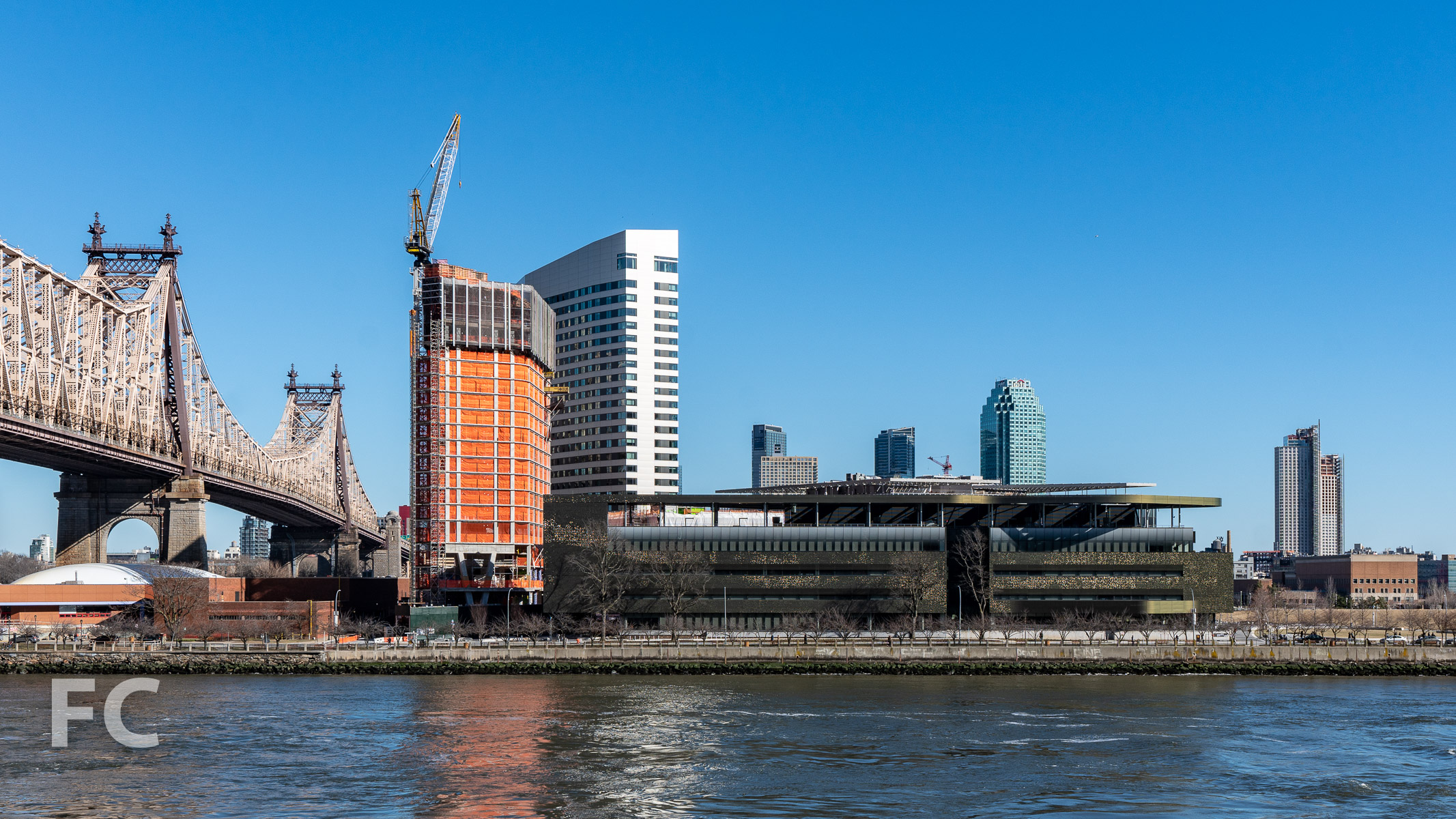
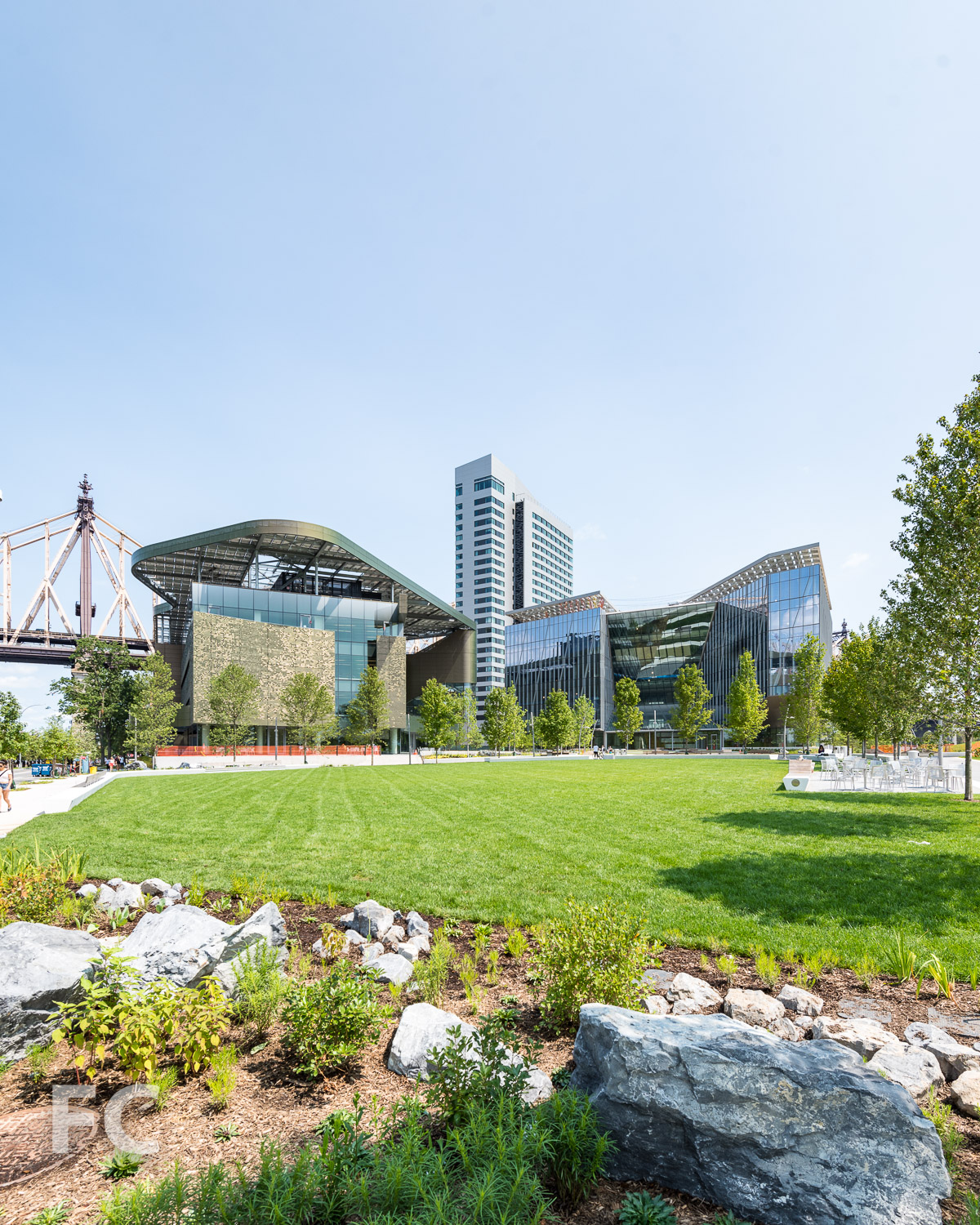
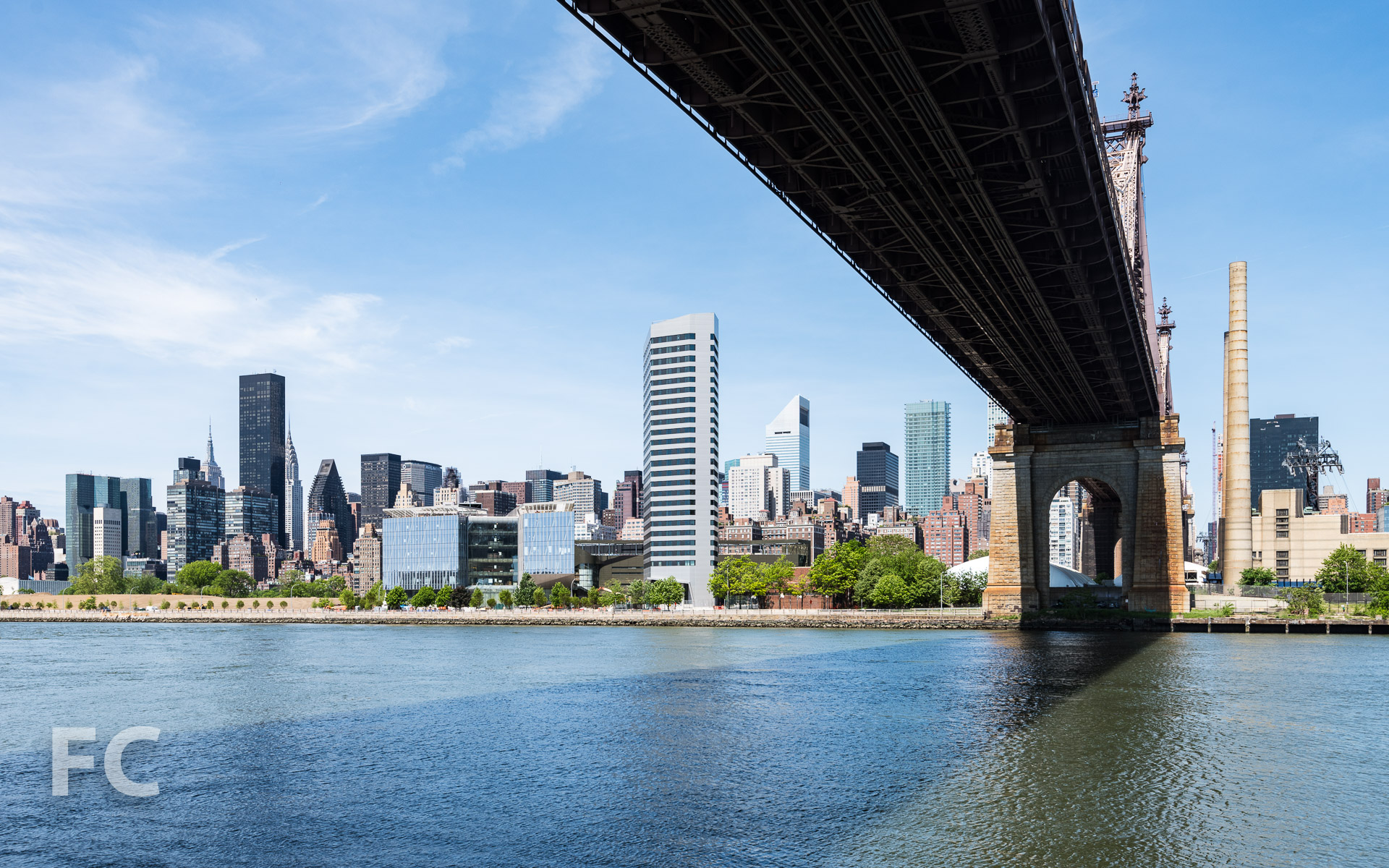
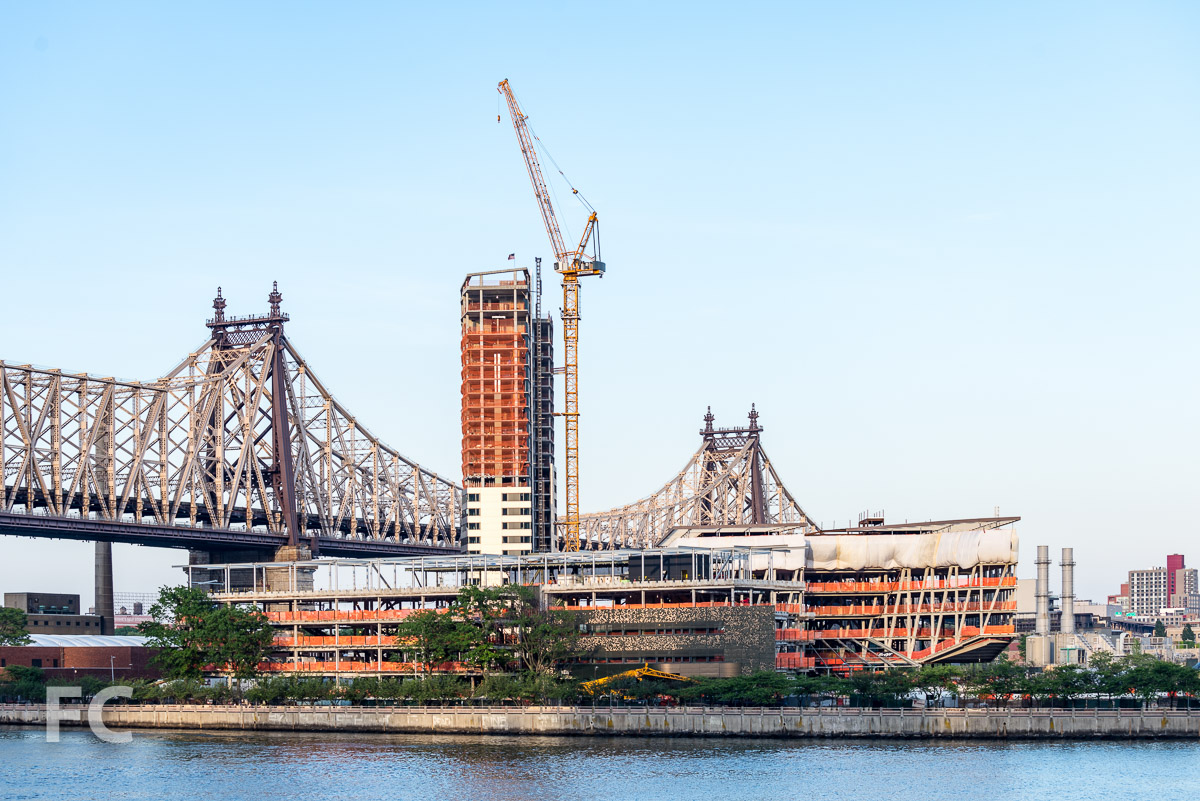
Superstructure has started to rise at the phase one sites of Cornell's new tech campus on Roosevelt Island. The site is located to the south of the Ed Koch Queensboro Bridge and was formerly home to the Goldwater Hospital, which housed 2,106 beds. Included in the first phase of construction is an academic building by Morphosis, a corporate co-location building by Weiss/Manfredi, a residential tower by Handel Architects, a meeting center for the academic and tech community, a central utility building by SOM, and a campus plaza by Field Operations.
Located on a triangular site at the northwest corner of the campus, the four-story, 160,000-square-foot Bloomberg Center will house the school's initial academic functions. Bronze toned metal panels will clad the exterior, while a roof covered in photovoltaic panels crowns the top floor. The building has been designed with the goal of achieving Net-Zero energy consumption and a LEED Platinum certification. Superstructure has reached the fourth floor, making topping out eminent.
To the east of the Bloomberg Center, the Bridge at Cornell Tech serves as a corporate co-location building. The Weiss/Manfredi designed building will provide space for new and established companies to work on innovative projects. Superstructure has reached the second floor.
Aerial view of the Phase One campus from the Roosevelt Island tram.
Aerial view of the Phase One campus from the Roosevelt Island tram.
Aerial view of the Phase One campus from the Roosevelt Island tram.
Northwest corner of the Bloomberg Center by Morphosis.
At the northern boundary of the site lies the Central Utility Plant and the residential tower. The one story utility building features a sawtooth facade, clad in metal panels, that faces the North Loop Road. An unoccupiable green roof covers the top. The Hudson Companies' 26-story, 270-foot-tall residential tower stands adjacent to the utility building and will provide 350 residential units to mostly graduate students. Handel Architects has designed the tower to the Passive House sustainability standards, making it the world's tallest project to use such standards. The Central Utility Plant has topped out, while the residential tower has reached its second floor.
North facade of the Central Utility Plant by SOM.
Northwest corner of the Central Utility Plant.
North facade of the Central Utility Plant by SOM.
Northeast corner of the Phase One campus with the Residential Building (center) and the Central Utility Plant (right).
Northeast corner of the Residential Building by Handel Architects.
Work on the first phase of the campus is schedule for completion by 2017.
Architects: SOM (Master Plan, Central Utility Plant), Morphosis (The Bloomberg Center), Weiss/Manfredi (The Bridge at Cornell Tech), Handel Architects (Residential Tower); Landscape Architects: Field Operations (Campus Plaza); Program: Education, Office, Residential, Open Space; Location: Roosevelt Island, New York, NY; Completion: 2017.