Brooklyn Bridge Park - Pier 6
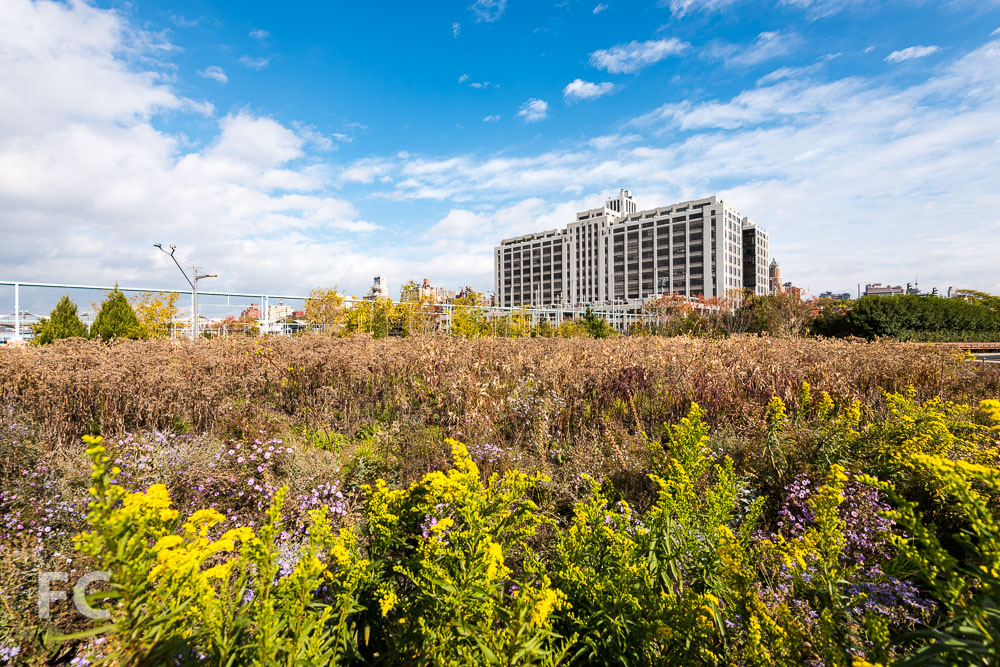
Though much recent discussion about Pier 6 has focused on the two proposed residential towers, work has been ongoing to complete the park lands at the western edge of the pier. This past weekend, the remaining 3.5 acres of the pier's landscape opened to the public. Containing large expanses of grassy lawns and flower meadows accessible by meandering paths, this half of the pier provides passive recreation space in contrast to the active sports fields and playgrounds of the easterly half. Pier 6's landscape was designed by Michael Van Valkenburgh Associates, the team responsible for the park's other phases. Construction has yet to start on BIG's pavilion that would occupy the western edge of the pier.
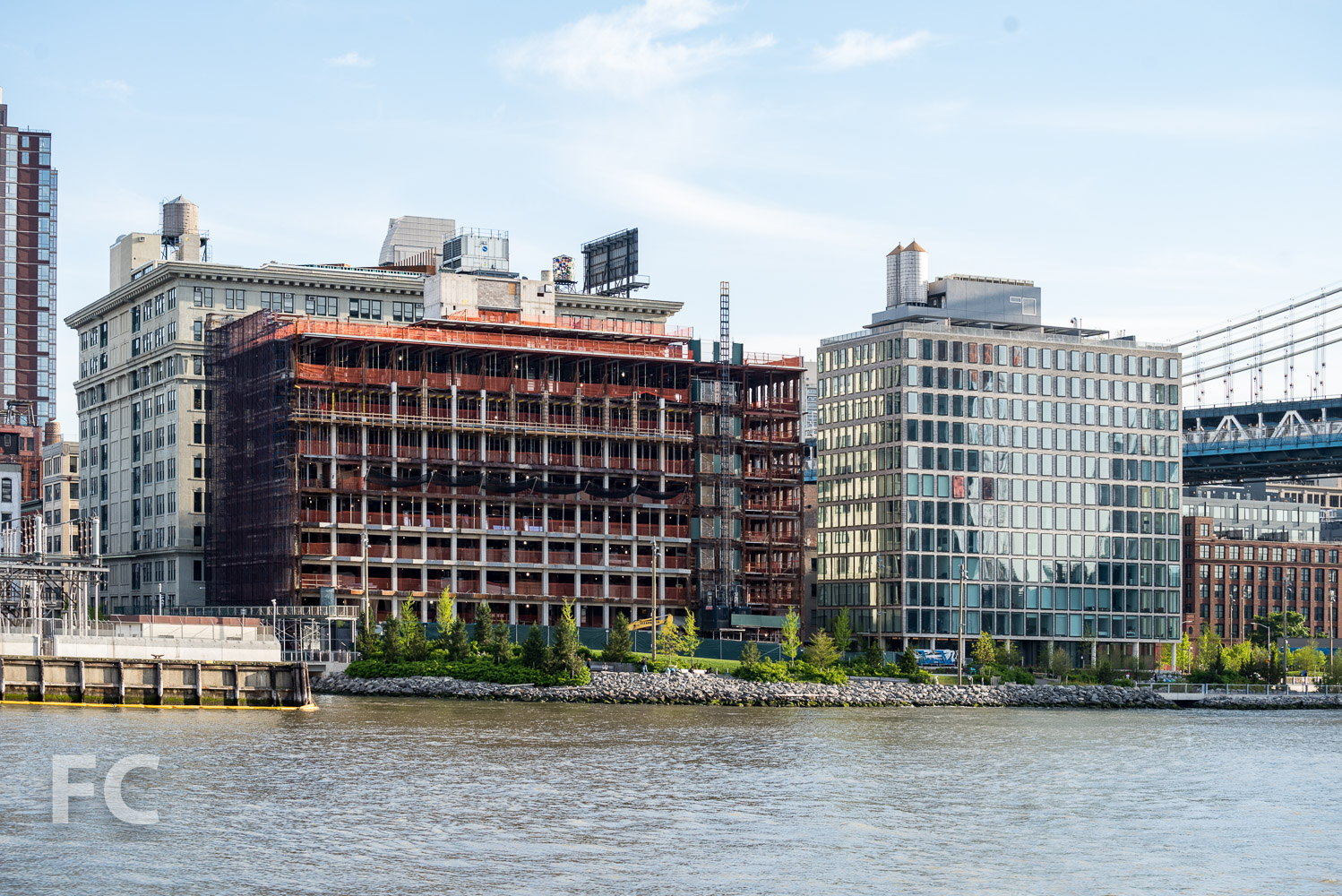
Pier 6 from the Brooklyn Bridge Park greenway.
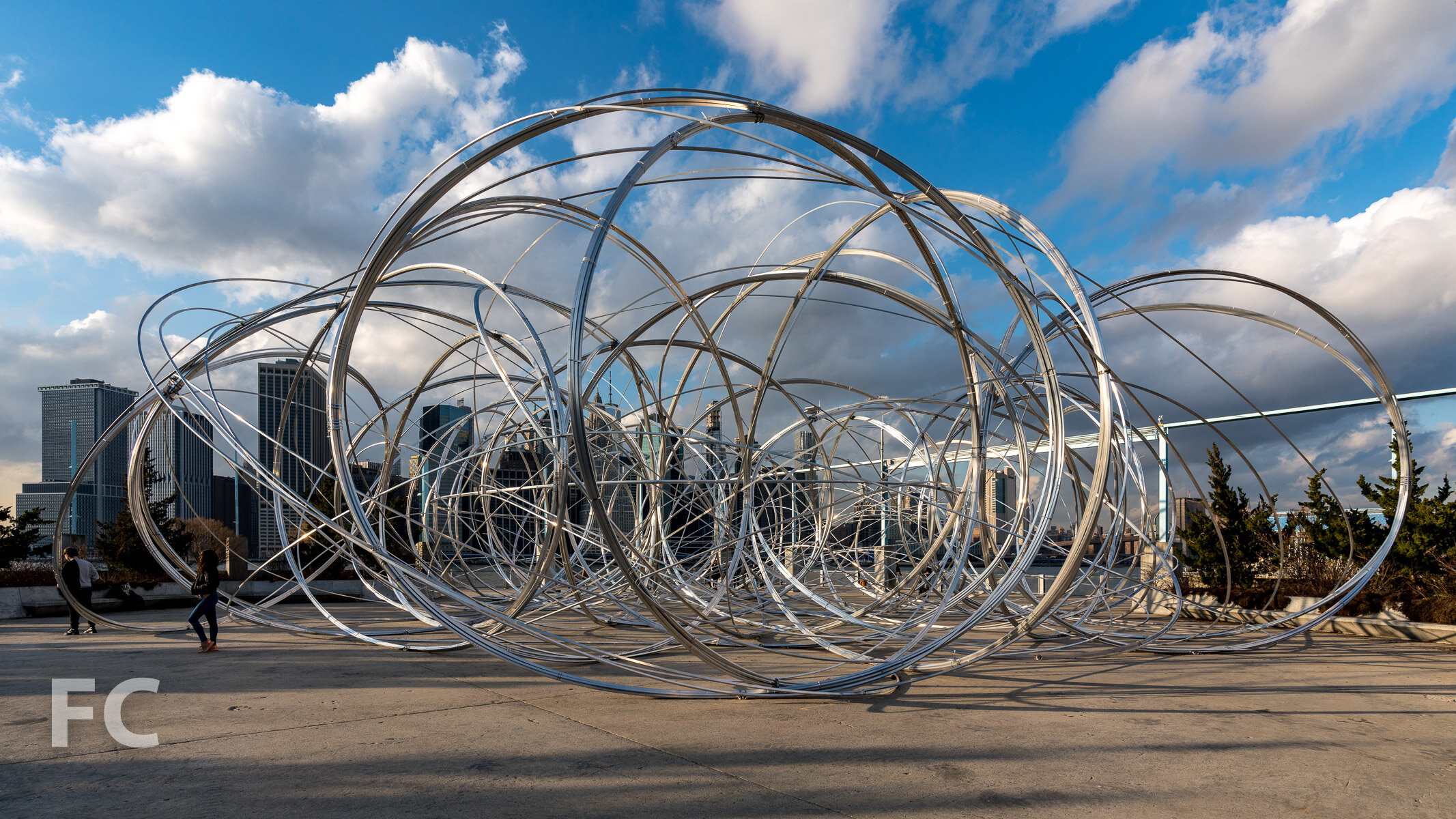
View of Lower Manhattan from the end of Pier 6.
Landscape Architects: Michael Van Valkenburgh Associates; Program: Park; Location: Brooklyn Bridge Park, Brooklyn, NY; Completion: Fall 2015.


Grace Farms
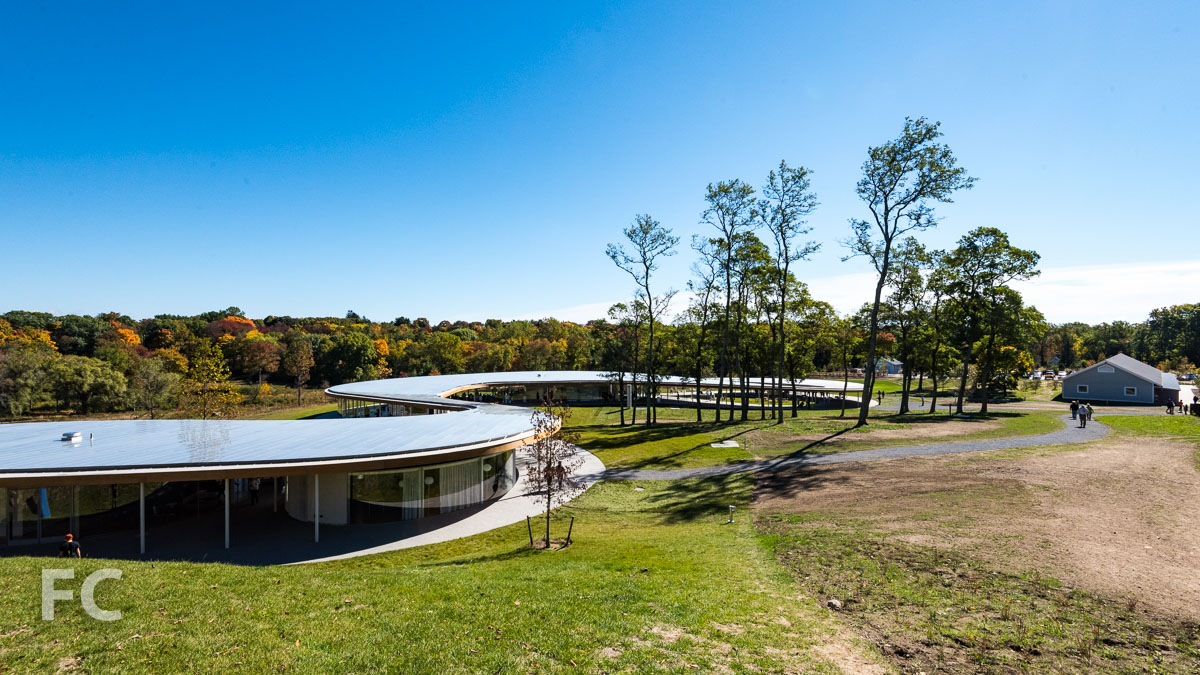
The River Building with the Sanctuary in the foreground.
Entering the River Building at the Sanctuary.
The lobby of the Sanctuary.
Sanctuary.

Sanctuary.
The view from the stage inside the sanctuary.
The stage inside the Sanctuary.
Sanctuary.
Roof structure detail inside the Sanctuary.
Perimeter structure and glass enclosure detail inside the Sanctuary.
Glass enclosure detail at the floor of the Sanctuary.
Kazuyo Sejima and Ryue Nishizawa speaking at the opening day ceremony.
Roof drainage system at the Sanctuary roof.
Looking down at the continuation of the River Building from the Sanctuary.
An artist captures the River Building on his canvas.
Looking down at the continuation of the River Building.
The stairs leading down from the Sanctuary.
Looking back towards the Sanctuary.
The Library entry.
Shelving inside the Library.
Farm 56 by Thomas Demand inside the Library.
Conference room inside the Library.
Glass enclosure detail at the Library.
Pathway.
Double Glass River by Teresita Fernandez inside the Commons.
Double Glass River by Teresita Fernandez inside the Commons.
Detail of Double Glass River by Teresita Fernandez inside the Commons.
Lighting inside the Commons.
Looking toward the Sanctuary from the Commons.
Signage on the glass enclosure of the Court.
Looking down onto the basketball court.
Looking down onto the basketball court.
Looking down onto the basketball court.
The Court.
The Court.
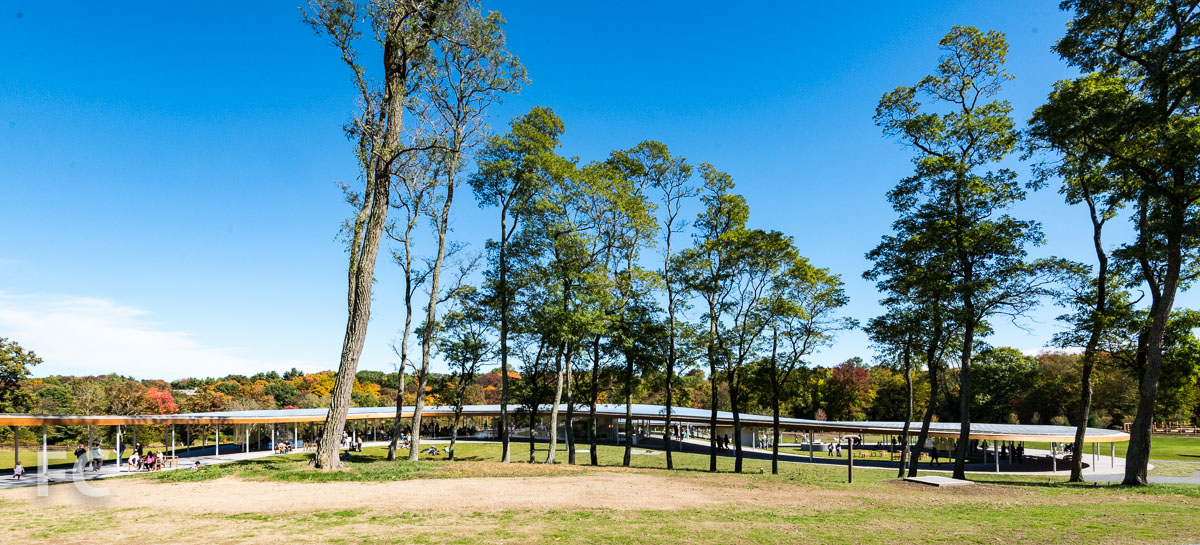
The River Building.
Looking towards the River Building from the Plaza and the East and West Barns.
Architects: SANAA (Design Architect) with Handel Architects (Executive Architect); Landscape Architects: OLIN; MEP Engineer and Lighting: Buro Happold; Structural Engineer: Robert Silman Associates; Building Envelope: Front; Construction Manager: Sciame; Graphics: Pentagram; Program: Church and Cultural Facilities; Location: New Canaan, Connecticut; Completion: 2015.
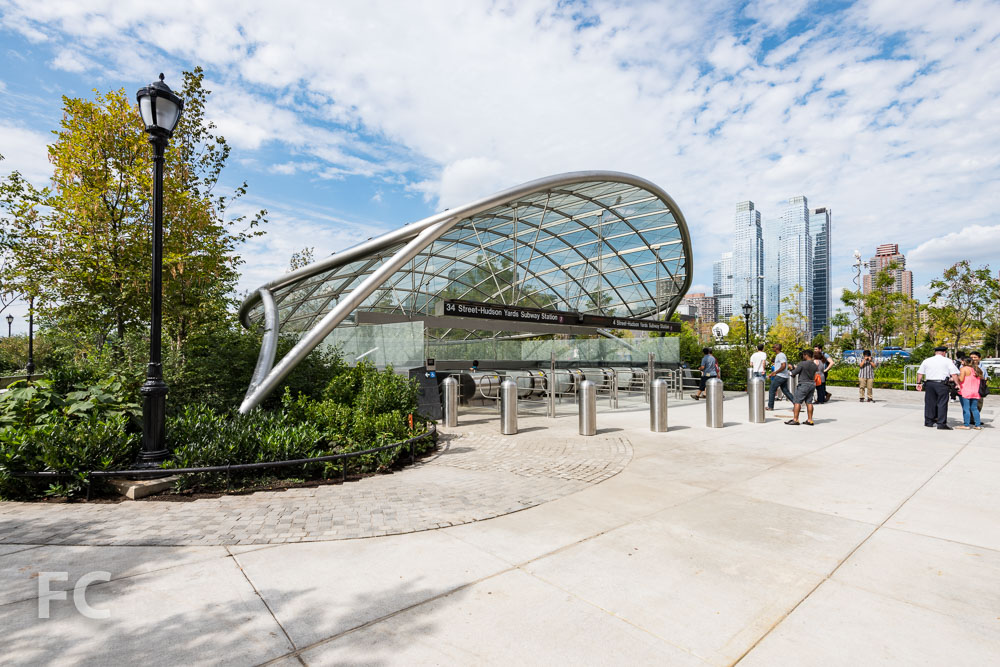
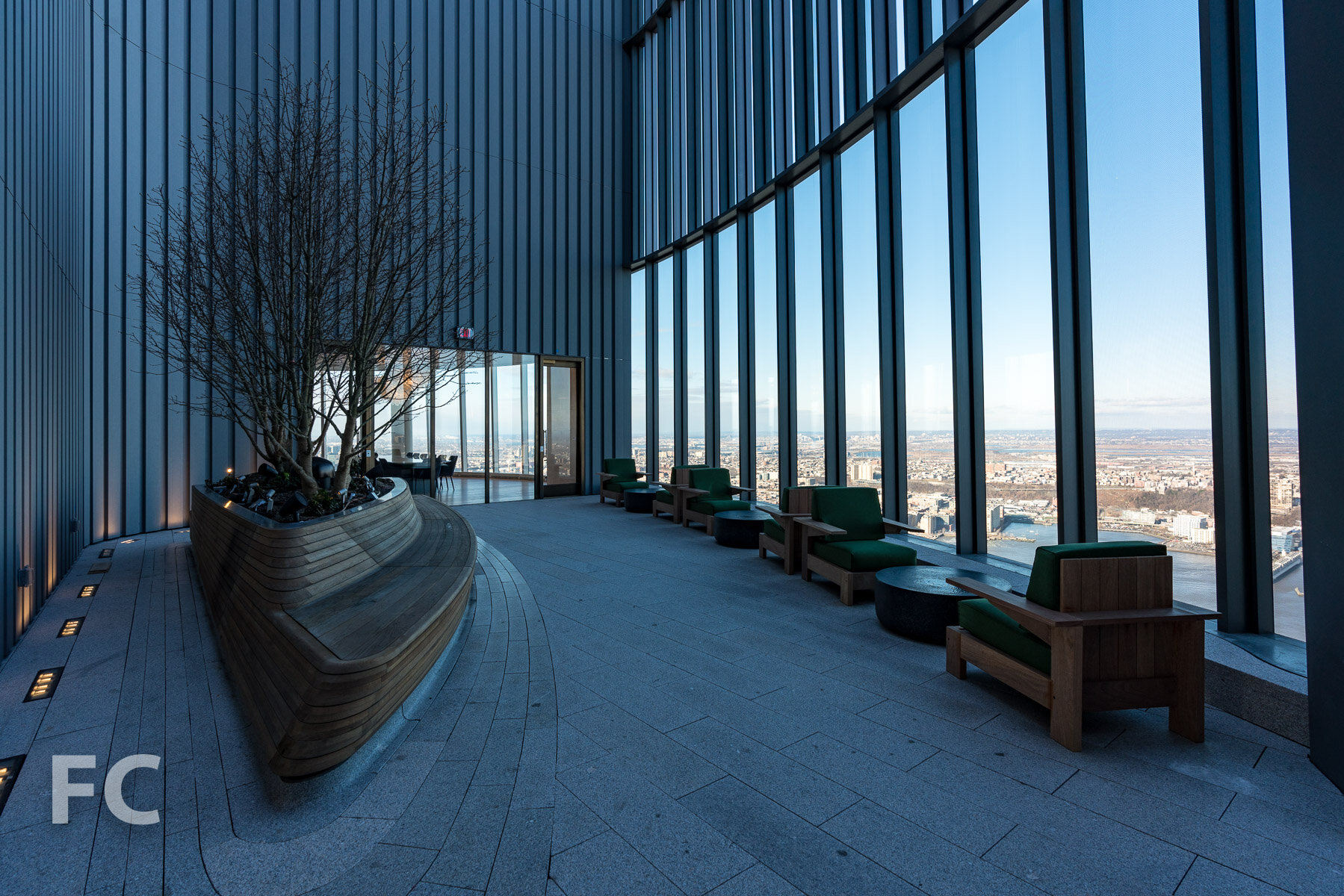
34th Street-Hudson Yards Station
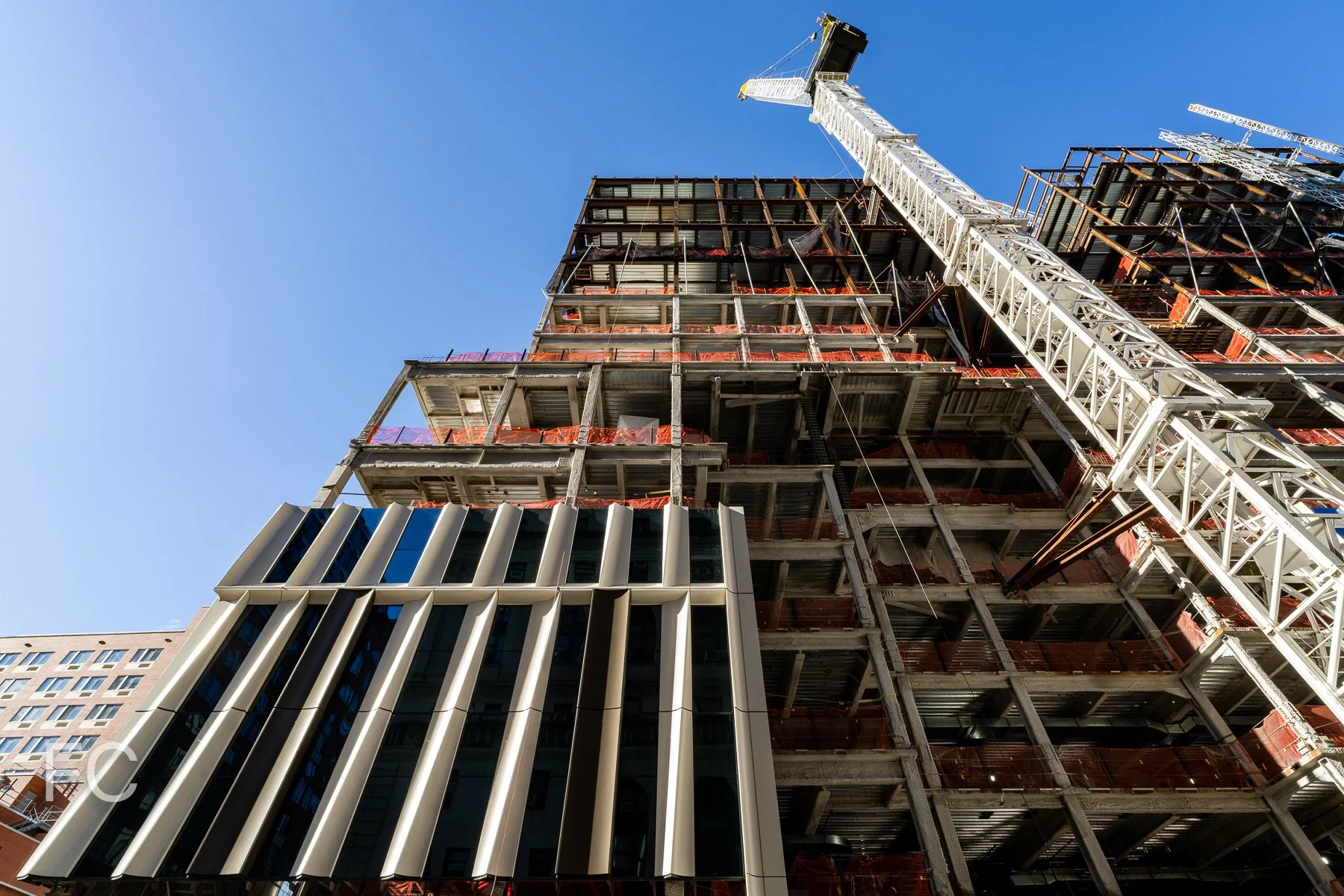
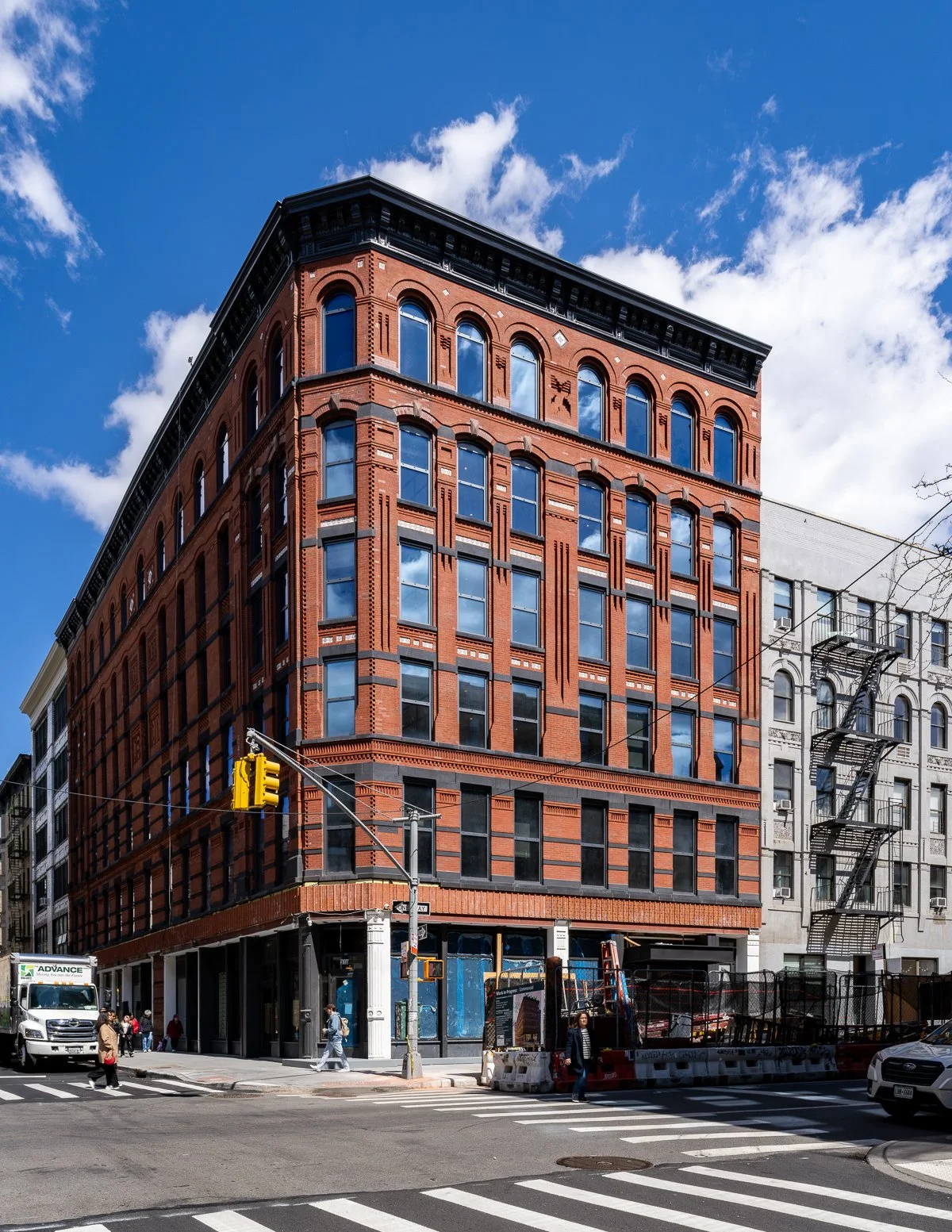
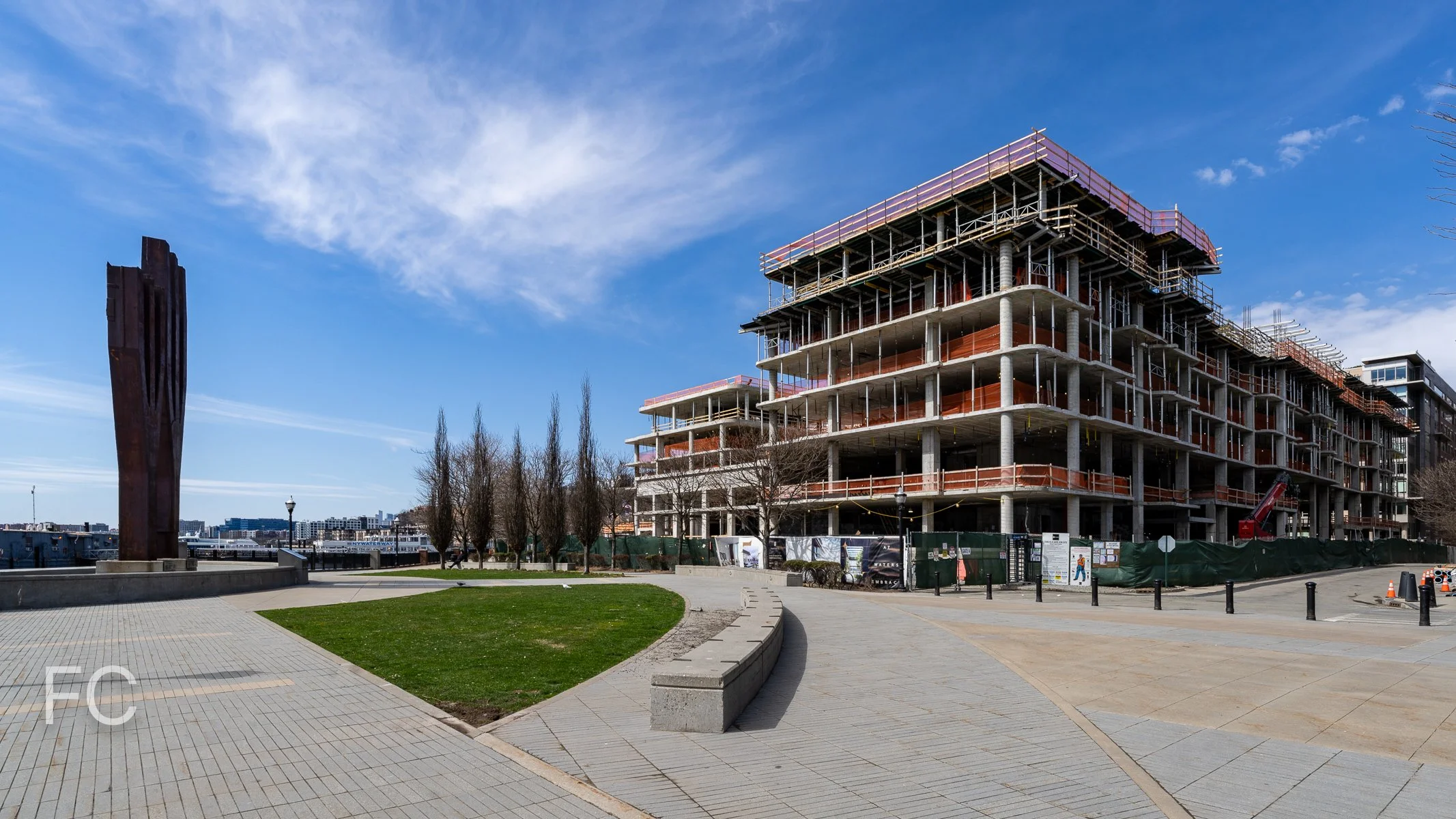
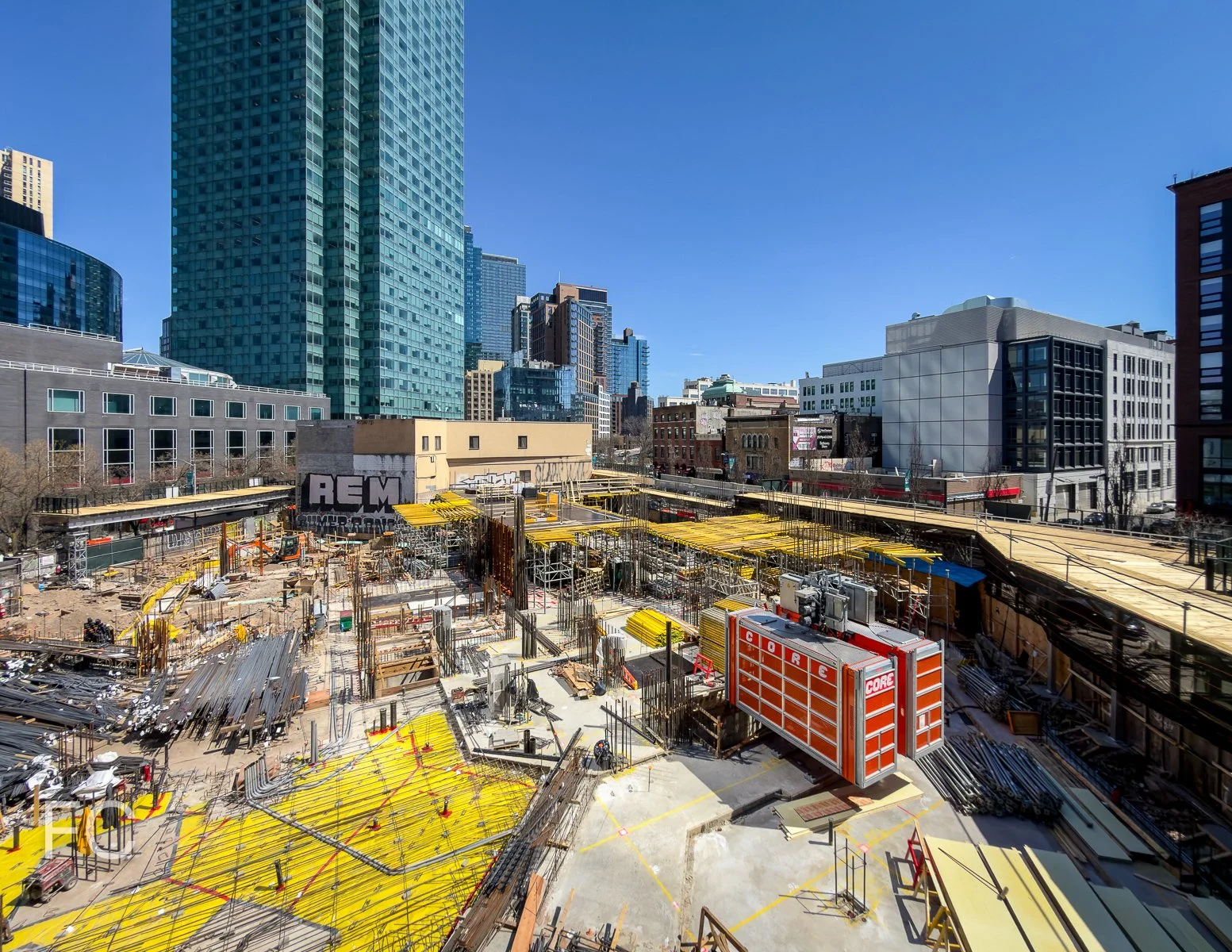
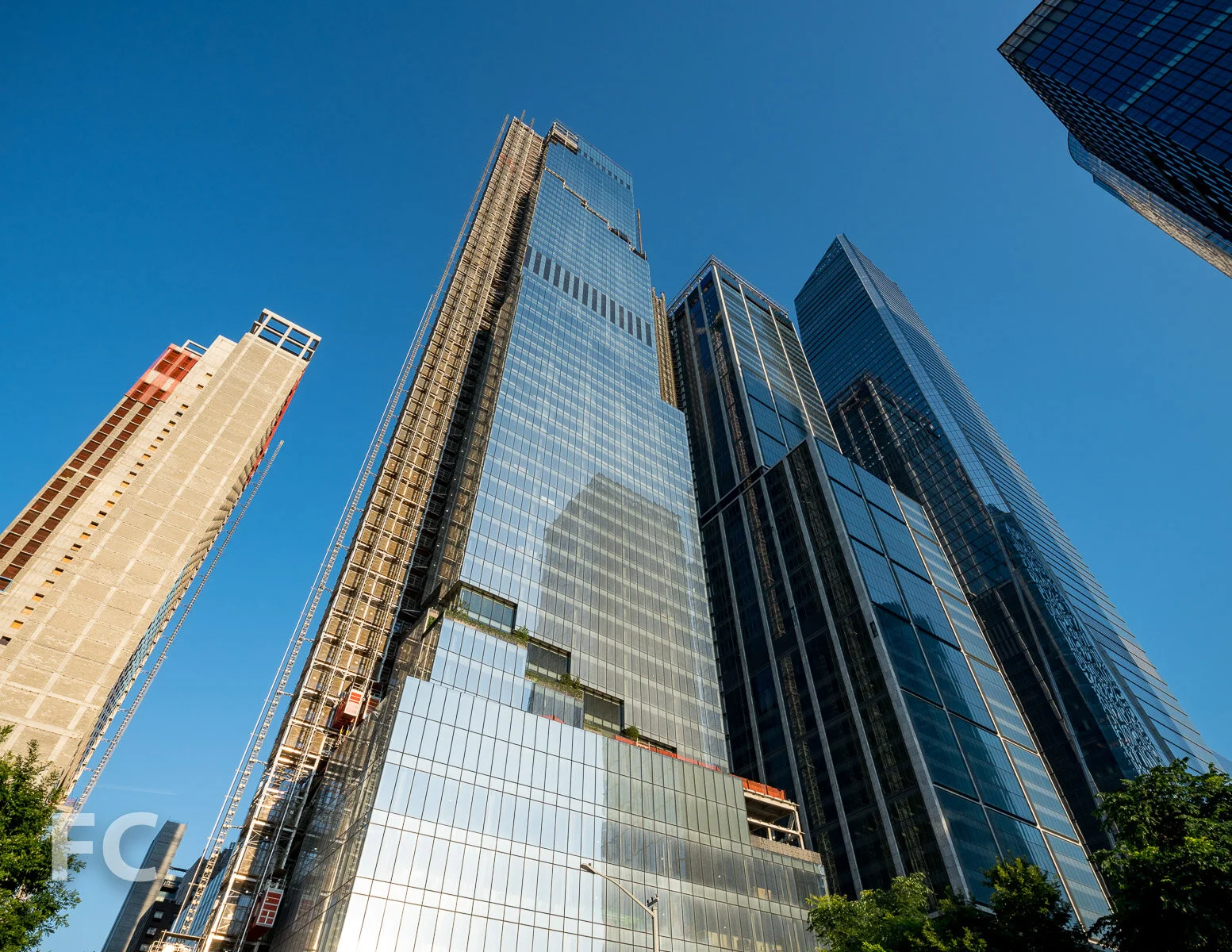
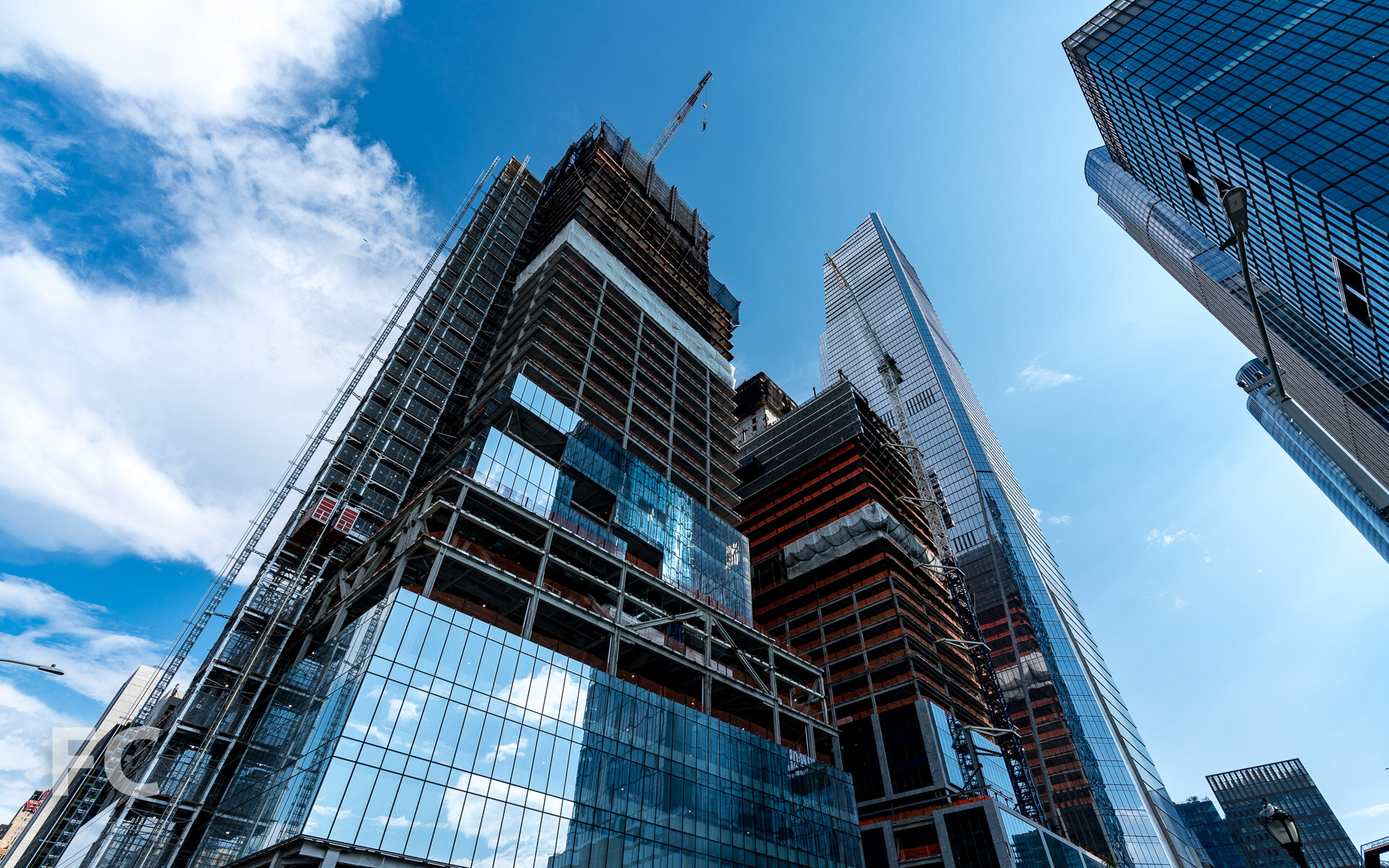
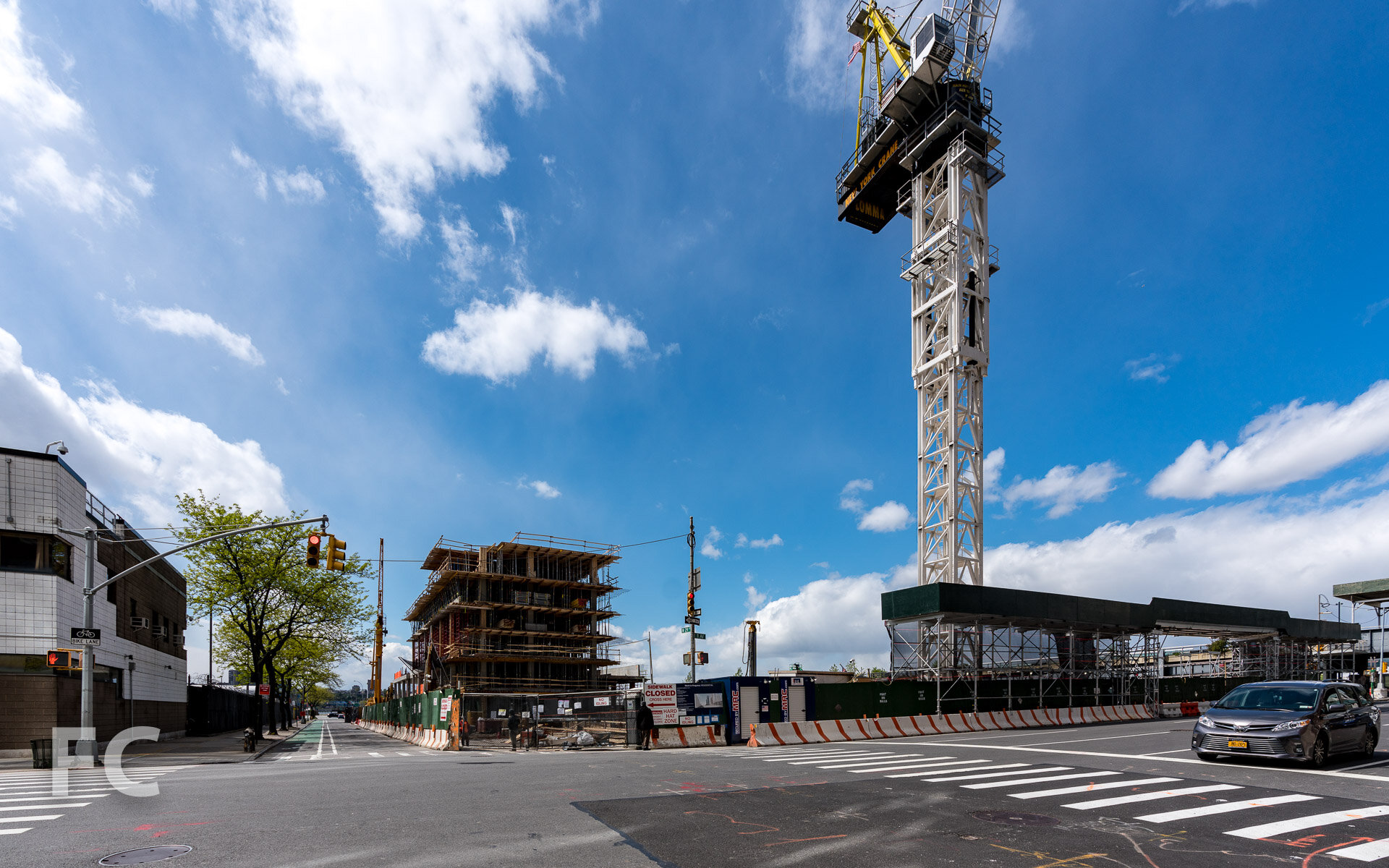
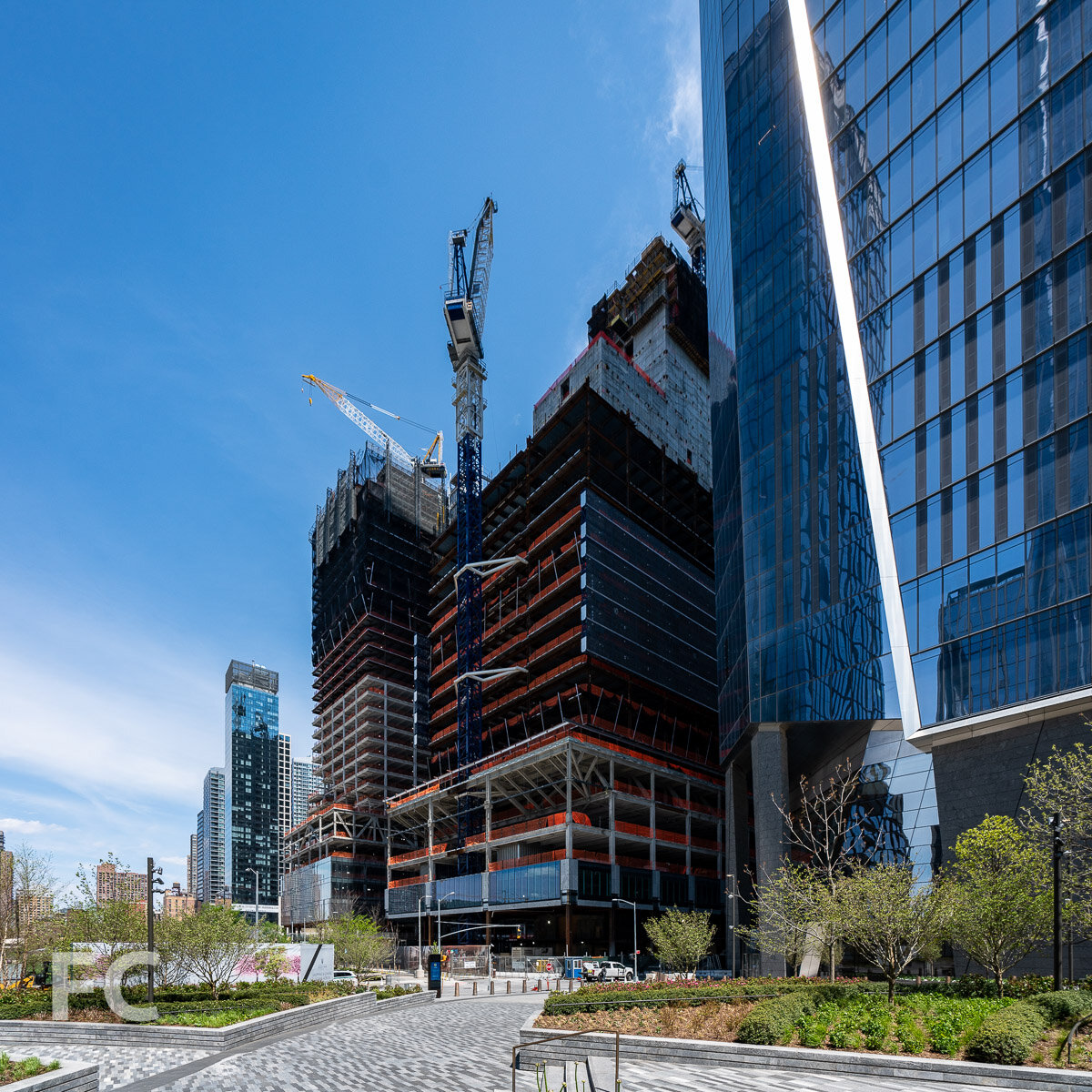
A small city within a city is under construction on the far west side of Manhattan. Known as Hudson Yards, this neighborhood will add millions of commercial and residential square footage over the next decade. With the first of Related's office towers in the mega development set to open next year, 10 Hudson Yards, a major concern was access to the area by mass transit. With the long-awaited opening of the 7 train extension yesterday, the area looks ready to embrace the throngs of new workers and residents.
Extending 1.5 miles from the former last stop at Times Square, the 7 line extension has cost 2.42 billion and opens 10 years after its initial proposal. The extension was originally part of the city's failed bid to host the 2012 Olympics and Mayor Bloomberg's plan to build a football stadium for the Jets on the Hudson Yards site. Though both projects failed, the subway extension was approved and construction started in 2007.
Station entries, designed by Dattner Architects in partnership with WSP I Parsons Brinckerhoff, are located within the newly opened Hudson Park and Boulevard from landscape architect Michael Van Valkenburgh. The metal and glass forms complement the organic shapes of the landscape elements that define the park. Underground, the organic theme continues, with an elliptical mural, curving boundaries, and curved archways that reference the beloved TWA Flight Center by Eero Saarinen at the JFK airport. The station provides travelers with many modern conveniences, including air conditioned platforms for year round comfort and inclined elevators.
Architects: Dattner Architects; Engineers: WSP I Parsons Brinckerhoff; Program: Infrastructure; Location: Hudson Yards, New York, NY; Completion: 2015.
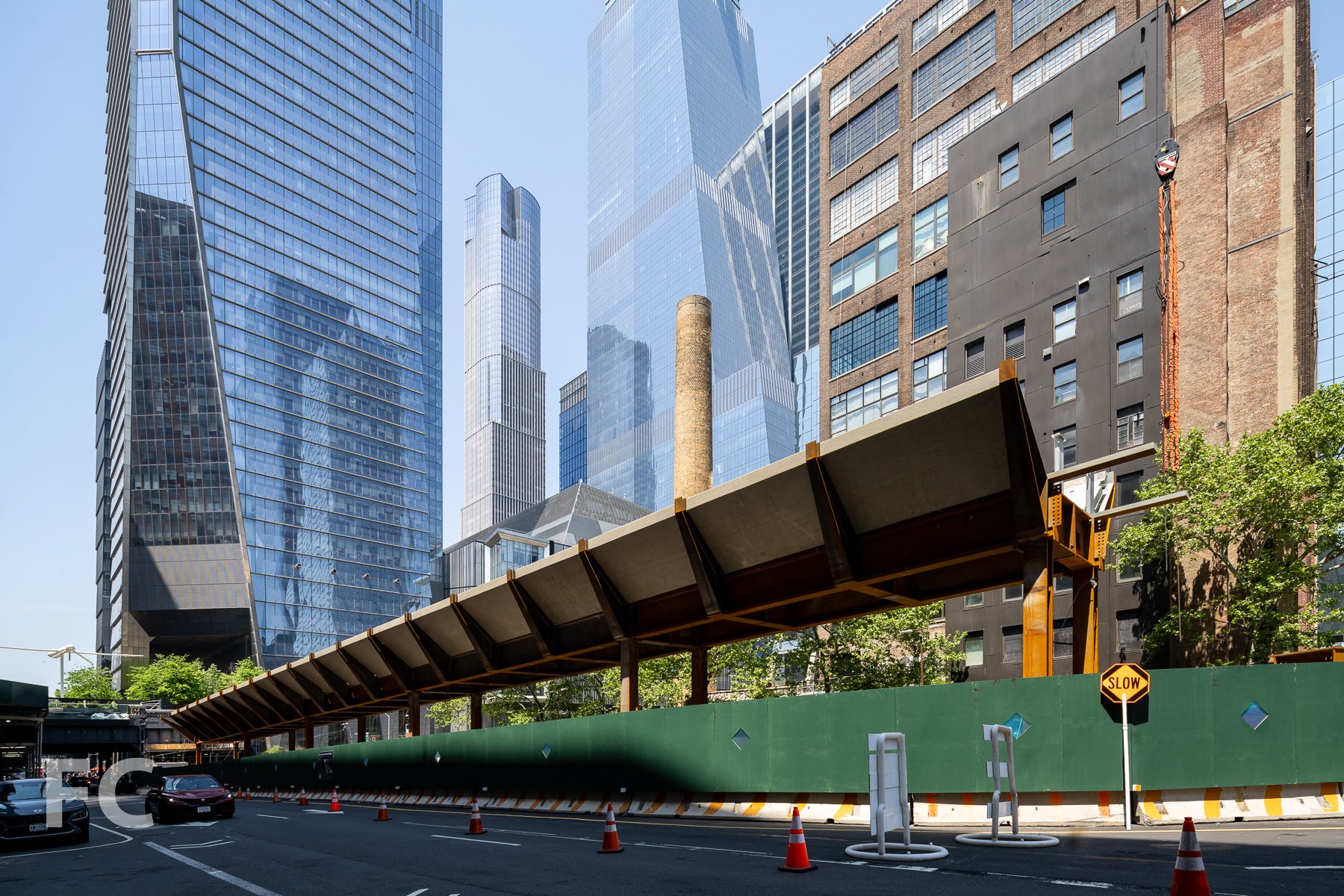



Hudson Park & Boulevard
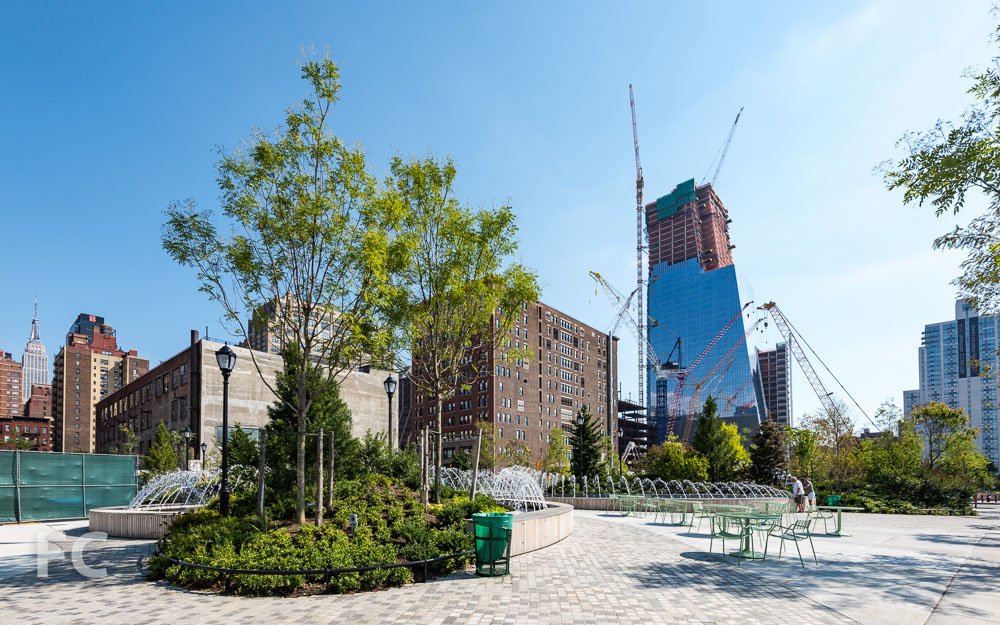
In advance of the 7 train extension expected later this year, a new park that surrounds the station entrances has opened to the public. Designed by Michael Van Valkenburgh Associates, this is the first phase of the eventual 4-acre park that will extend from West 33rd to West 39th Streets and is bounded by 10th and 11th Avenues. Phase one extends to West 36th Streets, with the northern second phase yet to be built. Besides ample bench and table seating, there are lawns, fountains, a structure that houses restrooms and a kiosk, and a playground. The subway entrances have been designed by Dattner Architects and will open later this year with the 7 train extension.
Landscape Architects: Michael Van Valkenburgh Associates Inc.; Architects: Dattner Architects; Program: Park, Transit; Location: Hudson Yards, New York, NY; Completion: 2015.

940 Madison Avenue - Apple Store - Upper East Side
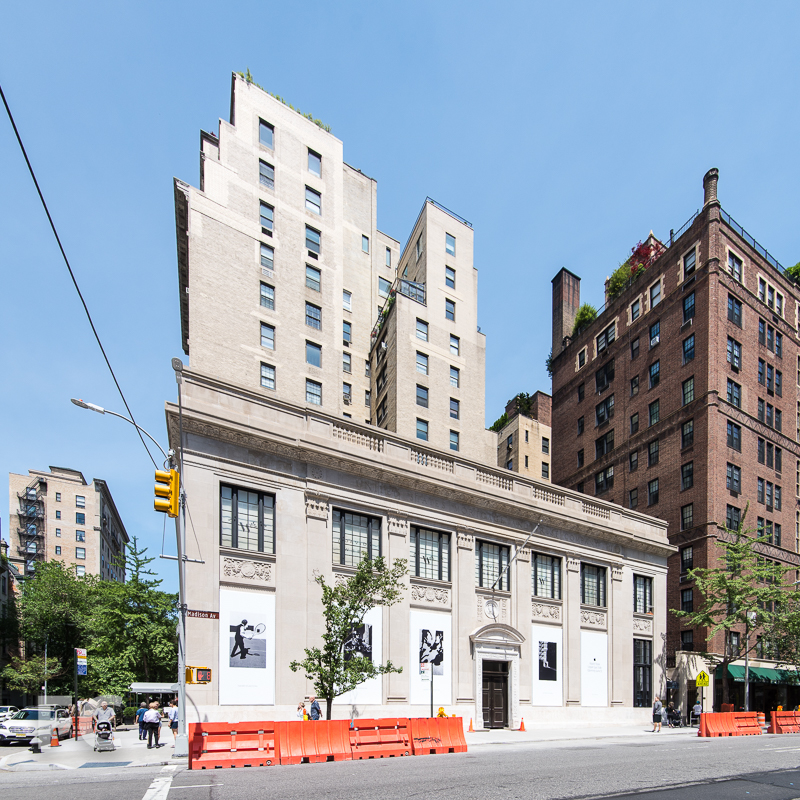
The Apple Store has arrived on the Upper East Side, opening to the public over the weekend in a renovated 1922 neoclassical bank building at 940 Madison Avenue. This is Apple's sixth location in New York City with another location rumored for Williamsburg sometime in the next year.
Southeast corner from Madison Avenue.
Northeast corner from Madison Avenue.
Visiting on Saturday morning, in its first hour of operation, the store was fairly busy. Employees handed out little hardbound books of the black and white iPhone photography of the neighborhood, some of which had been used in banners covering the store windows during construction and now adorn the interior walls. The ground floor space houses the various devices on display with Apple's typical wood tables. Neoclassical detailing is found throughout the space, with ornate pilasters and dark metal chandeliers.
Ground floor interior.
Device accessories are located on the basement level, reached by way of a grand stair. Certain accessories are featured in large, elaborate displays. There is a colorful grid of iPhone cases mounted on wood panels which are revealed to be drawers storing the cases in the corresponding color. Beats headphones are also displayed on a grid of wooden spheres that highlight the variety of colors offered. It's nice to see Apple breaking out of their established aesthetic and trying new approaches to display design. The bank's original vault is also located on the basement level and has been repurposed as a intimate space for trying on the Apple Watch Edition gold watches.
Grand stair.
Stair handrail detail.
Vault entry.
Vault entry detail.
Original vault door.
Vault door detail.
iPhone case display.
Detail of the iPhone case display.
Beats headphone display.
Detail of the Beats headphone display.
Though some of the neighbors have been resistive of Apple, going so far as to attempt lawsuits to block the store's opening, its a nice addition to the neighborhood that is appropriately scaled to the area.
Architects: Bohlin Cywinski Jackson; Program: Retail; Location: Upper East Side, New York, NY; Completion: June 13, 2015.
1 World Trade Center - One World Observatory
In yet another milestone at the World Trade Center site, the observatory at One World Trade Center opened to the public last Friday. Known as One World Observatory, the attraction reinstates views lost due to the tragic events of September 11. Almost 14 years later, the public can once again view the city from its highest point.
One World Observatory entry canopy.
Like much else in New York, the opening day was marred by long lines. Although those in line had timed tickets, those times came and went before you could even enter the building. Once inside, there were more lines as you waited to pass through the security screening. At least a pat down wasn't required. After passing through security, it's on to more lines as you make your way through corridors with a brief exhibit about the building. This exhibit feels like a lost opportunity to actually discuss the design and construction of the tower with more engaging content like models, renderings, and extensive construction photos.
Stairs down to observatory entrance.
One World Observatory entry from the World Trade Center Transit Hub.
Ticket counter.
Observatory entrance.
Almost an hour after the time designated on the ticket, its actually time to enter the "skypod" elevator that takes you to the 102nd floor in less than a minute. The animation on three of the interior panels plays like a time lapse in Google Earth, illustrating Lower Manhattan's evolution from the time of the earliest European settlers to present day. It's very well done but hard to experience while crammed into an elevator.
Elevator vestibule.
Time lapse animation inside the elevator cab.
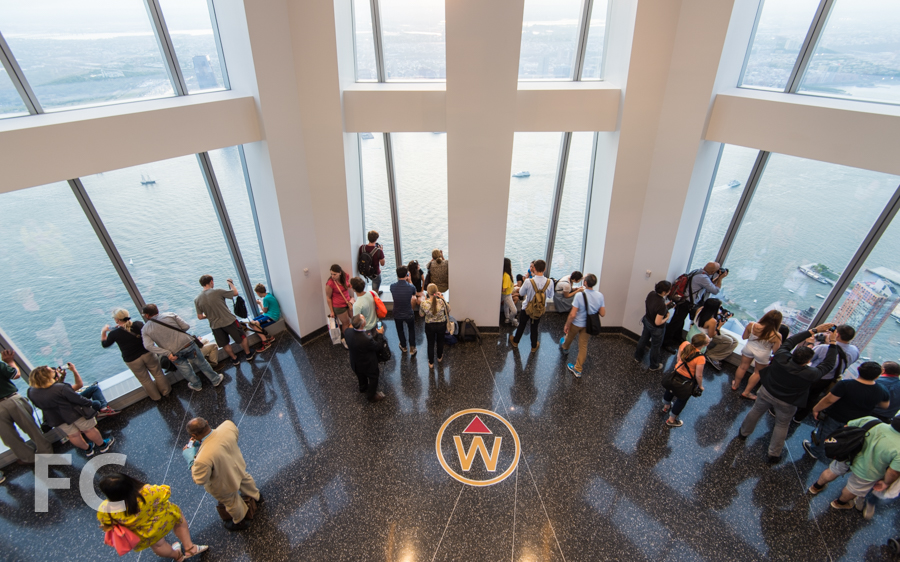
Arriving at the 102nd floor, there is yet another video presentation to watch on a screen composed of panels extruded in and out a few inches. Scenes of New York life play for several minutes before finally the screen moves upwards into the ceiling, revealing a dramatic view towards Midtown. This is but a teaser for what awaits below on floor 100, where visitors can see the entire city from double height glass. Unlike other observatories in the city, you are always viewing the city from inside, which means your photos will have to contend with reflections on the windows, exacerbated by the sloped facade and unfortunate placement of mechanical ventilation grills at the foot of each window. Even so, the views are spectacular, revealing old favorites, recent additions to the skyline, and the scores of new construction underway in the city. Nearby, you get up close views of the rest of the World Trade Center Site, Herzog & de Meuron's 56 Leonard and Robert Stern's 30 Park Place. Further afield, the rapid development of Brooklyn's waterfront parks and downtown towers are on display. Looking to Midtown, the eye dances from Riverside Park,to the Hudson Yards district, to Times Square, and up to 432 Park Avenue's slender tower rising above it all.
First glimpse of the views.
Lower Manhattan with the Transit Hub, 3 WTC, and 4 WTC (center).
56 Leonard.
30 Park Place.
Governors Island.
Downtown Brooklyn and Brooklyn Bridge Park along the waterfront.
View towards Midtown.
The west side of Manhattan.
The Jersey City waterfront.
There are many touristy attractions on the observation floors that try to complement the experience but only feel like distractions. City Pulse, a ring of touch screens that present images of the city and real time information from social sites, attempts to act as a tour guide that's tapped into the web. It's presence feels distracting, unnecessary and actually hinders visitors who line up around it to get to the windows behind. What would be more useful is if the cell service at the observatory level was a bit stronger so the visitor could actually share their experiences on social sites more easily. Service was often spotty at best. Among the other offerings, there is a restaurant and gift shop if you need to take a break from the views. After you have taken in every conceivable angle of the city and head back down the elevator, another animation shows the visitor what the area will look like with the full World Trade Center site master plan built out, including the old design for Tower 5.
The City Pulse kiosk at the south viewing station.
The City Pulse kiosk at the north viewing station.
The Sky Portal attraction.
Undoubtedly, in the weeks and months to come the kinks will get worked out and visitors will have a smoother visit. Its wonderful to once again see this area of the city from such heights and given the pace of development, it will be an ever changing vista.

Holiday Train Show
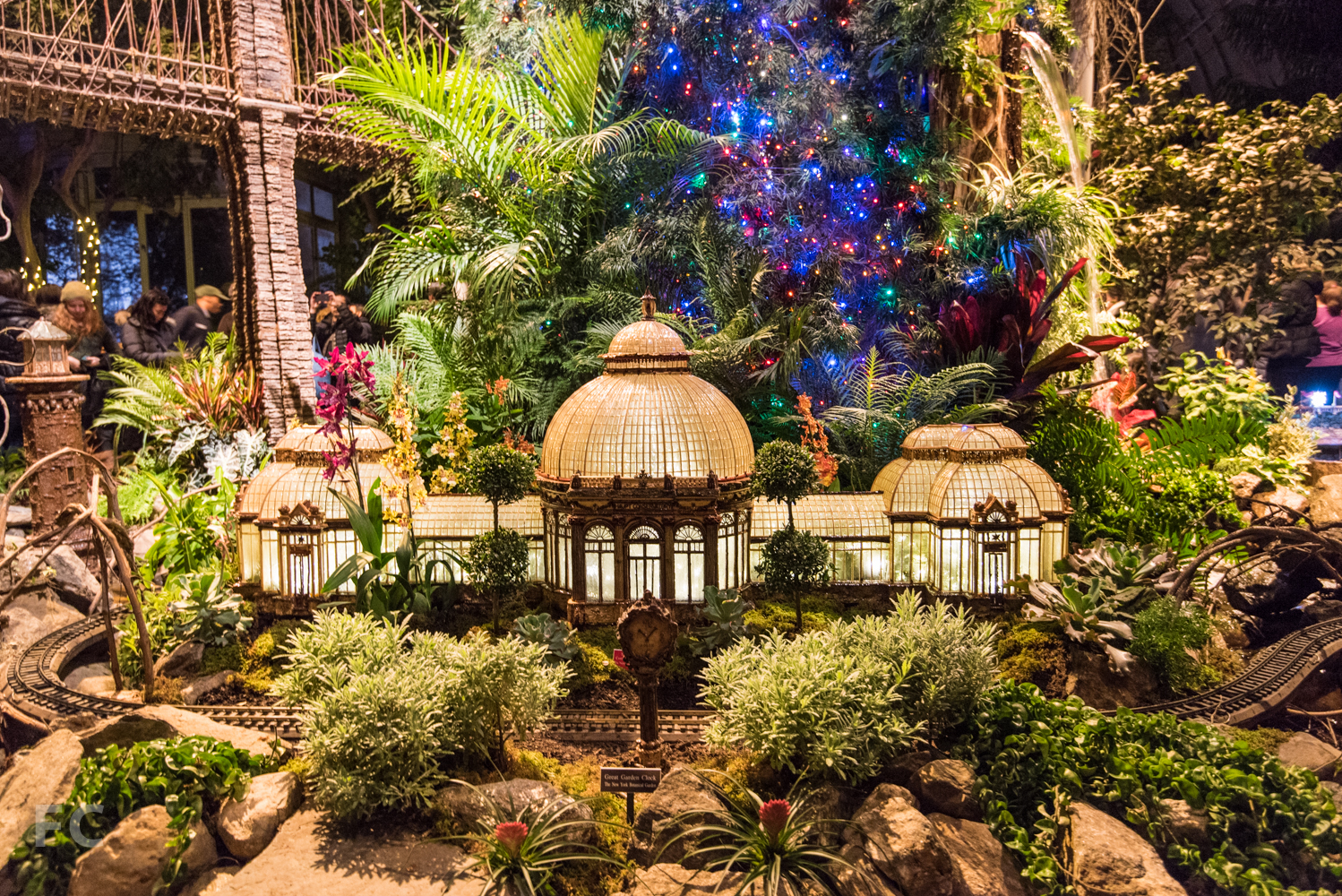
Now in its twenty-third year, the Holiday Train Show at the New York Botanical Garden is a holiday tradition among many in the city. Over 150 architectural icons are on display in the Haupt Conservatory, with model trains running on tracks that weave their way through the model structures rendered in natural materials. Paul Busse and his team at Applied Imagination have created each of the landmarks for the show. They have designed train exhibitions for gardens across the country, including Chicago, Las Vegas, New Orleans, and Washington, D.C. The Holiday Train Show will run through January 19, 2015.
Haupt Conservatory at the New York Botanical Garden.
Haupt Conservatory, 1902.
Brooklyn Bridge, 1883.
Manhattan skyscrapers.
Detail of Grand Central Terminal, 1913.
Penn Station, 1910 (demolished, 1963).
Park Avenue Armory, 1880.
Detail of Park Avenue Armory.
Guggenheim Museum, 1959.
TWA Terminal at JFK Airport, 1962.
TWA Terminal at JFK Airport, 1962.
Yankee Stadium, 1923 (demolished, 2010).
Rose Center for Earth and Space, The American Museum of Natural History, 2000.
Macy's department store, 1902.
Cooper Hewitt Smithsonian Design Museum
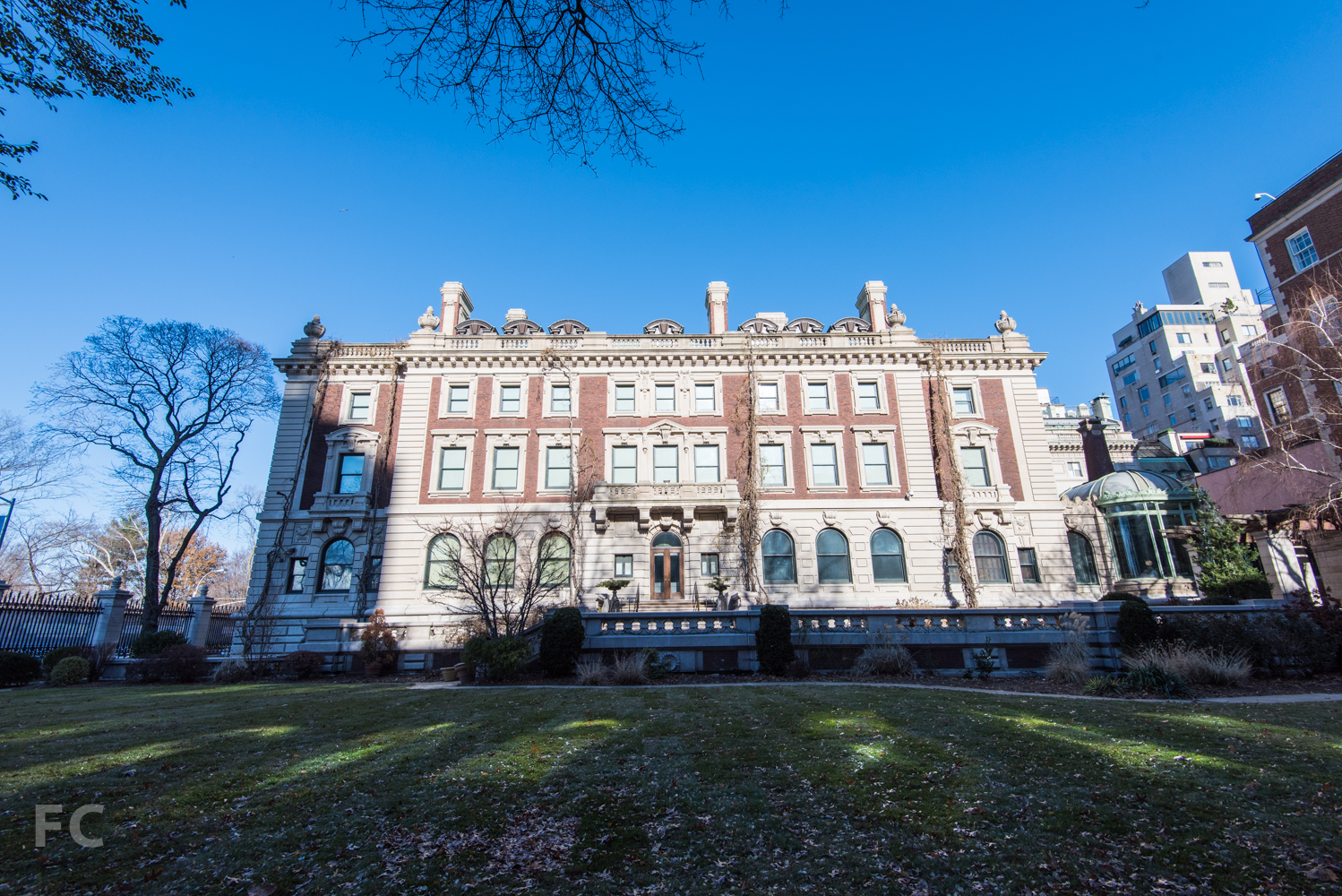
After three years of renovation, the Cooper Hewitt, at 2 East 91st Street, has reopened to the public. The Smithsonian Institute's National Museum of Design has undergone a major overhaul of its home in the former Carnegie Mansion, located in the Carnegie Hill neighborhood on the Upper East Side of Manhattan.
The mansion was designed by Babb, Cook & Willard and completed in 1902, with Andrew Carnegie and his family moving in on December 12. No doubt the museum has chosen its reopening date of December 12 for that significance. On the south side of the block lies the Carnegie Mansion Garden, designed by Guy Lowell and Richard Schermerhorn Jr. in 1901.
Andrew Carnegie's story is quintessentially American. He emigrated to the U.S. from Scotland with his parents in 1848, at the age of 12, after his father's job as hand loom weaver was displaced by the steam loom technology born of the Industrial Revolution. Ironically, Andrew would eventually find wealth investing in other technologies of the Industrial Revolution, including railroads, bridges, and oil derricks. In 1901, Carnegie would become the richest man in the world with the sale of his company, Carnegie Steel, to J.P. Morgan. This resulted in the founding of the nation's first billion dollar company, U.S. Steel. Carnegie would spend his later years devoted to giving away his fortune through philanthropic endeavors and managed by his Carnegie Corporation of New York, established in 1911. Some of the current generation of tech titans have followed a similar path with their fortunes, such as the Bill and Melinda Gates Foundation.
Carnegie died in 1919, but his wife lived on in the mansion till her death in 1946. With the family gone, the mansion transitioned into an institutional role. Initially home to the Columbia School of Social Work in 1949, the mansion would eventually be donated to the Smithsonian Institute to become the home of the Cooper Hewitt in 1972. The landmarked structure was renovated by Hardy Holzman & Pfieffer Associates and opened its doors to the public on October 7, 1976. A subsequent renovation of the fourth floor spaces and the linking of the two adjacent townhouses to the musuem followed in 1998 by Polshek & Partners (now Ennead Architects).
The museum's newly opened renovation began in the planning stages in 2006, but construction didn't begin until 2011 with the closing of the museum. Gluckman Mayner Architects with Beyer Blinder Belle Architects & Planners were brought in to helm the extensive renovations, with additional design support from Diller Scofidio + Renfro and Pentagram. The three year construction project has resulted in five times the amount of space previously available for the permanent exhibition and sixty percent more space for special exhibitions.
Though the renovation project has been long, it has proven to be well worth it. The public has been given an engaging museum that connects with our society's fascination with technology and history. Like a Wes Anderson movie, the visitor inhabits a place from one bygone era while perusing objects from many others. Exhibits are well integrated into this unique context for a museum. Rather than residing in the typical white walled box, objects often reside within the mansion's details, such as the Process Lab's exhibits located within the shelving of Carnegie's beloved library. There is a wonderful contrast between the mansion's 19th century details and the new, contemporary interventions like the information desk, new circulation stair, or the 4K touch screen tables throughout the building. As for the technology that has been infused throughout the renovated museum, visitors of all ages seemed thoroughly engaged. Technology can sometimes come across as a gimmick in its implementation in a museum, but the Cooper Hewitt seems to have avoided such pitfalls.
New York has been given a fantastic, revitalized museum to celebrate design and inspire a new generation to create the technology of the future.
Southwest corner from 5th Avenue.
Southwest corner of the gate with new LED lighting feature and signage.
New canopy signage at south gate by Diller Scofidio + Renfro.
New canopy signage at south gate by Diller Scofidio + Renfro.
South façade from the garden.
South façade from the garden.
Northwest corner from 5th Avenue.
North façade from East 91st Street.
North entrance.
First Floor
Information desk by Diller Scofidio + Renfro in the Great Hall.
4K touchscreen table with interactive software by Local Projects.
Interactive touchscreen software by Local Projects.
The Great Hall, formerly the Main Hall.
Ceiling detail of the Great Hall.
Signage by Pentagram.
Signage by Pentagram.
Process Lab entrance.
Fireplace in the Process Lab, formerly the Library.
Detail of the Process Lab ceiling.
Maira Kalman Selects in the Marks Gallery, formerly the Drawing Room.
Detail of the Marks Gallery ceiling.
Entry to the Design Process Galleries, formerly the Reception Room.
Entryway in the Design Process Galleries, formerly the Dining Room.
Beautiful User exhibits in the Design Process Galleries, formerly the Dining Room.
Detail of the fireplace's walnut paneling.
Gallery signage.
Beautiful User exhibits in the Design Process Galleries, formerly the Breakfast Room.
SHOP Cooper Hewitt located in the former Conservatory.
SHOP Cooper Hewitt, formerly the Picture Gallery.
The Rear Hall leading to SHOP Cooper Hewitt.
The great stair.
Detail of carved oak ornamentation on the great stair.
Second floor hall.
Entry to the Models & Prototypes Gallery, formerly the Billiard Room.
The Models & Prototypes Gallery, formerly the Billiard Room.
View of Staircase Hall from the Models & Prototypes Gallery.
Passion for the Exotic exhibition located in the former Family Library, or Teak Room.
Entryway of the Family Library.
Detail of the ornamentation in the Family Library.
Entryway to the Hewitt Sisters Collect exhibit, located in the former bedrooms for Mr. and Mrs. Carnegie.
The Hewitt Sisters Collect exhibit.
The Hewitt Sisters Collect exhibit.

The Hewitt Sisters Collect exhibit.
Making Design exhibit, formerly Mrs. Carnegie's Sitting Room.
New circulation stair by Gluckman Mayner.
Stairwell.
Stair rail detail.
Stairwell signage and way-finding board by Pentagram.
Tools: Extending our Reach exhibit on the third floor.
Controller of the Universe (2007), by artist Damián Ortega.
3D print model of the Carnegie Mansion.
Scale model of a tunnel-boring machine.
Detail of tunnel-boring machine model.
Architects: Gluckman Mayner Architects, Beyer Blinder Belle Architects & Planners, Diller Scofidio + Renfro; Landscape Architects: Hood Design; Engineering: Goppion S.P.A.; Exhibition Design: THINC; Visitor Experience: Local Projects, GE, Sistelnetworks, Undercurrent, Ideum; Graphic Identity: Pentagram, Village; Location: Carnegie Hill, New York, NY; Completion: December 12, 2014.
Bush Terminal Park
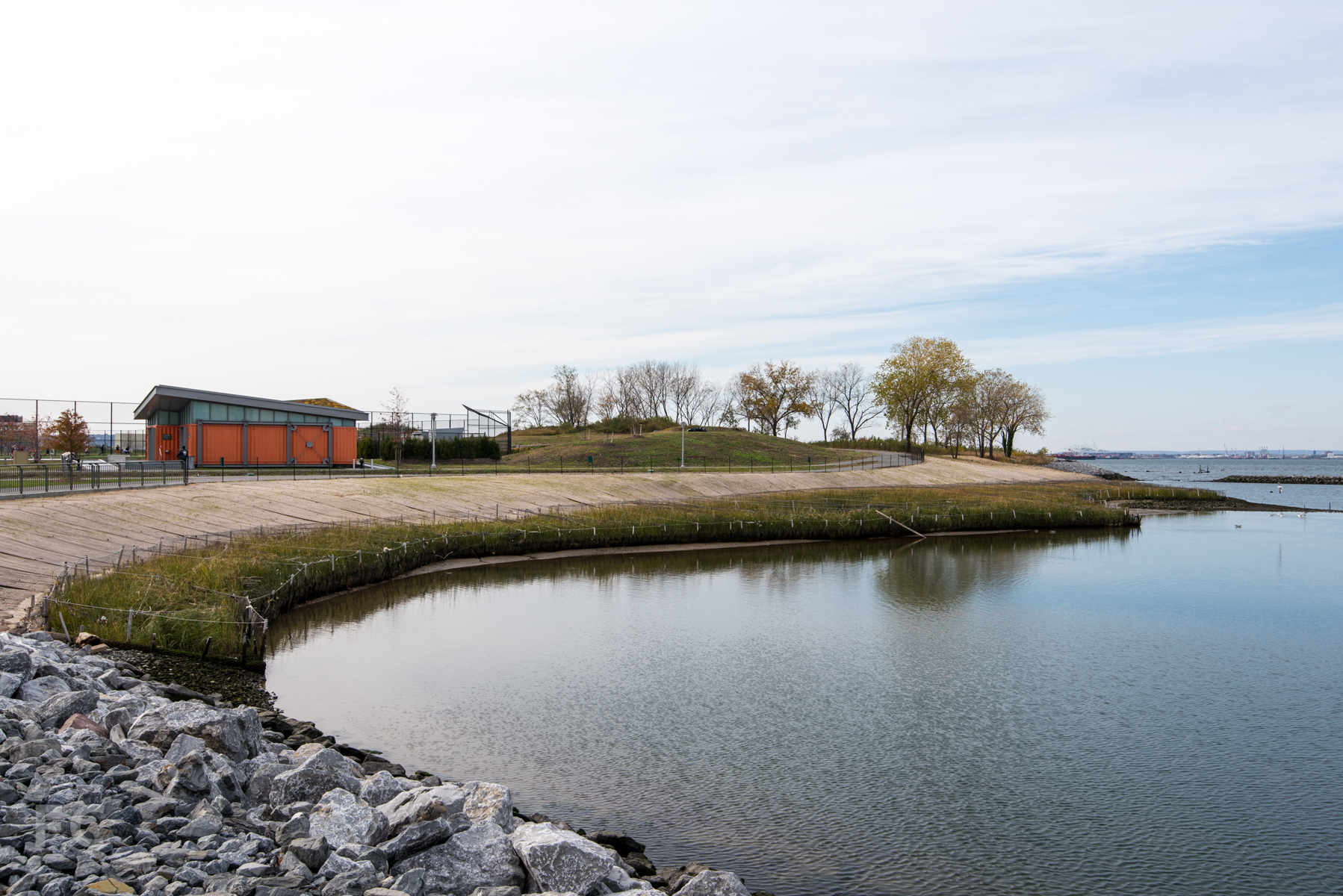
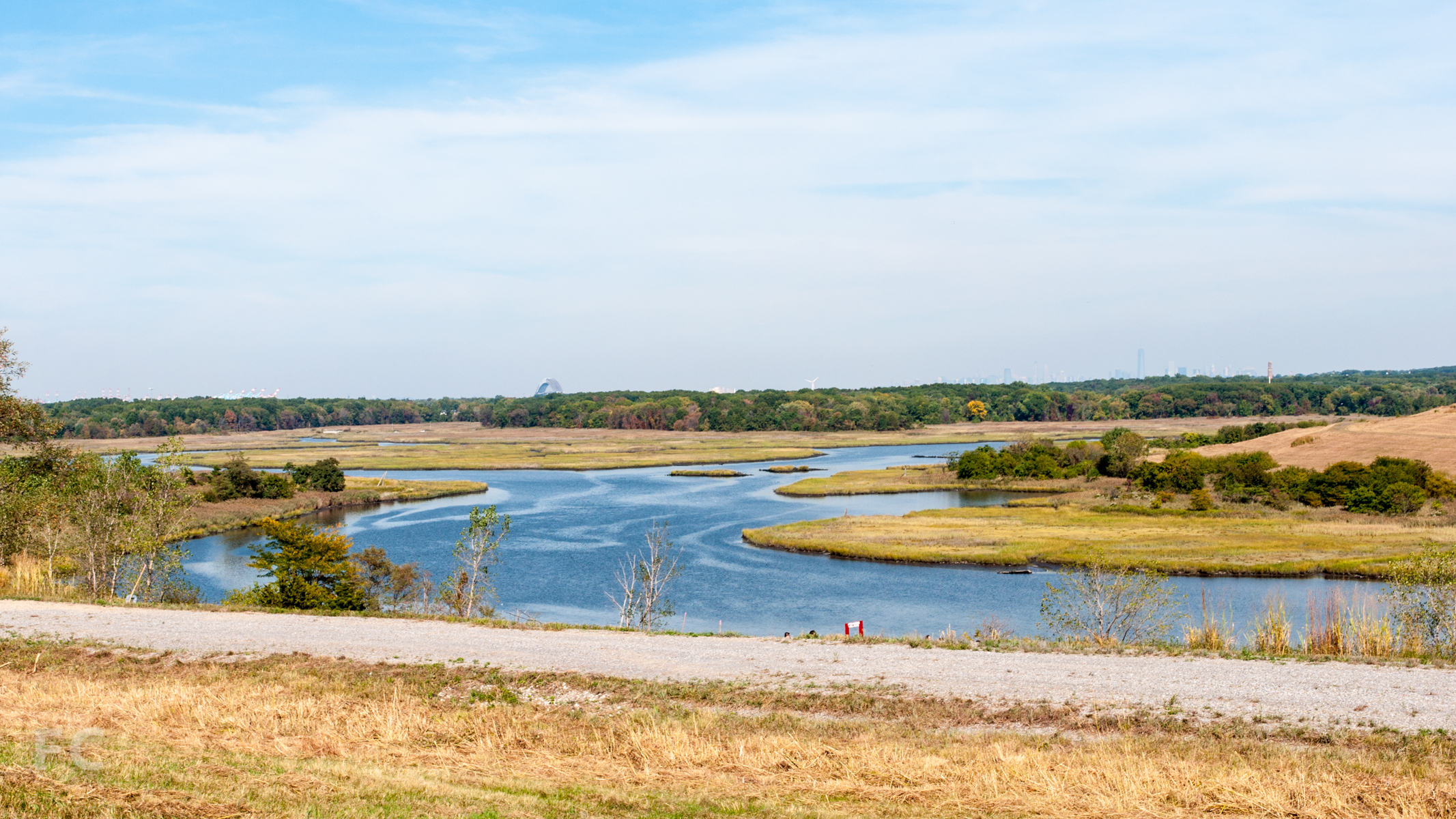
Over the weekend, the much anticipated Bush Terminal Park opened in the Sunset Park neighborhood of Brooklyn. The park is located on a former brownfield site that stretches from 43rd to 51st Street on the south Brooklyn waterfront. Along with terrific views of Lower Manhattan and New Jersey, the park also offers visitors: two soccer and baseball fields, tidal wetlands, a sloping lawn, a wooded area, harbor view points, walkways, and a sustainable comfort station. The community has been waiting for the completion of the park for several years and it looks to be worth the wait.
Landscape Architects: AECOM, Adrian Smith Landscape Architects; Architecture (Comfort Station): Turett Collaborative Architecture; Program: Park; Location: Sunset Park, Brooklyn, NY; Completion: 2014.



Whitney Museum of Art - Uptown
It's just past midnight and the atmosphere is more party than funeral for the final hours of the Whitney Museum of Art's home on the Upper East Side. The crowds are lined up around the block, waiting to get in. Inside, wall-to-wall people, some with more than a slight buzz on, meander through the Jeff Koons retrospective that will close out the museum. The work is quite broad in topic and medium, but the artist is probably best known to the general public for his highly reflective reproductions of balloon animals and other mundane, kitschy objects. Although most of these were created long before the invention of the ubiquitous smartphone camera or Instagram, the pieces are perfectly suited for the current "selfie" craze. It was near impossible to move about the galleries without disrupting some group taking selfies in anything that reflected. Among all the crowds someone was even able to tag the wall of the fourth floor gallery just after midnight during the marathon 36 hour closeout of the building.
The southwest corner from Madison Avenue. October 19, 2014.
At 11 PM last Sunday, the Upper East Side location of the Whitney closed for the final time. Next year, the Breuer building will become a satellite location for the Met in an eight year agreement. The Whitney will reopen next spring in its new location at the main entry to the High Line. Breuer's building was but one chapter in the Whitney's long history of housing its collection. Gertrude Vanderbilt Whitney founded the Whitney in 1931 from her Whitney Studio (1914) and Whitney Studio Club (1918). The building was located at 8-12 West Eighth Street with renovations by G. McCullough Miller and Augustus L. Noel. Pressure quickly mounted from donors and patrons to leave the bohemian downtown for a more refined neighborhood. In the ensuing decades, alliances were attempted with numerous other institutions in the city, including a failed deal to relocate the collection to its own new wing at the Metropolitan Museum of Art in 1945 before falling apart by 1948. Robert Moses, serving on the board of the Met, fought against the plan due to its negative visual impact on Central Park. The failed alliance with the Met was followed by another attempted agreement with the Met and MoMa together, and a separate deal that led to their brief move into a wing of the MoMa in 1949 at 22 West 54th Street. Conditions proved unacceptably small and by 1958 the museum started looking for a new home three times its current size, in a building of its own.
The southwest corner from Madison Avenue. October 19, 2014.
In June of 1963, the Whitney organization announced the purchase of a 13,000 square foot parcel of land at 945 Madison Avenue, already under excavation for a co-op with financing troubles. After a selection process for an architect, which included Louis I. Kahn and Edward Larrabee Barnes, Marcel Breuer was announced as architect and released a design by December of the same year. Anyone familiar with the museum's decades long attempts at expanding Breuer's building will understand the incredible speed at which the initial building took shape.
The west elevation along Madison Avenue. October 19, 2014.
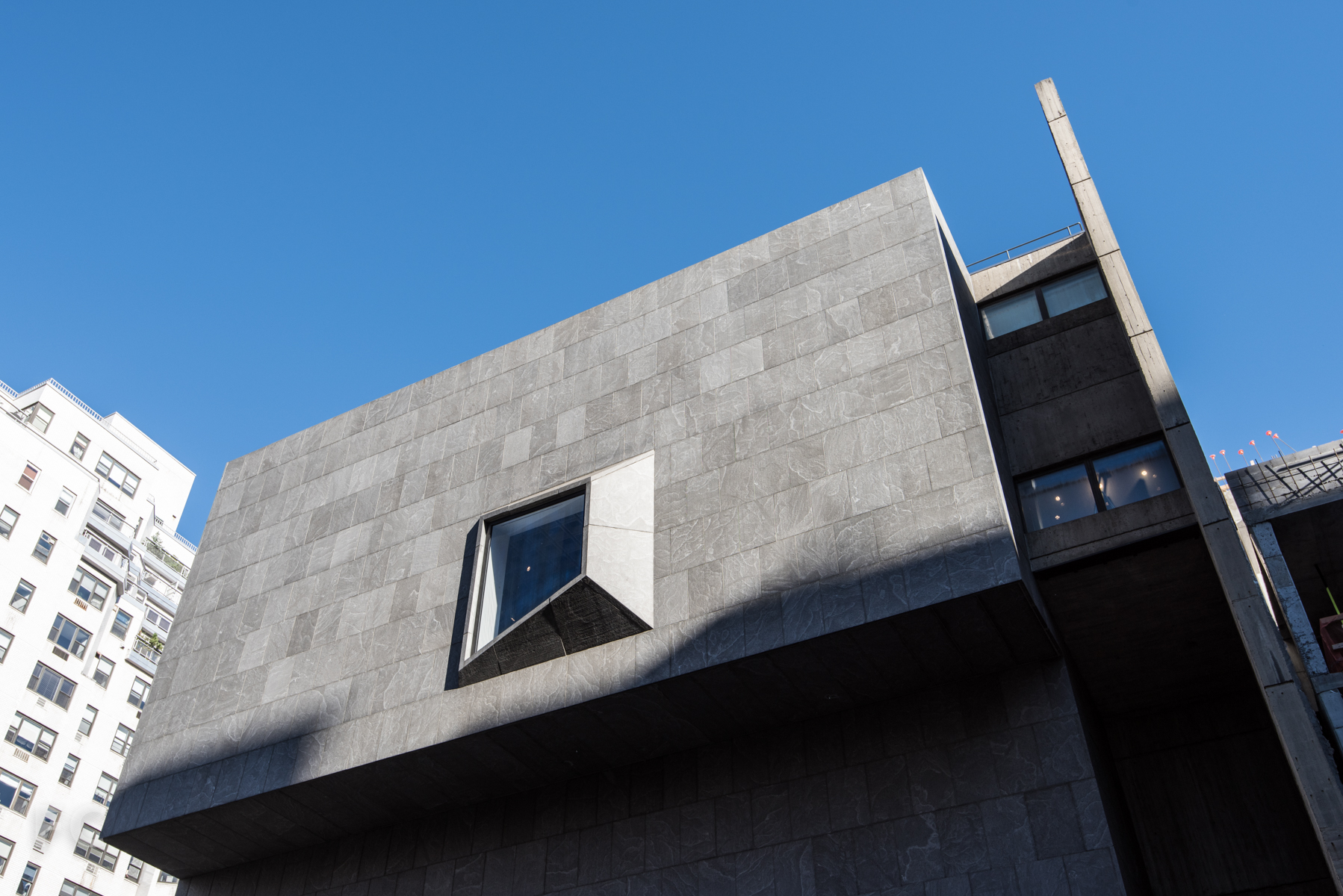
Breuer's design occupied a corner site at Madison Avenue and 75th Street. Intended as sculpture, the project was conceived as three cantilevered boxes over a sunken court. The form appeared as an inverted diagram of New York's ubiquitous tiered towers To emphasize its sculptural quality and create a separation from the adjacent buildings, shear walls of exposed, board-formed reinforced concrete bookend the granite-clad cantilevers with a glass enclosed stairwell in between. Bush-hammered concrete aggregate enclose the stairwells, contrasting well with the large expanses of smooth, white gallery walls. Other than the stairwell and the all glass west lobby entry, the only other apertures above ground are the six angled bay windows of varying size on the north facade and a larger version on the west facade, which looms over Madison Avenue from the uppermost cantilever like the eye of Cyclops. There are galleries on the ground floor and within each of the three cantilevered volumes. A library and staff offices occupy the top floor, with an outdoor terrace created from its street setback. In the galleries, bluestone and split-slate line the floors and a concrete ceiling grid accommodates movable partitions and the incandescent lighting system. Below ground, a restaurant and sunken court for displaying large sculptures can be accessed from the lobby via an open, sculptural stair of rough concrete, continuing the design language of the gallery circulation stairs above.
The northwest corner from Madison Avenue. October 19, 2014.
When it opened in 1966, the Whitney was met with mixed reviews from the critics for its stark, heavy form at a time when most projects emphasized lightness and transparency. It found a champion of its design in Ada Louis Huxtable, the first architecture critic for The New York Times. Huxtable found merit in the project while acknowledging its challenging form to a public that valued lighter architecture.
"It may be too somber and severe for many tastes, but it is still a careful, conscientious search for a creative solution..."
Others, like critic Emily Genauer of the New York Herald Tribune, found it arrogant, aggressive, and "as alive as a clenched fist."
Like many buildings that initially challenge the public with non-familiar design, with time the Whitney has won over the majority of critics and general public alike. Hopefully the building will find a long term tenant committed to preserving the building and maintaining its function as gallery space.
The northwest corner from Madison Avenue. October 19, 2014.
Angles bay windows on the north facade along East 75th Street.
Grid of lighting fixtures in the lobby.
The fifth floor galleries.
The fifth floor galleries.
Balloon Dog (Yellow), part of the Celebration series in the fourth floor gallery.
Graffiti on the wall of the Celebration series room of the fourth floor gallery.
Fourth floor Celebration series gallery space shut down to repaint the graffiti wall.
Fourth floor Celebration series gallery space shut down to repaint the graffiti wall.
The statues in the Banality series on the third floor gallery space.
Works on display from the New series in the second floor gallery space.
Works on display from the New series in the second floor gallery space.
Concrete ceiling grid in the gallery.
Circulation stairwell.
Bench inside the circulation stairwell.
Open stair from the lobby down to the sunken court.
The restaurant and sunken court.
Underneath the entry bridge in the sunken court.
The Popeye statue in the sunken court.
The sunken court and restaurant space from East 75th Street.
Architect: Marcel Breuer; Program: Museum; Location: Upper East Side, New York, NY; Completion: 1966.