
Obama Presidential Library
Tod Williams Billie Tsien · Jackson Park · Chicago · 2026
South facade of the Obama Presidential Museum.
Construction is ongoing at the Obama Presidential Library in Jackson Park on the South Side of Chicago. Designed by Tod Williams Billie Tsien Architects + Partners, the 19-acre campus will include a museum; a branch of the Chicago public library; an auditorium; a fruit and vegetable garden; and a facility for athletics, programs, and events.
Southwest corner of the Obama Presidential Museum (left) and the forum building (right).
The form of the Obama Presidential Museum was inspired by the idea of four hands coming together, embodying the notion that many hands shape a place. Tapestry granite, mined in New Hampshire, will clad the structure and has started to be installed on the lower levels.
Close-up of the museum's Tapestry granite panel facade.
Close-up of the museum's Tapestry granite panel facade.
West facade of the Obama Presidential Museum.
Northwest corner of the Obama Presidential Museum.
North facade of the Obama Presidential Museum.
North facade of the Obama Presidential Museum.
Architect: Tod Williams Billie Tsien Architects + Partners (Museum, Forum, and Library), Moody Nolan (Athletics and Events Center); Structural Engineer: Thornton Tomasetti; MEP Engineer: Altieri Sebor Wieber; Facade Consultant: Heintges; Landscape Architect: Michael Van Valkenburgh Associates; Program: Museum, Library, Auditorium, Winter Garden, Athletics and Events Center; Location: Jackson Park, Chicago, IL; Completion: First Half of 2026.
4 Hudson Square - Disney NYC Headquarters
SOM · Hudson Square · 2024
Northeast corner from the intersection of Varick Street and Vandam Street.
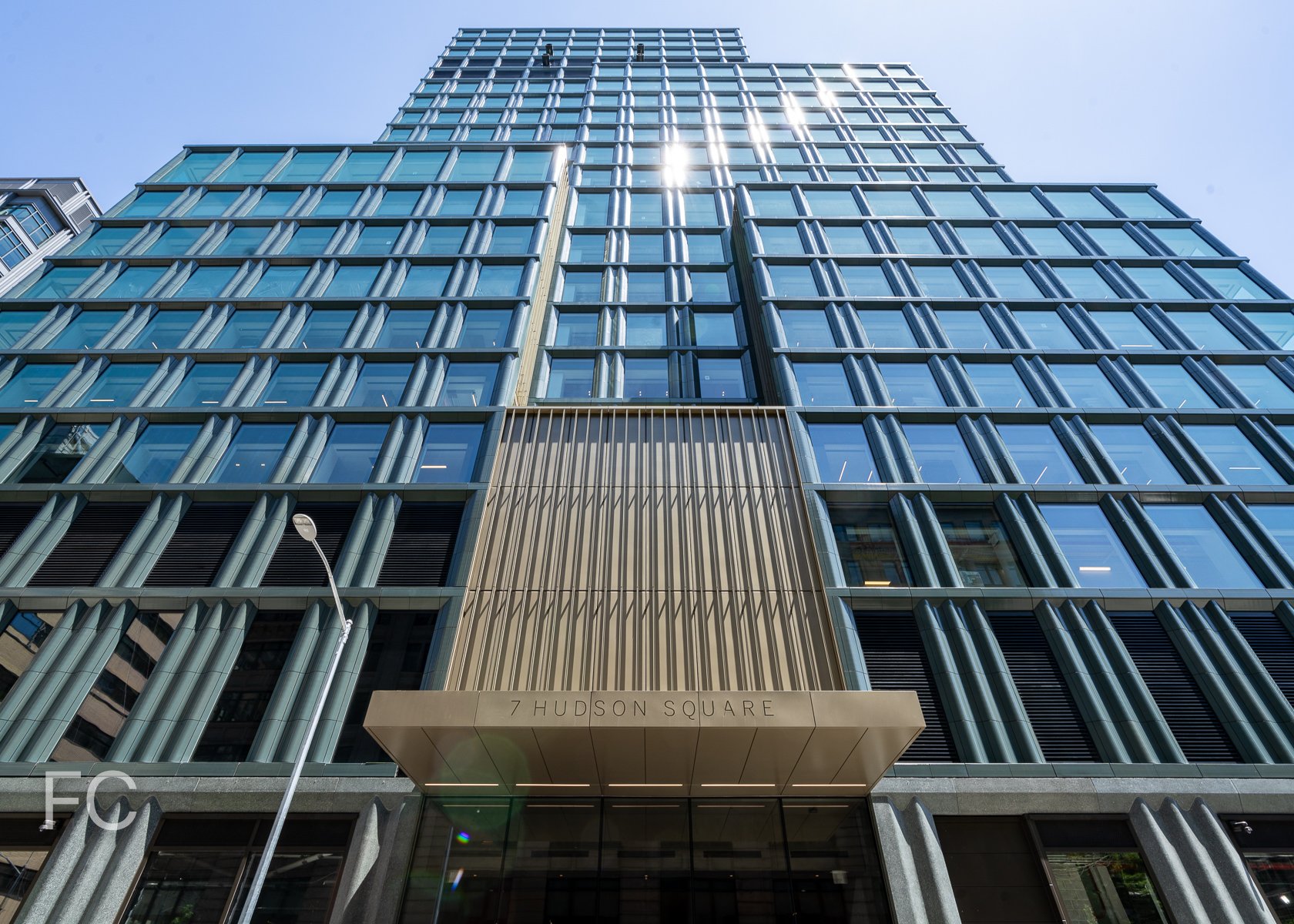
Facade installation has wrapped up for everywhere except the ground floor at The Walt Disney Company’s 22-story New York headquarters at 4 Hudson Square in Lower Manhattan from Silverstein Properties. Designed by Skidmore Owings & Merrill (SOM), the full block development features a massing with setbacks that afford terraces for employees and two towers. In total, the development includes 1.2 million gross square feet with floor plates up to 85,000 square feet.
East facade from Spring Street.
In dialog with the neighborhood’s masonry and stone material palette, the development features a facade of single-, double- and triple-columned green terracotta panels, large picture windows, and bronze toned metal accents.
Southwest corner from Hudson Street.
West facade from Hudson Street.
Architect: Skidmore Owings & Merrill; Interiors: Gensler; Developer: Silverstein Properties; Structural Engineer: Thornton Tomasetti; MEP Engineer: Jaros, Baum & Bolles; Facade Consultant: R.A. Heintges & Associates; Landscape Architect: SCAPE; General Contractor: Lendlease; Client: The Walt Disney Company; Program: Office, Retail; Location: Hudson Square, New York, NY; Completion: 2024.

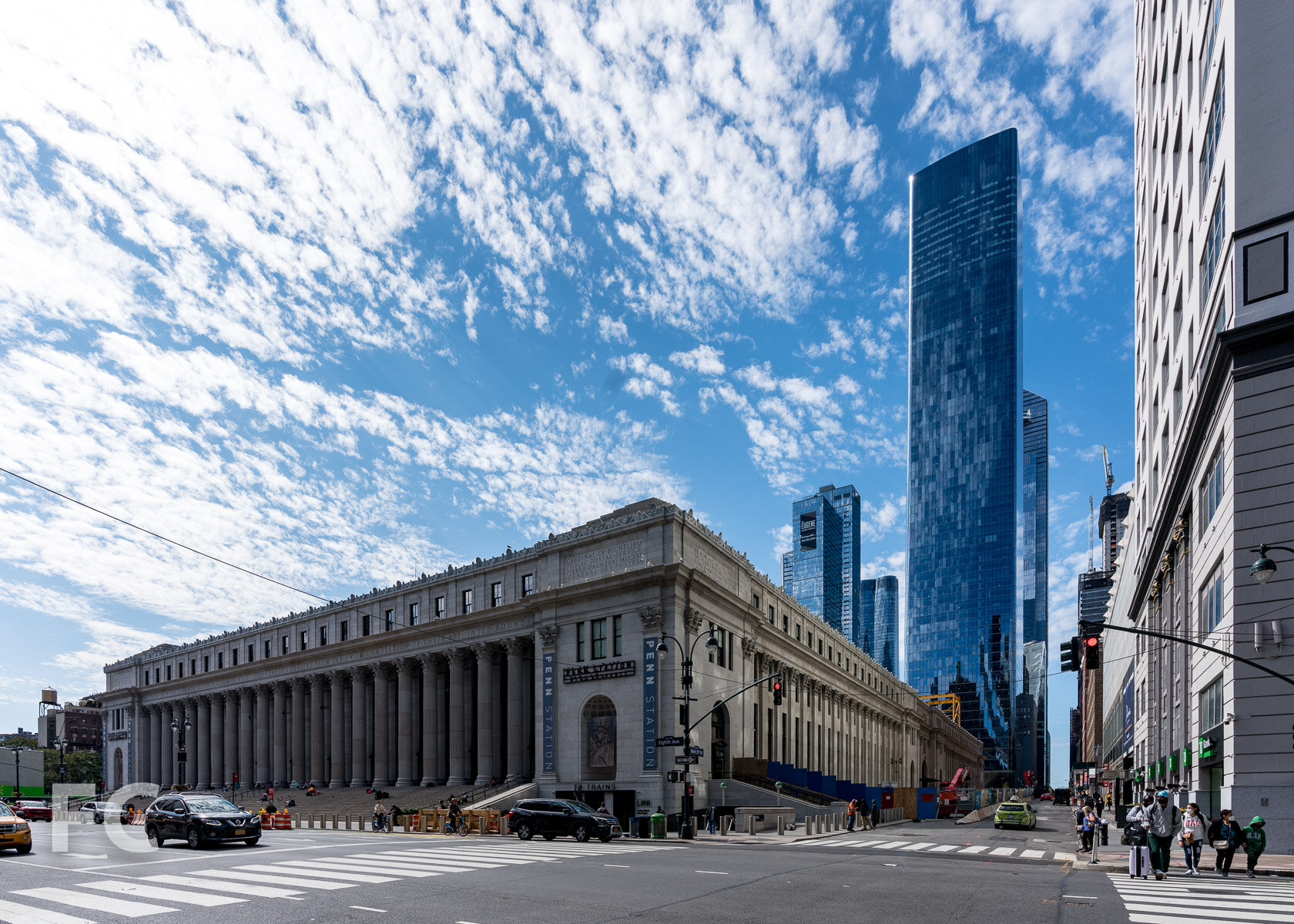
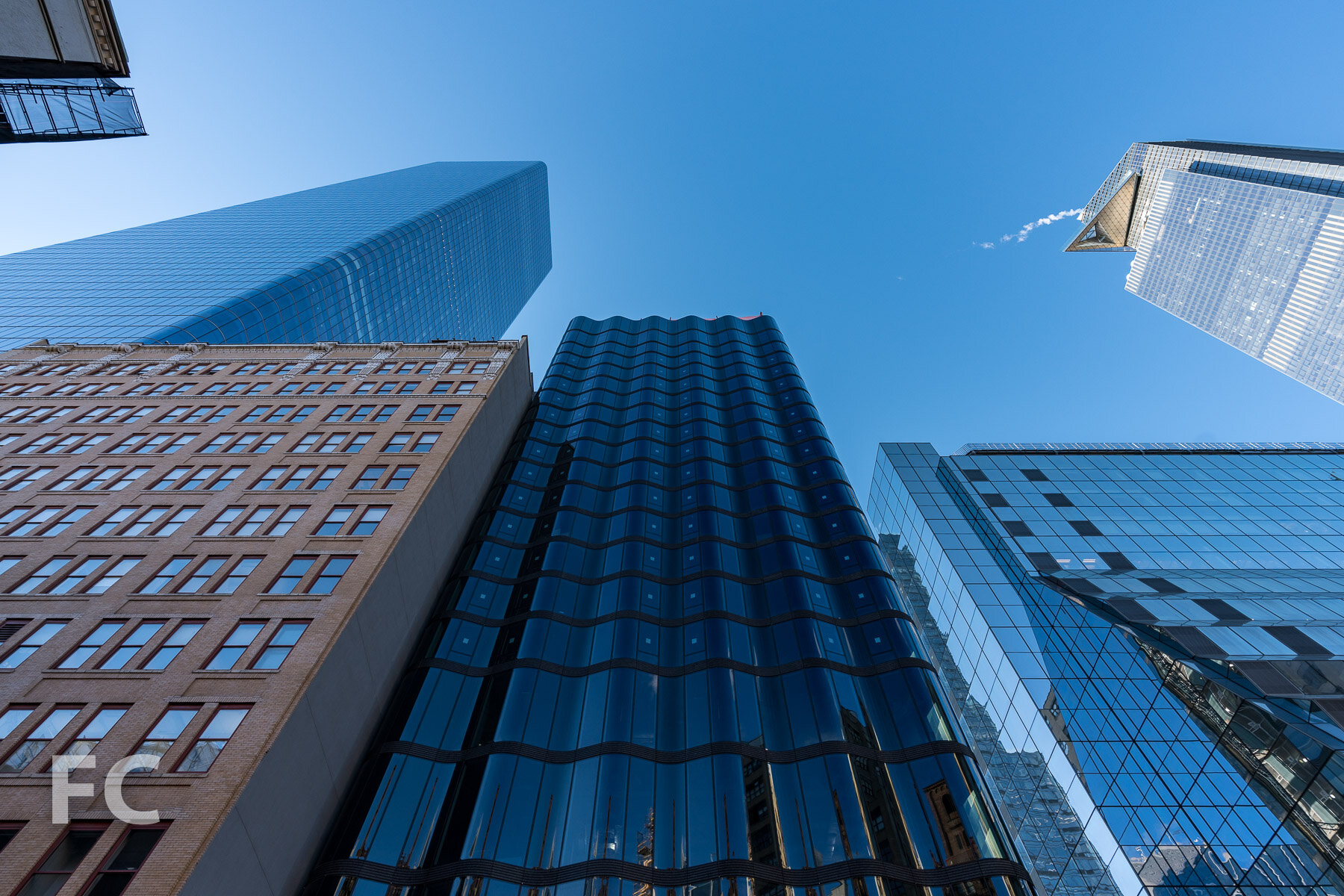
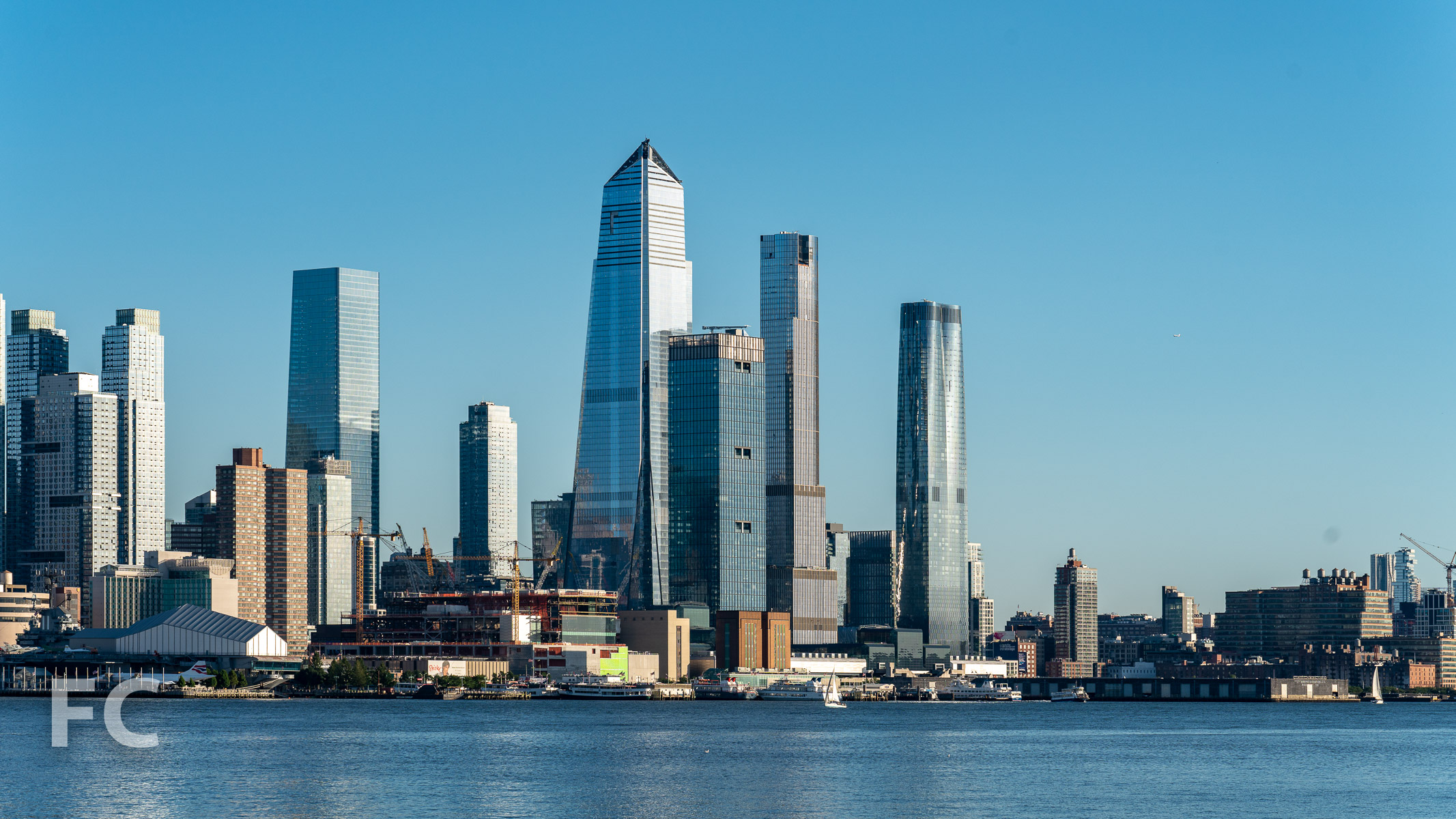
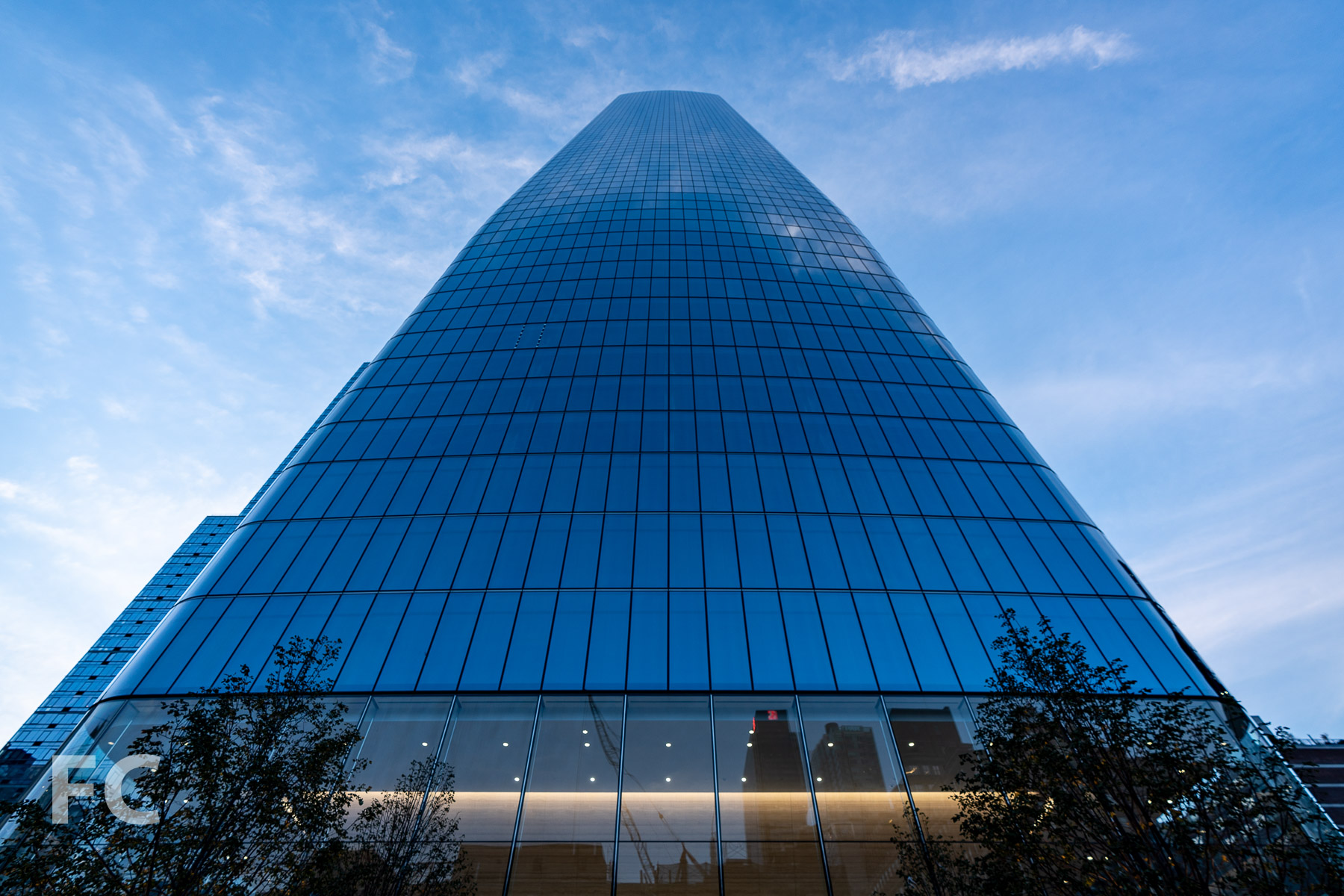
Construction Update: 181 Mercer Street
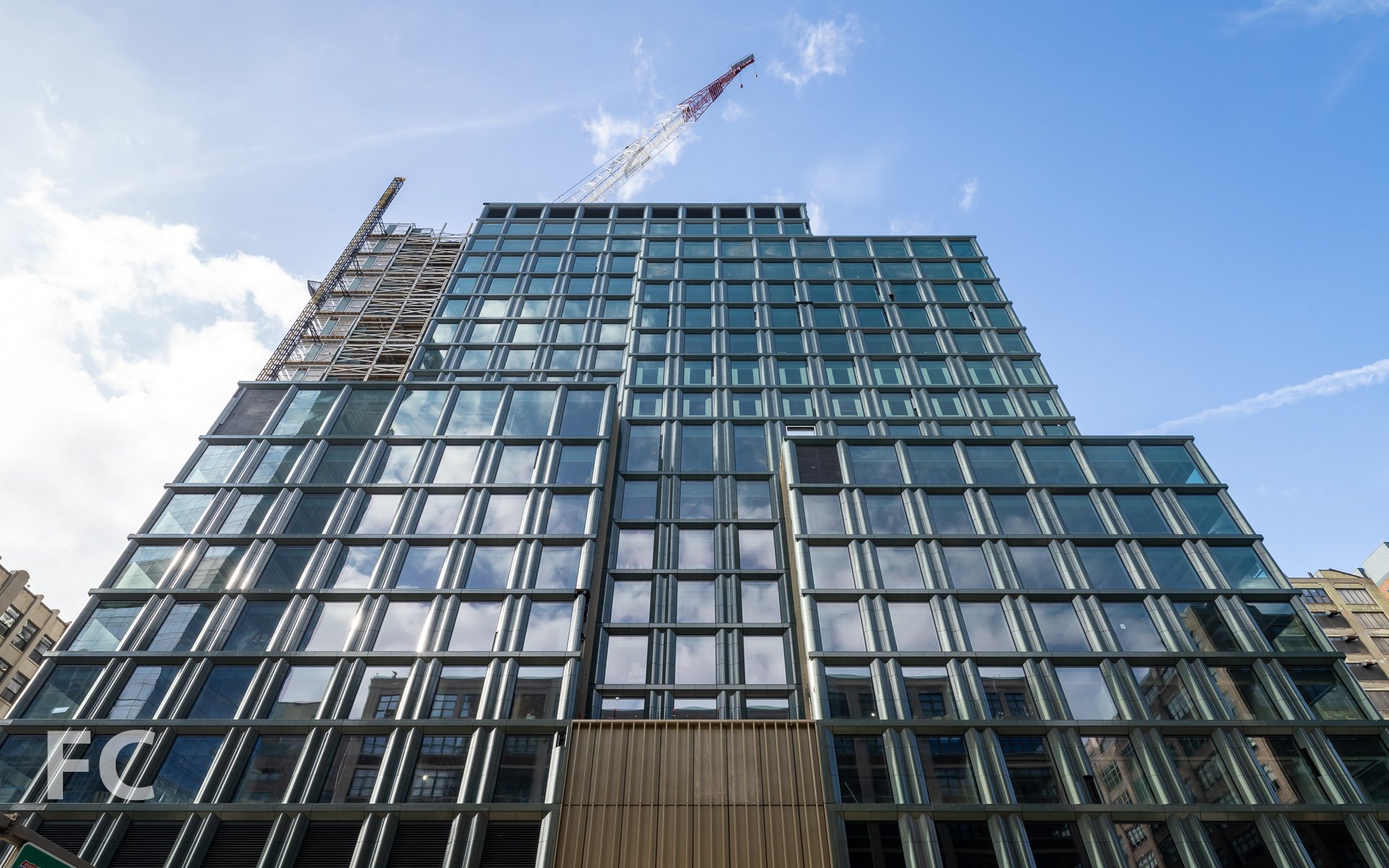
Southeast corner from Houston Street.
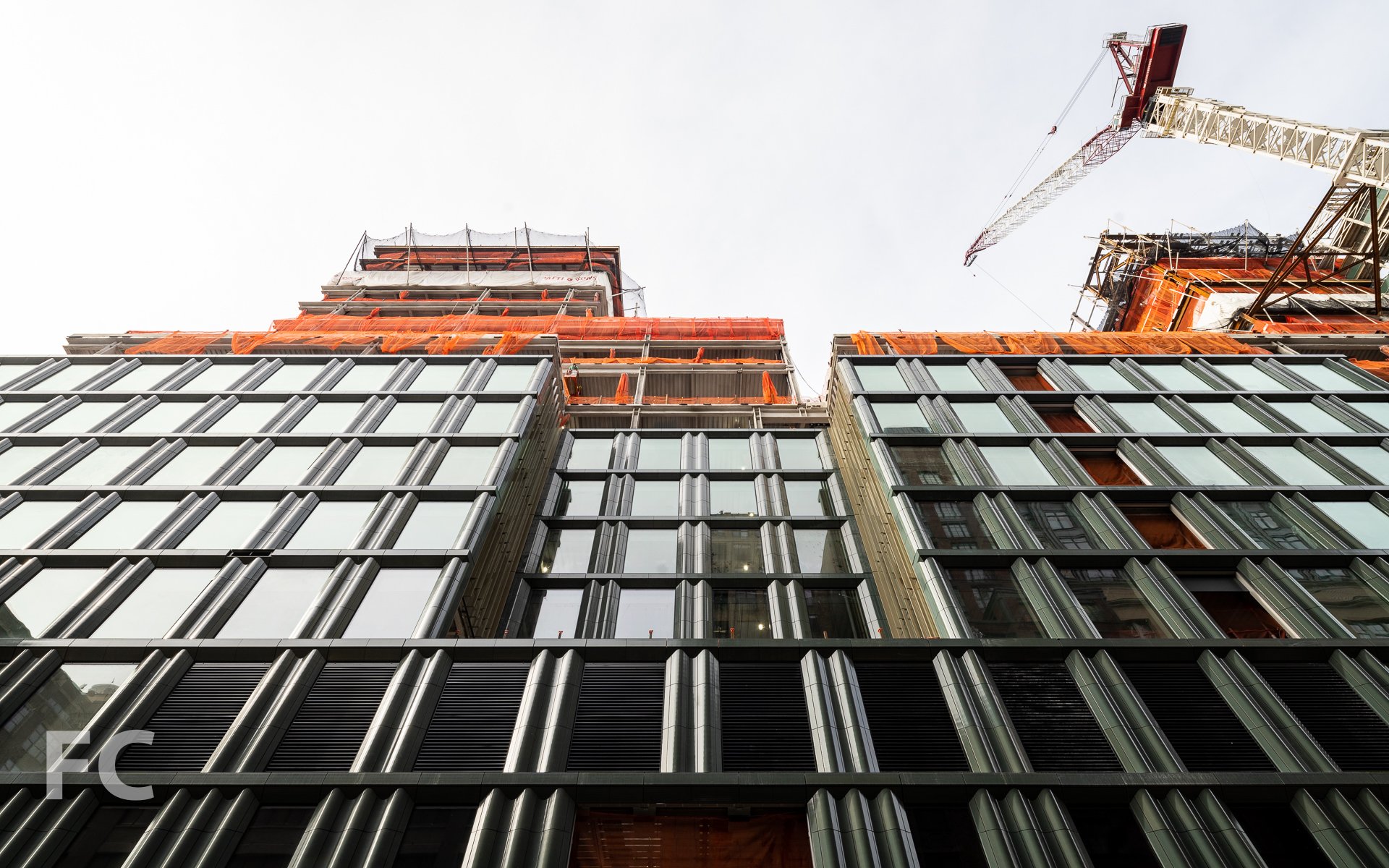
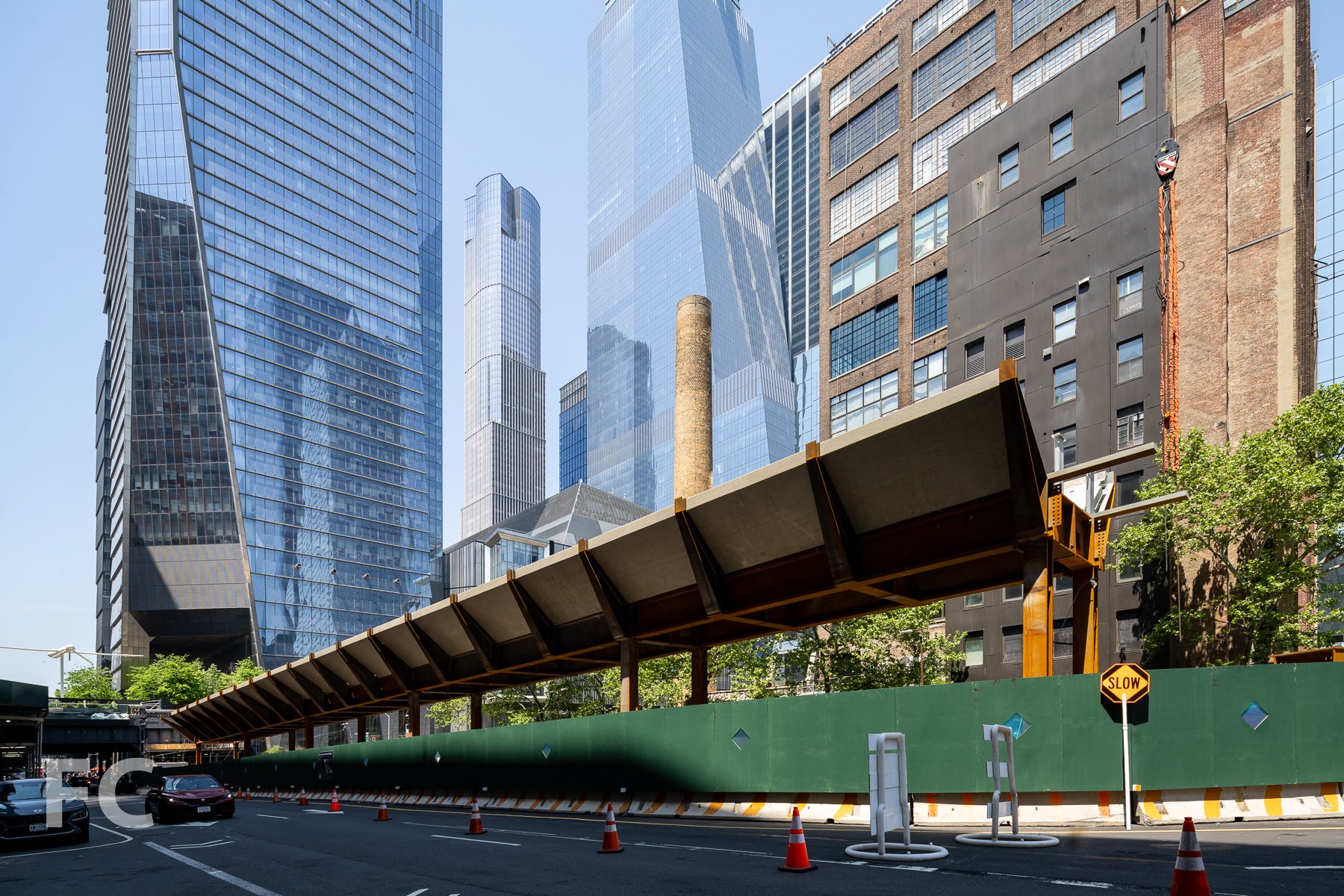
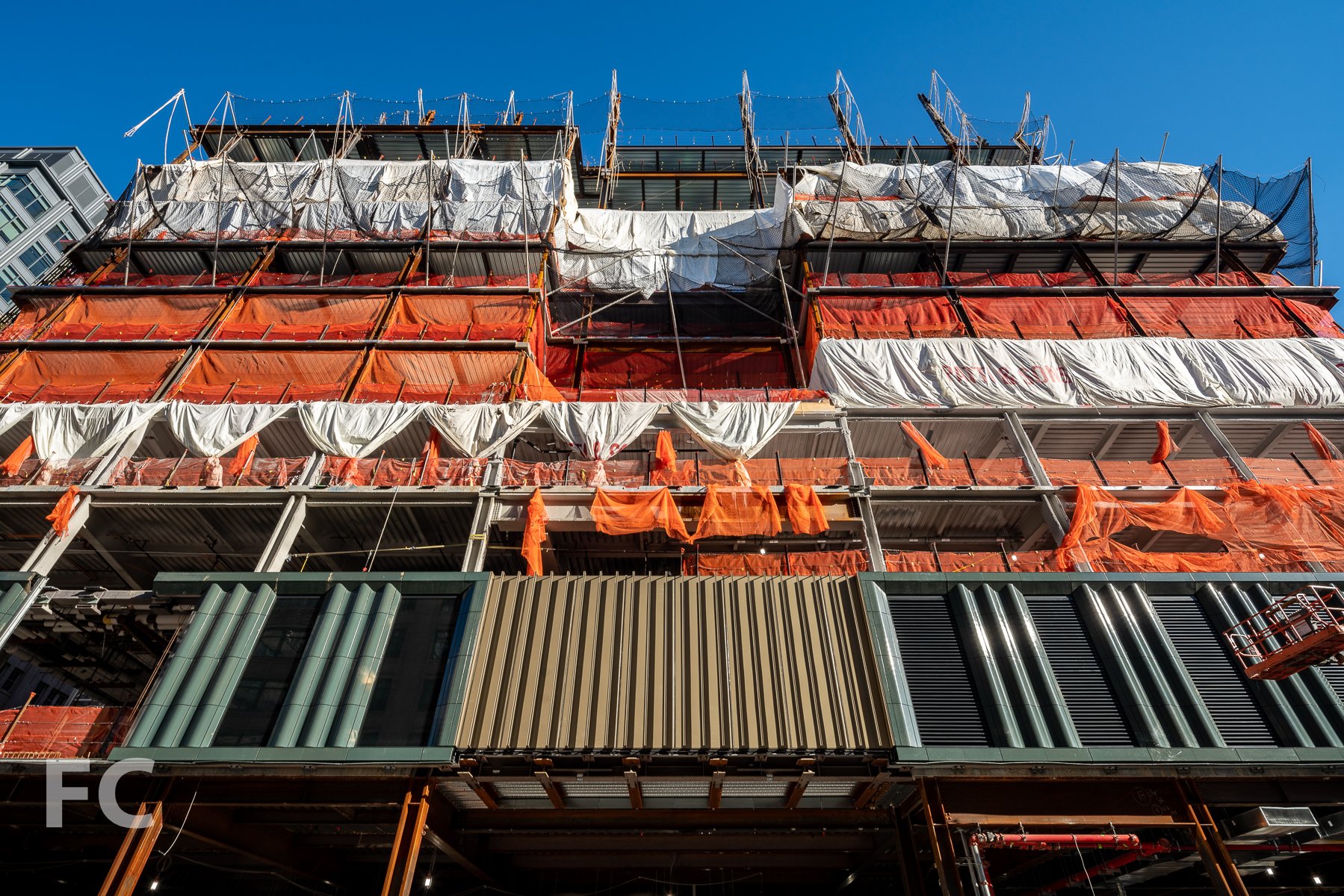
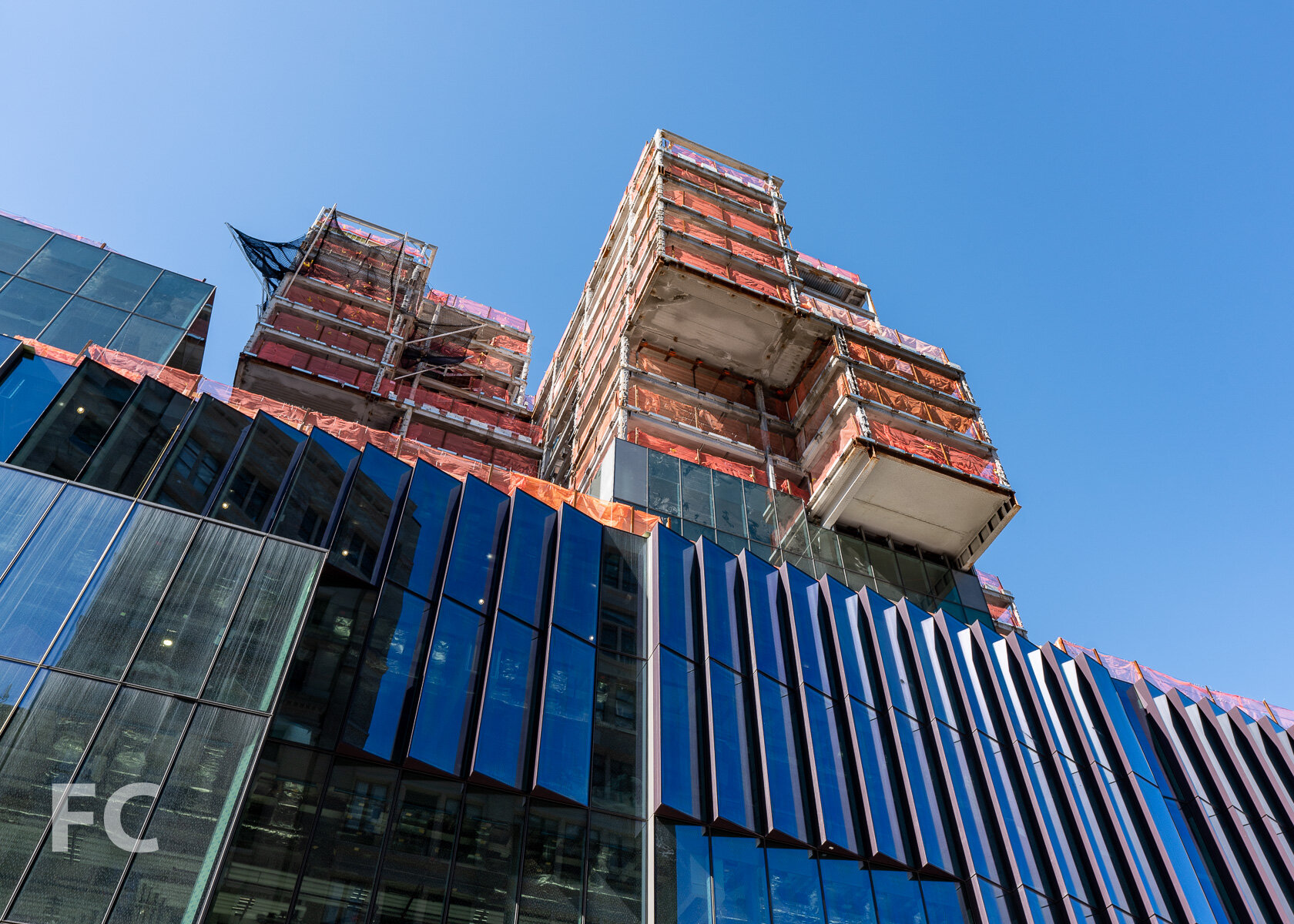
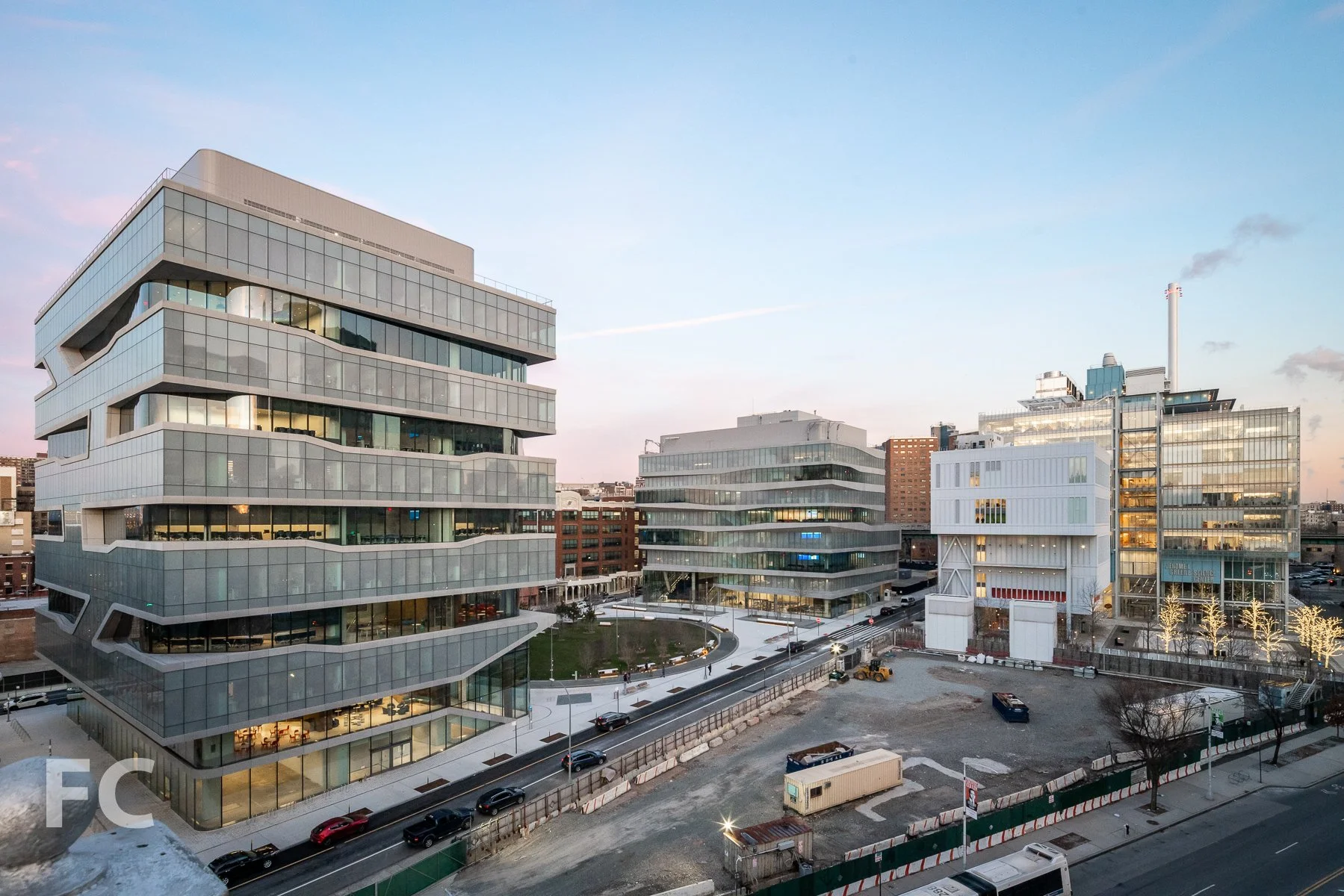
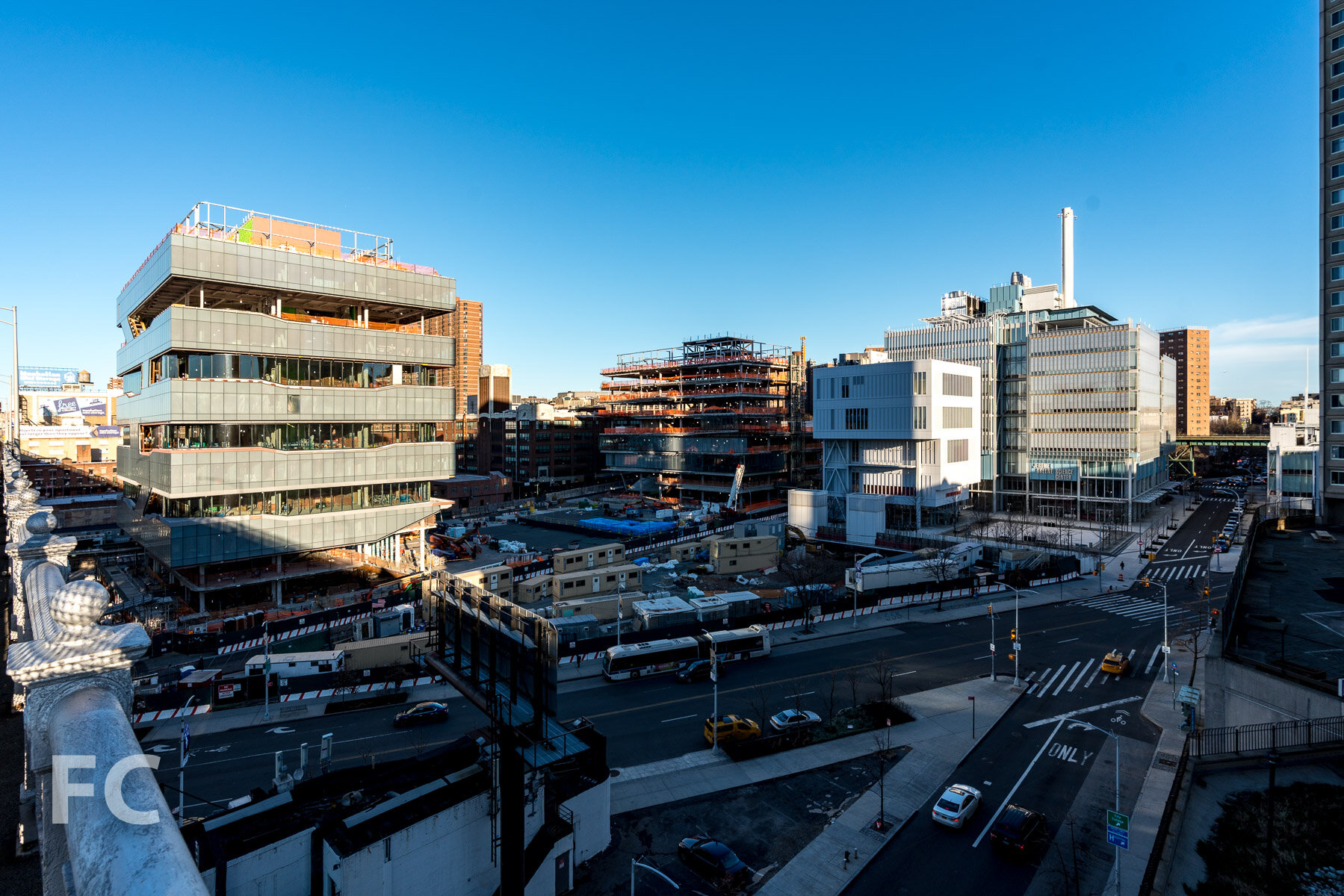
Facade installation is ongoing at NYU’s 23-story mixed use building 181 Mercer at the northern edge of SoHo. Designed by KieranTimberlake and Davis Brody Bond, the full block structure features faculty and student housing, 58 classrooms, performing arts spaces including a 350-seat theater, a student commons space on the second floor, and athletic facilities at the base. Installation of the pleated glass curtain wall with glare reducing frit patterns is nearly finished at the podium and panels are going up on the towers.
Northeast corner.
Looking up at the south facade from Houston Street.
Southwest corner from Houston Street.
Close-up of the south podium facade.
Southwest corner from Houston Street.
Southwest corner from Houston Street.
West facade of 181 Mercer (right) and Picasso’s Bust of Sylvette (left) from NYU’s Silver Towers.
Architects: KieranTimberlake and Davis Brody Bond; Client: New York University (NYU); Program: Faculty and Student Housing, Classrooms, Performing Arts, Athletic Facility, and Commons; Location: SoHo, New York, NY; Completion: 2021.
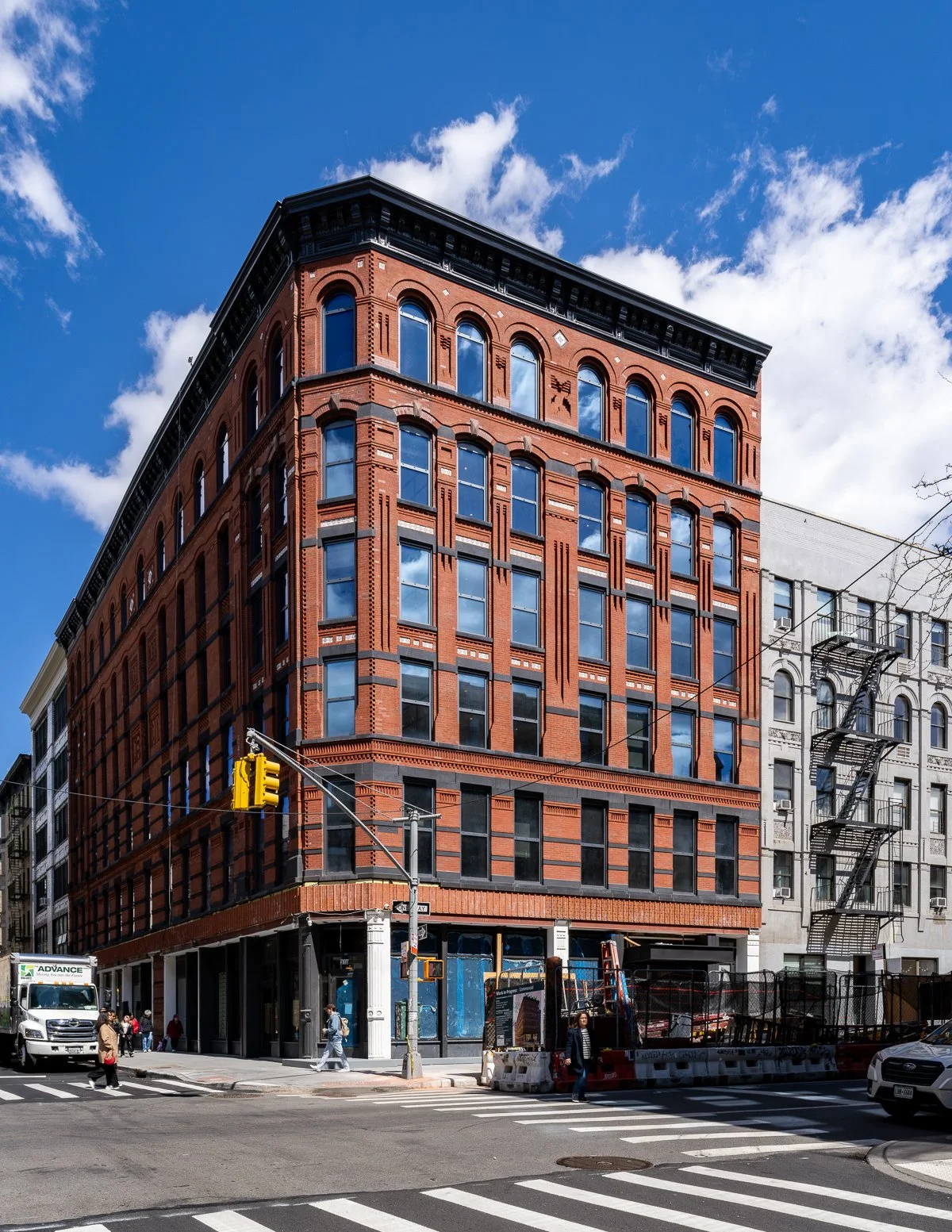
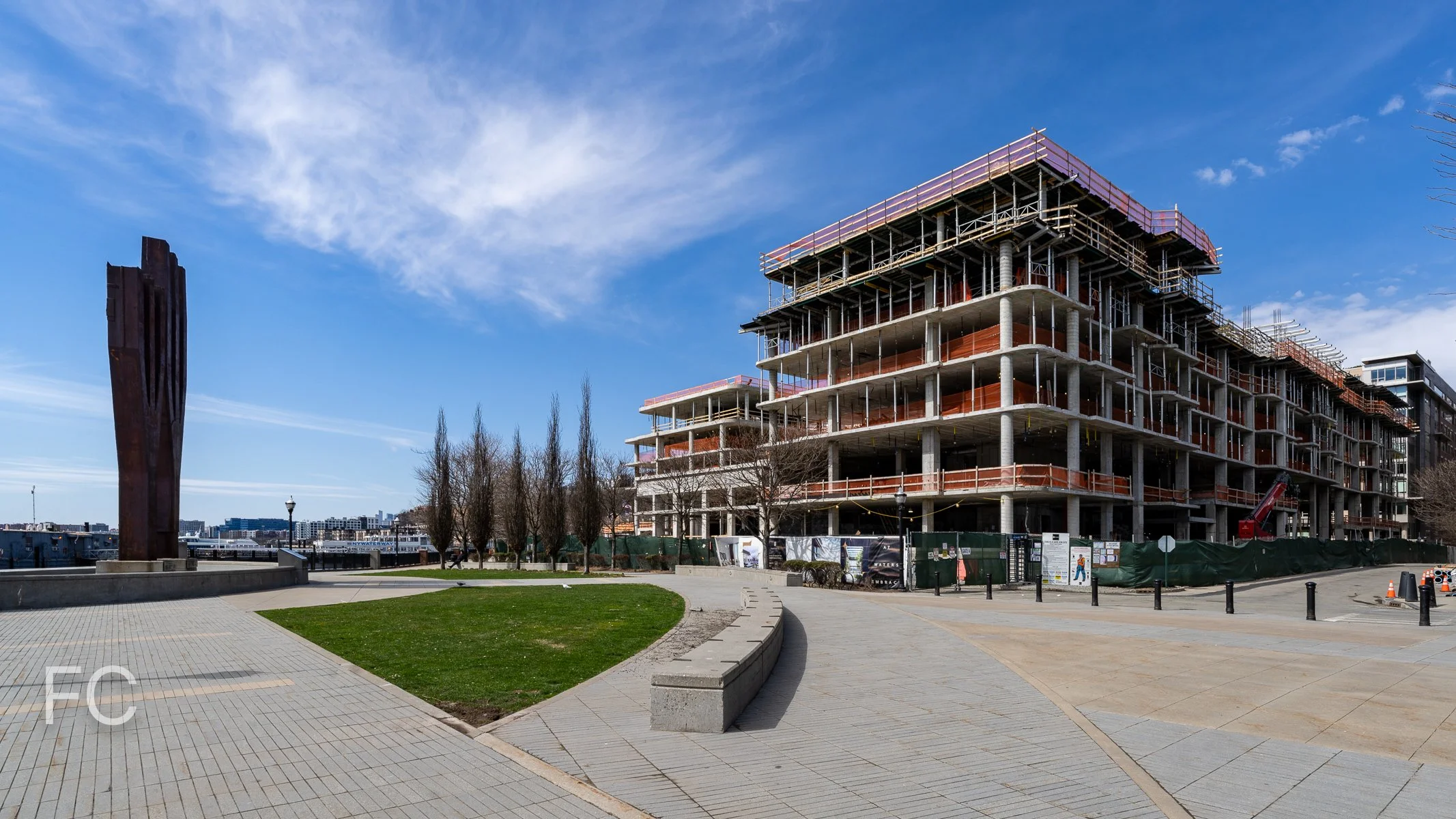
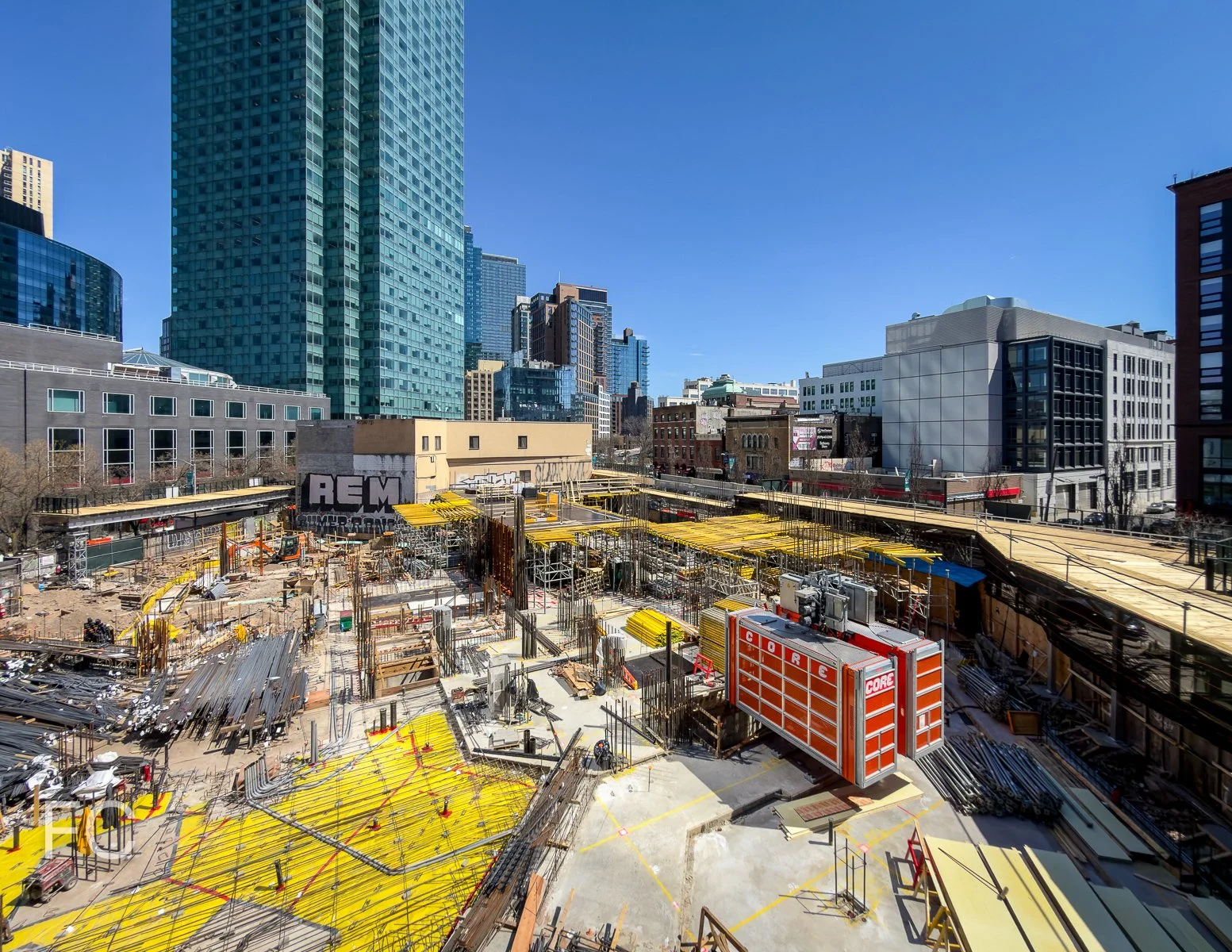
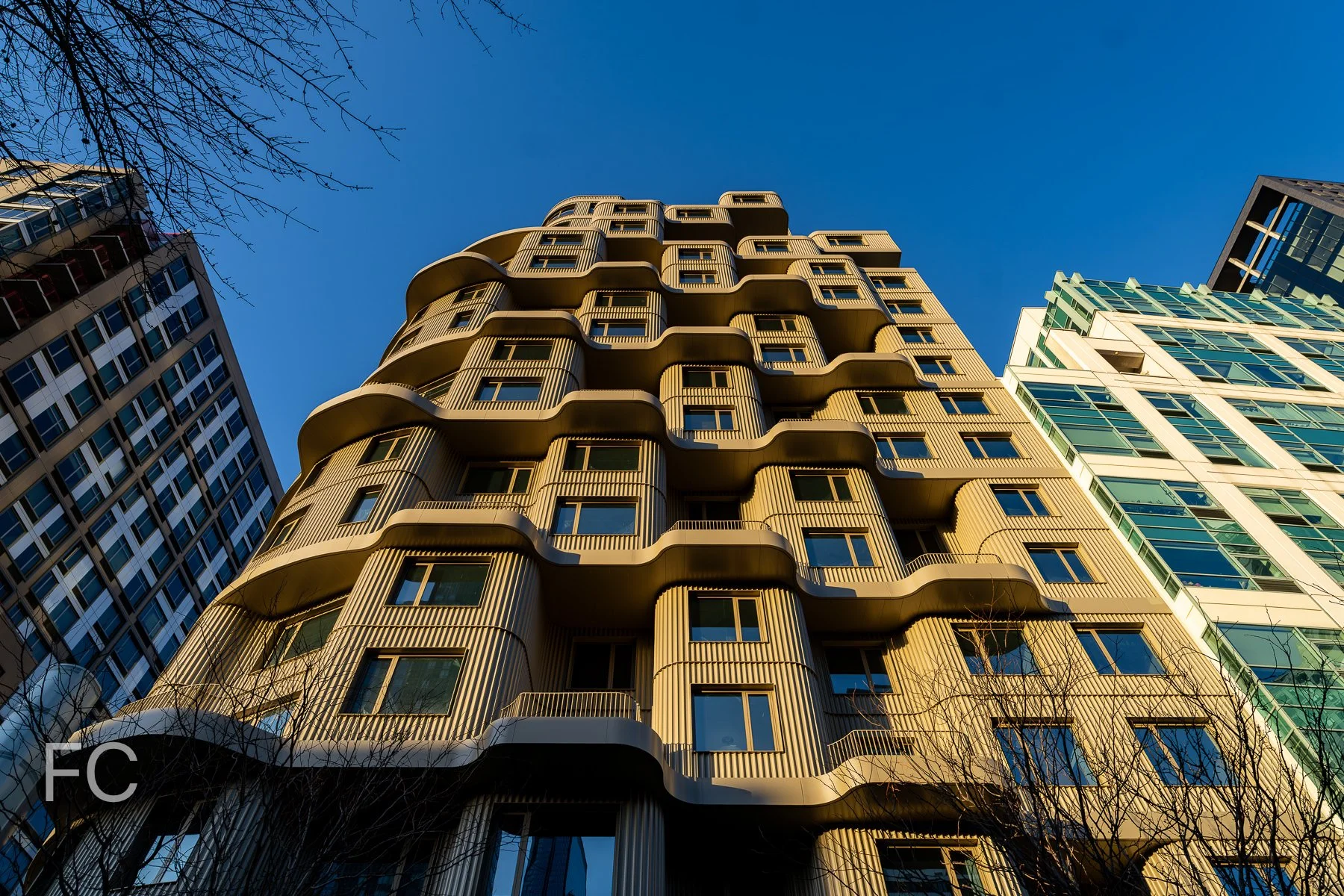
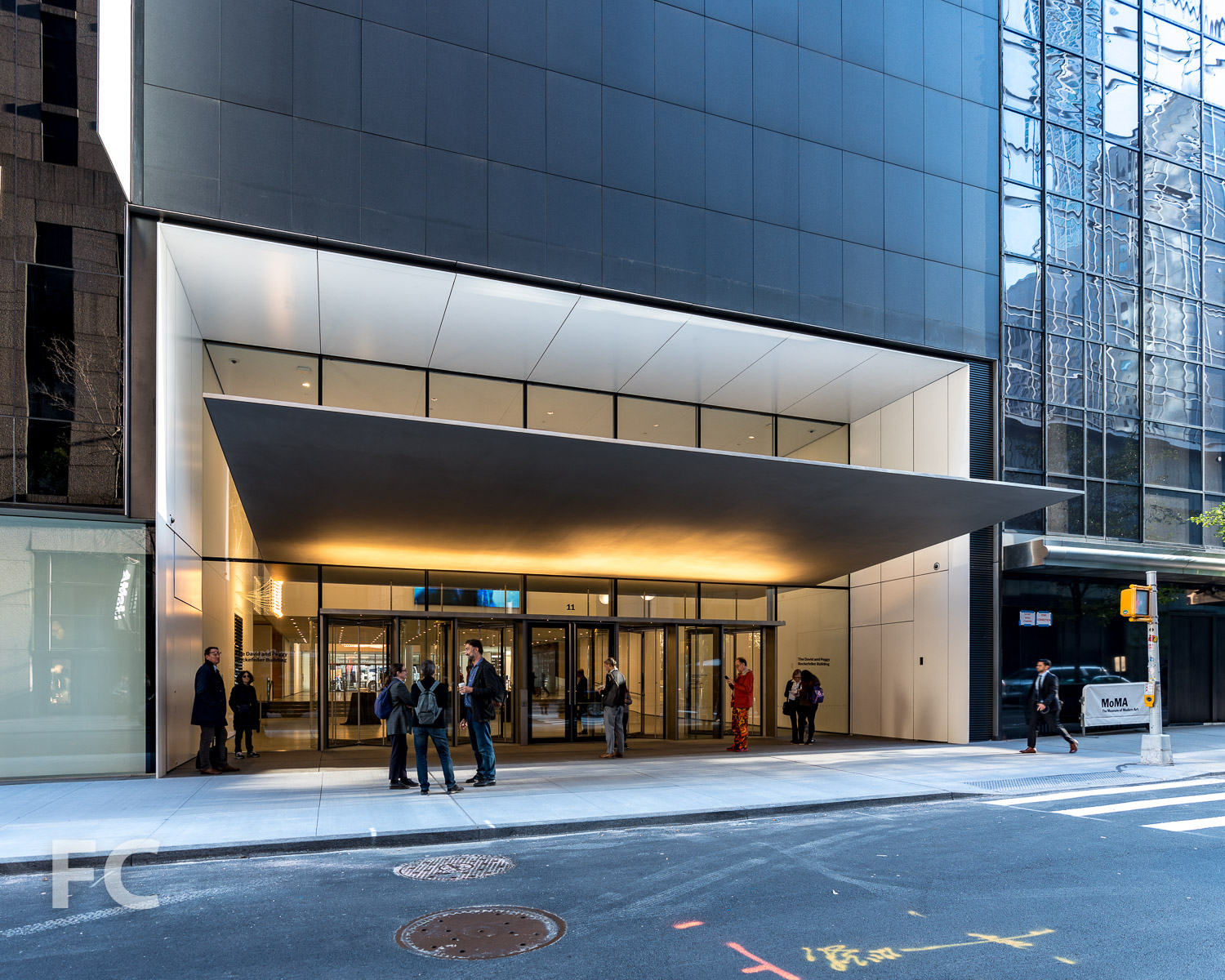
Tour: Museum of Modern Art Renovation and Expansion
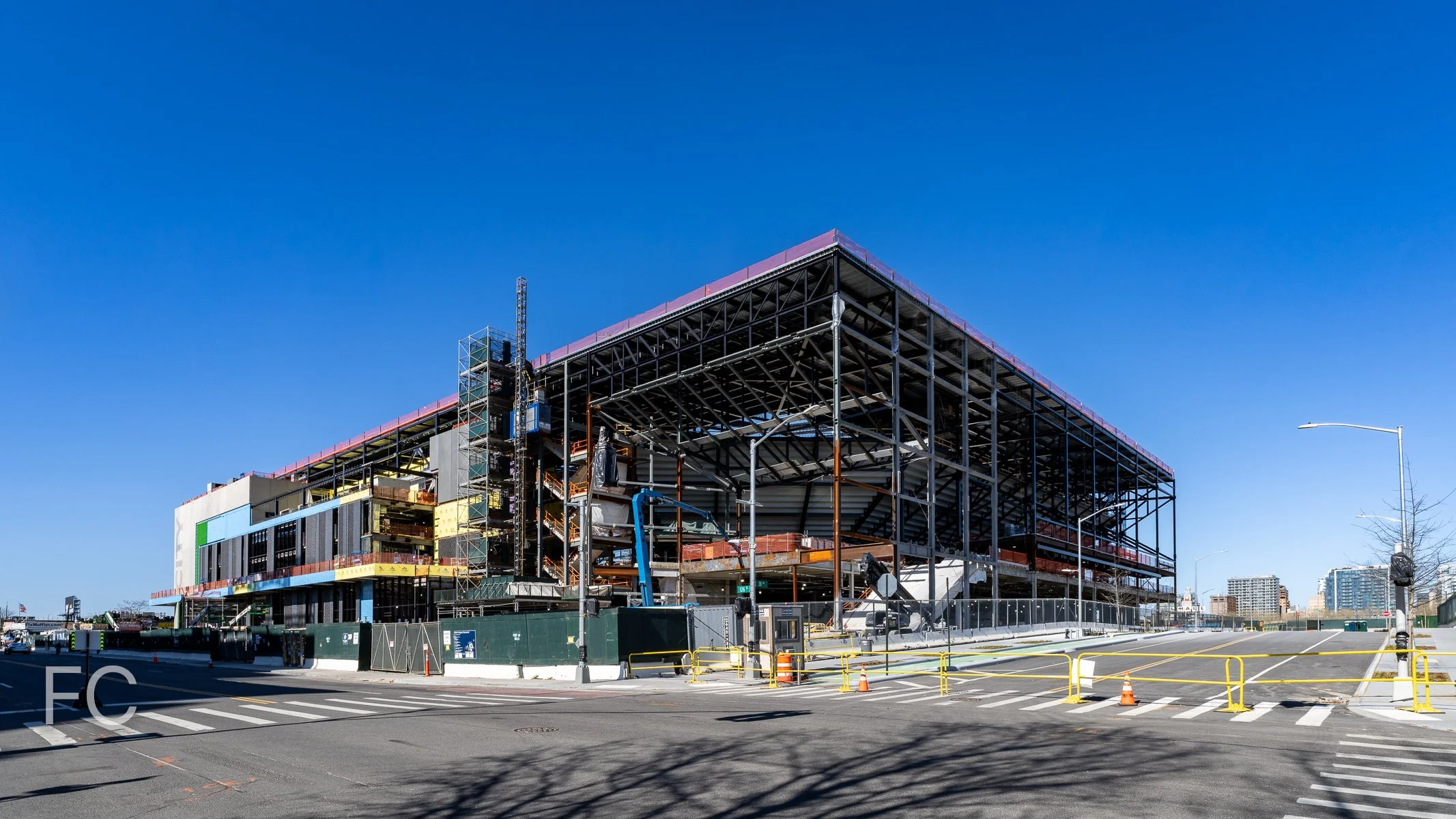
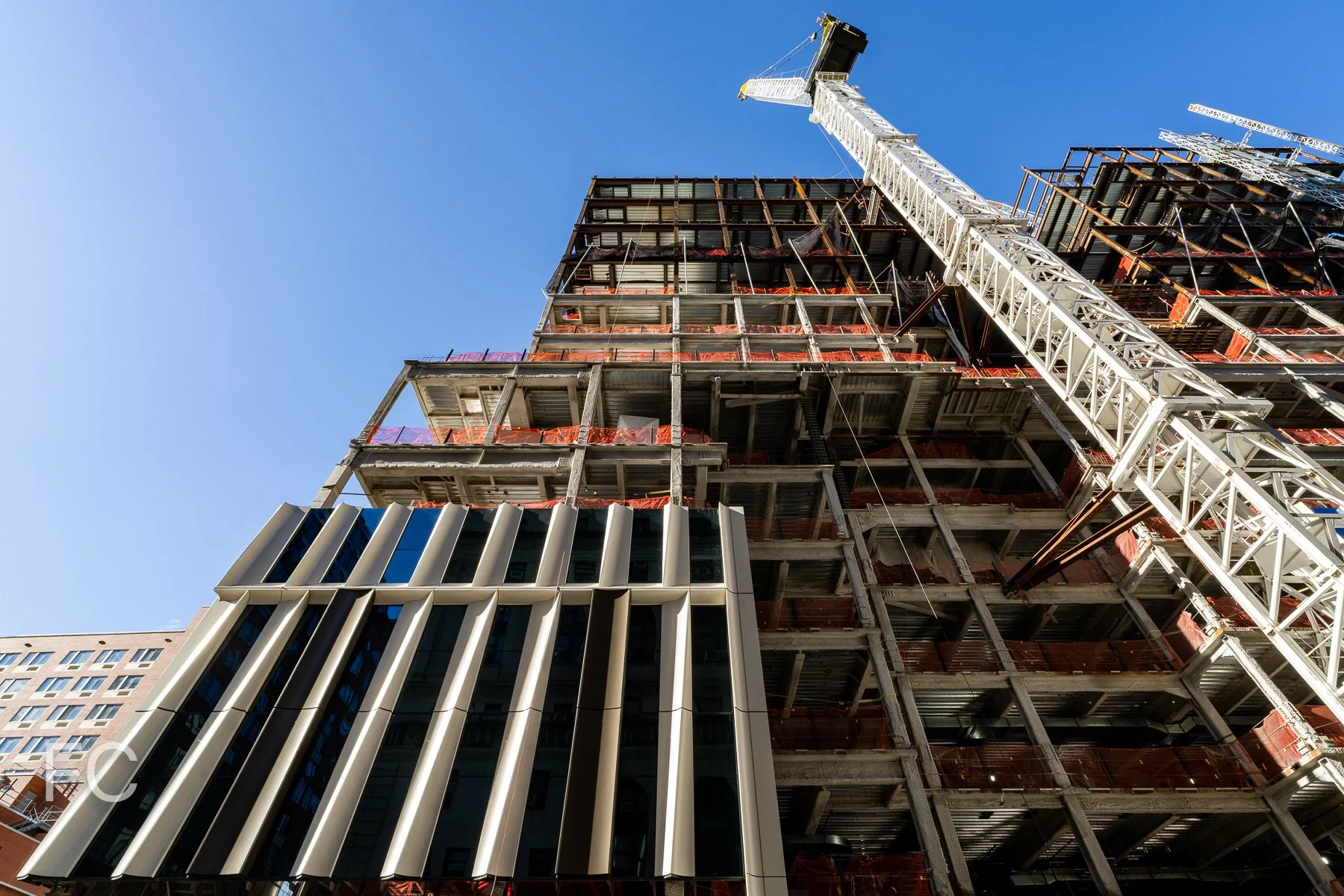
The Museum of Modern Art is ready for it’s reopening later this month, with expanded gallery space, renovations to existing entry and gallery spaces, and a new museum store.
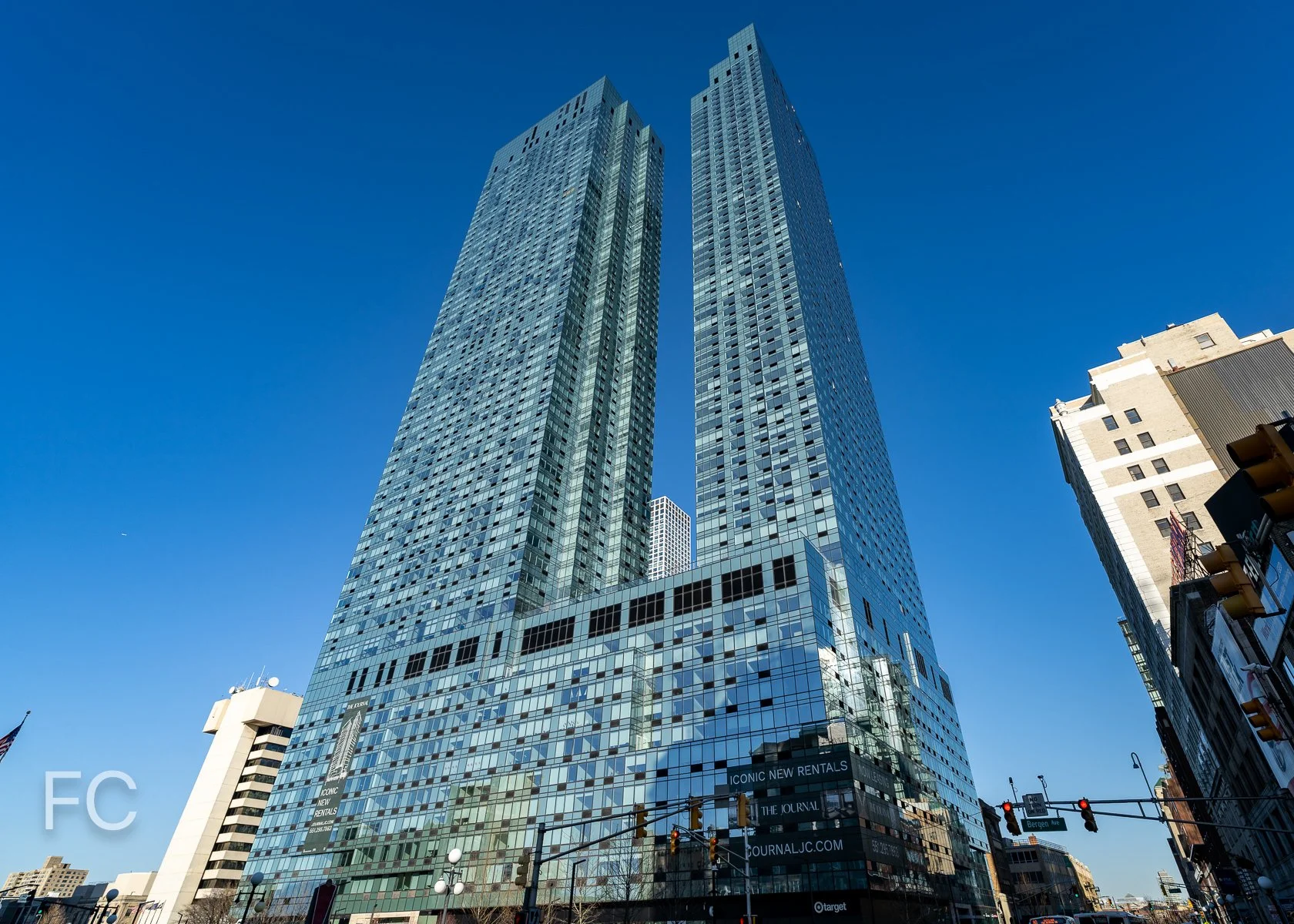
Designed by Diller Scofidio + Renfro and Gensler, the MoMA’s expansion occupies two sites to the west of the existing museum. Tod Williams Billie Tsien Architects‘ Folk Art Museum occupied the first site from its completion in 2001 until demolition in 2014. The rest of the expansion is located in the base of the adjacent Jean Nouvel tower 53 West 53.
The museum’s main entrance is now marked by a large cantilevered metal canopy at West 53rd Street. Inside, the lobby ceiling height has been raised and the museum store has been relocated one floor below to open up views outward from the lobby. Ticketing desks have also been installed in new locations in the ground floor lobby.

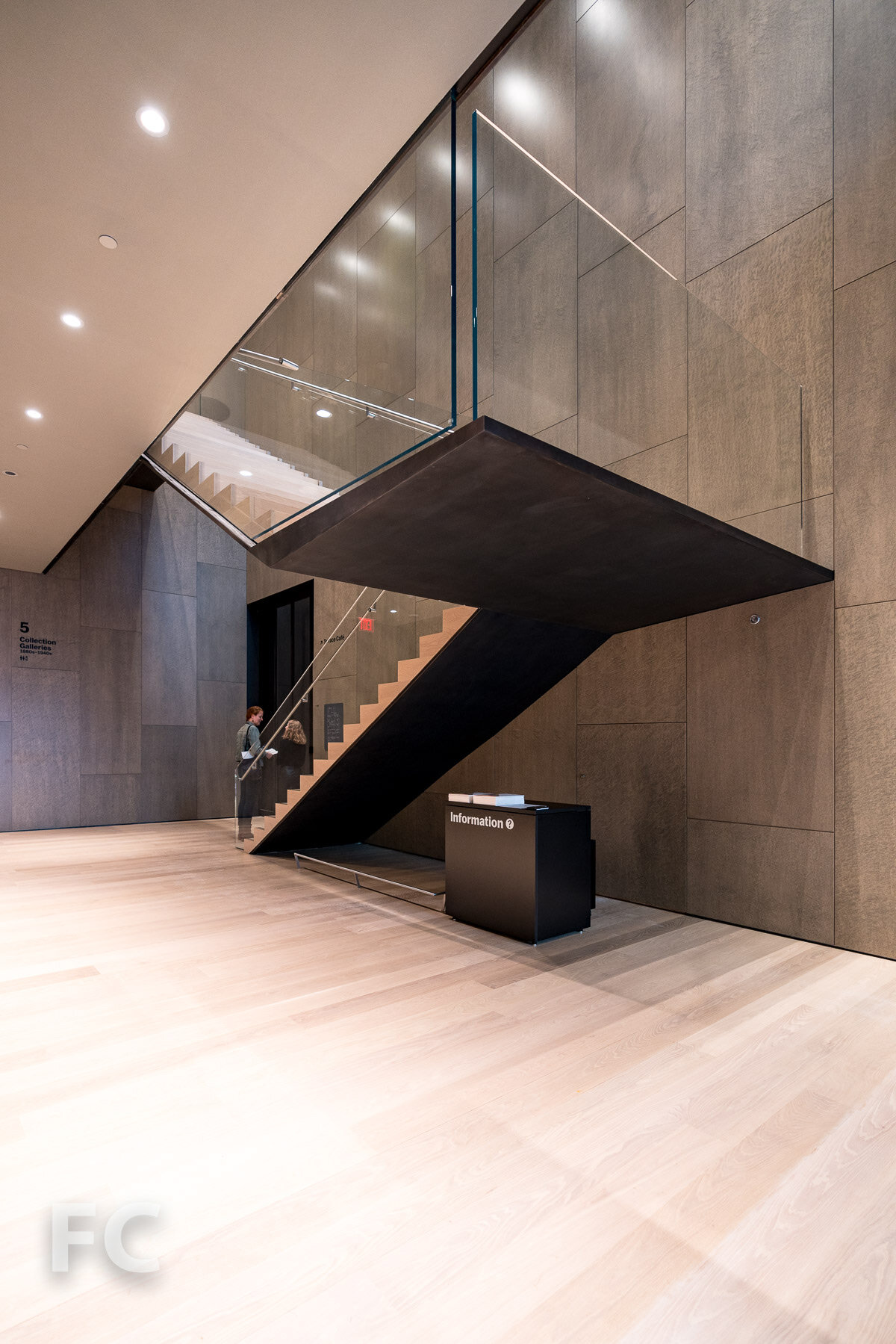
A new blade stair serves as the circulation spine of the new gallery spaces in the west expansion. A solid six inch divider hangs from the roof structure to support the bead blast stainless steel panels and solid northern oak treads and risers. Glass balustrades are cantilevered off of the stair and held in place by pins. The walls of the stairway are clad in bird’s eye maple with acoustic micro-perforations. A separate blackened stainless steel stair at the sixth floor leads to the cafe.


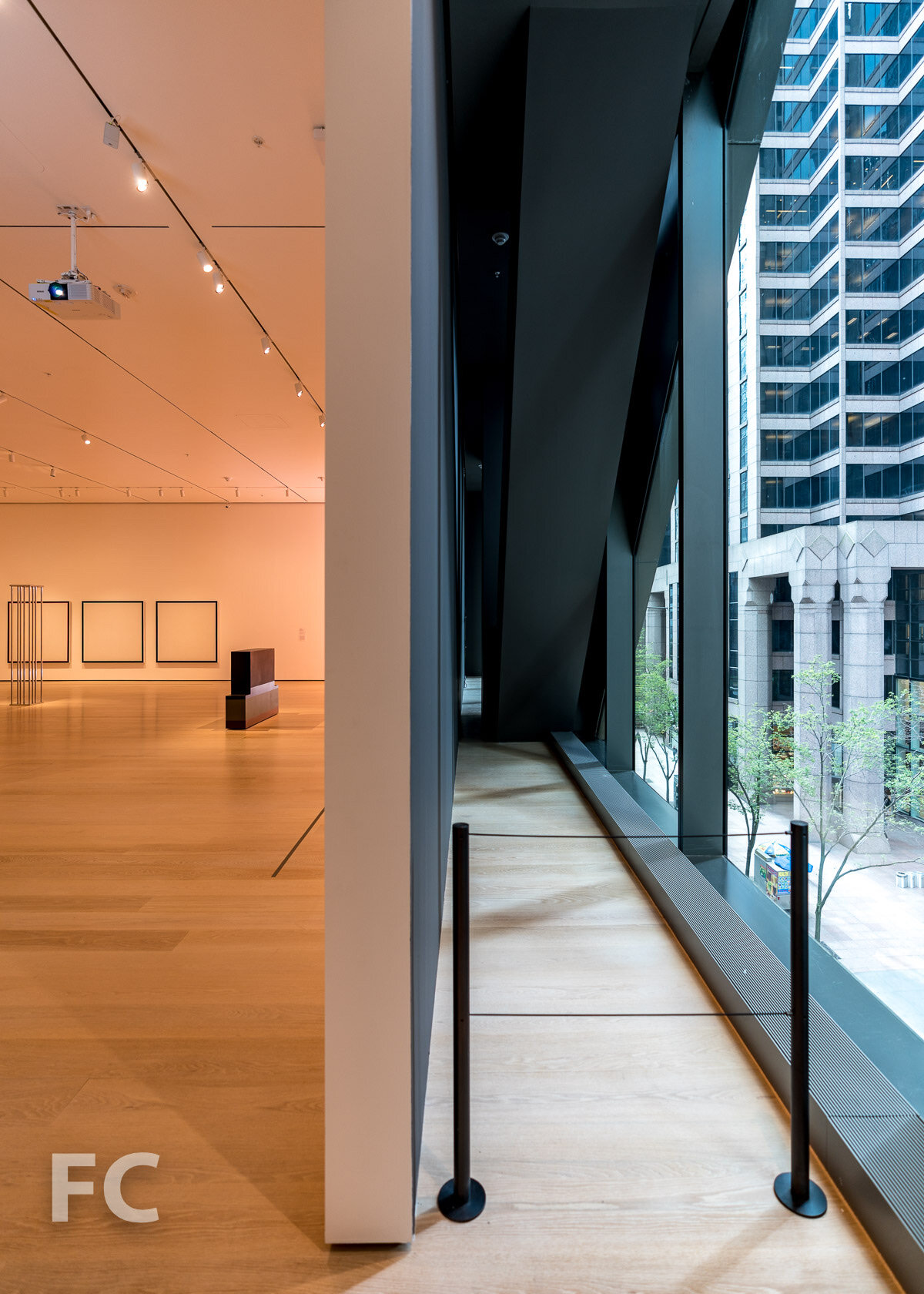
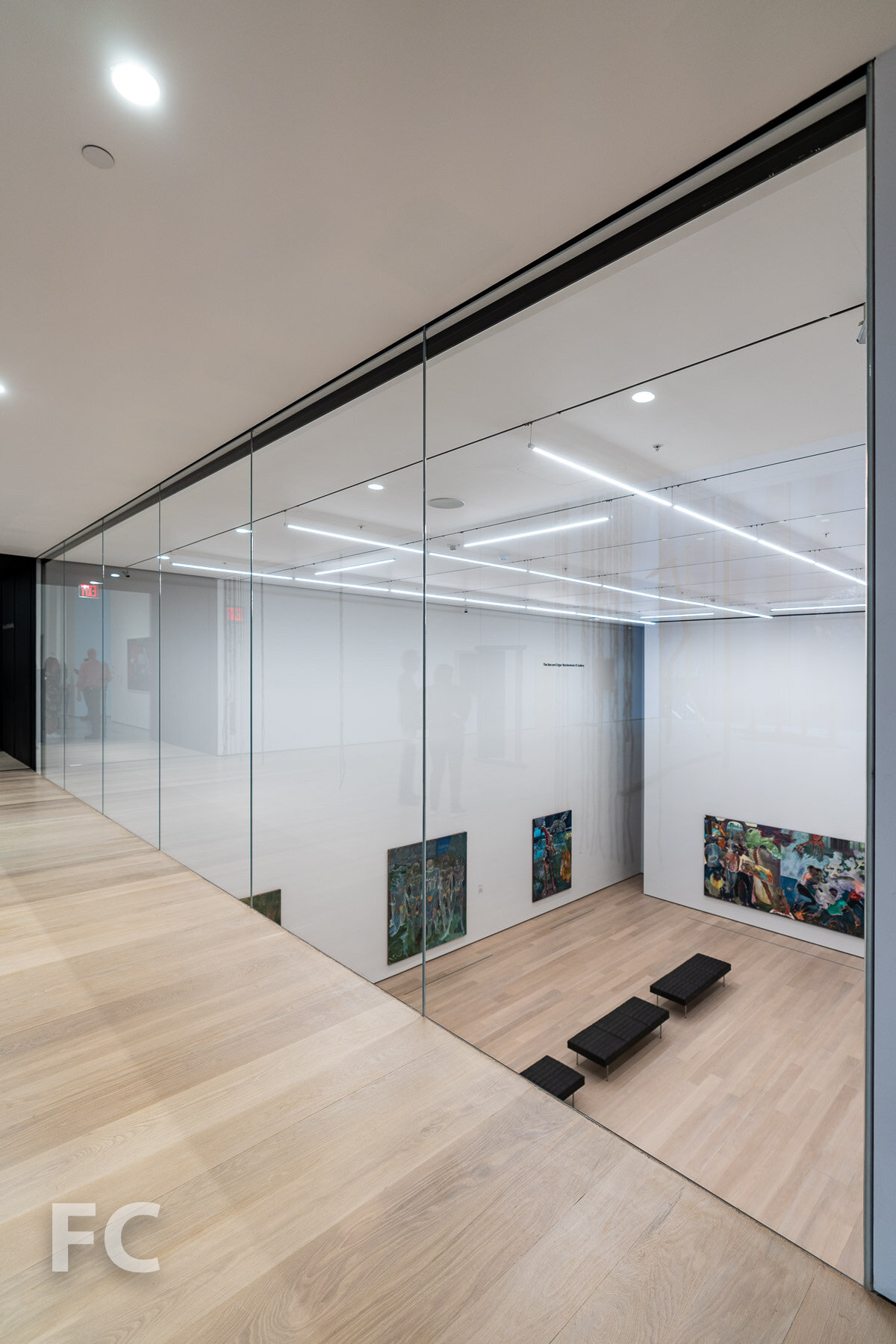
The museum’s expansion includes 47,000 square feet of new and renovated gallery space. Along with the five floors of new gallery space in the west building, some of the galleries added in the Taniguchi expansion of 2004 have also been renovated and reconfigured.

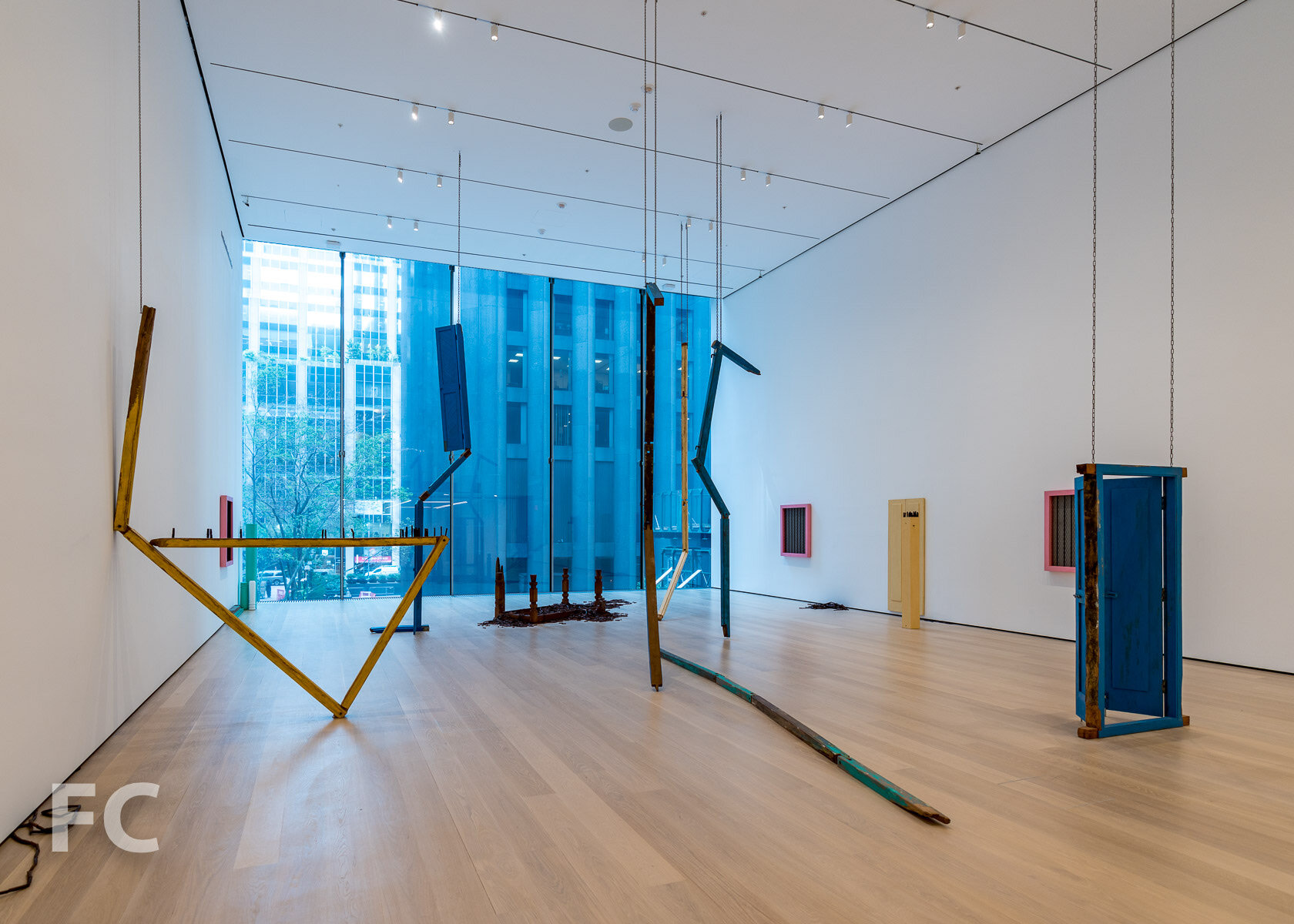

Architects: Diller Scofidio + Renfro in collaboration with Gensler; Client: The Museum of Modern Art; Program: Museum; Location: Midtown, New York, NY; Completion: October 2019.





Tour: Glenstone Museum
Glenstone, a private museum of contemporary art, is located on 230 acres of land in Potomac, Maryland. The museum was developed and financed by local billionaire Mitchell Rales, and opened to the public in 2006 under the curation of Emily Wei Rales. Glenstone is named for the nearby Glen Road and the areas stone quarries. The Gallery, a 30,000 square foot Modernist structure designed by Charles Gwathmey, housed the collection at the museum’s 2006 opening. In 2010, Thomas Phifer was awarded a commission to design the five fold expansion of the museum after a two stage competition. Phifer, who had previously worked for Gwathmey and fellow New York Five Architect Richard Meier, is known for numerous museums and civic buildings.
Arrival Hall
Upon entering the grounds of the museum property, visitors drive to the Parking Grove. An adjacent Arrival Hall offers information and a book store. Alaskan yellow cedar, a soft wood chosen for its complementary tone to the concrete of the pavilions, clads the exterior of the Arrival Hall. Inside, the spaces are clad in a maple wood.
Detail of the maple wall, flooring, and bench.
Bookstore.
Pavilions
The pavilions are situated in a meadow of undulating topography that denies the visitor a clear view of all twelve structures as you follow the winding path to their entrance. Phifer’s site strategy is inspired in part by the dry garden at Ryoan-ji that features fifteen stones in a rectangular gravel field seen from a platform. Visitor’s are never able to see all fifteen stones at the same time, embodying a meditation strategy that favors intuition over reason.
Phifer’s concept for the pavilions was to treat them as a series of rooms, with unique proportions tied to specific artwork, surrounding a water court. Pavilions are sited on the cardinal points to emphasize the changing natural light throughout the day.
Entry.
The cast-in-place concrete used at the pavilion interiors is an architectural concrete made with a mixture of pure white and common grey cement and locally quarried aggregate stones. Finnish plywood panels were used on the handmade formwork to produce a smooth finish for the exterior surface of the concrete. The resulting concrete has slight variations of color and visible lift lines from the removal of the formwork.
Room 1.
Twenty-six thousand precast concrete blocks, measuring six feet by one foot, clad the exterior and interior walls of the pavilions. Blocks were cast off site and vary based on weather conditions during casting and curing. Darker blocks were poured in winter due to temperature and the slower evaporation of water. Surface finish was even affected by removing the formwork in rain or sunny weather. Time will further the contrast of the blocks as they are further exposed to the elements.
Stair handrail detail.
Phifer has situated the twelve pavilions around an 18,000 square foot Water Court which can be viewed through large panels of glass. These German made panels are set in stainless steel mullions and reach heights up to thirty feet.
A platform made of Ipe wood and a teak bench allow visitors to sit and reflect outside in the Water Court. Plantings include water lilies, irises, rushes, cattails, and hardy canna.
Terrazzo made of granite is employed for the floors of the pavilions and complements the surrounding concrete and glass. Although typically polished to a high gloss, the Glenstone’s terrazzo has a matte finish and has a lighter than normal color due to the small aggregate used in the mix.
Room 7 features a monumental bench made of hickory and the largest glass panel in the pavilions, offering visitor’s a stunning view of the surrounding meadow. Maple clads the interior surfaces of the room.
Room 7.
Phifer has specified a plaster for the gallery walls that is made of Italian marble dust and a lime paste from the rocks of the Ticino River in Switzerland.
The clerestories in the pavilions are made of glass that has been acid-etched to produce a uniform and semitransparent surface. This process involves washing clear glass in a light acid bath, creating a smoother surface than sandblasting, to filter natural light entering a space.
Every detail is thoughtfully considered, even the accommodation of sprinkler heads and fire extinguishers.
Water fountains outside of the restrooms.
Located near the pavilions’ entrance, Michael Heizer’s Compression Line is surrounded by argillite, a sedimentary rock of hardened clay particles. This type of argillite comes from the southwest United States and resembles the rusted steel of the sculpture it surrounds. Another piece by Heizer, Collapse, is located in Room 5 and surrounded by the same argillite rock.
Compression Line by Michael Heizer.
Collapse by Michael Heizer.
The Gallery
Glenstone’s first art gallery was designed by the late Charles Gwathmey and opened in 2006. The exterior is clad in zinc and gray granite.
The Gallery (2006).
Sylvester by Richard Serra (2001).
Landscape
The nearly 300 acre landscape of Glenstone is designed by landscape architect Peter Walker and Partners and includes paths, trails, streams, meadows, forests, and outdoor sculptures.
Split-Rocker by Jeff Koons, 2000.
Sculpture in the surrounding landscape includes Jeff Koons’s Split-Rocker, 2000, which is planted each year in the spring with New Guinea Impatiens.
Split-Rocker before its spring planting.
Clay Houses (Boulder-Room-Holes) by Andy Goldsworthy, 2007.
Architects: Thomas Phifer and Partners (The Pavilions), Gwathmey Siegel & Associates Architects (The Gallery); Landscape Architect: Peter Walker and Partners; Client: Glenstone Museum; Program: Museum; Location: Potomac, Maryland; Completion: 2006 (The Gallery), 2018 (The Pavilions).
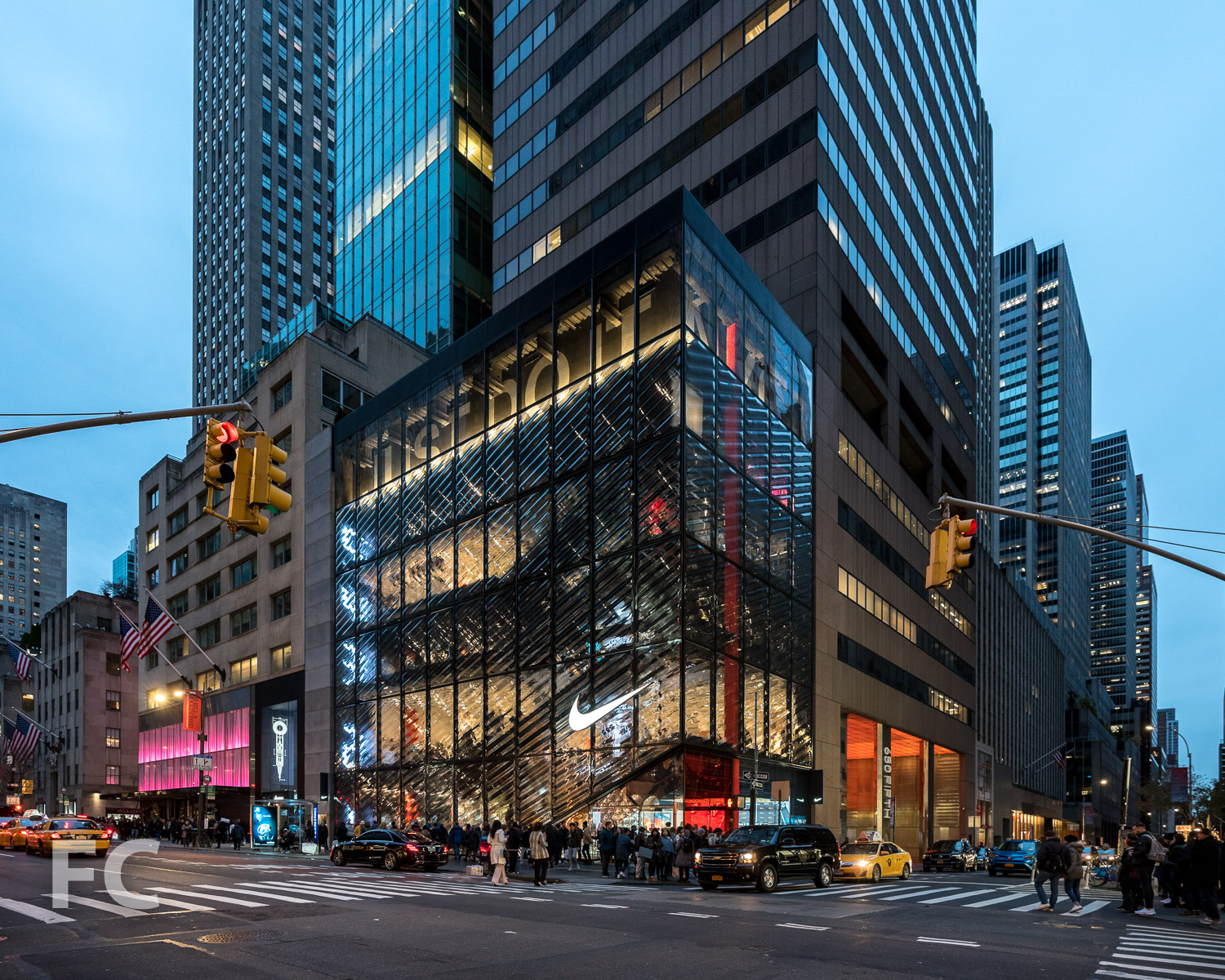
Tour: 650 Fifth Avenue - Nike Flagship Store
Nike’s new six-story flagship store, House of Innovation 000, has opened at the corner of 5th Avenue and East 52nd Street in Midtown. The façade is clad in slumped glass with a strong diagonal pattern that matches the angle of the brand’s famous swoosh logo. Retail concepts inside the flagship store include a Sneaker Bar, two maker’s studios, a Sneaker Lab, a Nike Expert Studio, and a Speed Shop at the below grade floor that will use local data to stock and restock shelves based on what is popular with buyers at this particular location.

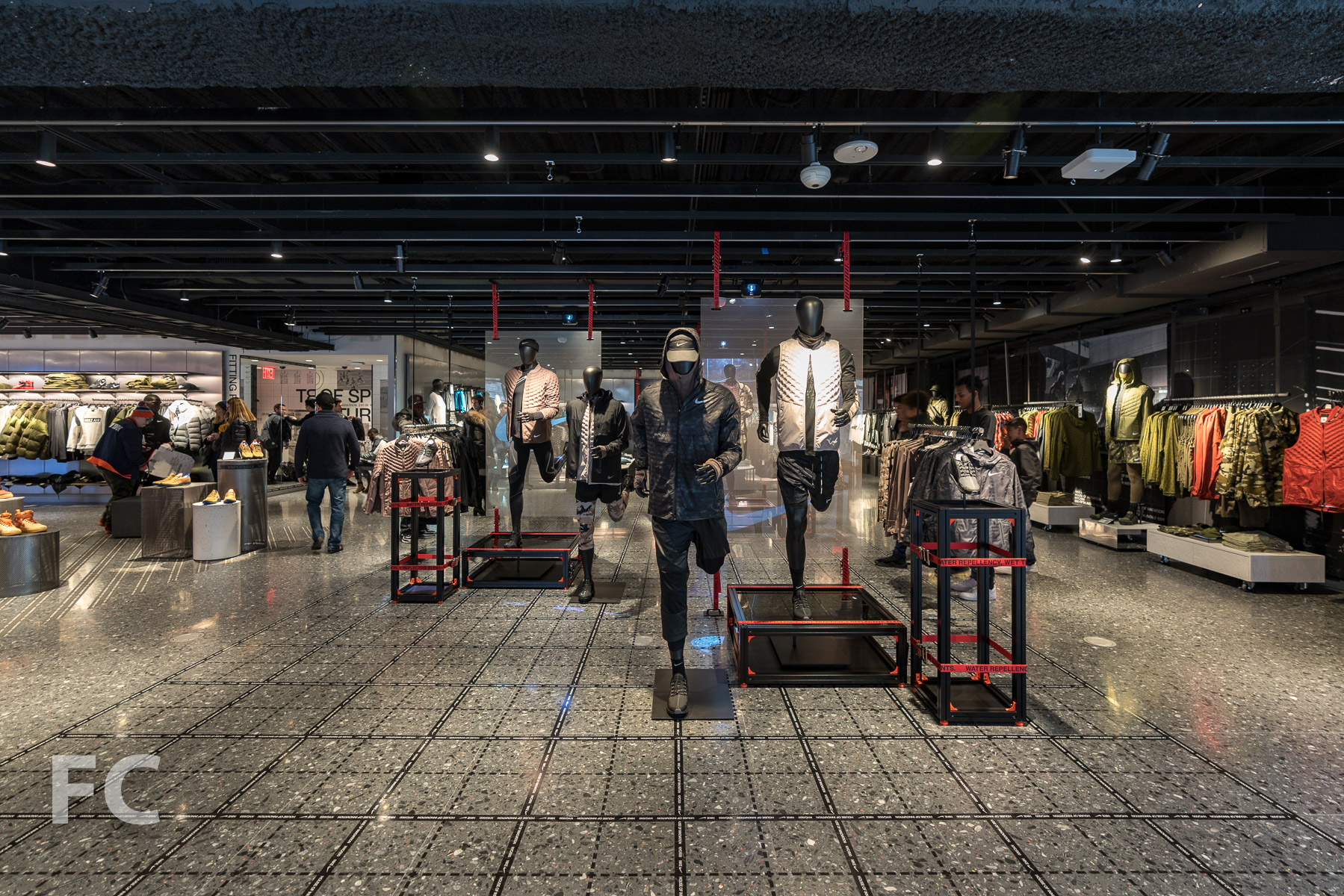
Architects: Nike Global Retail Design and CallisonRTKL; Facade Consultant: Heintges Consulting Architects & Engineers, Mode Lab; Client: Nike; Location: Midtown, New York, NY; Completion: 2018.




220 Central Park South
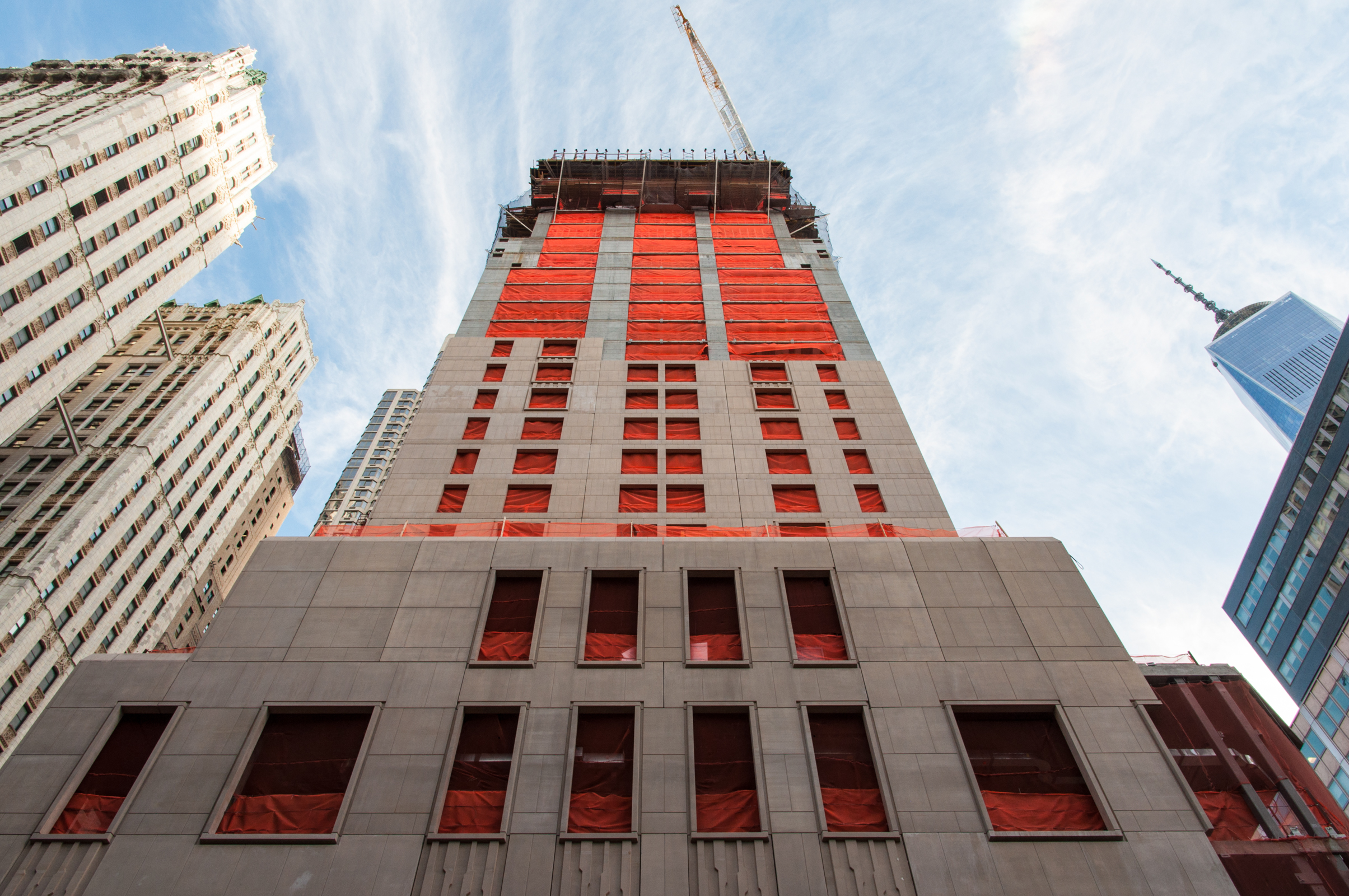
Superstructure has surpassed the one-third mark and limestone panels are going up at Vornado and Robert A.M. Stern's 220 Central Park South skyscraper.
Superstructure is on the rise at Vornado Realty Trust's skyscraper at 220 Central Park South. Designed by Robert A.M. Stern Architects, the 950-foot-tall, 66-story tower will bring 87 residential condo units to the Central Park South neighborhood. Currently, the tower's structure appears to have reached approximately the 24th floor, surpassing the one-third mark for height. Also underway is the installation of the windows and limestone cladding, a signature of Stern's luxury towers in New York. Completion is set for sometime in 2017 and the project is already over 50 percent sold.
Southeast corner from West 58th Street.
Close-up of the facade at the southeast corner.
Looking up at the southeast corner of the tower.
Looking up at the south elevation of the tower.
Looking up at the south elevation of the tower.
Looking up at the southwest corner of the tower.
Close-up of the west facade.
Architect: Robert A.M. Stern Architects (Design Architect), SLCE Architects (Executive Architect); Structural Engineer: Desimone Consulting Engineers; Facade Consultant: Heintges; General Contractor: Lendlease; Developer: Vornado Realty Trust; Program: Residential; Location: Midtown, New York, NY; Completion: 2019.

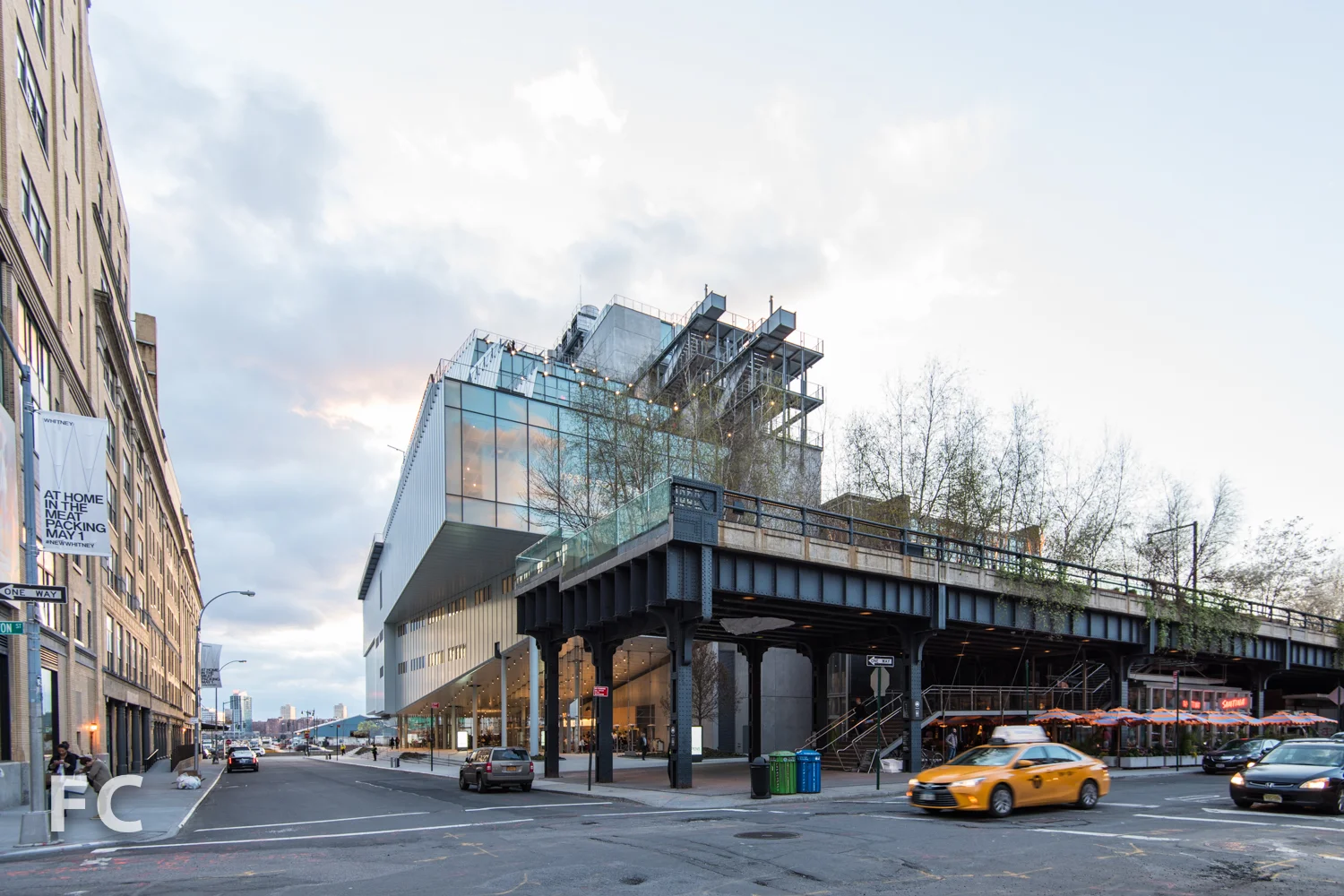
Whitney Museum of American Art
Ungainly and awkward, the Whitney's $422 million, 220,000-square-foot new home asserts its presence at the High Line's southern edge. Renzo Piano's addition to the Meatpacking neighborhood is indicative of the district's decade-long transformation from working class industrial to trendy tourist destination. What started in the previous decade with the conversion of unused elevated train tracks into the High Line elevated park, has culminated in a major new museum for the city in a neighborhood now dominated by buildings from an elite group of architects.
The Whitney Museum of American Art, begun with a collection of artwork amassed by Gertrude Whitney in 1908, has called several places home in its first century of existence. Most recently the museum was located on the Upper East Side, in a building designed by Marcel Breuer in 1966, at the corner of Madison Avenue and East 75th Street. Breuer's building, with its stone clad, inverted ziggurat form, was also considered at its opening to be awkward and panned for its unusual massing. With time, the building gained acceptance but was never able to adequately hold the museum's vast collection.
The Whitney Museum by Marcel Breuer, 1966.
Many attempts were made to expand the museum at its Upper East Side location, with designs from Norman Foster, Michael Graves, OMA, and finally Renzo Piano. Given the scale of the neighborhood and the historic value of buildings on site and adjacent, large scale expansion plans proved too contentious to realize.
With the advent of the High Line in 2009, properties that surrounded the park gained new value and the exodus of industrial businesses in the area left behind many sites ripe for new construction. Realizing the futility of its expansion plans at the Breuer building, the Whitney brokered a deal with the city of New York for a site at the southern entrance to the High Line and occupied by a meatpacking business. While the business has remained on the northern half of the massive site, the Whitney's deal with the city allows them to acquire the remaining half should the business relocate elsewhere.
Program study models.
Massing study models.
Presentation model of final design.
The Whitney Museum by Marcel Breuer, 1966.
Piano's building is arranged with gallery spaces and other public functions in the southern half, while offices for the museum's staff, education programs, and other support spaces occupy the northern half. At the primary public corner, where Gansevoort intersects Washington Street, the Whitney engages the public at both street level and the High Line as the building's form folds skyward at the corner of Gansevoort and Washington Street, creating a multi-story volume enclosed by vast expanses of glass. Piano uses this element in conjunction with the more solidly clad galleries cantilevered above to subtly invoke the Breuer building's iconic massing, a motif that will reoccur throughout. The folded facade also evokes Diller Scofidio + Renfro's overhaul of Lincoln Center's Alice Tully Hull (renovated, 2009), where a double height entry is also formed by peeling up the building's original travertine facade. For the Whitney, this space houses Danny Meyer's latest restaurant, Untitled. Stretching along the restaurant's Gansevoort Street frontage, the open kitchen visually dominates the space. At night, the scene from the street is reminiscent of Edward Hopper's Nighthawks, with the patrons spread out along the bar and the glow of Robert Indiana's illuminated word "EAT" artwork hanging above.
Southeast corner of the Whitney (left) and the southern entrance to the High Line (right).
Untitled restaurant from Gansevoort Street.
Restaurant entrance off of Gansevoort Street.
View of the restaurant bar from Gansevoort Street.
Main museum entrance from Gansevoort Street.
View of the museum shop at the southwest corner from Gansevoort Street.
Museum visitors enter mid-block off of Gansevoort Street into a glass enclosed 6,000 square-foot lobby that is adjacent to a free gallery and a museum shop consisting of open shelving to maintain visual porosity. Galleries on the upper floors can be accessed by a grand stair or by one of four elevators, featuring commissioned artwork in the elevator cab by the artist Richard Artschwager. Glazing above the elevator entry at ground level allows the visitor to see the machinery needed to operate, continuing an oft used theme by Piano. The concrete and steel of the stair serves as another subtle reference to the Breuer building.
Main museum entrance from Gansevoort Street.
Museum lobby.
Museum shop shelving.
Special exhibitions are housed on the eighth floor, which currently features "America is Hard to See." The show serves as a means for the Whitney to reexamine American art since 1900 with works from their vast collection that has long gone unseen. The galleries at this level feature the typical white walls and reclaimed wide-plank pine flooring found throughout the museum. Because of its top floor location, Piano has designed the ceilings as a grid work that allows in light from the sawtooth skylights, resulting in a much brighter and inviting environment to wander the galleries than the Breuer building. There, the dark tones of the stone flooring and the concrete waffle ceiling gave the galleries a heavy and dark atmosphere. Although Piano's galleries are a sharp turn from the previous aesthetic, he continually references the Breuer ceilings with the varying take on grids created at each level of galleries. On some floors the ceiling grid is present but solid while other floors reveal the conduit and ductwork of necessary services in a modern building, a muted and vertical take on Piano's first museum, the Pompidou.
On floors six and seven reside the permanent collection galleries in spaces unmatched by their previous home. Now visitors can peruse the work in vast spaces that give the pieces enough real estate to stand on their own but still create a dialogue with adjacent works. With the added space comes spectacular moments of rest and reflection, where visitors can sit at one of two large walls of glass and take in the High Line in the morning light from the east facade or the setting sun from the west facade's window. Moments of connection to the surrounding neighborhood can even be experienced while in the midst of perusing the galleries, as slots of space cut through gallery walls leading to the facade's glazing.
Not to be outdone, the 13,000-square-feet of outdoor galleries and terraces provide additional opportunities to pause and reflect. Views of the city skyline serve as a backdrop to outdoor cafe seating and several large sculptures. On the fifth floor outdoor gallery, the Whitney has commissioned a site specific work by Mary Heilmann, Mary Heilmann: Sunset, which features colorful chairs scattered about the terrace that visitors can use. Also included is a projected film and panels of colorful shapes that mimic the stepping of the building's terraces.

At the northern half of the building, Piano has located the support space for the Whitney's staff, which has grown steadily in recent years. Like the galleries, these spaces are generous in size and provide ample light and views to the neighborhood.
With the opening of the Whitney, the city has gained another spectacular cultural destination. Yes, it's exterior is a quirky wrapper, more muscle than beauty, but the interior more than compensates with its spot on take on the contemporary museum. Piano expertly crafts a museum that accommodates the visitor with the right mix of galleries and leisure space, allowing the museum to coexist with, rather than be consumed by, the commercial program of contemporary institutions. Like the Breuer building, Piano's structure will likely be embraced by most over time, as visitors forgive its exterior clumsiness for the expertly crafted experience within.
Architect: Renzo Piano Building Workshop (Design Architect), Cooper Robertson (Executive Architect); Structural Engineer: Robert Silman Associates: MEP Engineer: Jaros, Baum & Bolles; Facade Consultant: Heintges; Landscape Architect: Piet Oudolf with Mathews Nielson Landscape Architect; General Contractor: Turner Construction; Client: Whitney Museum of American Art; Program: Museum; Location: Meatpacking District, New York, NY; Completion: 2015.