Construction Update: 809 Broadway
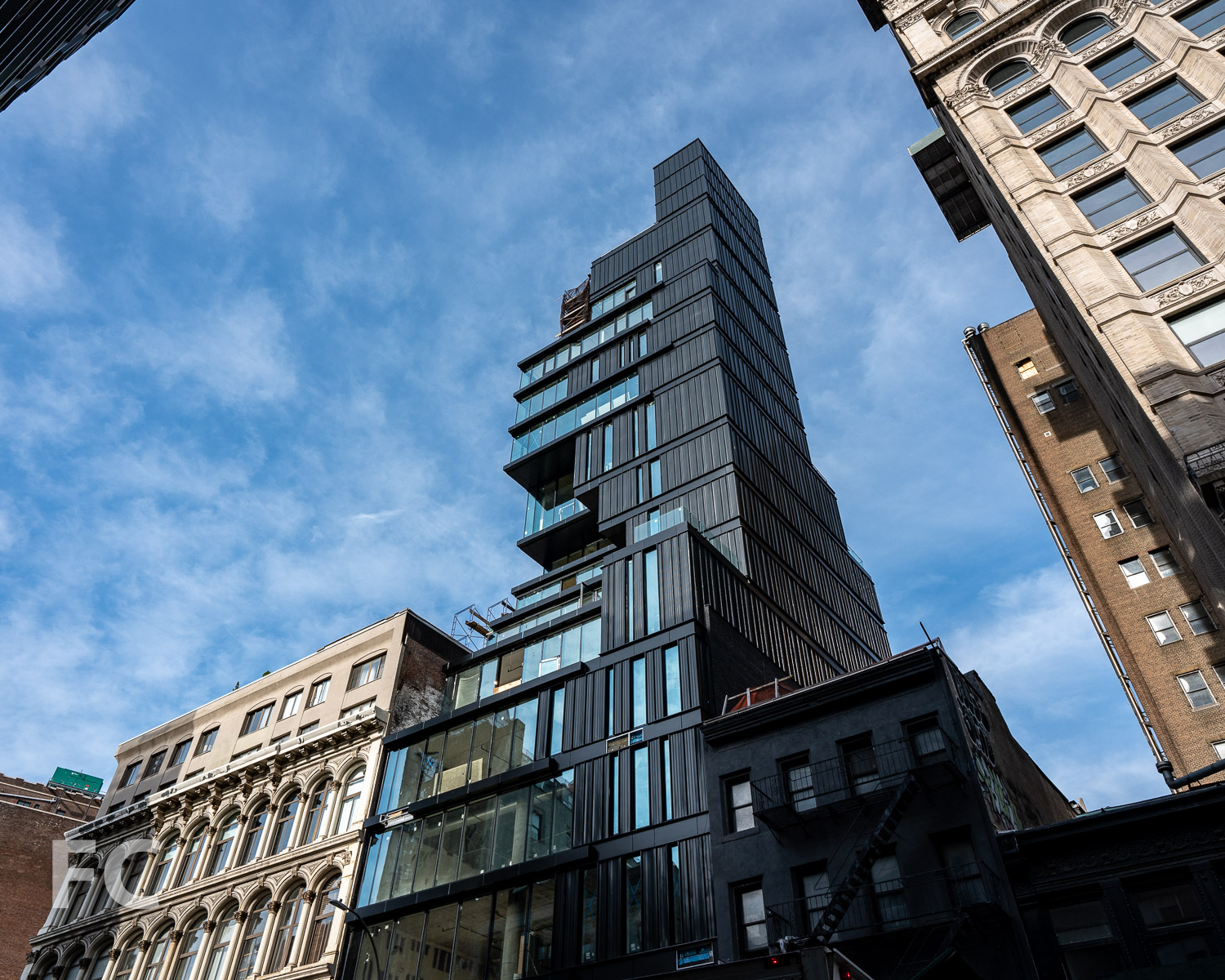
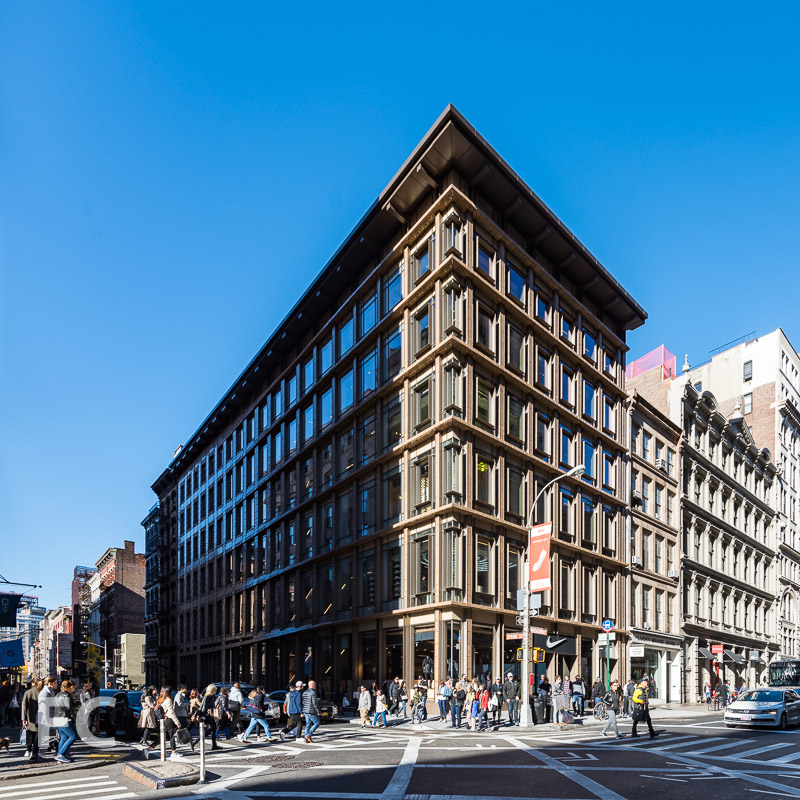
Northeast corner from Broadway.
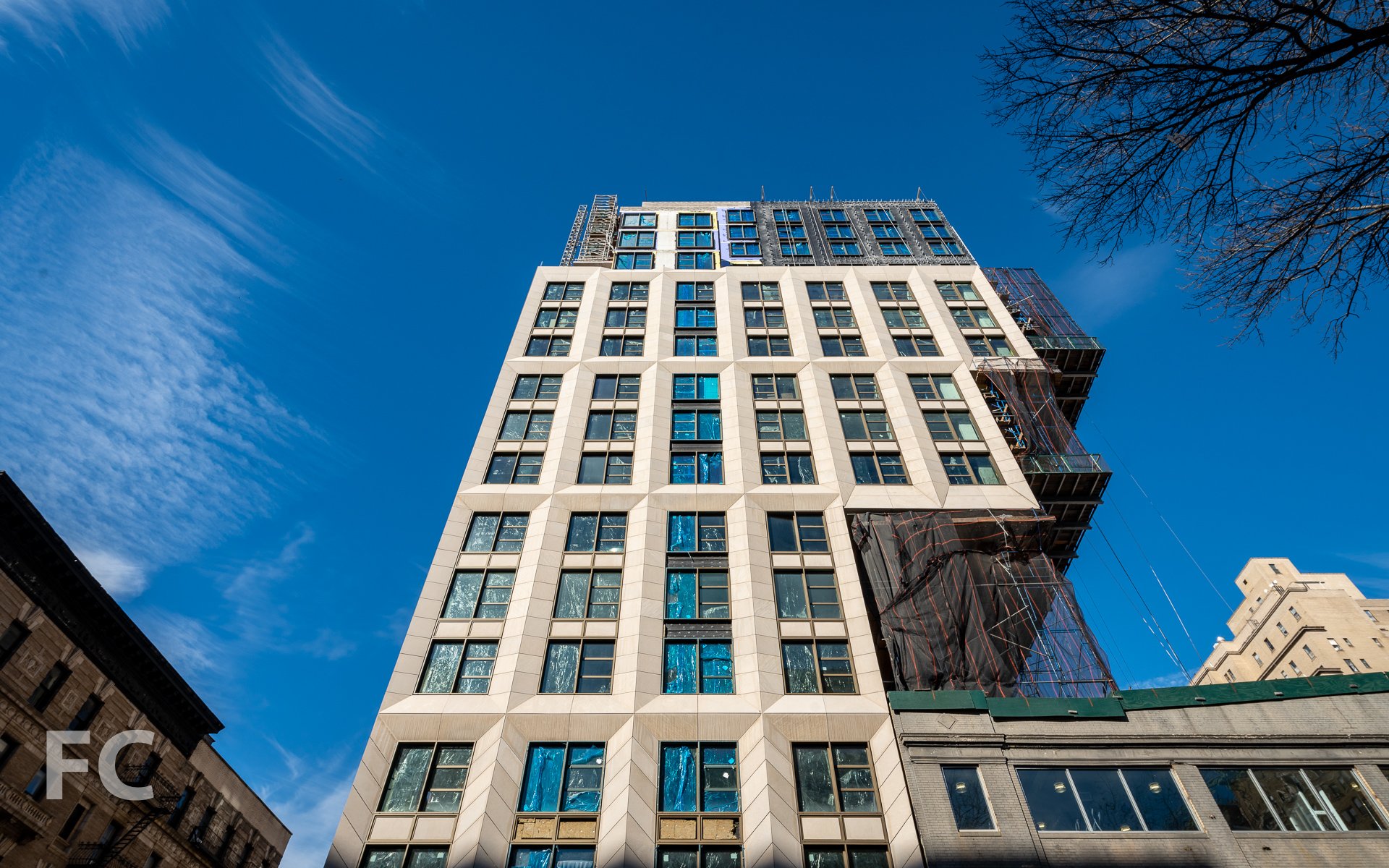
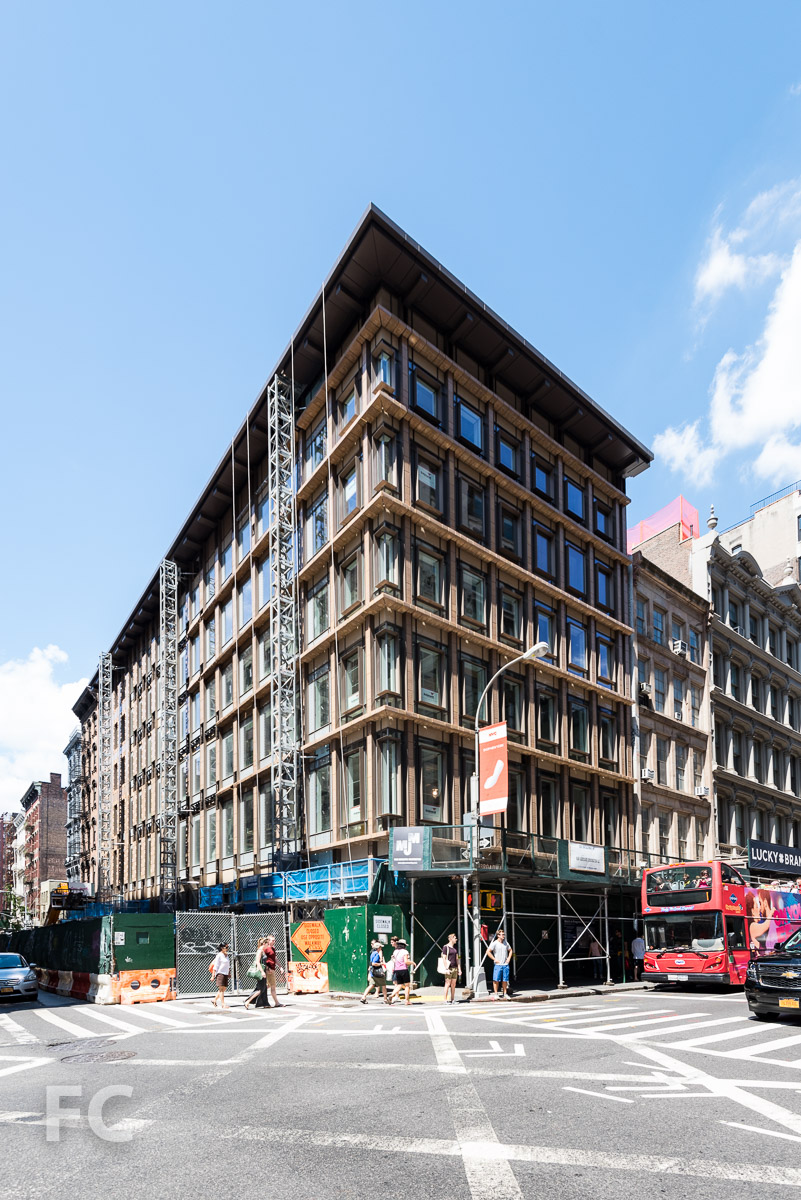
Construction scaffolding is coming down at 809 Broadway, revealing the metal and glass facade. The 15-story mixed-use tower, developed by IDM Capital, sits on a mid-block site near Union Square. Retail will occupy the cellar and ground floor, floors 2 through 12 will offer commercial office space, and three residential condos will be available at the top floors. ODA New York is responsible for the design, which features the firm’s signature eroded massing that breaks down the simple extruded rectangle at the southern corners of the tower. The tower cladding also mimics the erosion, as the solid black metal cladding transitions to glass at the southeast and southwest corners to allow for views of Lower Manhattan.
Looking up at the northeast corner.
Closeup of the northeast corner.
Looking up at the east facade from Broadway.
Looking up at the southeast corner.
Southeast corner from Broadway.
Close-up of the southeast corner.
Architect: ODA New York; Developer: IDM Capital; Program: Commercial Office, Residential Condo, Retail; Location: Union Square, New York, NY; Completion: 2019.

Construction Tour: Tammany Hall
December, 2018.
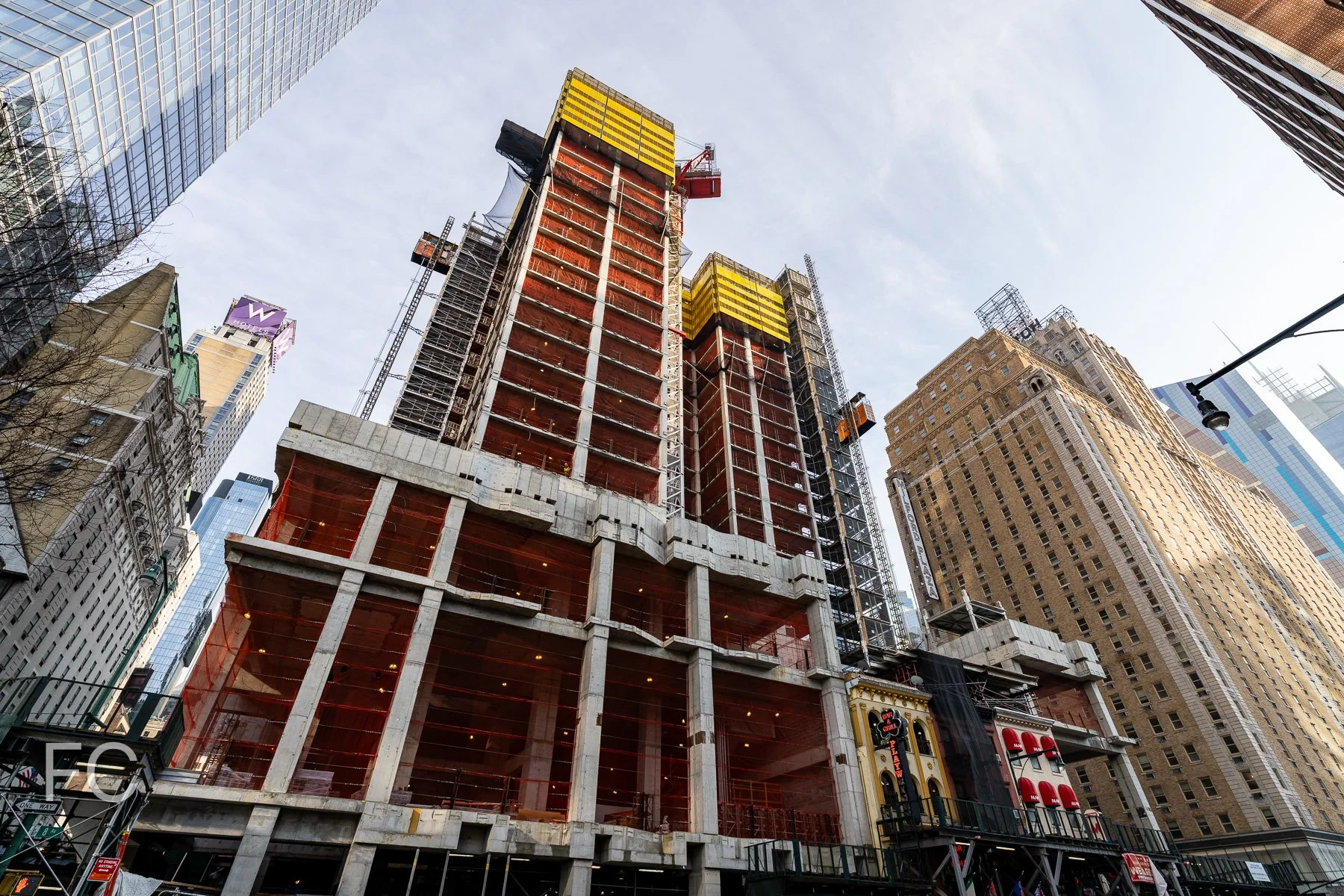
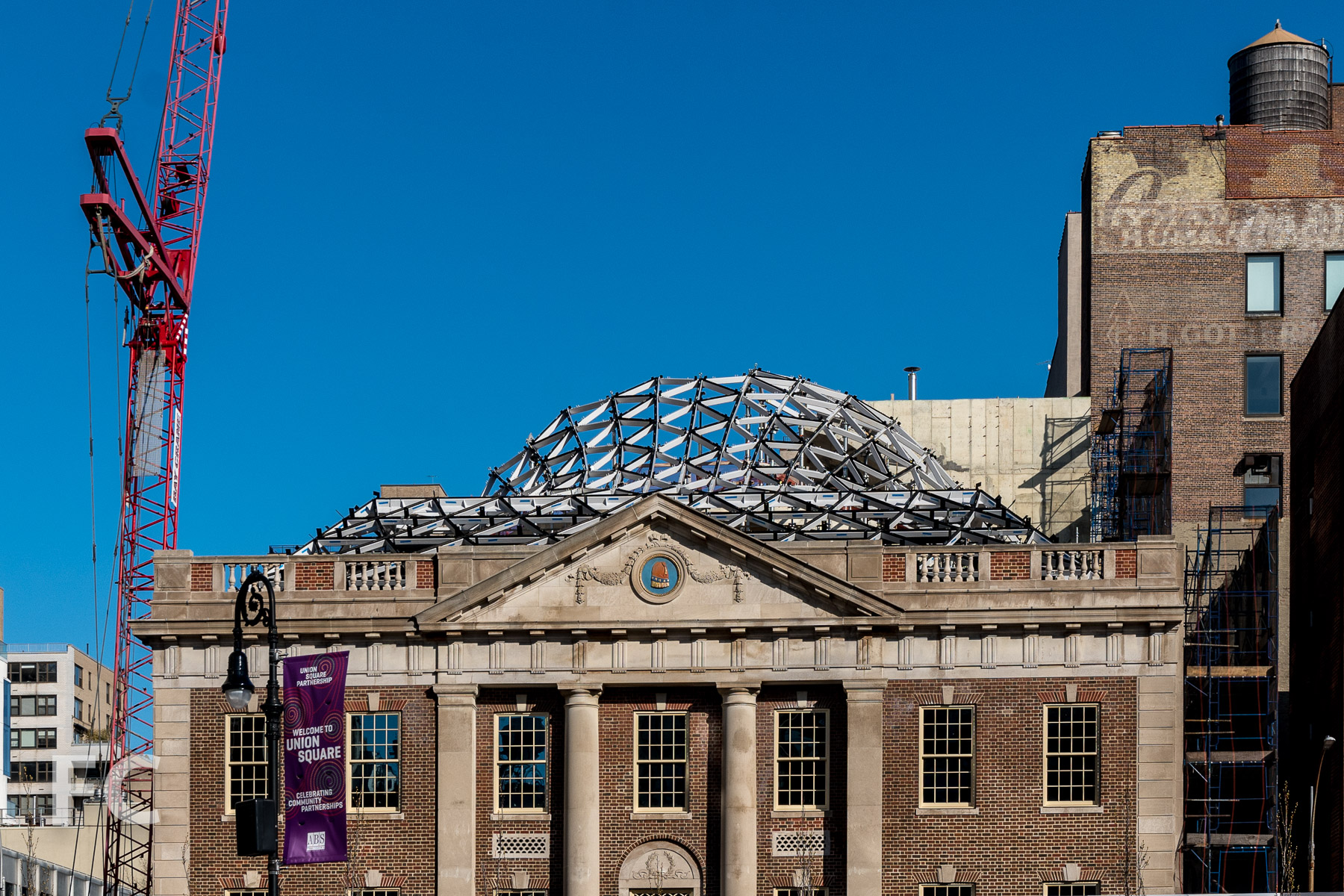
Once the headquarters for Tammany Hall, the landmarked structure at 44 Union Square is undergoing an extensive renovation by BKSK Architects. The 1929 neo-Georgian building’s brick and limestone exteriors will be preserved, with a wholesale renovation of the interiors. In recent years the building served as a theater and a film school, but will now be converted into office and commercial space. At the roof, a new metal and glass domed addition is taking shape, recalling a turtle that the Lenape Chief Tamanend stands upon, part of the historic symbolic roots of the Tammany political organization which promoted nation-building ideals of the Revolutionary War period.
April, 2019
December, 2018.
December, 2018.
March, 2019.
March, 2019.
March, 2019.
Architect: BKSK Architects; Program: Commercial; Location: Union Square, New York, NY; Completion: 2020.


35 West 15th Street - 35 XV
Tour the recently completed 35XV tower from Alchemy Properties and FXFOWLE in Chelsea.
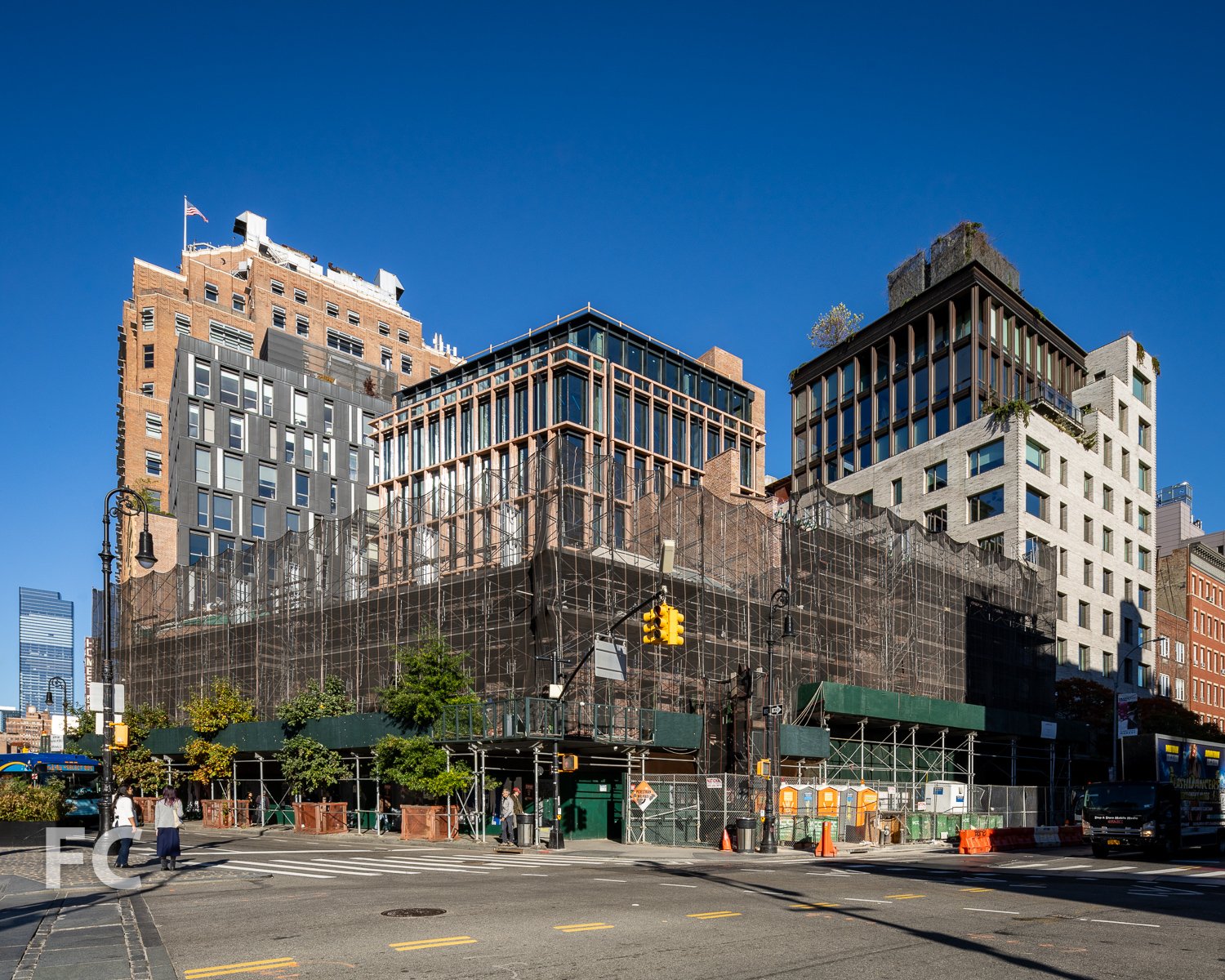
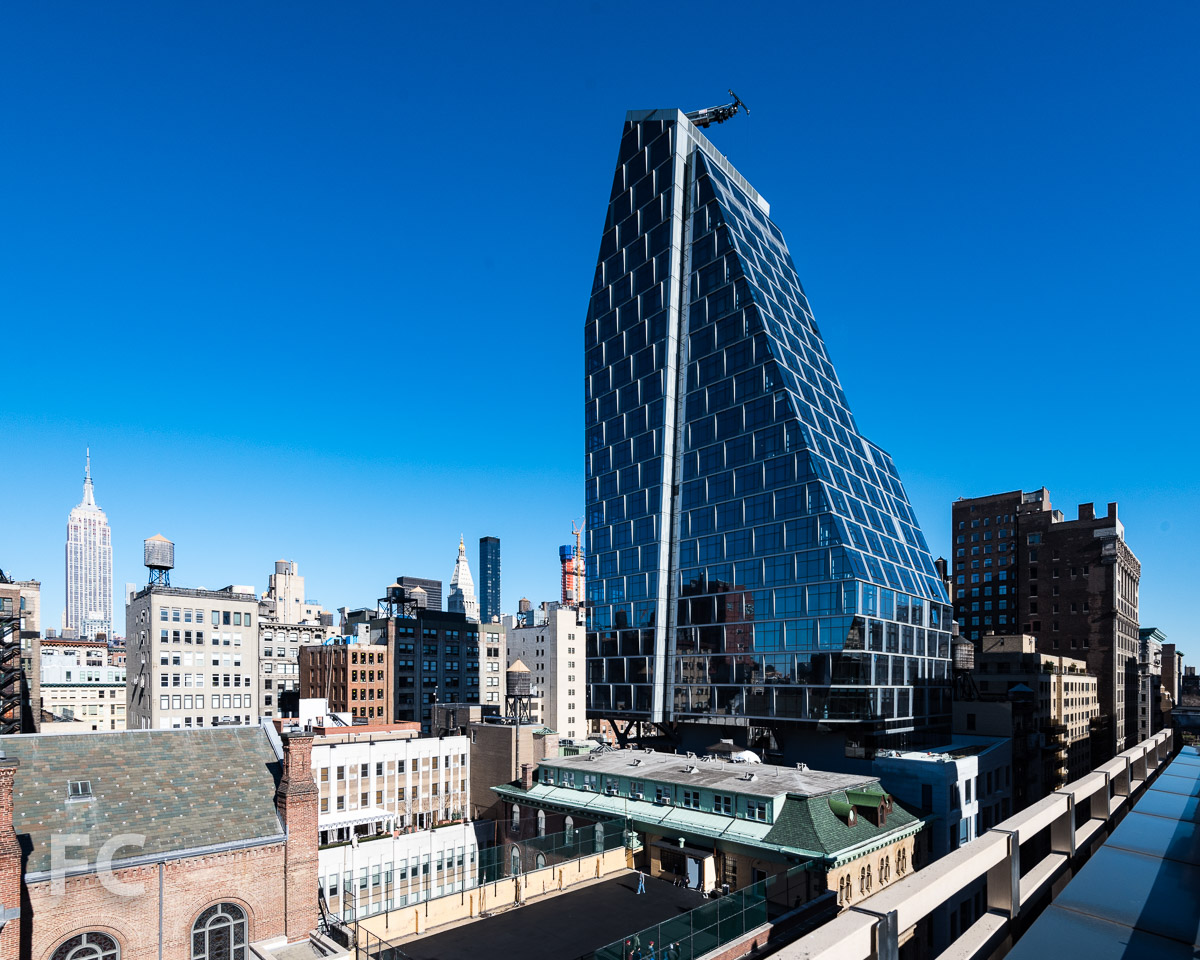
Construction is wrapping up at Alchemy Properties' 35 XV, a 25-story residential tower and school addition that occupies a mid-block site in Chelsea. Designed by FXFOWLE, the project includes a six-story podium that houses an expansion of Xavier High School and a 55-unit residential tower above.
Southwest corner.
The podium is clad in granite which helps to tie it in with the surrounding context of mostly brick structures. A residential lobby at ground floor welcomes residents arriving from 15th Street, while above there are classrooms and a half court gym for the school.
Southwest corner of the podium and tower.
In contrast to the solid base, the residential tower rises above its surroundings in a sculpted glass volume that is prominent on the skyline from afar but less intrusive when experienced from the street. The glass curtain wall features integrated metal fins for solar shading on the east and west facades and patterned frit spandrels throughout that tie its facade in with the podium below.
Southwest corner of the tower.

Close-up of the southwest corner.
Residence 12C
While most of the units have sold, there are a handful of units left in the tower, of which I toured two. The first residence faces south, with amazing views of the neighborhood and Lower Manhattan from the floor-to-ceiling Italian glass curtain wall. There are views south and west from the 10 foot tall spaces of the living/dining area at the southwest corner of the tower. An adjacent breakfast/den off of the kitchen gets a southern view as well. Mechanized shades in the living area offer relief from the sun without fully obscuring the view.
Living/Dining with views to the south and west.
Living/Dining with mechanized shades deployed.
Living/Dining.
Living/Dining.
Southwest corner of the Living/Dining.
The kitchen features marble countertops, Poggenpohl cabinetry, and luxury appliances from Miele and Sub Zero.
Kitchen.
Breakfast/Den.
Master Bedroom.
Residence 17A
The second unit faces the north with dramatic views of the Midtown skyline, including prominent icons like the Empire State Building and new additions like Hudson Yards. The living/dining area feature views north and west, while the master bedroom faces north and east.
Living/Dining with views to the north and west.
Northwest corner of the Living/Dining.
View north towards Midtown.
Kitchen.
Master Bedroom with views toward the north and east.
Benjamin Noriega Ortiz has designed bespoke master bathrooms featuring Calacatta Gold Marble countertops and backsplashes, along with Gaudi Marble radiant heated floors.
Master Bath vanity.
Master Bath soaking tub.
Master Bath steam shower.
Bedroom with a view to the north.
Architect: FXFOWLE; Interiors: BNOdesign; Developer: Alchemy Properties Inc.;Program: Residential, Education; Location: Chelsea, New York, NY; Completion: 2016.
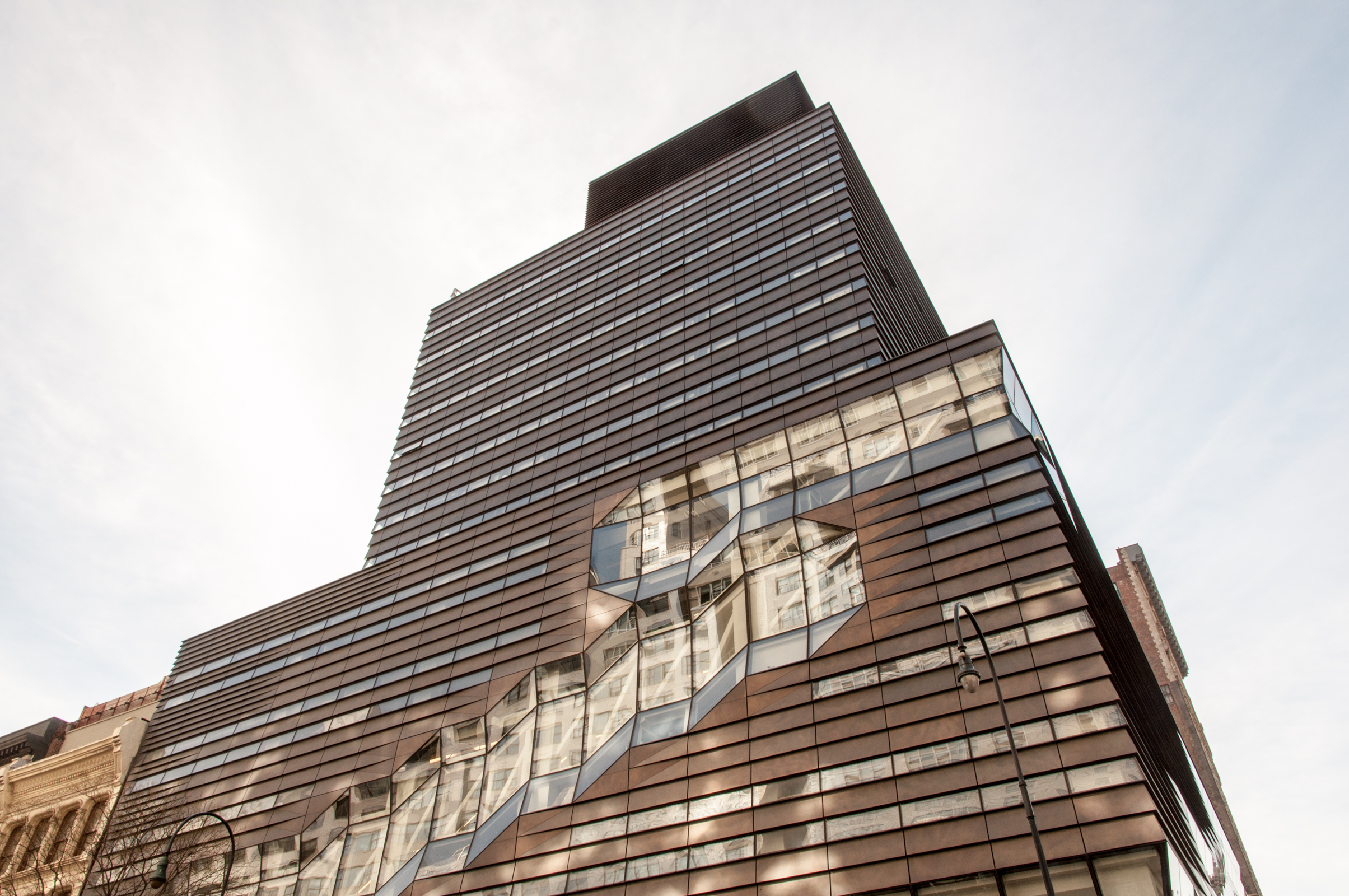
The New School University Center / March 01, 2014
A block to the west of Union Square stands the newest addition to the New School‘s urban campus, the SOM designed University Center. The Center is the latest in New York City‘s recent academic building boom, in which almost every major institution is adding to their campus. Since its founding in 1919, the New School‘s campus has grown as a multi-building network of schools that are concentrated in the Union Square neighborhood with several buildings spreading out to the east and west and two buildings further uptown. In order to provide a central hub for its 10,000 degree-seeking students and faculty of all disciplines to centrally connect, collaborate and live, the New School has developed the University Center.
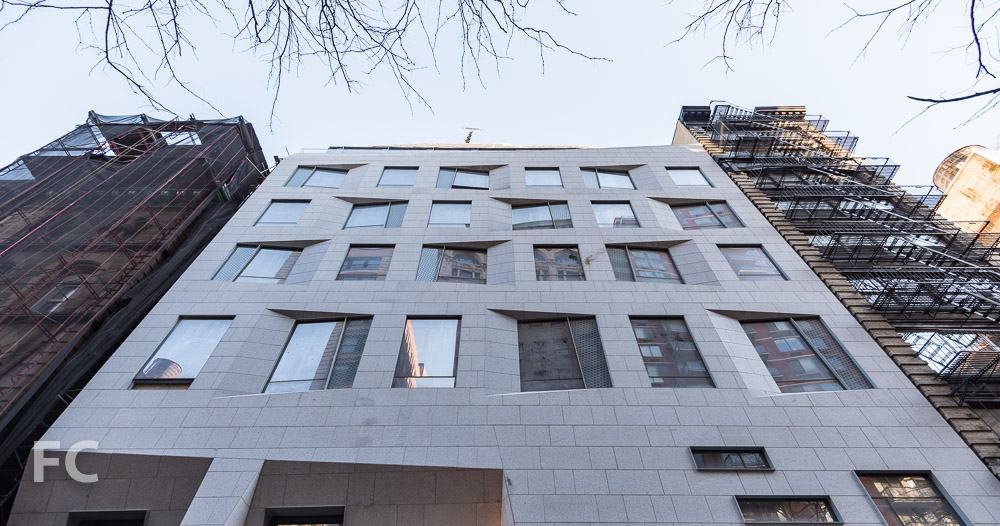
The massing of the building employs the classic New York typology, driven by zoning regulations, of volumes that step back from the street wall as the height increases. A full site base volume houses the academic and performance spaces while the upper volume accommodates the residential student housing in its smaller floor plates. Covering both volumes is a mixture of glass and the dominate chocolate brown of the muntz metal, which echoes the brown of the First Presbyterian Church (Joseph C. Wells, 1845) to the southwest. Muntz metal is a type of brass composed of about 60% copper and 40% zinc that is both cost effective and durable compared to other metals of a similar hue.
The academic volume is visually dominated by the strongest architectural concept, the grand stair and the egress stair that have been pushed to the building‘s periphery and run in a parallel stack. This relocation opens up a building feature often concealed by interior location or the demands of life safety code, which requires two stairs which can withstand the effects of a fire for a period of time to allow building occupants a safe exit. On the facade, the stair registers as a dynamic, diagonal gash that erodes the opaque walls with faceted glass like an 8 bit termite swarm eating its way around the building. Not merely an aesthetic flourish, the concept seeks to address the real challenges of providing adequate vertical circulation for academic buildings which, unlike residential or office with its more concentrated periods of peak usage, have to accommodate hourly fluctuations as students and faculty migrate from class to class within the building. In the University Center, a skip stop elevator strategy encourages building occupants to utilize the stairs by confining elevator stops to every other floor, requiring the use of stairs for the floor above or below. The openness and novelty of the grand stair at the periphery rewards the occupant for the more active and energy efficient means of circulation.
At the top floor of the academic volume and the termination of the grand stair lies the Center‘s library and student study area, the Arnhold Forum. Occupying two floors, the library culminates in the first setback floor of the residential tower, where a Mathews Nielsen designed landscape provides a sustainable solution for rain water runoff and a tranquil foil to the urban panorama on view from the large expanses of glass.
Also present in the library, as in other floors of academic spaces, the grand stair‘s railing makes a strong presence in the space as a solid concrete faceted form that alters its shape from wall to bench, affording social engagement and transforming a mundane detail into a sculptural installation. The mechanical systems also impact the academic spaces with an artistic flair from the air ducts that double as sculpture by the American artist, Rita McBride.

Students and faculty find the same level of thoughtfulness in design and function in the 57 classrooms and supporting hallways which they will spend the greatest amount of time in. Each hallway is painted a different color, from the walls and storage lockers to the exposed mechanical pipes and ducts running along the ceiling. The specific color continues into the classrooms from the sprinkler pipe, while the remaining elements of the exposed mechanical systems and the walls are a neutral white. These classrooms are work spaces that remain flexible and raw to meet any future needs.


At the base of Center resides the most public programs of the Event Cafe and the John L. Tishman Auditorium, an 800 seat theater that can transform to accommodate dramatically different events. With the help of 18 electric lifts, the auditorium can reconfigure itself from a theater for dramatic performances to a lecture hall to a runway for fashion shows. A connection is maintained to the other occupants in the building with a tall vertical window along the side of the hall that allows people in the hallway to catch a glimpse of the activities on stage.
The iconic impact of the stair on both exterior and interior is matched by the building‘s signage and way-finding system, utilizing a typeface specially designed for the building by the Franco-Swiss graphic designer Ruedi Baur. A three dimensional typography has been created from a basis of the typeface Gotham and Irma that plays off of the iconic architectural elements on the exterior facade. Also included in the way-finding design is a graphic architectural element that acts as a logo for the building and is applied to the many glass interior partitions to satisfy the requirement for visual indicators of glass to occupants to avoid accidental collisions.
Kerrey Hall, the approximately 600 bed residential dormitory on the setback tower of floors 8-16, loses the intricate facets and folds of the grand stair for a more uniform envelope of metal and glass horizontal stripes. Though the reduction in floor plates for the dormitory is necessitated by zoning regulations and the standard dimensions of housing units, the tower‘s stripped down language of form and skin makes it feel like an afterthought tacked onto the more defined architectural language of the academic building‘s folds and facets.
With the completion of the University Center, the New School has built a new academic and social hub for their student body that also engages the neighborhood and its architectural heritage. As academic institutions continue their expansion projects in New York City in the coming years, lessons can be learned from the level of community engagement, implementation of sustainable strategies, and quality of design that have guided the New School in their development.