
Nine Chapel
SO-IL · Downtown Brooklyn · 2024
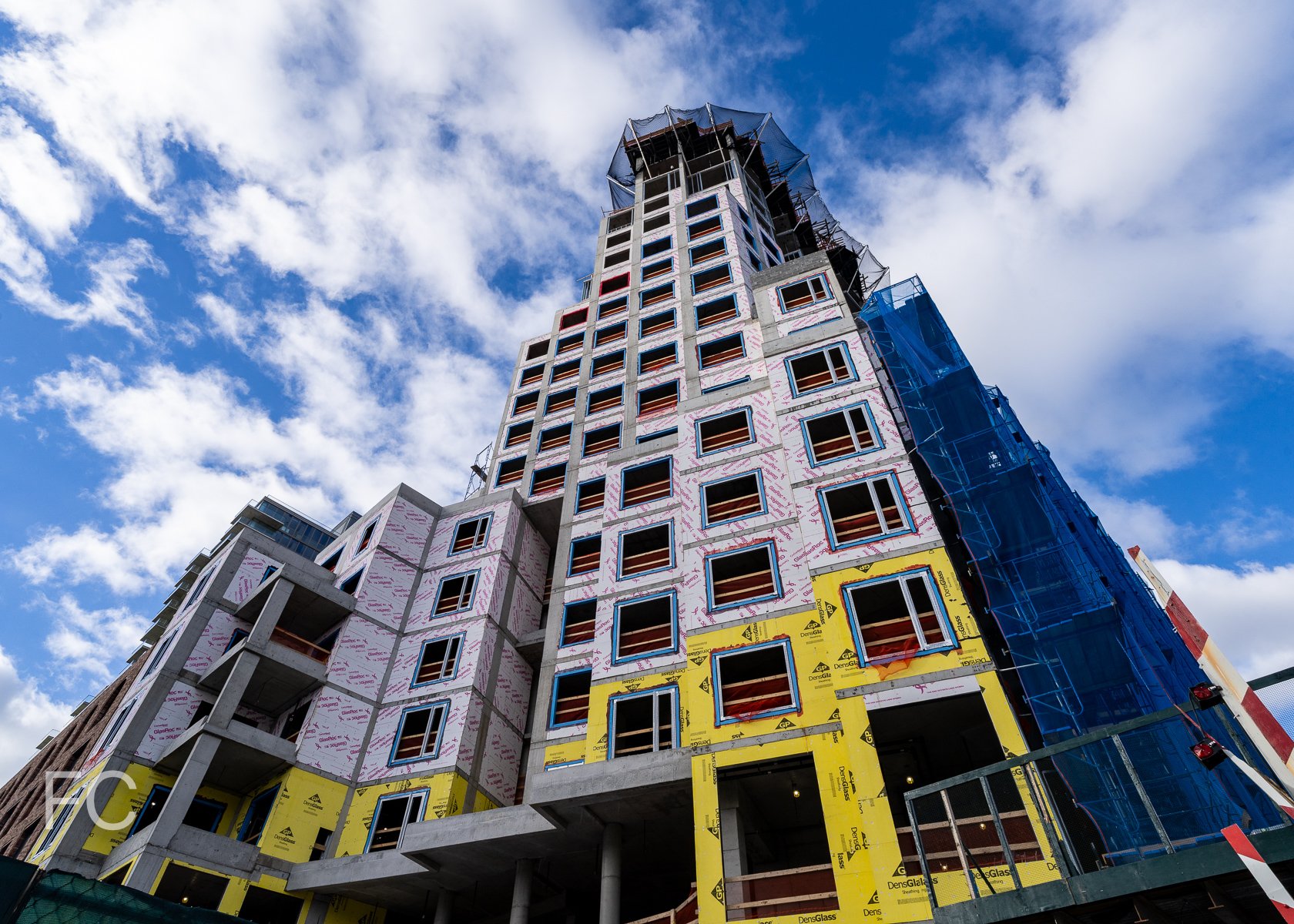
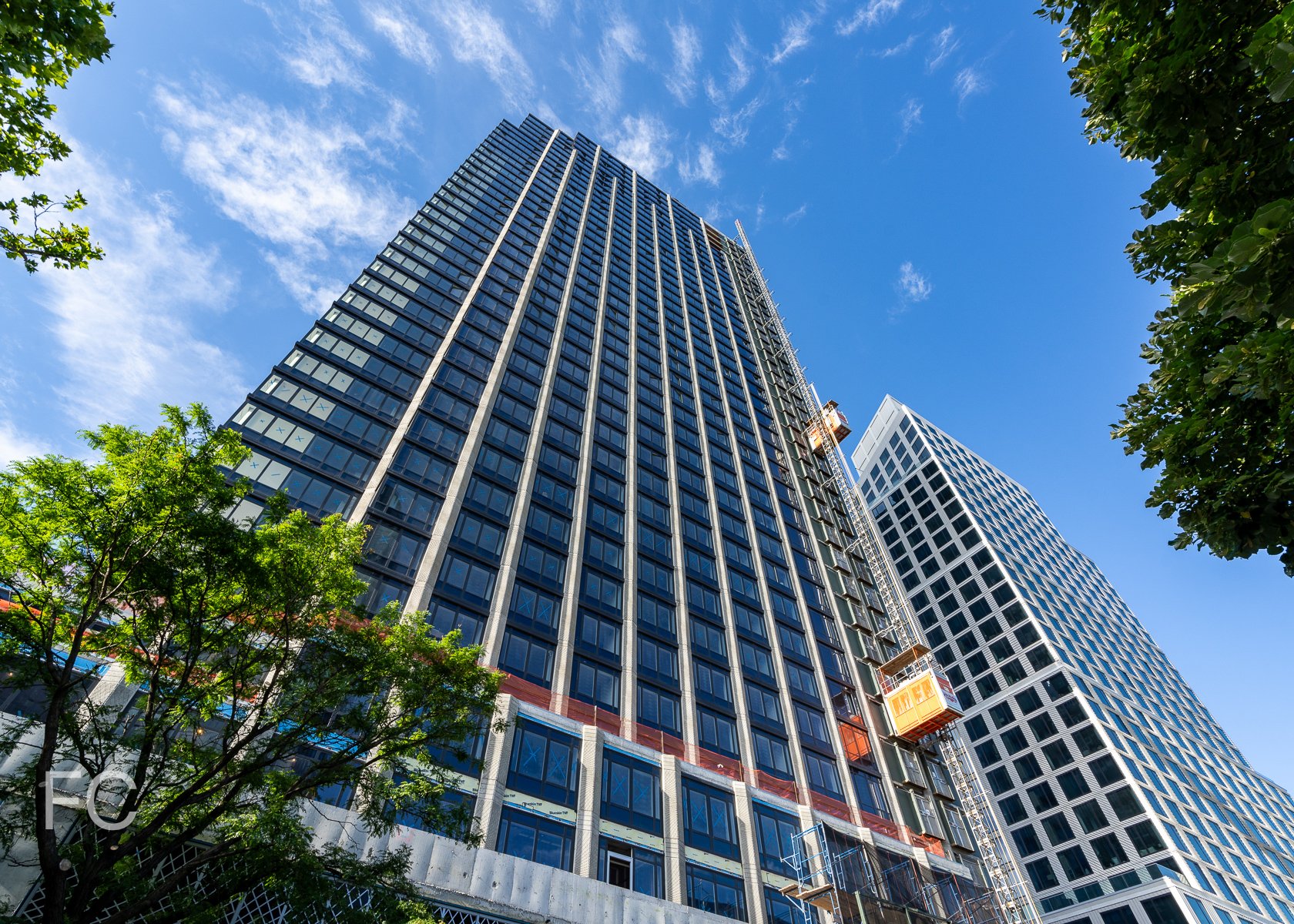
Southwest corner from Jay Street.
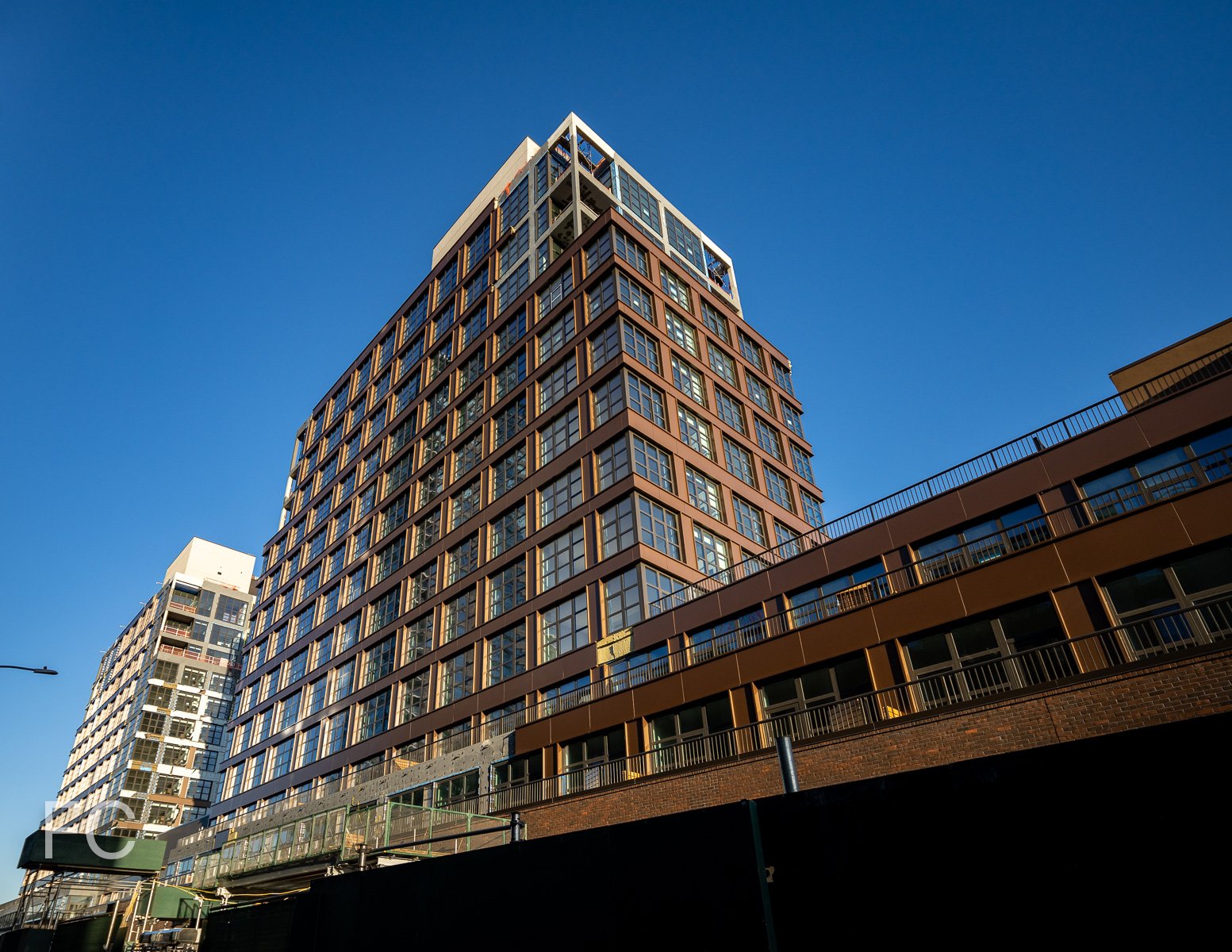
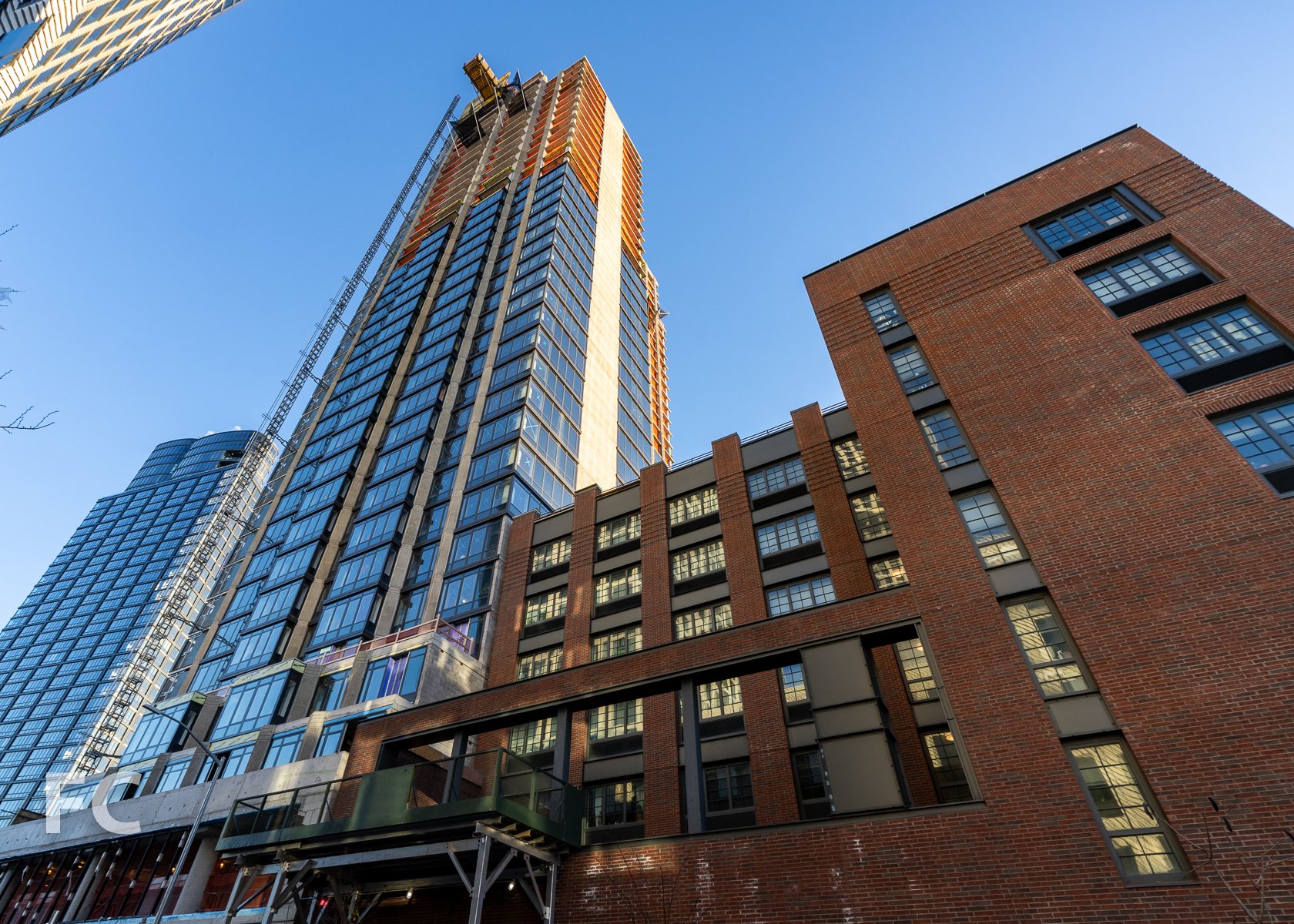
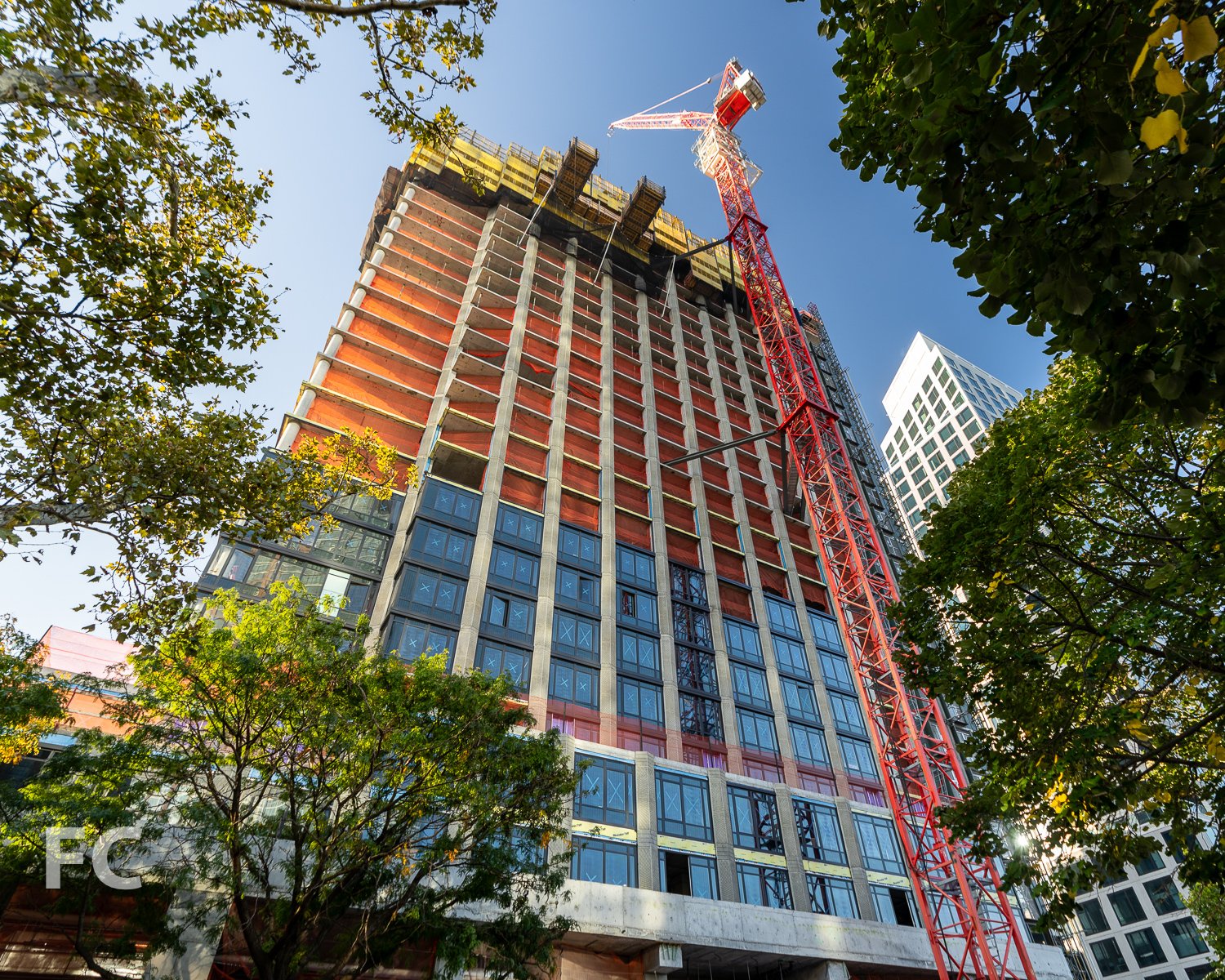
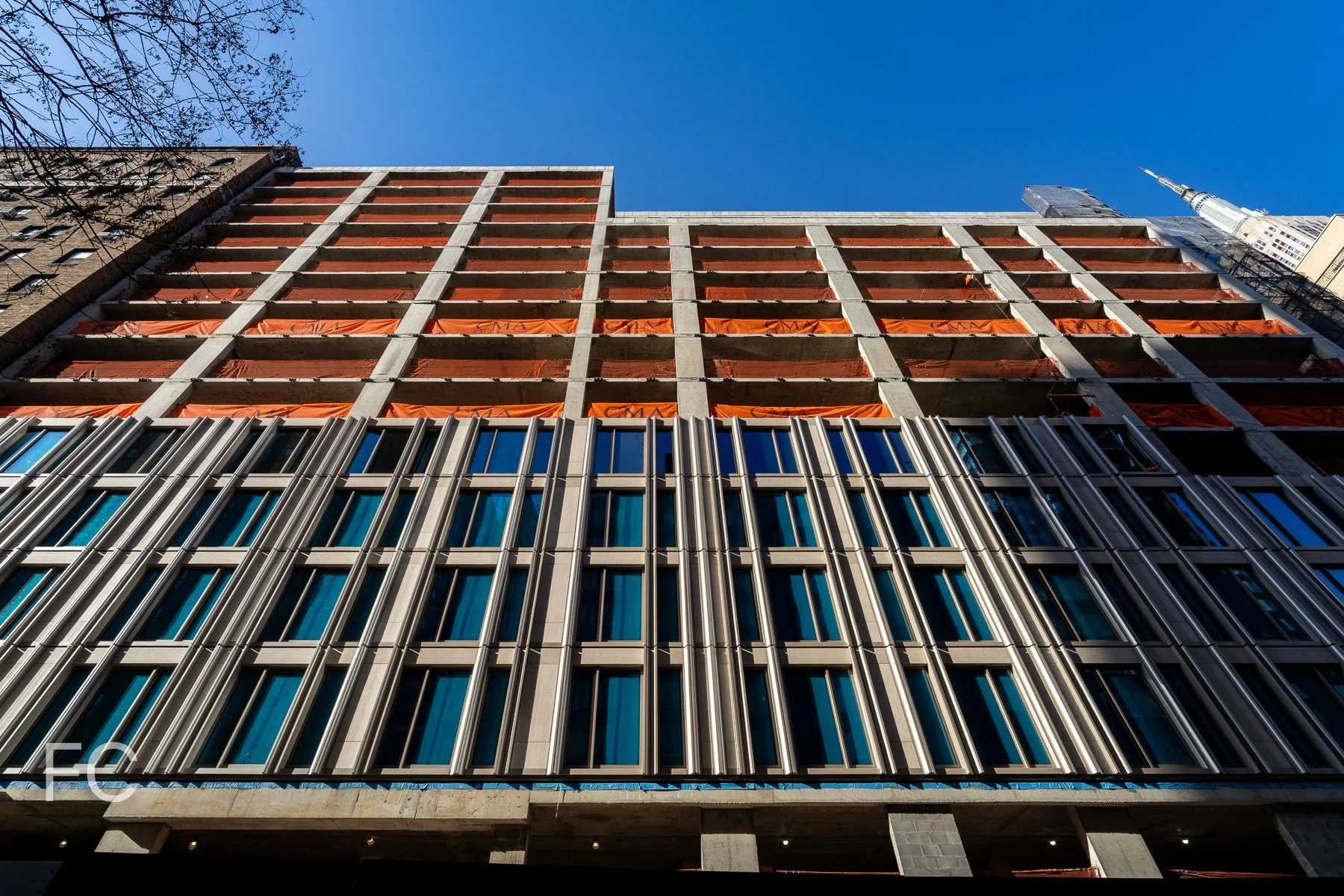
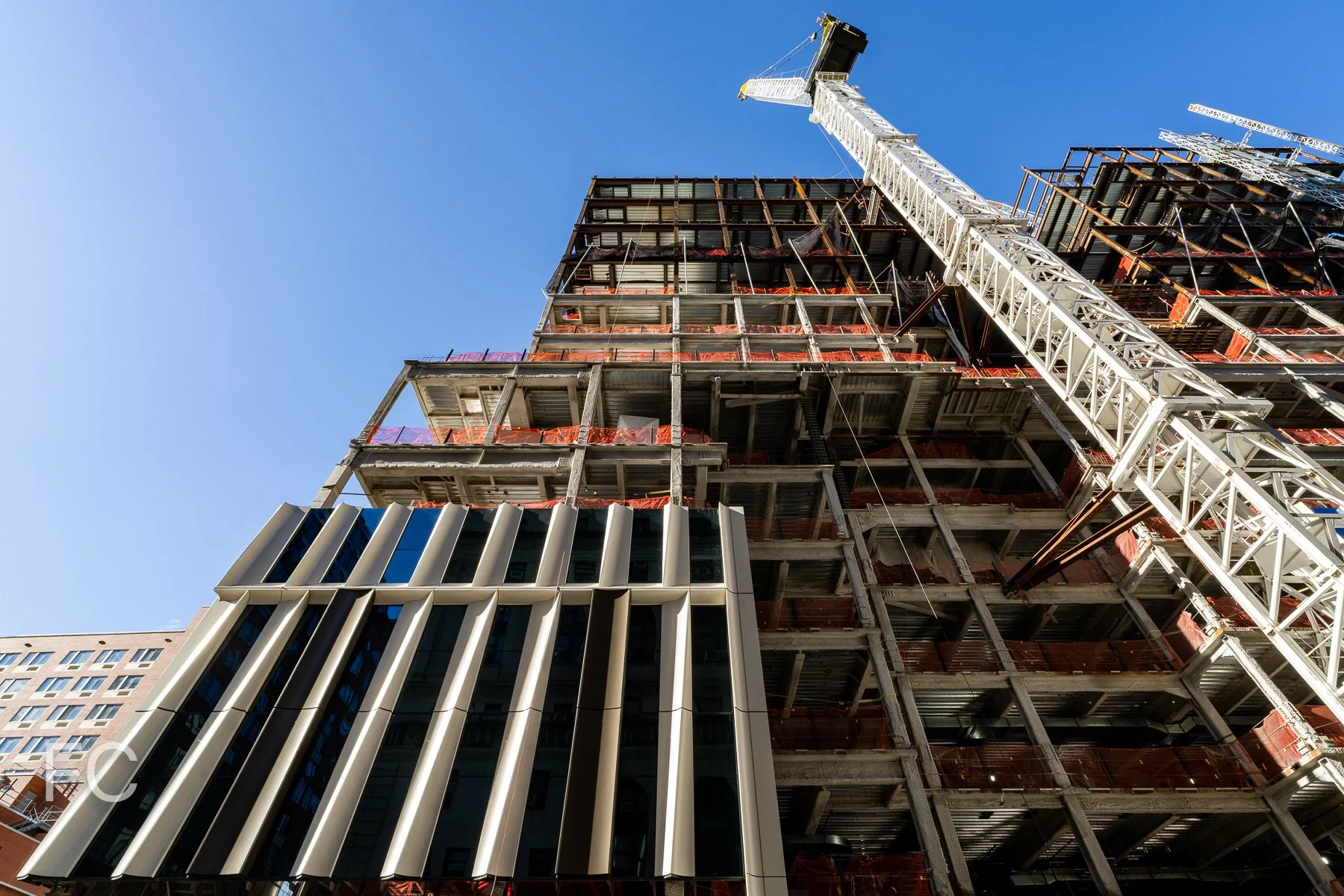
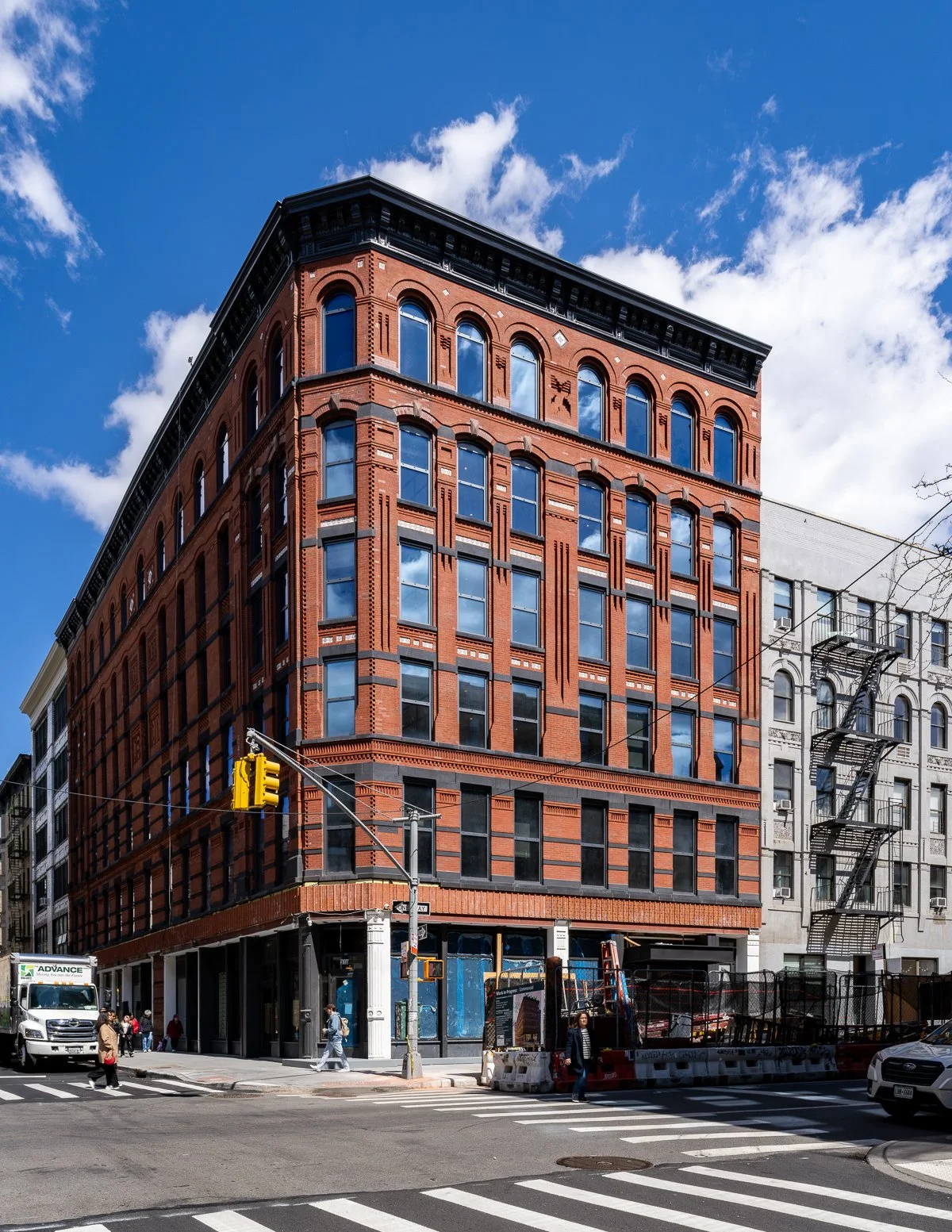
Facade installation is nearing completion at Tankhouse’s residential tower at 9 Chapel Street in Downtown Brooklyn. Designed by SO-IL, the tower rises 158 feet and features a massing broken down into smaller blocks to achieve a more varied appearance and more variety in the residential organization than the zoning code typically produces. This is the second residential development that SO-IL has designed for developer Tankhouse, with the recently completed 450 Warren being the first.
South facade from Jay Street.
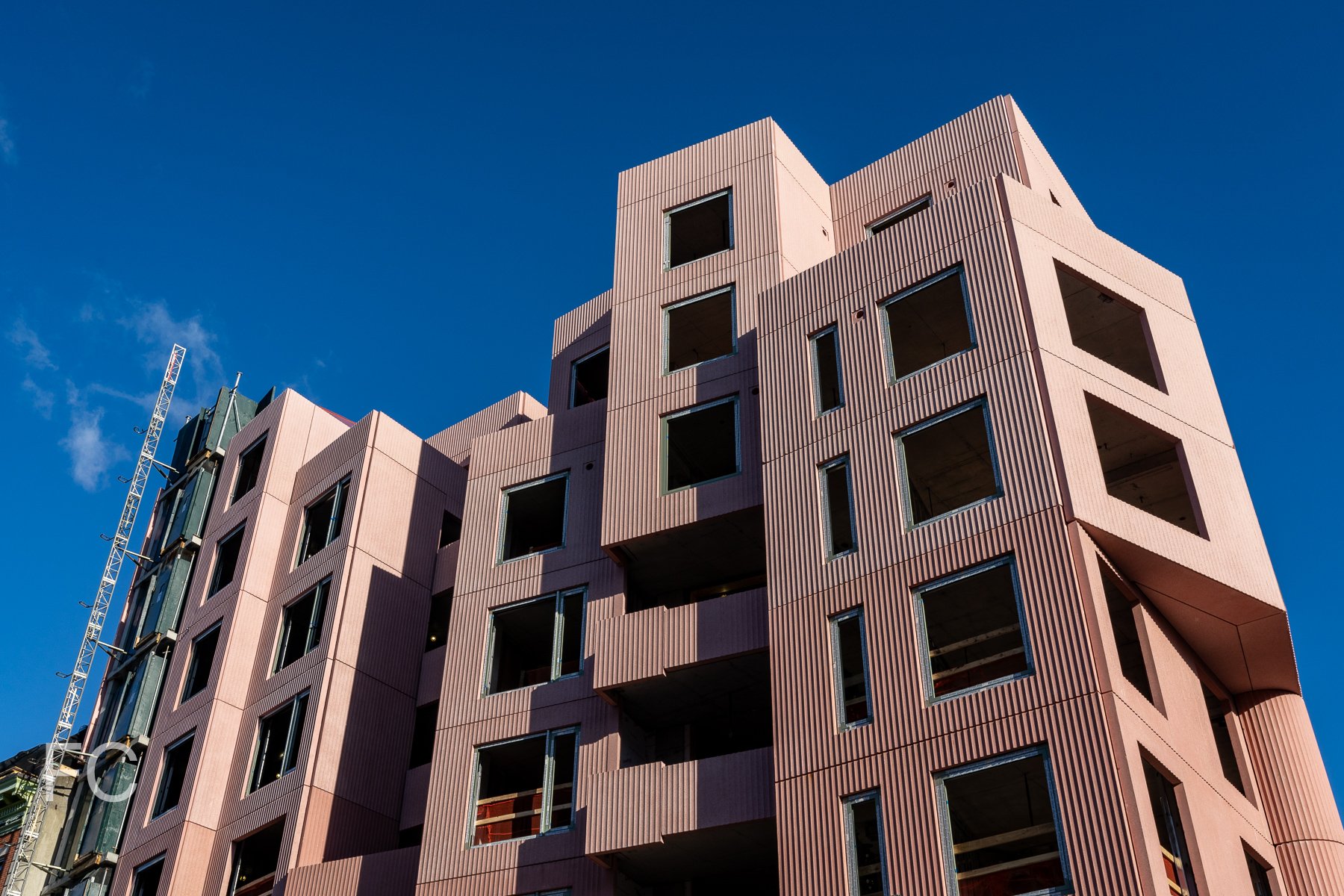
Designed by SO-IL in collaboration with Kane AUD and Laufs, the facade features undulating, perforated anodized aluminum panels that provide privacy at exterior living areas while allowing in light and air. Each home will offer significant private outdoor space ranging from 98 SF to 2,237 SF. The undulation of the panels is created by the rotation and mirroring of just three unique facade panels. A secondary exterior skin of precast concrete blocks mimic and complement the undulating form of the primary metal facade. Operable windows and glass doors are provided by Kleidco and designed for reduced energy consumption.
Close-up of the southwest corner from Jay Street.
Rendering of the residential entrance. Provided by Tankhouse.
Looking up at the west facade.
West facade from Jay Street.
Looking up at the northwest corner.
Looking up at the south facade from Chapel Street.
Northeast corner from Chapel Street.
Northwest corner from Jay Street.
North facade from Concord Street.

Close-up of the west facade.
Close-up of the west facade.
Close-up of the south facade.
Architects: SO-IL (Design Architect), Kane Architecture and Urban Design (Architect of Record); Structural Engineer: Silman; MEP Engineer: CES Engineering; Facade Consultant: LAUFS; Lighting Design: Lighting Workshop; Developer: Tankhouse; Program: Residential Condo; Location: Downtown Brooklyn, Brooklyn, NY; Completion: 2024.

Construction Update: 505 State Street
Southeast corner from Flatbush Avenue.
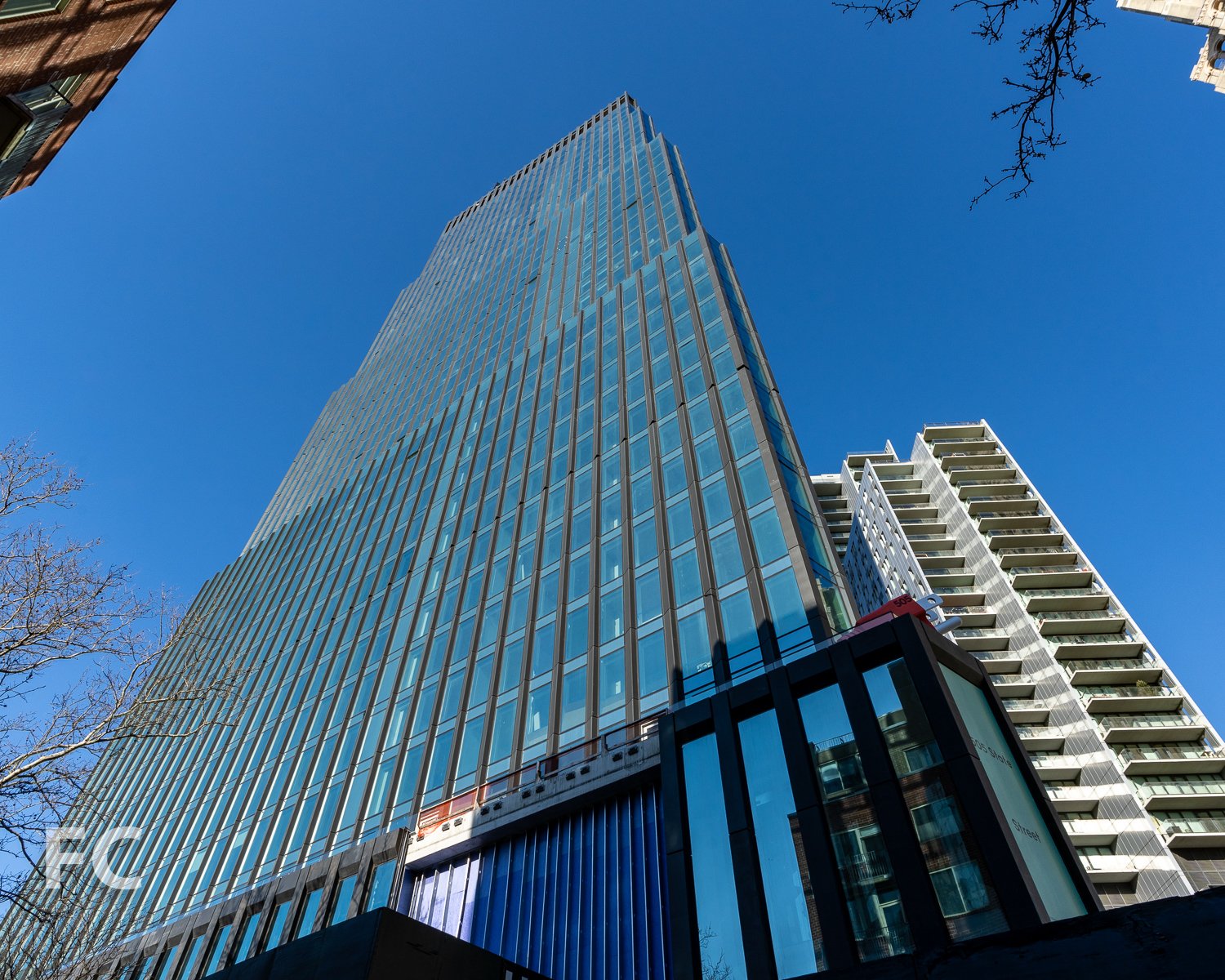
Curtain wall installation is wrapping up at Alloy’s 100 Flatbush residential tower in Downtown Brooklyn. Designed and developed by Alloy, the tower is the first of two that will rise on the block. It will be the city’s first all-electric tower, using electricity instead of oil or gas to power, heat, and cool the 440 residential rental units.
Looking up at the south facade from State Street.
The first tower, 100 Flatbush, sits at the southern end of the triangular block and takes its flatiron massing form from the block’s shape. Curtain wall clad’s the 44-story tower with panels that include a large glass pane and a vertical shaped pier.
Looking up at the east facade from Flatbush Avenue.
Looking up at the east facade from Flatbush Avenue.
Northeast corner from Flatbush Avenue.
Southeast corner terrace with a view of the Williamsburgh Savings Bank Tower, now known as One Hanson Place.
Looking up at the facade at the southeast corner.
Looking up at the south facade.
Looking up at the south facade.
Looking up at the south facade.
Rooftop Terrace Views
View looking west towards Downtown Brooklyn.
View looking north towards Midtown.
View looking north towards Hudson Yards.
View looking south towards Boerum Hill.
View looking southeast towards Pacific Park.
Williamsburgh Savings Bank Tower, now known as One Hanson Place.

View looking north towards the Brooklyn waterfront and Queens.
Design Architect: Alloy; Structural Engineers: Silman, MKA; MEP Engineer: Cosentini; Interiors: INC Architecture; Developer: Alloy; Program: Residential, Retail, Public Schools; Location: Downtown Brooklyn, New York; Completion: 2024 (First Residential Tower).
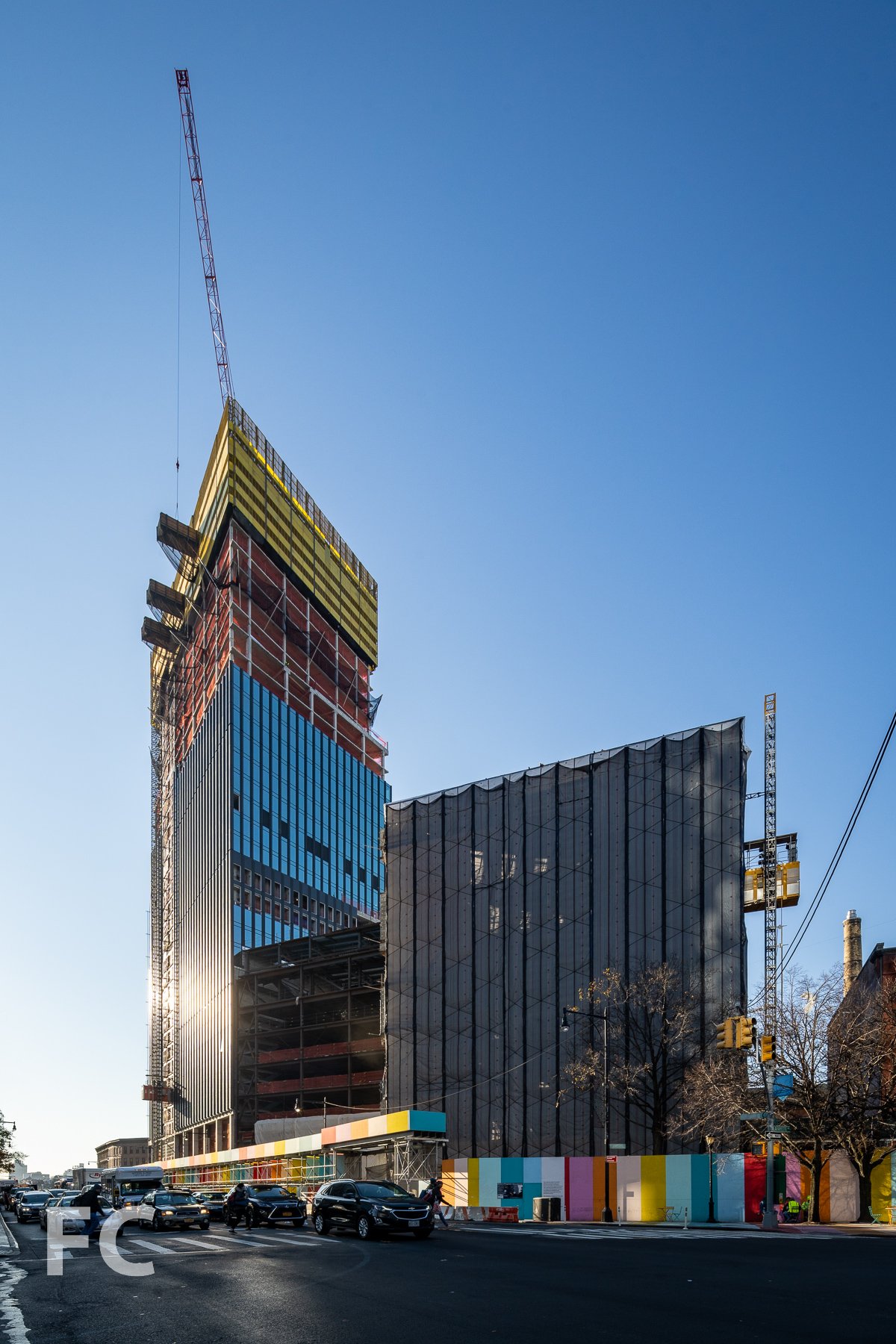
Construction Update: 505 State Street
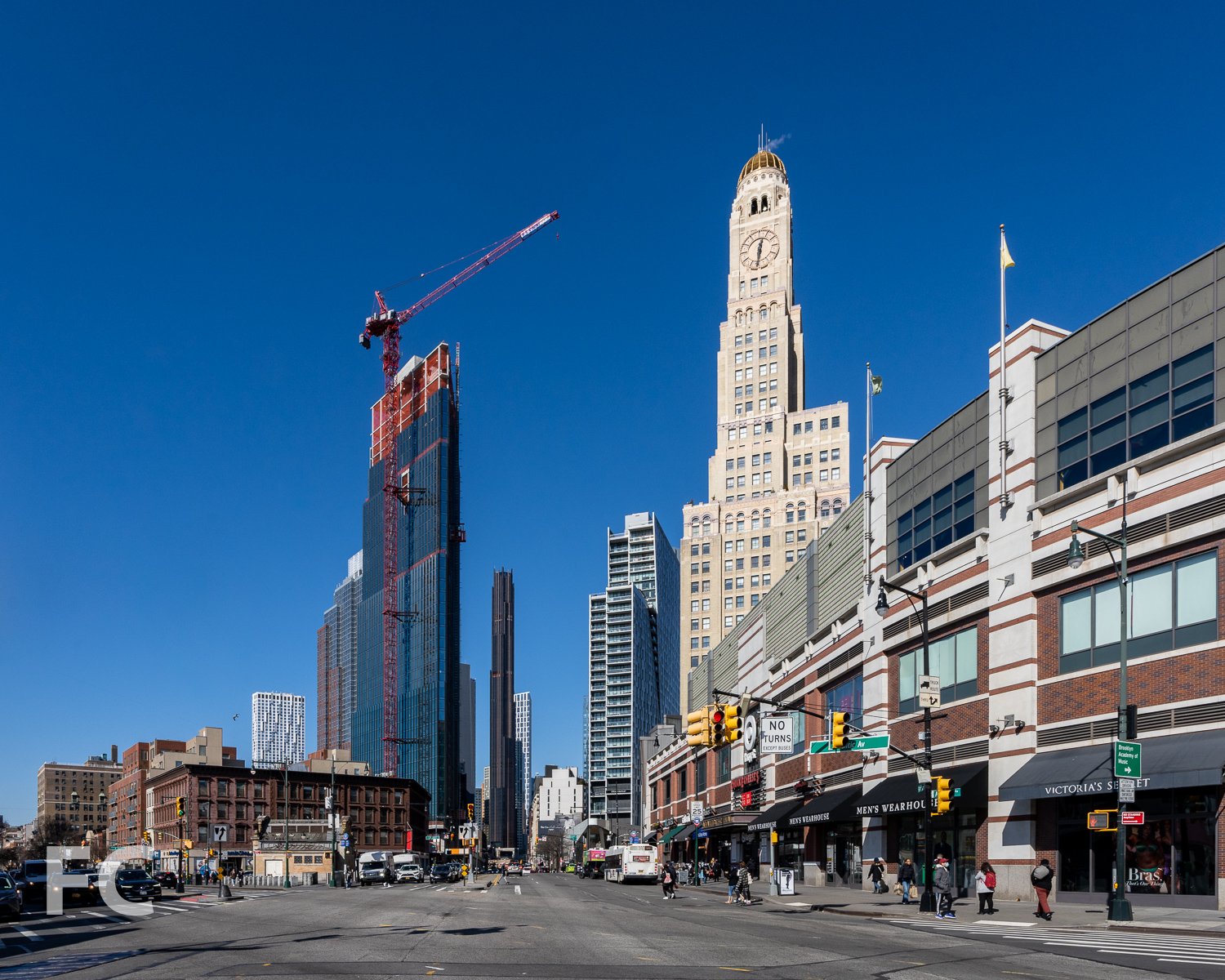
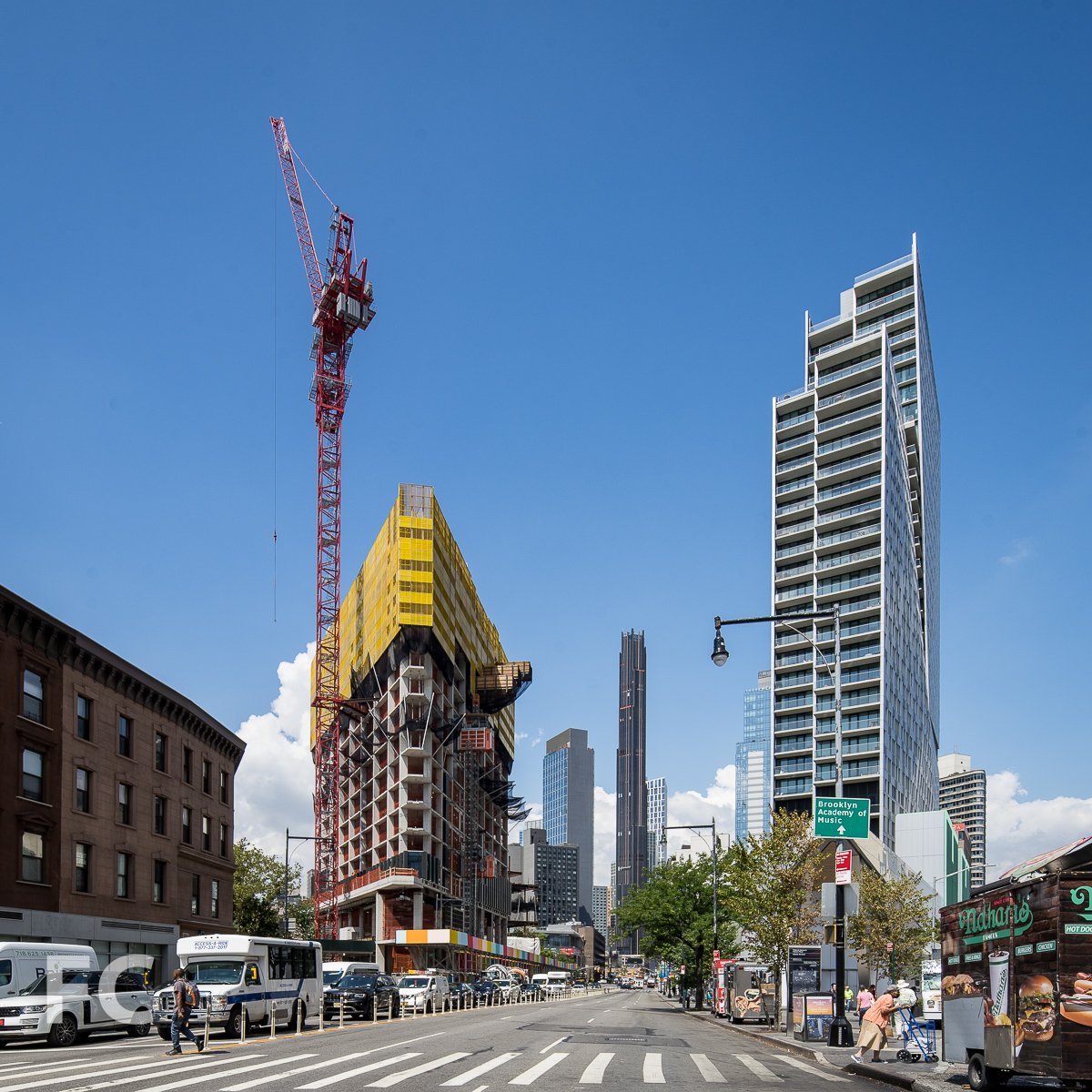
Curtain wall installation is underway at Alloy’s 505 State Street residential tower in Downtown Brooklyn. Designed and developed by Alloy, the tower is the first of two that will rise on the block. It will be the city’s first all-electric tower, using electricity instead of oil or gas to power, heat, and cool the 440 residential rental units.
The first tower, 505 State Street, sits at the southern end of the triangular block and takes its flatiron massing form from the block’s shape. Curtain wall clad’s the tower with panels that include a large glass pane and a vertical shaped pier.
Alloy is also developing two public schools, the city’s first to be designed to Passive House standards, at the center of the site. ARO is leading the design of the two schools, which will be clad in brick. Steel superstructure is rising for the first of the two schools.
Design Architect: Alloy, ARO (Schools); Executive Architect: Ismael Leyva Architects (Schools); Structural Engineers: Silman (Residential Tower, Schools), MKA (Residential Tower); MEP Engineer: Cosentini (Residential Tower, Schools); Interiors: INC Architecture (Residential Tower); Developer: Alloy; Program: Residential, Retail, Public Schools; Location: Boerum Hill, New York; Completion: 2024 (First Residential Tower).
Construction Update: NYPD 40th Precinct
East facade from St Ann’s Avenue.
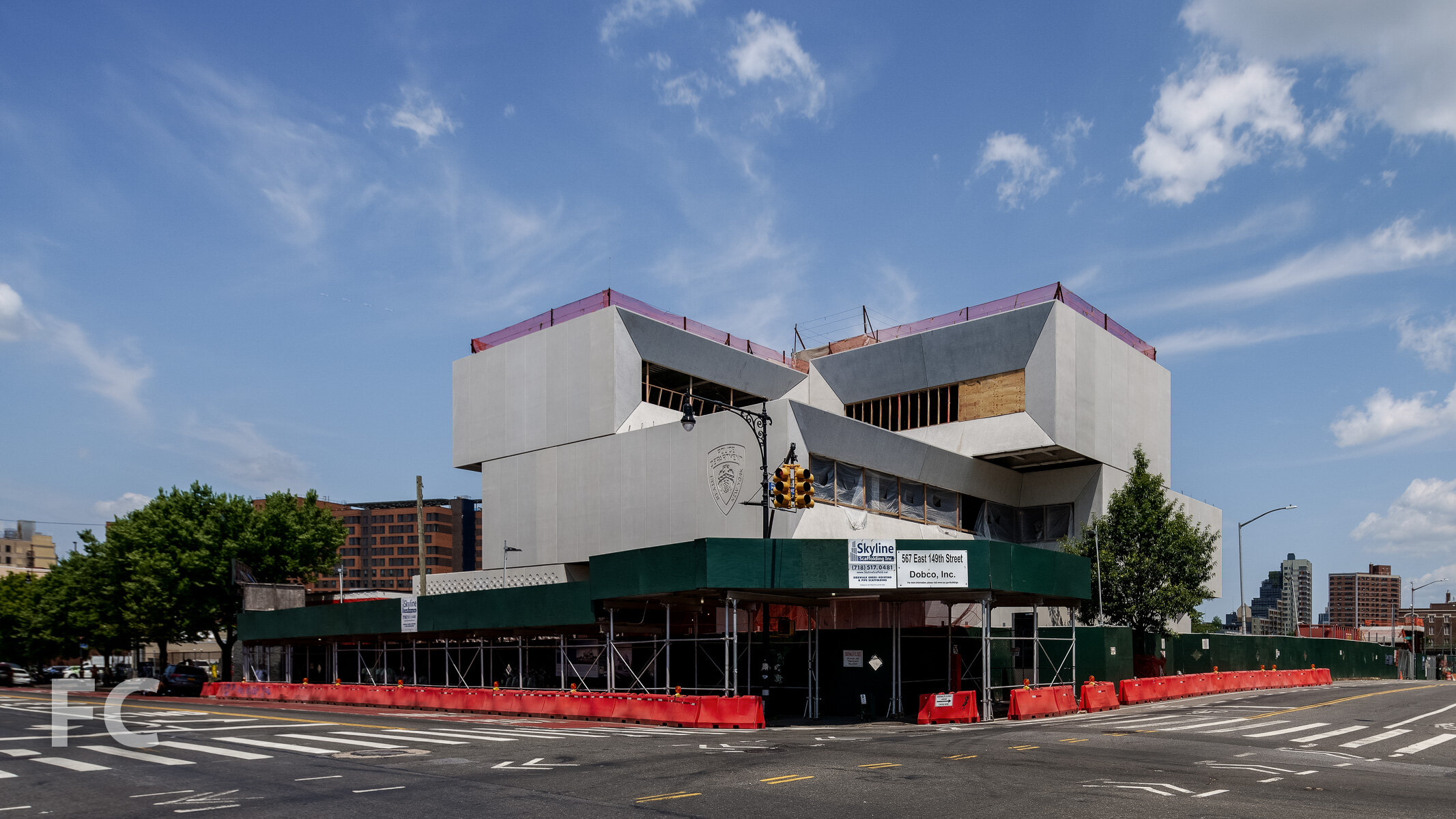
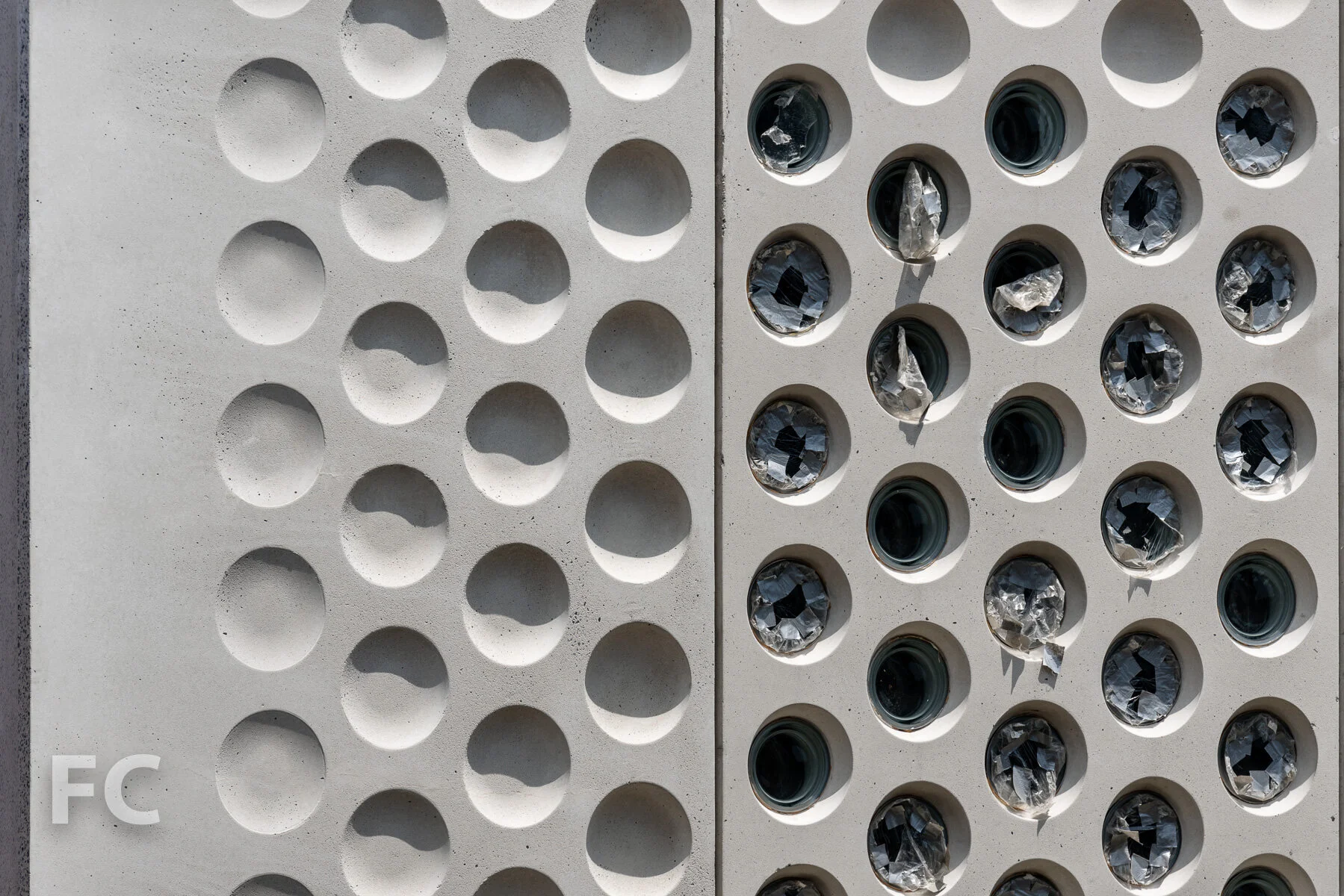
Construction is ongoing at the new 40th Precinct Station for the NYPD in the Melrose neighborhood of the Bronx. Designed by the Bjarke Ingels Group (BIG), the massing features stacked boxes, each housing a different program element for the 43,500 square foot precinct. The facade is clad in sandblasted concrete and large rectangular windows at either end of the stacked volumes. Program includes a community meeting room at street level, exercise courtyard with training areas, and the first ever green roof for an NYPD station.
Northeast corner.

Northeast corner.

Southeast corner from East 149th Street.
Close-up of the southeast corner of the facade.
South facade from East 149th Street.

Architect: Bjarke Ingels Group; Client: NYC Department of Design and Construction; Location: Melrose, Bronx, NY; Completion: 2024.




Tour: Greenpoint Library and Environmental Education Center
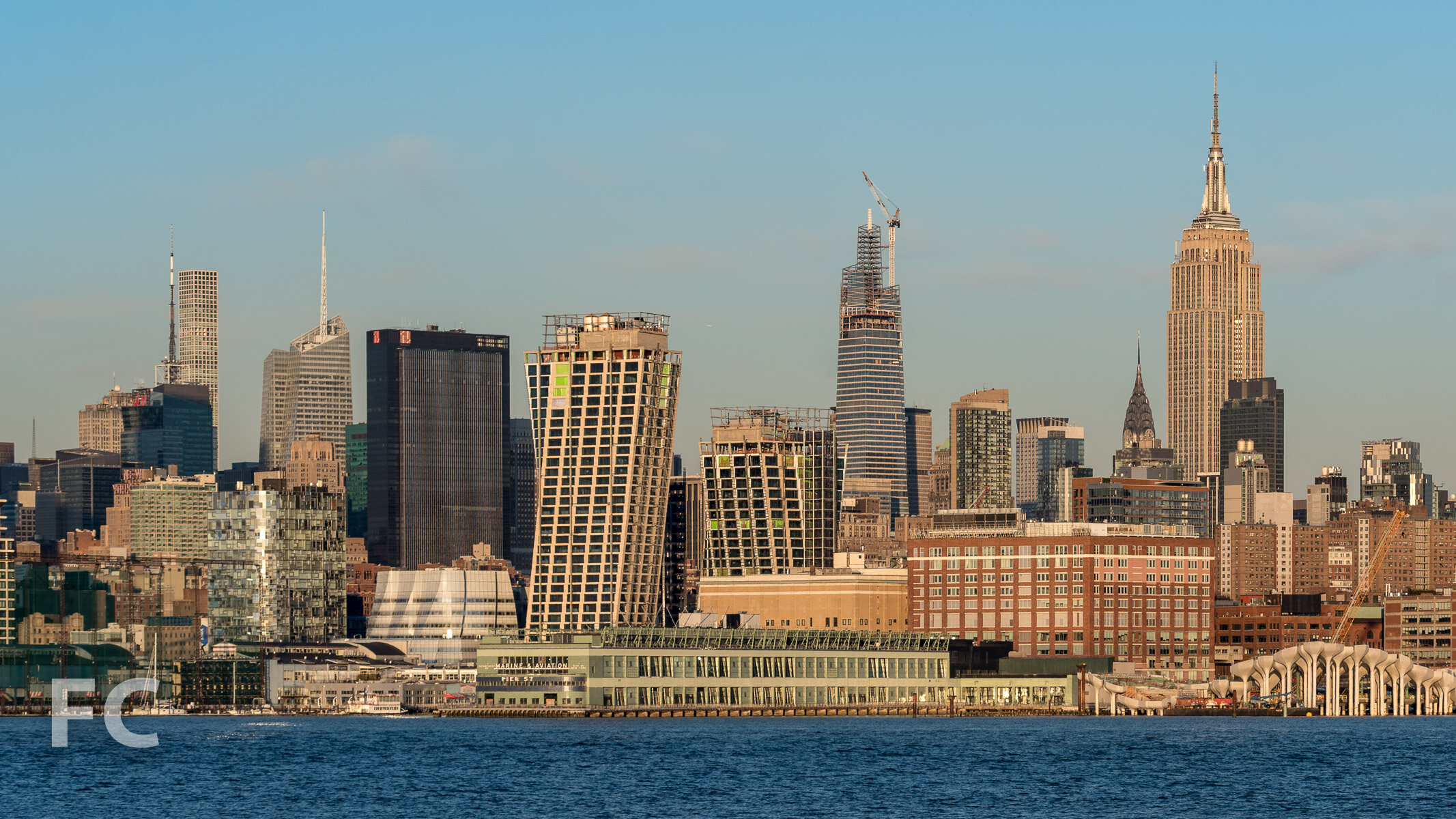
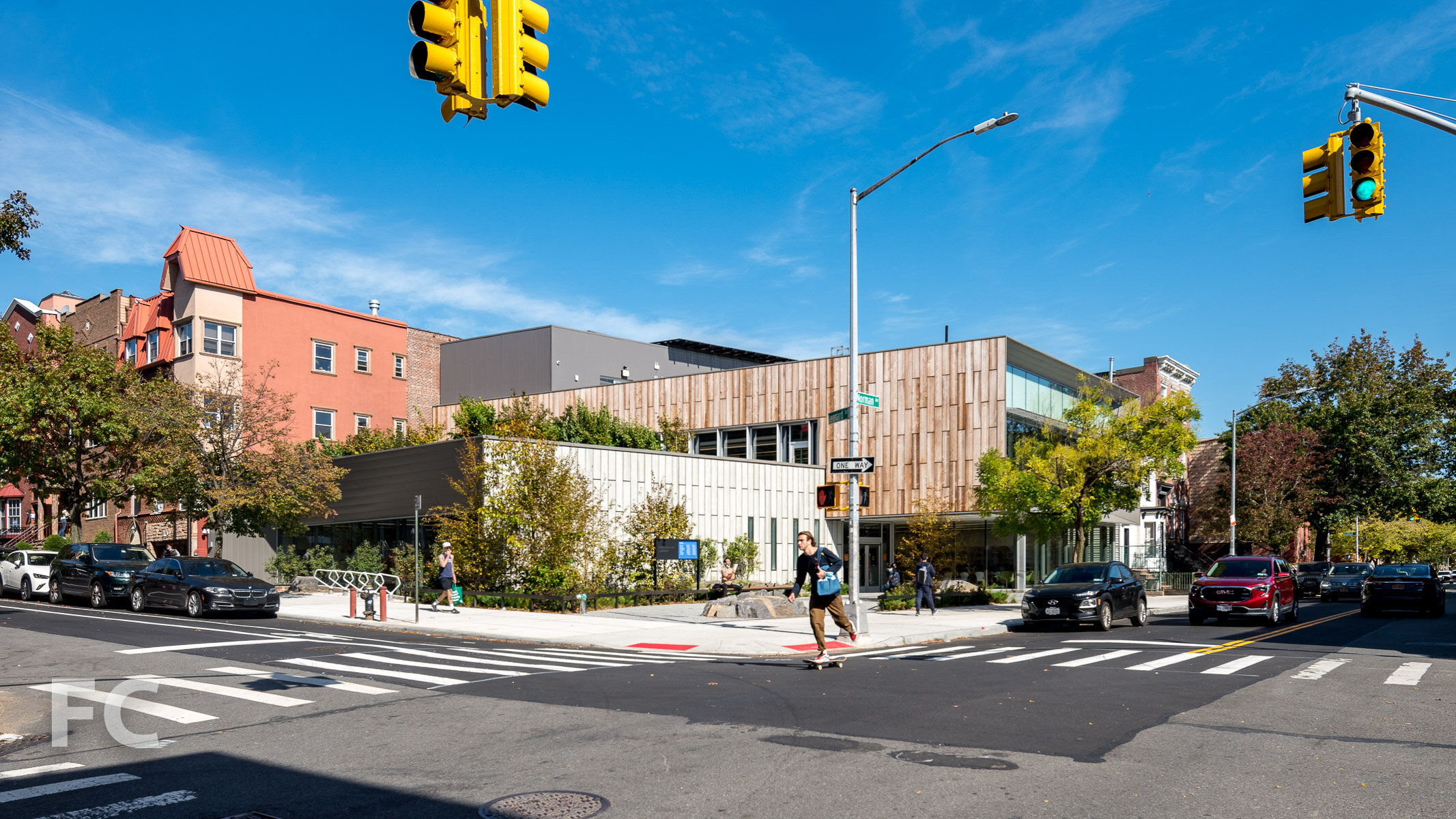
South facade from Norman Avenue.
It’s opening day for the Greenpoint Library and Environmental Education Center, a 15,000 square foot community hub that doubles the size of a previous library building in the neighborhood. Designed by Marble Fairbanks, the structure includes adult, young adult, and children reading rooms and collection spaces, and community spaces dedicated to library programming. Along with the library program, the two-story structure also includes lab spaces for interactive projects, a community event space, a lounge, small meeting rooms, and staff spaces for the environmental education center.
South facade from Norman Avenue.
South facade from Norman Avenue.
Library entrance from Norman Avenue.
The two-story structure is designed as one volume rotated and stacked atop the other and clad in two separate materials. Custom cast concrete panels formed by sandblasted wood formwork clad the ground floor volume, while sandblasted wood panels wrap the second floor.
South facade detail.
Cast concrete panels.
Southwest corner from Norman Avenue.
Southwest corner.
West facade.
Entry desk at the ground floor.
First floor bench with solar windows that will register the time of year with future floor markings.
Children’s area with custom designed rug featuring an insect motif. Floor-to-ceiling windows offer views to the bioswale outside.
Elevator with custom graphics noting the floor number.
Young adult fiction room with the capacity to be closed off for events or activities.
Display cases will feature items related to the environmental education center.
Second floor meeting space with movable partitions for flexible use.
Second floor reading garden with fruit bearing plants to attract birds.
Close-up of the sandblasted cedar wood panels cladding the second floor volume.
Looking down on the Scape-designed entry open space with bioswale to slow down rainwater runoff and reduce flooding.
Third floor roof deck for special events.
Solar panels installed at the roof deck help power the library with their bifacial design to collect energy from both sides of the panel.
Third floor pollinator garden with plant species designed to bloom throughout the year and attract a wide variety of pollinators.
Looking down on the entry open space and the second floor reading garden,
Architect: Marble Fairbanks; Landscape Architect: SCAPE / Landscape Architecture; Structure: Robert Silman Associates; MEP/FP Engineers & LEED: ads Engineers, PC; Client: Brooklyn Public Library; Program: Library; Location: Greenpoint, Brooklyn, NY; Completion: Fall 2020.


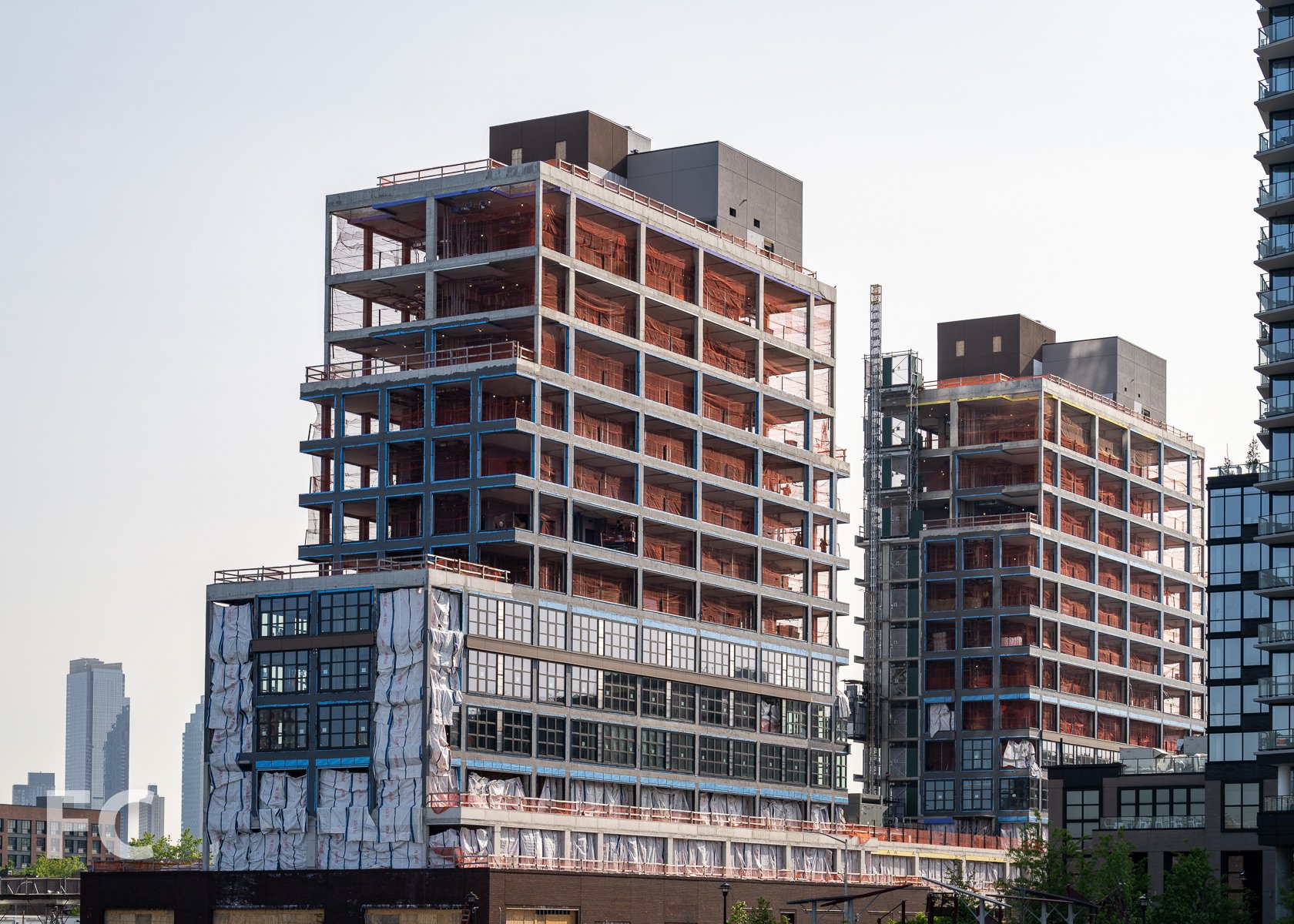
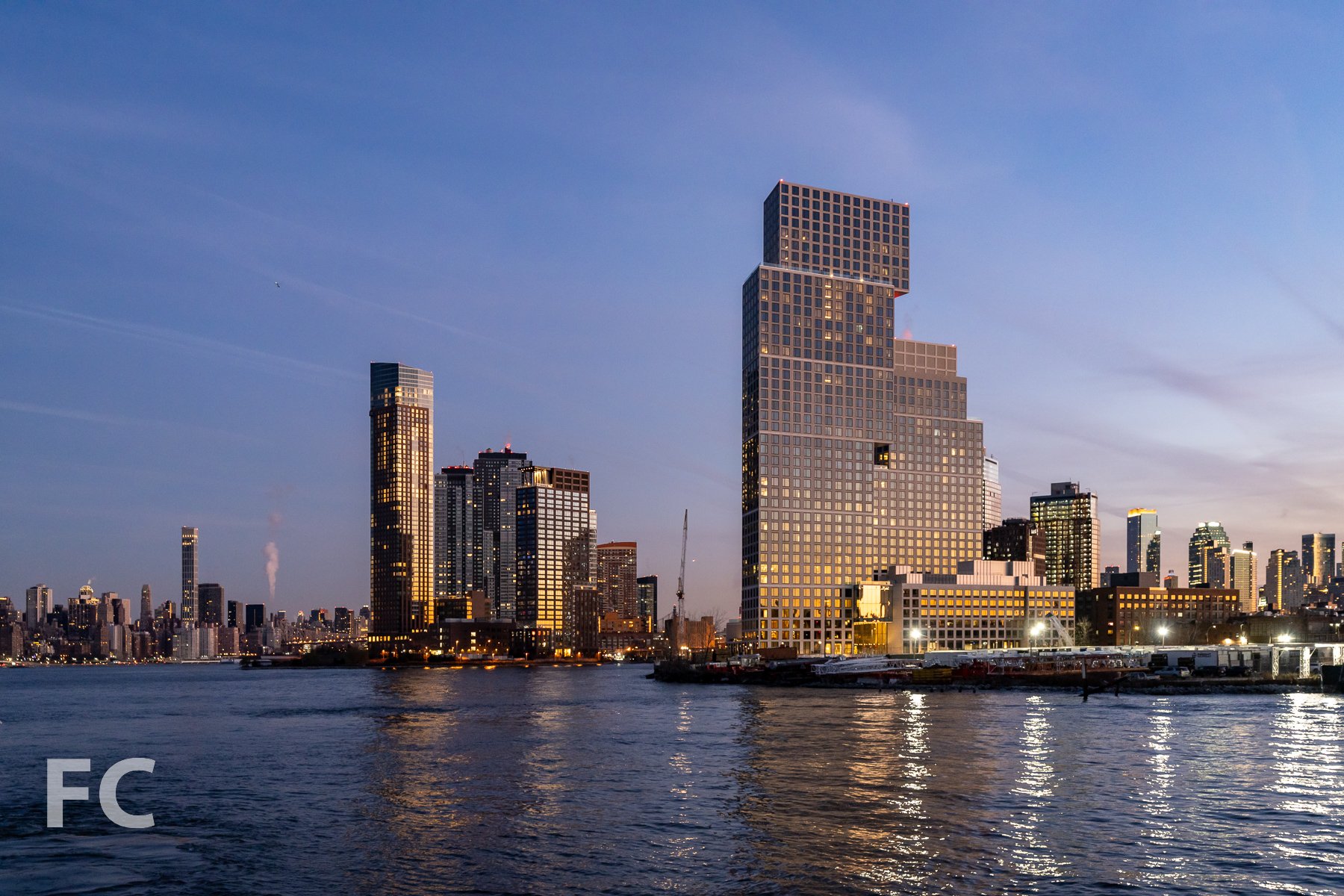

2550 3rd Avenue - Tres Puentes
Southeast corner of the west building.
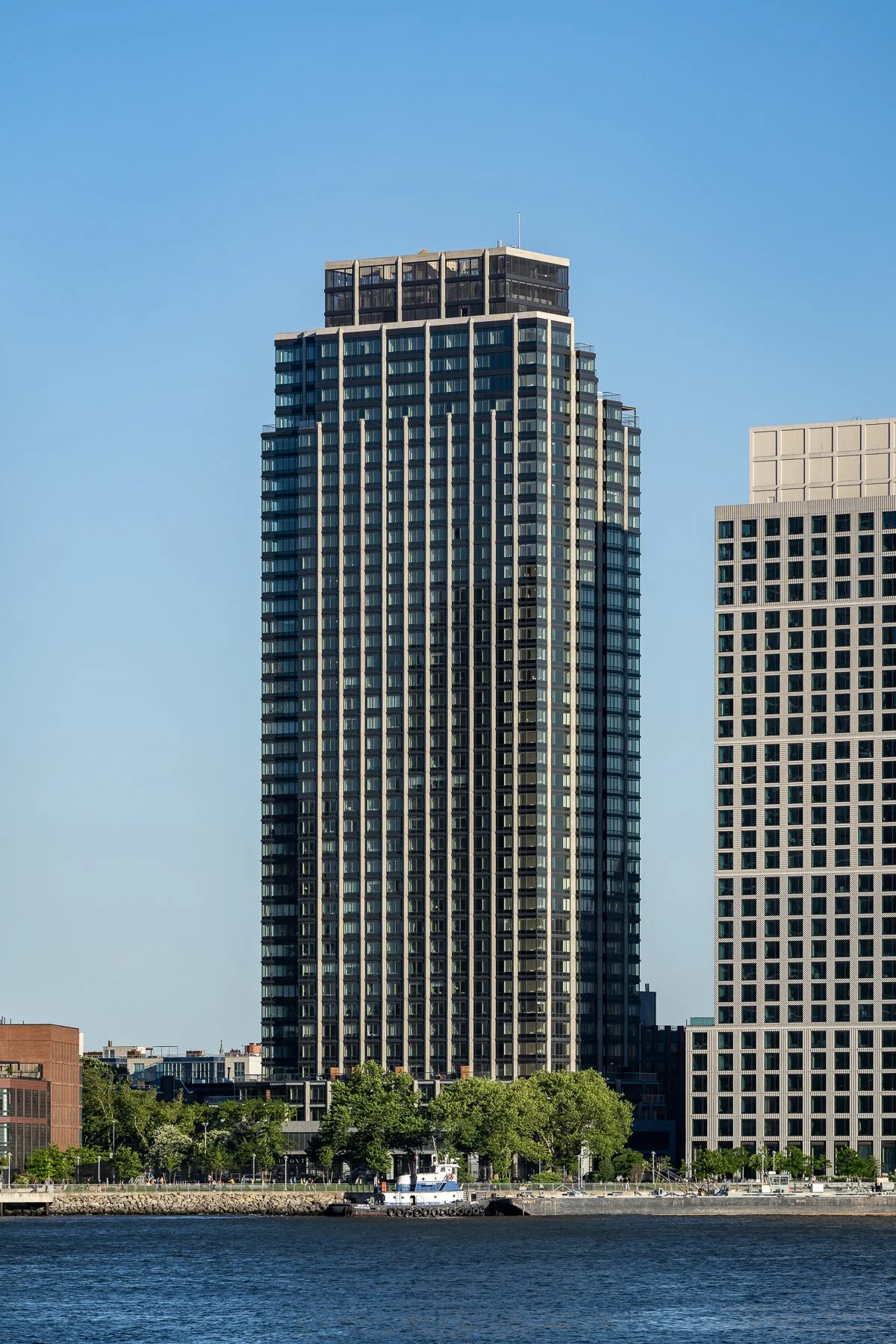
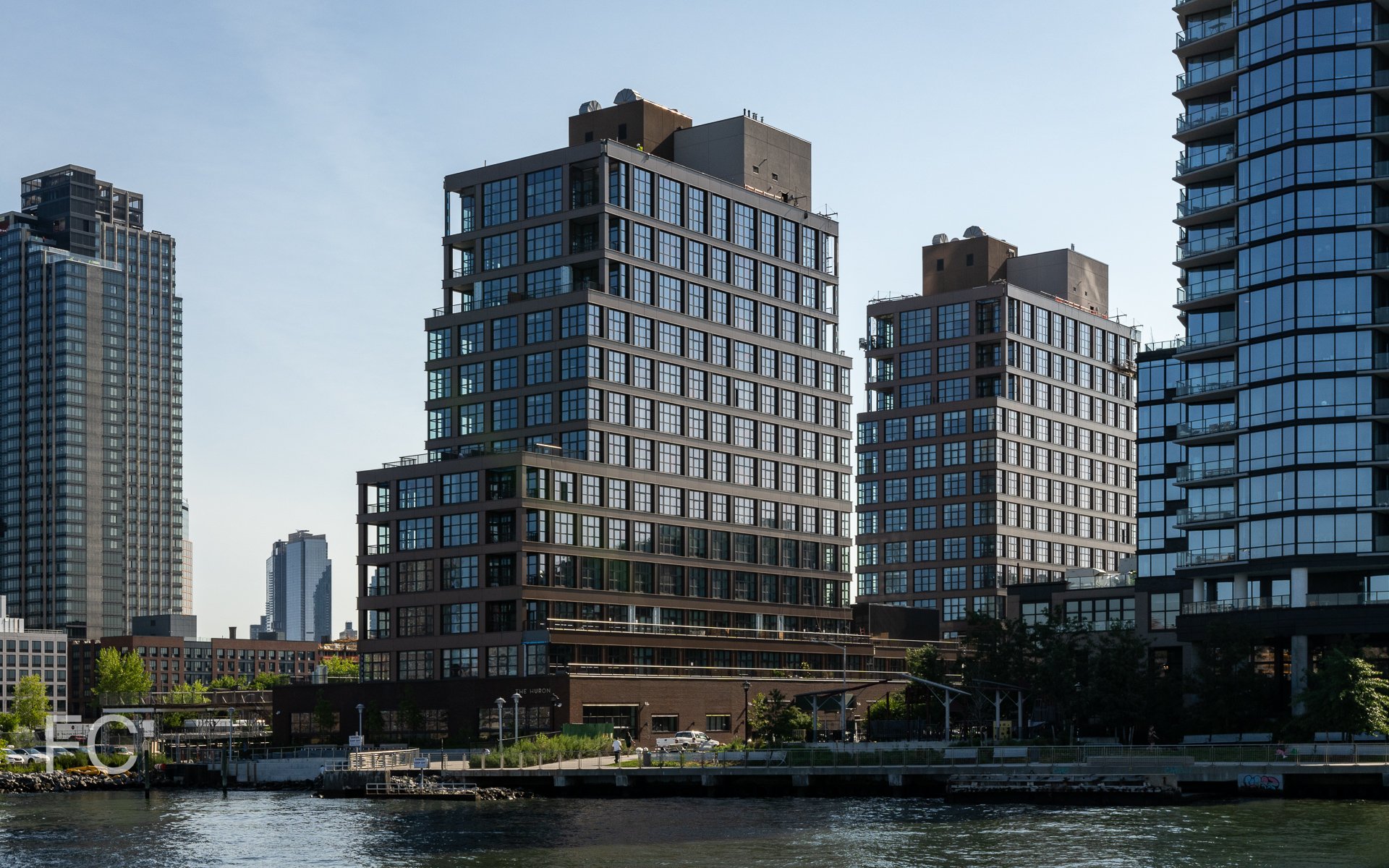
Tres Puentes, part of the South Bronx’s recent revitalization, is a two building senior housing development recently completed by SGVA. The project includes 175 apartments for seniors and individuals with special needs spread across two buildings, a 11-story west building and a 8-story east building. Along with the residential units, the project includes 10,000 square feet of health-oriented commercial and community space. The adjacent Borinquen Court Senior Center has also been expanded for neighborhood residents.
Southeast corner of the west building.
Close-up of the east facade of the west building.
Close-up of the east facade of the west building.
South facade of the west building.
Close-up of the south facade of the west building.
Southwest corner of the west building.
South facade of the east building.
Close-up of the south facade of the east building.
Architect: SGVA; Program: Affordable Senior Housing; Location: Mott Haven, Bronx, NY; Completion: 2019.
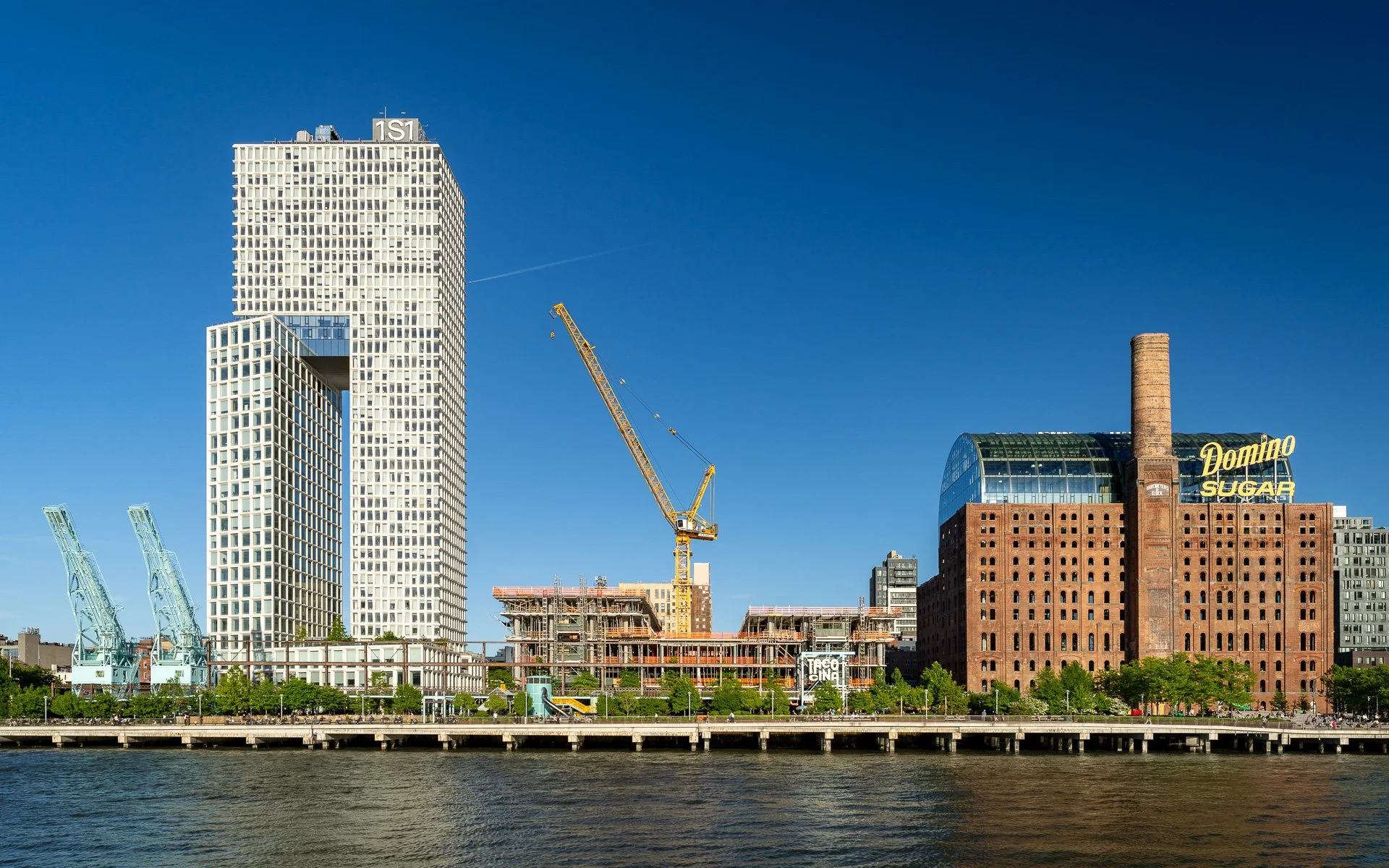
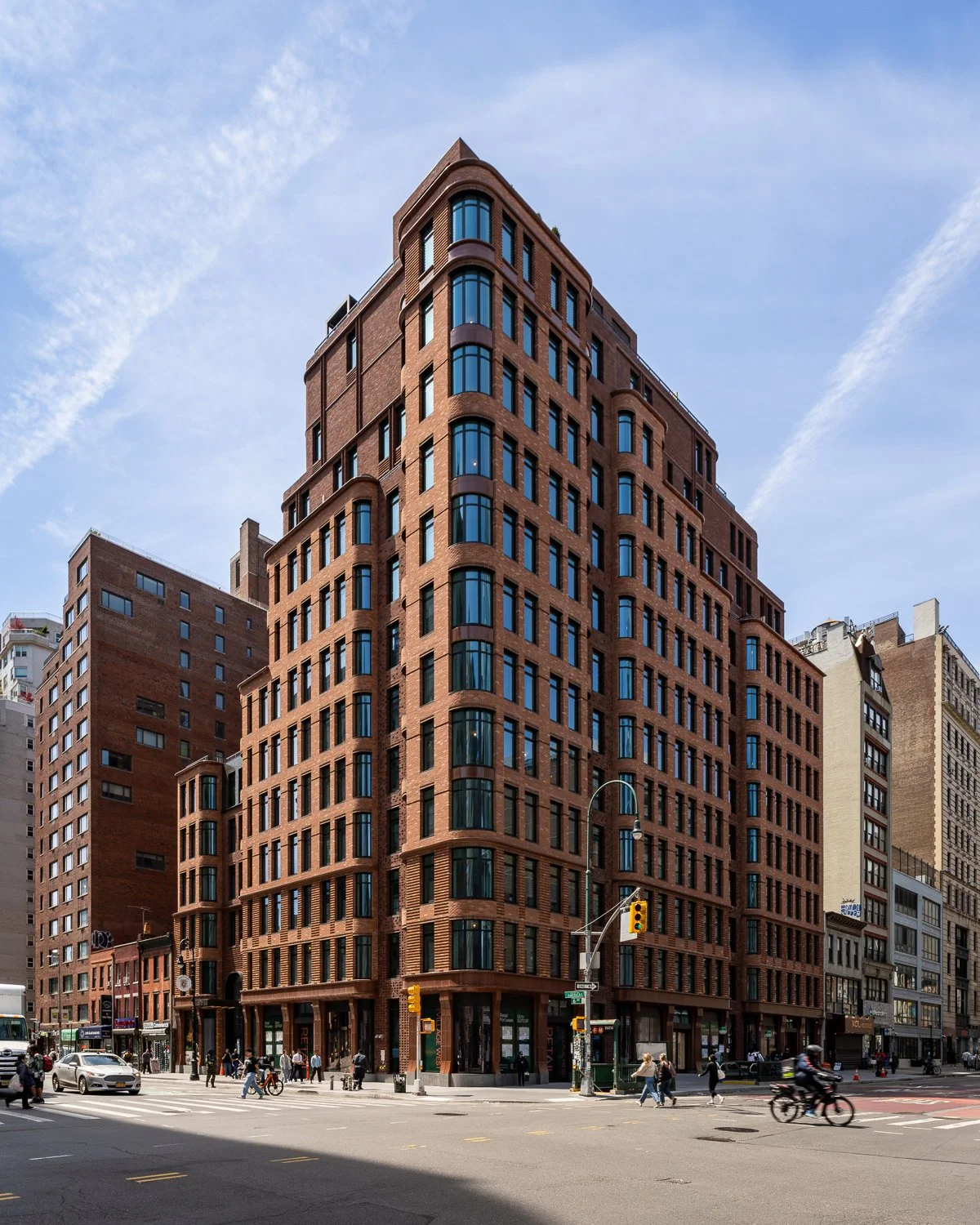
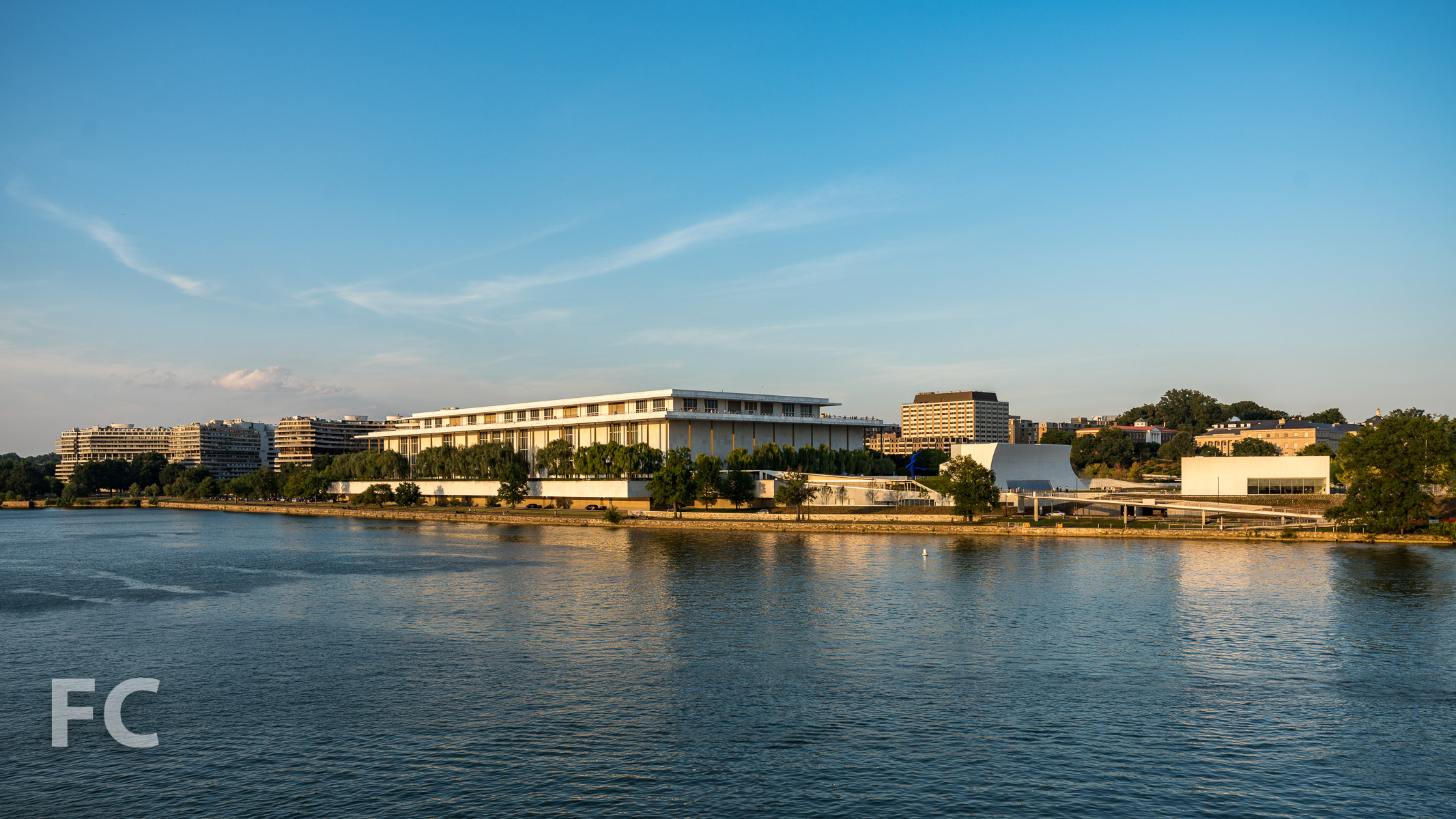
Tour: The Reach at the Kennedy Center for the Performing Arts
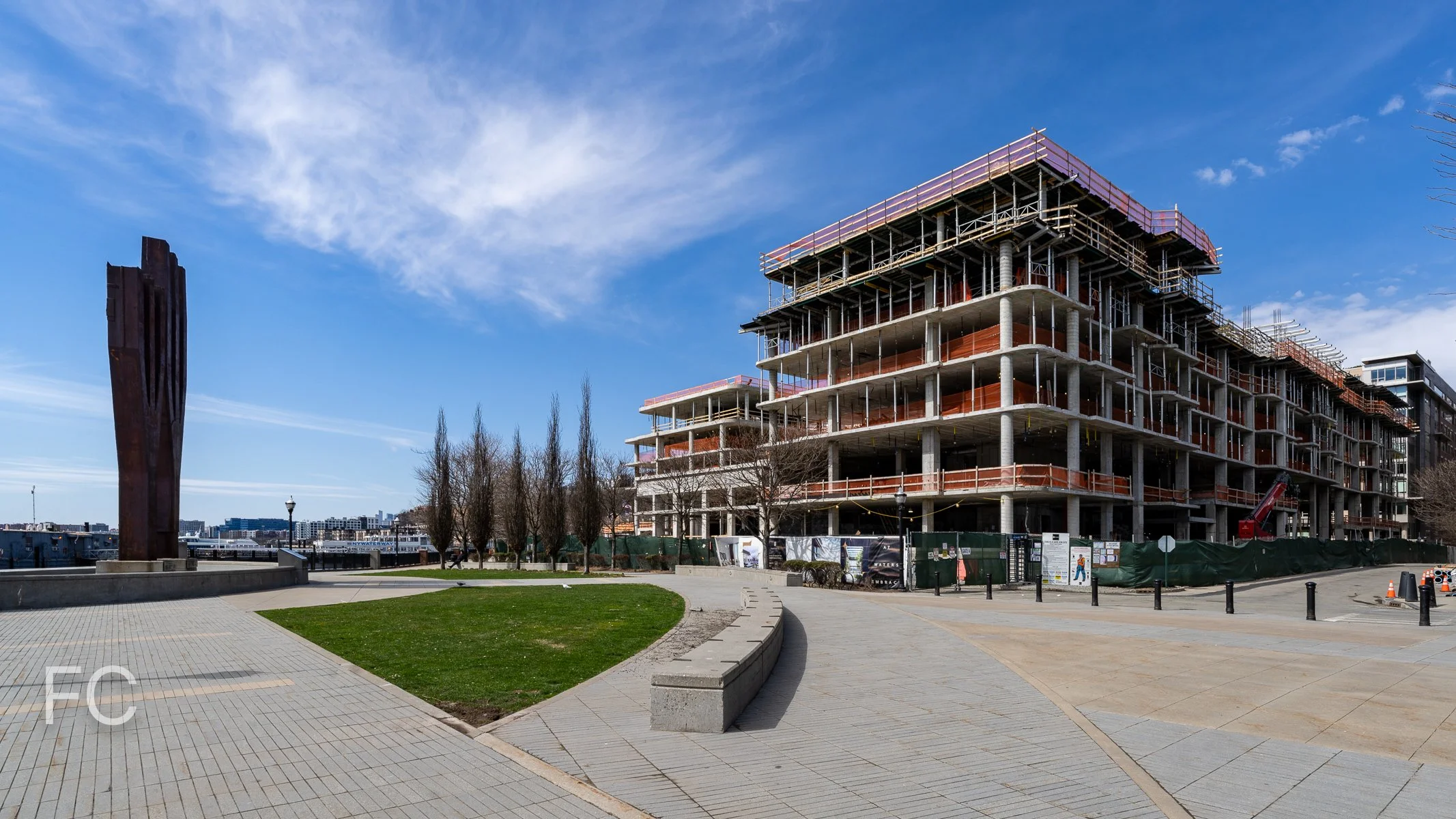
Steven Holl Architects’ expansion of the John F. Kennedy Center for the Performing Arts in Washington, D.C. officially opens on September 7. Known as The Reach, the expansion is located on 4.6 acres immediately south of the original 1971 structure by Edward Durell Stone. Rather than build onto the existing structure, the architect has designed a series of pavilions sited on the largest green roof in Washington, DC. The pavilions and connecting underground spaces house rehearsal rooms and classrooms, a lecture hall, multipurpose meeting rooms, and an event space. Holl envisions his design as a means to connect the expansion with the landscape and the adjacent Potomac River.
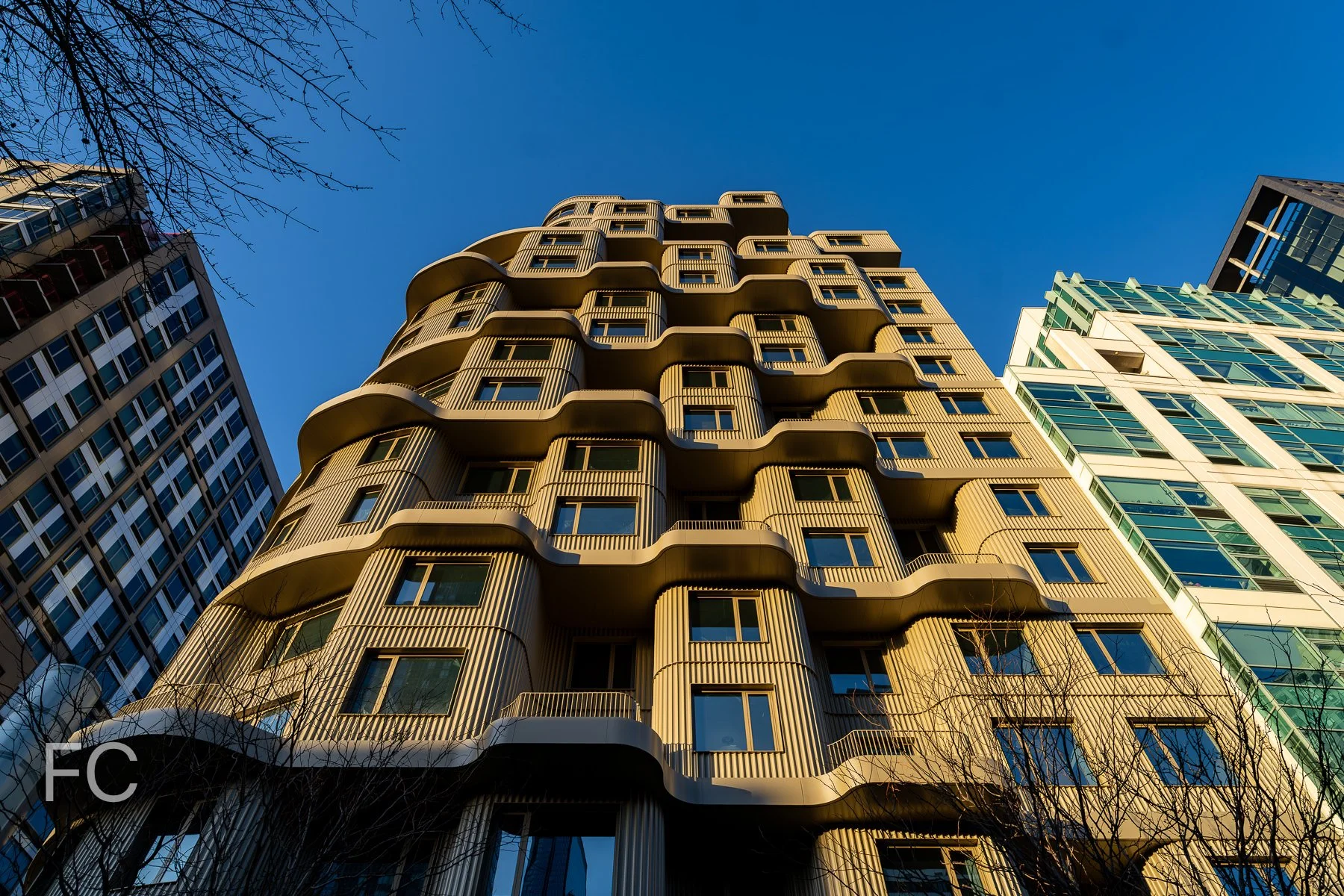
Holl employs titanium white, board-formed concrete and backlit clear and etched glass windows as the primary exterior materials for the three pavilions.
The pavilions sit within a four season landscape of expansive lawns, wild grasses, sedum varietals, and a ginkgo grove. Pathways are defined by bluestone pavers.
Welcome Pavilion
Welcome Lobby
The entry lobby features a visitors desk, coffee bar, and a Wall of Gratitude recognizing leadership donors.
Justice Forum
The Justice Forum, named after one of the five ideals commonly attributed to President Kennedy, is a 144 seat lecture hall with the capacity for film screenings and small-format performances. Primary finishes include cherry wood and “crinkle concrete” that diffuses sound waves with its faceted shape created by the unique formwork.
Multipurpose Studios
Skylight Pavilion
The Skylight Pavilion serves as a public atrium space that can accommodate special events, seated dinners, and receptions. Acoustic plaster covers the walls and ceiling within the 36-foot tall space, while a large curved glass opening allows for views out to the river, lower lawn, and reflecting pool.

River Pavilion
The River Pavilion serves as a flexible interior and exterior space with dramatic views of the Potomac River, the River Plaza and reflecting pool.
Sculpture
The Bridge
A pedestrian bridge spans Rock Creek and Potomac Parkway, connecting the Kennedy Center campus to the Potomac riverfront.
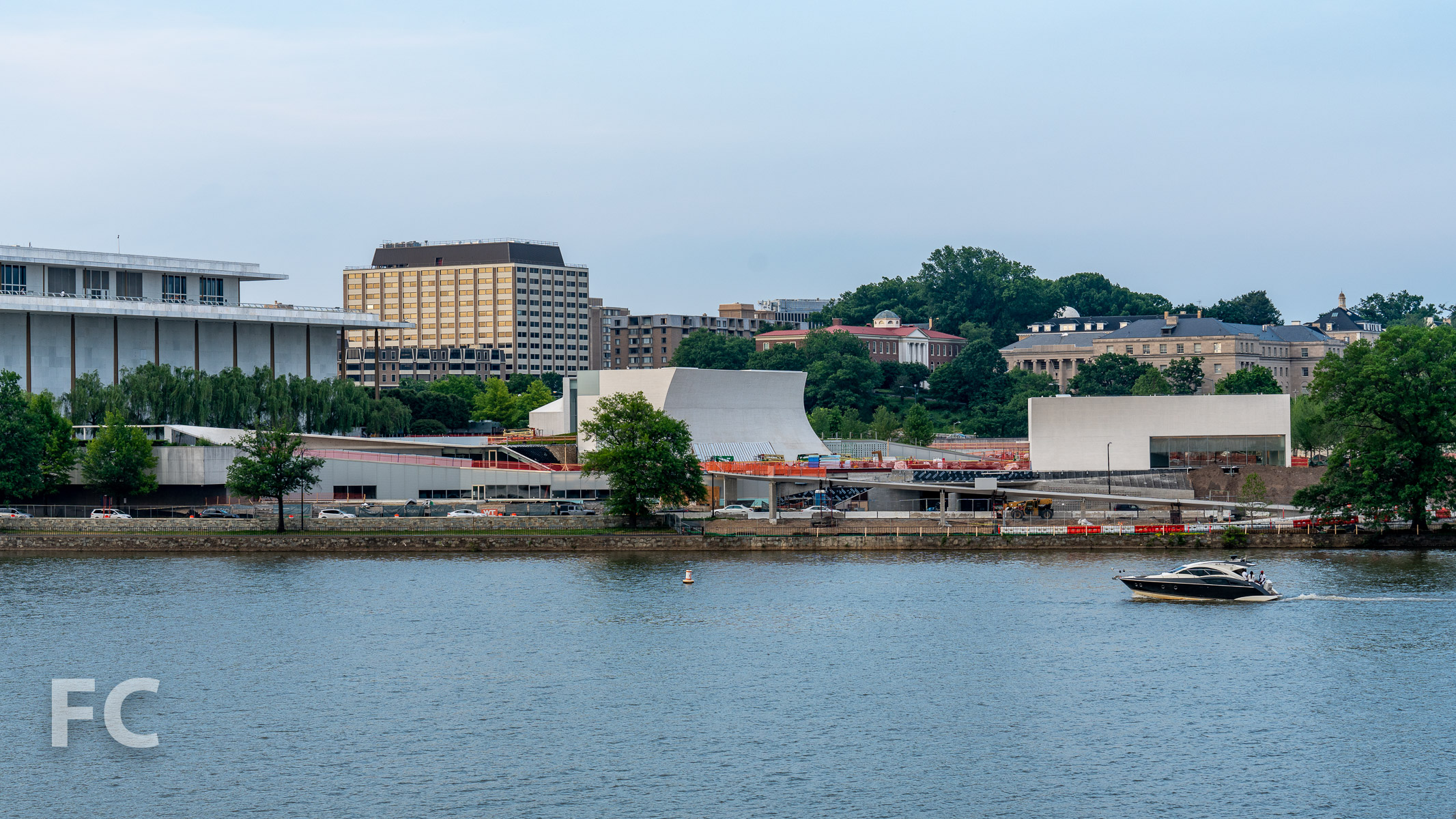
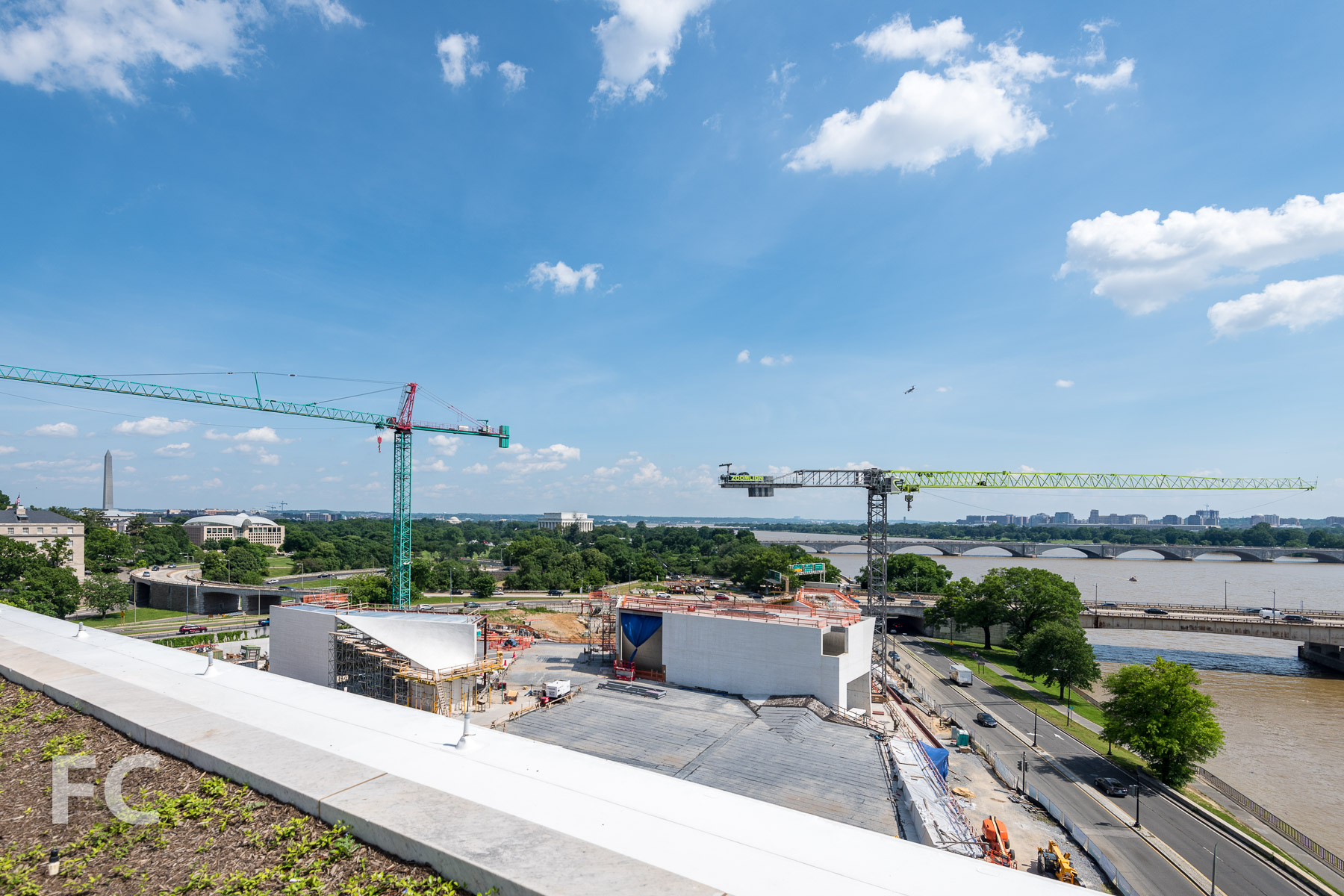
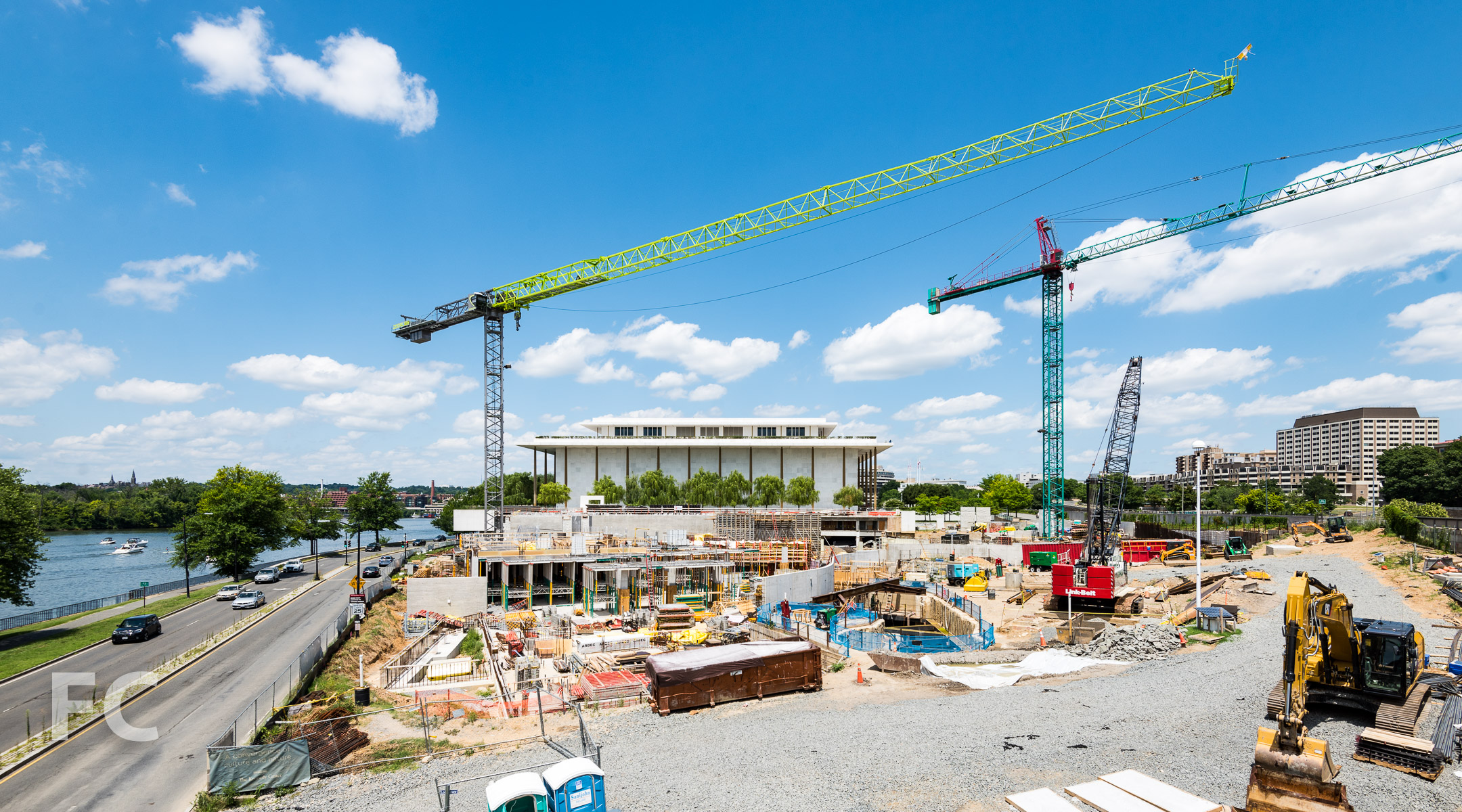
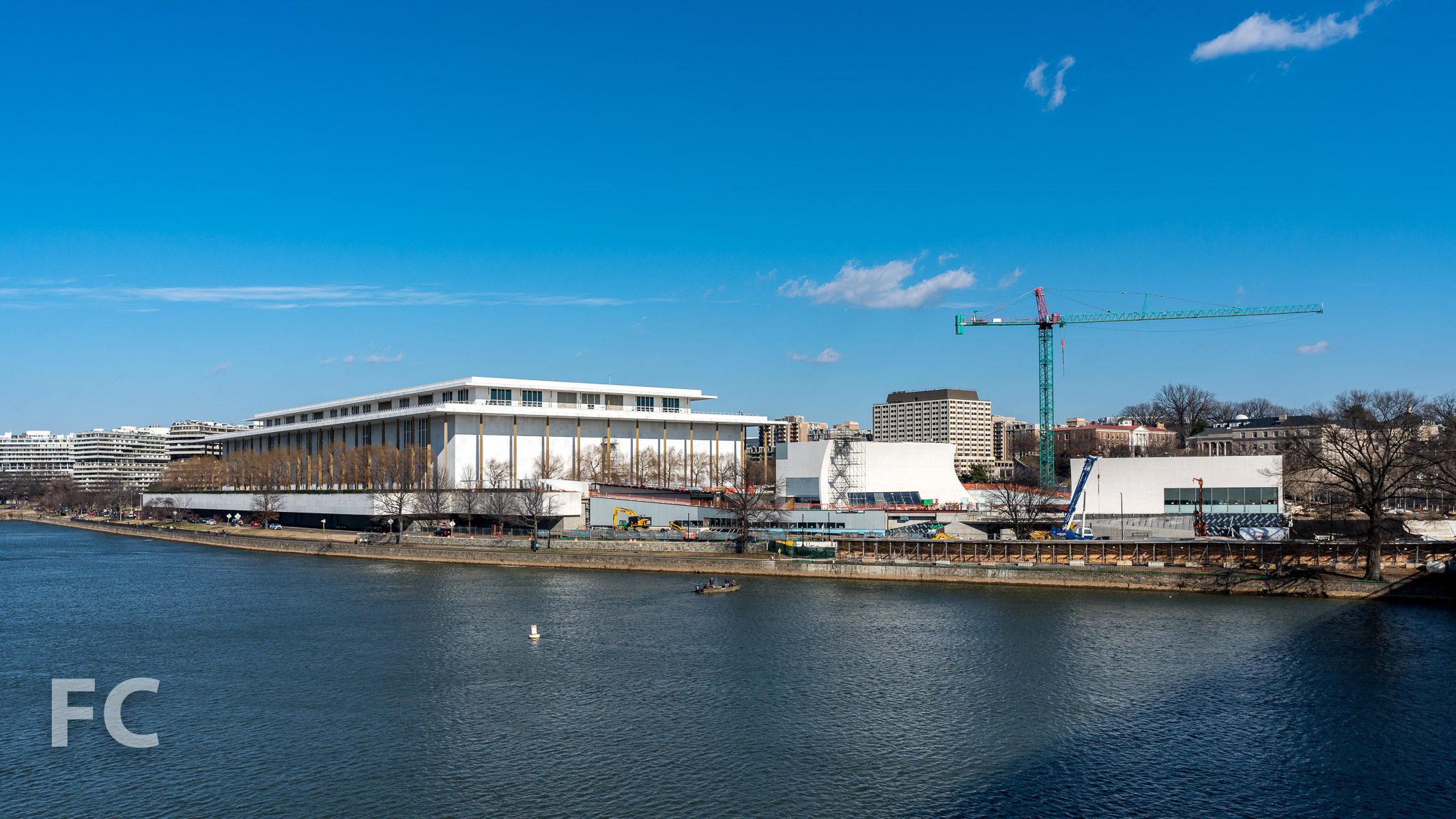
Construction Update: The JFK Center for the Performing Arts Expansion
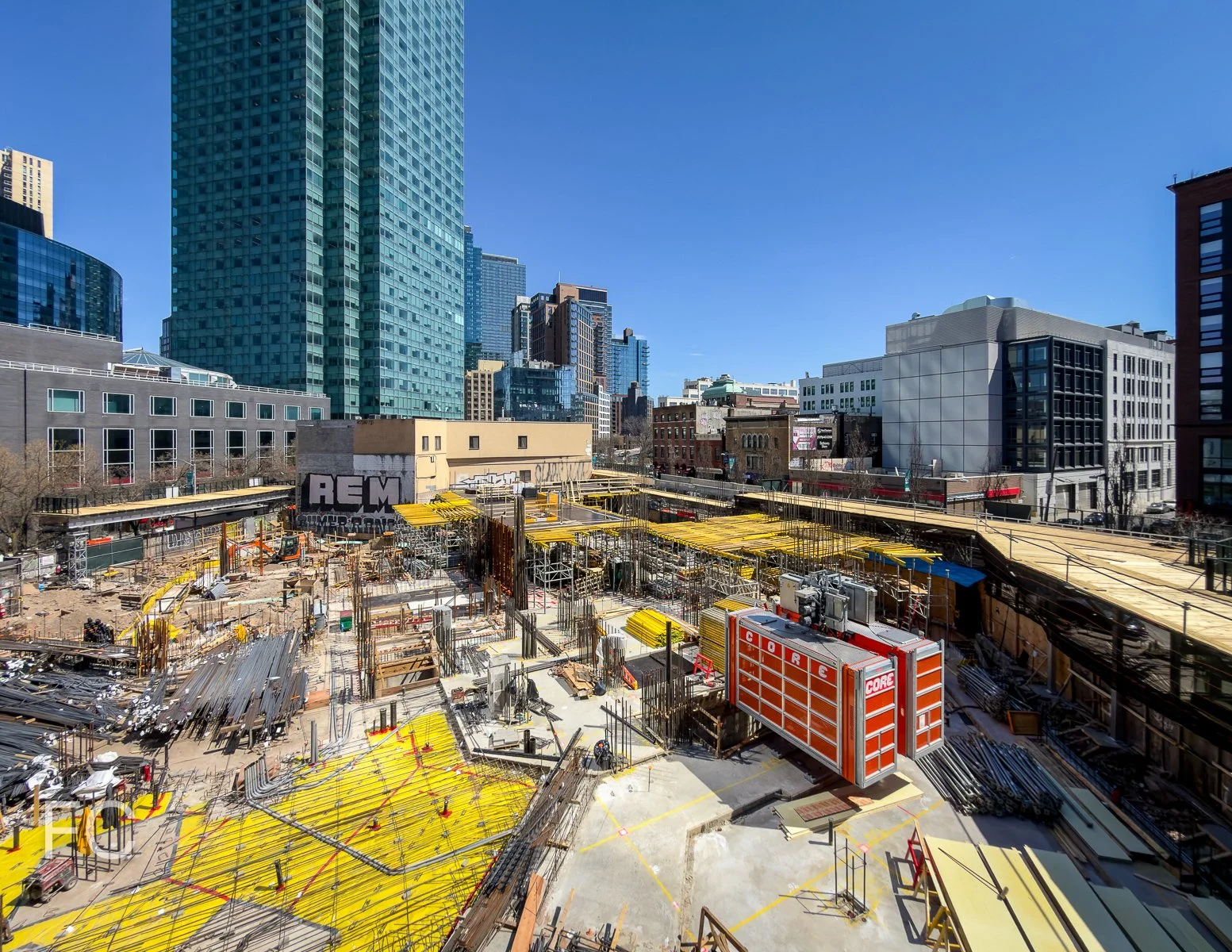
Exterior wall construction is nearing completion at the expansion of the John F. Kennedy Center for the Performing Arts in Washington, D.C. Designed by Steven Holl Architects, the expansion is located immediately south of the original 1971 structure by Edward Durell Stone. Rather than build onto the existing structure, the architect has designed a series of structures that will house rehearsal rooms and classrooms, a lecture hall, multipurpose meeting rooms, and an event space. Holl envisions his design strategy as a means to connect the expansion with the landscape and the adjacent Potomac River.
Architect: Steven Holl Architects (Design Architect), BNIM (Architect of Record); Structural Engineer: Robert Silman Associates; MEP Engineer: Arup; Landscape Architect: Edmund Hollander Landscape Architects; Envelope Consultant: Thornton Tomasetti; Client: The John F. Kennedy Center for the Performing Arts; Program: Performing Arts; Location: Washington, D.C.; Completion: Fall 2019.

Tour: Institute for Contemporary Arts at VCU
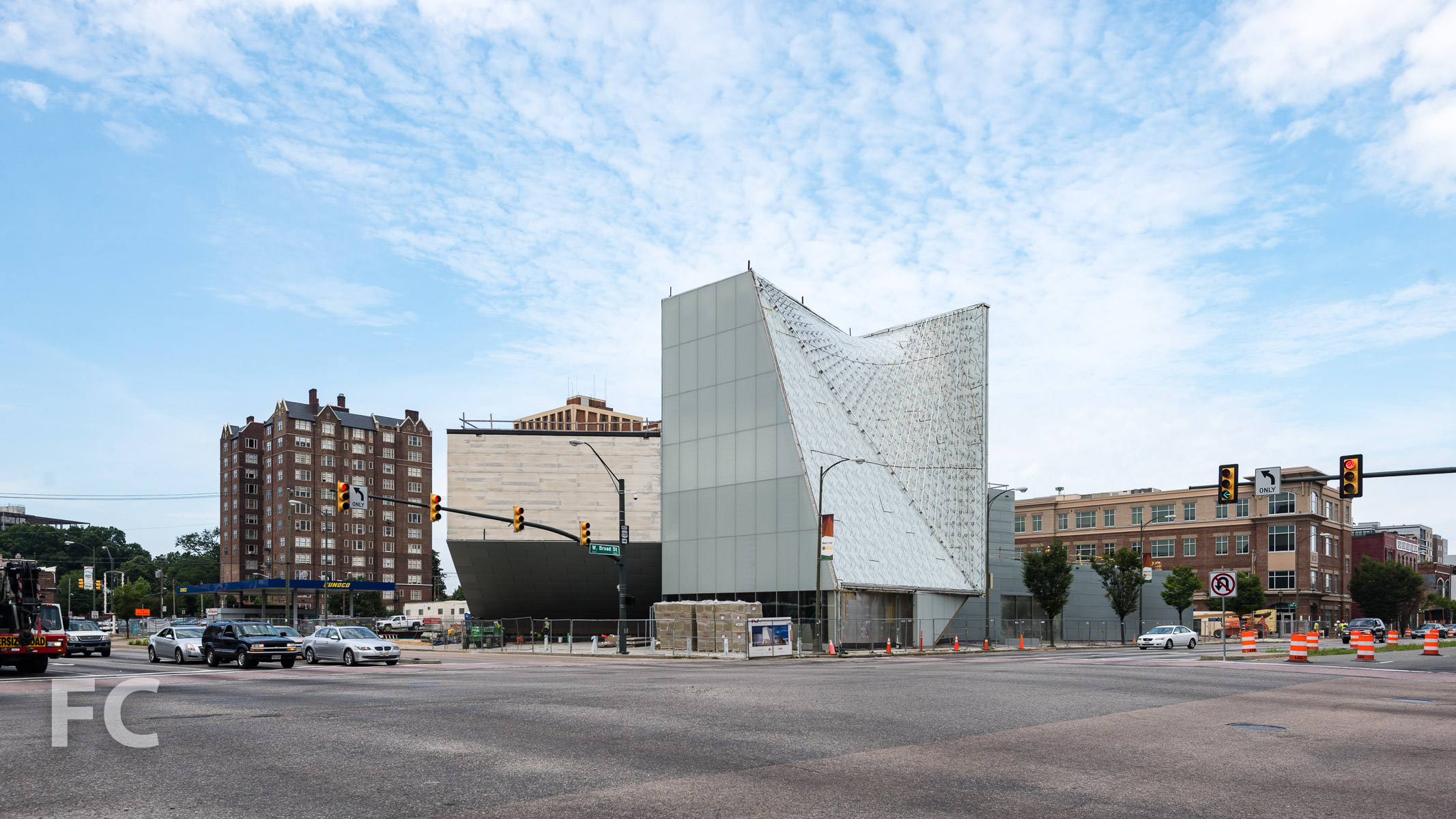
East facade from West Broad Street.
Steven Holl Architects' latest museum, the Institute for Contemporary Art's Markel Center, has opened on the campus of Virginia Commonwealth Universityin Richmond, Virginia.
Looking up at the performance space volume.
The centerpiece of the design is the 33 foot high forum located at the intersection of West Broad Street and North Belvidere Street. Off of this main forum volume, visitors can access the 240-seat auditorium, sculpture garden, and the four contemporary art galleries that fork into multiple volumes along West Broad Street.
Looking up at the forum and performance space volumes intersection.
Pre-weathered titanium zinc, the primary cladding material, was selected for its environmental friendliness as a 100% recyclable material and its flexibility in cladding the curved shapes of the museum.
Northeast corner from West Broad Street.
Other sustainable features of the design include the use of 7,500-square-feet of green roofs on three of the four galleries and the use of geothermal wells for the central heating/cooling system. The wells are drilled down to approximately 460 feet and use the earth as a heat source in the winter and a heat sink in the summer for the building's climate control system.
Sculpture Garden
North entry.
Northwest corner at the sculpture garden.
Entry door hardware detail.
Forum

South entry.
Ground Floor Gallery

Stair railing detail.
Sculpture Terrace Garden
Second Floor Galleries
Third Floor Gallery
Performance Space
Cafe
Basement

Architect: Steven Holl Architects with BCWH Architects; Structural Engineer: Robert Silman Associate; Mechanical Engineers: Arup, OLDS; Landscape: Michael Boucher Landscape Architect; Client: Virginia Commonwealth University; Program: Museum; Location: Richmond, VA; Completion: Spring 2018.


Grace Farms
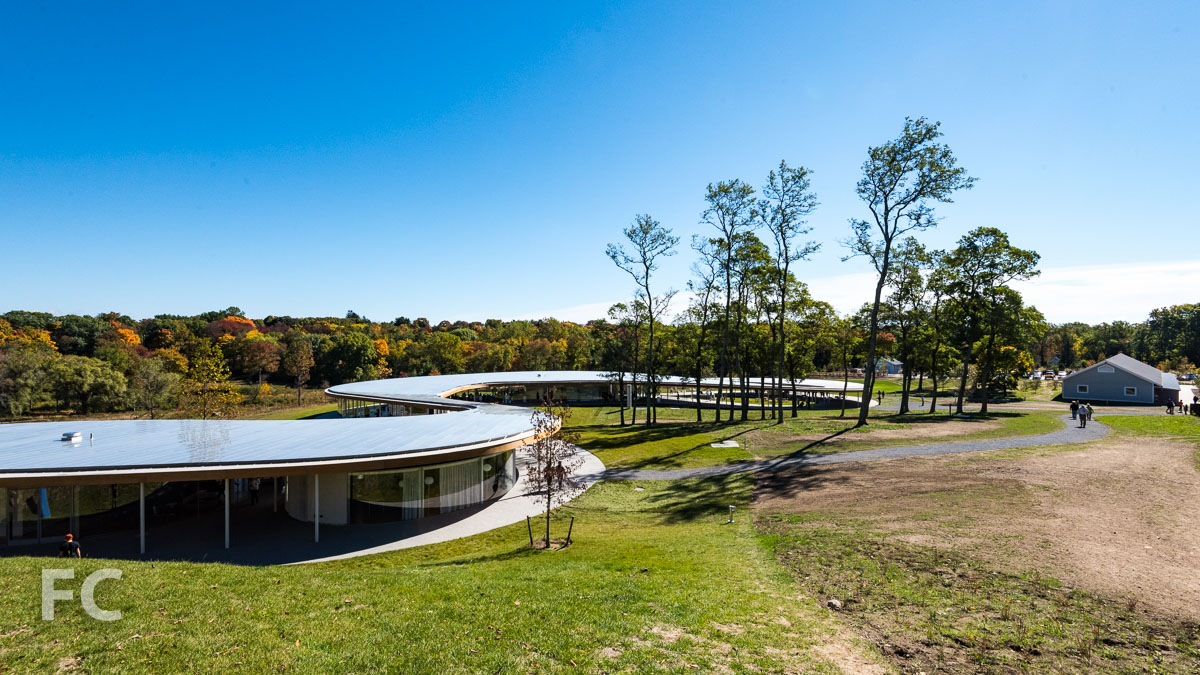
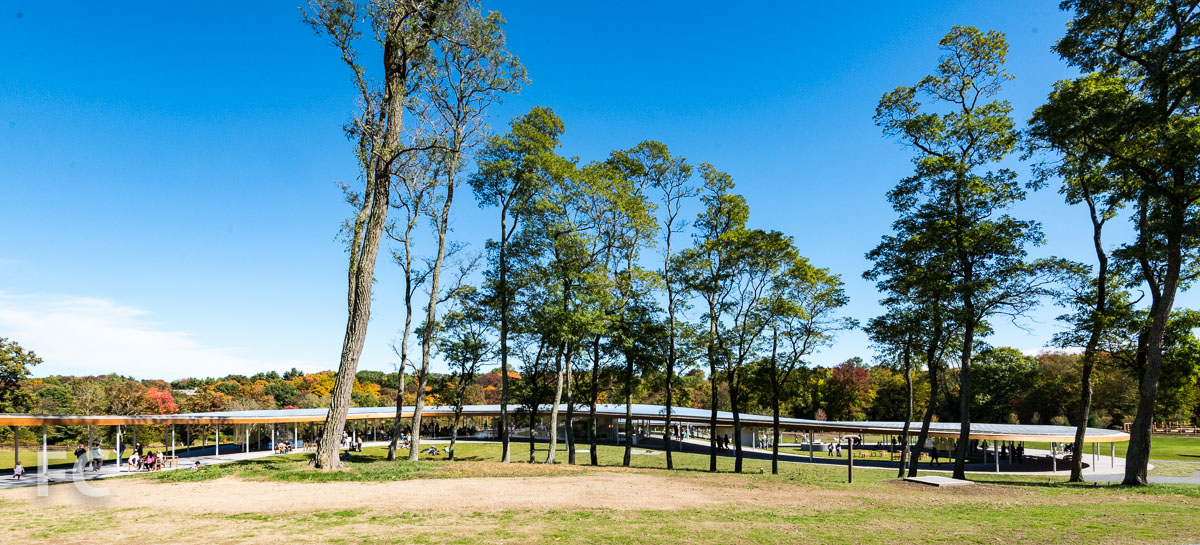
The River Building with the Sanctuary in the foreground.
Entering the River Building at the Sanctuary.
The lobby of the Sanctuary.
Sanctuary.

Sanctuary.
The view from the stage inside the sanctuary.
The stage inside the Sanctuary.
Sanctuary.
Roof structure detail inside the Sanctuary.
Perimeter structure and glass enclosure detail inside the Sanctuary.
Glass enclosure detail at the floor of the Sanctuary.
Kazuyo Sejima and Ryue Nishizawa speaking at the opening day ceremony.
Roof drainage system at the Sanctuary roof.
Looking down at the continuation of the River Building from the Sanctuary.
An artist captures the River Building on his canvas.
Looking down at the continuation of the River Building.
The stairs leading down from the Sanctuary.
Looking back towards the Sanctuary.
The Library entry.
Shelving inside the Library.
Farm 56 by Thomas Demand inside the Library.
Conference room inside the Library.
Glass enclosure detail at the Library.
Pathway.
Double Glass River by Teresita Fernandez inside the Commons.
Double Glass River by Teresita Fernandez inside the Commons.
Detail of Double Glass River by Teresita Fernandez inside the Commons.
Lighting inside the Commons.
Looking toward the Sanctuary from the Commons.
Signage on the glass enclosure of the Court.
Looking down onto the basketball court.
Looking down onto the basketball court.
Looking down onto the basketball court.
The Court.
The Court.
The River Building.
Looking towards the River Building from the Plaza and the East and West Barns.
Architects: SANAA (Design Architect) with Handel Architects (Executive Architect); Landscape Architects: OLIN; MEP Engineer and Lighting: Buro Happold; Structural Engineer: Robert Silman Associates; Building Envelope: Front; Construction Manager: Sciame; Graphics: Pentagram; Program: Church and Cultural Facilities; Location: New Canaan, Connecticut; Completion: 2015.