
Tour: Pier 55 - Little Island
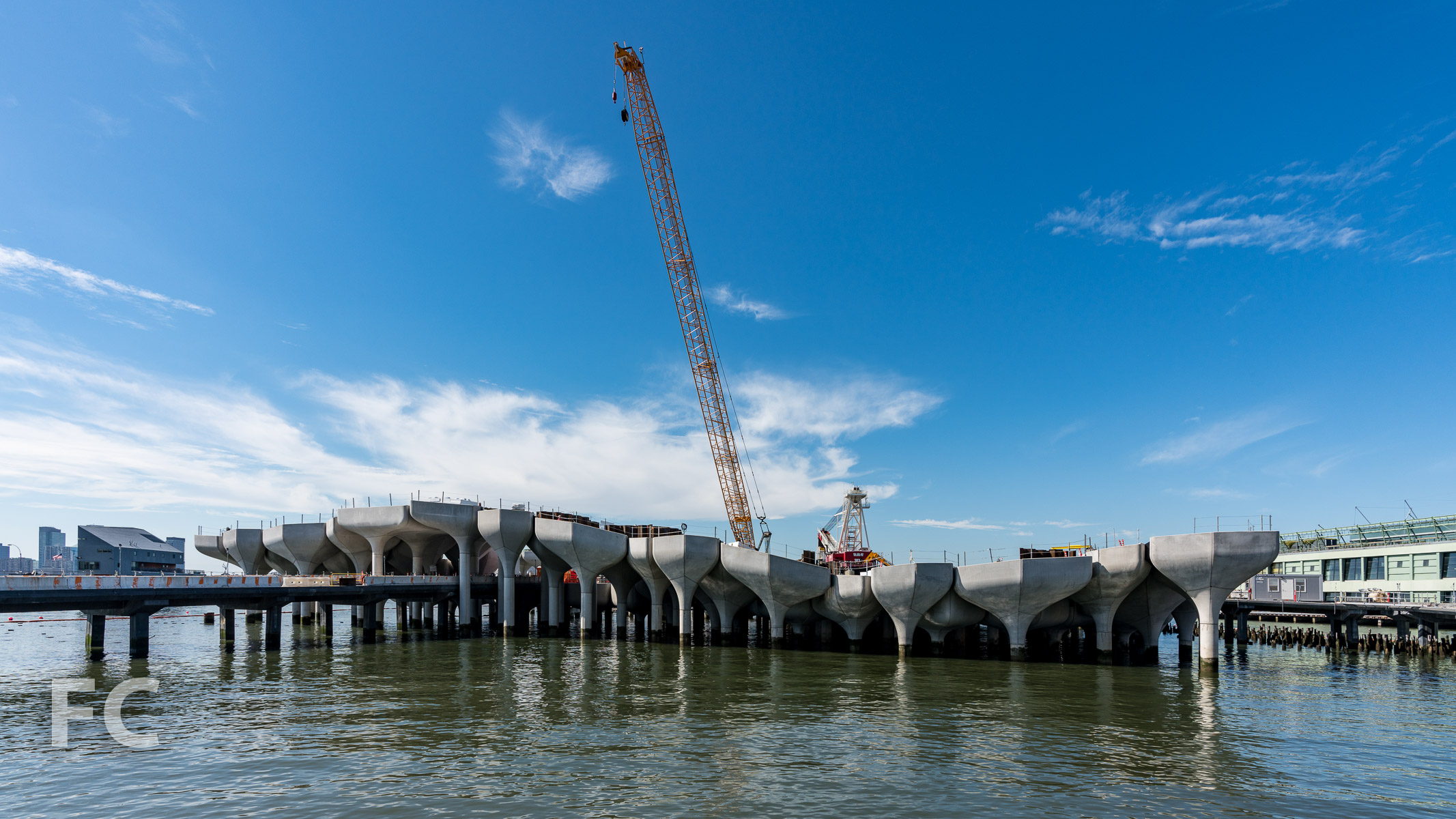
Heatherwick Studio’s park, known as Little Island, at Pier 55 in Hudson River Park has officially opened. Located near the Meatpacking District and the High Line, the design of the 2.4 acre park features an undulating field of 132 pots with plantings sitting on 280 concrete piles. At the park’s peak, the pots rise 30 feet into the air and can weigh more than 90 tons. Four to six petals of lightweight concrete combine to form each of the pots. MNLA led the landscape design, which is inspired by the textures and colors of coastal Acadia National Park in Maine. The park offers a 700-seat amphitheater for music, dance, and theater productions, along with numerous pathways and viewing platforms.

Architect: Heatherwick Studio; Landscape Architect: Mathews Nielsen Landscape Architect; Client: Hudson River Park; Program: park; Location: Meatpacking District, New York, NY; Completion: 2021.



Construction Update: 40 10th Avenue
Southwest corner.
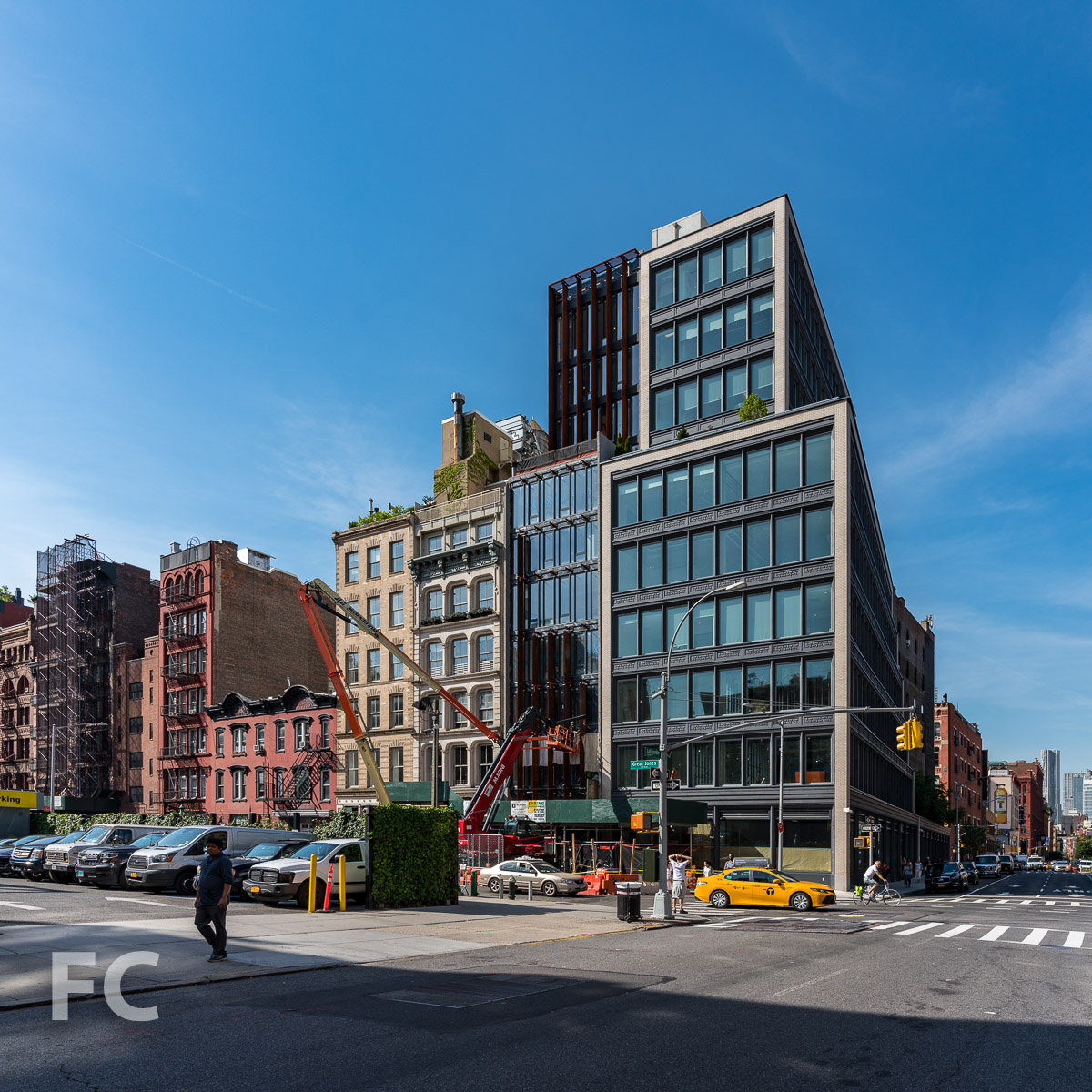
Facade installation is wrapping up at Aurora Capital and William Gottlieb Real Estate's 40 Tenth Avenue, the 10-story, 140,000 square foot spec office building adjacent to the High Line at West 13th Street. Design of the tower is led by Jeanne Gang of Studio Gang and uses the firm's strategy of "solar carving" which, according to their website, "uses incident angles of the sun’s rays to sculpt a building’s form." The northwest and southeast corner of the rectangular tower massing is carved away by this principle to produce a faceted façade and allow more sunlight to reach the adjacent green space of the High Line and the street.
Looking up at the south facade from Washington Street.
Southeast facade from the High Line.
Northwest corner.
Northwest corner.
Southeast corner.
Southeast corner.
Southeast corner.
Looking down on the High Line.
View east.
Architect: Studio Gang; Developer: Aurora Capital and William Gottlieb Real Estate; Program: Office, Retail; Location: Meatpacking District, New York, New York; Completion: March 2019.



9-19 9th Avenue
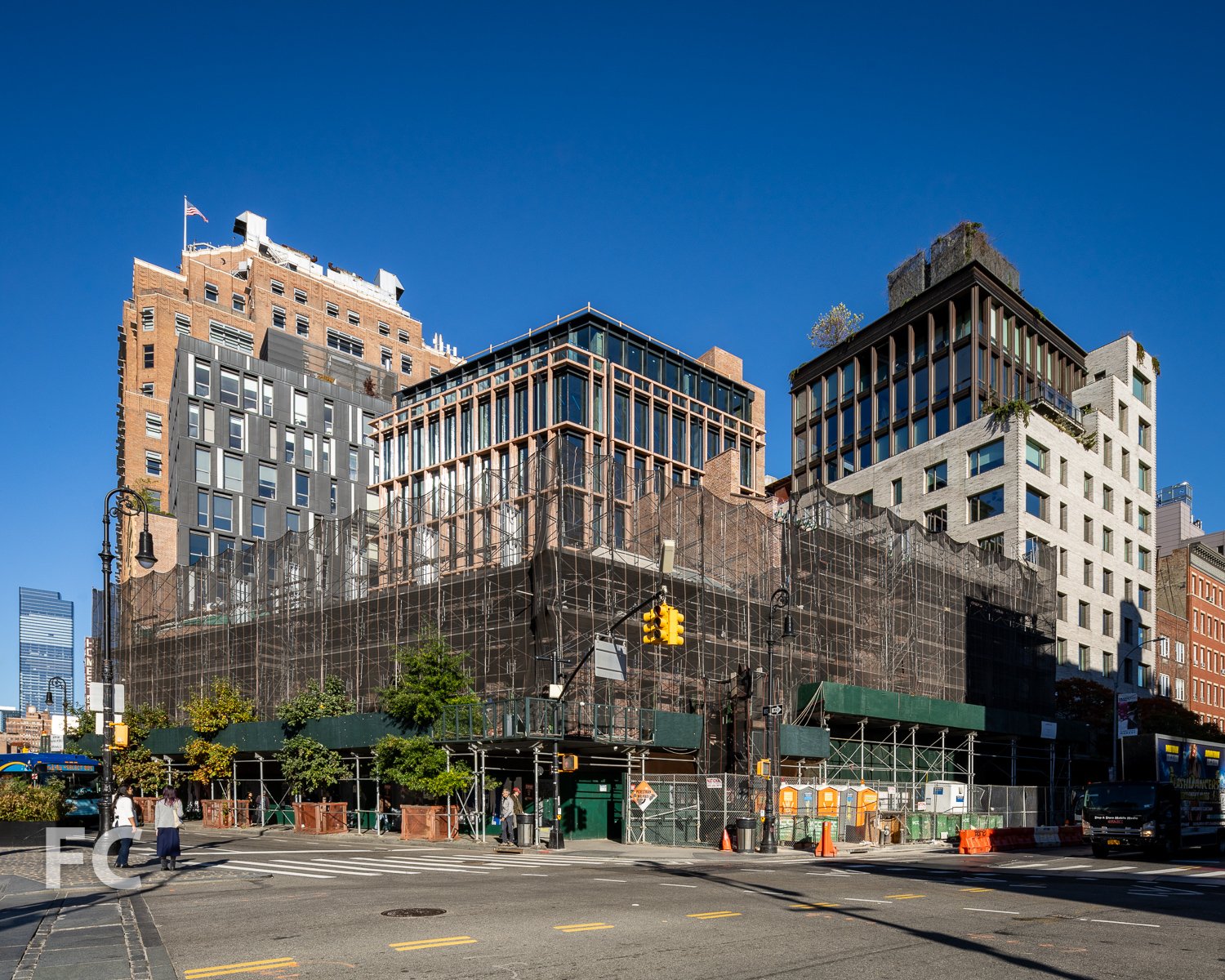
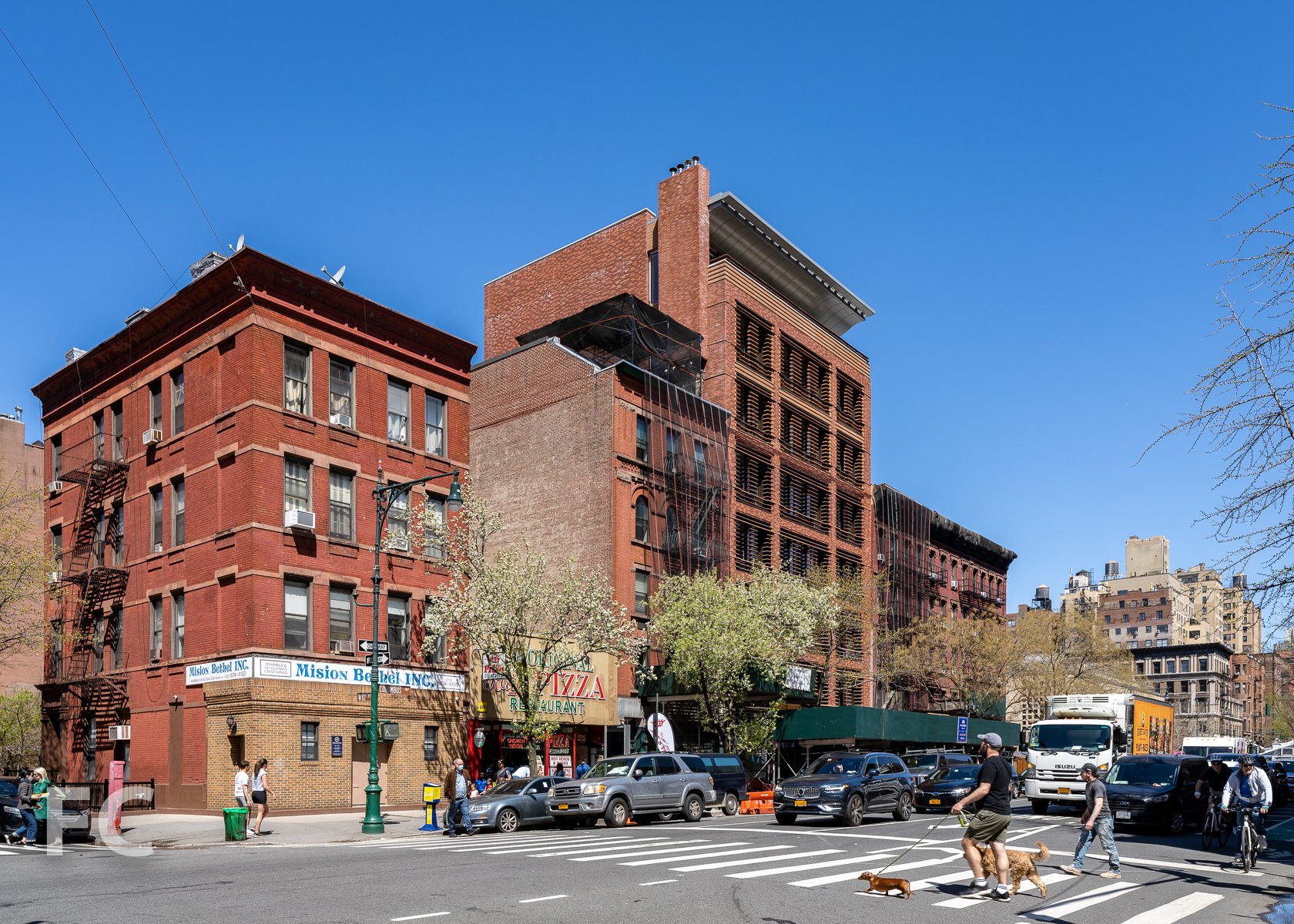
Northeast corner of 21-27 Ninth Avenue (right) and 9-19 Ninth Avenue (left).
Construction is underway on BKSK Architects' 2 1/2 story addition to 9-19 Ninth Avenue, a commercial structure in the Gansevoort Market Historic District that is slated to become the latest outpost for Restoration Hardware. The project is located adjacent to the firm's recently renovated 21-27 Ninth Avenue, a residential-to-commercial conversion on the northeast corner of the block. Because the projects fell within the historic district, both were required to receive approval from the Landmarks Preservation Commission, which they received in 2014.
Perched atop an existing 2-story masonry base that served as a warehouse, the new 2 1/2-story glass-enclosed addition contrasts with the heavy volume below. A metal screen with a mixture of clear and patterned translucent glass panels acts as a secondary facade for the new volume.
East facade of the addition.
Southeast corner.
Close-up of the southeast corner.
Close-up of the southeast corner.
South facade of the addition.
Close-up of the patterned glass on the south facade of the addition.
South facade.
South facade of the addition.
Architect: BKSK Architects; Developer: Aurora Capital Associates; Program: Commercial; Location: Meatpacking District, New York, NY; Completion: 2017.


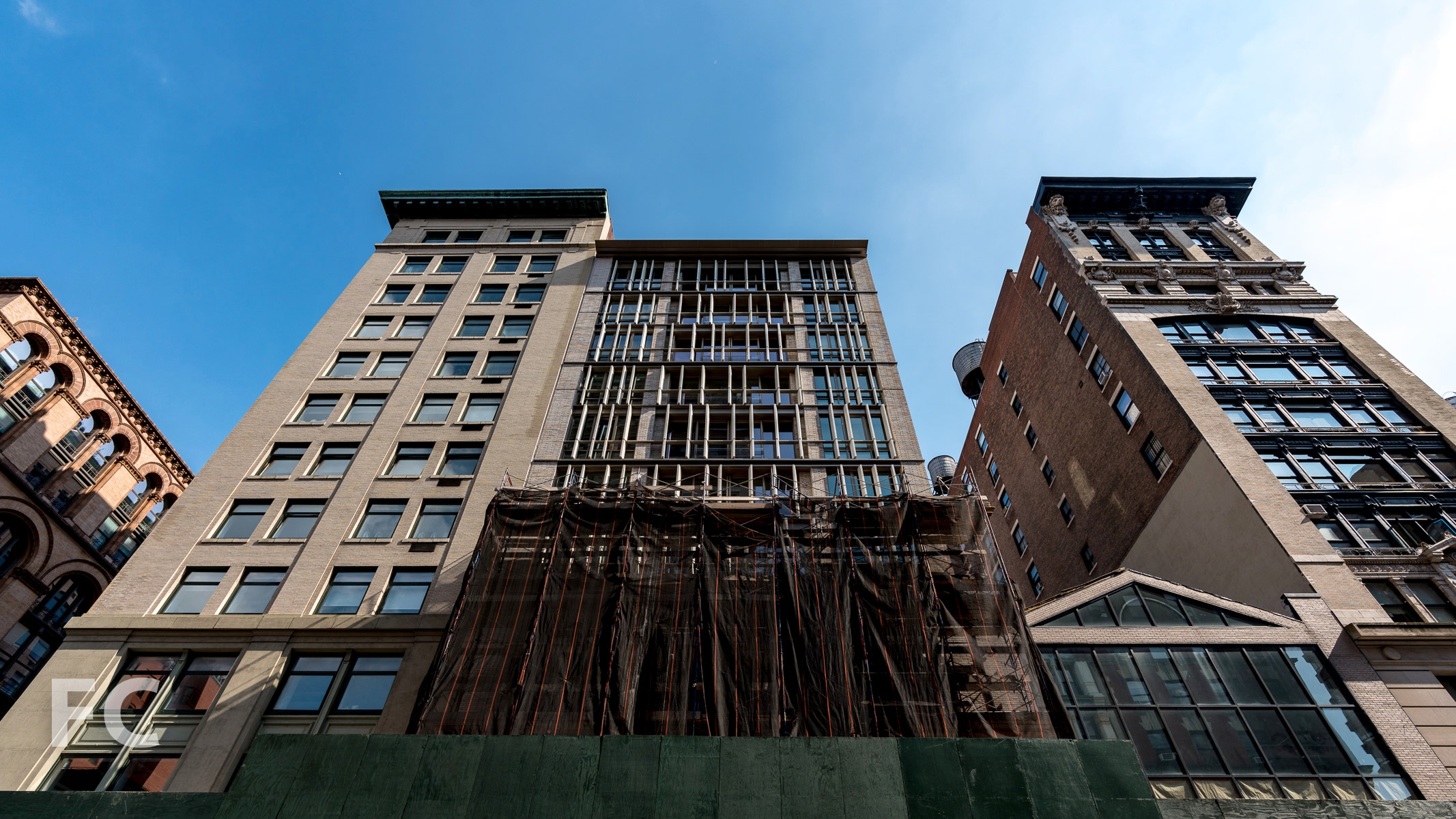
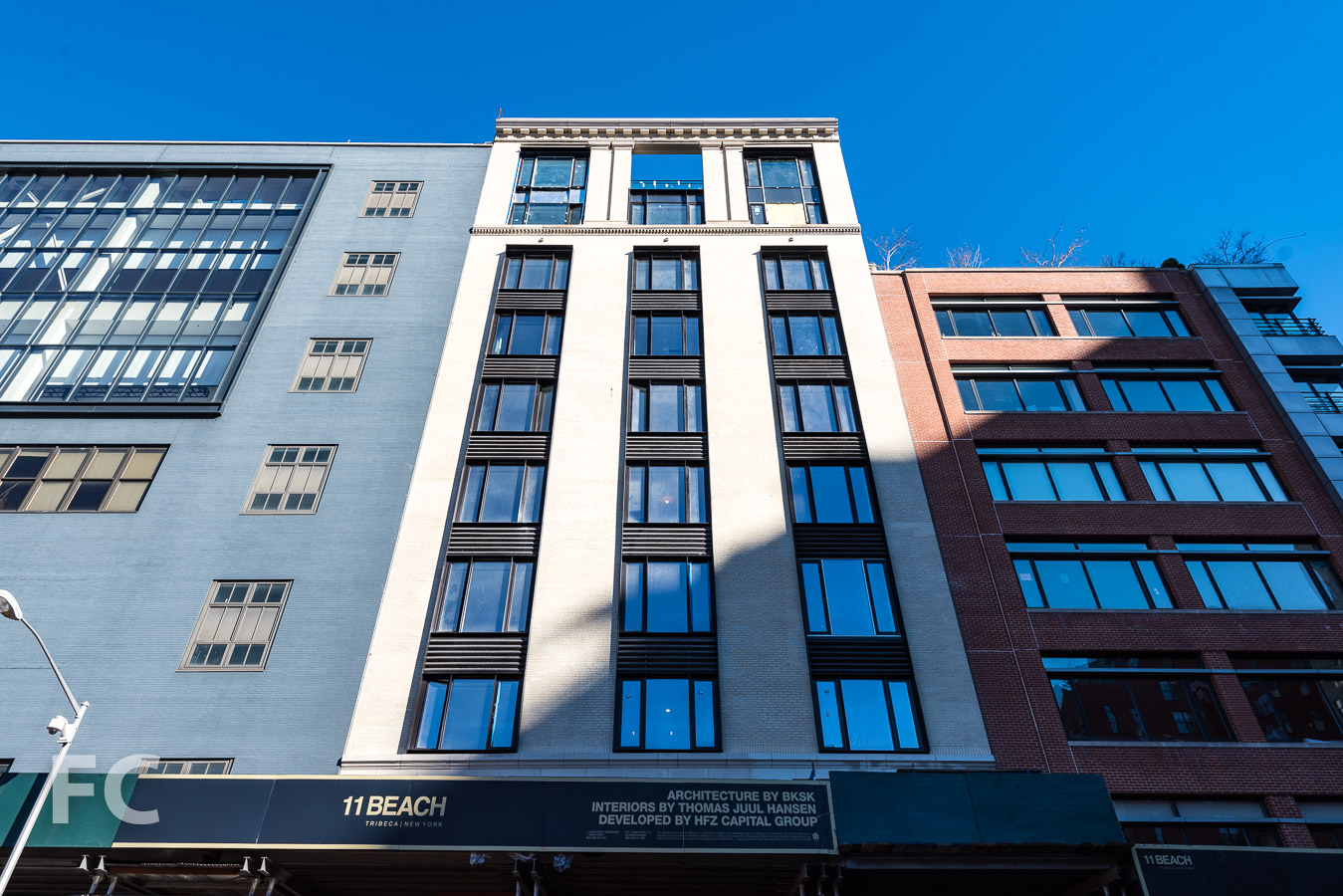
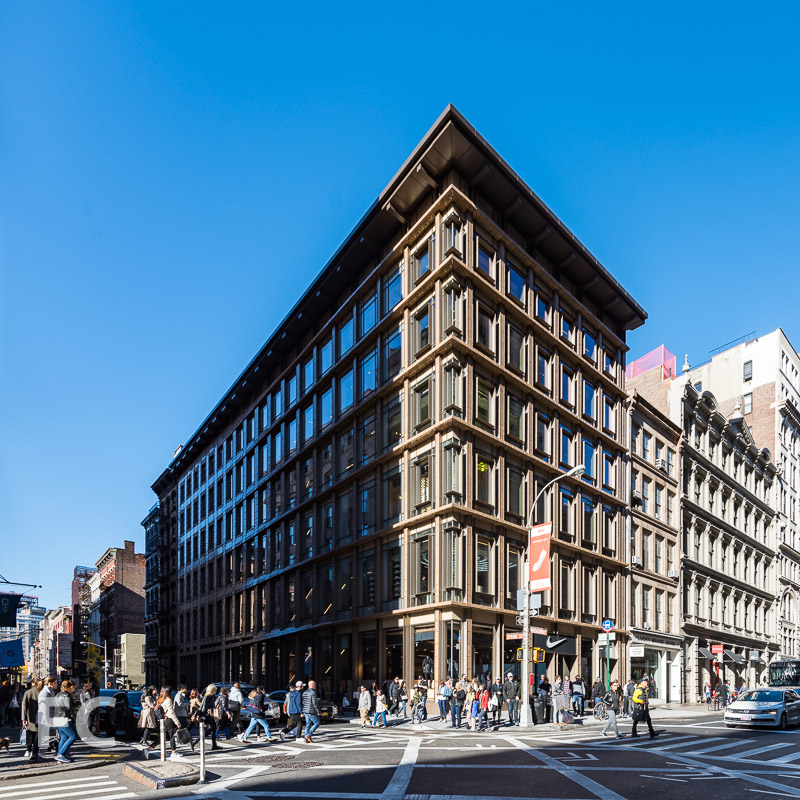
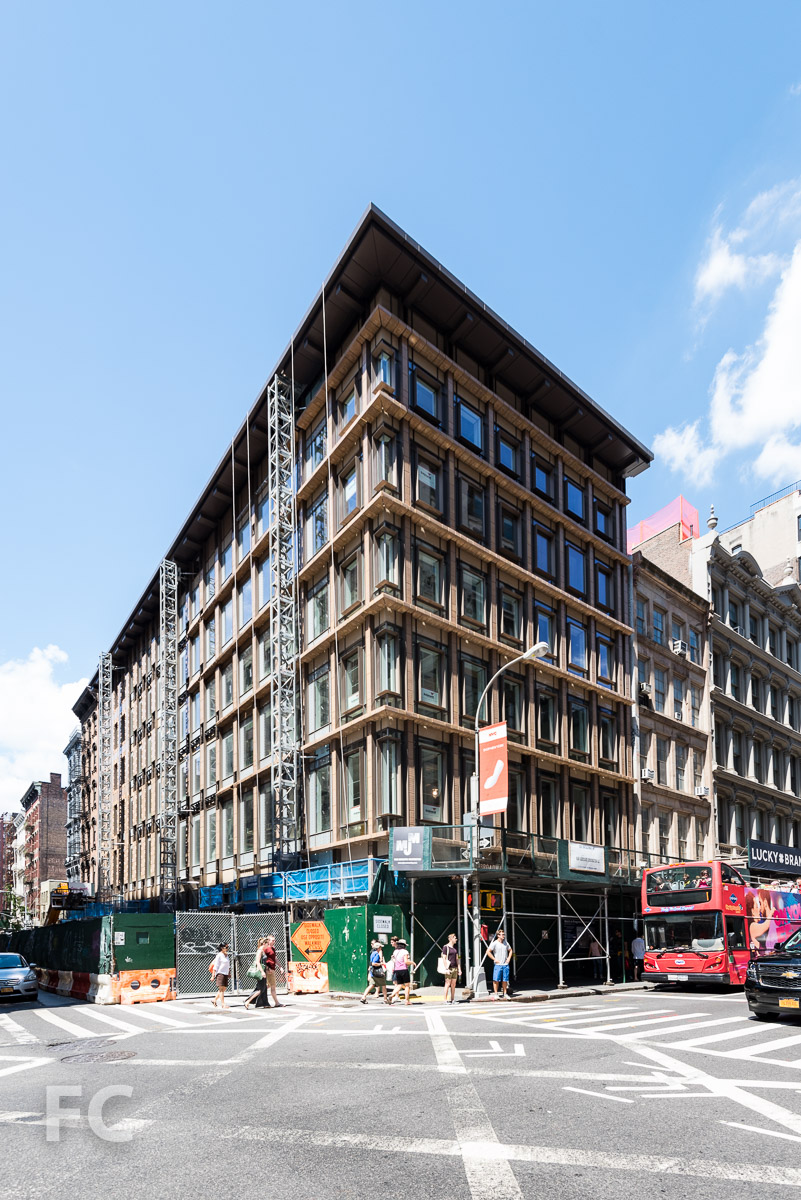
860 Washington
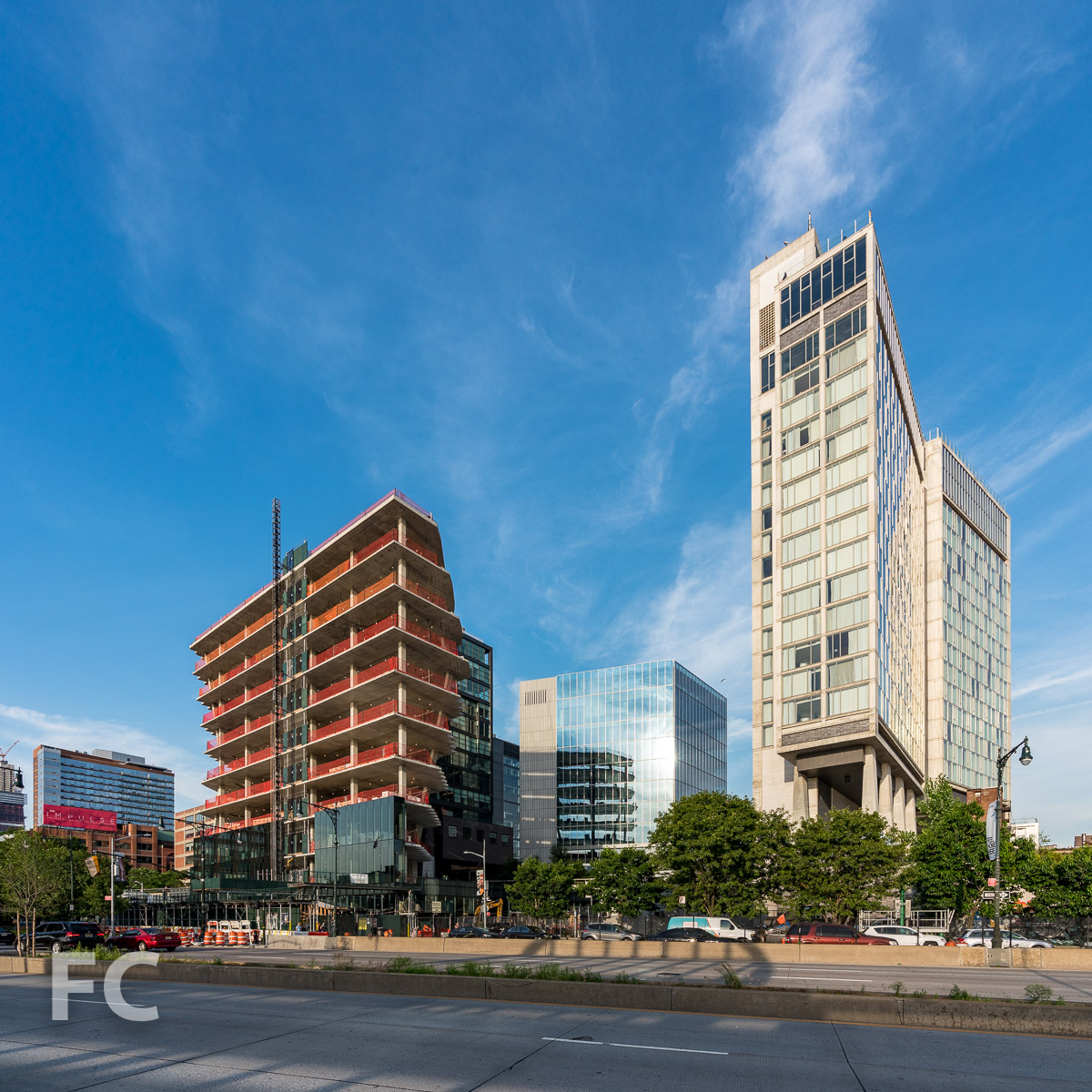
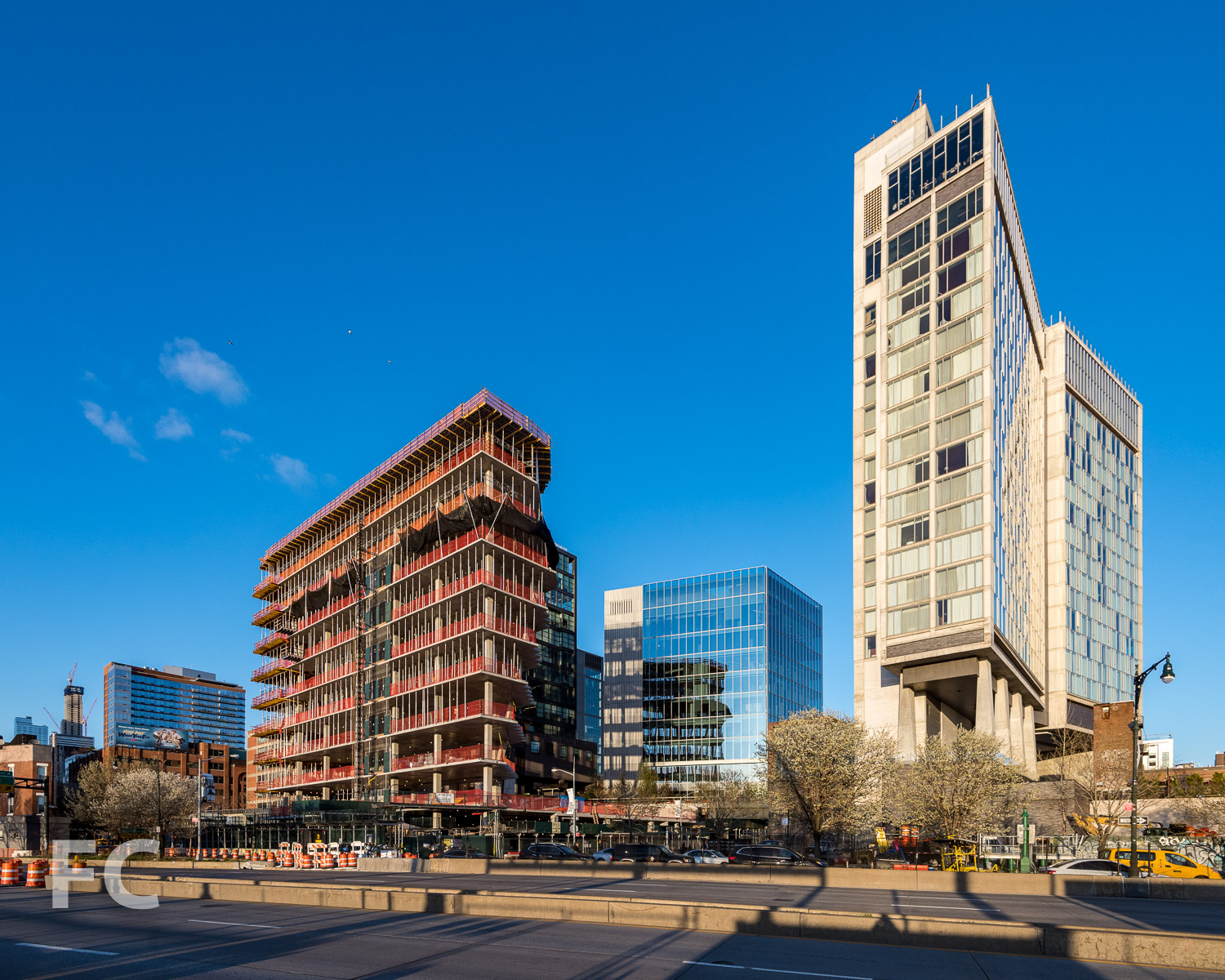
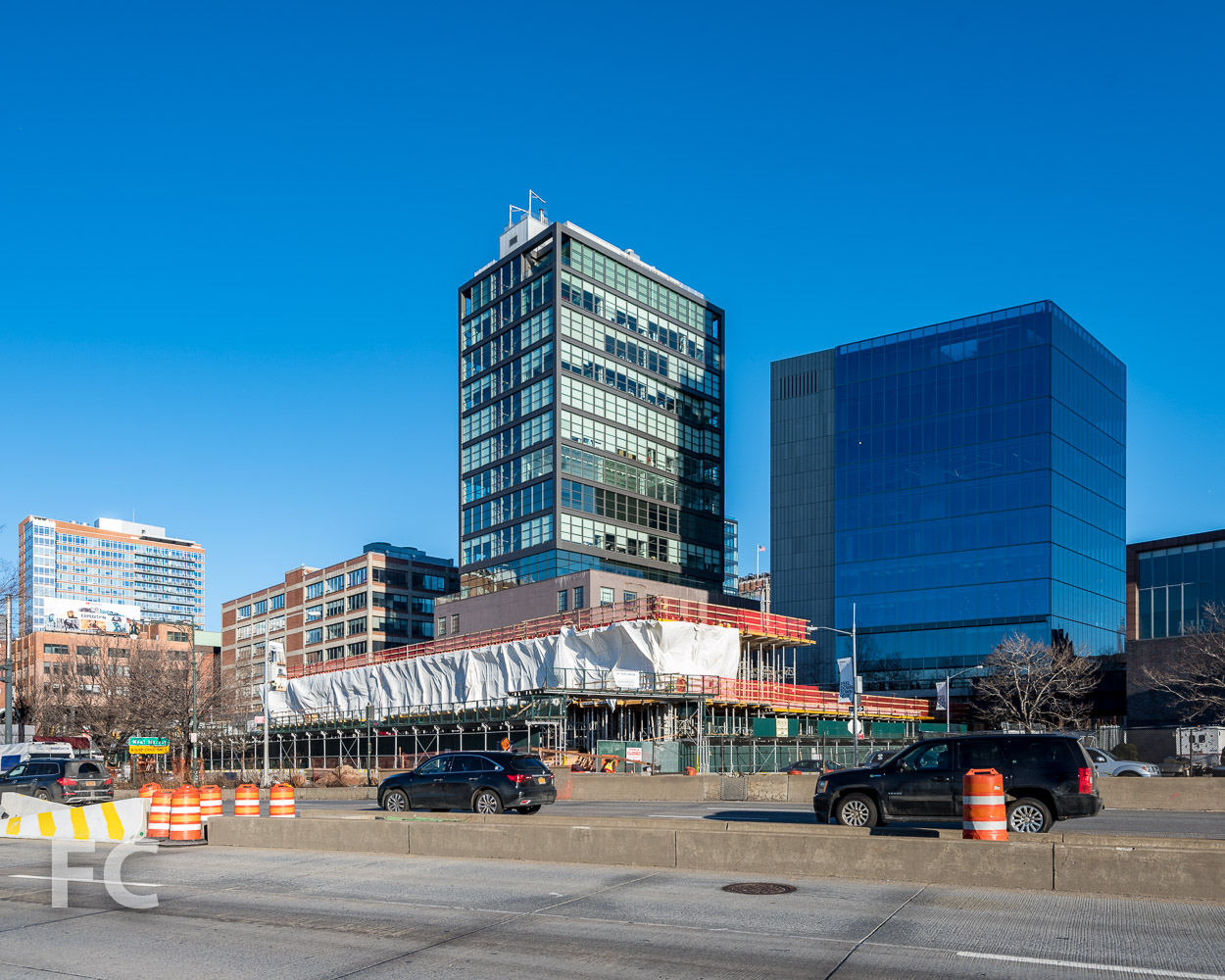
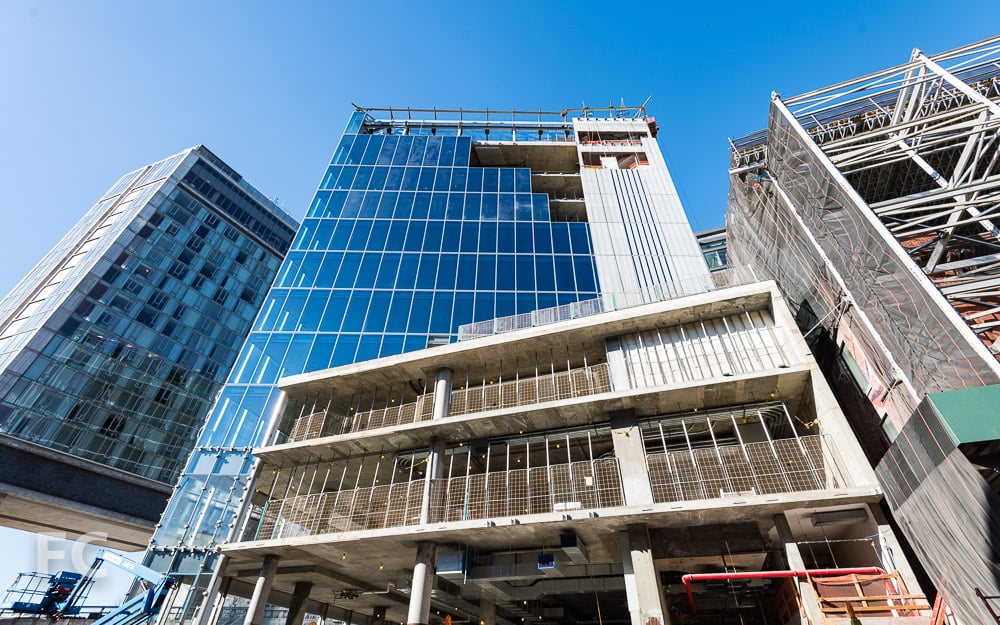
Curtain wall installation continues at James Carpenter's office building at 860 Washington Street along the High Line.
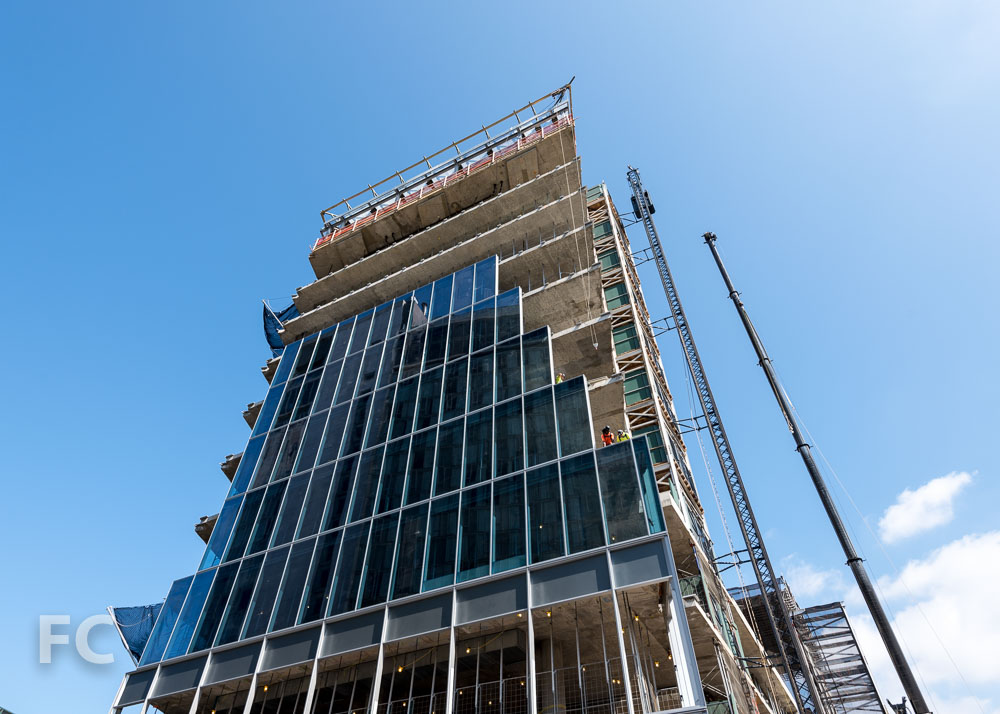
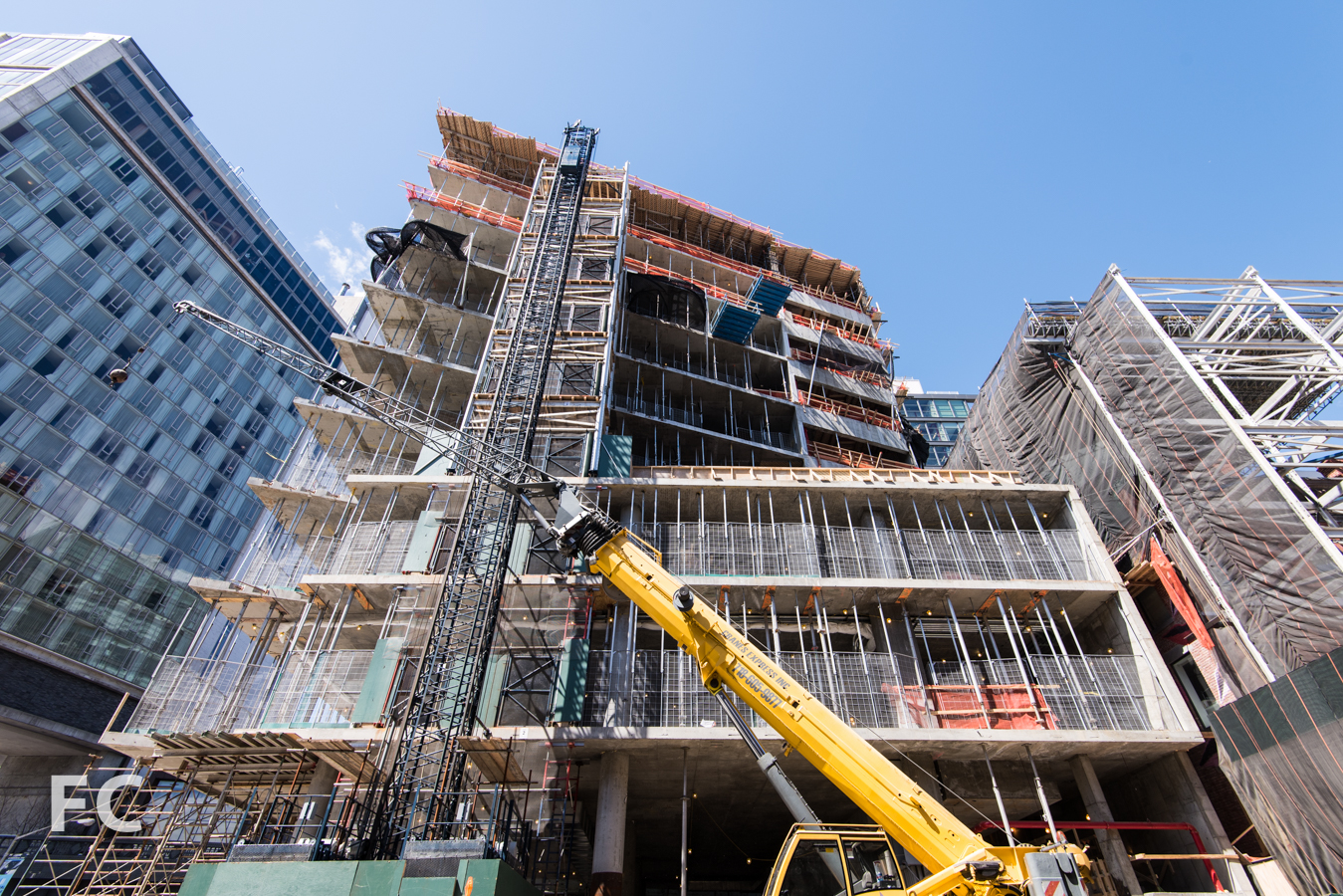
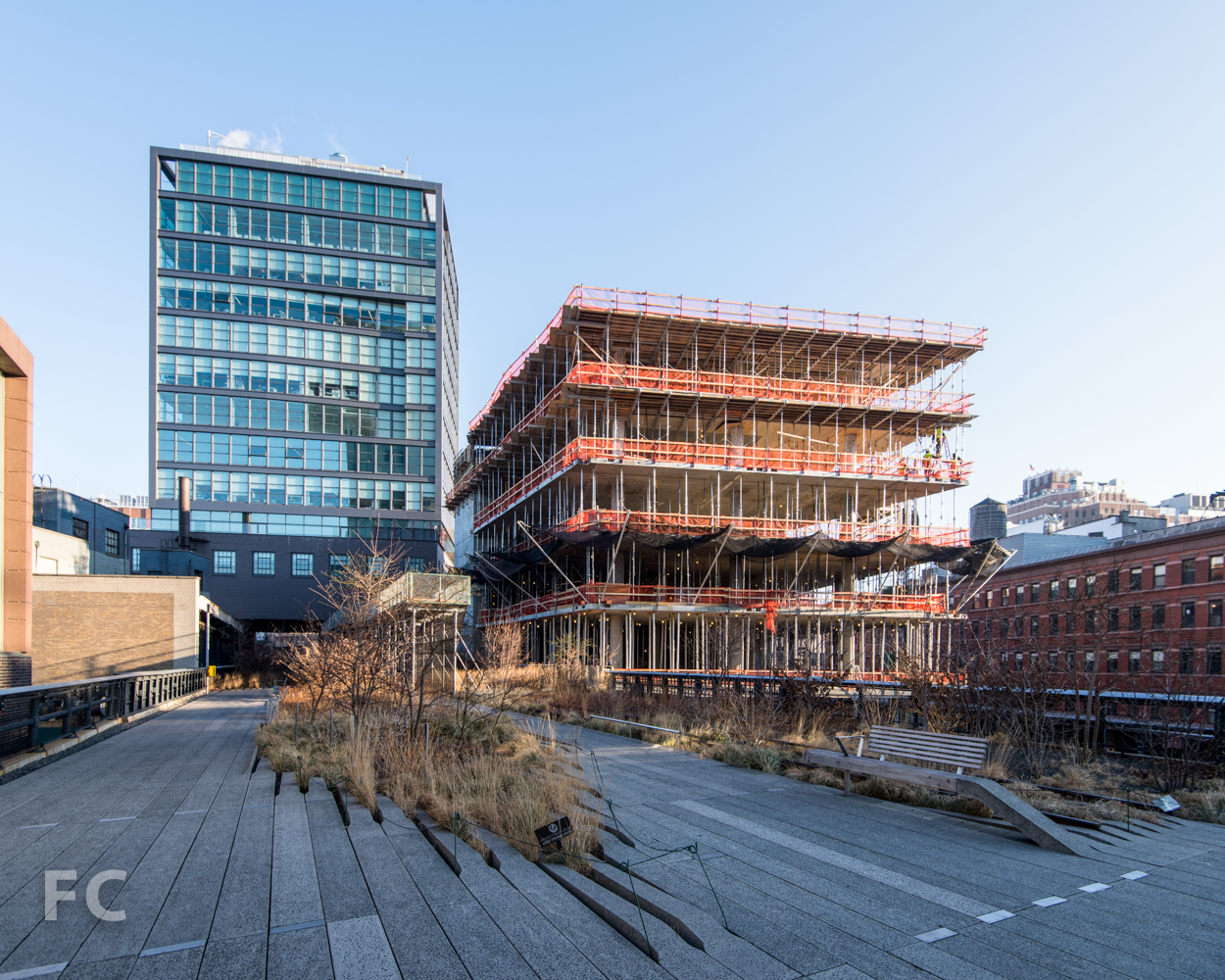
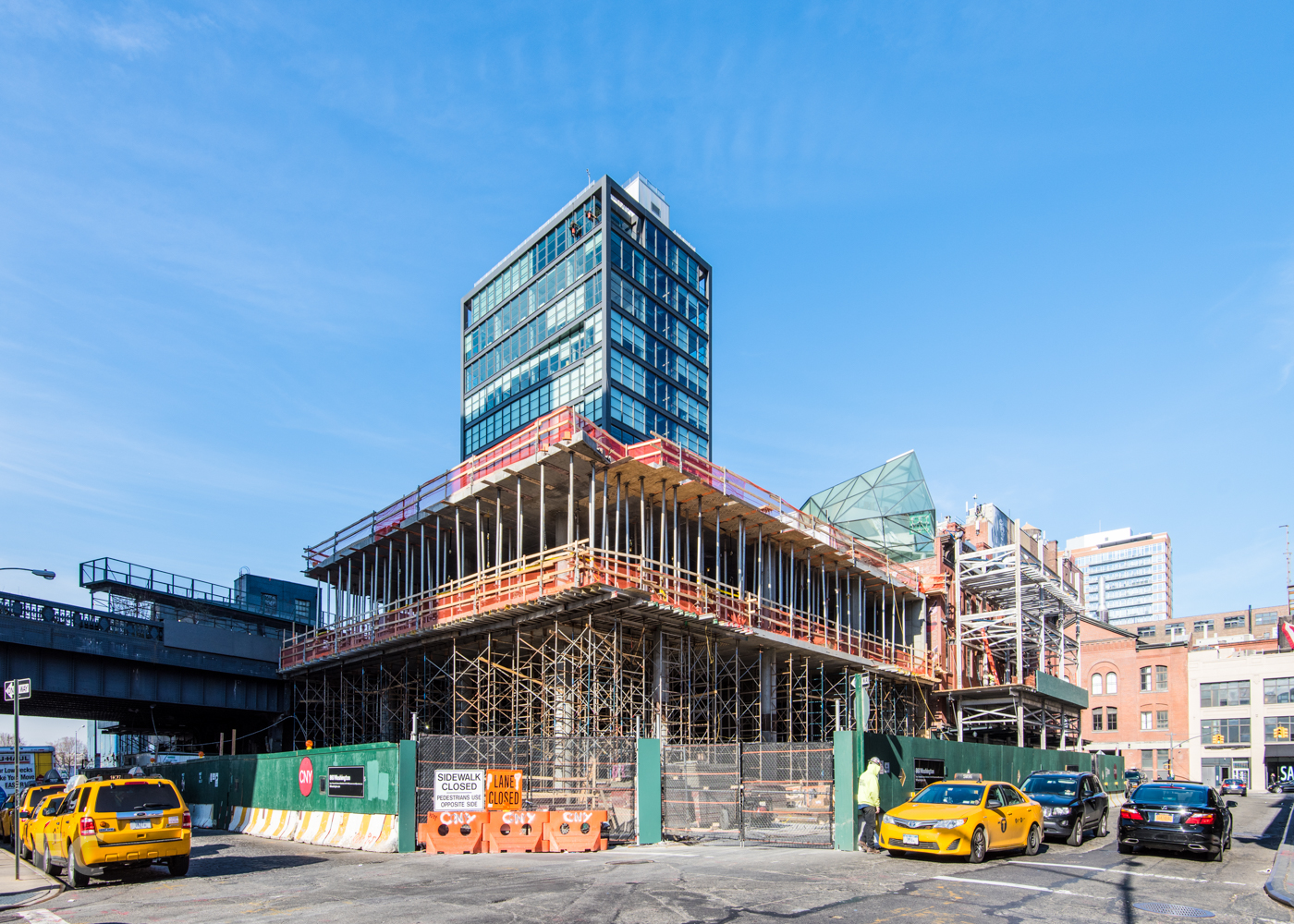
Curtain wall installation continues at Property Group Partners and Romanoff Equities' 860 Washington in the Meatpacking District. Designed by James Carpenter Design Associates, the ten-story, 113,848-square-foot office and retail tower flanks the High Line's eastern edge at West 13th Street.
Southeast corner from Washington Street.
James Carpenter, known for his implementation of glass in projects such as 7 World Trade Center and the Fulton Transit Center, has designed the tower with a floor-to-ceiling glass curtain wall on three of its four sides. Currently, the curtain wall has been installed on all but a few upper floor panels and the first three floors of the east facing facade along Washington Street. Carpenter's glass tower will contrast nicely with the industrial aesthetic of the historic brick structures and add to the recent diversity of materials from the likes of the Standard's concrete and the Whitney's metal facade.
East facade from Washington Street.
Looking south along Washington Street.
The majority of the north facade's cladding, a profiled terra-cotta panel to conceal the elevator core, has also been installed. By pushing the circulation core to the northern fringe, Carpenter maximizes light and views to the High Line from the office floors.

Northeast corner from Washington Street and West 14th Street.
North facade from West 14th Street.
Looking up at the west facade from the High Line.
West facade from the High Line.
Southwest corner from the High Line.
South facade from the High Line.
Close-up of the southwest corner of the tower.
Southeast corner of the Standard Hotel (far left) and 860 Washington (center) from the High Line park.
Southeast corner of the Standard Hotel (far left) and 860 Washington (center) from the High Line park.
Retail space on the first three floors will be accessible from Washington Street and visible to those strolling along the High Line.
Looking up at the south facade from West 13th Street.
The building is targeting LEED silver and is projected to open in 2016.
Looking north along Washington Street.
Architects: James Carpenter Design Associates; Developers: Property Group Partners with Romanoff Equities; Program: Office, Retail; Location: Meatpacking District, New York, NY; Completion: 2016.

Whitney Museum of American Art
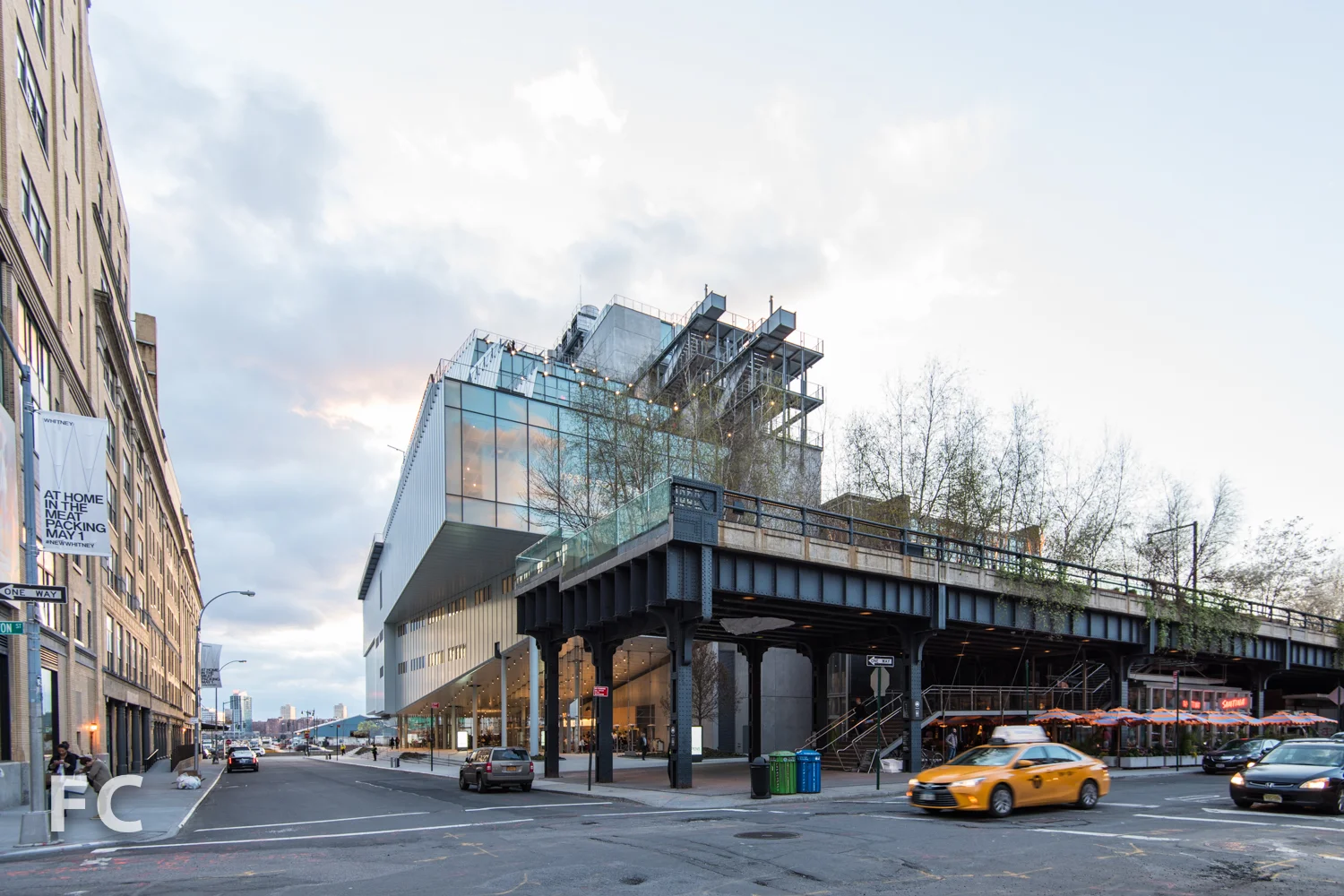
Ungainly and awkward, the Whitney's $422 million, 220,000-square-foot new home asserts its presence at the High Line's southern edge. Renzo Piano's addition to the Meatpacking neighborhood is indicative of the district's decade-long transformation from working class industrial to trendy tourist destination. What started in the previous decade with the conversion of unused elevated train tracks into the High Line elevated park, has culminated in a major new museum for the city in a neighborhood now dominated by buildings from an elite group of architects.
The Whitney Museum of American Art, begun with a collection of artwork amassed by Gertrude Whitney in 1908, has called several places home in its first century of existence. Most recently the museum was located on the Upper East Side, in a building designed by Marcel Breuer in 1966, at the corner of Madison Avenue and East 75th Street. Breuer's building, with its stone clad, inverted ziggurat form, was also considered at its opening to be awkward and panned for its unusual massing. With time, the building gained acceptance but was never able to adequately hold the museum's vast collection.
The Whitney Museum by Marcel Breuer, 1966.
Many attempts were made to expand the museum at its Upper East Side location, with designs from Norman Foster, Michael Graves, OMA, and finally Renzo Piano. Given the scale of the neighborhood and the historic value of buildings on site and adjacent, large scale expansion plans proved too contentious to realize.
With the advent of the High Line in 2009, properties that surrounded the park gained new value and the exodus of industrial businesses in the area left behind many sites ripe for new construction. Realizing the futility of its expansion plans at the Breuer building, the Whitney brokered a deal with the city of New York for a site at the southern entrance to the High Line and occupied by a meatpacking business. While the business has remained on the northern half of the massive site, the Whitney's deal with the city allows them to acquire the remaining half should the business relocate elsewhere.
Program study models.
Massing study models.
Presentation model of final design.
The Whitney Museum by Marcel Breuer, 1966.
Piano's building is arranged with gallery spaces and other public functions in the southern half, while offices for the museum's staff, education programs, and other support spaces occupy the northern half. At the primary public corner, where Gansevoort intersects Washington Street, the Whitney engages the public at both street level and the High Line as the building's form folds skyward at the corner of Gansevoort and Washington Street, creating a multi-story volume enclosed by vast expanses of glass. Piano uses this element in conjunction with the more solidly clad galleries cantilevered above to subtly invoke the Breuer building's iconic massing, a motif that will reoccur throughout. The folded facade also evokes Diller Scofidio + Renfro's overhaul of Lincoln Center's Alice Tully Hull (renovated, 2009), where a double height entry is also formed by peeling up the building's original travertine facade. For the Whitney, this space houses Danny Meyer's latest restaurant, Untitled. Stretching along the restaurant's Gansevoort Street frontage, the open kitchen visually dominates the space. At night, the scene from the street is reminiscent of Edward Hopper's Nighthawks, with the patrons spread out along the bar and the glow of Robert Indiana's illuminated word "EAT" artwork hanging above.
Southeast corner of the Whitney (left) and the southern entrance to the High Line (right).
Untitled restaurant from Gansevoort Street.
Restaurant entrance off of Gansevoort Street.
View of the restaurant bar from Gansevoort Street.
Main museum entrance from Gansevoort Street.
View of the museum shop at the southwest corner from Gansevoort Street.
Museum visitors enter mid-block off of Gansevoort Street into a glass enclosed 6,000 square-foot lobby that is adjacent to a free gallery and a museum shop consisting of open shelving to maintain visual porosity. Galleries on the upper floors can be accessed by a grand stair or by one of four elevators, featuring commissioned artwork in the elevator cab by the artist Richard Artschwager. Glazing above the elevator entry at ground level allows the visitor to see the machinery needed to operate, continuing an oft used theme by Piano. The concrete and steel of the stair serves as another subtle reference to the Breuer building.
Main museum entrance from Gansevoort Street.
Museum lobby.
Museum shop shelving.
Special exhibitions are housed on the eighth floor, which currently features "America is Hard to See." The show serves as a means for the Whitney to reexamine American art since 1900 with works from their vast collection that has long gone unseen. The galleries at this level feature the typical white walls and reclaimed wide-plank pine flooring found throughout the museum. Because of its top floor location, Piano has designed the ceilings as a grid work that allows in light from the sawtooth skylights, resulting in a much brighter and inviting environment to wander the galleries than the Breuer building. There, the dark tones of the stone flooring and the concrete waffle ceiling gave the galleries a heavy and dark atmosphere. Although Piano's galleries are a sharp turn from the previous aesthetic, he continually references the Breuer ceilings with the varying take on grids created at each level of galleries. On some floors the ceiling grid is present but solid while other floors reveal the conduit and ductwork of necessary services in a modern building, a muted and vertical take on Piano's first museum, the Pompidou.
On floors six and seven reside the permanent collection galleries in spaces unmatched by their previous home. Now visitors can peruse the work in vast spaces that give the pieces enough real estate to stand on their own but still create a dialogue with adjacent works. With the added space comes spectacular moments of rest and reflection, where visitors can sit at one of two large walls of glass and take in the High Line in the morning light from the east facade or the setting sun from the west facade's window. Moments of connection to the surrounding neighborhood can even be experienced while in the midst of perusing the galleries, as slots of space cut through gallery walls leading to the facade's glazing.
Not to be outdone, the 13,000-square-feet of outdoor galleries and terraces provide additional opportunities to pause and reflect. Views of the city skyline serve as a backdrop to outdoor cafe seating and several large sculptures. On the fifth floor outdoor gallery, the Whitney has commissioned a site specific work by Mary Heilmann, Mary Heilmann: Sunset, which features colorful chairs scattered about the terrace that visitors can use. Also included is a projected film and panels of colorful shapes that mimic the stepping of the building's terraces.

At the northern half of the building, Piano has located the support space for the Whitney's staff, which has grown steadily in recent years. Like the galleries, these spaces are generous in size and provide ample light and views to the neighborhood.
With the opening of the Whitney, the city has gained another spectacular cultural destination. Yes, it's exterior is a quirky wrapper, more muscle than beauty, but the interior more than compensates with its spot on take on the contemporary museum. Piano expertly crafts a museum that accommodates the visitor with the right mix of galleries and leisure space, allowing the museum to coexist with, rather than be consumed by, the commercial program of contemporary institutions. Like the Breuer building, Piano's structure will likely be embraced by most over time, as visitors forgive its exterior clumsiness for the expertly crafted experience within.
Architect: Renzo Piano Building Workshop (Design Architect), Cooper Robertson (Executive Architect); Structural Engineer: Robert Silman Associates: MEP Engineer: Jaros, Baum & Bolles; Facade Consultant: Heintges; Landscape Architect: Piet Oudolf with Mathews Nielson Landscape Architect; General Contractor: Turner Construction; Client: Whitney Museum of American Art; Program: Museum; Location: Meatpacking District, New York, NY; Completion: 2015.
860 Washington Street
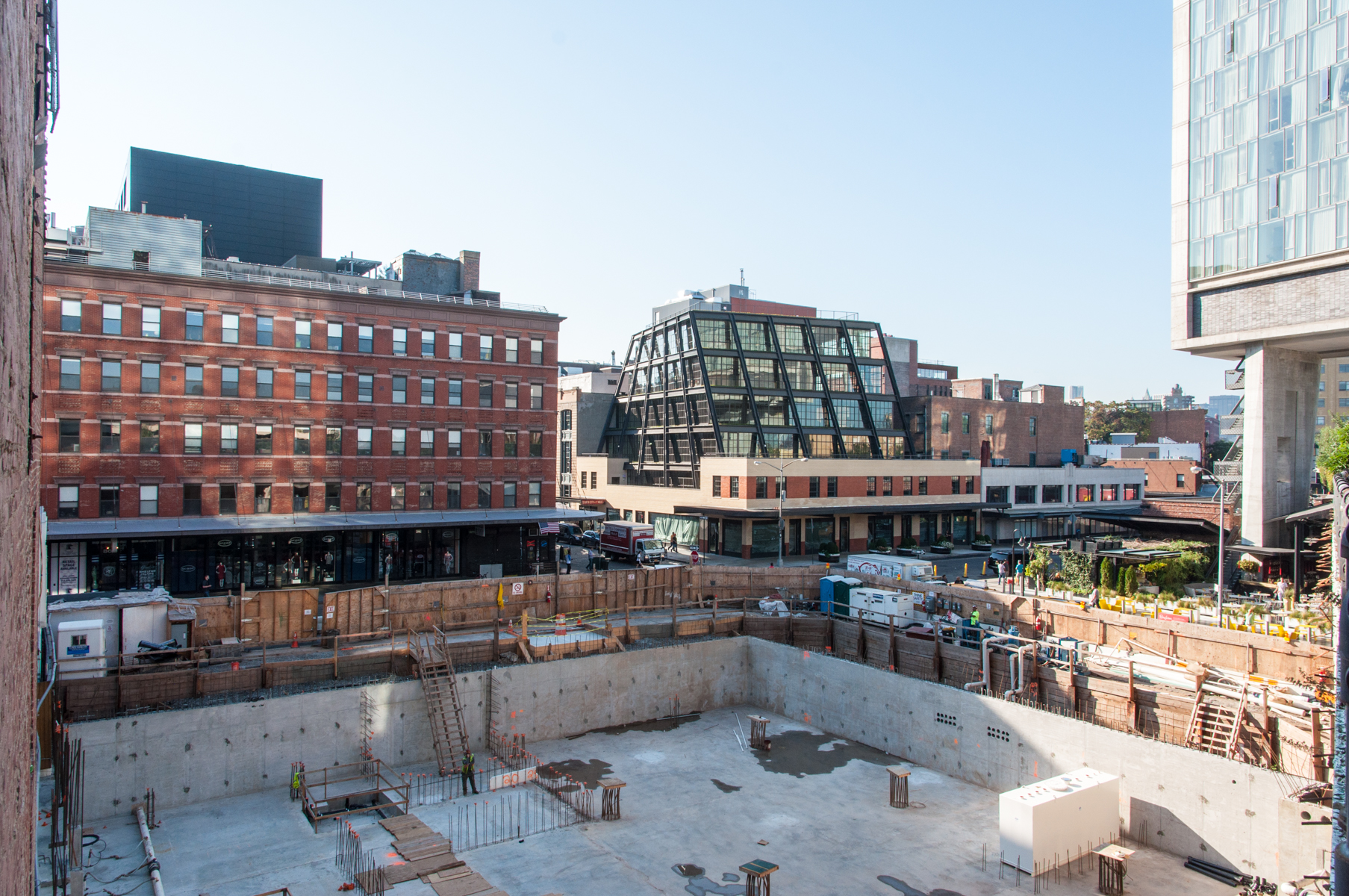
Foundation work is underway at James Carpenter's 10-story office tower at the southern end of the High Line. When completed in late 2015, the glassy tower will bring 2 floors of retail and 8 floors of office space to the trendy Meatpacking District. The simplicity of its glass curtain wall exterior will provide contrast to recent, nearby architecture, such as 837 Washington, that employs a more industrial palette of brick, concrete, and dark metal.
Architects: James Carpenter Design Associates; Developers: Property Group Partners with Romanoff Equities; Program: Office, Retail; Location: Meatpacking District, New York, NY; Completion: 2015.

837 Washington Street
Architects: Morris Adjmi Architects; Program: Offices, Retail; Location: New York, NY; Completion: 2014.
Exterior work is wrapping up on the Meatpacking District's newest trendy office building, 837 Washington. The warped exoskeleton addition, designed by Morris Adjmi's studio, has been fully erected on top of the existing 2 story structure that dates back to 1938 when it served as a meat warehouse. Not just for visual flair, the warped tower's structure will also allow for more open office floor plates by reducing the amount of interior columns. Vegetation is also accommodated by the warped form through planters that occupy the space between the columns and the exterior window wall. Views to the nearby High Line and its trendy neighbors, the Standard Hotel and the future Whitney Museum, will be available both in the office interiors and from the 7,000 square feet of outdoor terraces on the third floor and the roof. When completed, the project should achieve LEED Gold certification.