New Museum Expansion
OMA NY · Bowery · 2026
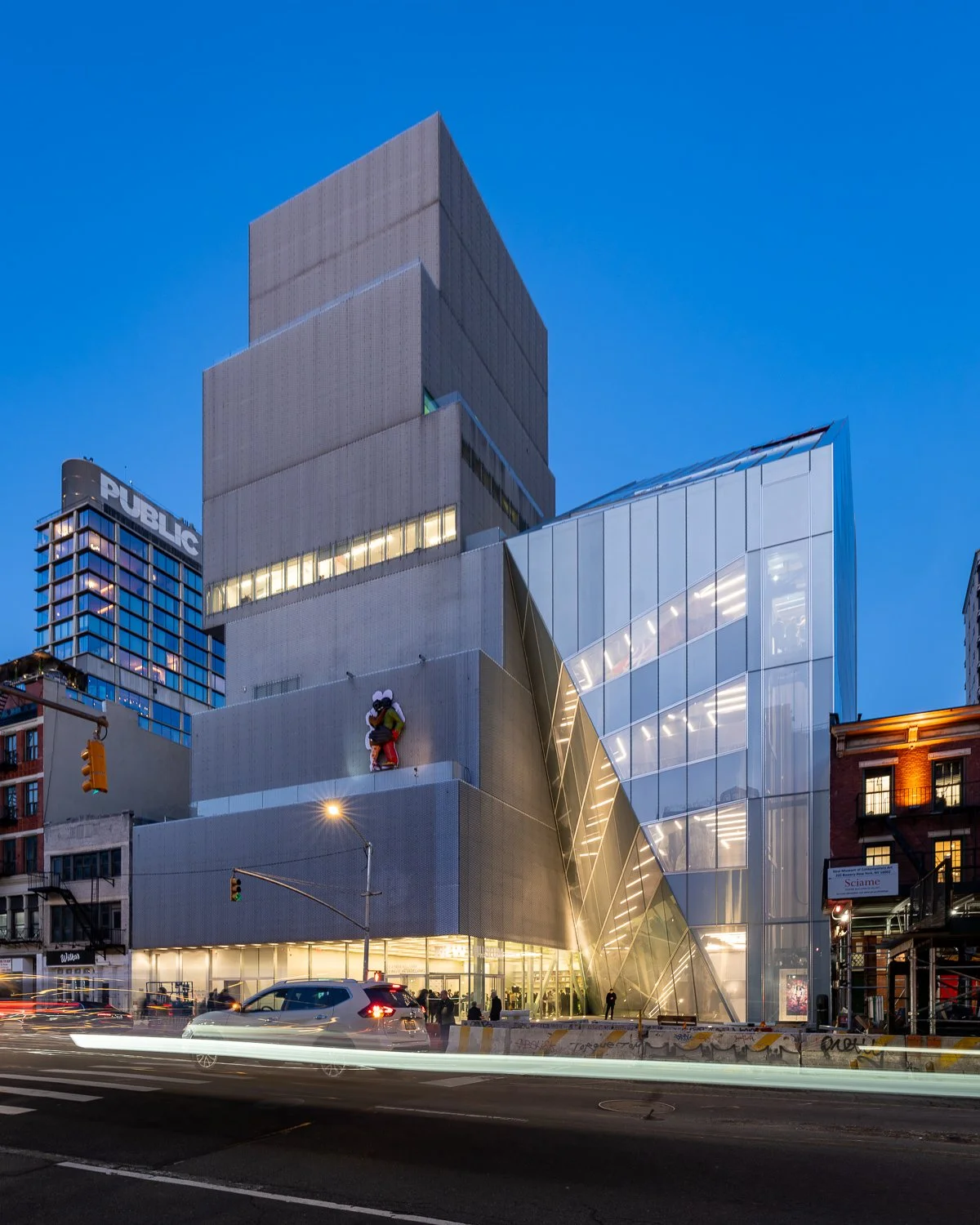
West facade of the flagship building (left) and the extension (right).
Construction has wrapped up at the extension to the New Museum of Contemporary Art on the Lower East Side of Manhattan. Designed by Shohei Shigematsu and Rem Koolhaas of OMA, the seven story structure sits adjacent to the 2007 SANAA flagship building and includes 60,000 square feet of additional program space. The building will include three floors of galleries, additional space for the Museum’s community and education programs, a permanent home for NEW INC, and increased public amenities and improved vertical circulation.
West facade from Prince Street.
West facade from the Bowery.
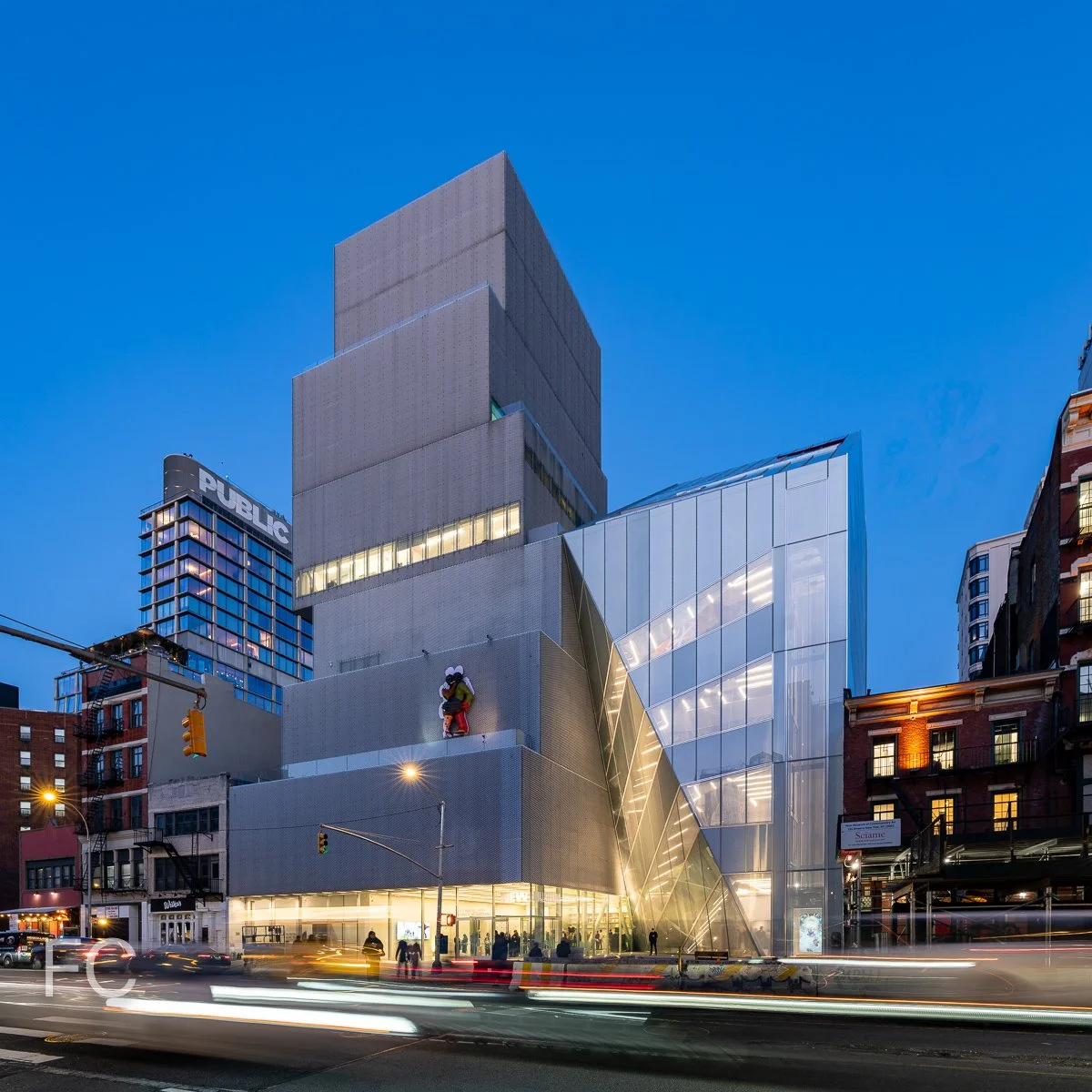
Close-up of the west facade.
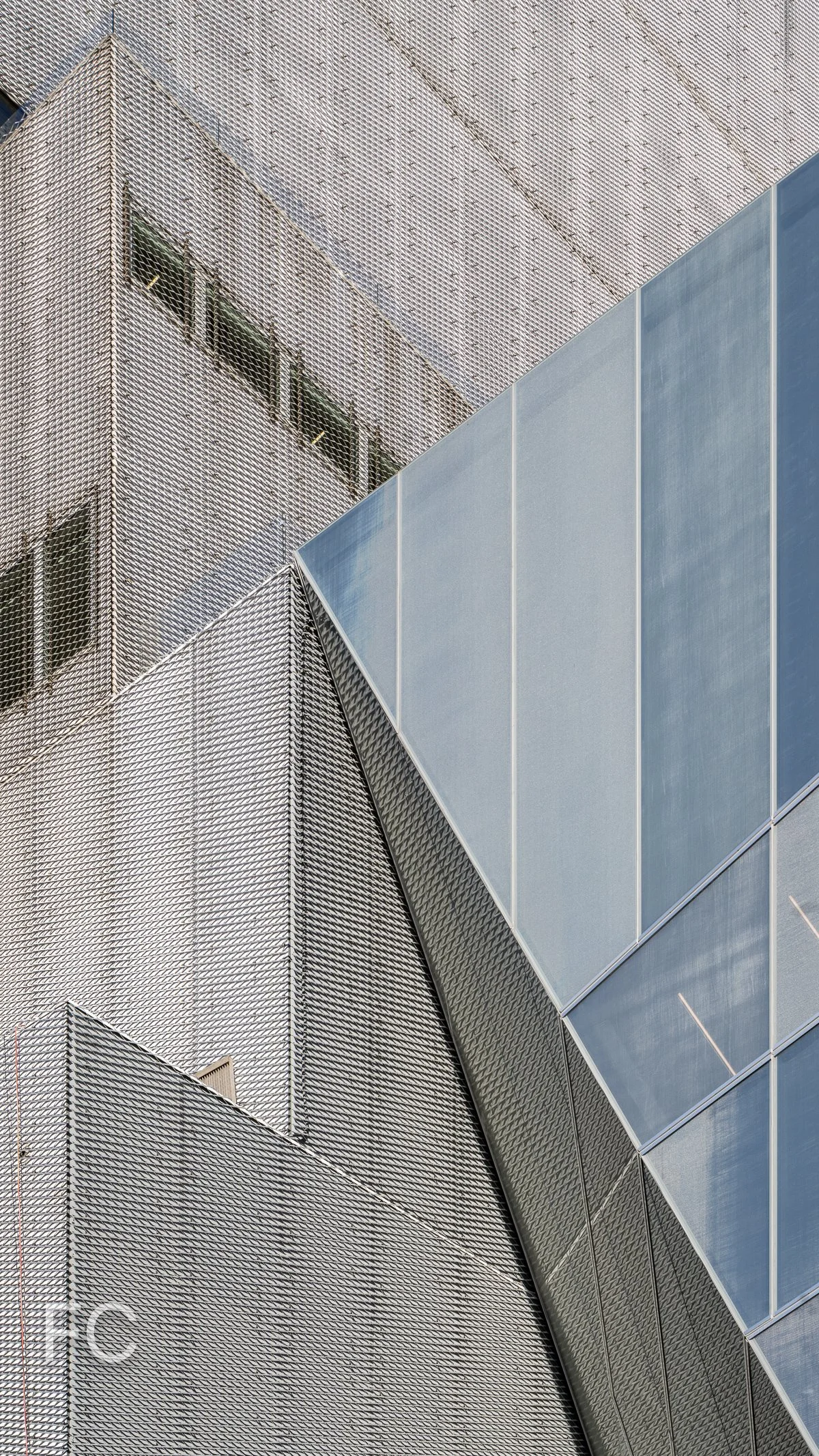
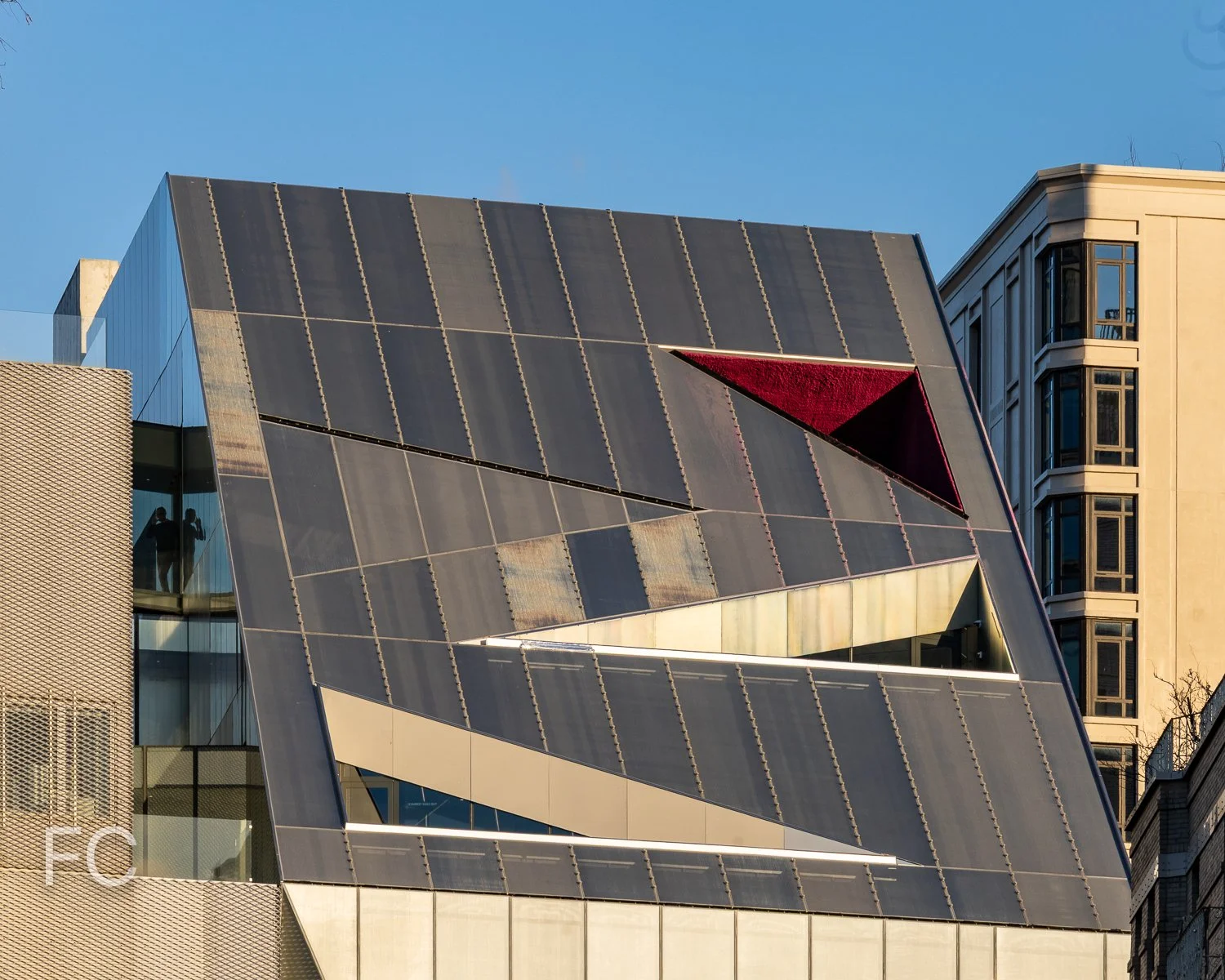
Atrium stair at the ground floor.
Looking up at the atrium stair.
Atrium stair detail.

New Museum Expansion
OMA NY · Bowery · 2026
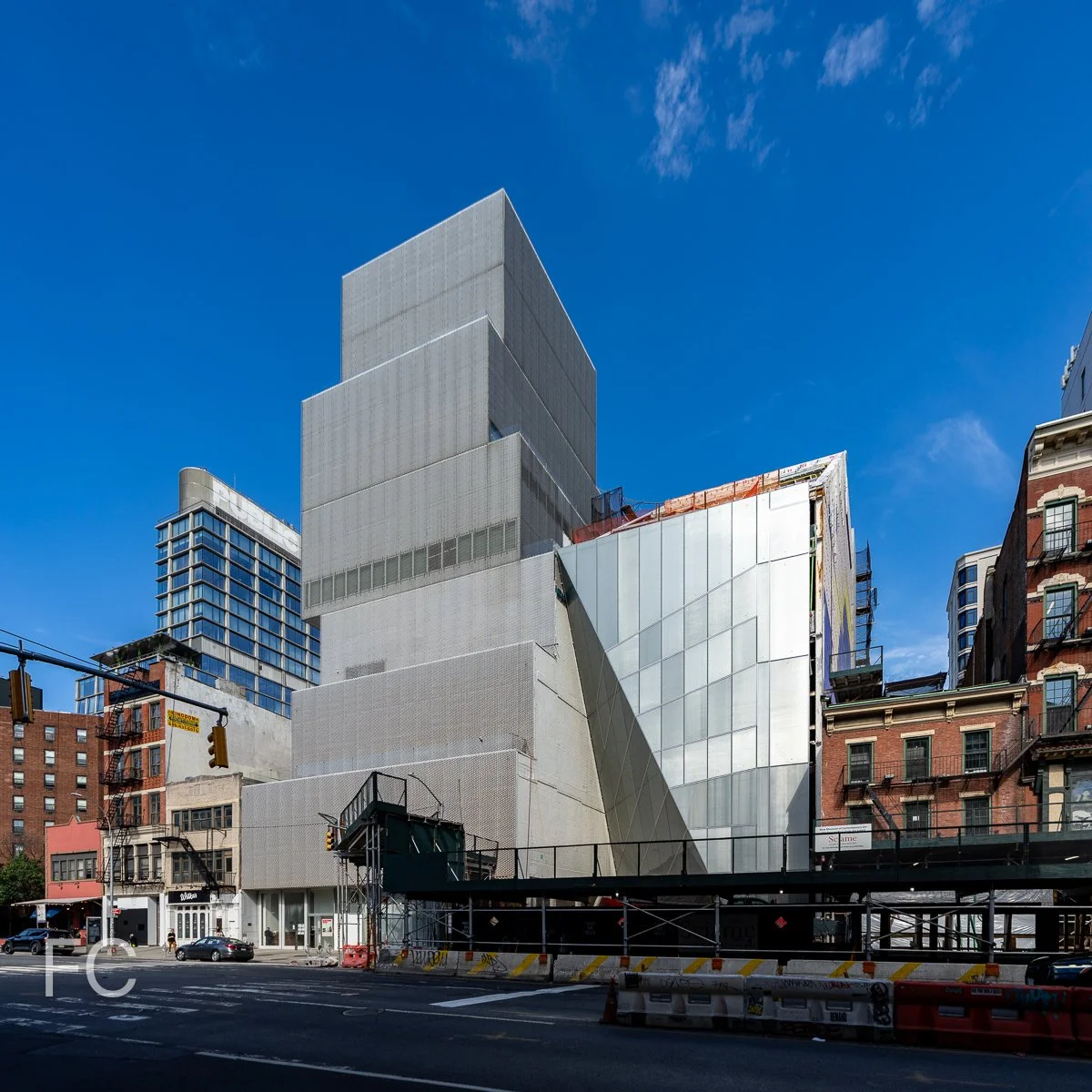
West facade of the flagship building (left) and the extension (right).
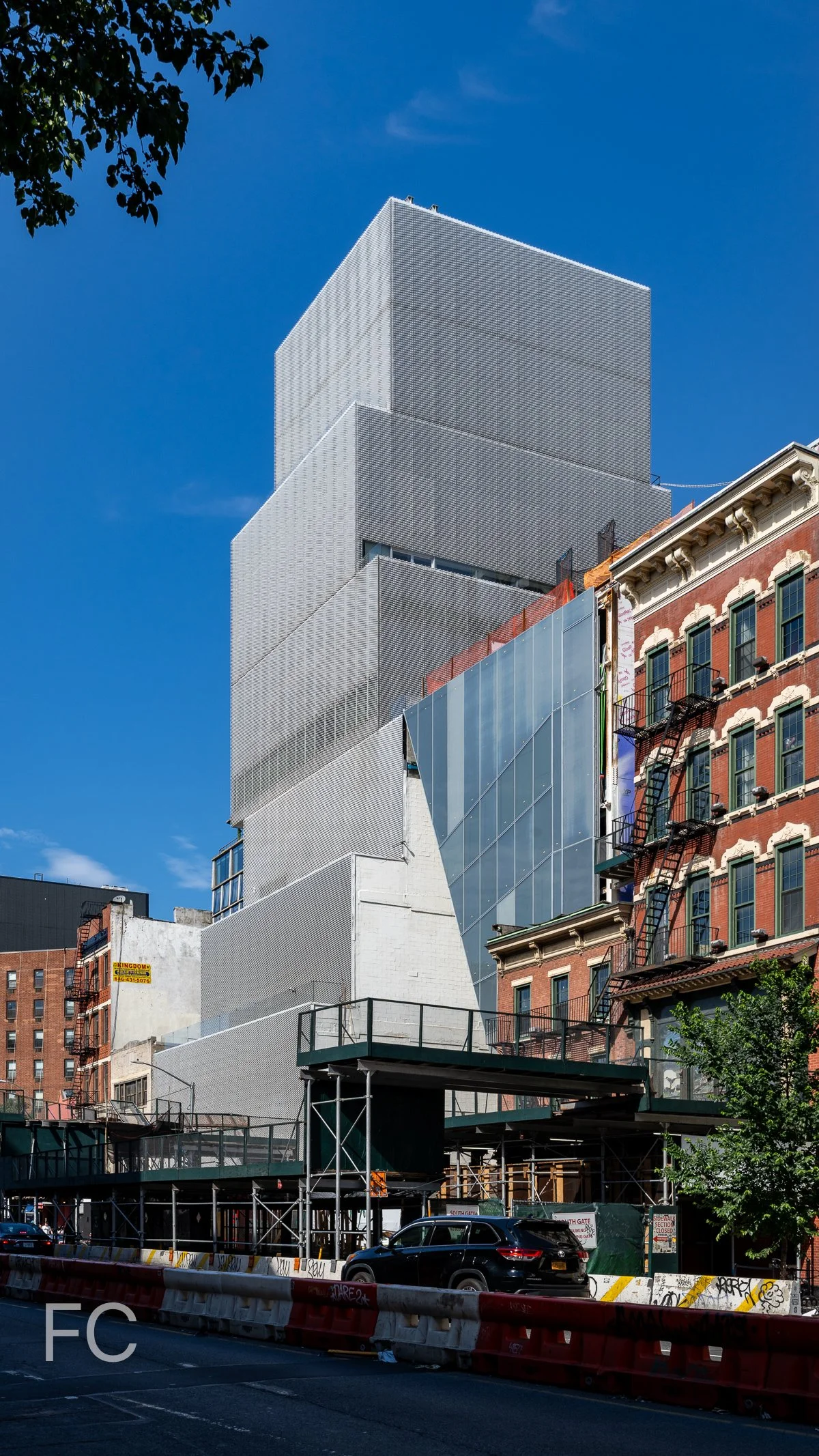
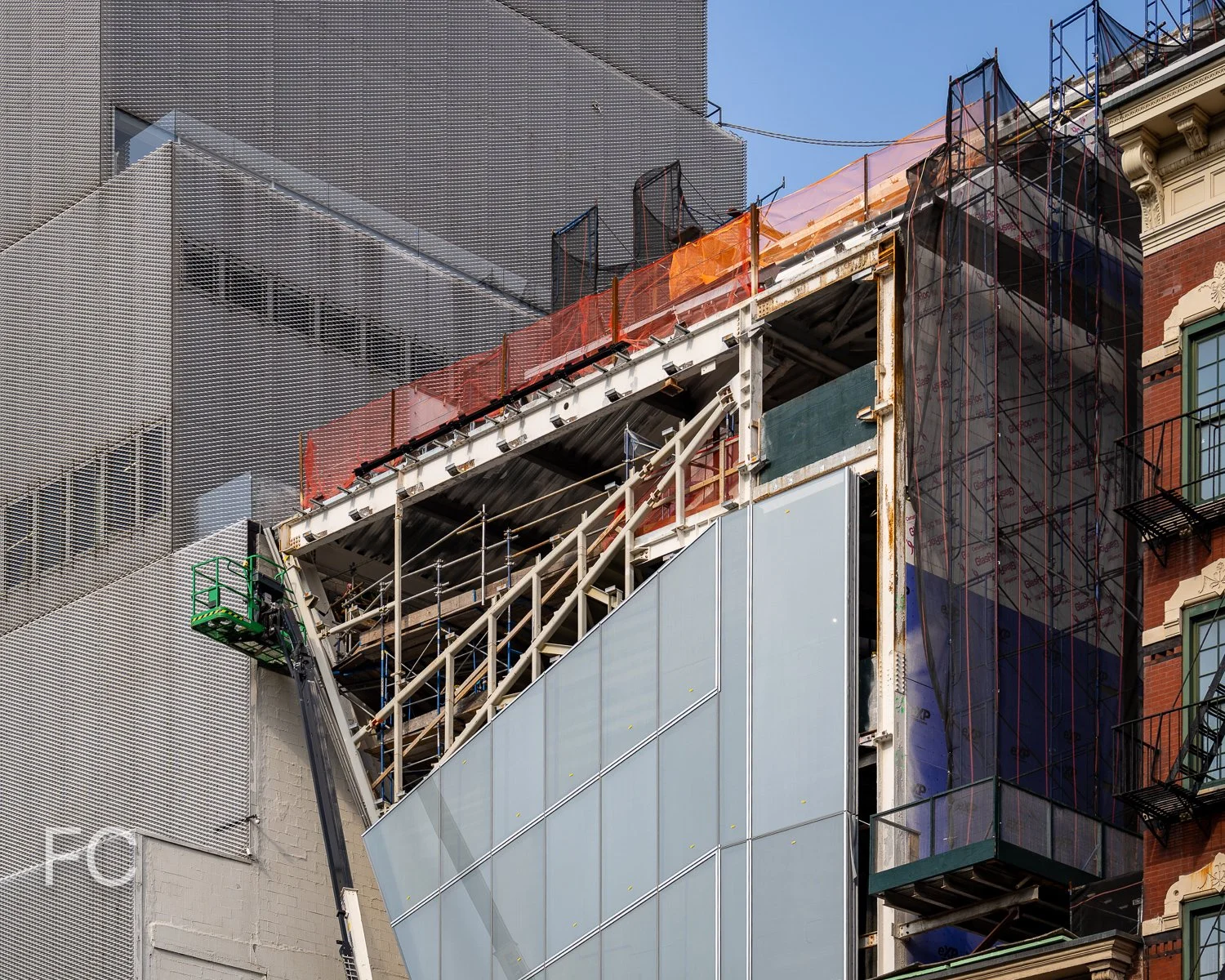
Facade installation is ongoing at the extension to the New Museum of Contemporary Art on the Lower East Side of Manhattan. Designed by Shohei Shigematsu and Rem Koolhaas of OMA, the seven story structure will sit adjacent to the 2007 SANAA flagship building and include 60,000 square feet of additional program space. The building will include three floors of galleries, additional space for the Museum’s community and education programs, a permanent home for NEW INC, and increased public amenities and improved vertical circulation.
West facade from Prince Street.
West facade from the Bowery.
Southwest corner of the flagship building (left) and the extension (right).

Close-up of the west facade.



Architects: OMA NY (Design Architect), Cooper Robertson (Executive Architect); Structural Engineer: Arup; Mechanical Engineer: Arup; Facade: Front; Client: New Museum of Contemporary Art; Program: Museum; Location: Lower East Side, New York, NY; Completion: 2026.
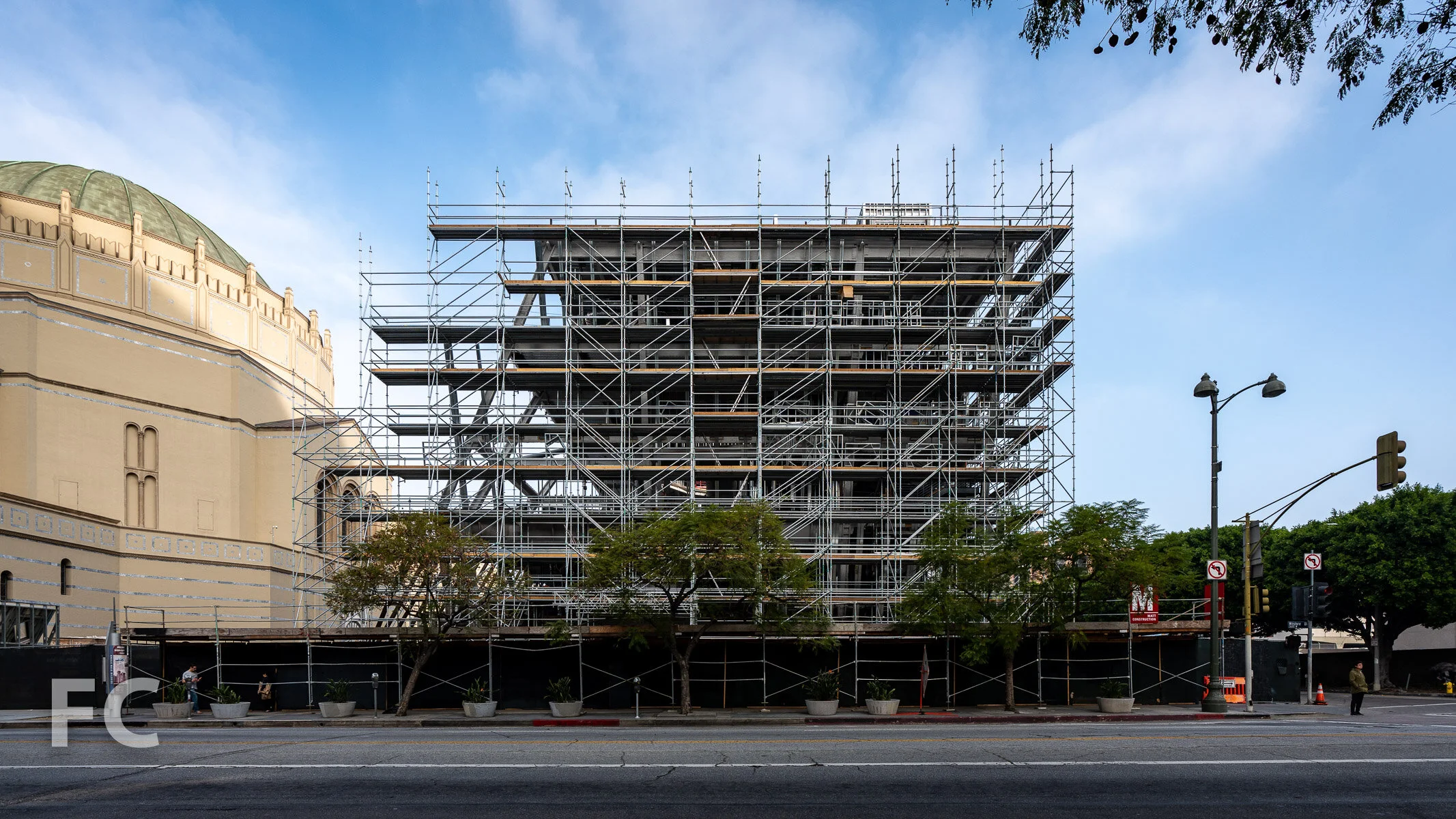

New Museum Expansion
OMA NY · Bowery · 2026
West facade of the flagship building (left) and the extension (right).
Facade installation is underway at the extension to the New Museum of Contemporary Art on the Lower East Side of Manhattan. Designed by Shohei Shigematsu and Rem Koolhaas of OMA, the seven story structure will sit adjacent to the 2007 SANAA flagship building and include 60,000 square feet of additional program space. The building will include three floors of galleries, additional space for the Museum’s community and education programs, a permanent home for NEW INC, and increased public amenities and improved vertical circulation.
West facade from Prince Street.
Southwest corner of the flagship building (left) and the extension (right).
Close-up of the west facade.
Architects: OMA NY (Design Architect), Cooper Robertson (Executive Architect); Structural Engineer: Arup; Mechanical Engineer: Arup; Facade: Front; Client: New Museum of Contemporary Art; Program: Museum; Location: Lower East Side, New York, NY; Completion: 2026.
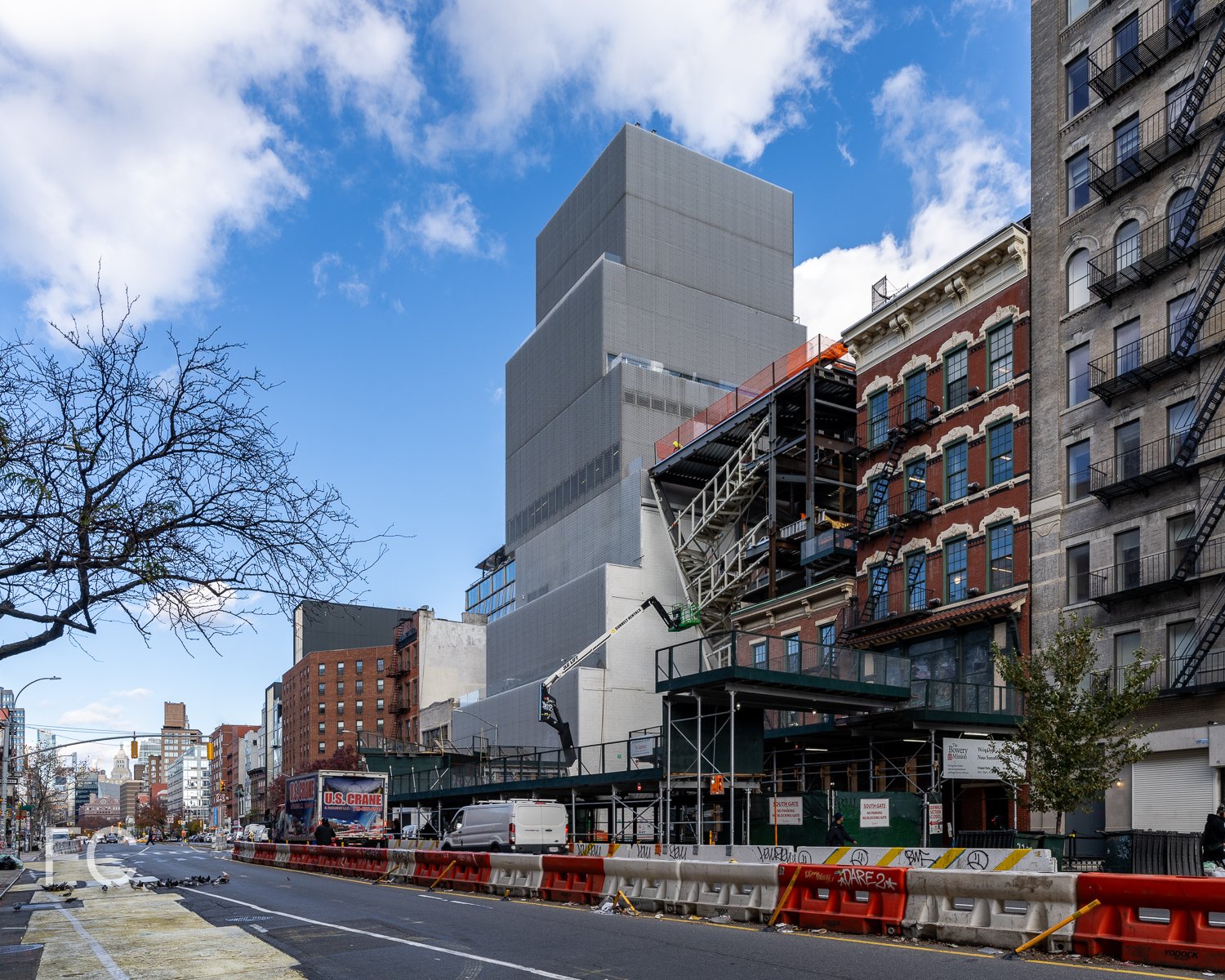
New Museum Expansion
OMA NY · Bowery · 2026
West facade of the flagship building (left) and the extension (right).
Superstructure has topped out at the extension to the New Museum of Contemporary Art on the Lower East Side of Manhattan. Designed by Shohei Shigematsu and Rem Koolhaas of OMA, the seven story structure will sit adjacent to the 2007 SANAA flagship building and include 60,000 square feet of additional program space. The building will include three floors of galleries, additional space for the Museum’s community and education programs, a permanent home for NEW INC, and increased public amenities and improved vertical circulation.
West facade from Prince Street.

Southwest corner of the flagship building (left) and the extension (right).
Close-up of the west facade.
Southwest corner of the flagship building (left) and the extension (right).
Close-up of the west facade.
Architects: OMA NY (Design Architect), Cooper Robertson (Executive Architect); Structural Engineer: Arup; Mechanical Engineer: Arup; Facade: Front; Client: New Museum of Contemporary Art; Program: Museum; Location: Lower East Side, New York, NY; Completion: 2026.
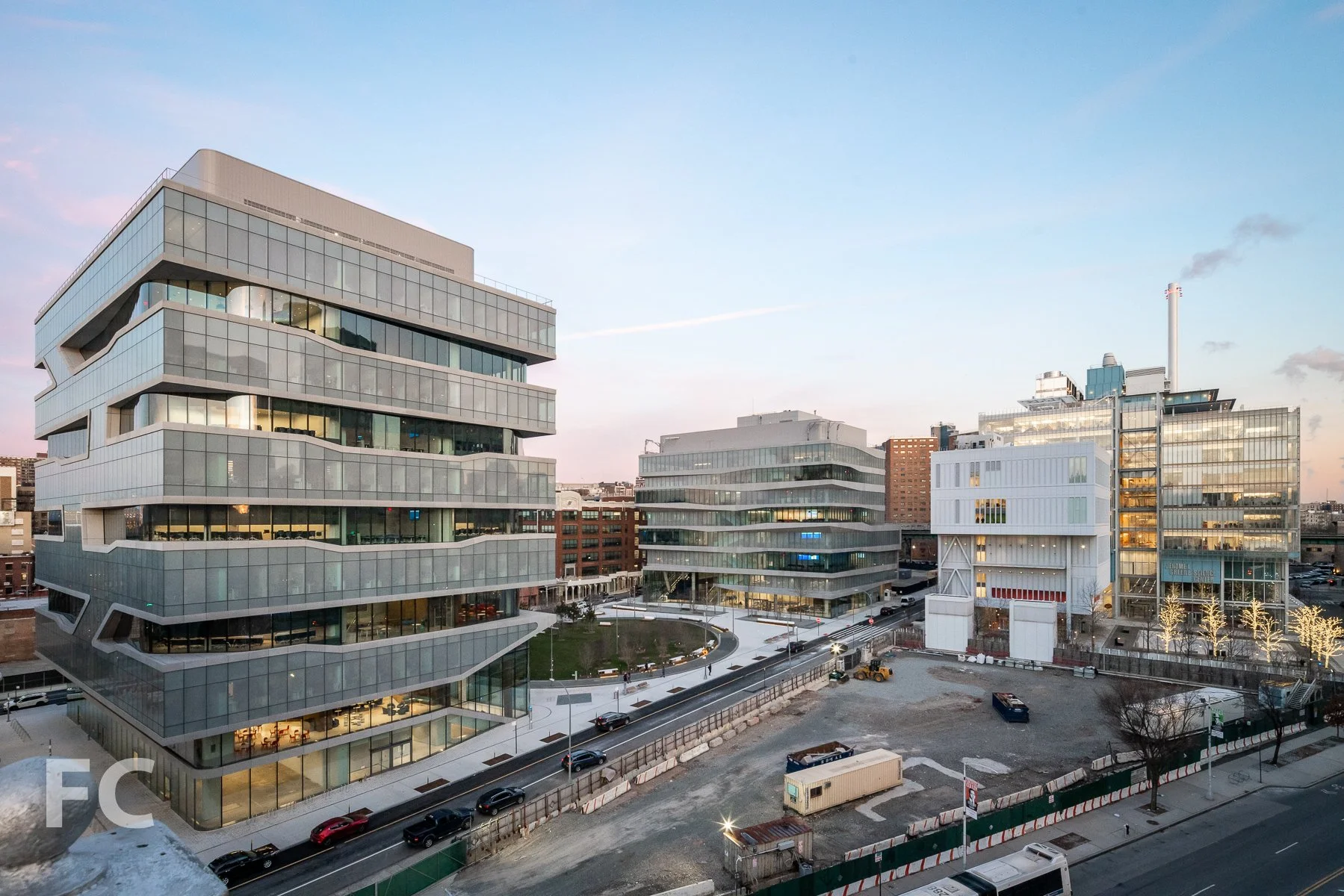
Columbia University Business School
Diller Scofidio + Renfro / FXCollaborative · Morningside Heights · 2022
Southwest corner of Kravis Hall (left) and Geffen Hall (right).
A new home for the Columbia Business School has opened at the university’s Manhattanville campus in West Harlem. The Business School’s two new structures, the 8-story David Geffen Hall and 11-story Henry R. Kravis Hall, are located on a site to the north of the first phase buildings by Renzo Piano. Totaling approximately 492,00 square feet, the two new buildings double the school’s current square footage. Design on the two buildings is led by Diller Scofidio + Renfro with FXCollaborative and associate architects Aaris Design Architects.
Looking northeast towards the Manhattanville campus, including the Business School (left), the Lenfest Center for the Arts (right), and the Jerome L. Greene Science Center (far right).
James Corner Field Operations have designed a 40,000 square foot central open space which the two buildings bookend.

Northwest corner of Geffen Hall (center) and Kravis Hall (right).
Henry R. Kravis Hall
East facade of Kravis Hall at sunset.
Kravis Hall features two generous circulation stairs, located at the east and west facades, which link together alternating floors of faculty offices and teaching spaces. Known as The Network, these stairs link lounges, seminar spaces, open-breakout, tiered seating, carrels and informal hang-out spaces at the east facade. A faculty version of The Network is located along the west facade and offers views of the Hudson River. Both circulation stairs also act as vertical structure elements.
The exterior wall, fabricated by Intercom Facades and AZA US (Former AZA-INTERCOM Corporation) with W&W Glass, is designed to express the interweaving of student, faculty, and administrative program. Transparent glass encloses student floors, the Network circulation spaces, and ground floor program. Faculty floors are clad in GFRC (glass fiber reinforced concrete) slab covers and fritted glass that contrasts with the more transparent student spaces. The building’s structure uses “skip truss” steel framing on alternating faculty floors to achieve nearly column-free classrooms.
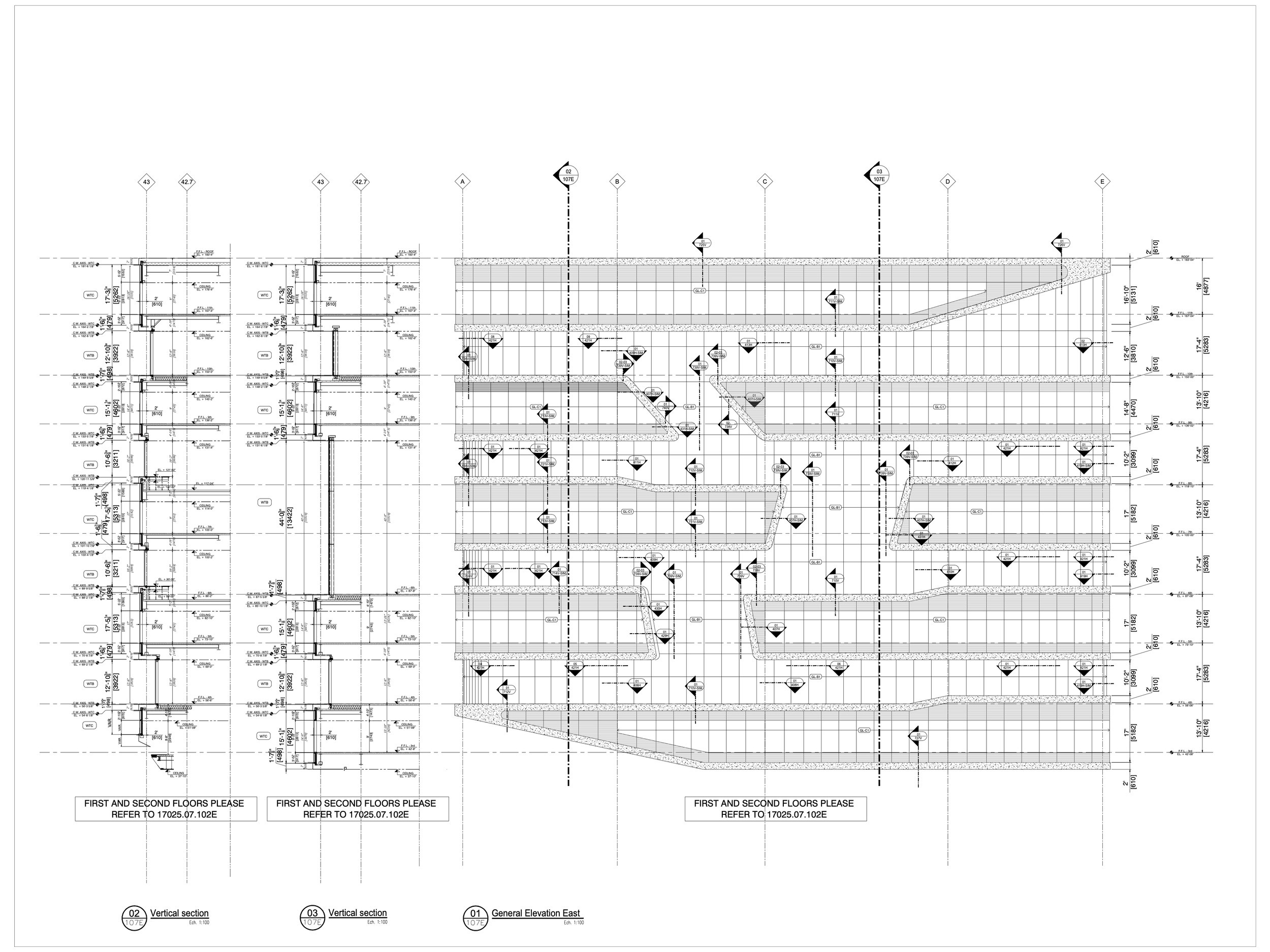
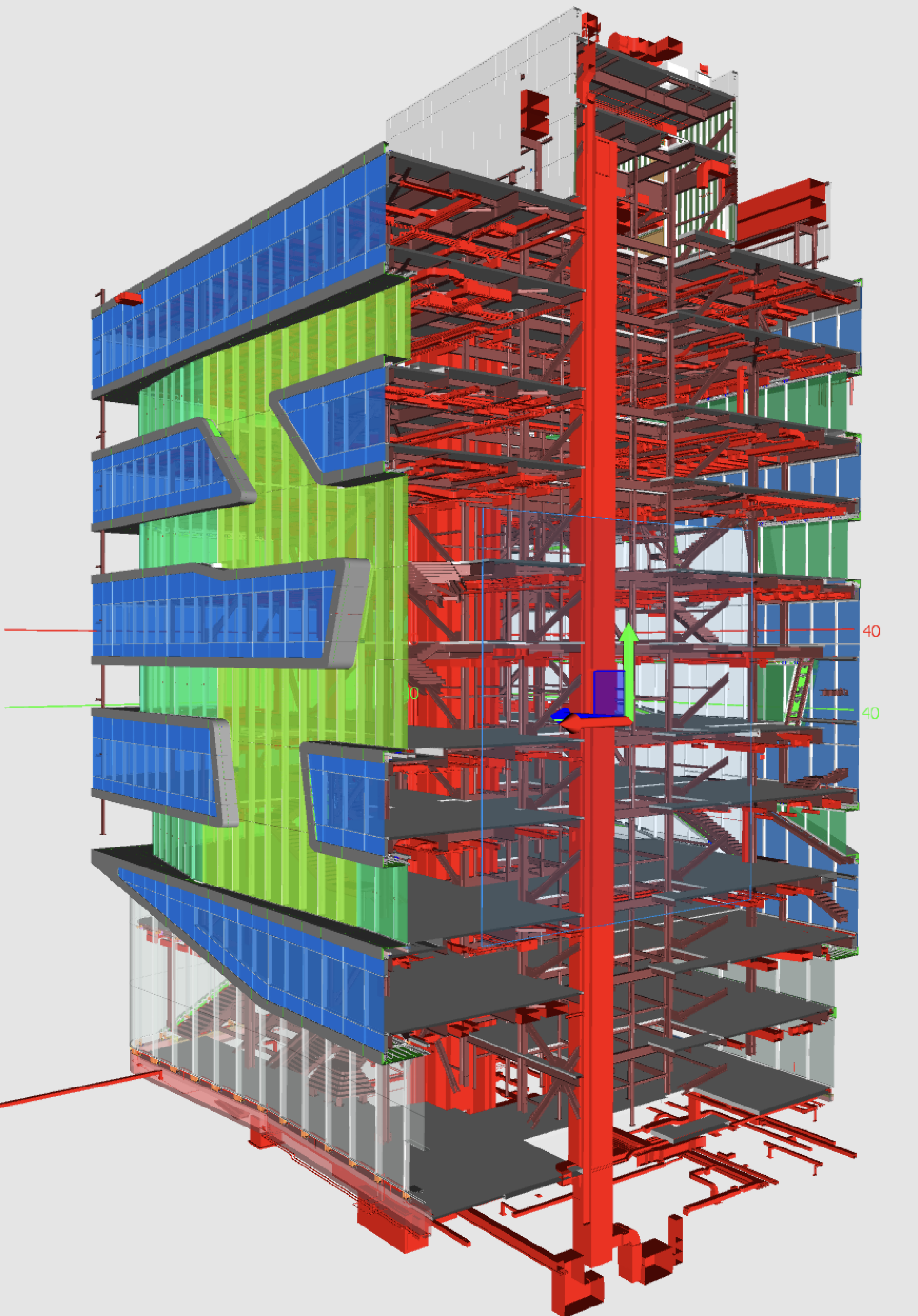
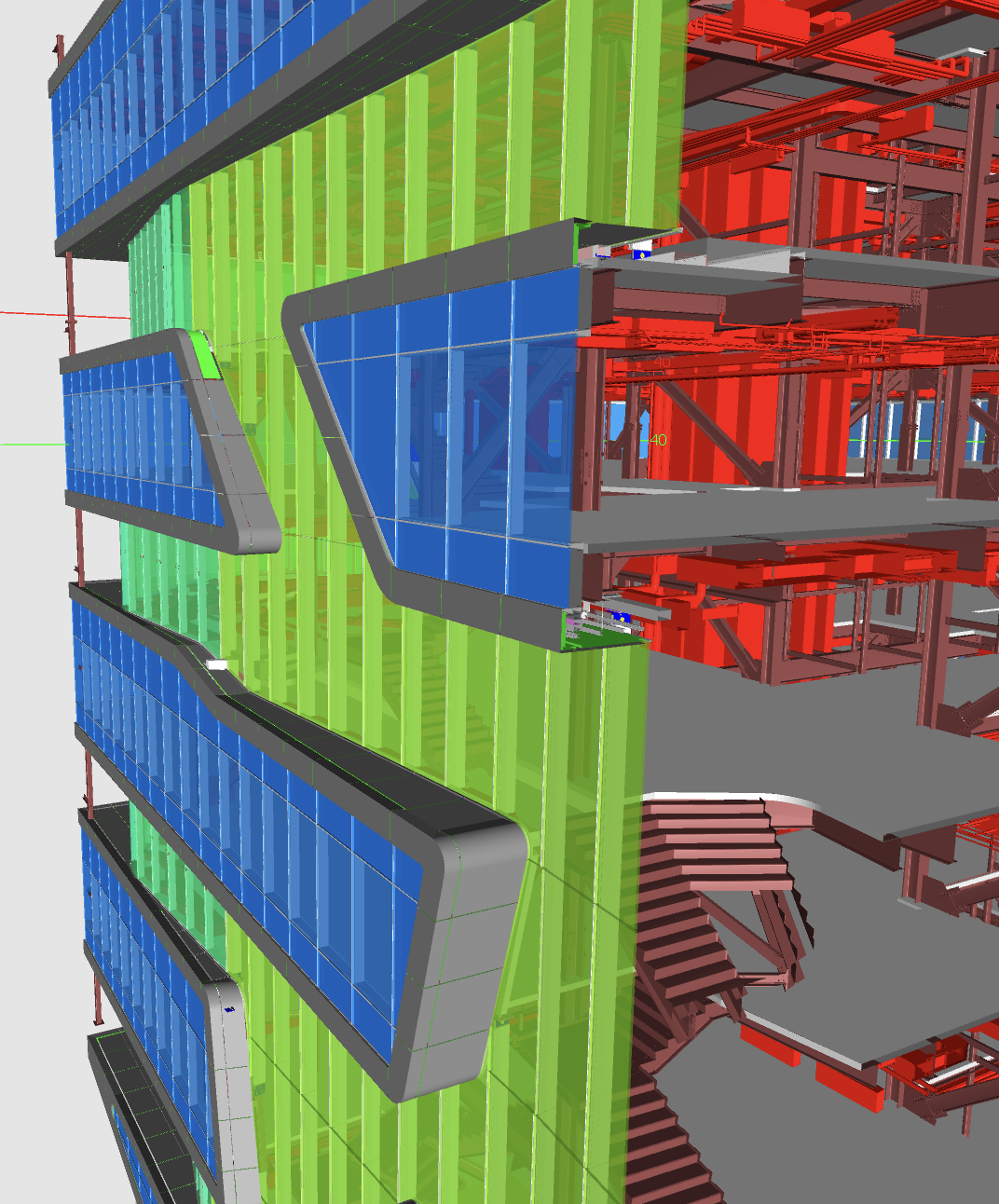
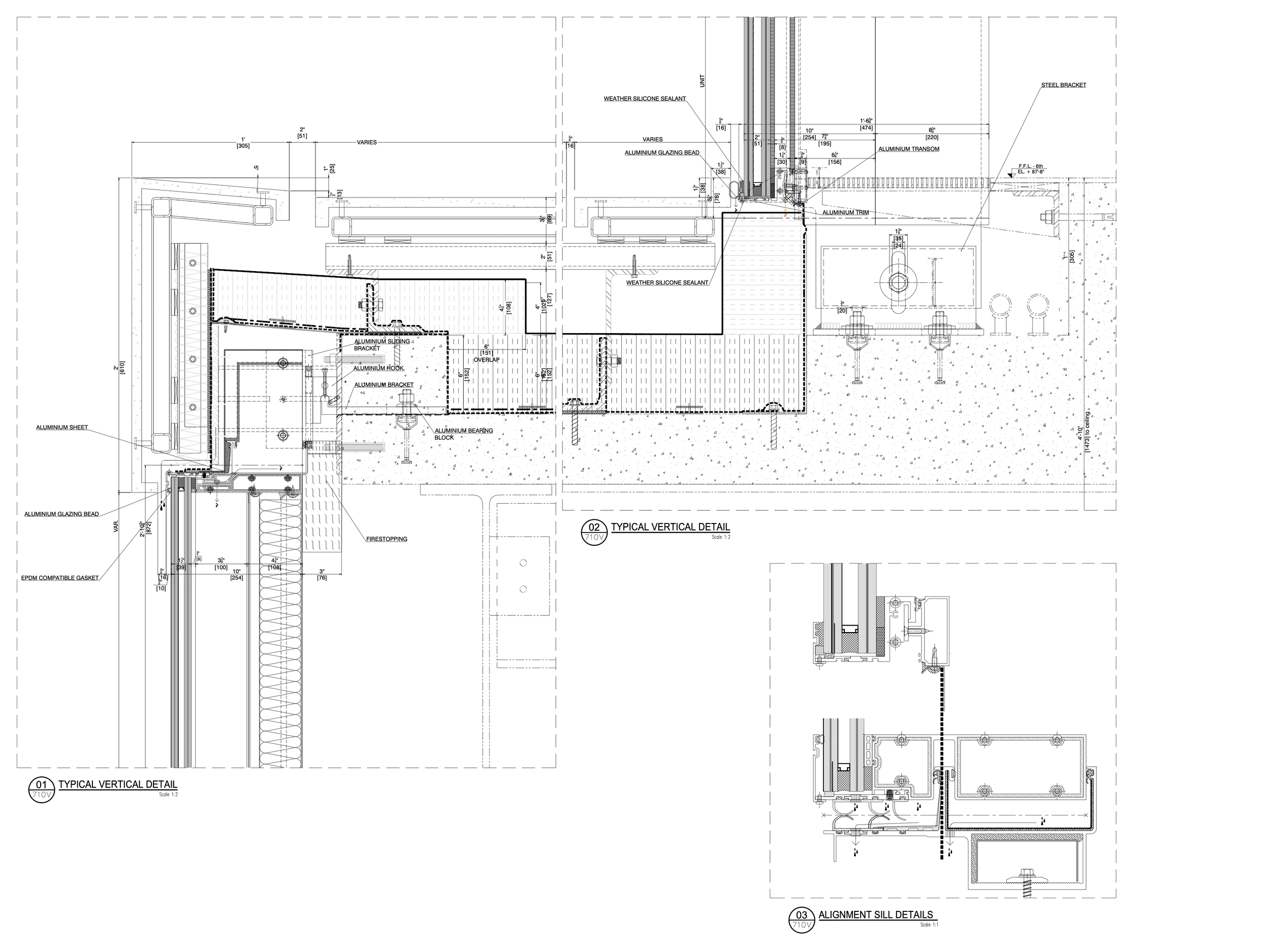
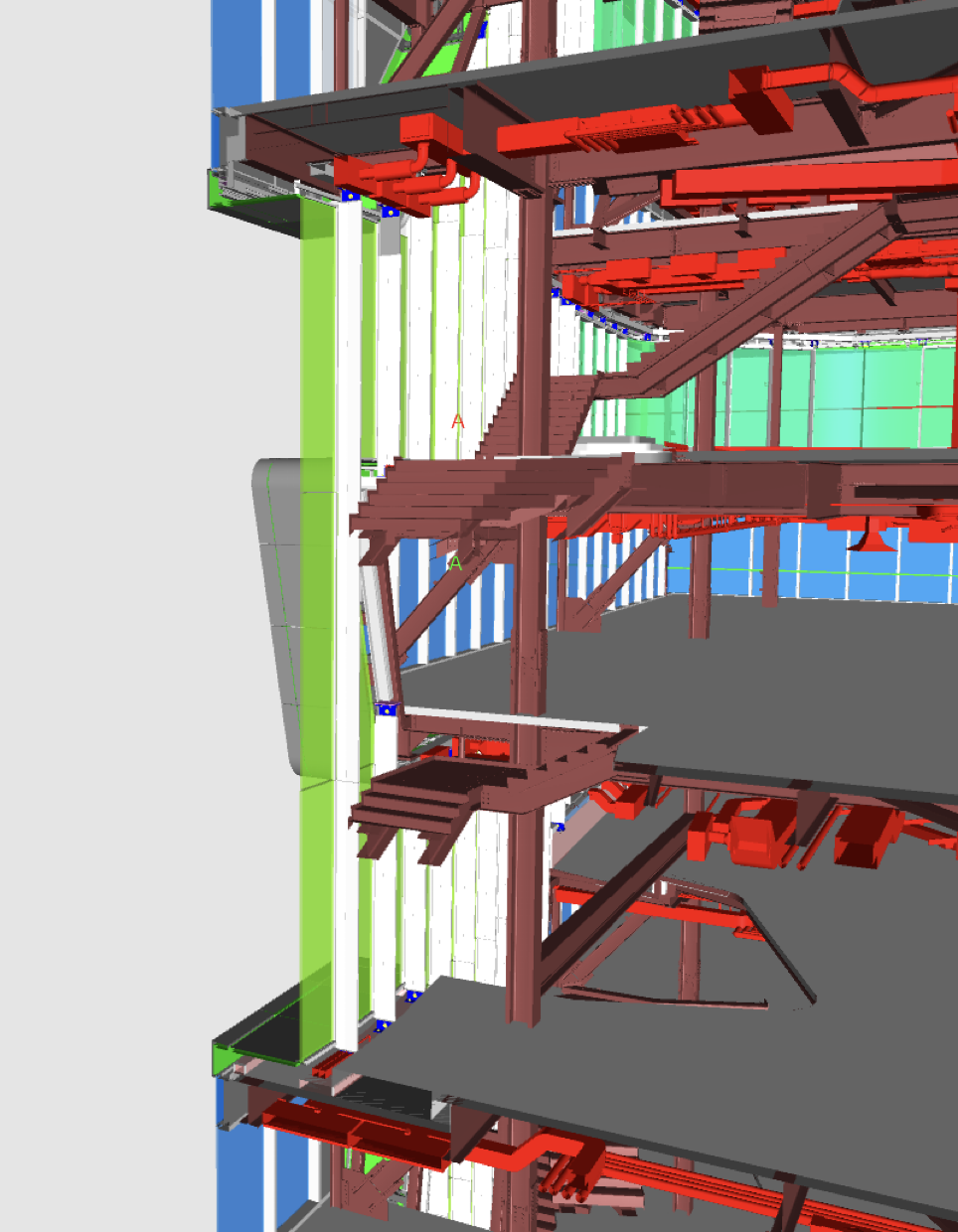
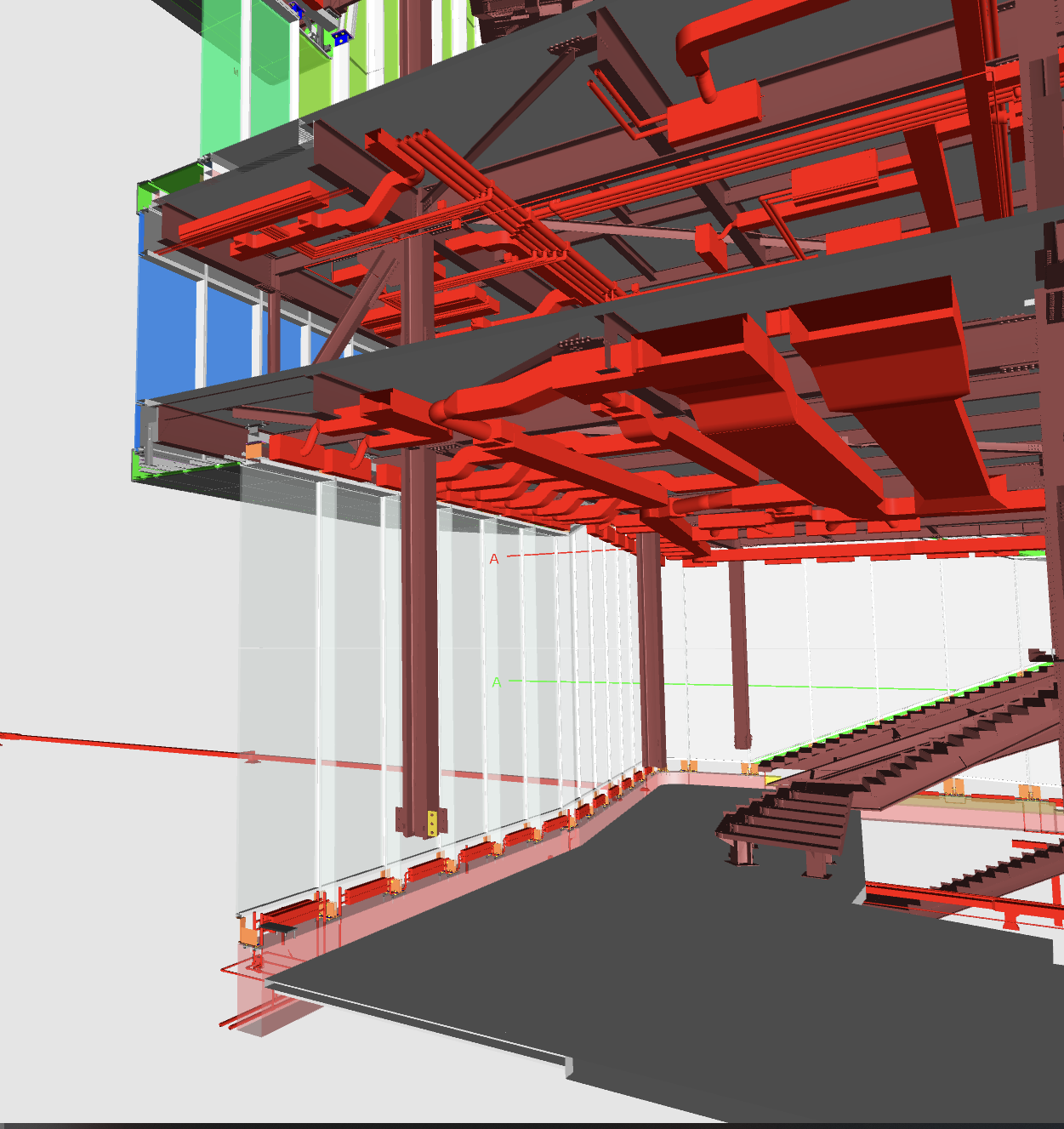
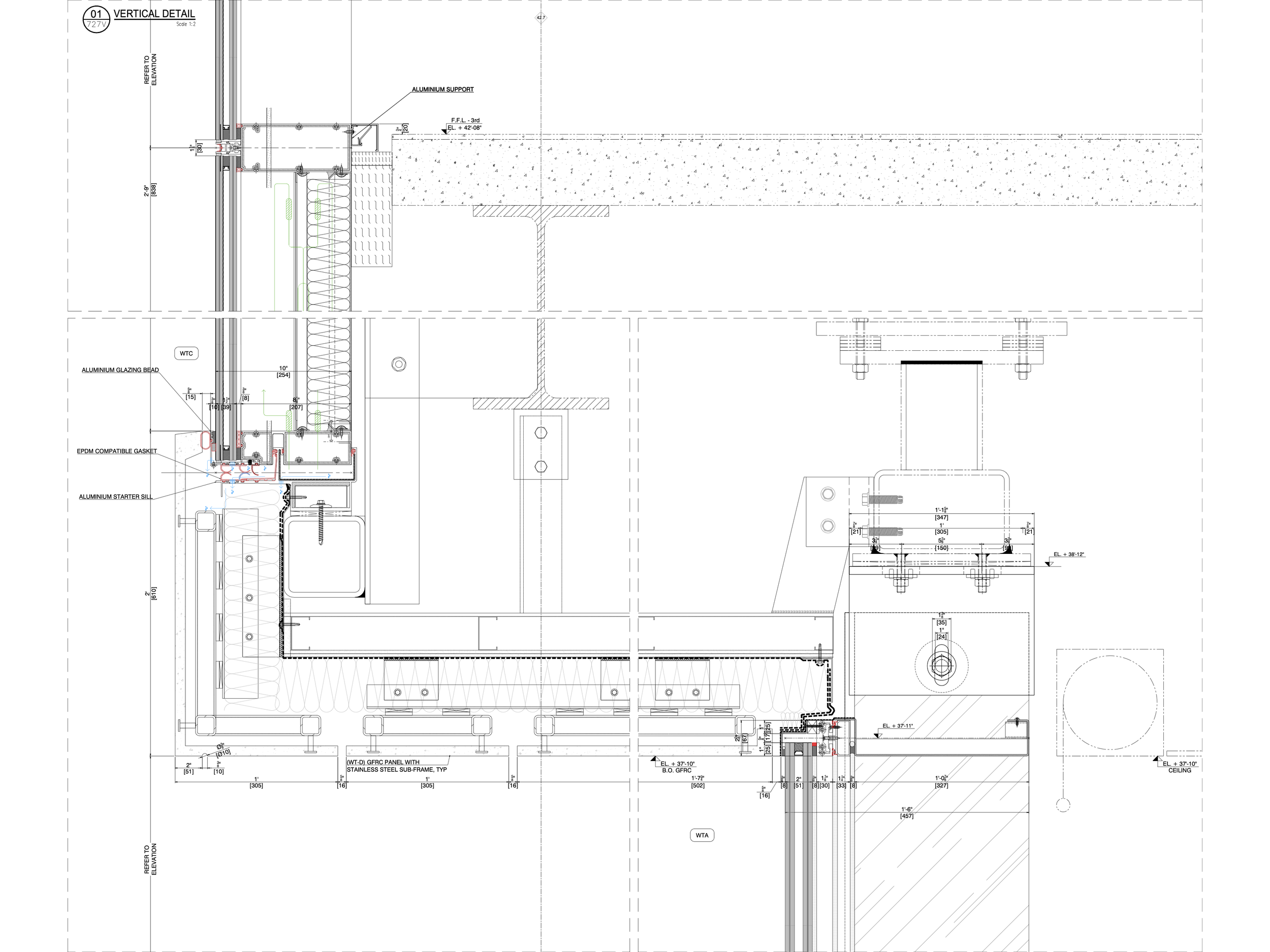
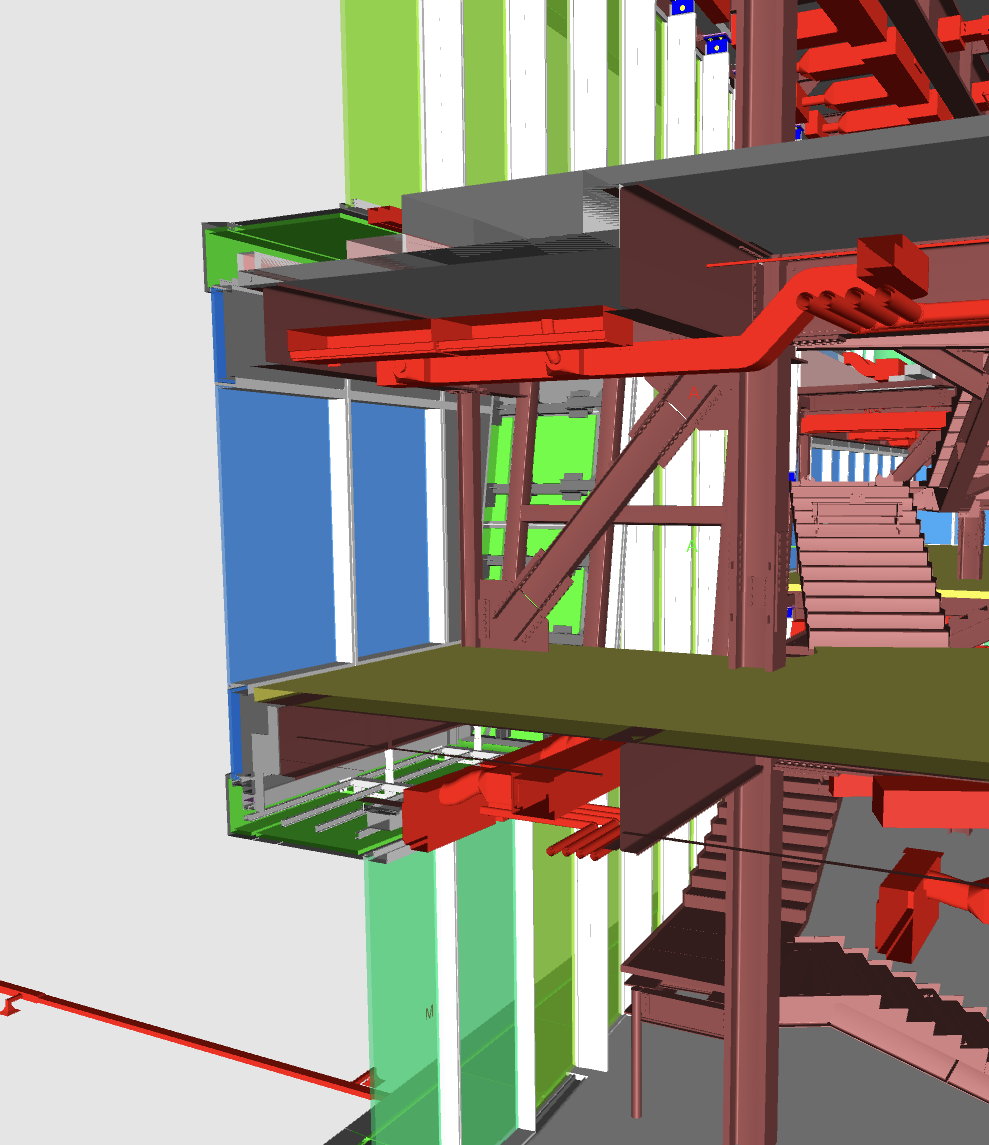

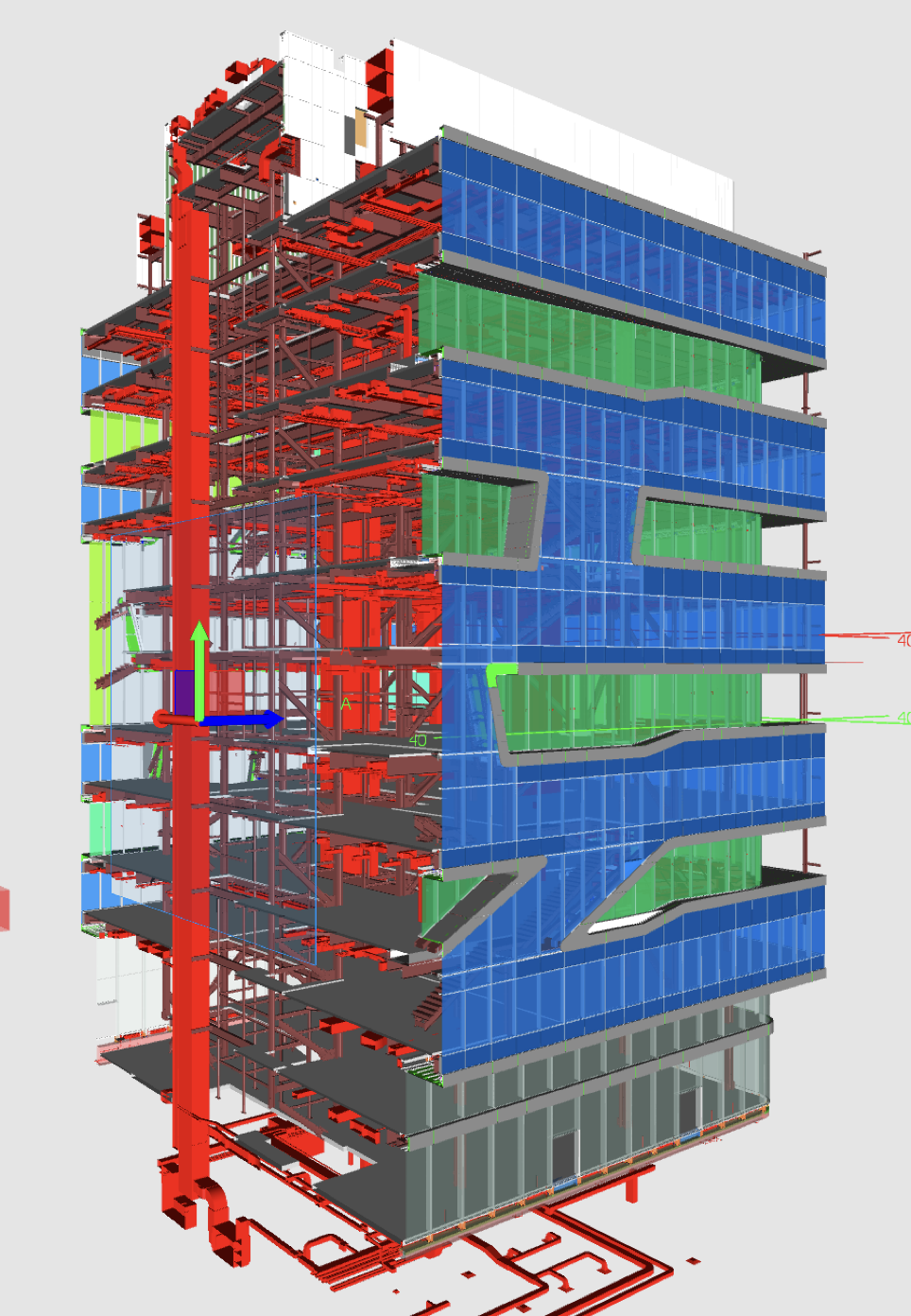
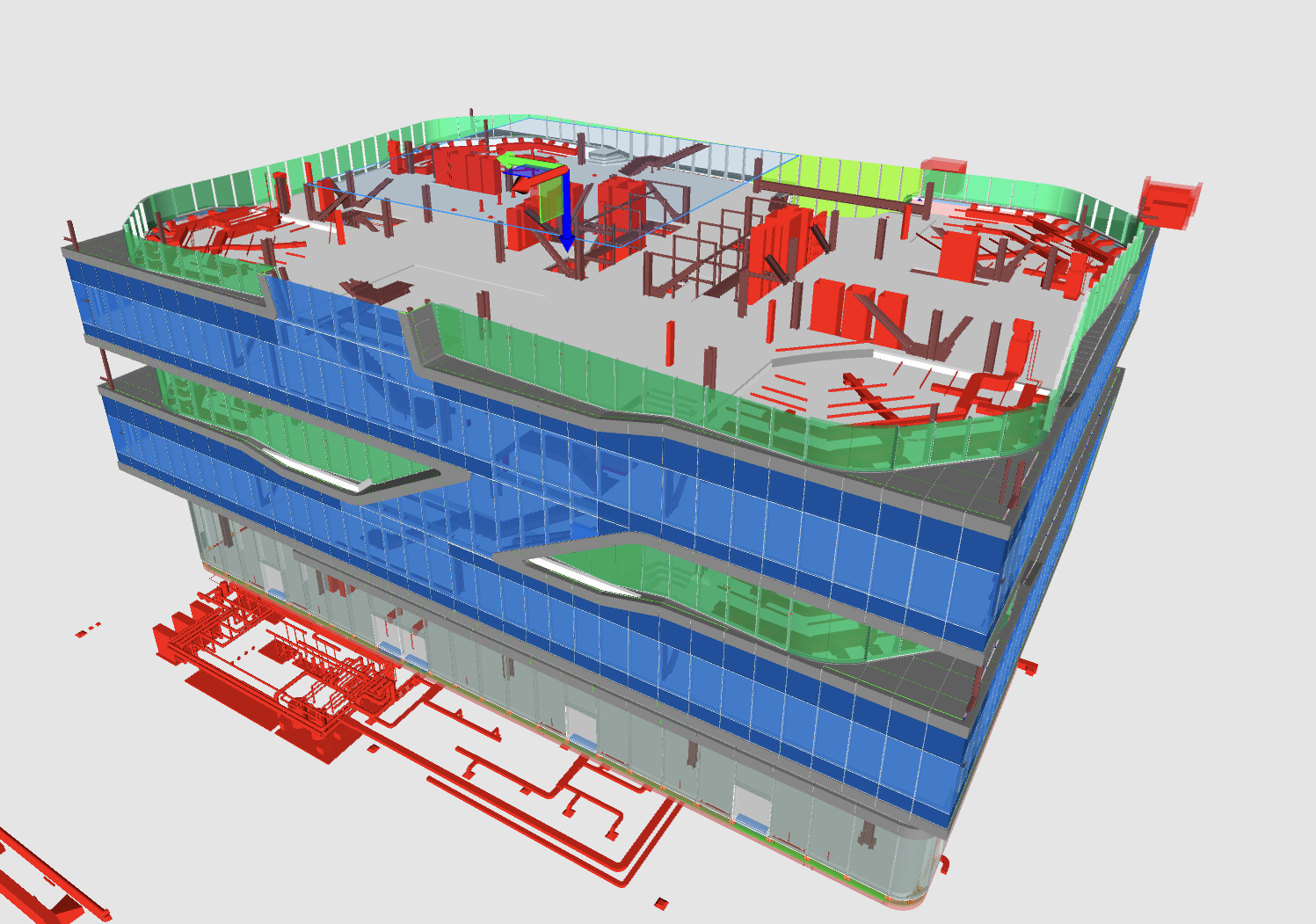
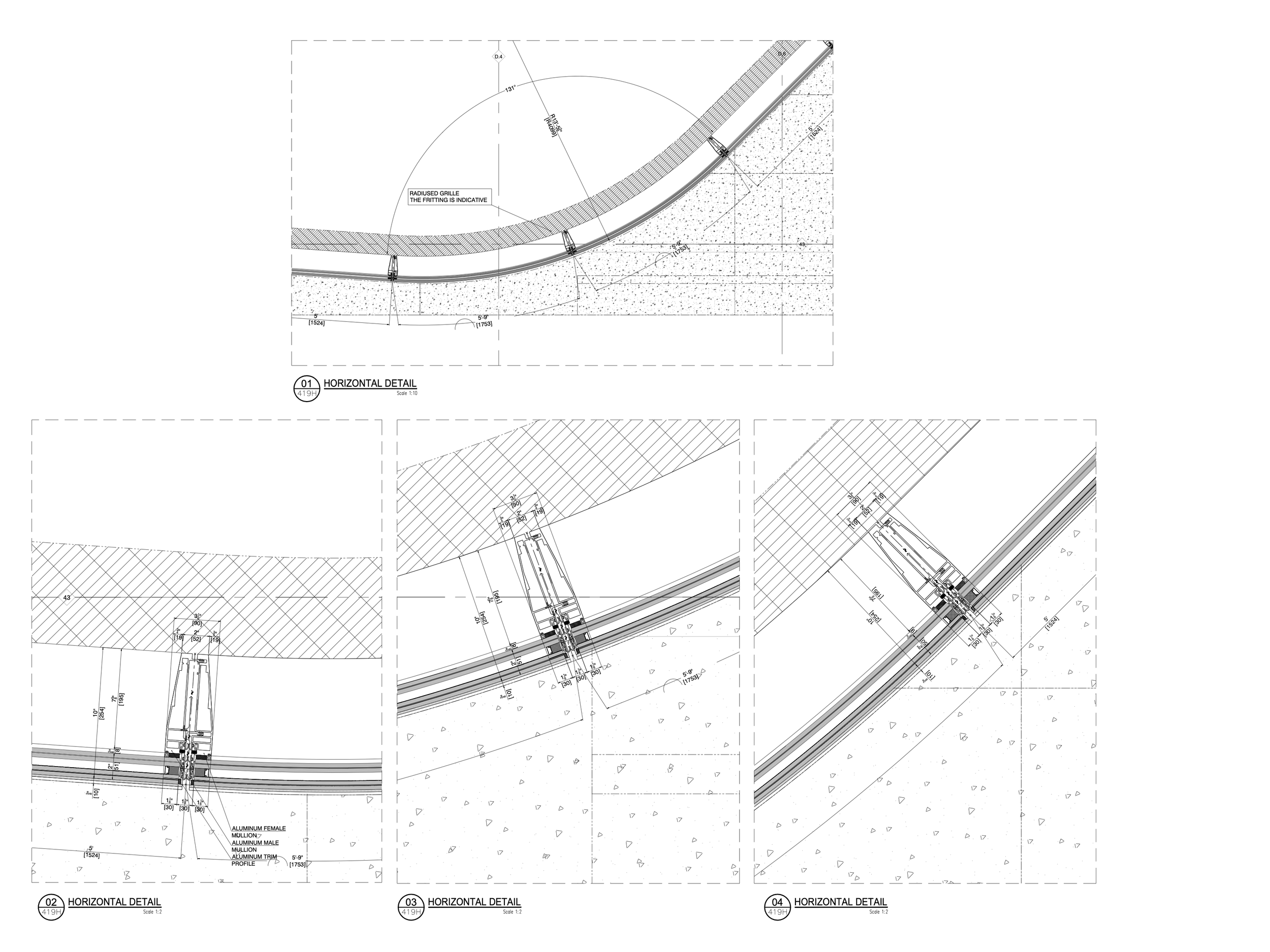
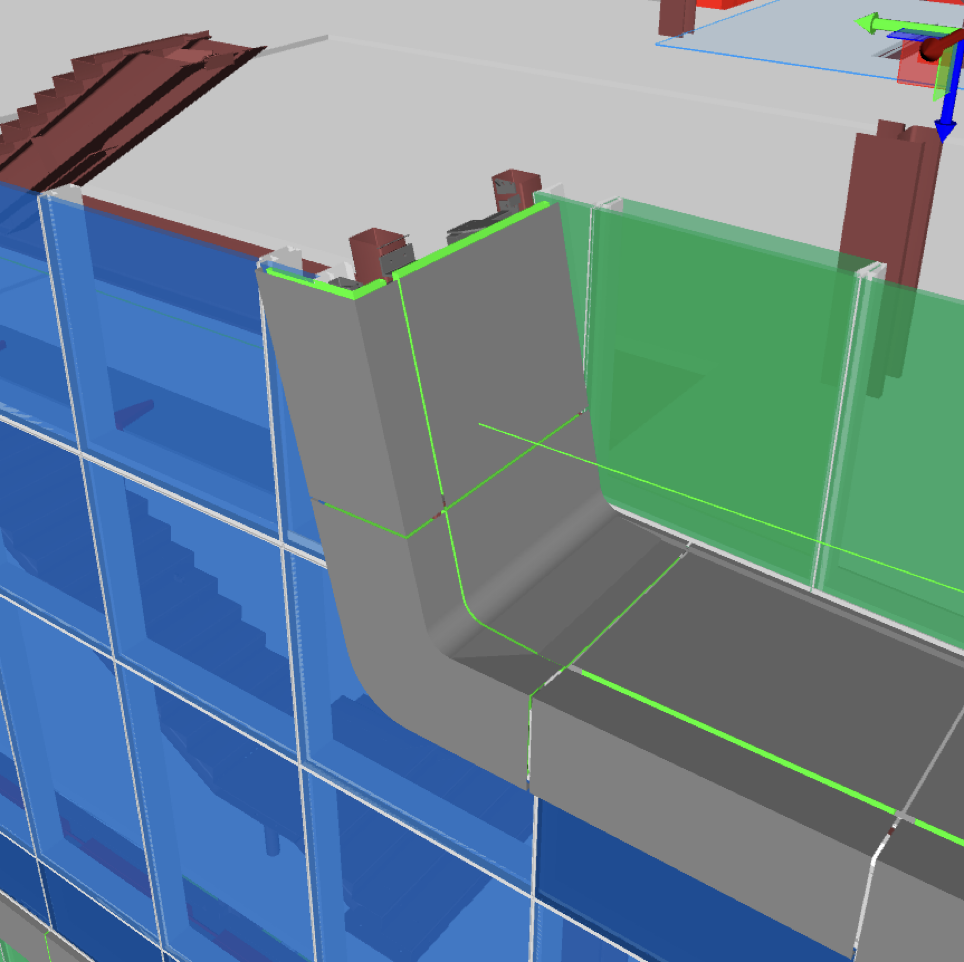
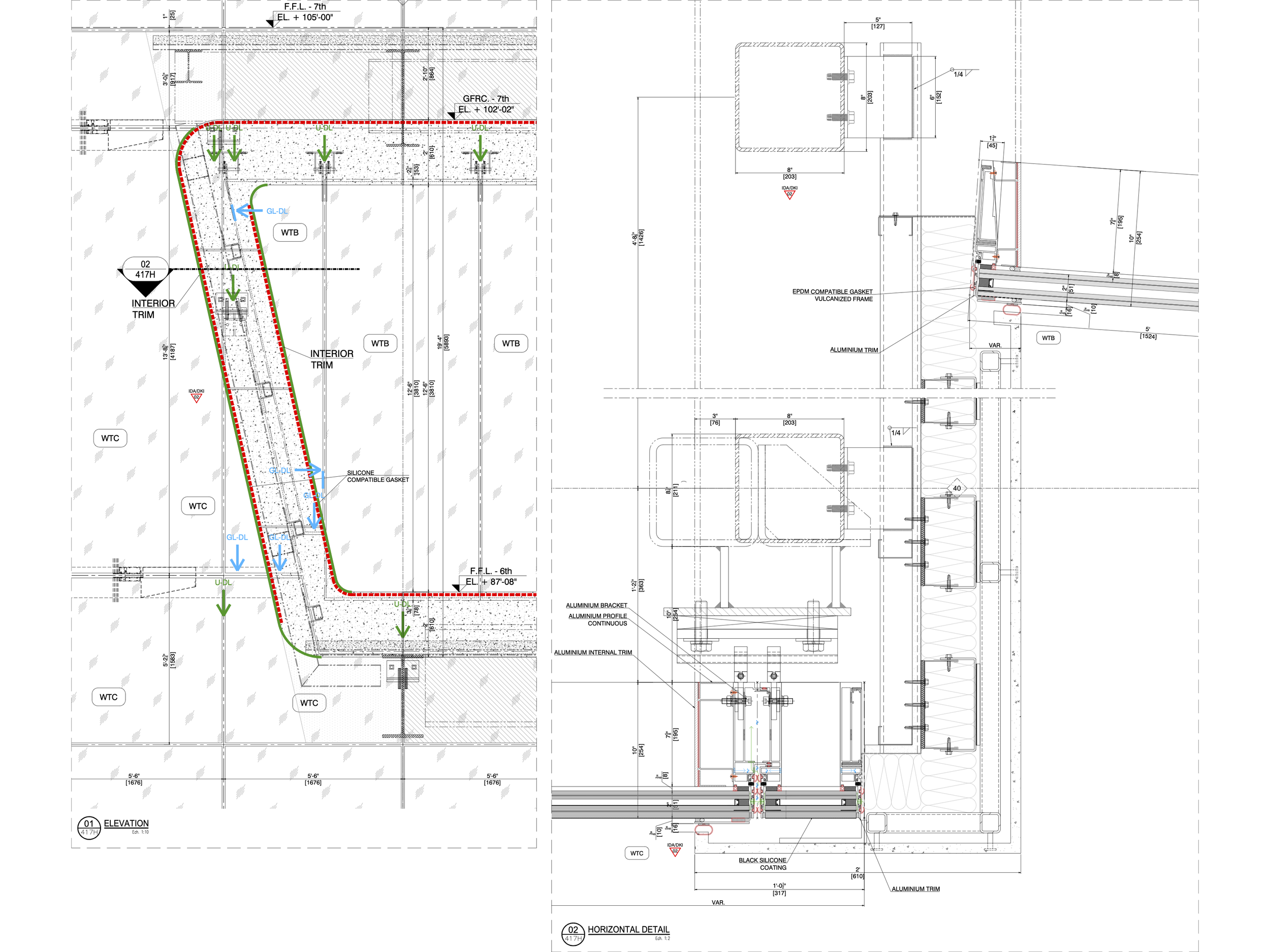
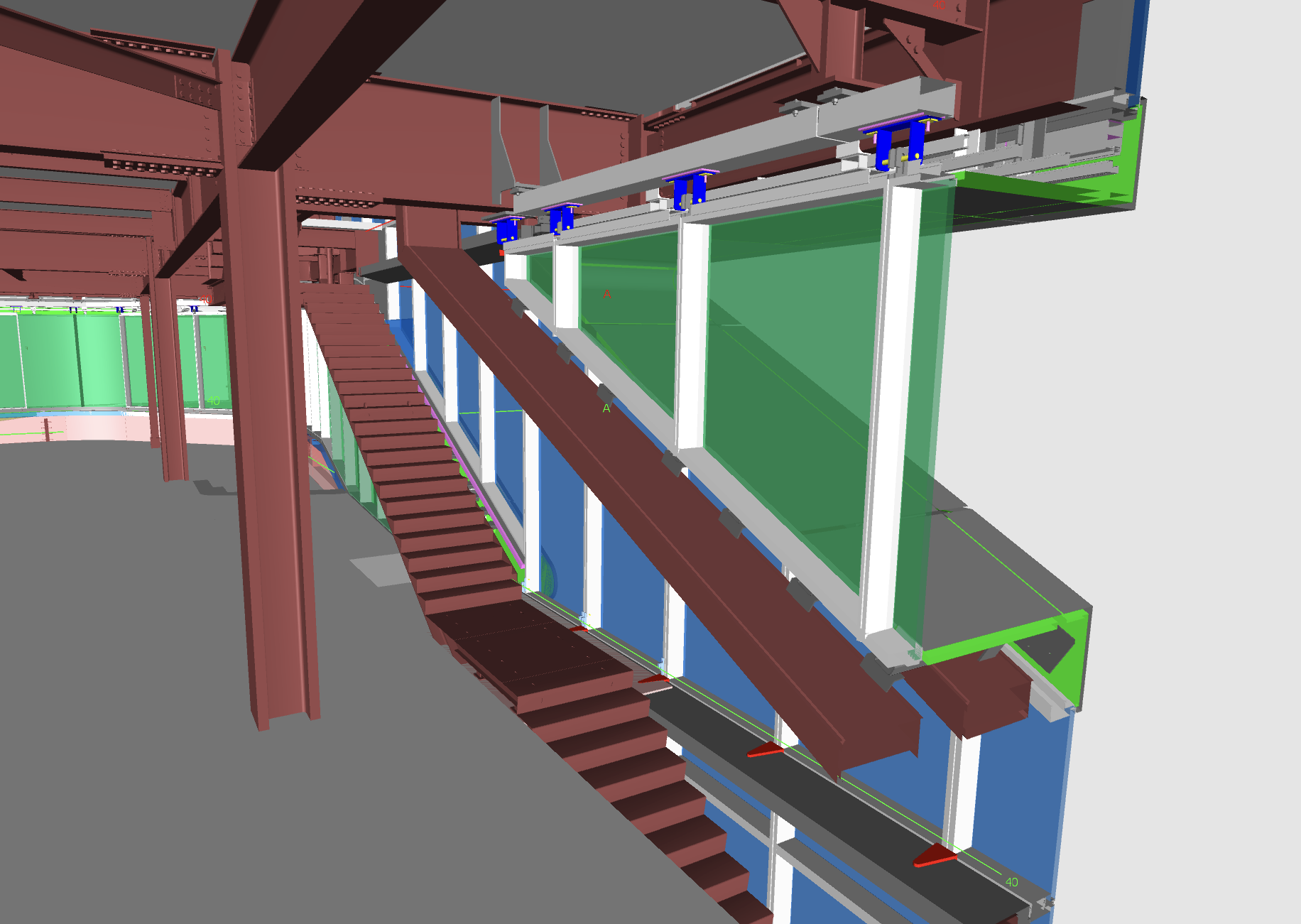
Exterior wall details courtesy of Intercom Facades and AZA US.
Southeast corner of Kravis Hall.
South facade of Kravis Hall.
Looking up at the south facade of Kravis Hall.
East facade of Kravis Hall.
East facade of Kravis Hall.
Southeast corner of Kravis Hall.
Looking up at the east facade of Kravis Hall.
Close-up of the northeast corner of Kravis Hall.
Close-up of the east facade of Kravis Hall.
At the ground floor, the Samberg Commons offers seating for 201 on tiered, undulating seating made of American oak. This space can be transformed to connect with a 199-person dining space on the second floor. The ground floor of Kravis Hall also offers retail space along the building’s 12th Avenue frontage.
Samberg Commons at the southeast corner of Kravis Hall.
West facade of Kravis Hall with ground floor retail frontage.
Southwest corner of Kravis Hall.
Southwest corner of Kravis Hall (left) and Geffen Hall (center).
West facade of Kravis Hall.
David Geffen Hall
Southwest corner of Geffen Hall.
Mirroring Kravis Hall, the eight-story Geffen Hall also features a perimeter circulation element at the west facade that connects alternating floors for administrative offices and teaching spaces. A skin of GFRC and fritted glass in a gradient from transparent to opaque clads the facade the fronts the commons and Kravis Hall. Along with MBA teaching spaces, Geffen Hall also houses the Executive MBA program. At the northwest corner of the ground floor, the Cooperman Commons 274-person auditorium space accommodates student and faculty gatherings. The Columbia-Harlem Small Business Development Center on the second floor offers support resources and services to local businesses and entrepreneurs.
West facade of Geffen Hall.
Southwest corner of Geffen Hall.
Northwest corner of Geffen Hall.
Northwest corner of Cooperman Commons.
Cooperman Commons and lobby.
Ground floor cafe at Geffen Hall.
Architects: Diller Scofidio + Renfro with FXCollaborative; Structural Engineer, Exterior Envelope and Facade Consultant: Arup; Mechanical Engineer: Buro Happold; Associate Architect: AARRIS ATEPA Architects (Dedicated Dining, Multi-Function Room); Sustainability/ LEED Consultant: FXCollaborative; Landscape Architect: James Corner Field Operations; Exterior Wall Fabricator: Intercom Facades and AZA US (Former AZA-INTERCOM Corporation) with W&W Glass; Program: Education; Location: Manhattanville, New York, NY; Completion: 2022.




Construction Update: Google Charleston East and Bay View Campus
Charleston East Campus
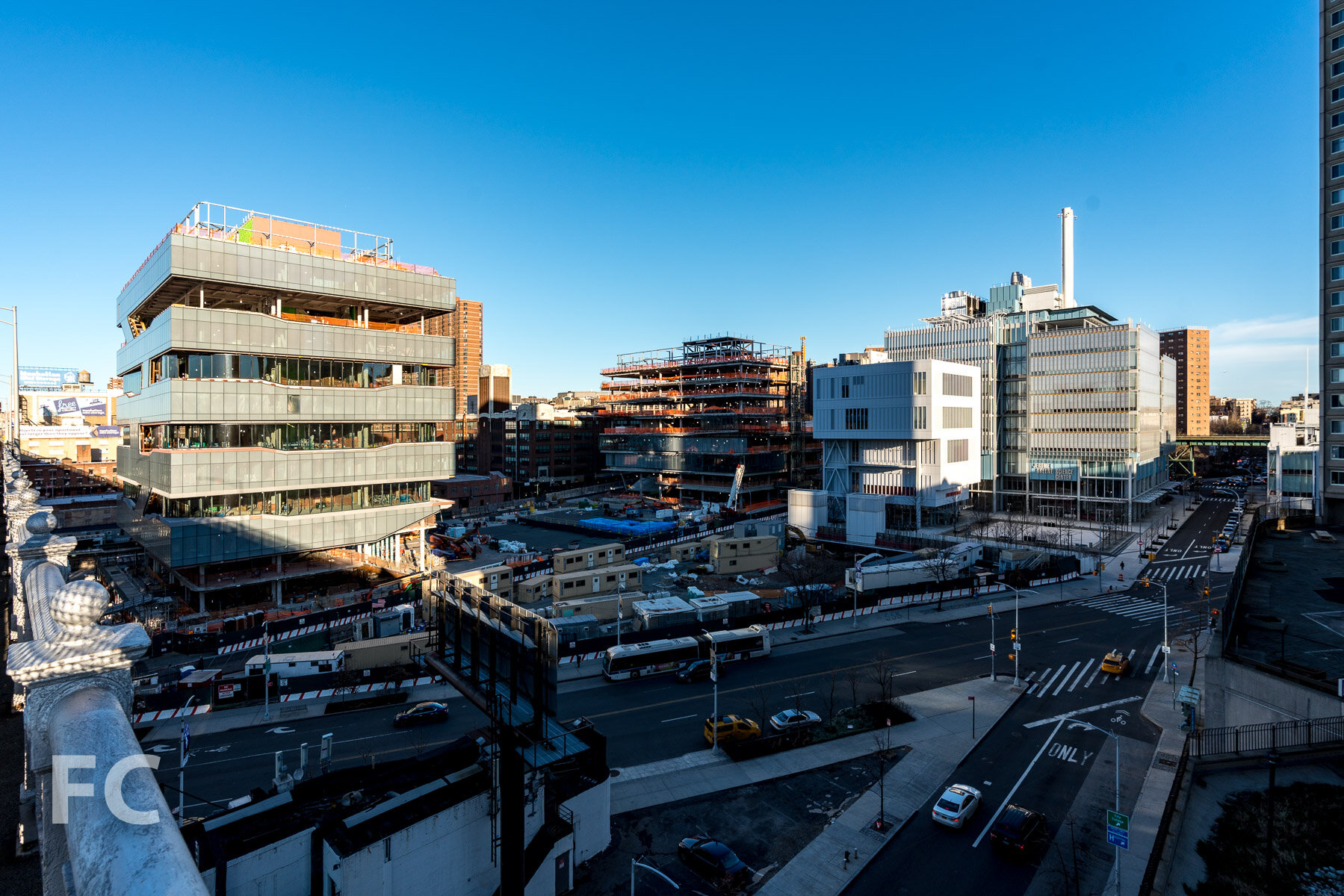
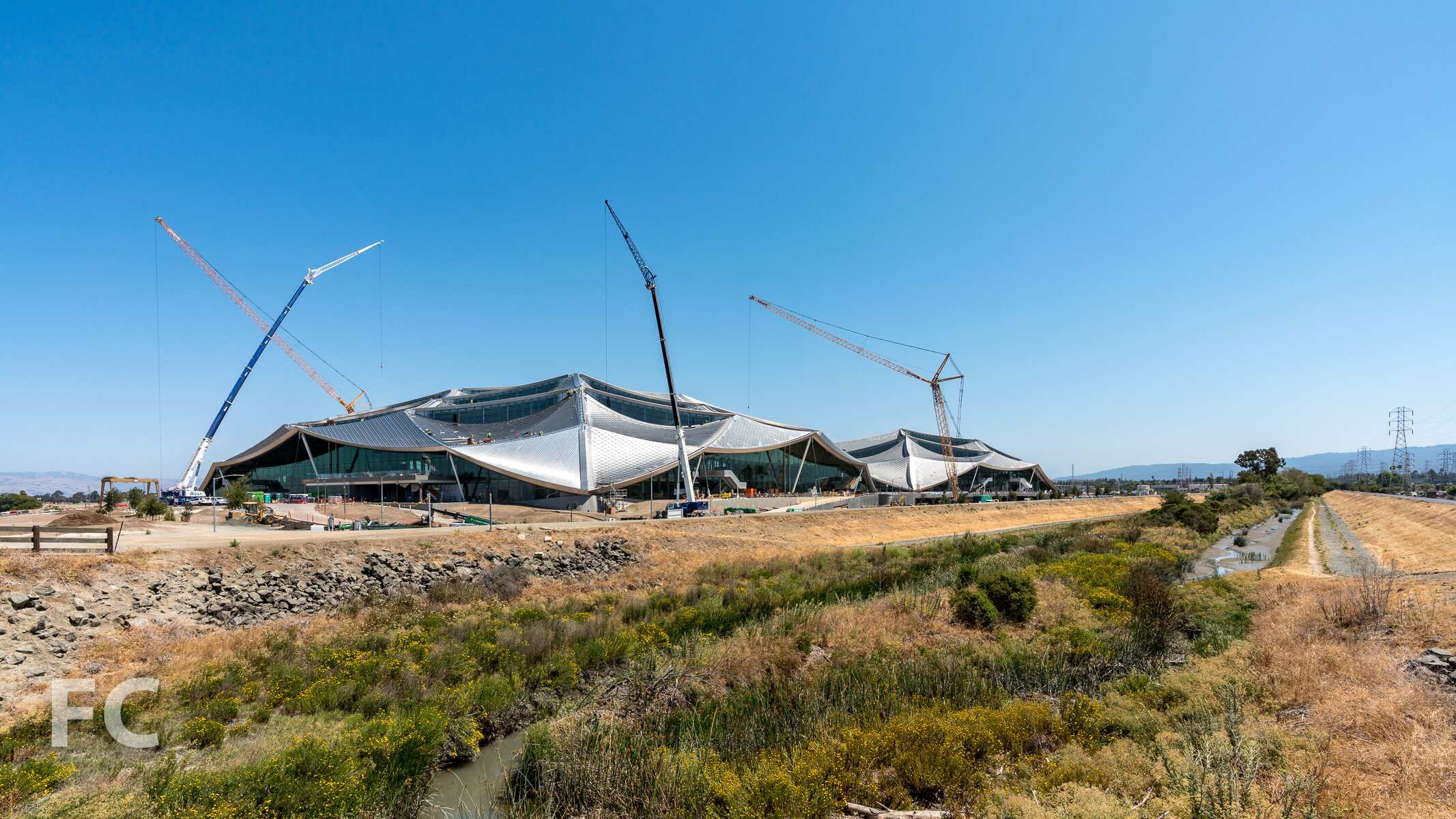
Construction is nearing completion at Google’s Charleston East campus expansion next to the original Googleplex campus in Sunnyvale, California. Designed by Bjarke Ingels Group (BIG) and Thomas Heatherwick, the 645,000 square foot campus features a hangar like canopy that allows for flexibility in locating walls and floor below. According to BIG, their strategy for the building was to “create a replicable and scalable building typology that is also adaptable and inclusive” to Google’s other potential expansion sites nearby.
Close-up of the roof with stainless steel edge profile and pv shingle installation underway.
Smile-shaped clerestories of bird-safe glass bring direct, indirect, and diffused natural light into the building.
Bay View Campus
Along with the Charleston East Campus, BIG and Heatherwick have designed three similar structures at the Bay View Campus on the grounds of the NASA Ames Research Center. Like Charleston East, these structures feature the canopy structure clad in pv shingles and clerestory glass.
Close-up of the roof clad with PV shingles.
Architects: Bjarke Ingels Group (BIG) with Thomas Heatherwick; Client: Alphabet; Program: Office; Location: Sunnyvale, Santa Clara County, CA; Completion: 2022.



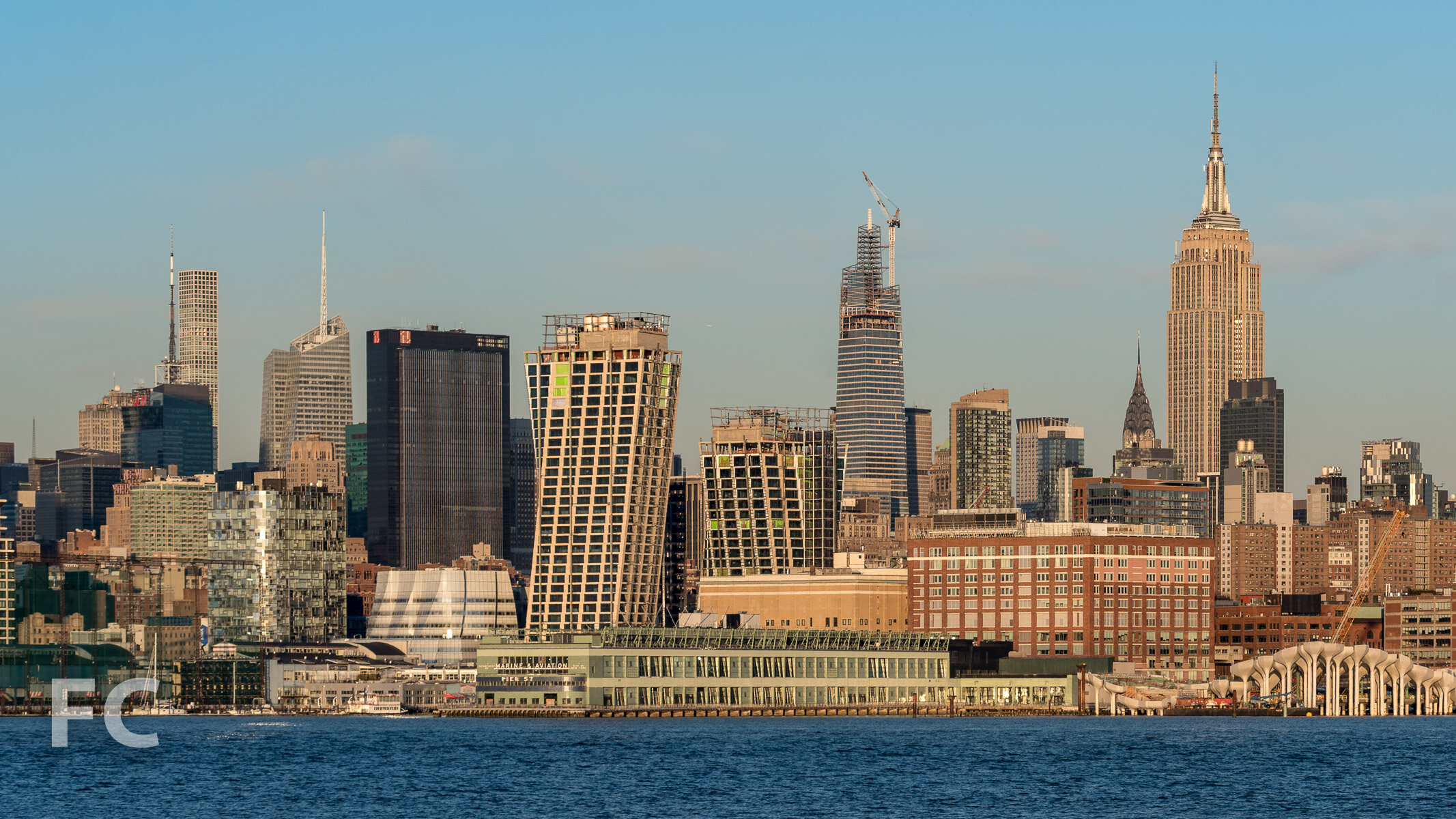

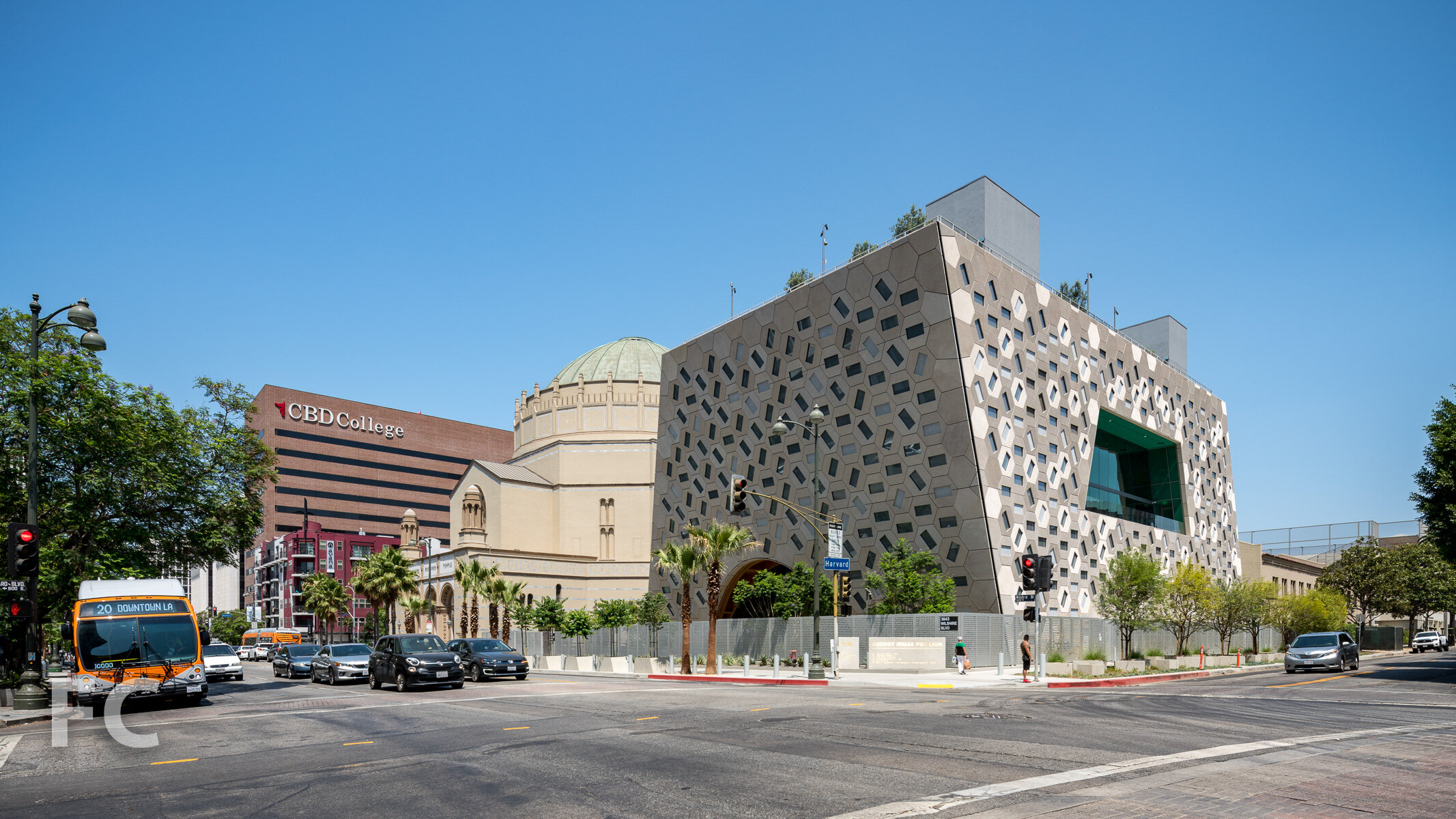
Audrey Irmas Pavilion at Wilshire Boulevard Temple
Southwest corner of the temple (left) and the new pavilion (right).
At the corner of Wilshire and Hobart Boulevard sits the Wilshire Boulevard Temple, a worship space for the oldest Jewish congregation in Los Angeles. The Moorish-style building, completed in 1929 by architect Abram M. Edelman, will soon be joined by a new multi-purpose event space for both the congregation and the surrounding city. Designed by Shohei Shigematsu of OMA New York, the Audrey Irmas Pavilion sits adjacent to the 1929 temple in a 5-story trapezoidal form that respects the landmarked building by sloping away from it, opening up a view corridor to the temple’s east facade.
South facade of the temple (left) and the new pavilion (right).
The pavilions trapezoidal massing is punctured by three distinct volumes - a main event space, a smaller multi-purpose room and a sunken garden - that frame views of the temple and the surrounding neighborhood.
Southwest corner of the Audrey Irmas Pavilion.
Exterior cladding for the pavilion pays homage to the temple dome’s octagonal tiling with hexagonal glass fiber reinforced concrete (GFRC) panels. The pavilion is clad in 1280 of these panels, which are approximately five-and-a-half feet tall and weigh 200 pounds. Rectangular windows and louver screens are inset into the hexagons and rotated in a randomized pattern that lends further texture to the facade.


South facade of the Audrey Irmas Pavilion.
The main event space on the ground floor will reference the temple’s iconic dome with its 36-foot tall arced ceiling that spans the entire width of the space. Extending north to south, the arc creates a column free space capable of hosting a variety of programs. A skylight at the ceiling will allow for views of the temple’s dome, continuing the building’s engagement with the existing structure.
Above the main event space, the second floor will offer a chapel, meeting spaces, and a west facing outdoor terrace with views to the existing temple . Offices will occupy the third floor.
Southeast corner of the Audrey Irmas Pavilion.
The fourth floor will serve as the future home of the Wallis Annenberg Center on Purposeful Aging with programming dedicated to wellness, creativity, tech exploration, social connection, community engagement, and financial security.
A sunken garden extends vertically through the pavilion floors up to the roof, furthering the vertical connection of space with circular and semi-circular slab openings. The roof terrace will feature numerous planters and olive trees

Architect: OMA New York (Design Architect), Gruen Associates (Executive Architect); Structure, MEP, Facades: Arup; Landscape Architect: Studio-MLA; Performance Space Consultants: Theatre DNA; Signage and Graphic Design: Space Agency; Civil Engineering: Rhyton Engineering; Lighting: L'Observatoire International; Client: Wilshire Boulevard Temple; Program: ; Location: Koreatown, Los Angeles, CA; Completion: Mid 2021.


Tour: Pier 55 - Little Island
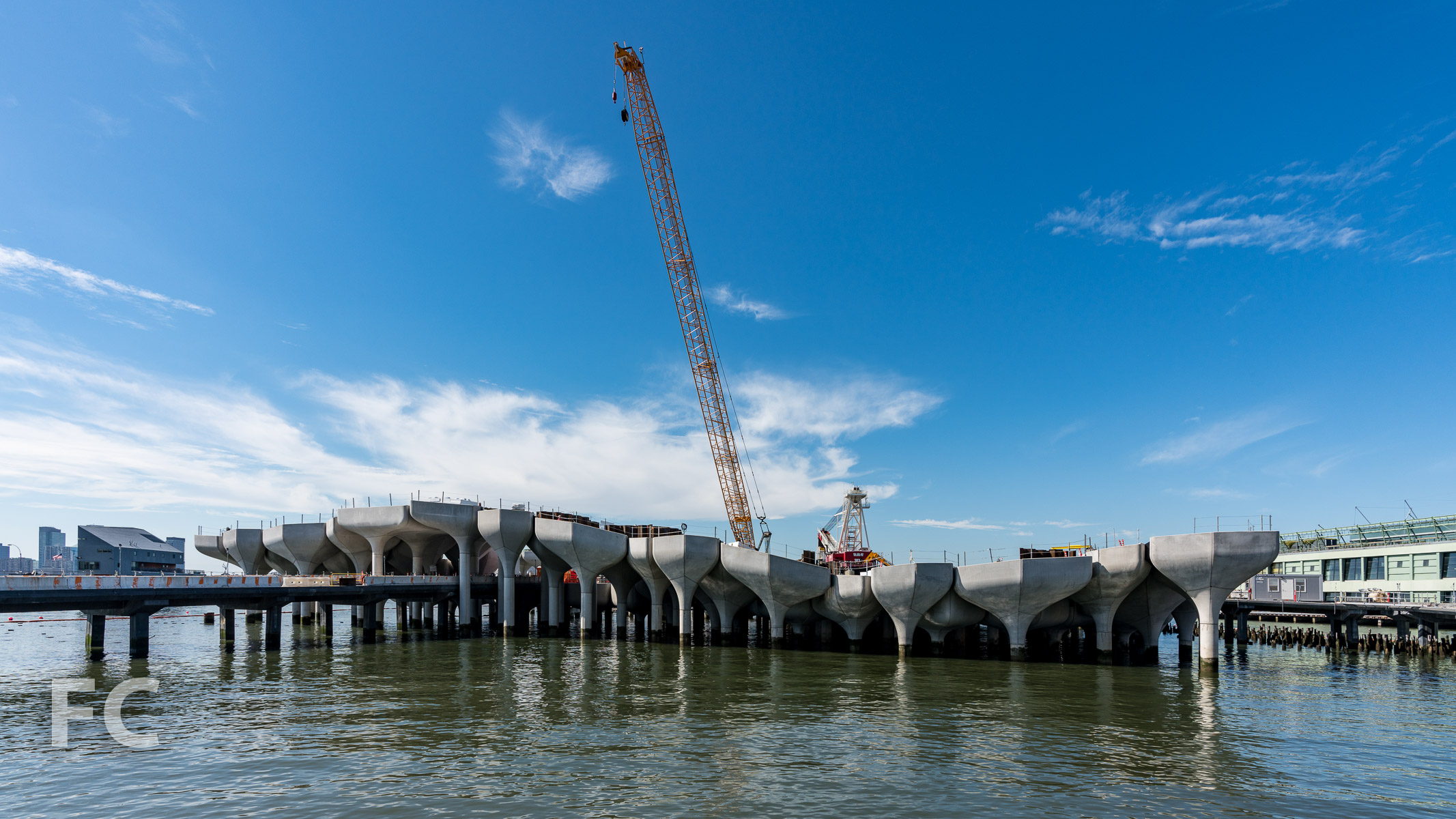
Heatherwick Studio’s park, known as Little Island, at Pier 55 in Hudson River Park has officially opened. Located near the Meatpacking District and the High Line, the design of the 2.4 acre park features an undulating field of 132 pots with plantings sitting on 280 concrete piles. At the park’s peak, the pots rise 30 feet into the air and can weigh more than 90 tons. Four to six petals of lightweight concrete combine to form each of the pots. MNLA led the landscape design, which is inspired by the textures and colors of coastal Acadia National Park in Maine. The park offers a 700-seat amphitheater for music, dance, and theater productions, along with numerous pathways and viewing platforms.

Architect: Heatherwick Studio; Landscape Architect: Mathews Nielsen Landscape Architect; Client: Hudson River Park; Program: park; Location: Meatpacking District, New York, NY; Completion: 2021.


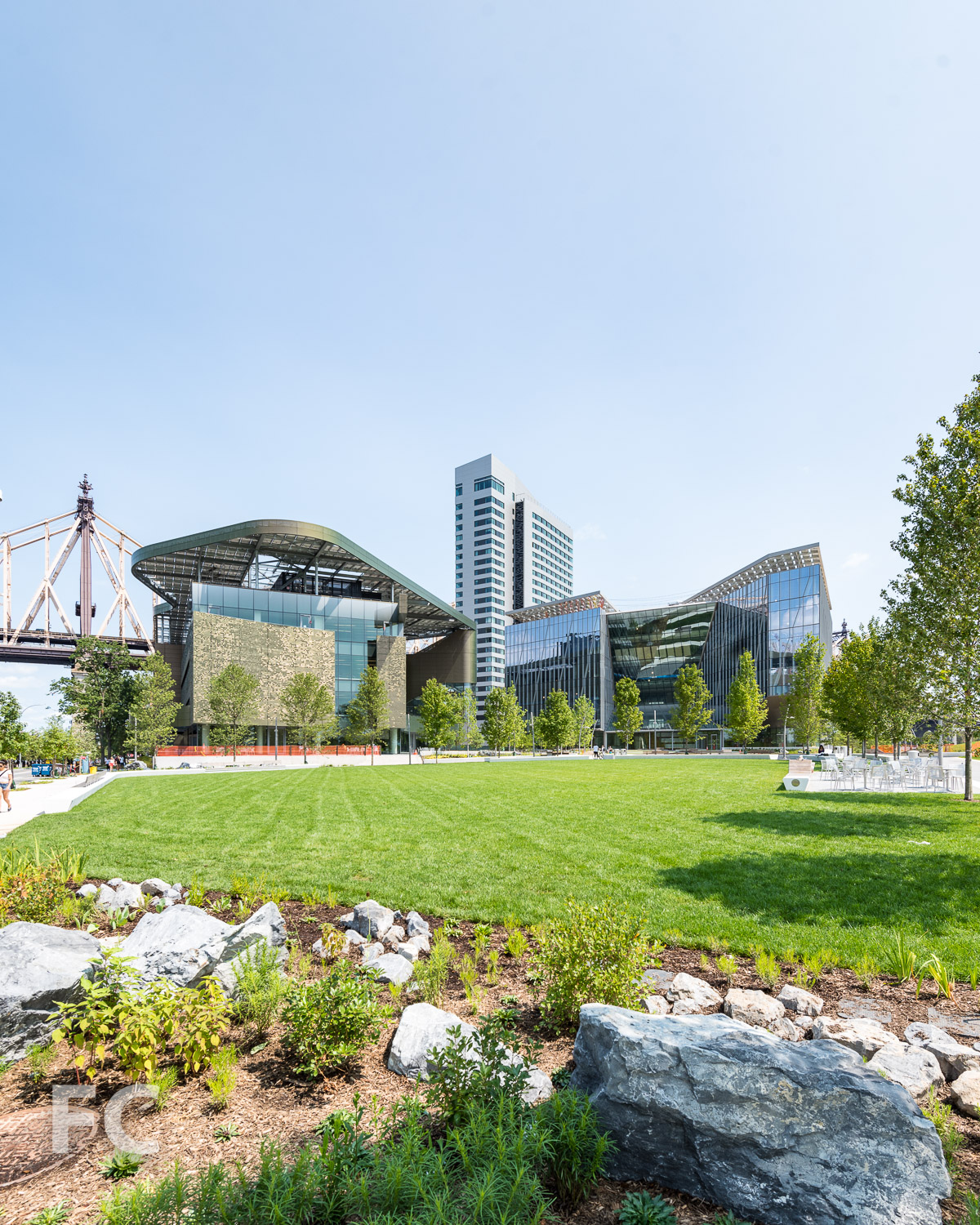
Tour: Cornell Tech Campus
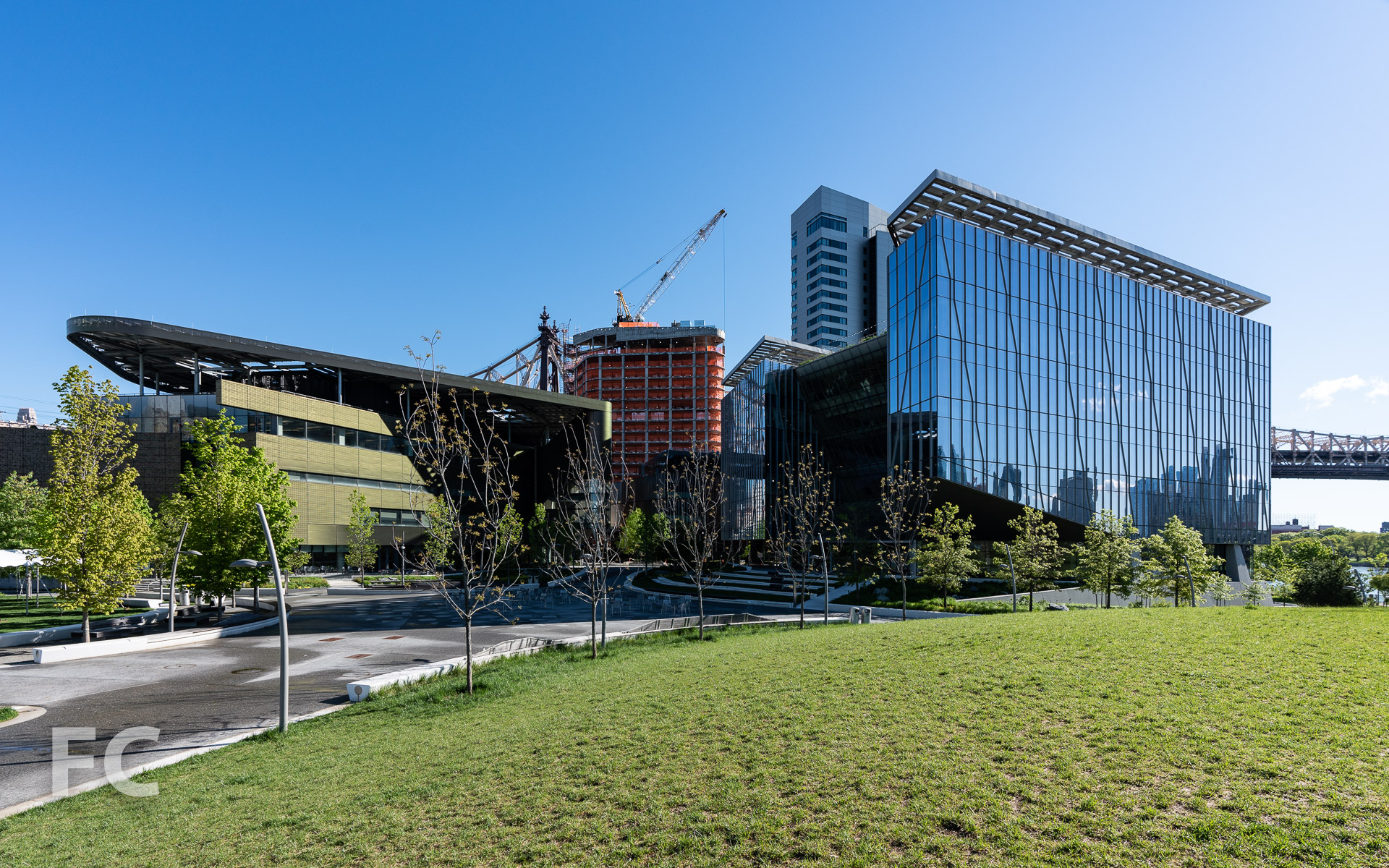
Northwest corner of the Cornell Tech campus.
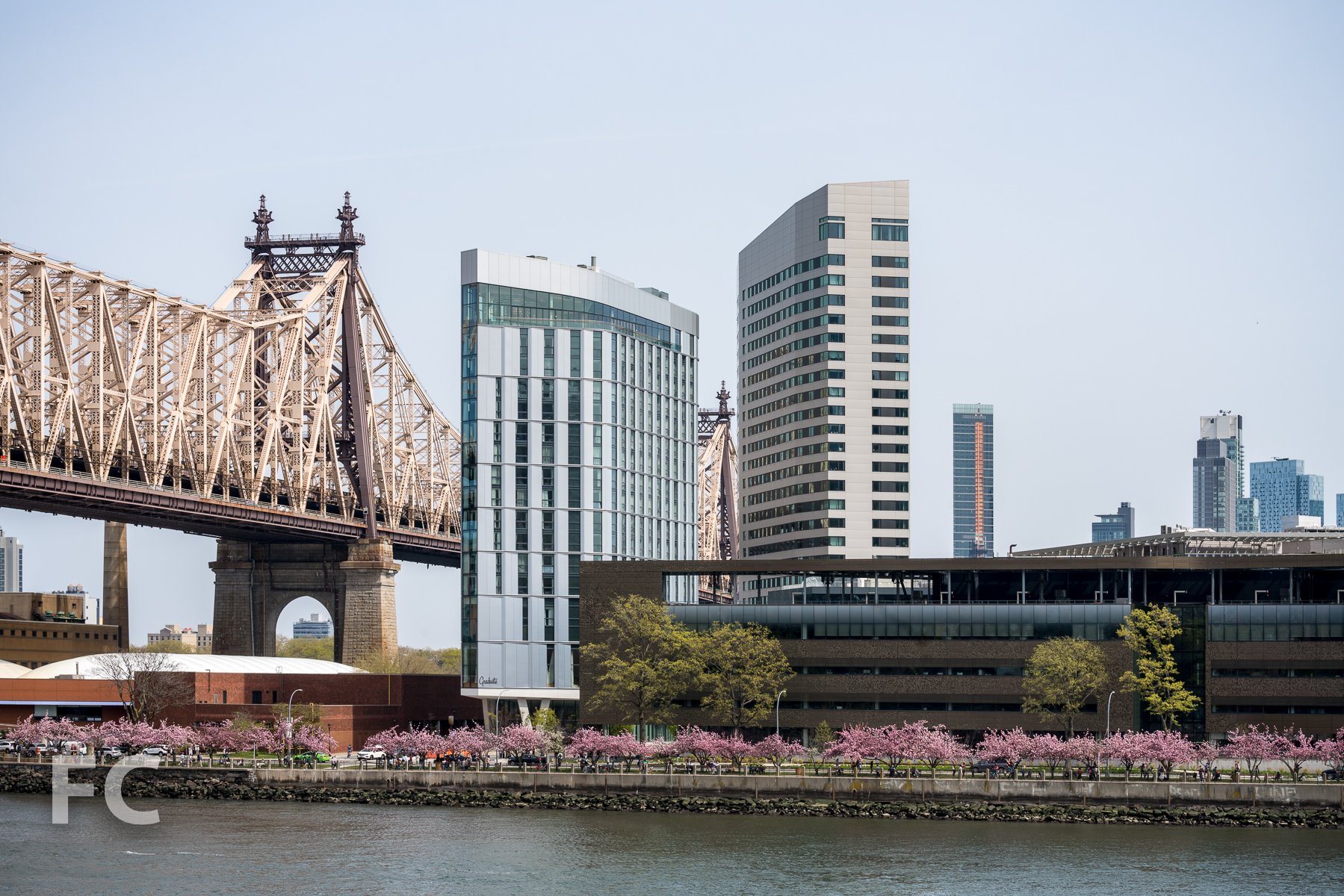
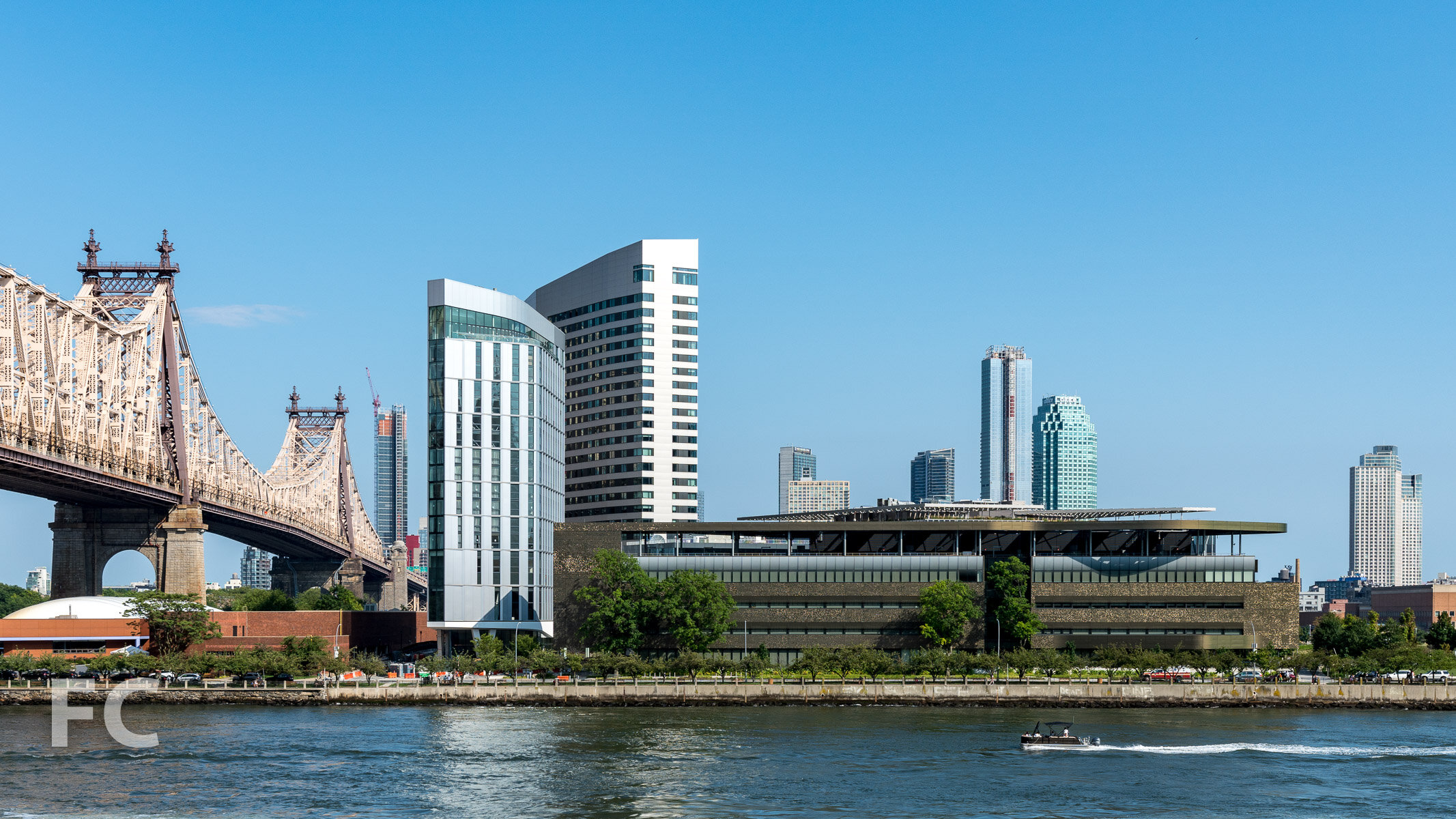
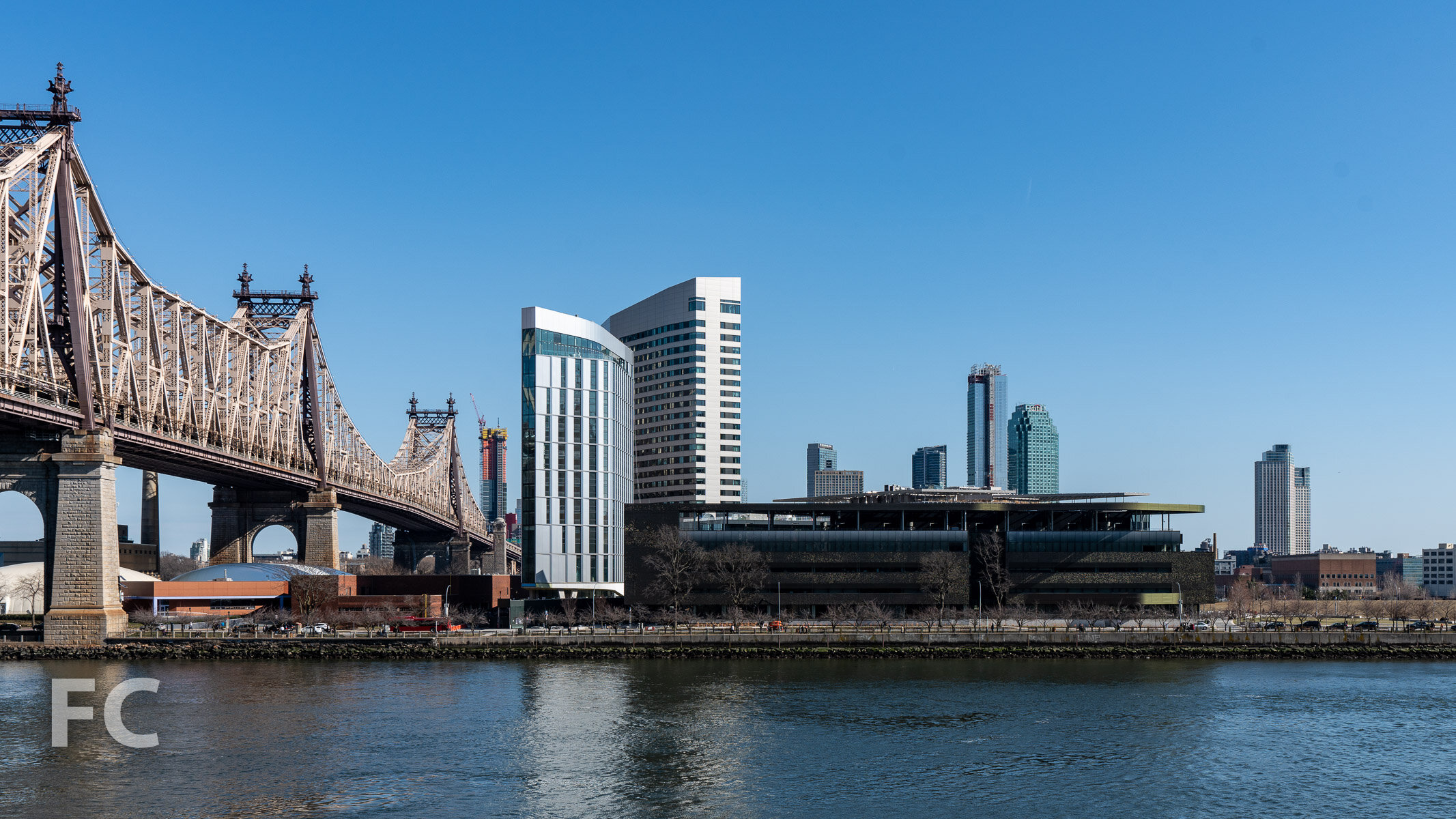
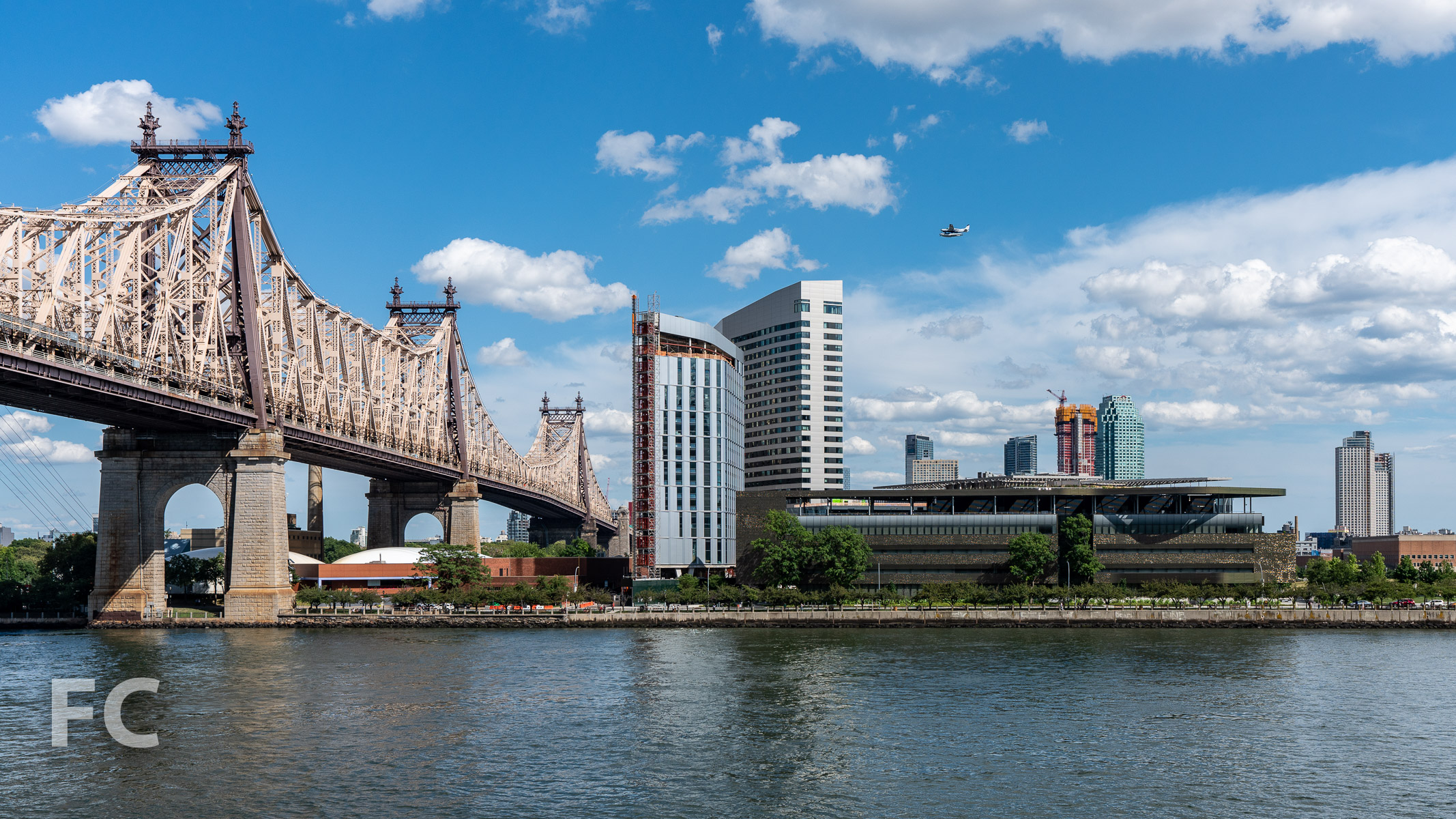
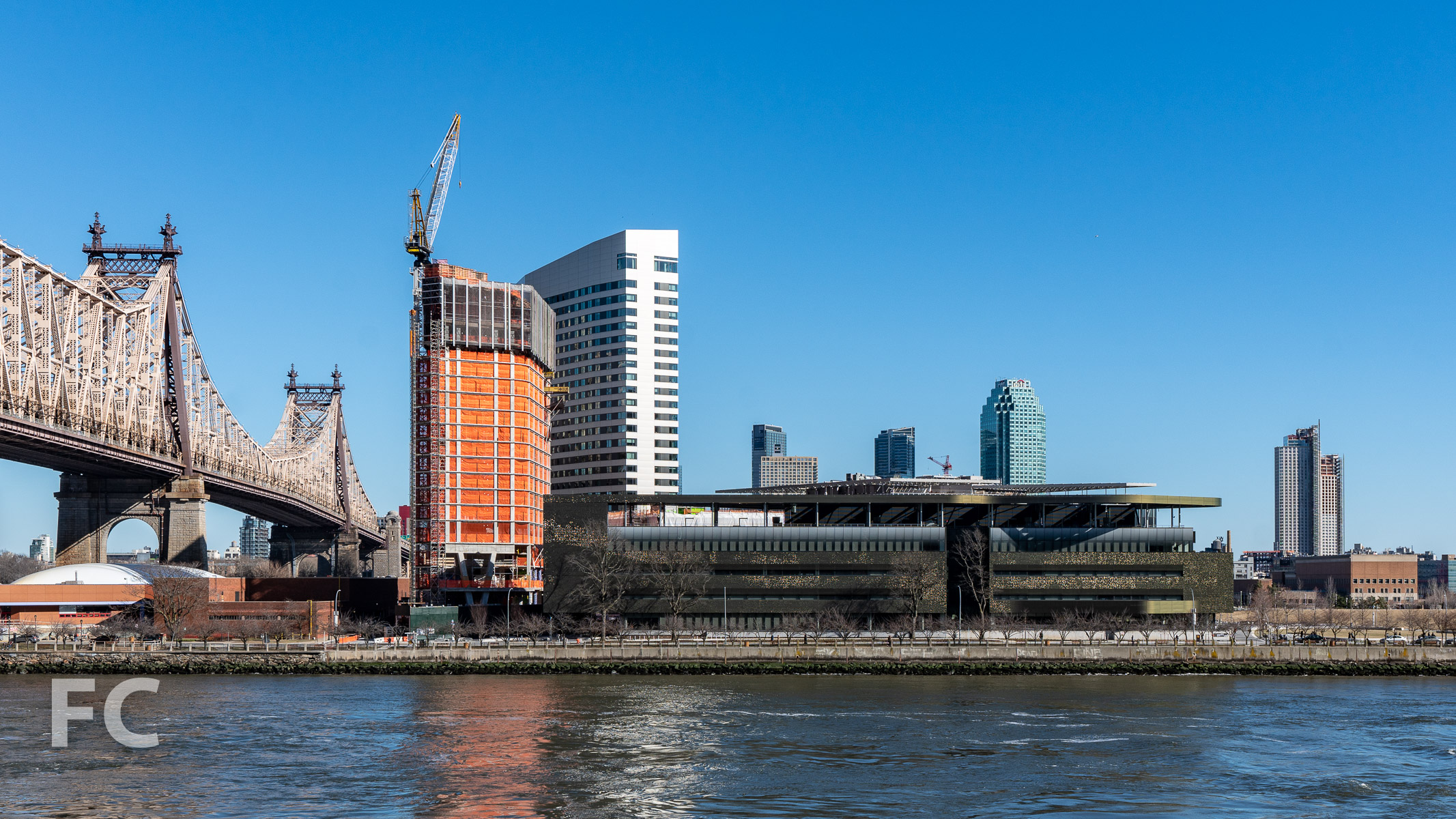
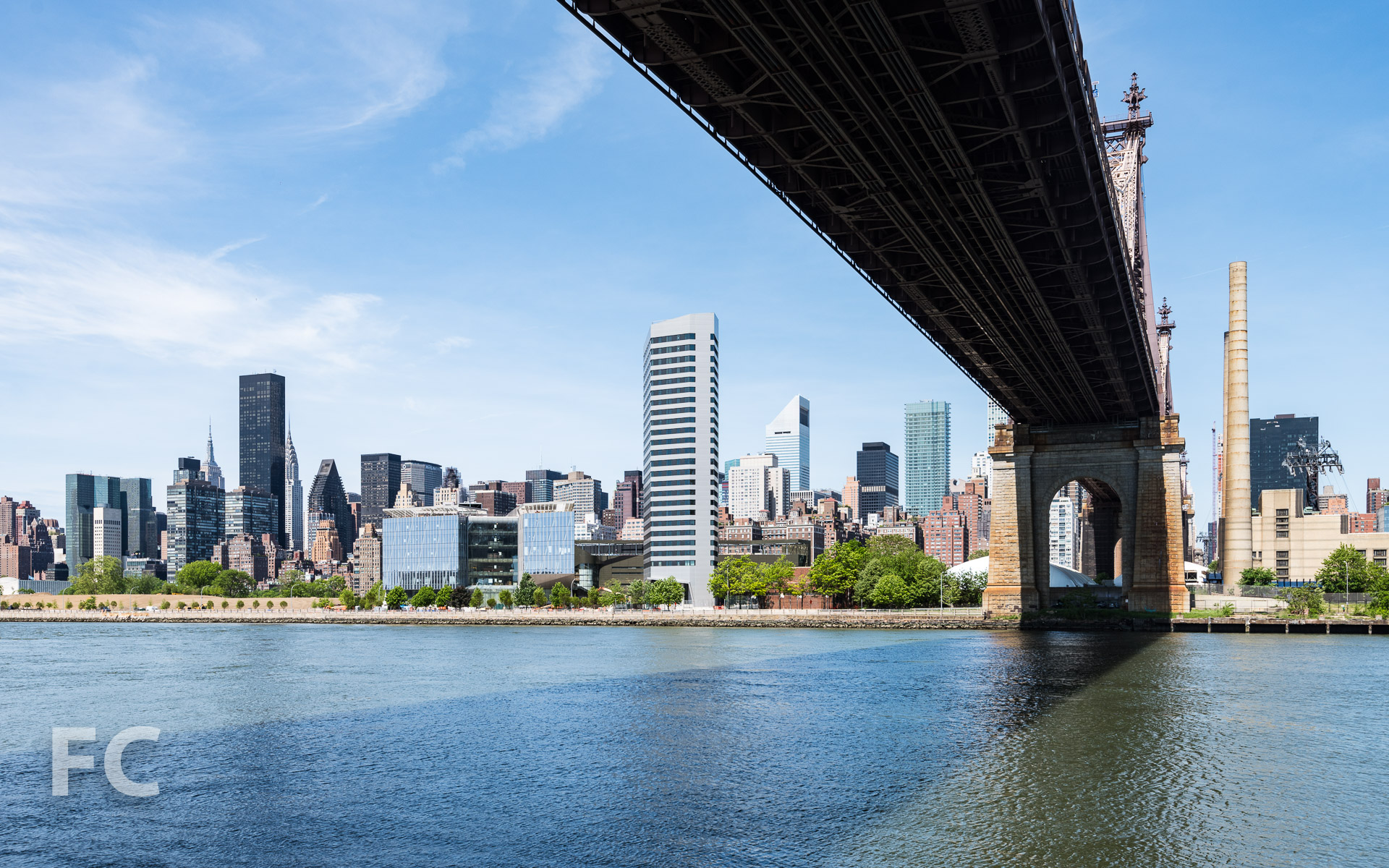
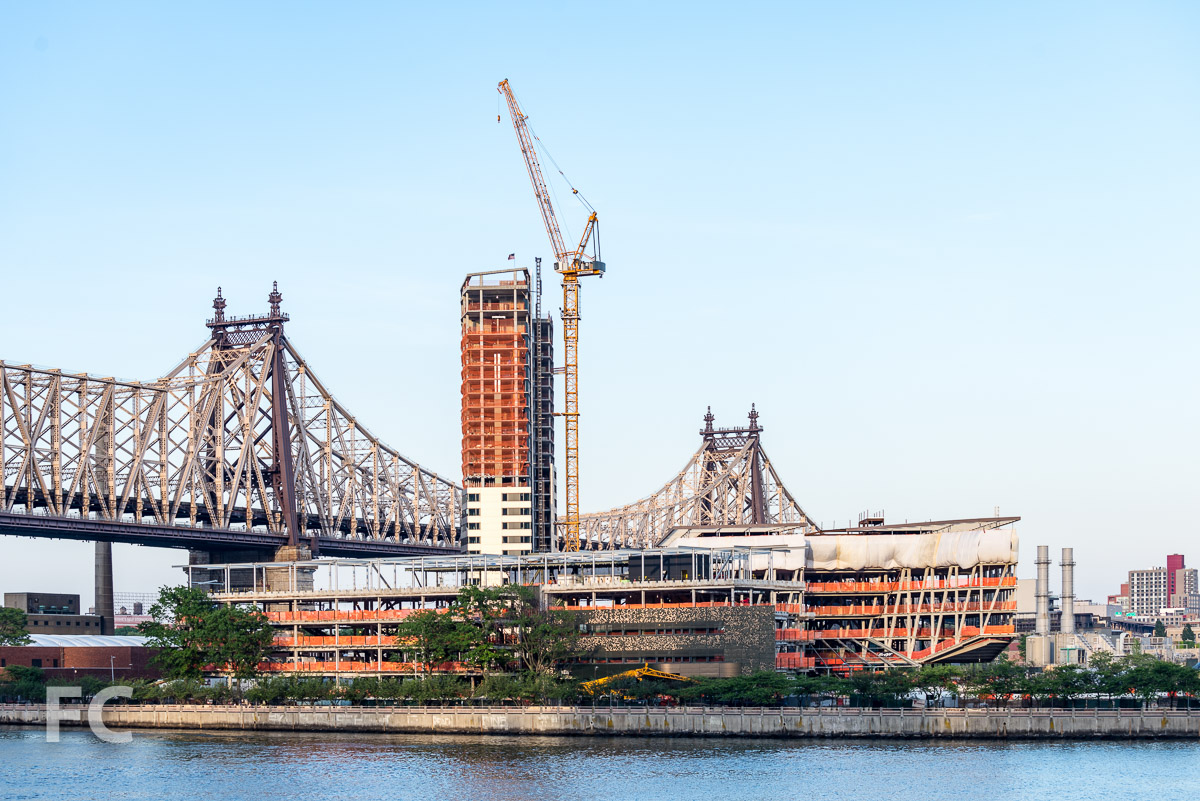
The first phase of the new campus for Cornell Tech on Roosevelt Island has officially for the fall semester. Established under a partnership between Cornell University and the Israel Institute of Technology, Cornell Tech serves as a graduate school for applied sciences that hopes to nurture the future of New York's growing tech industry. When the full master plan is realized in 2043, the completed campus will house 2 million square feet of space and 12 acres of open space for approximately 2,500 occupants.
Campus signage.
The Bloomberg Center
The Bloomberg Center, designed by Morphosis, serves as the main academic building for the first phase of the Cornell Tech campus. Faculty and students will be able to work independently and collaboratively in the building’s flexible space. Interaction with the public will be facilitated through the café and terrace. As with the other buildings on campus, The Bloomberg Center will pursue aggressive sustainability standards as it sets a goal of being the largest Net Zero energy use building in the United States. All of its energy will be generated on site through the use of geothermal wells for heating and cooling and a canopy of solar panels at the roof.
North façade of The Bloomberg Center.
Looking up at the east façade of The Bloomberg Center.
Southeast corner of The Bloomberg Center.
Morphosis has designed an iconic metal panel façade to cover the unitized, continuously insulated rainscreen wall system. A system of perforations in the panels catches the sunlight to create an organic pattern visible on campus and from afar.
Looking up at the south façade of The Bloomberg Center.
Southwest corner of The Bloomberg Center.
Close-up of the perforated metal panel façade of The Bloomberg Center.

The Bridge at Cornell Tech
The Bridge at Cornell Tech, designed by Weiss/Manfredi and developed by Forest City Ratner Companies, will serve as a corporate co-location facility to bring together established tech companies, startups, and academic researchers to accelerate the introduction of new technologies to the market. The 230,000 square foot building will pursue a minimum of LEED Silver with sustainable features such as 16,500 square feet of rooftop solar panels, efficient water fixtures, stormwater capture, and a ground floor elevated 10 feet above the 100 year flood plane. A glass curtain wall with a vertical frit pattern clads the steel structure, offering expansive light and views to the 14 foot floor to floor height work spaces.
Northeast corner of The Bridge.
Southwest corner of The Bridge.
Close-up of the façade of The Bridge.
Lobby of The Bridge.
The House at Cornell Tech
The House at Cornell Tech, designed by Handel Architects and developed in partnership with The Hudson Companies and The Related Companies, will offer 350 residential units for students and faculty of the college. Rising to a height of 270 feet, the tower is the tallest building on campus and will be the world’s tallest Passive House designed structure at completion. The Passive House energy standard was developed in Germany and is considered the most rigorous energy efficiency standard in the world. Buildings designed to this standard typically achieve energy consumption reduction of 60% to 80% that of a similar code building.
Northwest corner of The House.
Looking up at the south façade of The House.
As part of the energy efficient design of the building, the façade is clad in unitized mega panels of metal panel and punched windows that are designed and prefabricated for better control of air infiltration, reducing heating and cooling loss. A special color changing paint is employed on the metal panels that will shift from silver to warm champagne in the natural light. The southwest corner of the façade features a vertical strip of louvers that act as the building’s “gills”, concealing the outdoor space where the heating and cooling equipment are housed.
Residential entry at The House.

Amenities will include furnished common spaces, fitness center, landscaped ground floor porch and rooftop terraces, rooftop party room, and bicycle storage.
Southwest corner of The House.
Architects: SOM (Master Plan, Central Utility Plant), Landscape Architects: Field Operations (Open Space Master Plan, Campus Open Space); Location: Roosevelt Island, New York, NY; Completion: 2017.
BLOOMBERG CENTER:
Architect: Morphosis; Structural Engineer: Arup; MEP Engineer: Arup; Facade Consultant: Arup; Client: Cornell University; Program: Education.
THE BRIDGE AT CORNELL TECH:
Architect: Weiss/Manfredi; Program: Office.
THE HOUSE AT CORNELL TECH:
Architect: Handel Architects; Structural Engineer: Buro Happold; MEP Engineer: Buro Happold; Facade Consultant: Socotec; Sustainability and Passive House Consultant: Steven Winter Associates; General Contractor: Monadnock Construction; Client: Cornell University, Related Companies, Hudson Companies; Program: Residential.