
Tour: Century Plaza
Southeast corner of the site from Avenue of the Stars.
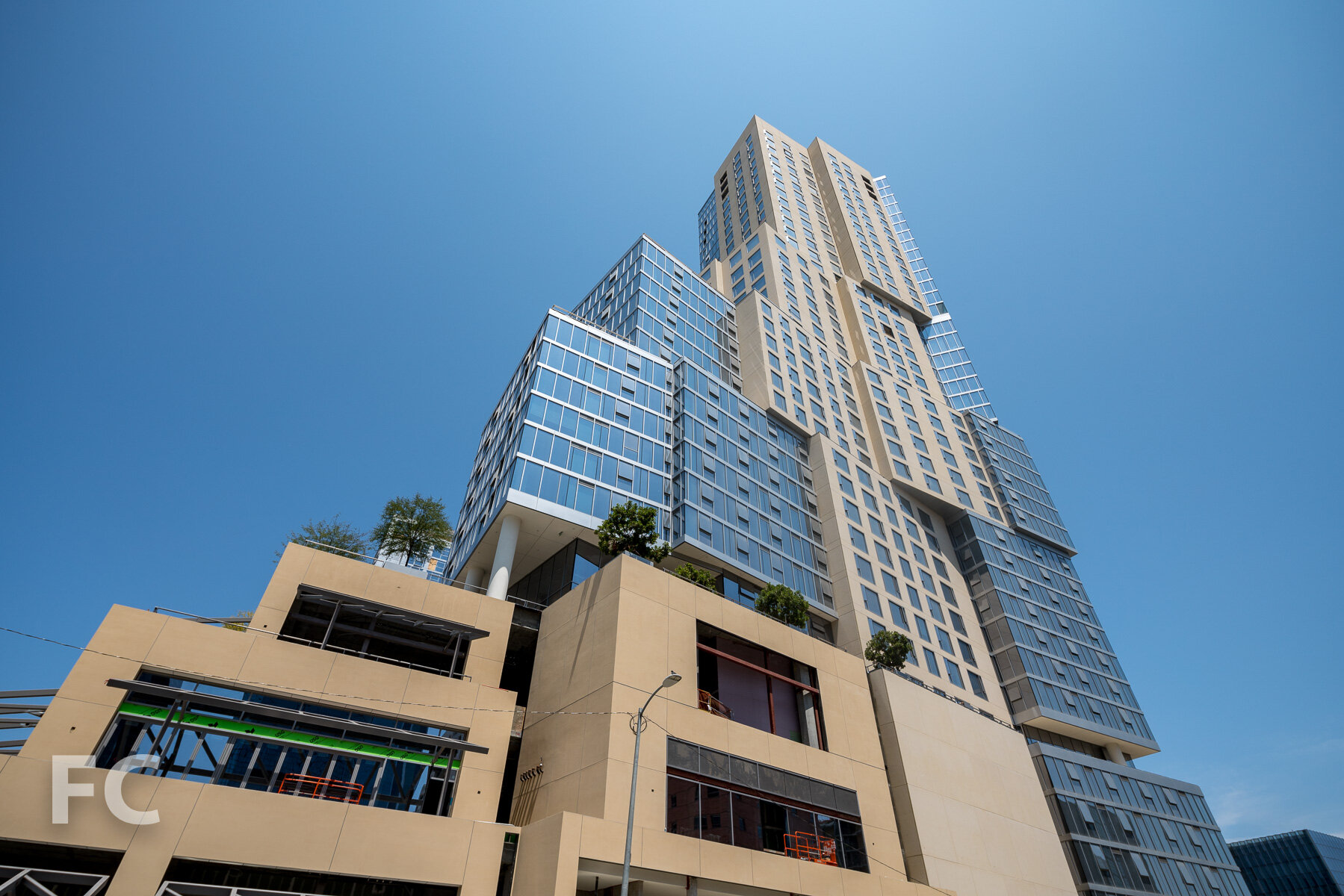
Construction is wrapping up on Next Century Partners’ Century Plaza in the Century City neighborhood of Los Angeles. The development includes the restoration of Minoru Yamasaki’s Century Plaza hotel (originally opened in 1966) and two new 44-story towers designed by Pei Cobb Freed & Partners.
Northwest corner of the site from Constellation Boulevard.
Looking up at the south facade of the towers from Solar Way.
Restoration of the 400-room Fairmont Century Plaza Hotel has been overseen by Marmol Radziner with guestrooms and public space interiors by Yabu Pushelberg. The hotel will offer a gourmet café, an American brasserie, a rooftop bar, a 14,000-square-foot spa, and two ballrooms. Along with hotel guest rooms, the restored hotel structure will also offer 63 single-story and townhouse homes designed by Yabu Pushelberg.
Entry plaza with a sculpture by Jaume Plensa.
Restored entry canopy at the Century Plaza Hotel.
Century Plaza Hotel lobby.
Hotel restaurant.
Spa.

Rooftop terrace.
The two 535-foot tall residential towers feature facades of floor-to-ceiling bent glass and glass enclosed terraces. Residents will have access to a collection of amenities that include a pool, fitness center and spa, screening room, library, game room, wine cellars, party spaces, and concierges.
Looking up at the towers (center, right) and restored hotel (right).
Architect: Pei Cobb Freed & Partners, Gensler; Interiors: Marmol Radziner (Century Plaza Hotel), Yabu Pushelberg (Tower Residences); Landscape Architect: Rios Clementi Hale Studio; Developer: Next Century Partners; Program: Hotel, Residential, Retail; Location: Century City, Los Angeles, CA; Completion: 2021.

Construction Update: Sunset Spectacular
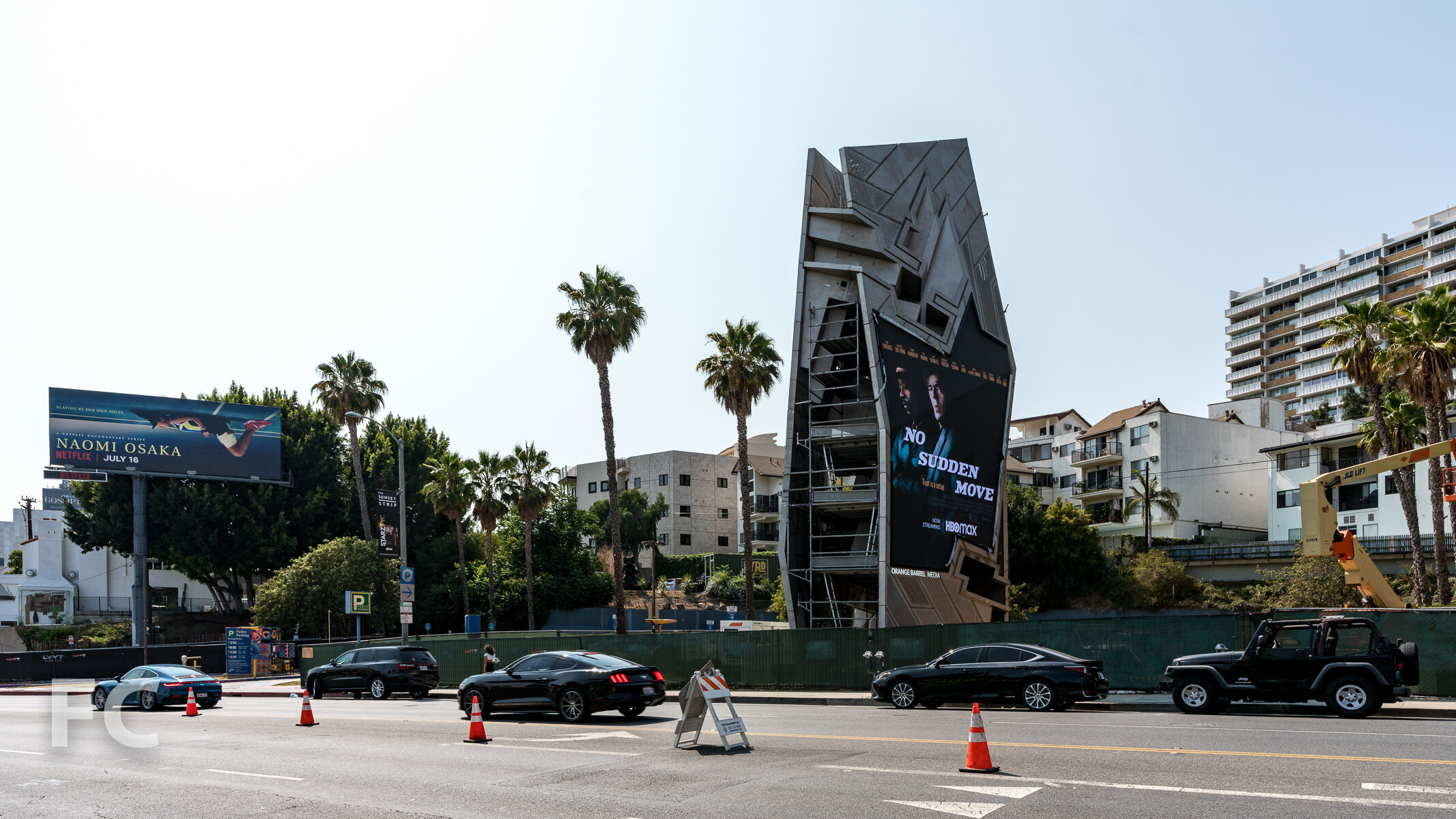
Construction is wrapping up on the three dimensional billboard structure for Orange Barrel Media and the city of West Hollywood in Los Angeles. Designed by Tom Wiscombe Architecture, the structure combines an east and west facing digital billboard with cultural space at the center. The project is clad in recyclable aluminum and includes a solar array to power the billboards. A multi-use public plaza with permeable grounds materials will surround the structure.
Architect: Tom Wiscombe Architecture; Client: Orange Barrel Media and the City of West Hollywood; Program: Advertising, Cultural; Location: West Hollywood, Los Angeles, CA.
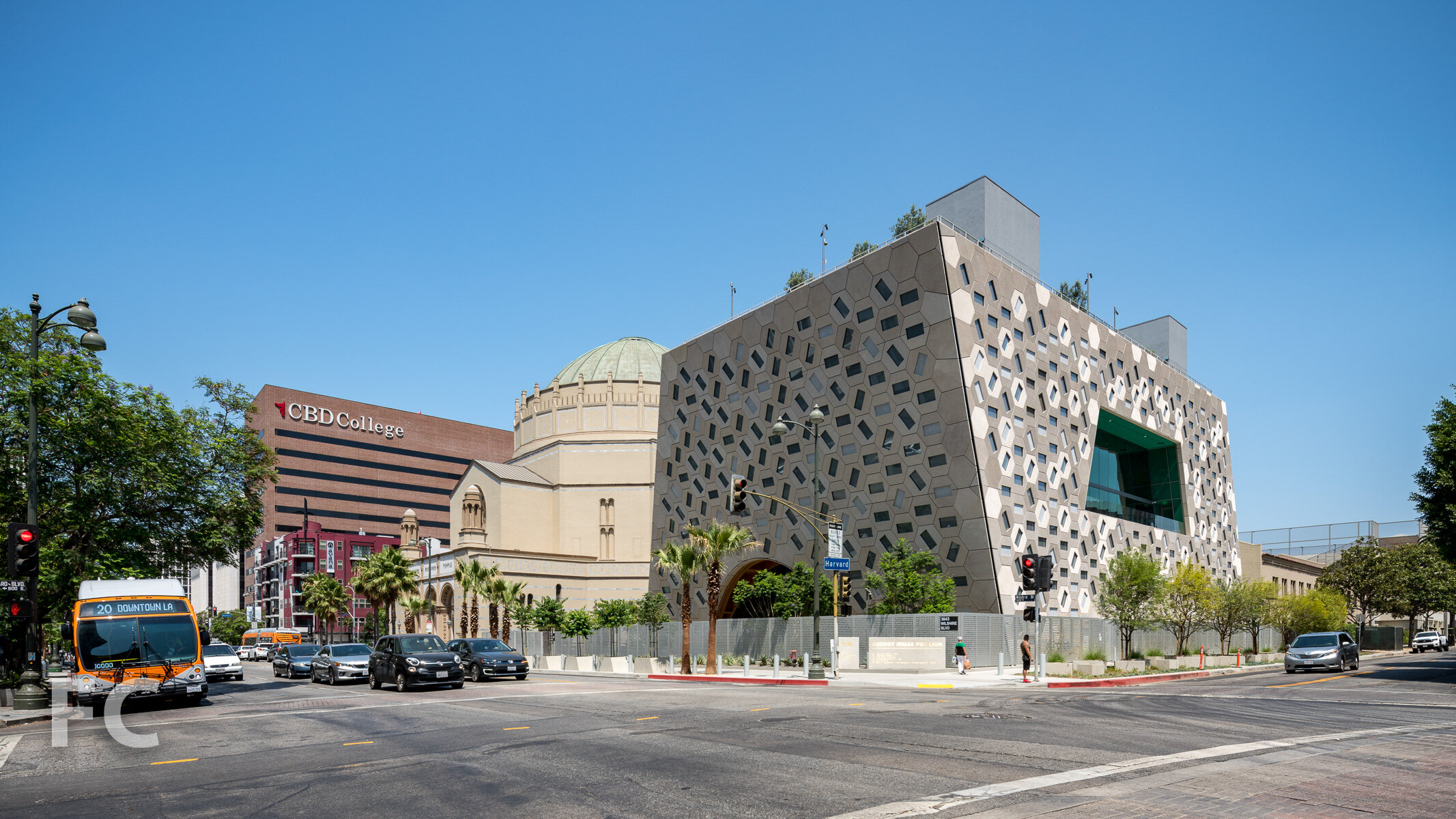
Audrey Irmas Pavilion at Wilshire Boulevard Temple
Southwest corner of the temple (left) and the new pavilion (right).
At the corner of Wilshire and Hobart Boulevard sits the Wilshire Boulevard Temple, a worship space for the oldest Jewish congregation in Los Angeles. The Moorish-style building, completed in 1929 by architect Abram M. Edelman, will soon be joined by a new multi-purpose event space for both the congregation and the surrounding city. Designed by Shohei Shigematsu of OMA New York, the Audrey Irmas Pavilion sits adjacent to the 1929 temple in a 5-story trapezoidal form that respects the landmarked building by sloping away from it, opening up a view corridor to the temple’s east facade.
South facade of the temple (left) and the new pavilion (right).
The pavilions trapezoidal massing is punctured by three distinct volumes - a main event space, a smaller multi-purpose room and a sunken garden - that frame views of the temple and the surrounding neighborhood.
Southwest corner of the Audrey Irmas Pavilion.
Exterior cladding for the pavilion pays homage to the temple dome’s octagonal tiling with hexagonal glass fiber reinforced concrete (GFRC) panels. The pavilion is clad in 1280 of these panels, which are approximately five-and-a-half feet tall and weigh 200 pounds. Rectangular windows and louver screens are inset into the hexagons and rotated in a randomized pattern that lends further texture to the facade.


South facade of the Audrey Irmas Pavilion.
The main event space on the ground floor will reference the temple’s iconic dome with its 36-foot tall arced ceiling that spans the entire width of the space. Extending north to south, the arc creates a column free space capable of hosting a variety of programs. A skylight at the ceiling will allow for views of the temple’s dome, continuing the building’s engagement with the existing structure.
Above the main event space, the second floor will offer a chapel, meeting spaces, and a west facing outdoor terrace with views to the existing temple . Offices will occupy the third floor.
Southeast corner of the Audrey Irmas Pavilion.
The fourth floor will serve as the future home of the Wallis Annenberg Center on Purposeful Aging with programming dedicated to wellness, creativity, tech exploration, social connection, community engagement, and financial security.
A sunken garden extends vertically through the pavilion floors up to the roof, furthering the vertical connection of space with circular and semi-circular slab openings. The roof terrace will feature numerous planters and olive trees

Architect: OMA New York (Design Architect), Gruen Associates (Executive Architect); Structure, MEP, Facades: Arup; Landscape Architect: Studio-MLA; Performance Space Consultants: Theatre DNA; Signage and Graphic Design: Space Agency; Civil Engineering: Rhyton Engineering; Lighting: L'Observatoire International; Client: Wilshire Boulevard Temple; Program: ; Location: Koreatown, Los Angeles, CA; Completion: Mid 2021.


Construction Tour: Audrey Irmas Pavilion at Wilshire Boulevard Temple
A rendering of the Audrey Irmas Pavilion. Rendering courtesy of OMA New York.
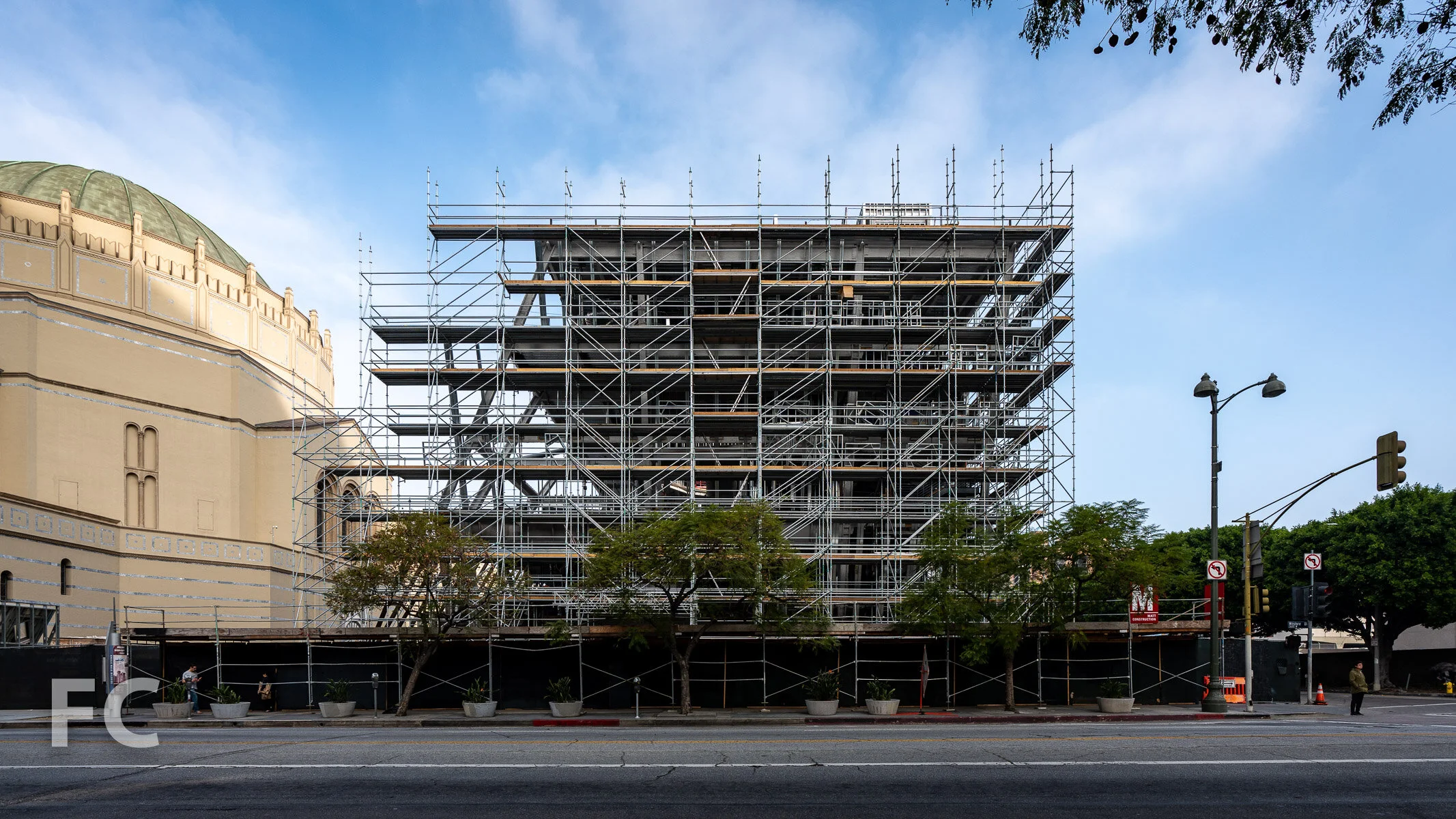
At the corner of Wilshire and Hobart Boulevard sits the Wilshire Boulevard Temple, a worship space for the oldest Jewish congregation in Los Angeles. The Moorish-style building, completed in 1929 by architect Abram M. Edelman, will soon be joined by a new multi-purpose event space for both the congregation and the surrounding city. Designed by Shohei Shigematsu of OMA New York, the Audrey Irmas Pavilion sits adjacent to the 1929 temple in a 5-story trapezoidal form that respects the landmarked building by sloping away from it, opening up a view corridor to the temple’s east facade. Steel superstructure has topped out and facade installation will soon be underway.
Southwest corner of the temple (left) and the new pavilion (right).
South facade of the temple (left) and the new pavilion (right).
The pavilions trapezoidal massing is punctured by three distinct volumes - a main event space, a smaller multi-purpose room and a sunken garden - that frame views of the temple and the surrounding neighborhood.
Southwest corner of the Audrey Irmas Pavilion.
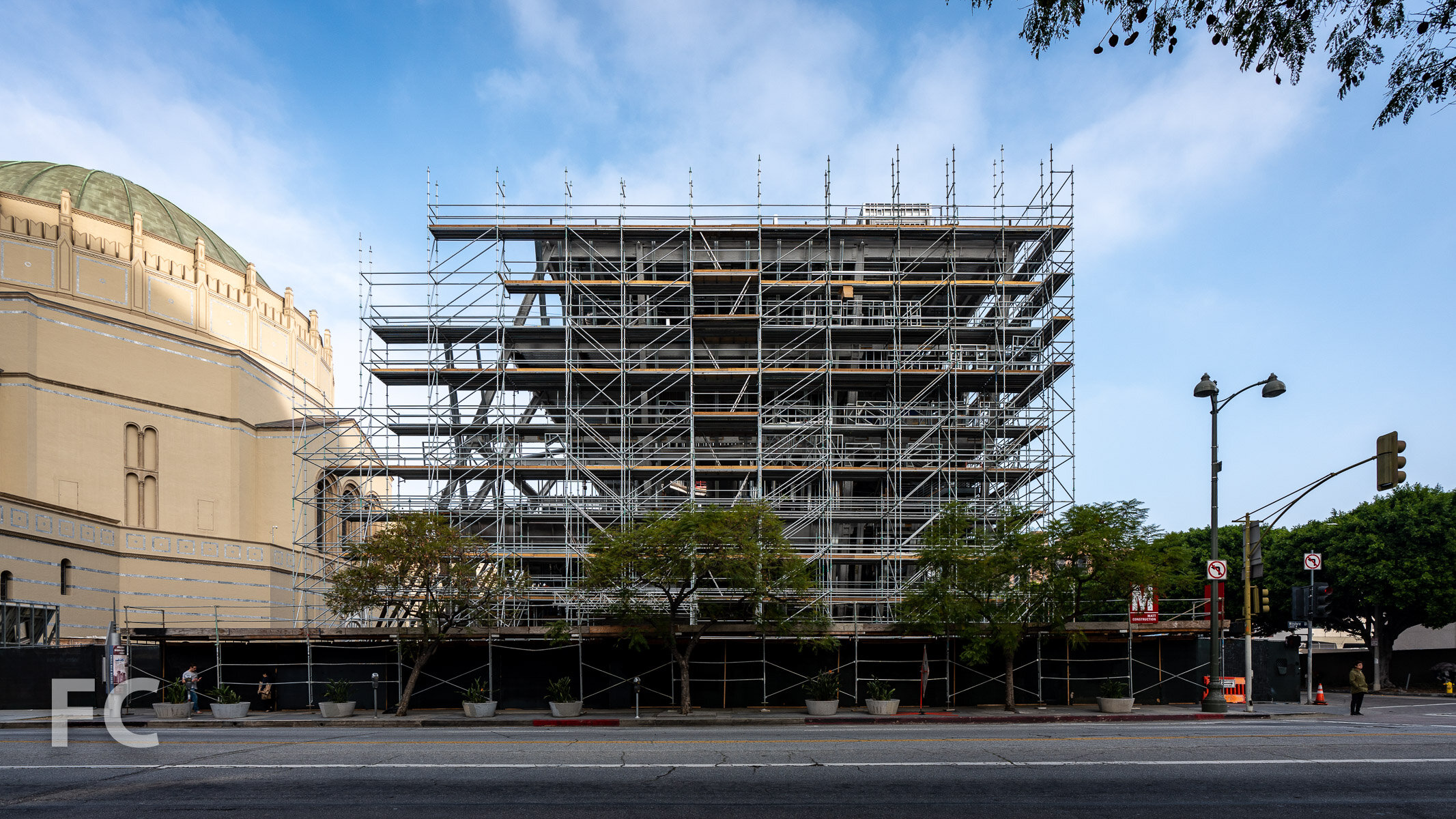
South facade of the Audrey Irmas Pavilion.
Southeast corner of the Audrey Irmas Pavilion.
Rendering of the west facade of the Audrey Irmas Pavilion (left) and the temple (right). Courtesy of OMA New York.
West facade of the Audrey Irmas Pavilion.
Southwest corner of the Audrey Irmas Pavilion.
Looking up at the west facade of the Audrey Irmas Pavilion.
Rendering of the east facade of the Audrey Irmas Pavilion. Rendering courtesy of OMA New York.
Exterior cladding for the pavilion will pay homage to the temple dome’s octagonal tiling with hexagonal glass fiber reinforced concrete (GFRC) panels. The pavilion will be clad in 1280 of these panels, which are approximately five-and-a-half feet tall and weigh 200 pounds. Rectangular windows and louver screens are inset into the hexagons and rotated in a randomized pattern that lends further texture to the facade.
Facade mockup.
Southwest corner of the Audrey Irmas Pavilion.
Rendering of the ground floor main event space. Rendering courtesy of OMA New York.
The main event space on the ground floor will reference the temple’s iconic dome with its 36-foot tall arced ceiling that spans the entire width of the space. Extending north to south, the arc creates a column free space capable of hosting a variety of programs. A skylight at the ceiling will allow for views of the temple’s dome, continuing the building’s engagement with the existing structure.
Main event space from the level one mezzanine.
Looking up through the skylight to the temple’s dome from the main event space.
Above the main event space, the second floor will offer a chapel, meeting spaces, and a west facing outdoor terrace with views to the existing temple . Offices will occupy the third floor.
Second floor outdoor terrace.
Second floor outdoor terrace.
The fourth floor will serve as the future home of the Wallis Annenberg Center on Purposeful Aging with programming dedicated to wellness, creativity, tech exploration, social connection, community engagement, and financial security.
A sunken garden extends vertically through the pavilion floors up to the roof, furthering the vertical connection of space with circular and semi-circular slab openings. The roof terrace will feature numerous planters and olive trees
Future home of the Wallis Annenberg Center on Purposeful Aging.
Roof terrace.
Looking down to the sunken garden from the roof terrace.
View west towards the existing temple from the roof terrace.
Wilshire Boulevard Temple
Looking up at the temple’s dome.
Modeled after Rome's Pantheon, the temple’s Byzantine revival dome, modeled after the Pantheon in Rome, measures 100 feet in diameter and rises 135 feet to the top from the street. The temple’s interior perimeter is ringed by the Biblically-themed Warner Memorial Murals, painted by Hugo Ballin and commissioned by the Warner Brothers.
View towards the Rose Window.
Architect: OMA New York (Design Architect), Gruen Associates (Executive Architect); Structure, MEP, Facades: Arup; Landscape Architect: Studio-MLA; Performance Space Consultants: Theatre DNA; Signage and Graphic Design: Space Agency; Civil Engineering: Rhyton Engineering; Lighting: L'Observatoire International; Client: Wilshire Boulevard Temple; Program: ; Location: Koreatown, Los Angeles, CA; Completion: Late 2020.

Construction Update: Asteras Kings
West facade from North Kings Road.
Construction is underway at Asteras Kings, a residential building by Asteras Properties in the West Hollywood neighborhood of Los Angeles. The four-story development will offer 25 residences ranging in size from one-to two-bedrooms, each with an average of 300 square feet of private open space. Residences will feature Italian-designed kitchens, floor-to-ceiling flush-sill sliding glass doors, walk-in closets and dressing rooms by Giesllesse, and marble stone tile in all living, dining, and kitchen areas.
Rendering of the southwest corner from North Kings Road. Rendering courtesy of Asteras Properties.
Ground floor residence with floor-to-ceiling sliding glass doors.
Rendering of a residence with private balcony. Rendering courtesy of Asteras Properties.
Private balcony.
Pass through kitchen looking out onto a private balcony.
Residents will have access to a range of amenities including an on-site theater, fitness studio, a third-floor rooftop with a cocktail area, fire pit lounge, and heated spa pool.
Rendering of the third-floor rooftop terrace lounge. Rendering courtesy of Asteras Properties.
Third floor rooftop terrace.
Future fitness studio looking out onto the third floor rooftop terrace.
View from the fourth floor fitness studio.
Architect/Developer: Asteras Properties; Program: Residential Rental; Location: West Hollywood, Los Angeles, CA; Completion: 2020.
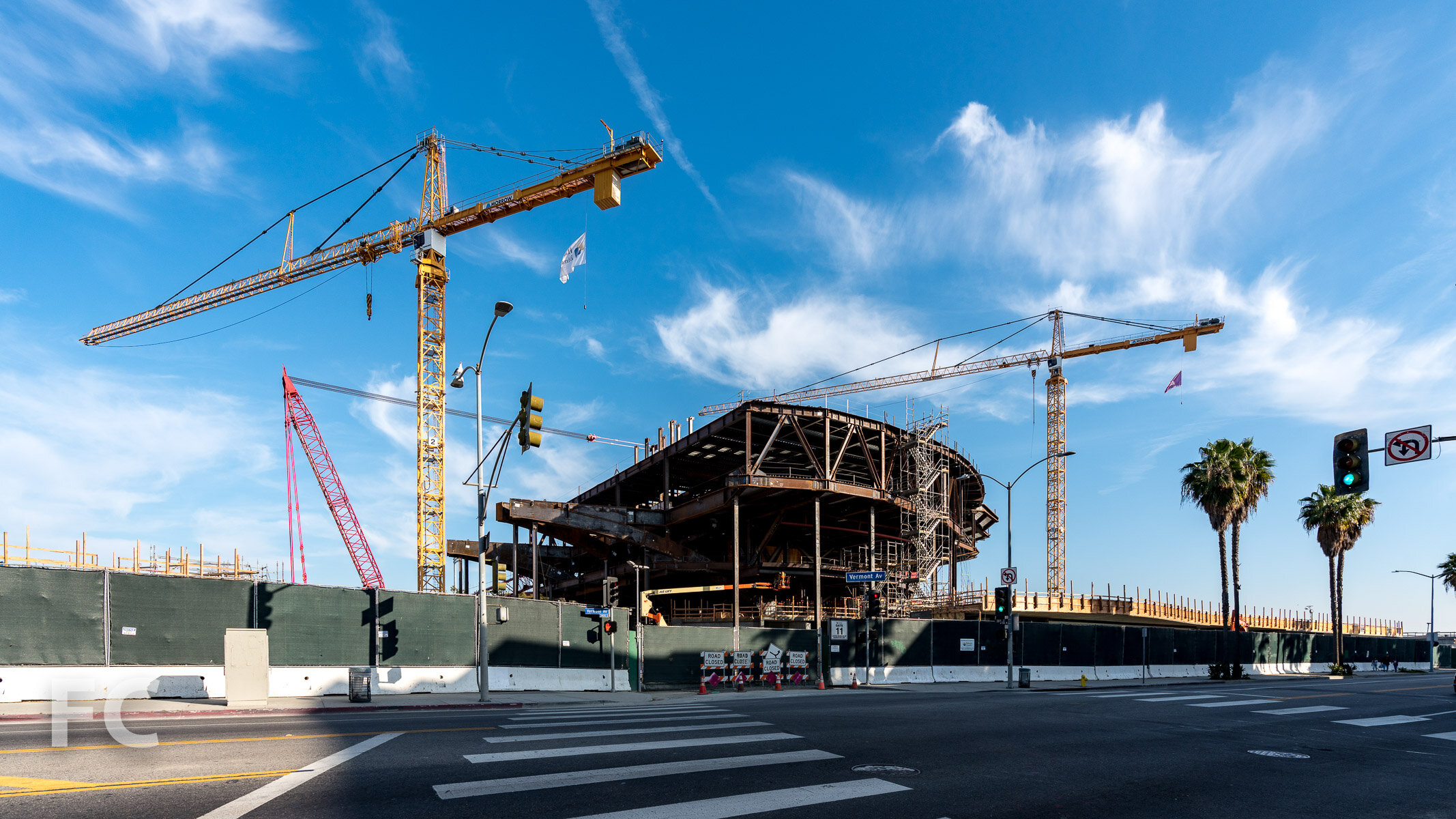
Construction Update: Lucas Museum of Narrative Art
West boundary of the south half of the museum site.
Construction continues at MAD Architects’ second US project, the Lucas Museum of Narrative Art at Exposition Park in South Los Angeles. The 300,000 square-foot non-profit museum will feature collection galleries, exhibition spaces, two theaters, digital classrooms and a free public research library for educators, scholars and students. Superstructure is currently rising on the southern half of the museum building.
Aerial rendering of the Lucas Museum. Rendering by MAD Architects. Courtesy of the Lucas Museum of Narrative Art.
West boundary of the north half of the museum site.
Architect: MAD Architects; Client: Lucas Museum of Narrative Arts; Program: Museum, Library, Parking; Location: Los Angeles, CA; Completion: 2026.

Construction Update: 8600 Wilshire Boulevard - Gardenhouse
Northeast corner from Wilshire Boulevard.
Construction is wrapping up at Gardenhouse, MAD Architects’ first US project in the Beverly Hills neighborhood of Los Angeles. The project includes 18 residential units, ranging in type from three townhouses, five villas, two studios and eight condominiums, atop a commercial ground floor. A living wall of native, drought-tolerant succulents and vines wraps the north and east facade of the three story podium that contains the condo units. Clustered white villas sit atop the podium and house the townhouses and villas.
Northeast corner from Wilshire Boulevard.
Closeup of the east facade.
North facade from Wilshire Boulevard.
East facade from South Stanley Drive.
East facade from South Stanley Drive.
East facade from South Stanley Drive.
Closeup of the east facade.
Southeast corner from South Stanley Drive.
Southwest corner from Charleville Boulevard.
Architects: MAD Architects (Design Architect), Gruen Associates (Executive Architect); Interior Designer: Rottet Studio; Structural Engineer: John Labib & Associates; MEP Engineer: Breen Engineering Inc.; Landscape Architect: Gruen Associates; Developer: Palisades Capital Partners LLC; Program: Residential Condo; Location: Los Angeles, CA; Completion: 2020.
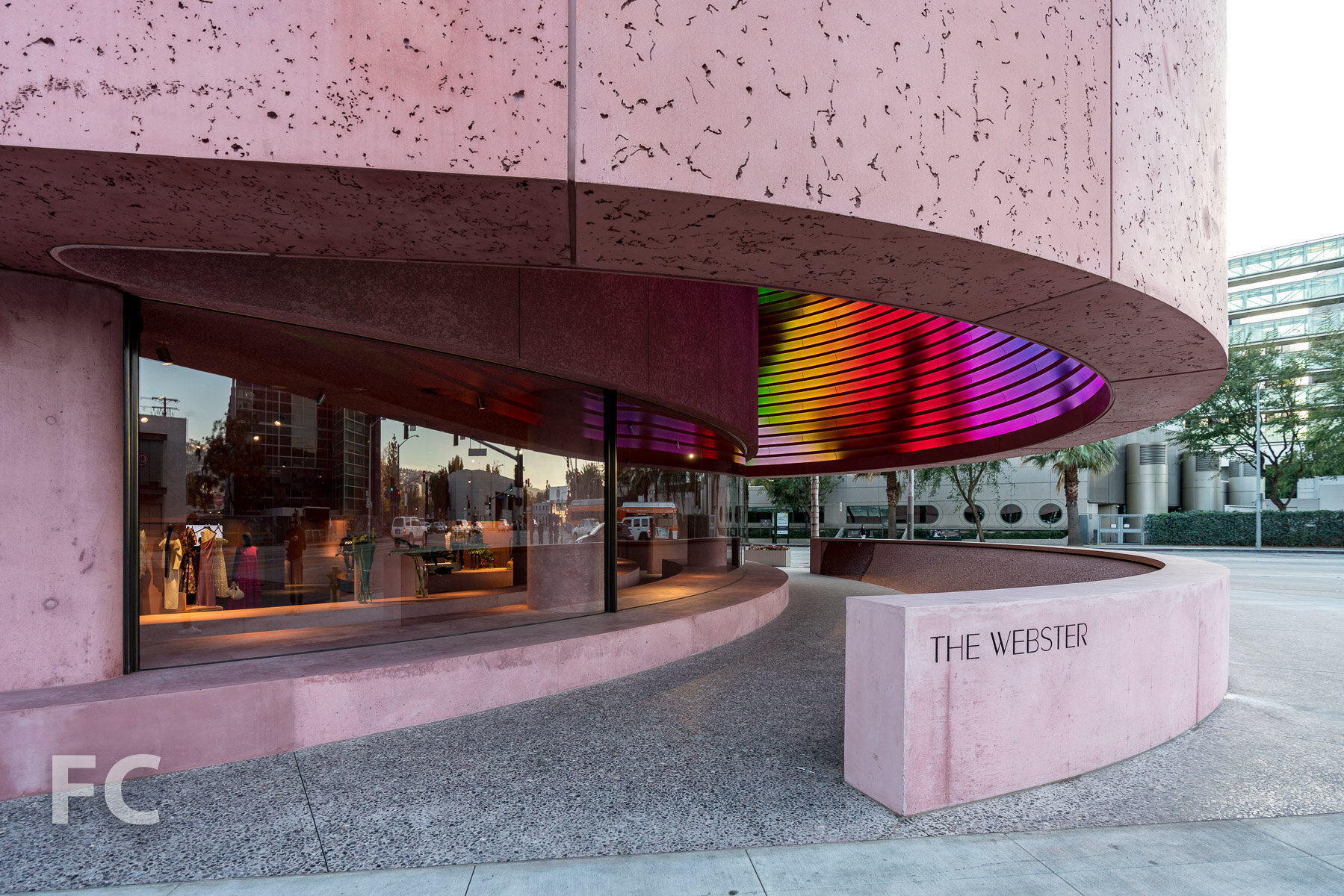
Tour: The Webster Los Angeles
Adjaye Associates has completed a new retail store for The Webster at the Beverly Center In Los Angeles. The luxury multi-brand fashion house’s new 11,000-square-foot flagship store is the first project by David Adjaye in California. Located at the corner of Beverly Boulevard and San Vicente Boulevard, the storefront features a pink-tinted concrete facade that creates a covered entrance with a large scale digital screen projected onto the inner face.
The pink-tinted concrete of the exterior carries into the interiors with curving walls enclosing changing rooms and product displays. Smooth concrete at the lower half of the interior walls transitions to a more textured finish at the upper half and ceiling of the store. Terrazzo with fragments of black cherry marble covers the floor.
Architect: Adjaye Associates; Client: The Webster; Program: Retail; Location: Beverly Hills, Los Angeles, CA; Completion: 2020.

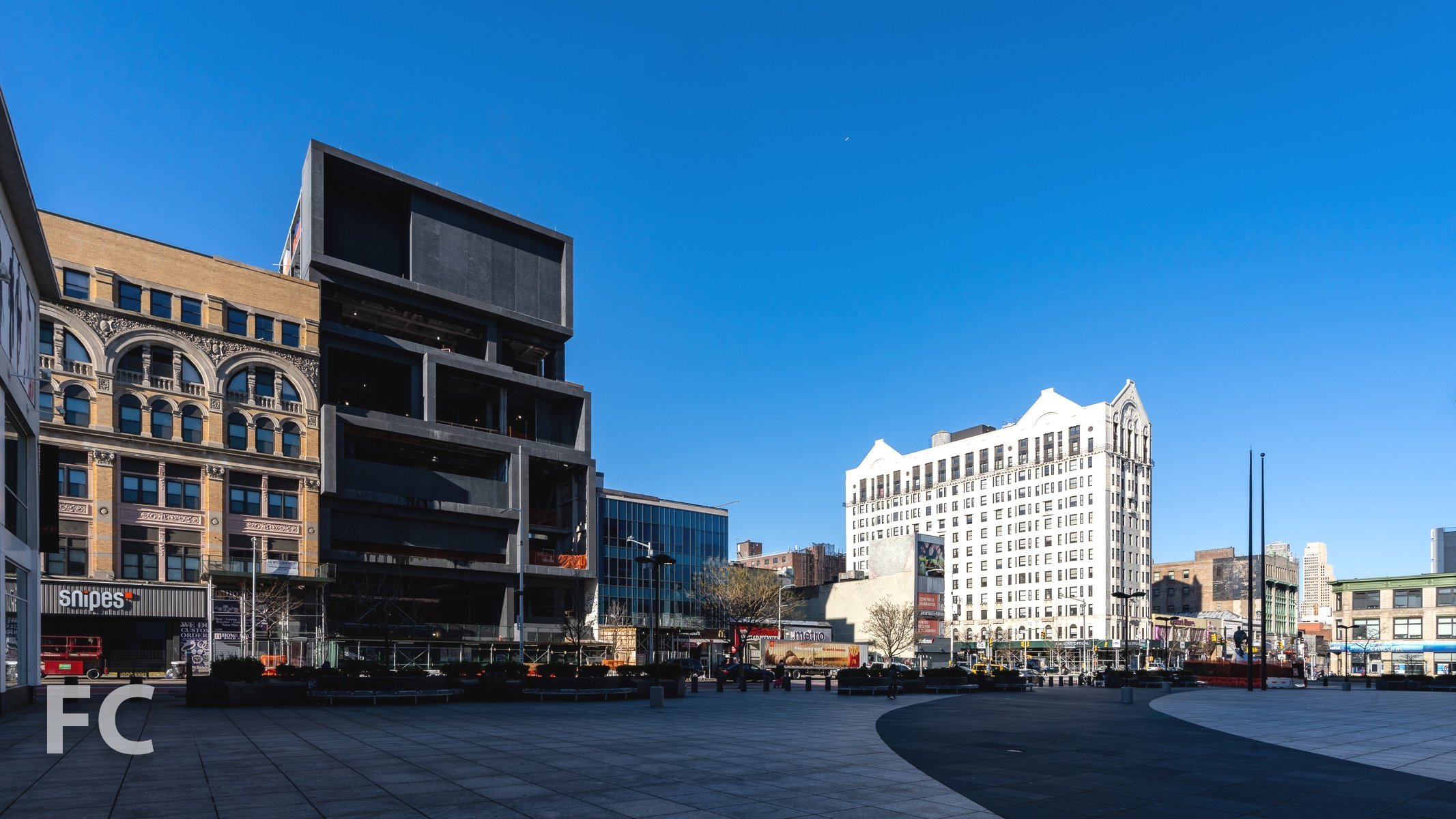
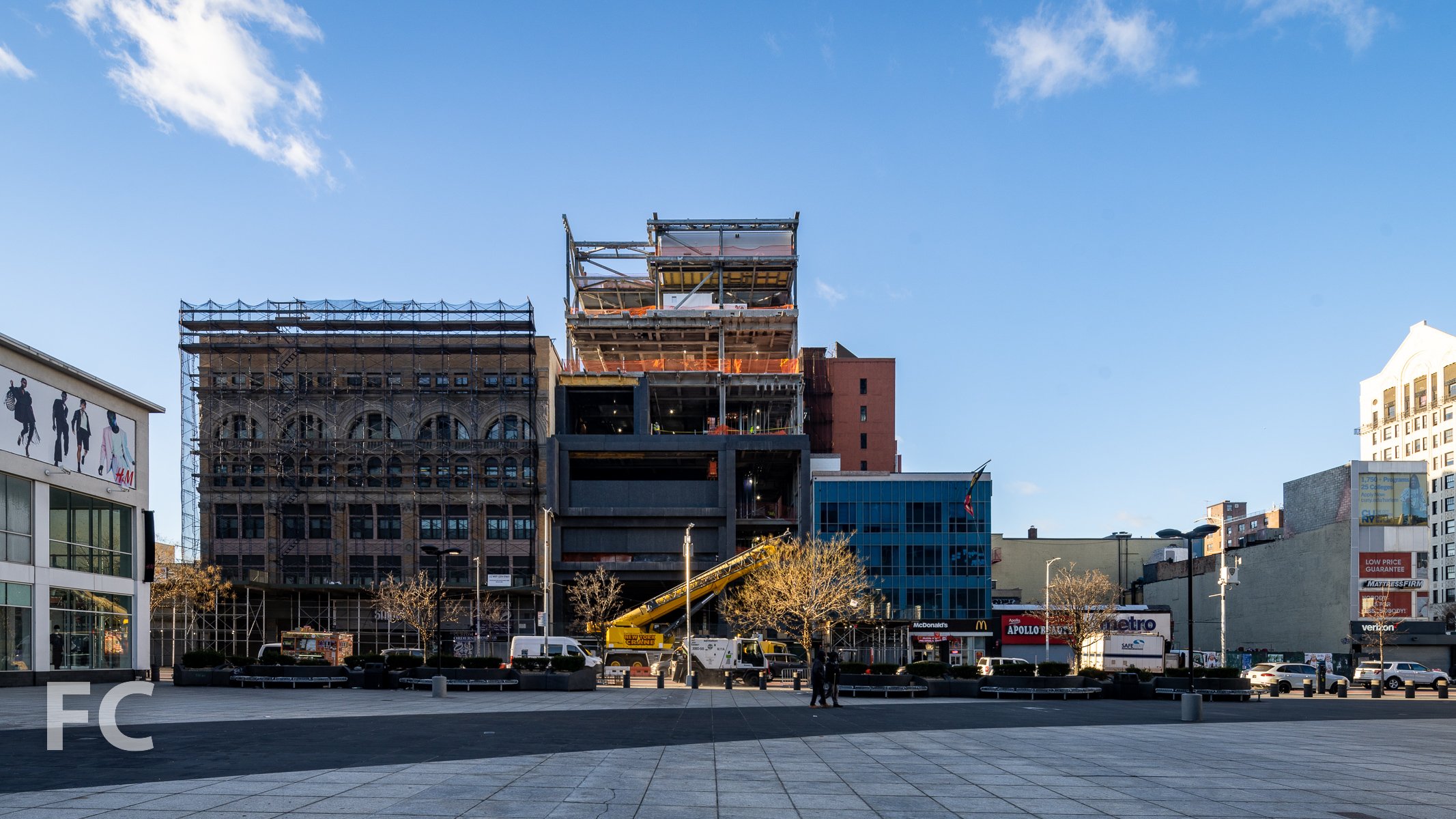
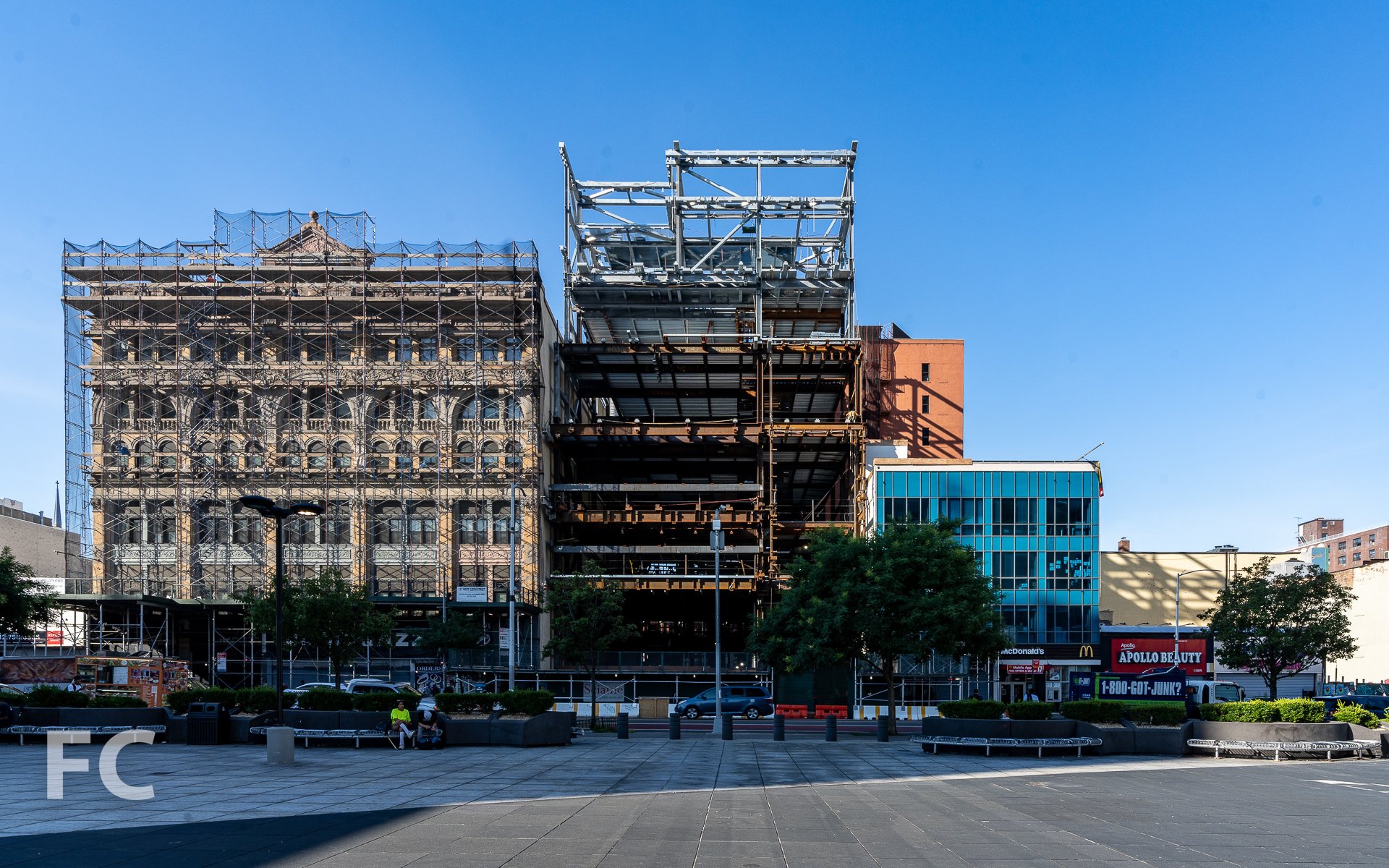
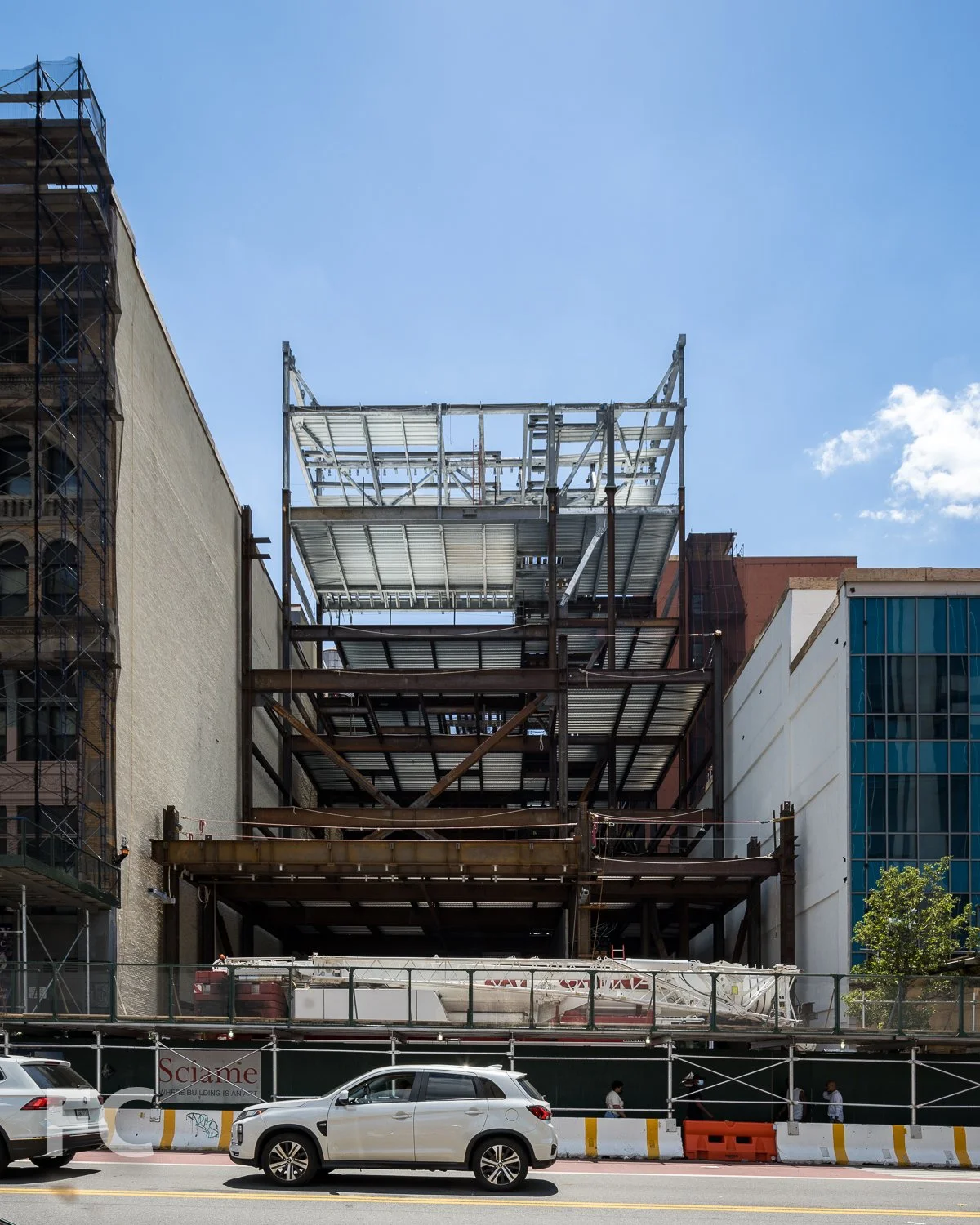


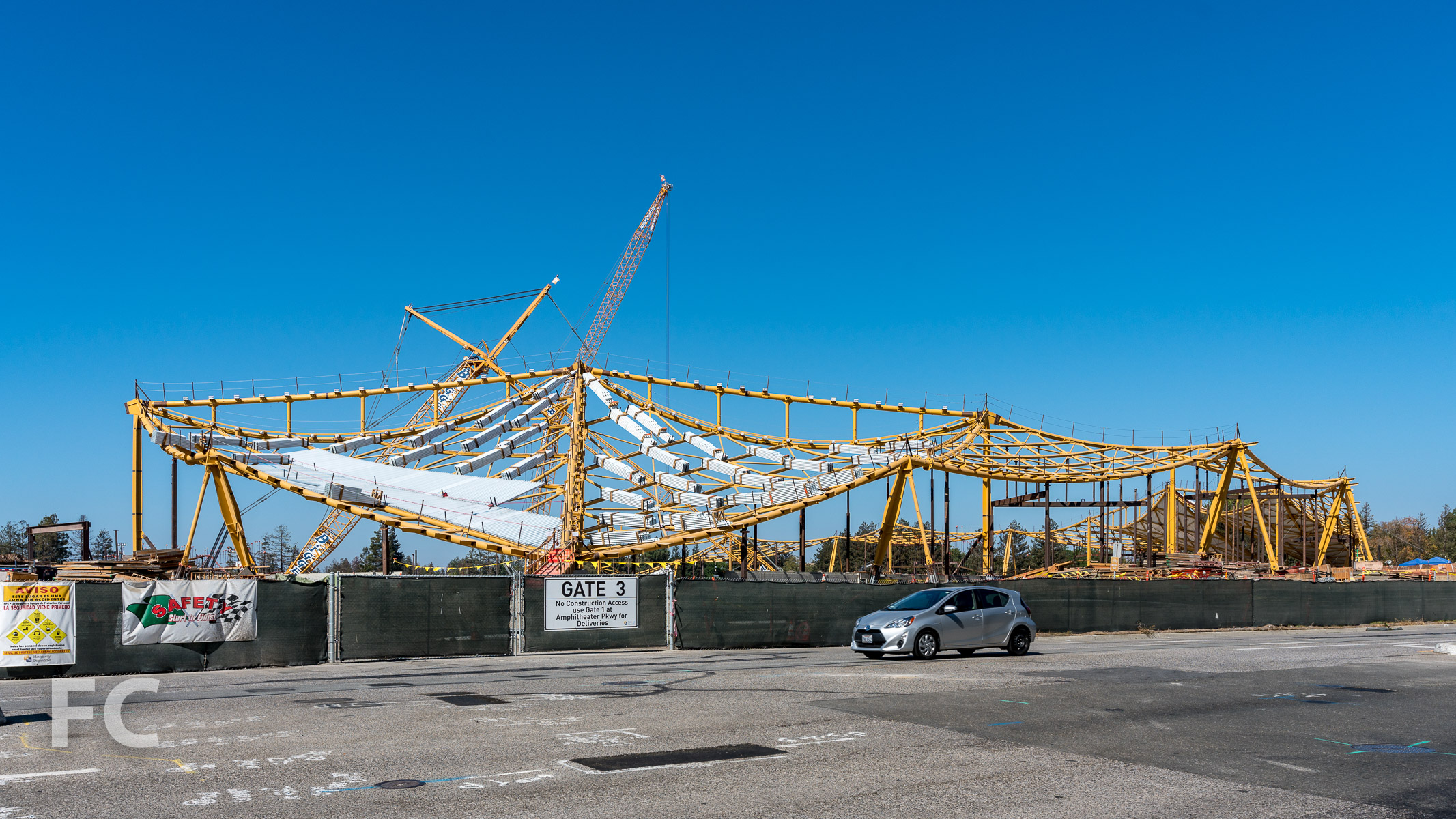
Construction Update: Google Charleston East
Construction is underway on Google’s Charleston East campus expansion next to the original Googleplex campus in Sunnyvale, California. Designed by Bjarke Ingels Group (BIG) and Thomas Heatherwick, the 645,000 square foot campus features a hangar like canopy that allows for flexibility in locating walls and floor below. According to BIG, their strategy for the building was to “create a replicable and scalable building typology that is also adaptable and inclusive” to Google’s other potential expansion sites nearby.
At the canopy, smile shaped clerestories allow for sunlight to reach the main work spaces of the second floor’s interconnected floor plate. Secondary program and public spaces occupy the ground floor and connect to the second floor by courtyards.
Architects: Bjarke Ingels Group (BIG) with Thomas Heatherwick; Client: Alphabet; Program: Office; Location: Sunnyvale, CA; Completion: 2019.
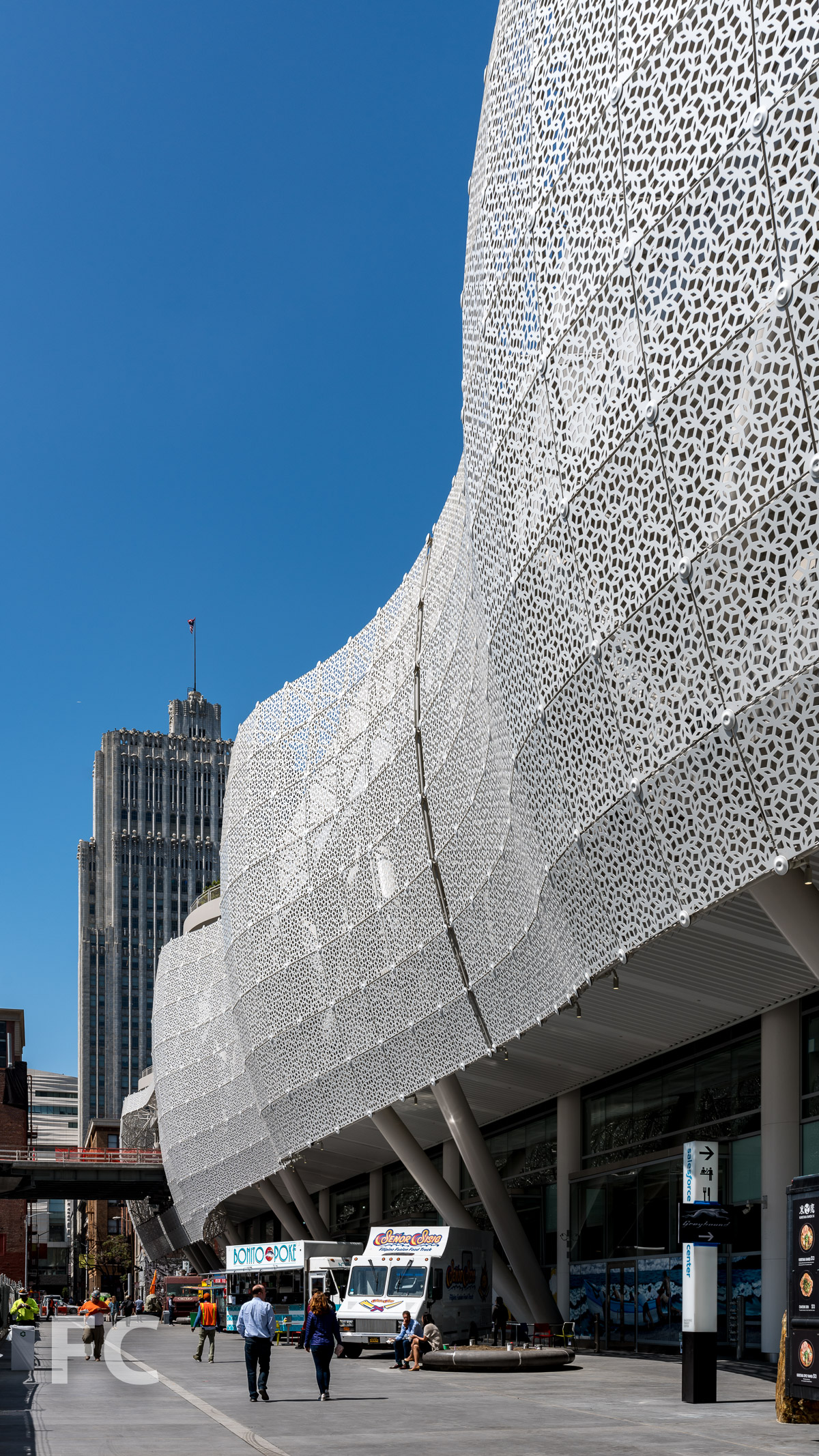
Transbay Transit Center and Salesforce Tower
Following the official opening of the Salesforce Tower in May, Pelli Clarke Pelli's adjacent Transbay Transit Center has now officially opened. The 1.5 million square feet multimodal transit hub spans five city blocks and is topped by a 5.4 acre public park. Due to the skyscrapers which flank either side, a stroll on the rooftop park feels similar to the experience of the High Line. A perforated aluminum screen composed of 4,486 conjoined panels clads the exterior above the ground floor, creating a lantern like effect at night.
Seismic joint.
Salesforce Tower.
Salesforce Tower.