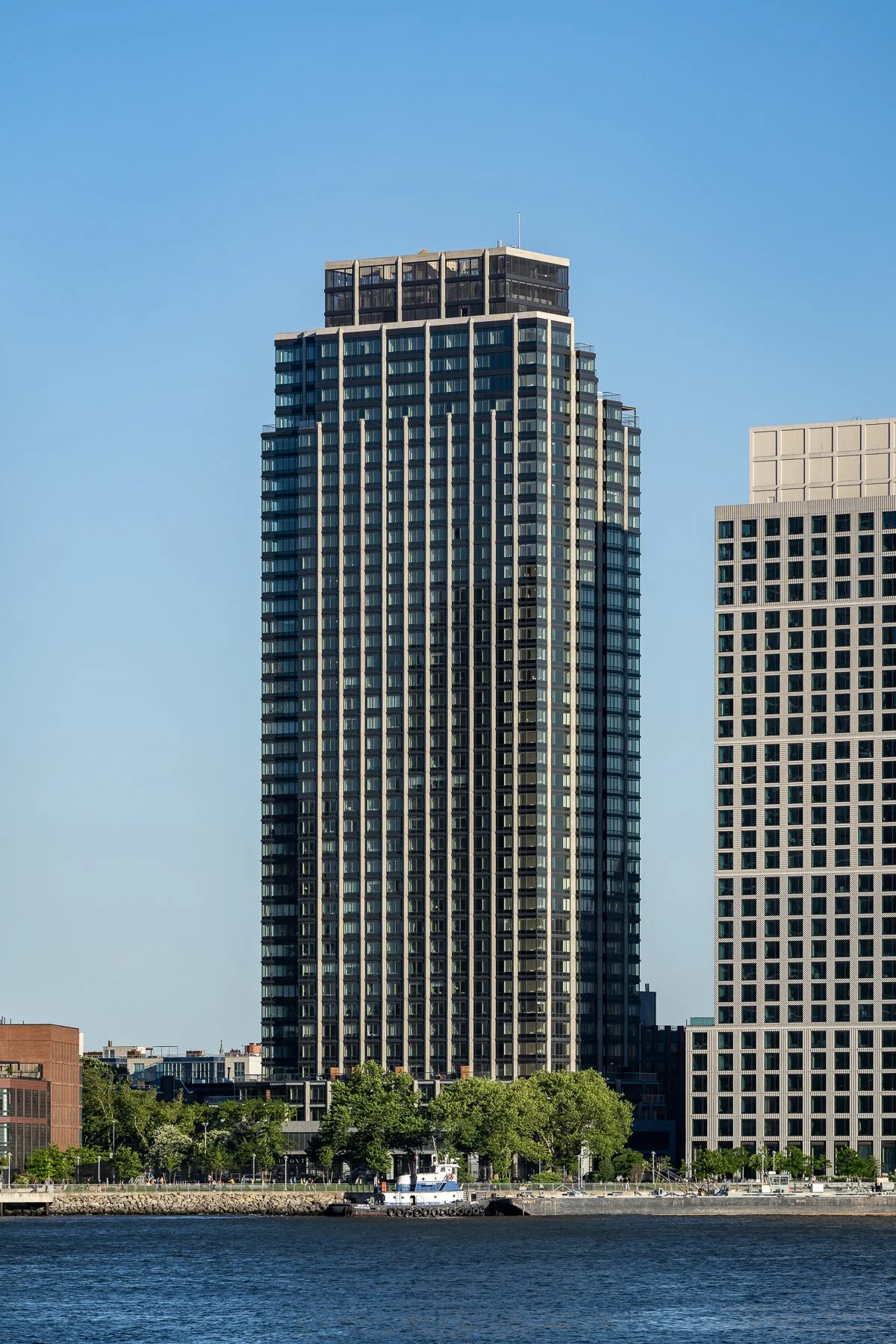
16 Dupont Street
Gerner Kronick + Valcarel · Greenpoint · 2025
North facade.
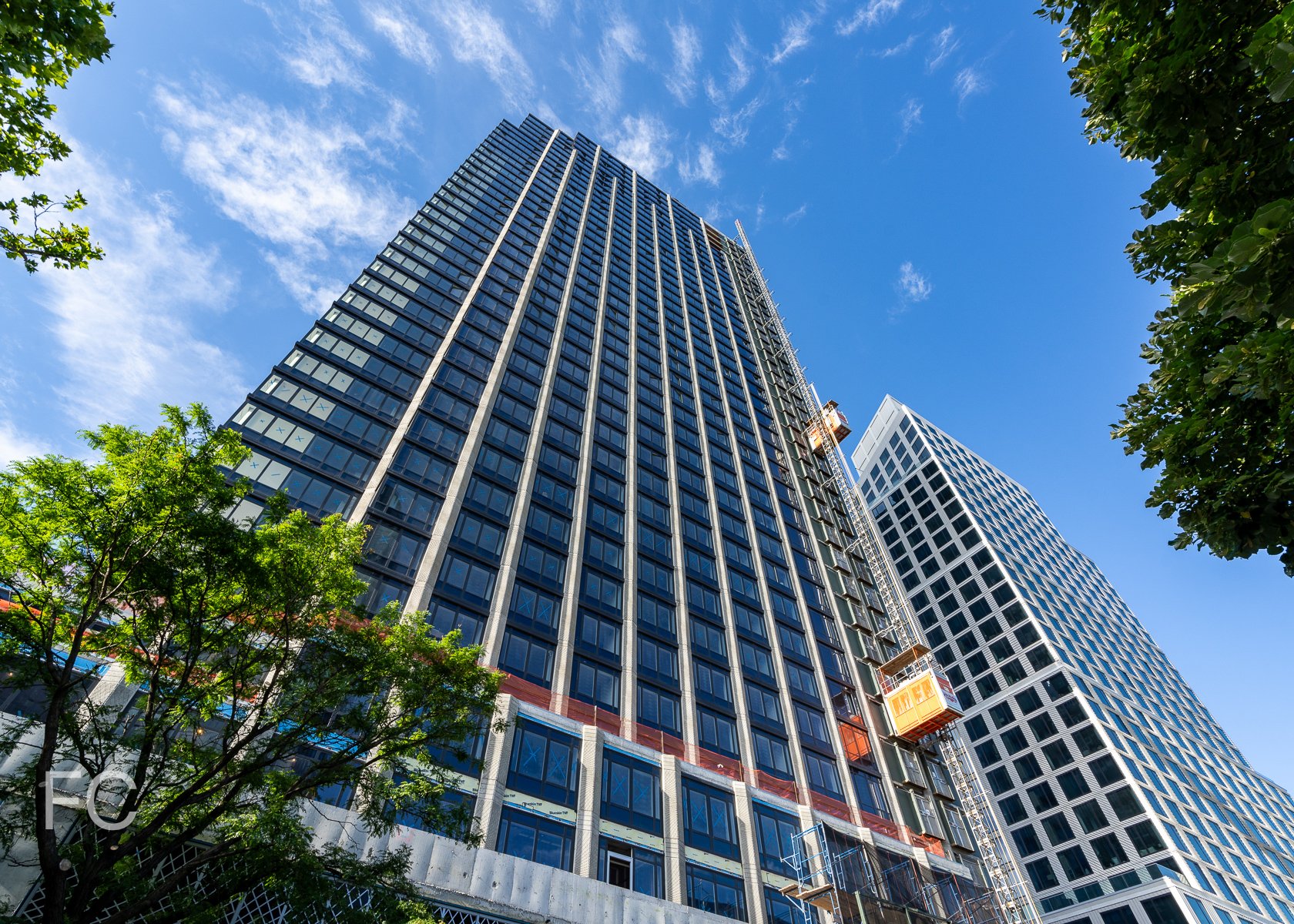
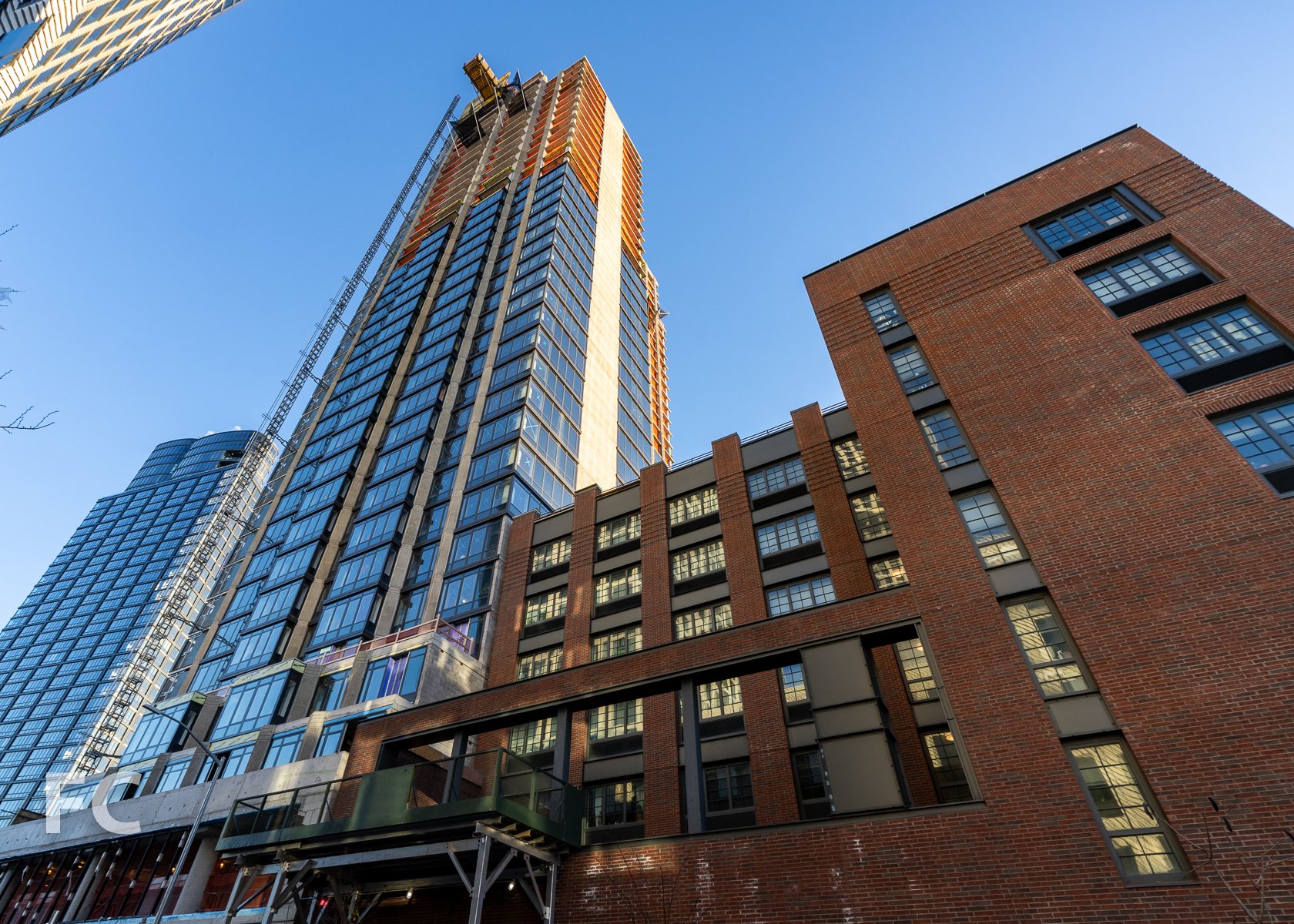
Construction has wrapped up at 40-story residential rental tower 16 Dupont at Greenpoint Landing by Rockefeller Group and Park Tower Group. Designed by Gerner Kronick + Valcarel (GKV), the facade features piers of textured cast-in-place concrete with a geometric pattern. Dark toned window wall glazing with metal spandrel covers clads the space between the concrete piers.
Closeup of the north facade of the tower crown.
Two Blue Slip (left), 16 Dupont (center), and Eagle + West (right).

Two Blue Slip (left), 16 Dupont (center), and Eagle + West (right).

North facade.
Gotham Point (left), Eagle + West (center), 16 Dupont (right), and The Huron (far right).
Southwest corner of the tower.
Northwest corner of 16 Dupont (left) and Eagle + West (right).
Northwest corner of 16 Dupont (left) and Eagle + West (right).
North facade.

South facade from West Street.

Looking up at the southwest corner of the tower.
Northeast corner of 16 Dupont (left) and Eagle + West (right) from Commercial Street.
Looking up at the north facade.

East facade from Dupont Street.

Looking up at the east facade.

Looking up at the south facade.

Residential entry at the north facade.

Looking up at the north facade at the residential entry.
Residential Amenities
Amenities will include a social lounge, an adjacent garden terrace, coworking lounge, fitness center with spa, and children’s playroom. At the roof, residents have access to a sundeck and outdoor pool, which will be the highest in Greenpoint. The tower also contains 2,548 square feet of commercial space and an enclosed parking garage for 138 vehicles.

Residential lobby.

Fitness center.

Social lounge.


Social lounge.

Social lounge.

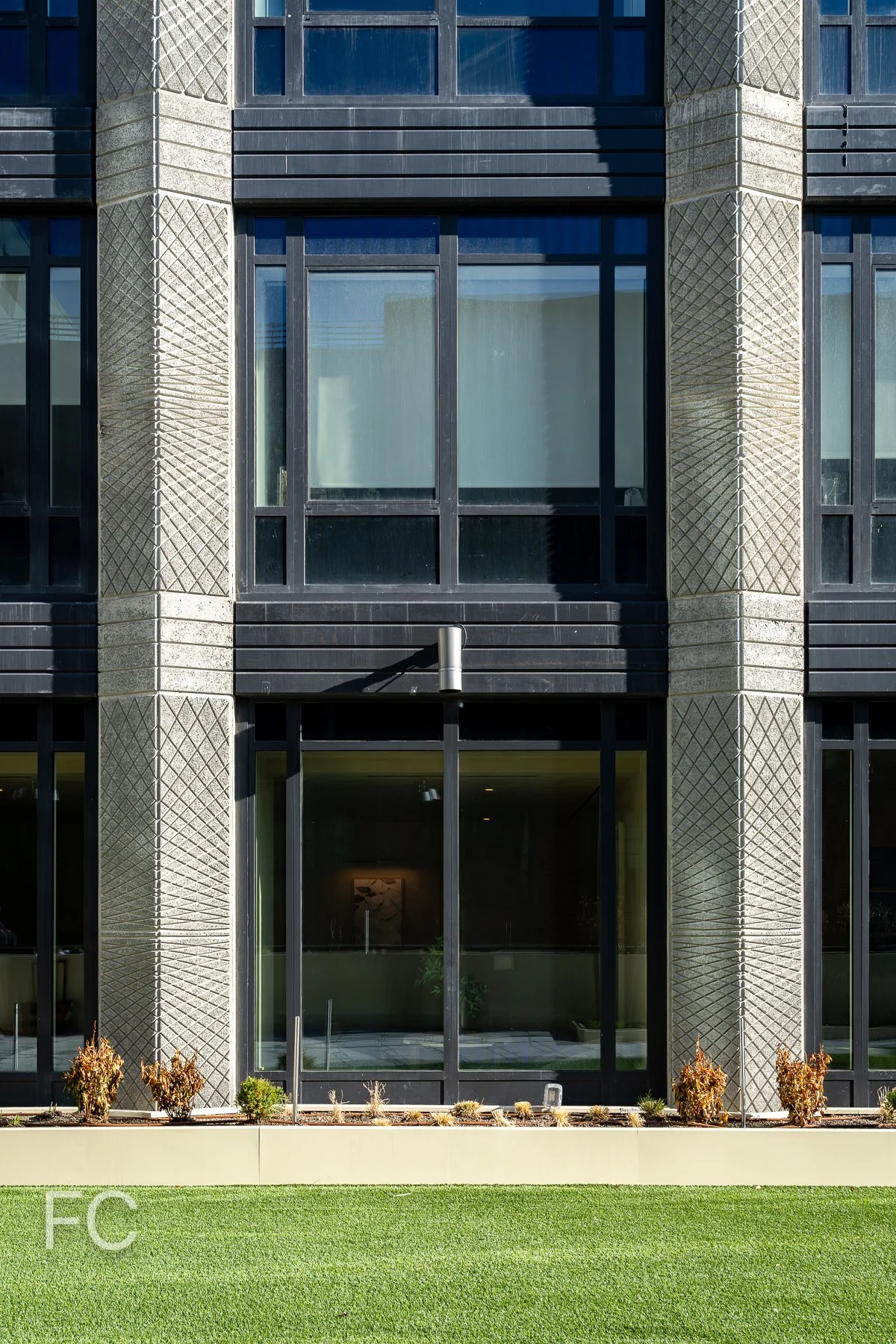
Garden terrace.

Model Residences
The development offers 381 rental units, ranging in size from studios to three-bedroom residences. About 90% of the residences feature a water view.

Kitchen with Workstead-designed Italian cabinetry with custom wood hardware.

Primary bedroom.
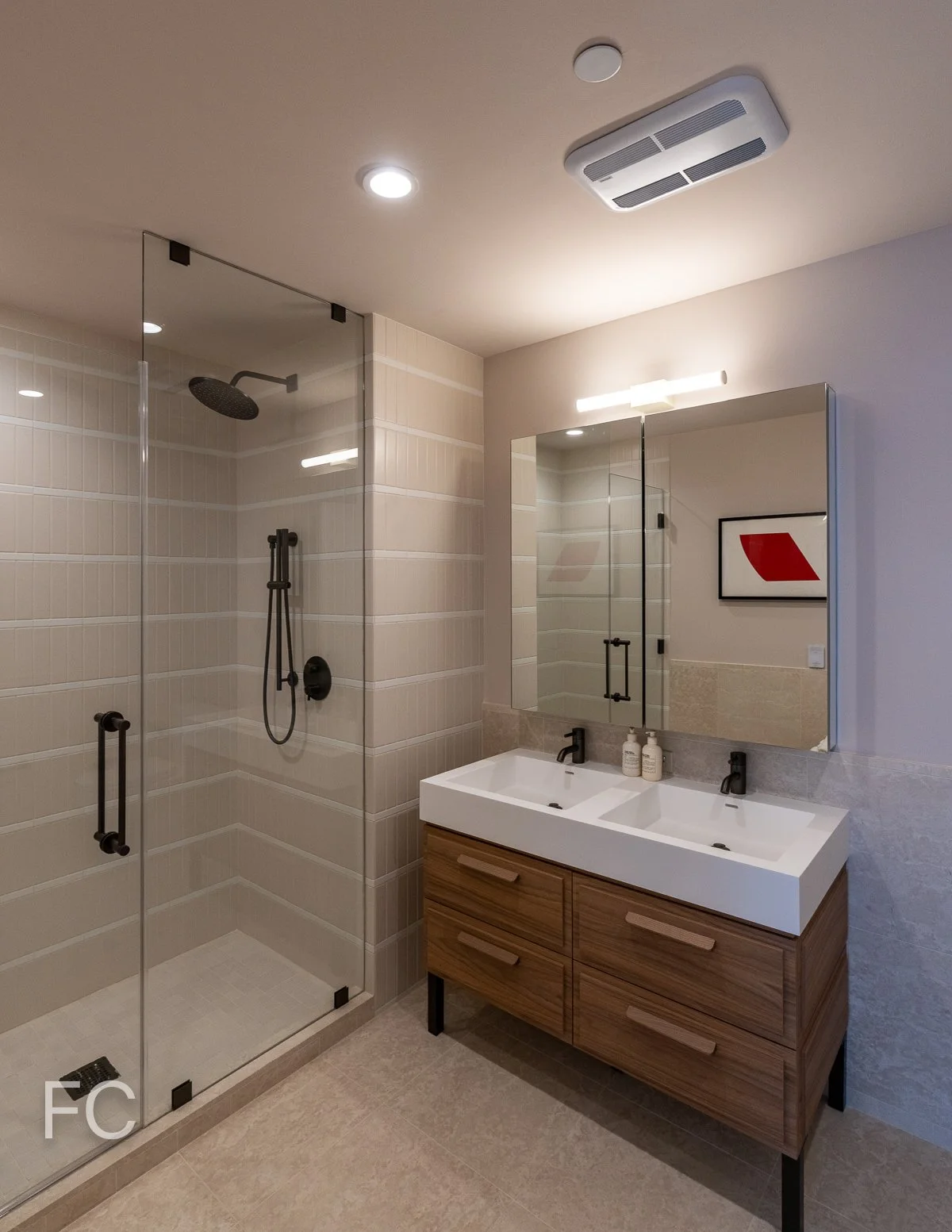
Bathroom with Bottocino Italian marble tile and Workstead-designed custom oak vanity and sconces.
Rooftop Views
View to the west towards Midtown Manhattan.
View to the northwest towards Midtown Manhattan and Hunters Point South.

View to the south towards Greenpoint and Lower Manhattan.
Architect: Gerner Kronick + Valcarel (GKV); Interiors: Workstead; General Contractor: Monadnock Construction; Developers: Park Tower and Rockefeller Group; Program: Residential Rental, Retail; Location: Greenpoint, Brooklyn, NY; Completion: 2025.
Tour: Cornell Tech Campus
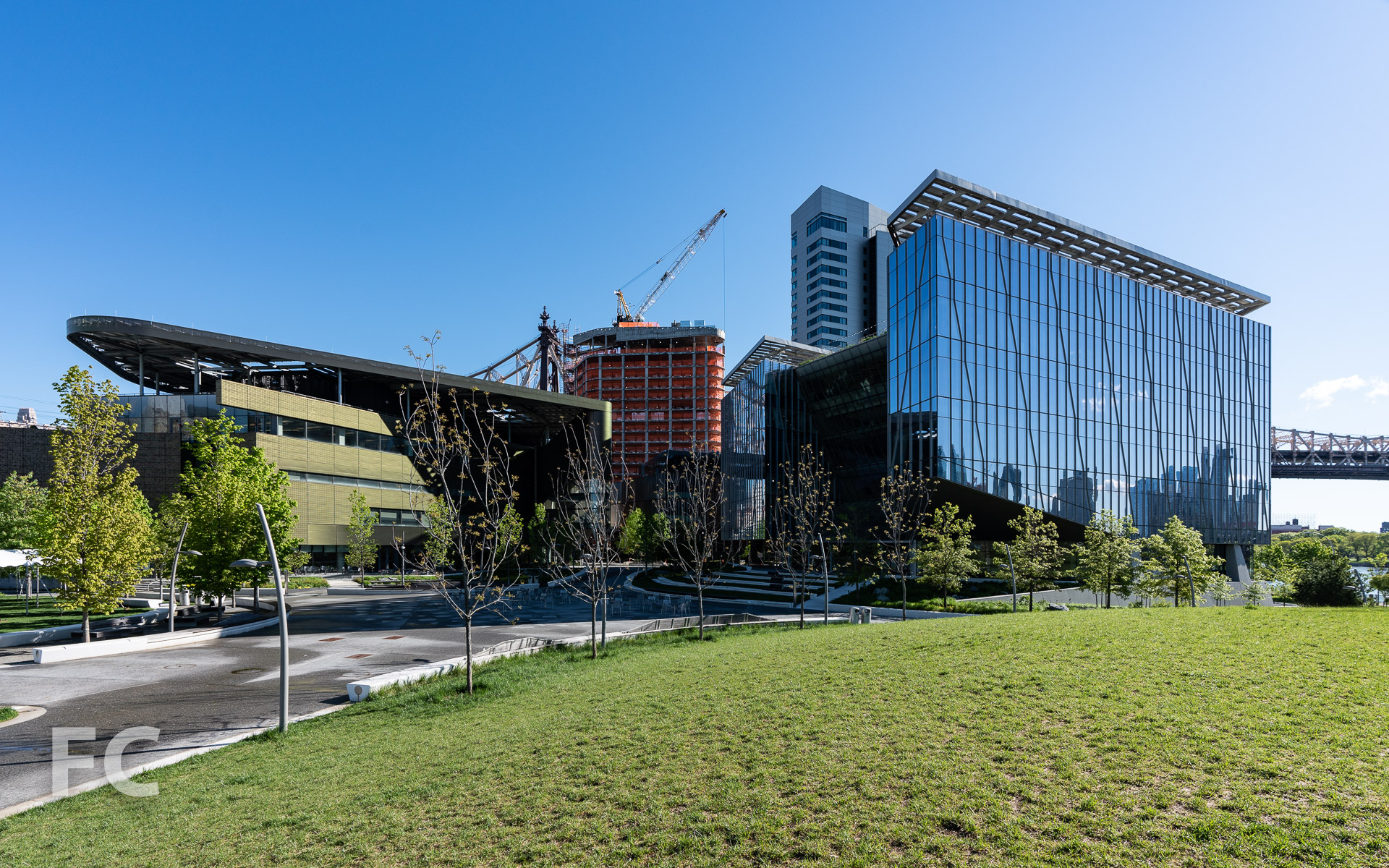
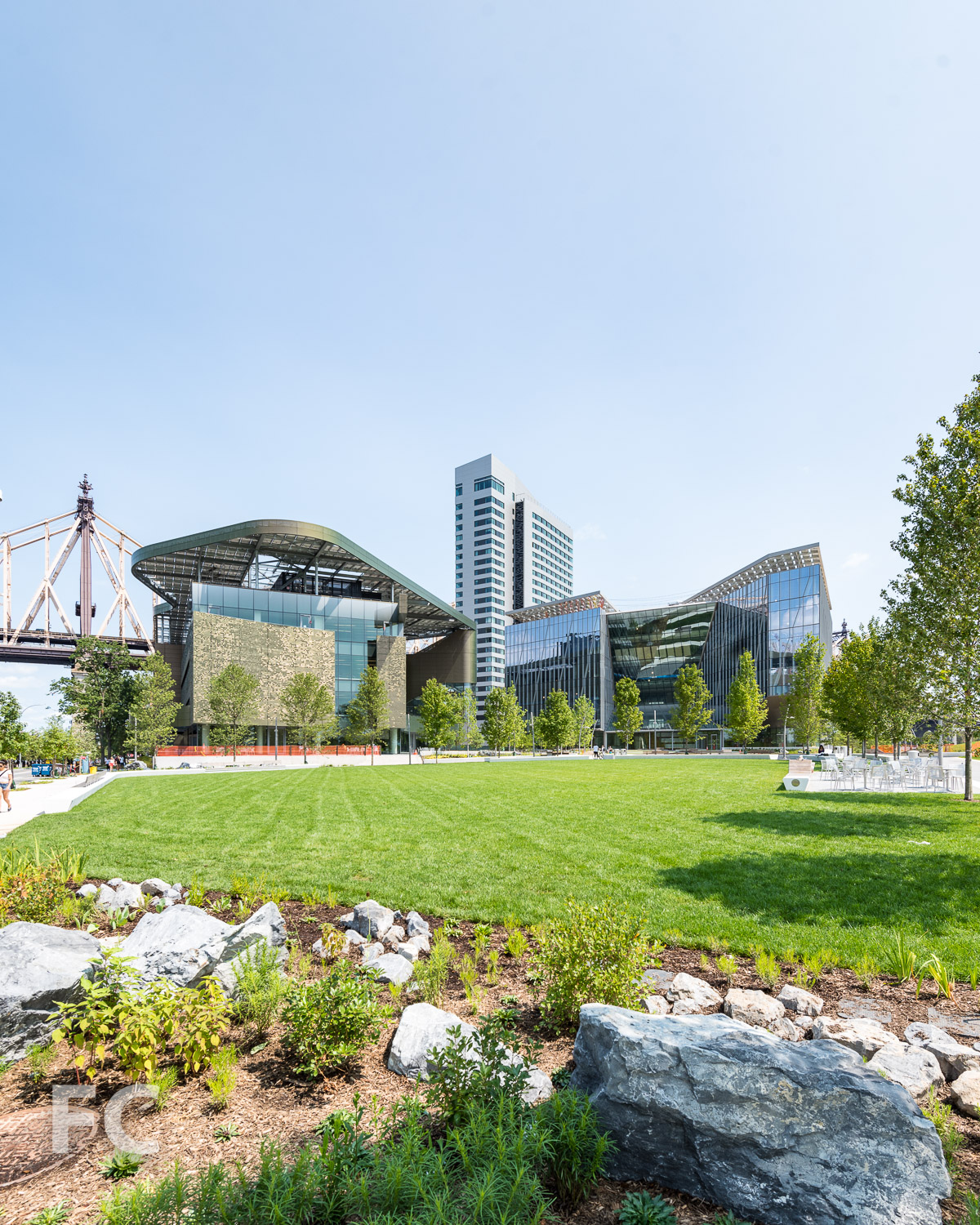
Northwest corner of the Cornell Tech campus.
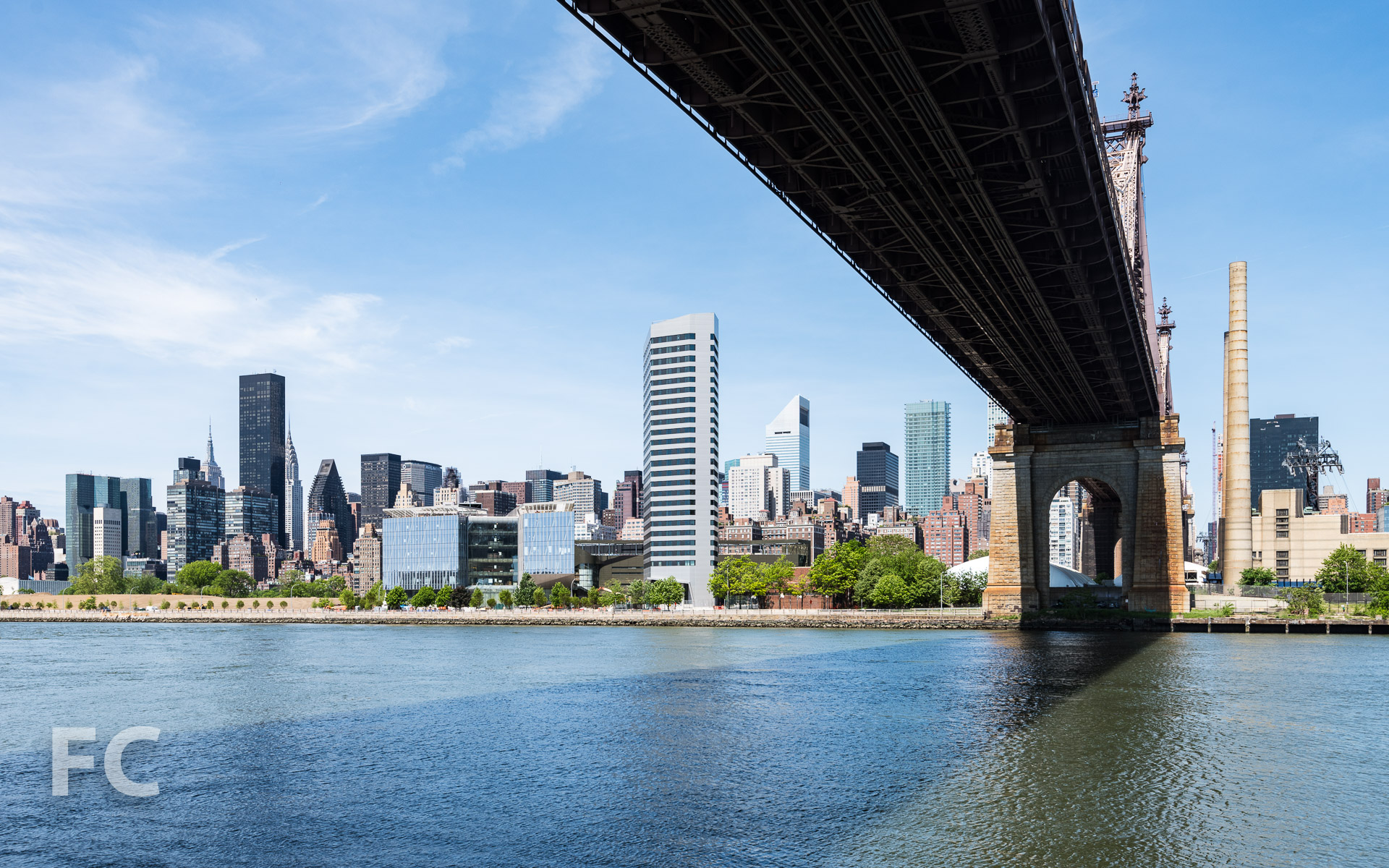
The first phase of the new campus for Cornell Tech on Roosevelt Island has officially for the fall semester. Established under a partnership between Cornell University and the Israel Institute of Technology, Cornell Tech serves as a graduate school for applied sciences that hopes to nurture the future of New York's growing tech industry. When the full master plan is realized in 2043, the completed campus will house 2 million square feet of space and 12 acres of open space for approximately 2,500 occupants.
Campus signage.
The Bloomberg Center
The Bloomberg Center, designed by Morphosis, serves as the main academic building for the first phase of the Cornell Tech campus. Faculty and students will be able to work independently and collaboratively in the building’s flexible space. Interaction with the public will be facilitated through the café and terrace. As with the other buildings on campus, The Bloomberg Center will pursue aggressive sustainability standards as it sets a goal of being the largest Net Zero energy use building in the United States. All of its energy will be generated on site through the use of geothermal wells for heating and cooling and a canopy of solar panels at the roof.
North façade of The Bloomberg Center.
Looking up at the east façade of The Bloomberg Center.
Southeast corner of The Bloomberg Center.
Morphosis has designed an iconic metal panel façade to cover the unitized, continuously insulated rainscreen wall system. A system of perforations in the panels catches the sunlight to create an organic pattern visible on campus and from afar.
Looking up at the south façade of The Bloomberg Center.
Southwest corner of The Bloomberg Center.
Close-up of the perforated metal panel façade of The Bloomberg Center.

The Bridge at Cornell Tech
The Bridge at Cornell Tech, designed by Weiss/Manfredi and developed by Forest City Ratner Companies, will serve as a corporate co-location facility to bring together established tech companies, startups, and academic researchers to accelerate the introduction of new technologies to the market. The 230,000 square foot building will pursue a minimum of LEED Silver with sustainable features such as 16,500 square feet of rooftop solar panels, efficient water fixtures, stormwater capture, and a ground floor elevated 10 feet above the 100 year flood plane. A glass curtain wall with a vertical frit pattern clads the steel structure, offering expansive light and views to the 14 foot floor to floor height work spaces.
Northeast corner of The Bridge.
Southwest corner of The Bridge.
Close-up of the façade of The Bridge.
Lobby of The Bridge.
The House at Cornell Tech
The House at Cornell Tech, designed by Handel Architects and developed in partnership with The Hudson Companies and The Related Companies, will offer 350 residential units for students and faculty of the college. Rising to a height of 270 feet, the tower is the tallest building on campus and will be the world’s tallest Passive House designed structure at completion. The Passive House energy standard was developed in Germany and is considered the most rigorous energy efficiency standard in the world. Buildings designed to this standard typically achieve energy consumption reduction of 60% to 80% that of a similar code building.
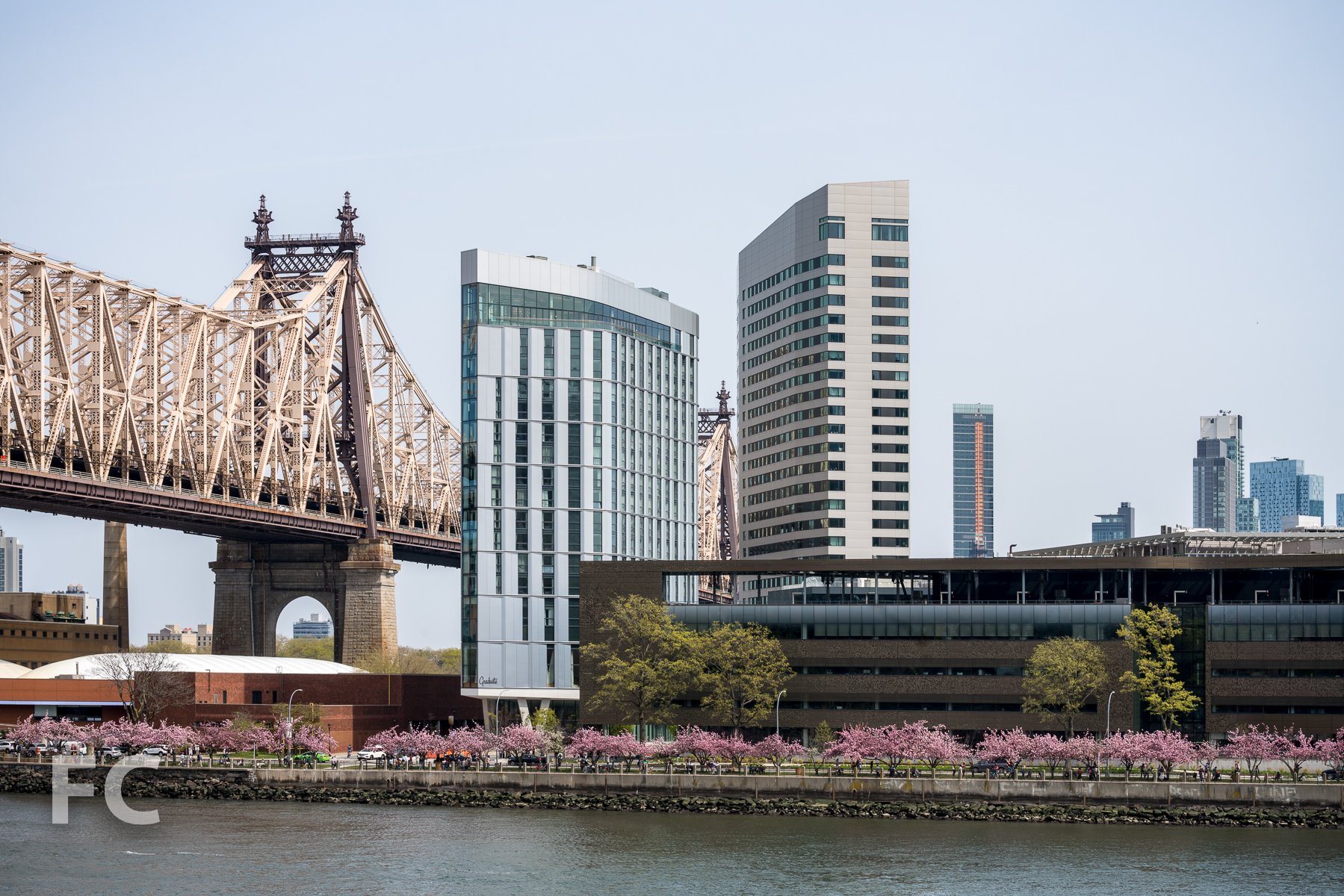
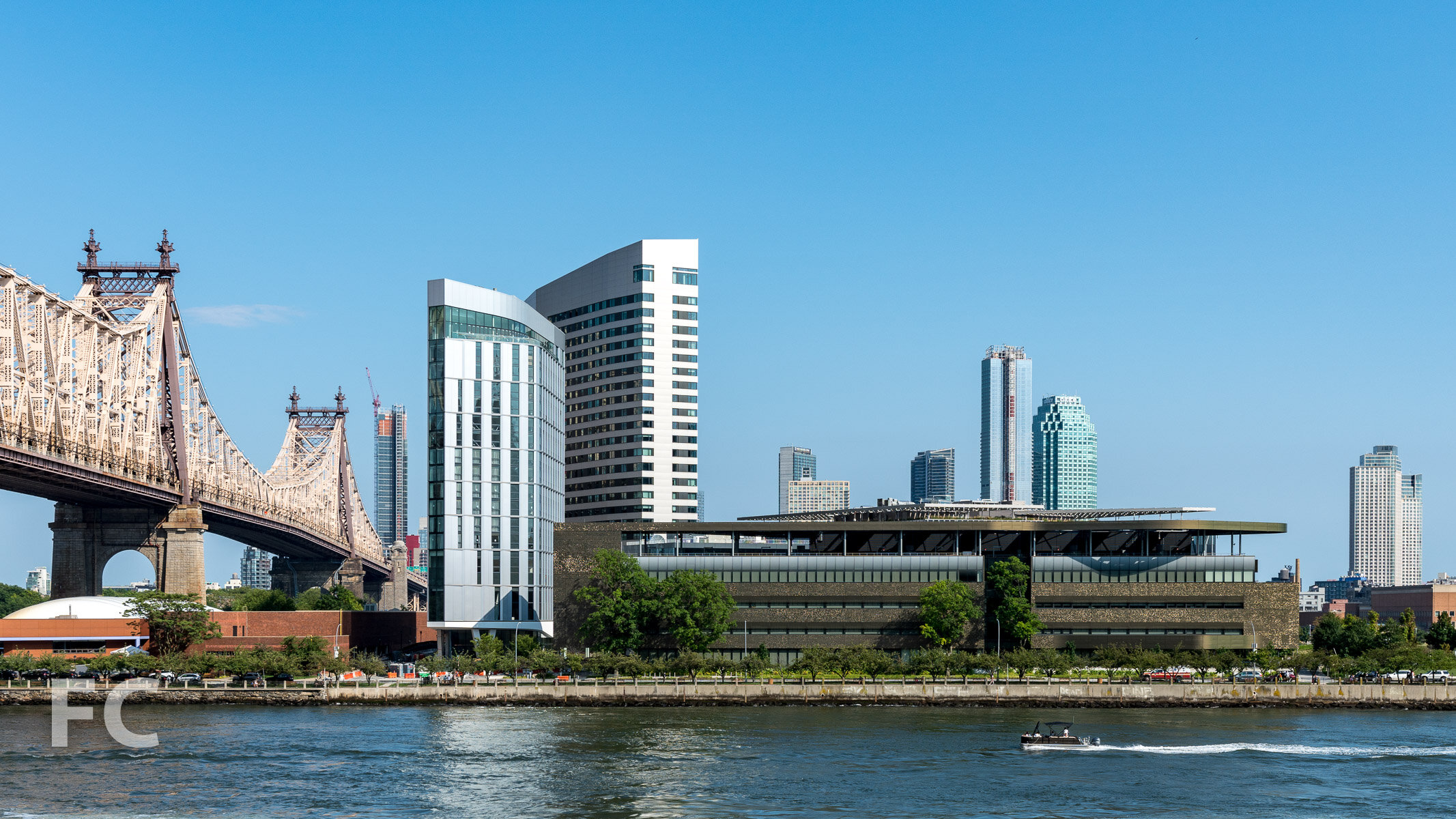
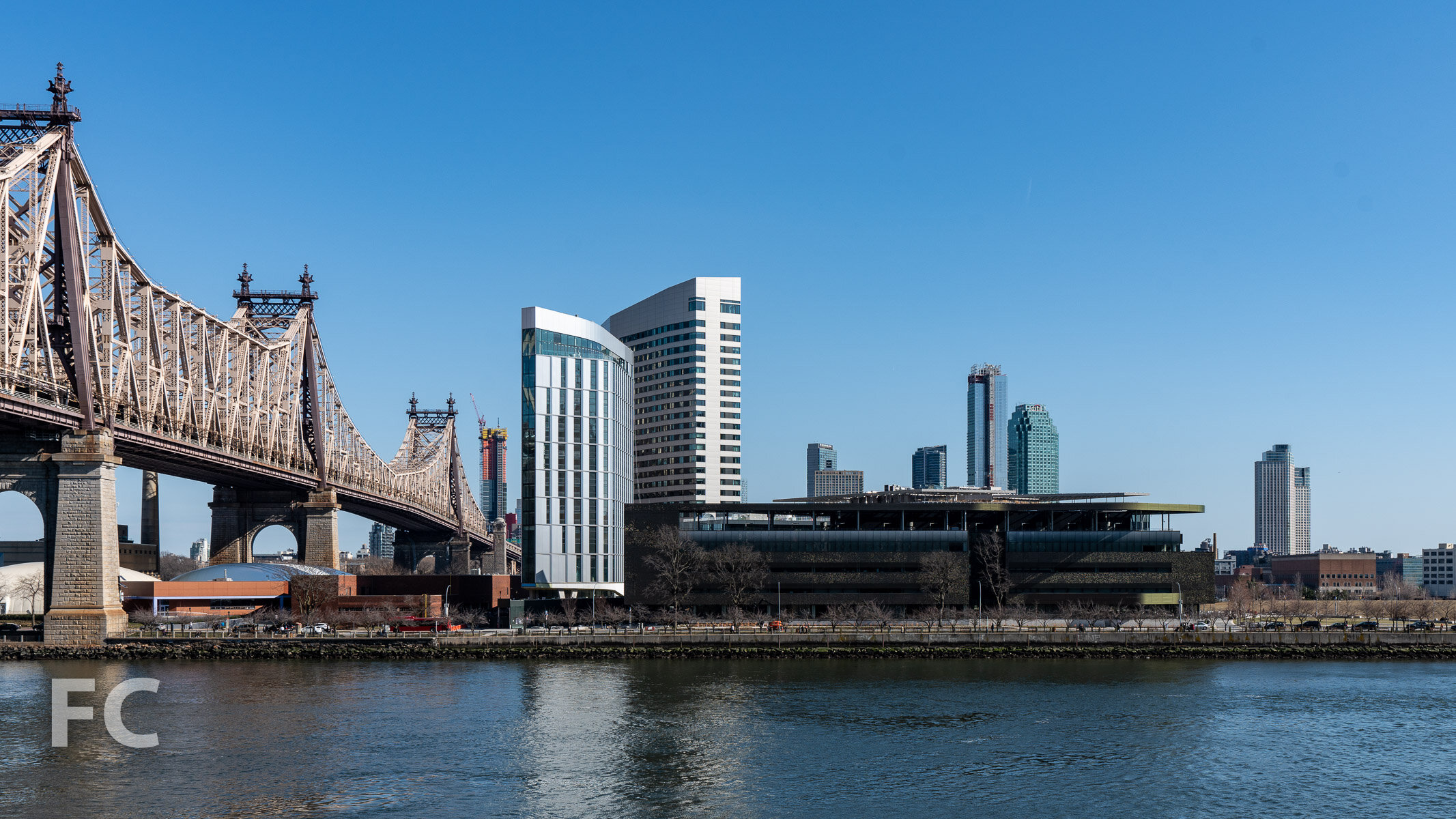
Northwest corner of The House.
Looking up at the south façade of The House.
As part of the energy efficient design of the building, the façade is clad in unitized mega panels of metal panel and punched windows that are designed and prefabricated for better control of air infiltration, reducing heating and cooling loss. A special color changing paint is employed on the metal panels that will shift from silver to warm champagne in the natural light. The southwest corner of the façade features a vertical strip of louvers that act as the building’s “gills”, concealing the outdoor space where the heating and cooling equipment are housed.
Residential entry at The House.

Amenities will include furnished common spaces, fitness center, landscaped ground floor porch and rooftop terraces, rooftop party room, and bicycle storage.
Southwest corner of The House.
Architects: SOM (Master Plan, Central Utility Plant), Landscape Architects: Field Operations (Open Space Master Plan, Campus Open Space); Location: Roosevelt Island, New York, NY; Completion: 2017.
BLOOMBERG CENTER:
Architect: Morphosis; Structural Engineer: Arup; MEP Engineer: Arup; Facade Consultant: Arup; Client: Cornell University; Program: Education.
THE BRIDGE AT CORNELL TECH:
Architect: Weiss/Manfredi; Program: Office.
THE HOUSE AT CORNELL TECH:
Architect: Handel Architects; Structural Engineer: Buro Happold; MEP Engineer: Buro Happold; Facade Consultant: Socotec; Sustainability and Passive House Consultant: Steven Winter Associates; General Contractor: Monadnock Construction; Client: Cornell University, Related Companies, Hudson Companies; Program: Residential.

Cornell Tech Campus
Superstructure rises at all building sites in the first phase of Cornell University's tech-focused new campus on Roosevelt Island in New York.
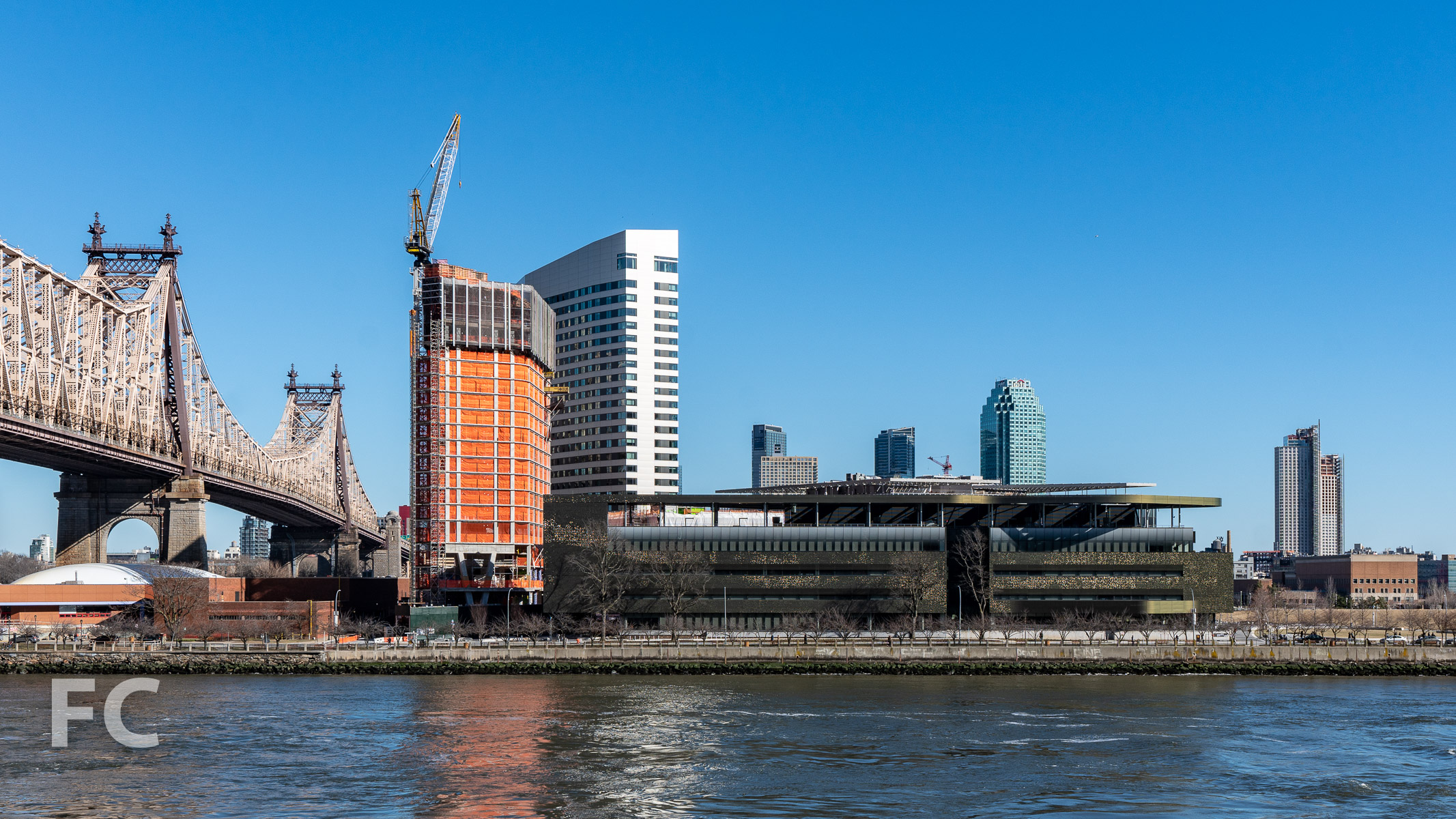
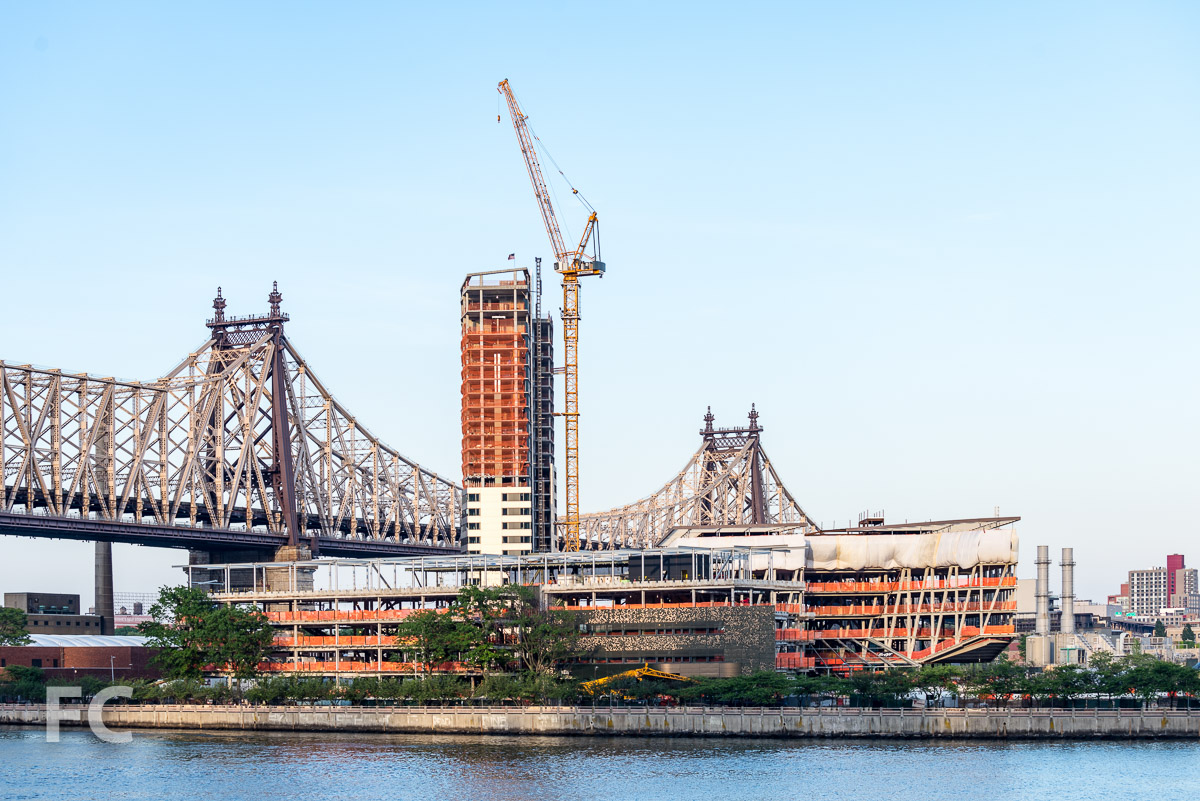
Superstructure has started to rise at the phase one sites of Cornell's new tech campus on Roosevelt Island. The site is located to the south of the Ed Koch Queensboro Bridge and was formerly home to the Goldwater Hospital, which housed 2,106 beds. Included in the first phase of construction is an academic building by Morphosis, a corporate co-location building by Weiss/Manfredi, a residential tower by Handel Architects, a meeting center for the academic and tech community, a central utility building by SOM, and a campus plaza by Field Operations.
Located on a triangular site at the northwest corner of the campus, the four-story, 160,000-square-foot Bloomberg Center will house the school's initial academic functions. Bronze toned metal panels will clad the exterior, while a roof covered in photovoltaic panels crowns the top floor. The building has been designed with the goal of achieving Net-Zero energy consumption and a LEED Platinum certification. Superstructure has reached the fourth floor, making topping out eminent.
To the east of the Bloomberg Center, the Bridge at Cornell Tech serves as a corporate co-location building. The Weiss/Manfredi designed building will provide space for new and established companies to work on innovative projects. Superstructure has reached the second floor.
Aerial view of the Phase One campus from the Roosevelt Island tram.
Aerial view of the Phase One campus from the Roosevelt Island tram.
Aerial view of the Phase One campus from the Roosevelt Island tram.
Northwest corner of the Bloomberg Center by Morphosis.
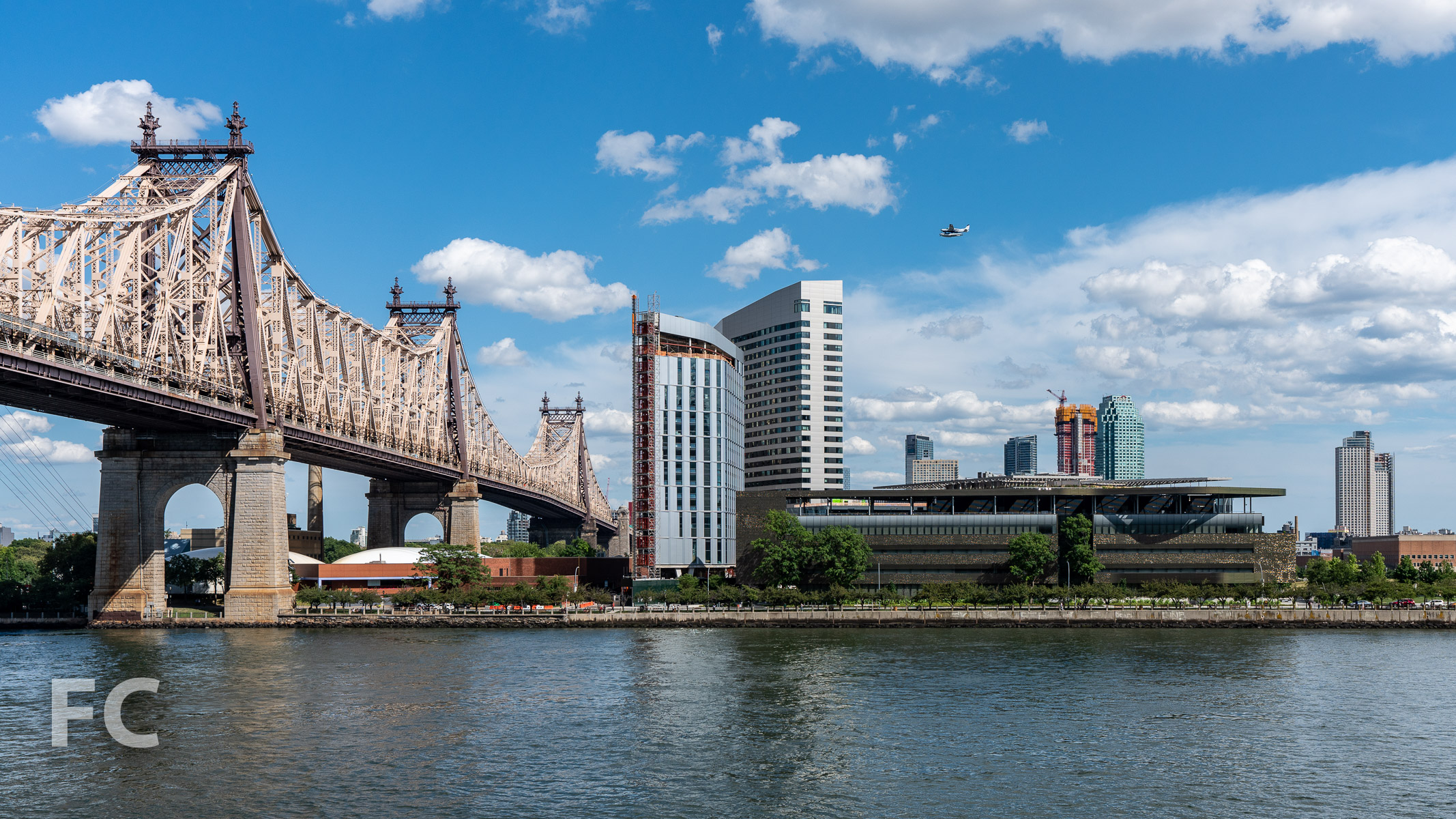
At the northern boundary of the site lies the Central Utility Plant and the residential tower. The one story utility building features a sawtooth facade, clad in metal panels, that faces the North Loop Road. An unoccupiable green roof covers the top. The Hudson Companies' 26-story, 270-foot-tall residential tower stands adjacent to the utility building and will provide 350 residential units to mostly graduate students. Handel Architects has designed the tower to the Passive House sustainability standards, making it the world's tallest project to use such standards. The Central Utility Plant has topped out, while the residential tower has reached its second floor.
North facade of the Central Utility Plant by SOM.
Northwest corner of the Central Utility Plant.
North facade of the Central Utility Plant by SOM.
Northeast corner of the Phase One campus with the Residential Building (center) and the Central Utility Plant (right).
Northeast corner of the Residential Building by Handel Architects.
Work on the first phase of the campus is schedule for completion by 2017.
Architects: SOM (Master Plan, Central Utility Plant), Morphosis (The Bloomberg Center), Weiss/Manfredi (The Bridge at Cornell Tech), Handel Architects (Residential Tower); Landscape Architects: Field Operations (Campus Plaza); Program: Education, Office, Residential, Open Space; Location: Roosevelt Island, New York, NY; Completion: 2017.