Audrey Irmas Pavilion at Wilshire Boulevard Temple
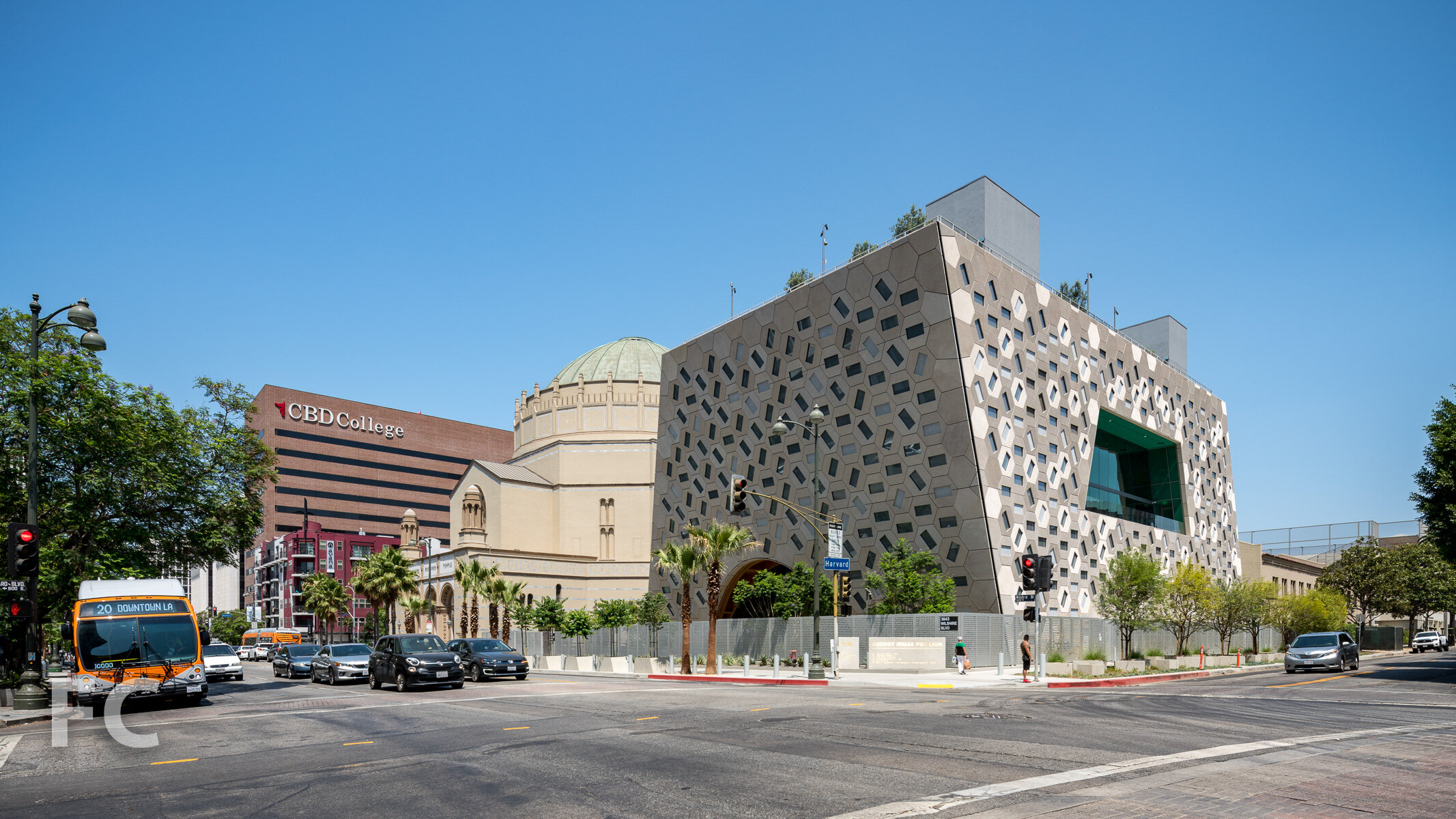
Southwest corner of the temple (left) and the new pavilion (right).
At the corner of Wilshire and Hobart Boulevard sits the Wilshire Boulevard Temple, a worship space for the oldest Jewish congregation in Los Angeles. The Moorish-style building, completed in 1929 by architect Abram M. Edelman, will soon be joined by a new multi-purpose event space for both the congregation and the surrounding city. Designed by Shohei Shigematsu of OMA New York, the Audrey Irmas Pavilion sits adjacent to the 1929 temple in a 5-story trapezoidal form that respects the landmarked building by sloping away from it, opening up a view corridor to the temple’s east facade.
South facade of the temple (left) and the new pavilion (right).
The pavilions trapezoidal massing is punctured by three distinct volumes - a main event space, a smaller multi-purpose room and a sunken garden - that frame views of the temple and the surrounding neighborhood.
Southwest corner of the Audrey Irmas Pavilion.
Exterior cladding for the pavilion pays homage to the temple dome’s octagonal tiling with hexagonal glass fiber reinforced concrete (GFRC) panels. The pavilion is clad in 1280 of these panels, which are approximately five-and-a-half feet tall and weigh 200 pounds. Rectangular windows and louver screens are inset into the hexagons and rotated in a randomized pattern that lends further texture to the facade.


South facade of the Audrey Irmas Pavilion.
The main event space on the ground floor will reference the temple’s iconic dome with its 36-foot tall arced ceiling that spans the entire width of the space. Extending north to south, the arc creates a column free space capable of hosting a variety of programs. A skylight at the ceiling will allow for views of the temple’s dome, continuing the building’s engagement with the existing structure.
Above the main event space, the second floor will offer a chapel, meeting spaces, and a west facing outdoor terrace with views to the existing temple . Offices will occupy the third floor.
Southeast corner of the Audrey Irmas Pavilion.
The fourth floor will serve as the future home of the Wallis Annenberg Center on Purposeful Aging with programming dedicated to wellness, creativity, tech exploration, social connection, community engagement, and financial security.
A sunken garden extends vertically through the pavilion floors up to the roof, furthering the vertical connection of space with circular and semi-circular slab openings. The roof terrace will feature numerous planters and olive trees

Architect: OMA New York (Design Architect), Gruen Associates (Executive Architect); Structure, MEP, Facades: Arup; Landscape Architect: Studio-MLA; Performance Space Consultants: Theatre DNA; Signage and Graphic Design: Space Agency; Civil Engineering: Rhyton Engineering; Lighting: L'Observatoire International; Client: Wilshire Boulevard Temple; Program: ; Location: Koreatown, Los Angeles, CA; Completion: Mid 2021.
Construction Update: 727 5th Avenue - Tiffany & Co. Flagship Expansion
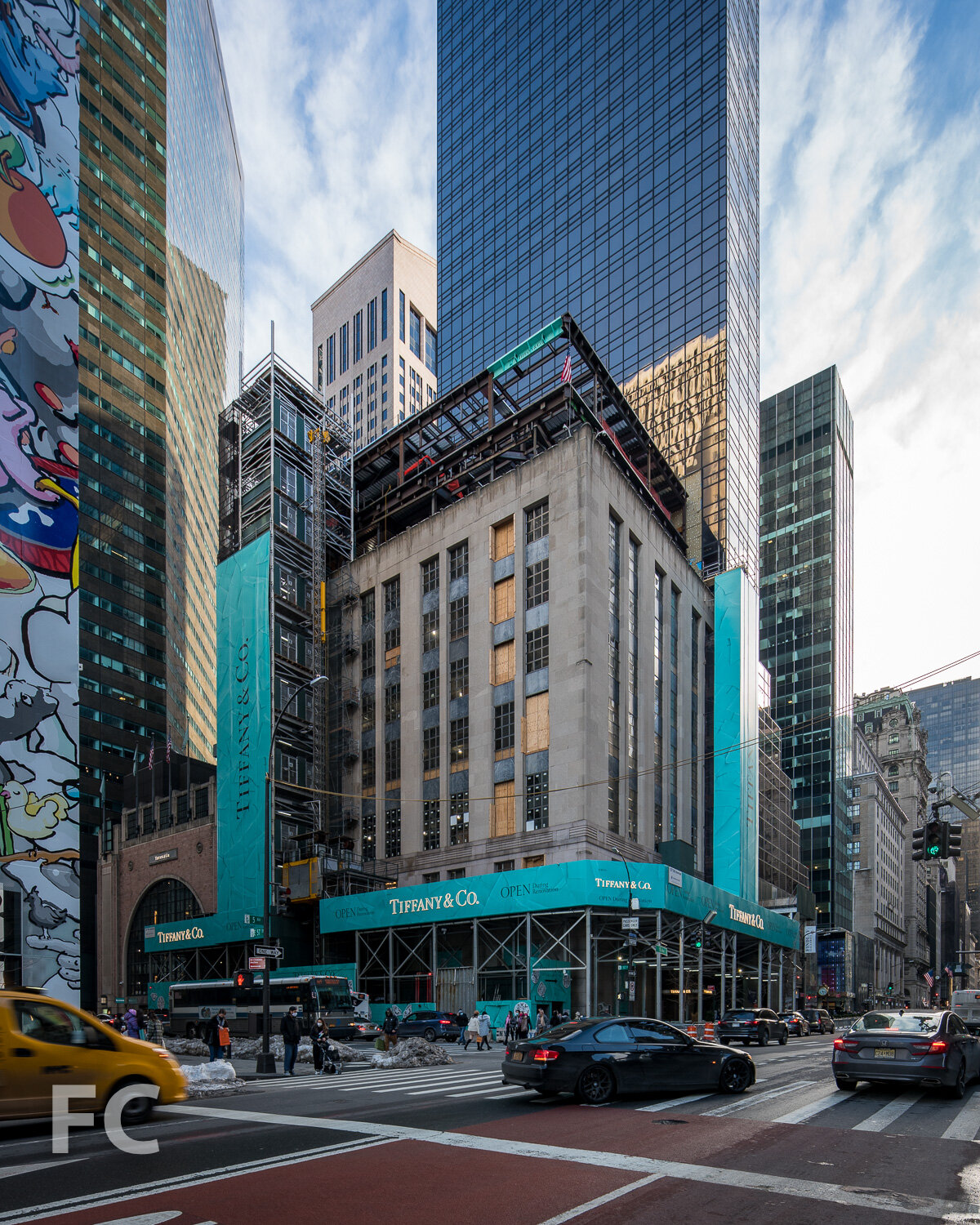
Northwest corner from Fifth Avenue.
Superstructure has topped out at LVMH’s renovation and expansion of the Tiffany & Co. flagship retail building on Fifth Avenue in Midtown. Designed by Shohei Shigematsu of OMA’s New York office, the project includes a renovation of the 1940 Cross & Cross designed structure at 727 Fifth Avenue and a new three-story pavilion at the top that will include exhibition, event and clienteling space. The new structure will be clad in two types of glass: flat low-e glass at floors 8 and 9 and an undulating slumped glass facade at floor 10 that resembles a soft curtain.
Close-up of the northwest corner of the rooftop expansion.
Close-up of the steel superstructure of the rooftop expansion.
Looking up at the north facade.
Northeast corner from East 57th Street.
Architect: OMA New York; Client: LVMH; Program: Retail; Location: Midtown, New York, NY; Completion: Spring 2022.
Construction Tour: Audrey Irmas Pavilion at Wilshire Boulevard Temple
A rendering of the Audrey Irmas Pavilion. Rendering courtesy of OMA New York.
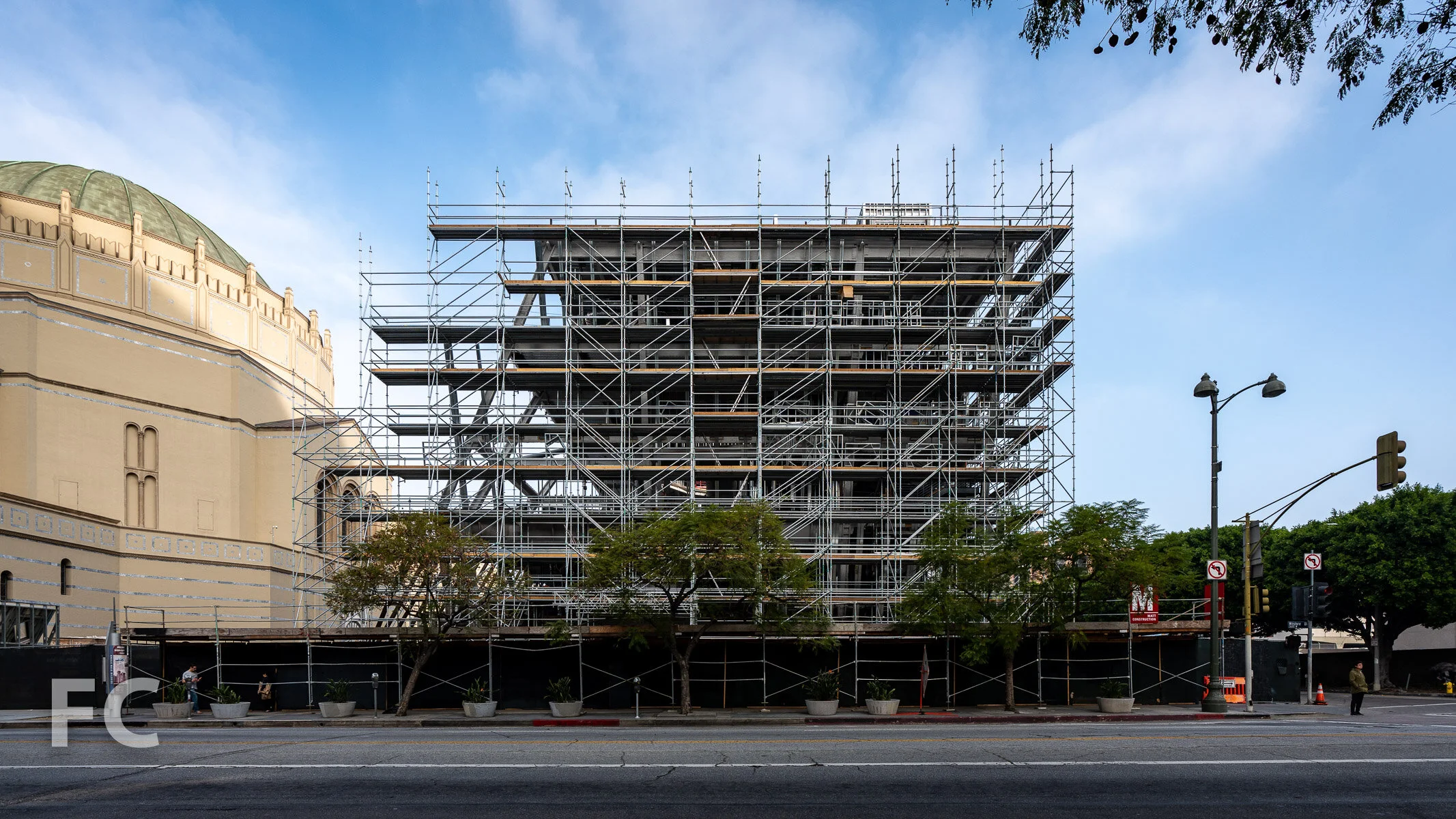
At the corner of Wilshire and Hobart Boulevard sits the Wilshire Boulevard Temple, a worship space for the oldest Jewish congregation in Los Angeles. The Moorish-style building, completed in 1929 by architect Abram M. Edelman, will soon be joined by a new multi-purpose event space for both the congregation and the surrounding city. Designed by Shohei Shigematsu of OMA New York, the Audrey Irmas Pavilion sits adjacent to the 1929 temple in a 5-story trapezoidal form that respects the landmarked building by sloping away from it, opening up a view corridor to the temple’s east facade. Steel superstructure has topped out and facade installation will soon be underway.
Southwest corner of the temple (left) and the new pavilion (right).
South facade of the temple (left) and the new pavilion (right).
The pavilions trapezoidal massing is punctured by three distinct volumes - a main event space, a smaller multi-purpose room and a sunken garden - that frame views of the temple and the surrounding neighborhood.
Southwest corner of the Audrey Irmas Pavilion.
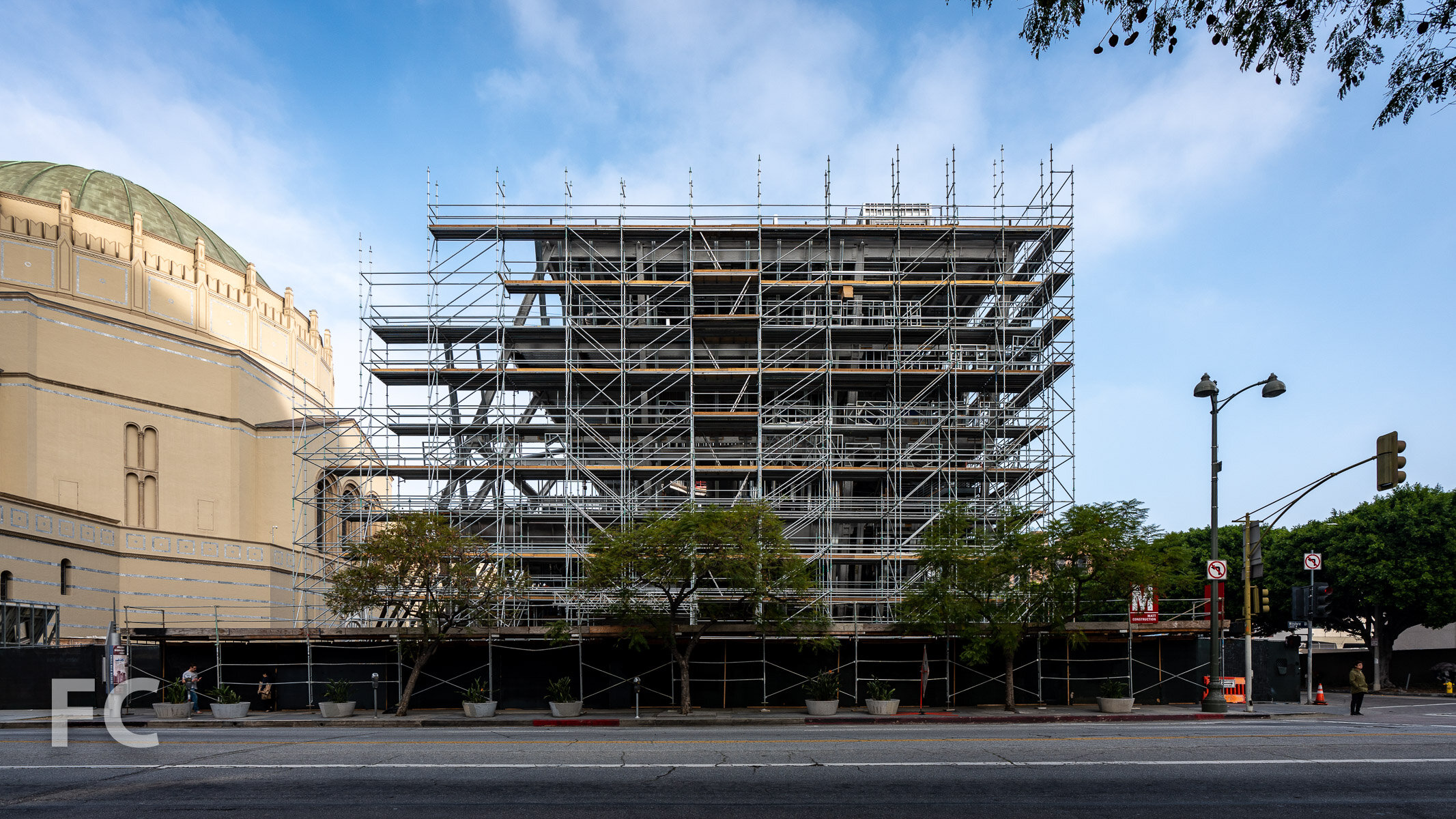
South facade of the Audrey Irmas Pavilion.
Southeast corner of the Audrey Irmas Pavilion.
Rendering of the west facade of the Audrey Irmas Pavilion (left) and the temple (right). Courtesy of OMA New York.
West facade of the Audrey Irmas Pavilion.
Southwest corner of the Audrey Irmas Pavilion.
Looking up at the west facade of the Audrey Irmas Pavilion.
Rendering of the east facade of the Audrey Irmas Pavilion. Rendering courtesy of OMA New York.
Exterior cladding for the pavilion will pay homage to the temple dome’s octagonal tiling with hexagonal glass fiber reinforced concrete (GFRC) panels. The pavilion will be clad in 1280 of these panels, which are approximately five-and-a-half feet tall and weigh 200 pounds. Rectangular windows and louver screens are inset into the hexagons and rotated in a randomized pattern that lends further texture to the facade.
Facade mockup.
Southwest corner of the Audrey Irmas Pavilion.
Rendering of the ground floor main event space. Rendering courtesy of OMA New York.
The main event space on the ground floor will reference the temple’s iconic dome with its 36-foot tall arced ceiling that spans the entire width of the space. Extending north to south, the arc creates a column free space capable of hosting a variety of programs. A skylight at the ceiling will allow for views of the temple’s dome, continuing the building’s engagement with the existing structure.
Main event space from the level one mezzanine.
Looking up through the skylight to the temple’s dome from the main event space.
Above the main event space, the second floor will offer a chapel, meeting spaces, and a west facing outdoor terrace with views to the existing temple . Offices will occupy the third floor.
Second floor outdoor terrace.
Second floor outdoor terrace.
The fourth floor will serve as the future home of the Wallis Annenberg Center on Purposeful Aging with programming dedicated to wellness, creativity, tech exploration, social connection, community engagement, and financial security.
A sunken garden extends vertically through the pavilion floors up to the roof, furthering the vertical connection of space with circular and semi-circular slab openings. The roof terrace will feature numerous planters and olive trees
Future home of the Wallis Annenberg Center on Purposeful Aging.
Roof terrace.
Looking down to the sunken garden from the roof terrace.
View west towards the existing temple from the roof terrace.
Wilshire Boulevard Temple
Looking up at the temple’s dome.
Modeled after Rome's Pantheon, the temple’s Byzantine revival dome, modeled after the Pantheon in Rome, measures 100 feet in diameter and rises 135 feet to the top from the street. The temple’s interior perimeter is ringed by the Biblically-themed Warner Memorial Murals, painted by Hugo Ballin and commissioned by the Warner Brothers.
View towards the Rose Window.
Architect: OMA New York (Design Architect), Gruen Associates (Executive Architect); Structure, MEP, Facades: Arup; Landscape Architect: Studio-MLA; Performance Space Consultants: Theatre DNA; Signage and Graphic Design: Space Agency; Civil Engineering: Rhyton Engineering; Lighting: L'Observatoire International; Client: Wilshire Boulevard Temple; Program: ; Location: Koreatown, Los Angeles, CA; Completion: Late 2020.
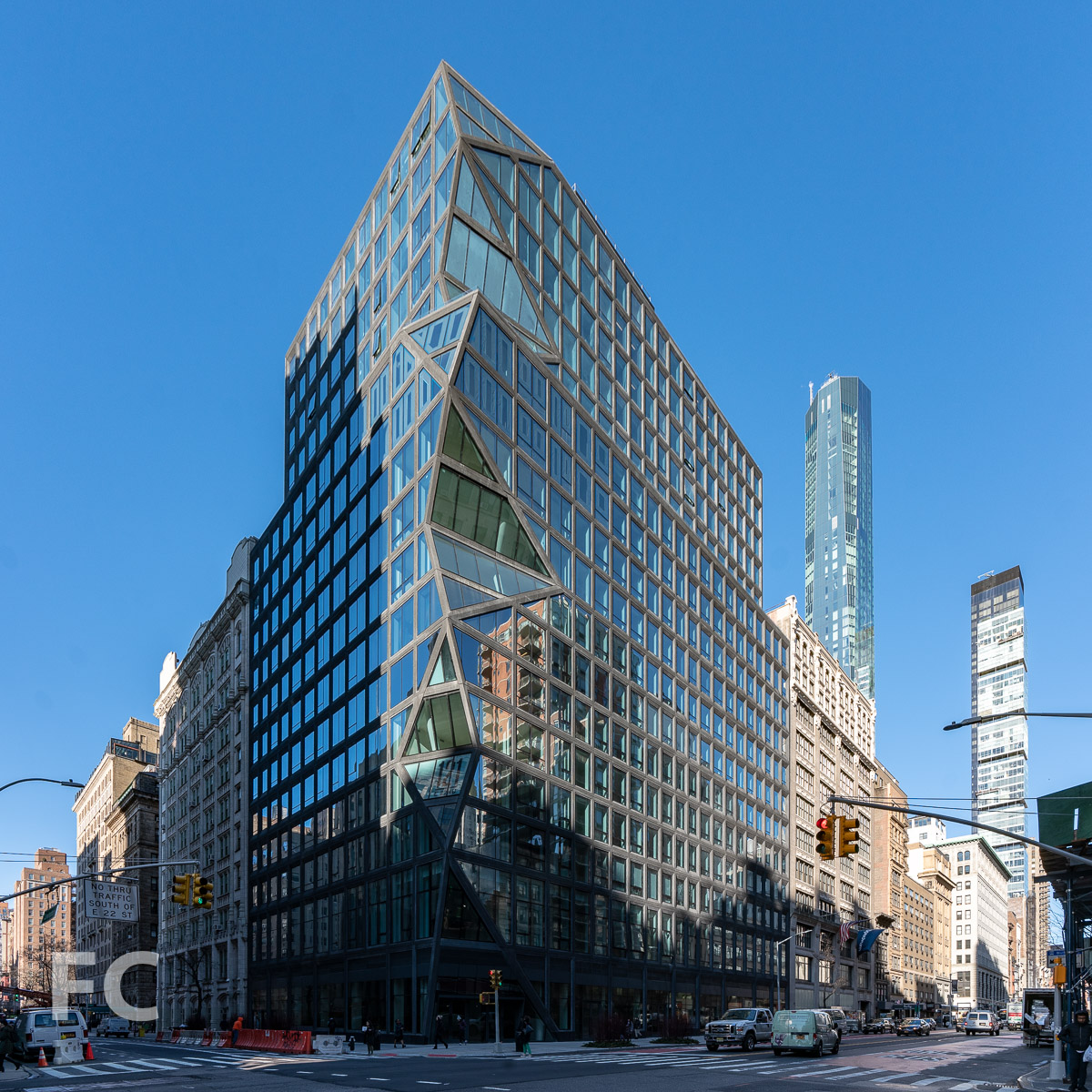
Tour: 121 East 22nd Street
Northeast corner of the north facade.
Construction has wrapped up at 121 East 22nd Street, the two-tower residential development in the Flatiron District from Toll Brothers City Living and Gemdale Properties and Investment. OMA's New York office, led by partner Shohei Shigematsu, is responsible for the design of the 18-story residential development, the firm's first in the city.
North facade from East 23rd Street.
Northeast corner of the north facade from East 23rd Street.
Addressing the neighborhood's pre-war architectural context, the façade of the north tower features a punched window design that transitions to a faceted northeast corner with glazing that frames views from multiple angles. This faceted corner echoes the faceted design of the smaller tower on East 22nd Street.
Northeast corner of the north facade.
North façade of the north tower from East 23rd Street.
South façade of the south tower from East 22nd Street.
At the south tower, located mid-block on East 22nd Street, the façade features dark-toned precast panels, in either a single or double bay configuration, with windows inset into warped rectangular cutouts.
Looking up at the south façade of the south tower from East 22nd Street.
Residential lobby entrance at the south tower from East 22nd Street.
Elevator lobby.
Lobby stone detail.
A central courtyard links the two towers and provides a focal point for the indoor pool and adjacent fitness center. Other amenities include a residents’ lounge and adjacent terrace, screening room, children’s playroom, and rooftop terrace.
Courtyard.
Looking up from the central courtyard.
Indoor pool.
Residents’ lounge.
Residents’ lounge.
Amenity terrace.
Screening room.
Model Residential Unit - South Tower
Residential corridor.
There are 140 residential condo units between the two towers, each featuring kitchens with Gaggenau appliances, polished quartz countertops, and acid-etched, black-painted glass cabinetry. Master bathrooms in the units feature Calacatta Paonazzo marble countertops, tub decks, and white oak cabinetry.
Living/dining room.
Kitchen.
Master bedroom.
Master bathroom.
Model Residential Unit - North Tower
Living room at northeast corner.
Kitchen.
Master bedroom.
Master bathroom.
Rooftop Terrace
Looking down to the central courtyard from the rooftop terrace.
West view from the rooftop terrace.
North view from the rooftop terrace.
Architects: OMA NY (Design Architect), SLCE Architects (Architect of Record); Developers: Toll Brothers City Living with Gemdale Properties and Investment; Program: Residential; Location: Flatiron District, New York, NY; Completion: 2019.
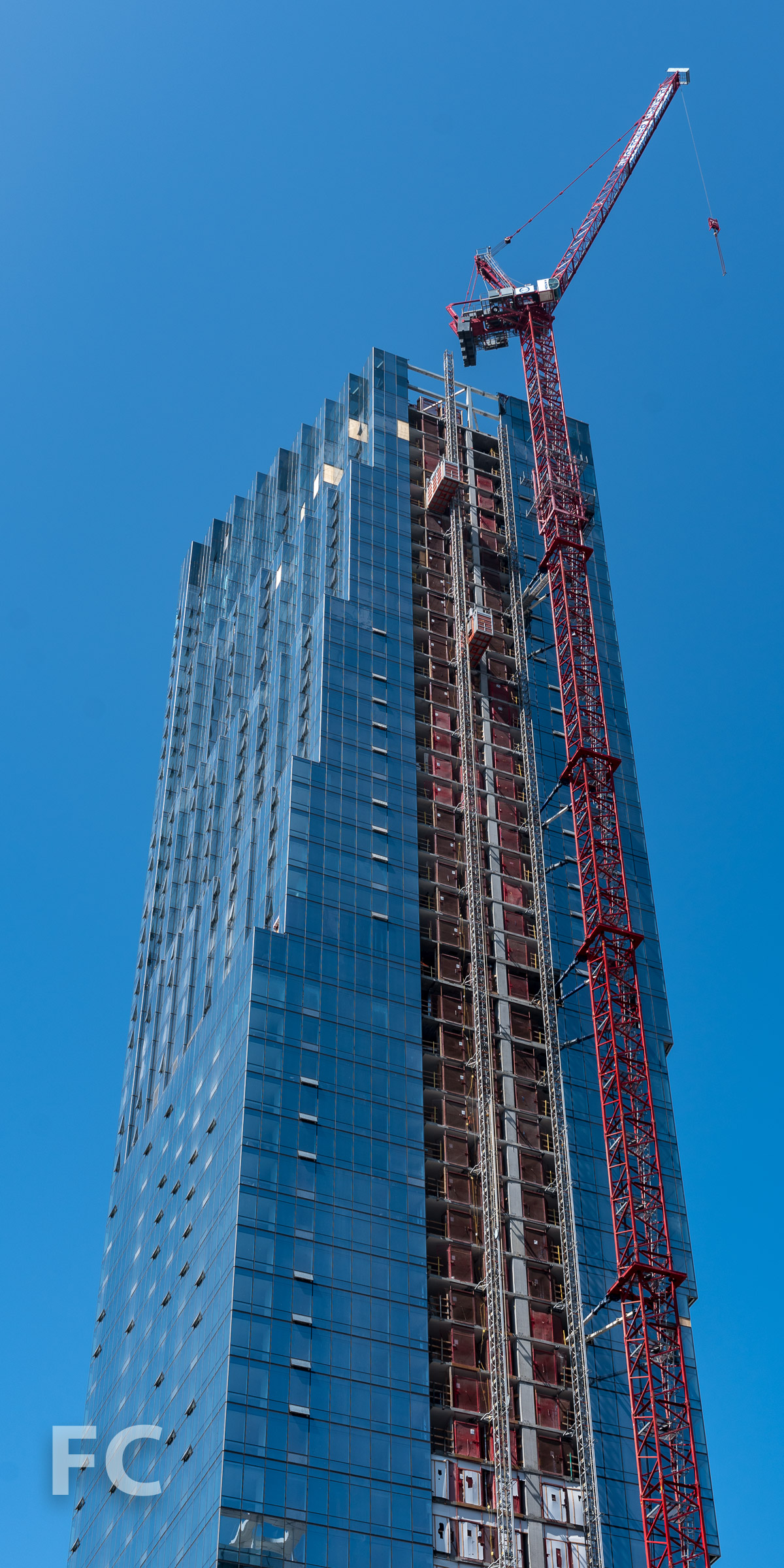
488 Folsom Street - The Avery
Northeast corner.
Facade installation is wrapping up at Related California's The Avery, a 56-story, 548-unit residential tower near the recently opened Transbay Transit Center in downtown San Francisco. Designed by Office of Metropolitan Architecture's New York office, the tower features an extruded tower massing shaped by facade setbacks and serrations. The serrations allow for an exponentially greater amount of corner units while also creating opportunities for dramatic moments of sunlight reflections at sunrise and sunset. Local firm Fougeron Architecture are responsible for the podium buildings at the base of the tower.
Closeup of the northeast corner of the tower.
When completed, the complex will offer 118 luxury condominiums on the upper floors and 280 luxury rental apartments and 150 affordable rental apartments on the lower floors.
Closeup of the northwest corner of the tower.
Looking up at the east facade of the tower.
East facade of the base of the tower.
West facade of the tower from the Transbay Transit Center's rooftop park.
Closeup of the southwest corner of the tower.
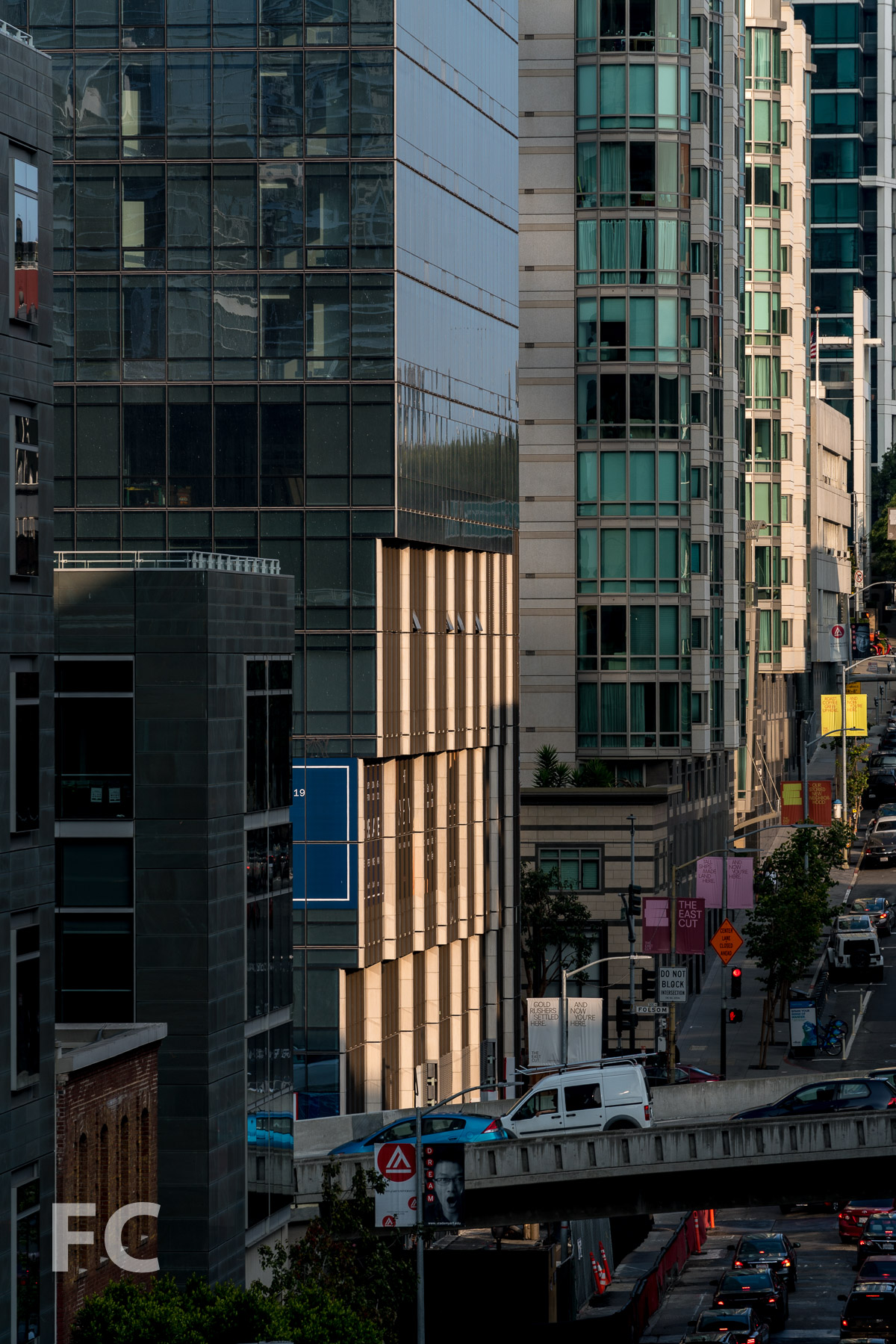
Sunset reflects off of the south facade.
Southwest corner of the tower from the Transbay Transit Center's rooftop park.
Architect: Office of Metropolitan Architecture (OMA NY) with Fougeron Architecture ; Developer: Related California with Tenderloin Neighborhood Development Corporation; Program: Residential Condo and Rental, Commercial; Location: San Francisco, CA; Completion: 2019.
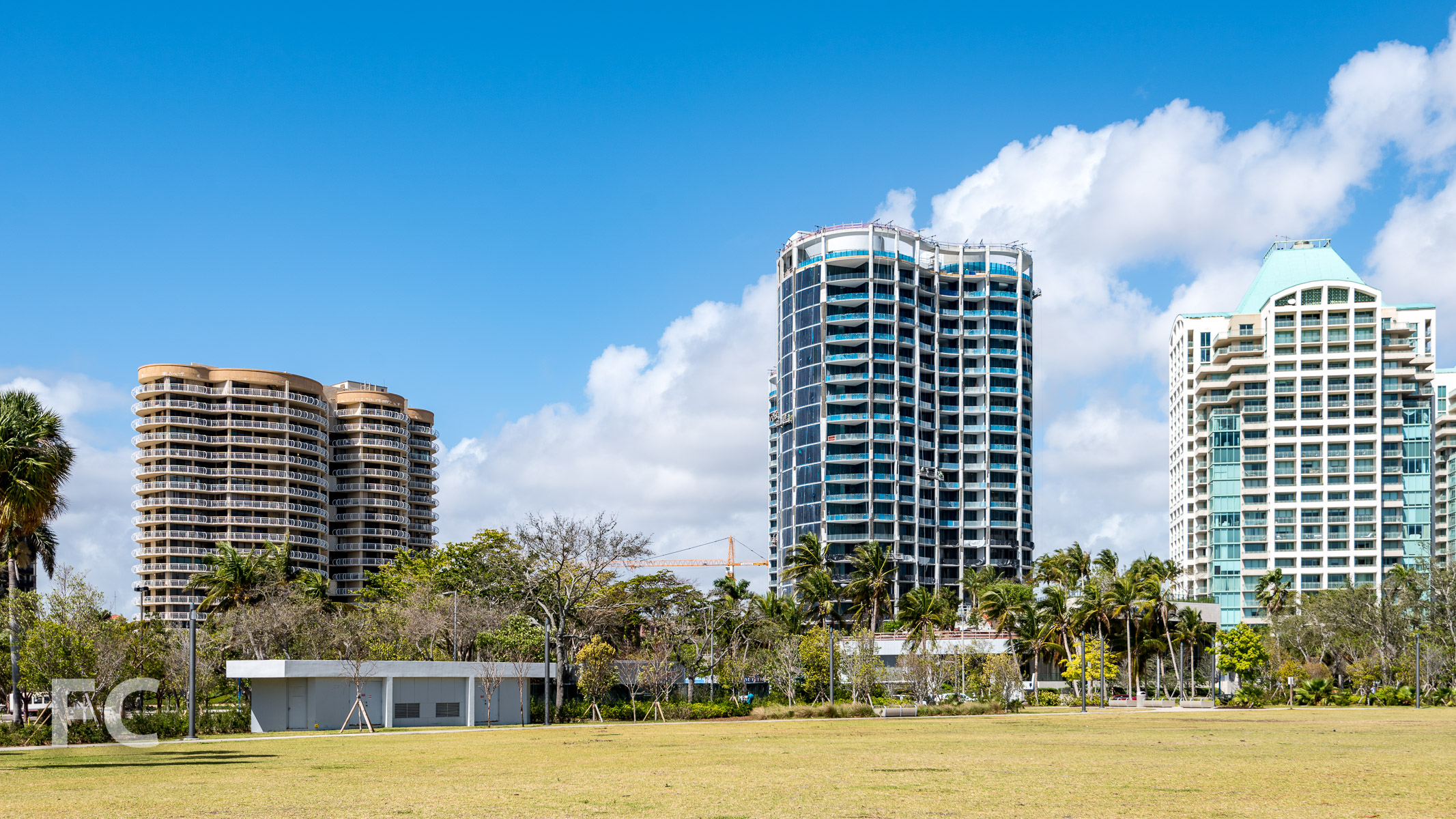
Construction Update: Park Grove
South facade of the Park Grove Club Residences (center) and Two Park Grove (right), with the site of One Park Grove in the foreground.
Work is underway on Park Grove, the three tower development from OMA in the Coconut Grove neighborhood of Miami. One million square feet of residential units is distributed across three luxury residential towers on 5.2 acres across from Regatta Park. Exterior construction on the first two towers, the Park Grove Club Residences and Two Park Grove are nearing completion, with work set to begin on One Park Grove, the third and final tower.
Site of One Park Grove with the Park Grove Club Residences (center left) and Two Park Grove (center right) in the background.
Each of the towers feature an asymmetrical, cylindrical massing with curved floor plates that optimizes views of the Biscayne Bay and reduces wind loads on the facade. Perimeter columns feature a tapering profile and are located to address privacy concerns between towers.
CLose-up of the podium at Two Park Grove.
The Park Grove Club Residences (left) and Two Park Grove (right) from .
Close-up of the facade of Two Park Grove.
Close-up of the facade of the Park Grove Club Residences.
Close-up of the facade of the Park Grove Club Residences.
Looking up at the north facade of the Park Grove Club Residences.
South facade of the Park Grove Club Residences (center) and Two Park Grove (right).
Close-up of the top floors of Two Park Grove.
Park Grove (center) and the Grove at Grand Bay (right) from Regatta Park.
Architect: Office for Metropolitan Architecture (OMA); Developers: Terra Group with Related Group; Interiors: Meyer Davis; Landscapes: Enzo Enea; Program: Residential; Location: Coconut Grove, Miami, Florida; Completion: 2020.
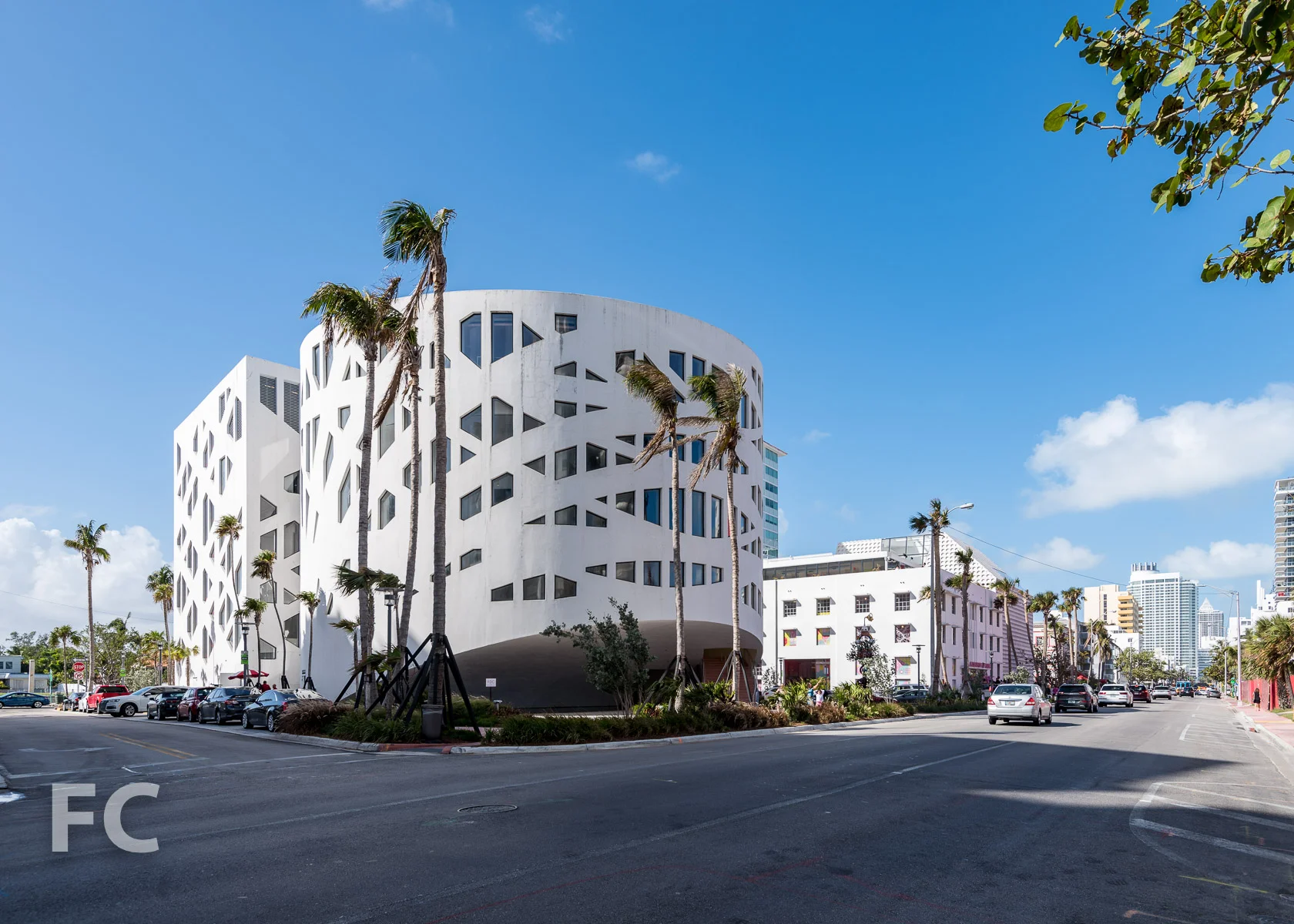
Construction Update: Faena Arts District
Faena Forum (center), Faena Bazaar (right), and Faena Park (far right) from Collins Avenue.
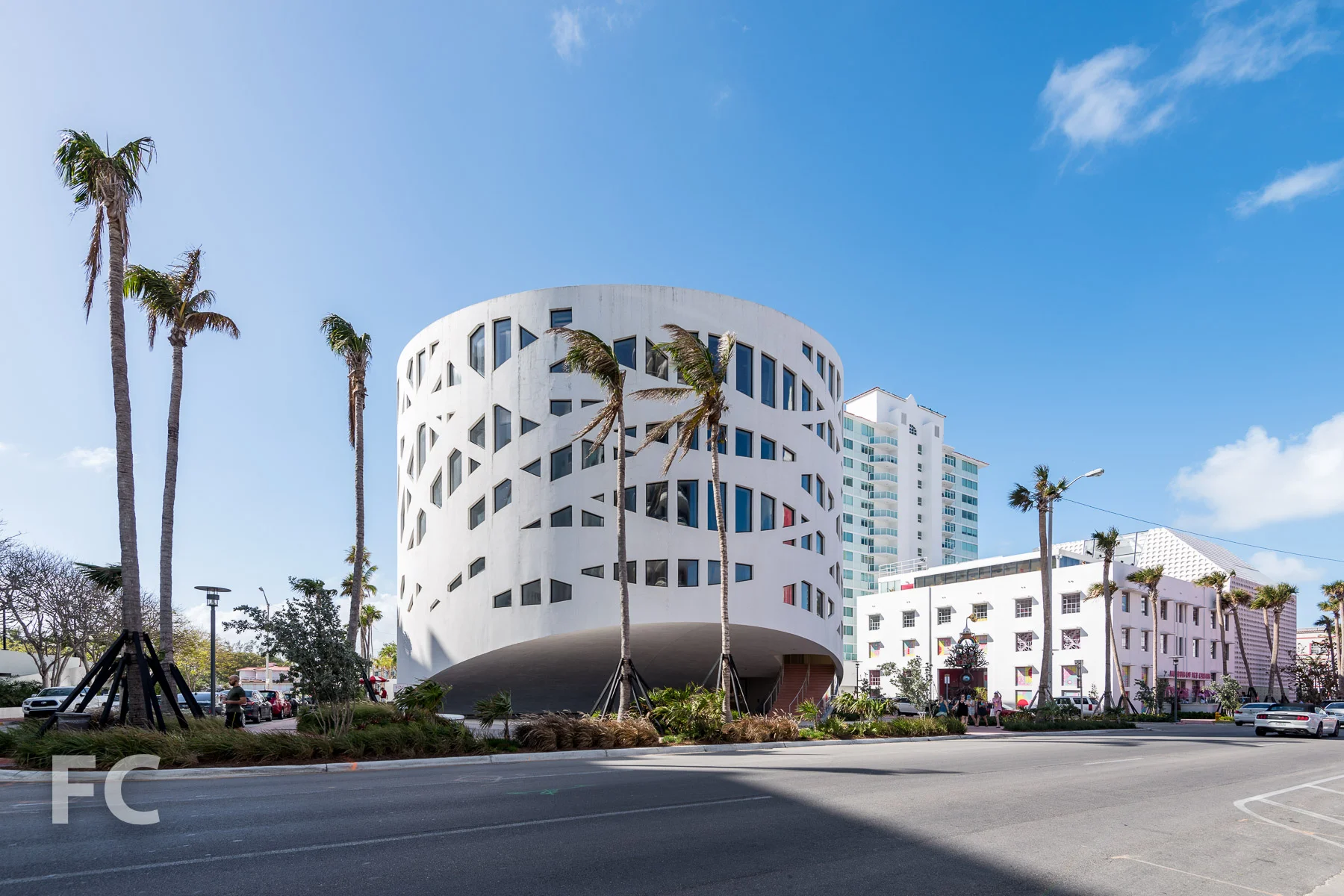
Faena Forum
South facade of the Faena Forum.
Southwest corner of the Faena Forum.
West facade of the Faena Forum.
Looking up at the west facade of the Faena Forum.
Northwest corner of the Faena Forum.
Northwest corner of the Faena Forum.
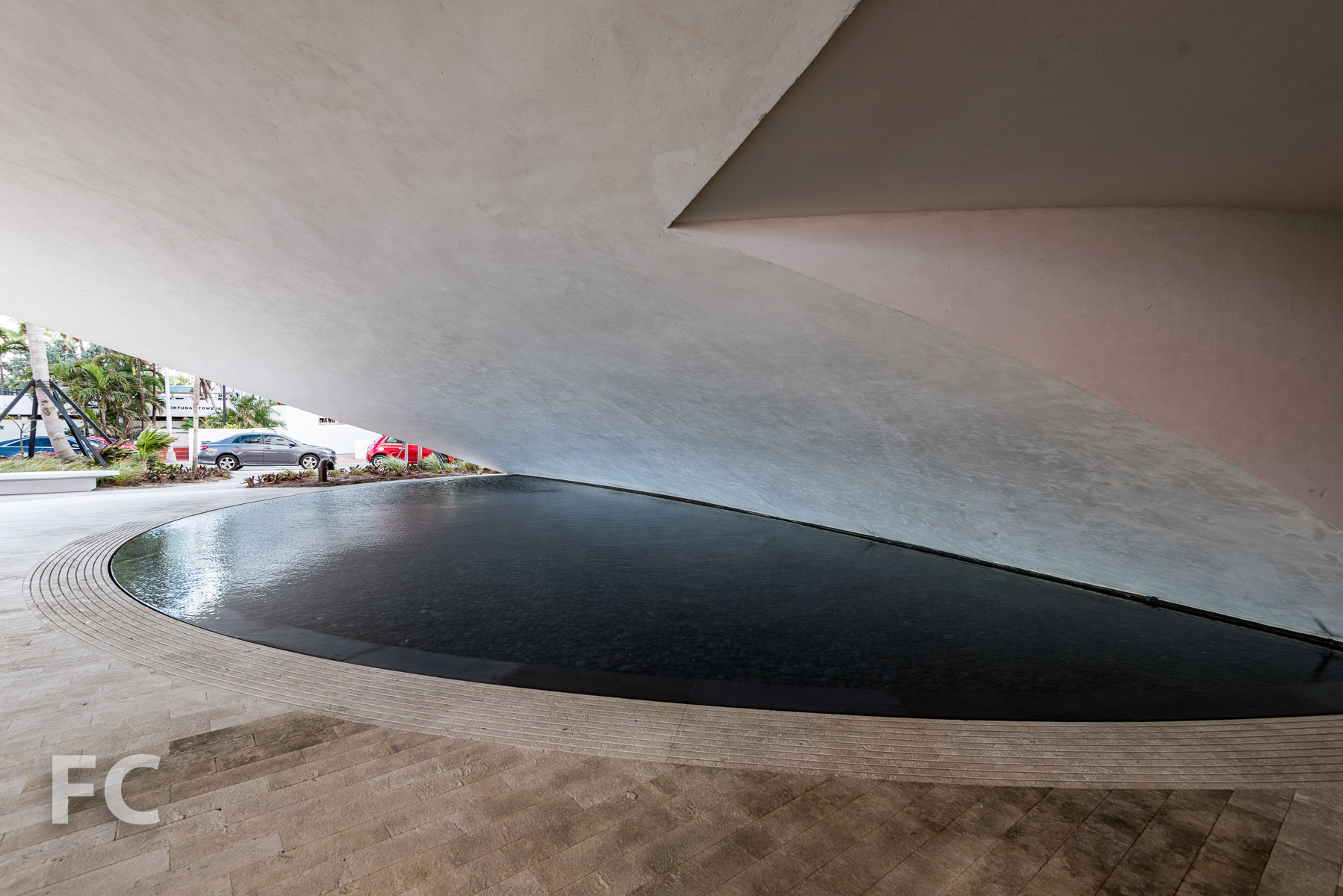
Plaza.
Plaza entry.
Assembly hall.
Assembly hall.
Assembly hall cylinder.
Looking up at the ceiling of the assembly hall cylinder.
Faena Bazaar
East facade of Faena Bazaar.
Looking up at the south facade of Faena Bazaar.
Northeast corner of Faena Bazaar.
Faena Park
East facade of Faena Park.
Looking up at the east facade of Faena Park.
Close-up of the facade of Faena Park.
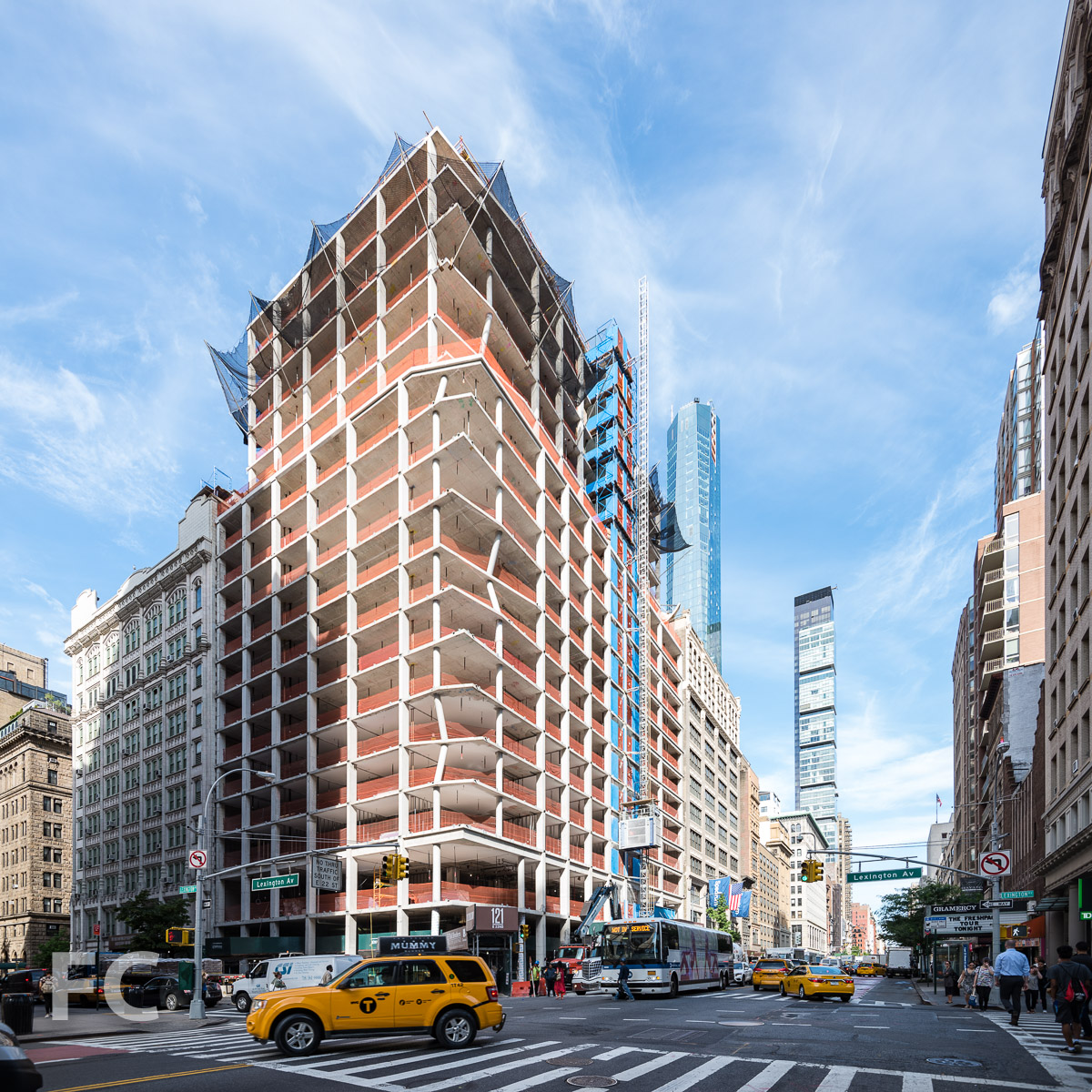
Construction Update: 121 East 22nd Street
Looking up at the north façade of the north tower from East 23rd Street.
Superstructure is close to topping out at the north tower of 121 East 22nd Street, the two-tower residential development in the Flatiron District from Toll Brothers City Living and Gemdale Properties and Investment. OMA's New York office, led by partner Shohei Shigematsu, is responsible for the design of the 18-story residential development, the firm's first in the city.
Looking up at the northeast corner of the north tower.
Addressing the neighborhood's pre-war architectural context, the façade of the north tower will feature a punched window design that transitions to a faceted northeast corner with glazing that frames views from multiple angles. This faceted corner will echo the faceted design of the smaller tower on East 22nd Street.
Close-up of the concrete superstructure at the northeast corner of the north tower.
North façade of the north tower from East 23rd Street.
Looking east on East 23rd Street.
At the south tower, located mid-block on East 22nd Street, façade installation is wrapping up on the faceted design. The façade features dark-toned precast panels, in either a single or double bay configuration, with windows inset into warped rectangular cutouts.
Looking up at the south façade of the south tower from East 22nd Street.
Close-up of the south façade of the south tower.
Close-up of the south façade of the south tower.
Architects: OMA NY (Design Architect), SLCE Architects (Architect of Record); Developers: Toll Brothers City Living with Gemdale Properties and Investment; Program: Residential; Location: Flatiron District, New York, NY; Completion: 2018.

Construction Update: 121 East 22nd Street
Façade installation is underway at 121 East 22nd Street, the two-tower residential development in the Flatiron District from Toll Brothers City Living and Gemdale Properties and Investment. OMA's New York office, led by partner Shohei Shigematsu, is responsible for the design of the 18-story residential tower, the firm's first in the city.
Looking up at the south facade from East 22nd Street.
Precast panels are going up on the smaller tower, located mid-block on East 22nd Street. The smaller tower's façade features a dark-toned, faceted design with precast panels in either a single or double bay size. Warped rectangular cutouts on the panels await future window installation.
Precast panel awaiting installation on East 22nd Street.
Construction worker prepares precast panel for the crane lift.
Crane lifts precast panel into place on the East 22nd Street façade.
South facade detail.
South facade detail.
South facade from East 22nd Street.
Superstructure has reached the seventh floor at the larger tower, which will eventually rise 18-stories at the corner of East 23rd Street and Lexington Avenue. Addressing the neighborhood's pre-war architectural context, the façade features a punched window design that transitions to a faceted northeast corner with glazing that frames views from multiple angles. This faceted corner will echo the faceted design of the smaller tower on East 22nd Street.
East facade from Lexington Avenue.
Northeast corner from Lexington Avenue.
North facade from East 23rd Street.
Architects: OMA NY (Design Architect), SLCE Architects (Architect of Record); Developers: Toll Brothers City Living with Gemdale Properties and Investment; Program: Residential; Location: Flatiron District, New York, NY; Completion: 2018.

Construction Update: 121 East 22nd Street
North facade from East 23rd Street.
Construction is underway at 121 East 22nd Street, the two-tower residential development in the Flatiron District from Toll Brothers City Living and Gemdale Properties and Investment. OMA's New York office, led by partner Shohei Shigematsu, is responsible for the design of the 18-story residential tower, the firm's first in the city.
North facade from East 23rd Street.
The larger tower will rise 18-stories at the corner of East 23rd Street and Lexington Avenue. Addressing the neighborhood's pre-war architectural context, the facade features a punched window design that transitions to a faceted northeast corner with glazing that frames views from multiple angles. The smaller tower is located mid-block on East 22nd Street and features a faceted facade similar to the larger tower's northeast corner.
Construction on the project is slated for some time in 2018.
East facade from Lexington Avenue.
East facade from Lexington Avenue.
Intersection of Lexington Avenue and East 22nd Street.
South facade from East 22nd Street.
Looking up at the south facade from East 22nd Street.
South facade from East 22nd Street.
South facade detail.
Architects: OMA NY (Design Architect), SLCE Architects (Architect of Record); Developers: Toll Brothers City Living with Gemdale Properties and Investment; Program: Residential; Location: Flatiron District, New York, NY; Completion: 2018.