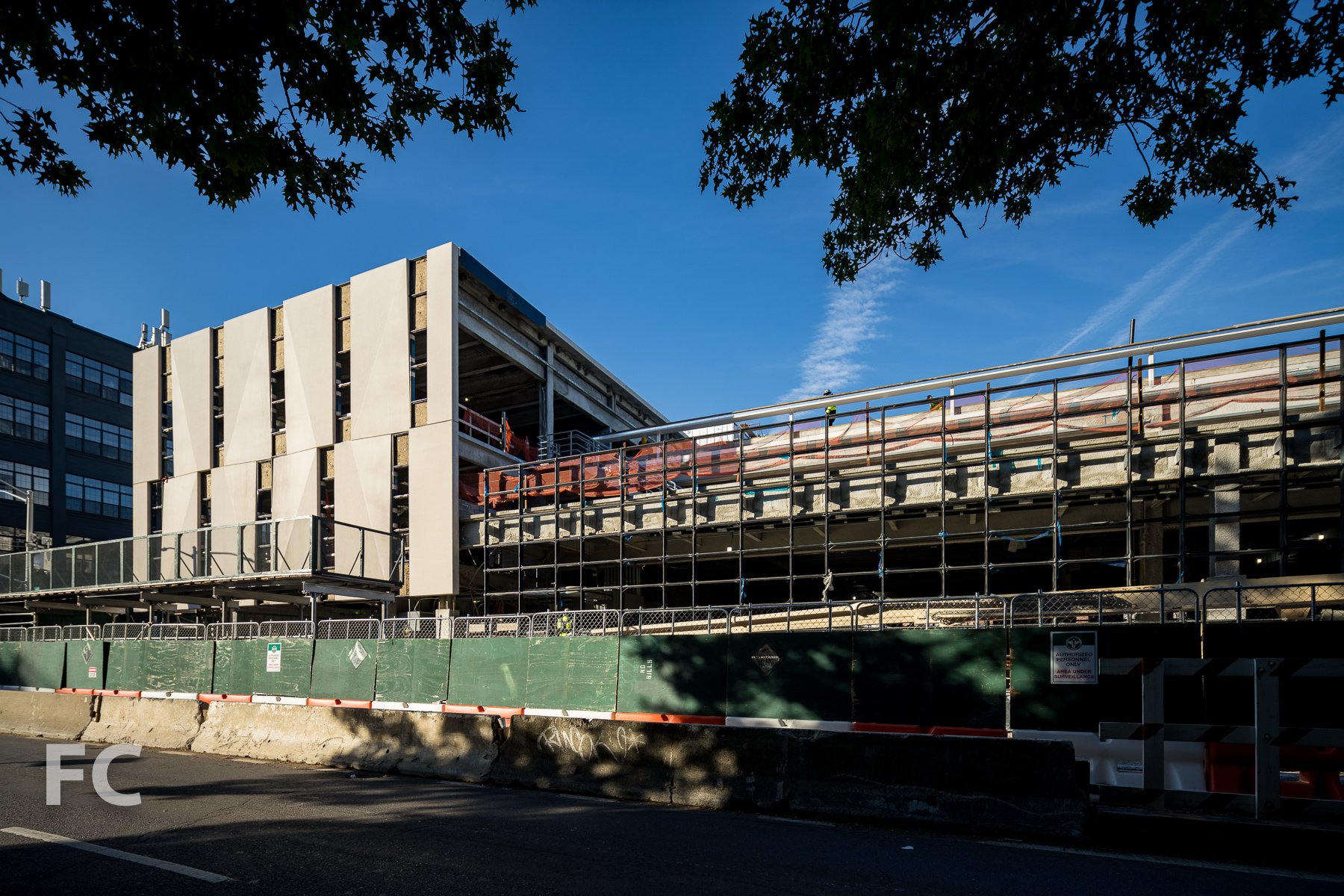
Construction Update: DSNY Brooklyn District 3 Garage
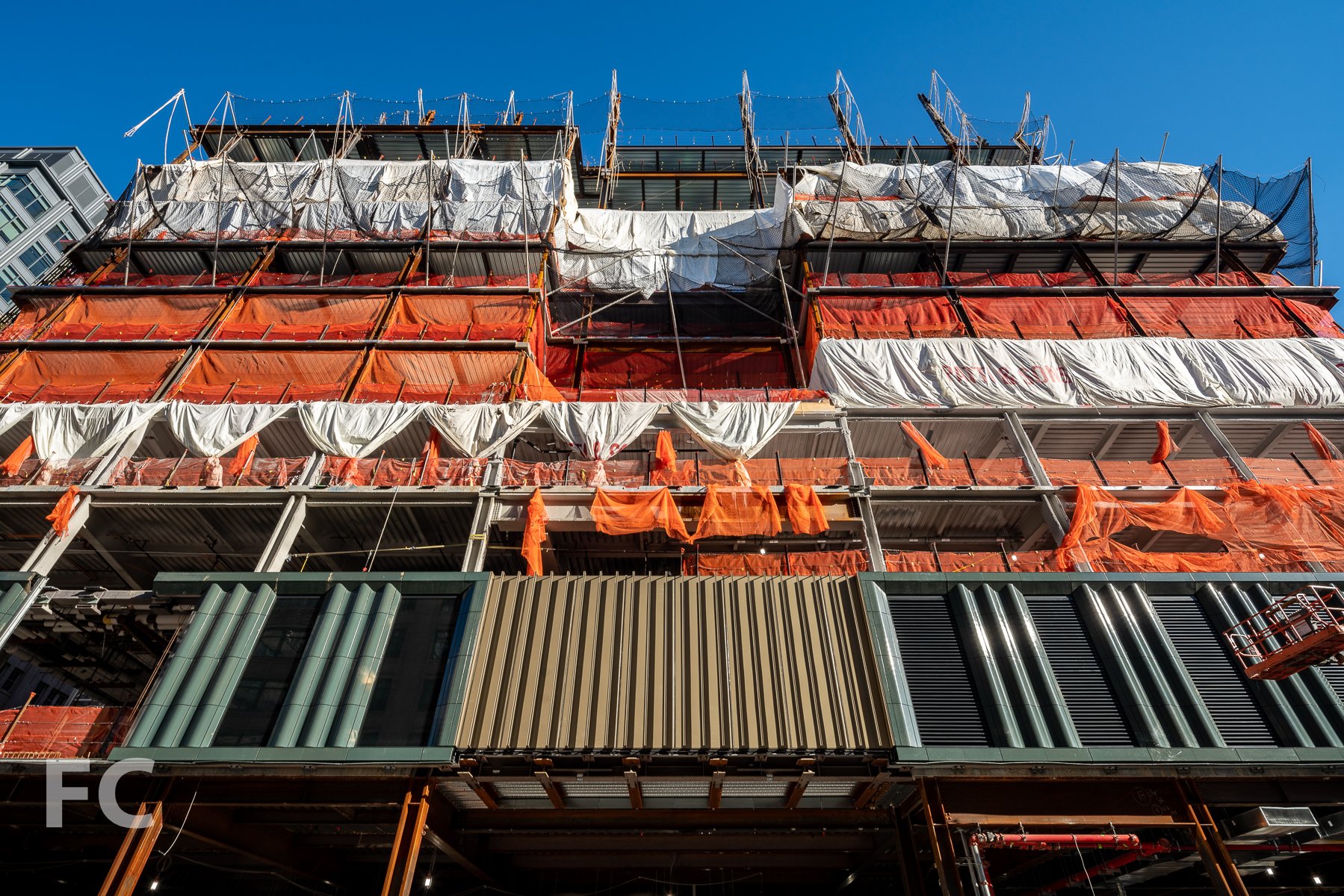
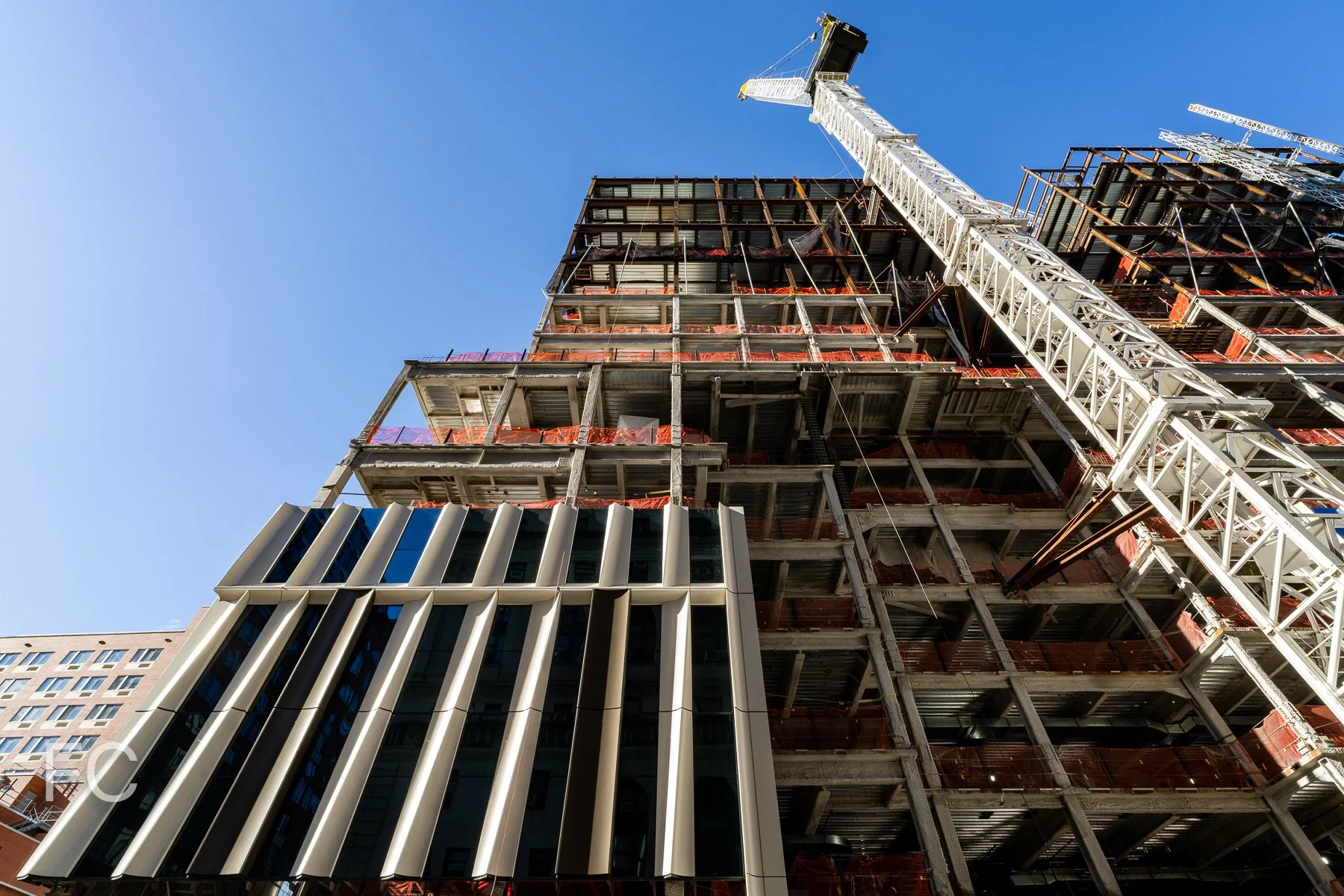
Facade installation is ongoing at the Brooklyn District 3 Garage in the Bed-Stuy neighborhood of Brooklyn. Designed by Dattner Architects, the 250,000 square foot facility will provide multi-functional spaces for storage, staff offices, repair, maintenance, and parking for employees and departmental vehicles. The facade is clad with over 175 vertically oriented exposed precast concrete panels and three-dimensional faceted precast panels with alternating window wall panels.
Architect: Dattner Architects; Client: DSNY; Program: Parking, Maintenance, Repair, Offices; Location: Bed-Stuy, Brooklyn, NY; Completion: 2024.

Tour: Moynihan Train Hall and New Penn Station Entry
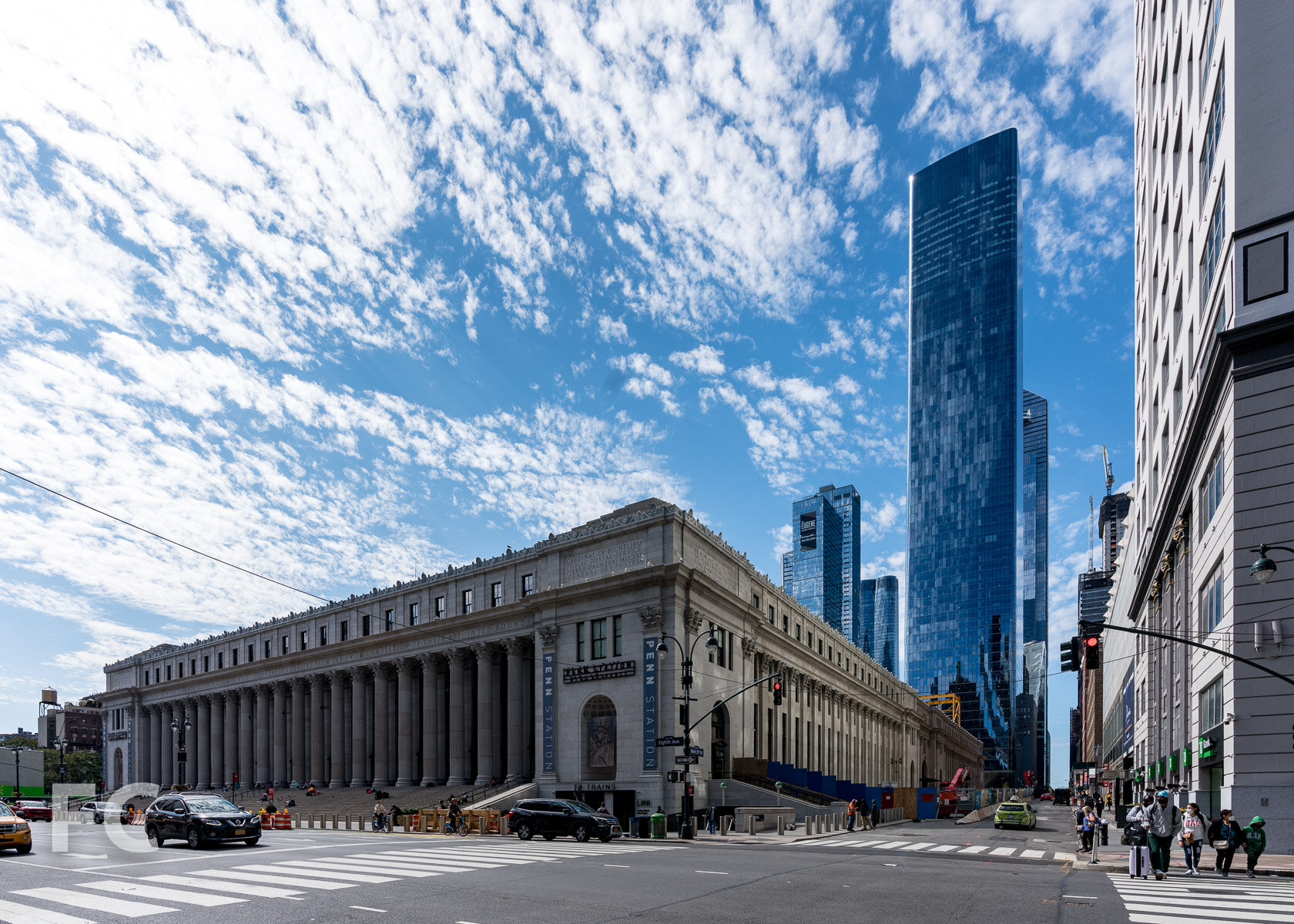
Northeast corner of the Farley Post Office Building.
After nearly three decades of planning, the Daniel Patrick Moynihan Train Hall has officially opened in the landmark James A. Farley Post Office Building across from Penn Station. Designed by Skidmore, Owings & Merrill (SOM), the 486,000 square foot rail hub is located in the former mail sorting room of the McKim, Mead & White building from 1913.
Entry at the northeast corner of the Farley Post Office Building.
The design references the demolished Pennsylvania Station, also by McKim, Mead & White, with its central skylight arranged in four catenary vaults supported on three existing trusses. Structural engineering firm Schlaich Bergermann Partner assisted with the design of the vaults, each of which are composed of more than 500 glass and steel panels that thicken at the edges and lighten at the apex.

At the center of the train hall, a new clock designed by Pennoyer Architects hangs from the center truss. The clock design is inspired by the analog clocks that hung in the original Penn Station.
Four LED screens along the eastern wall of the train hall feature New York State imagery designed by Moment Factory.
Rockwell Group has designed Amtrak waiting rooms at the concourse level.
FXCollaborative has designed an Amtrak Metropolitan Lounge on the second floor with views out onto the central train hall.
At night, the train hall is lit up by the lighting fixtures installed on the trusses.
An entrance at 31st Street features the art installation “The Hive” by Elmgreen & Dragset, a collection of 100 skyscrapers hung like stalactites from the ceiling. Kehinde Wiley Studio has designed a hand-painted stained-glass triptych “Go” for the ceiling of the 33rd Street entrance.
“The Hive” by Elmgreen & Dragset.

“Go” by Kehinde Wiley Studio.
New Penn Station Entry
Also opening to commuters is the new Penn Station entrance for the Long Island Rail Road and the subway at 33rd Street, marked by a steel and glass structure with a 32 foot tall overhang.
Architect: Skidmore, Owings & Merrill; Interiors: Rockwell Group (Amtrak Waiting Rooms), FXCollaborative (Amtrak Metropolitan Lounge), and Elkus Manfredi (Food Hall); Client: Office of Governor Andrew Cuomo and Empire State Development, Vornado Realty Trust, Related, MTA, Amtrak; Program: Train Hall, Retail; Location: Chelsea, New York, NY; Completion: 2021.
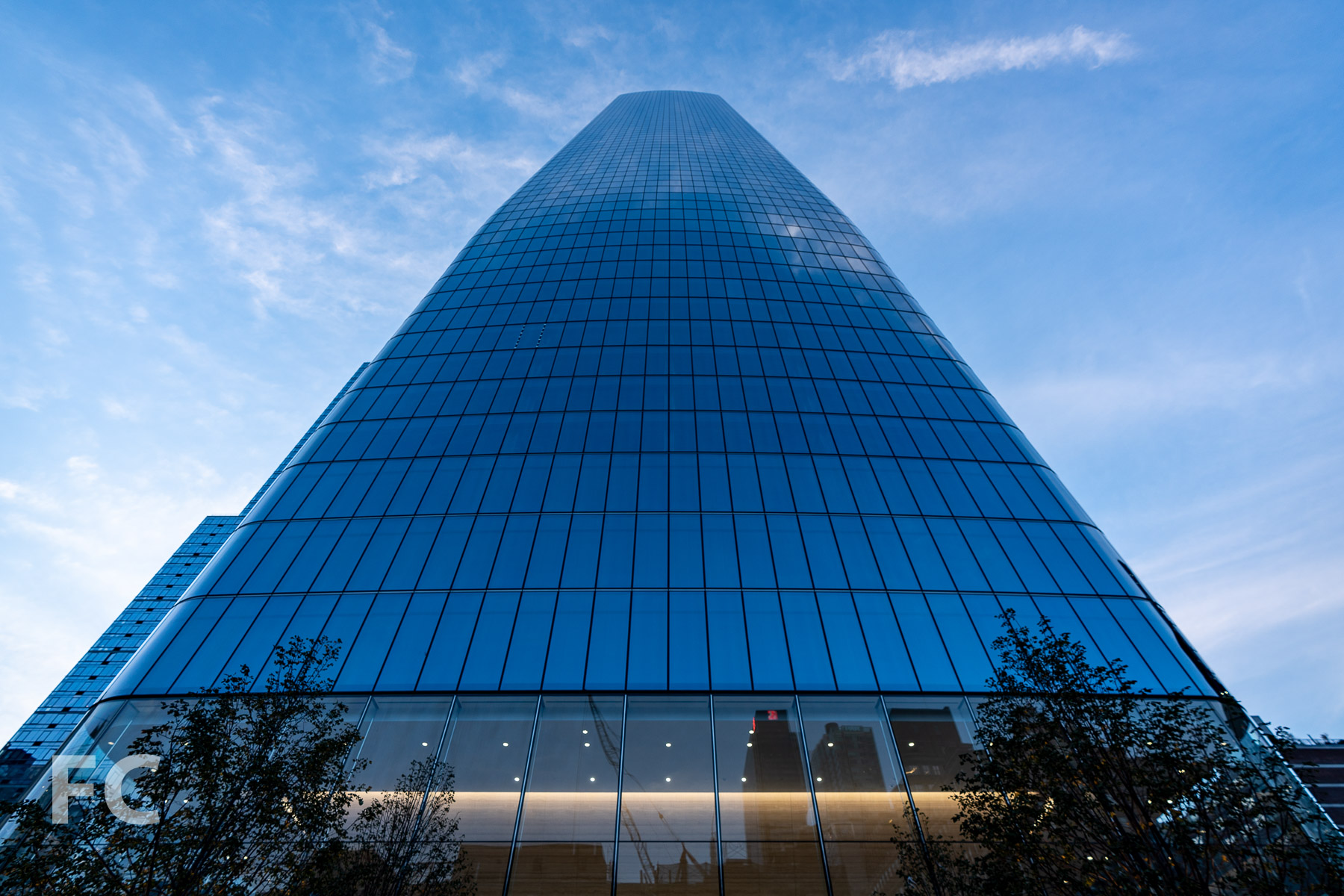
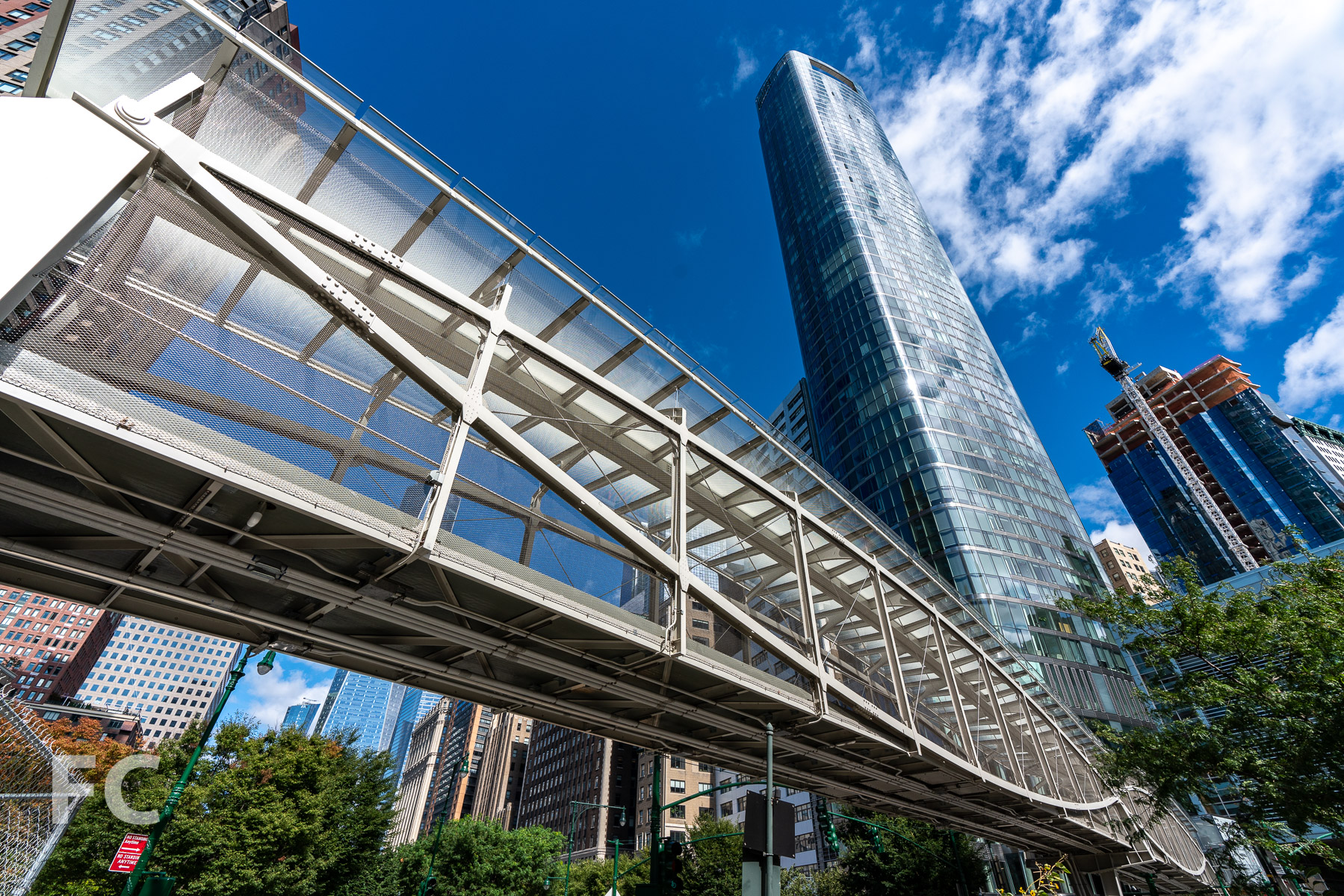
Construction Update: West Thames Street Pedestrian Bridge
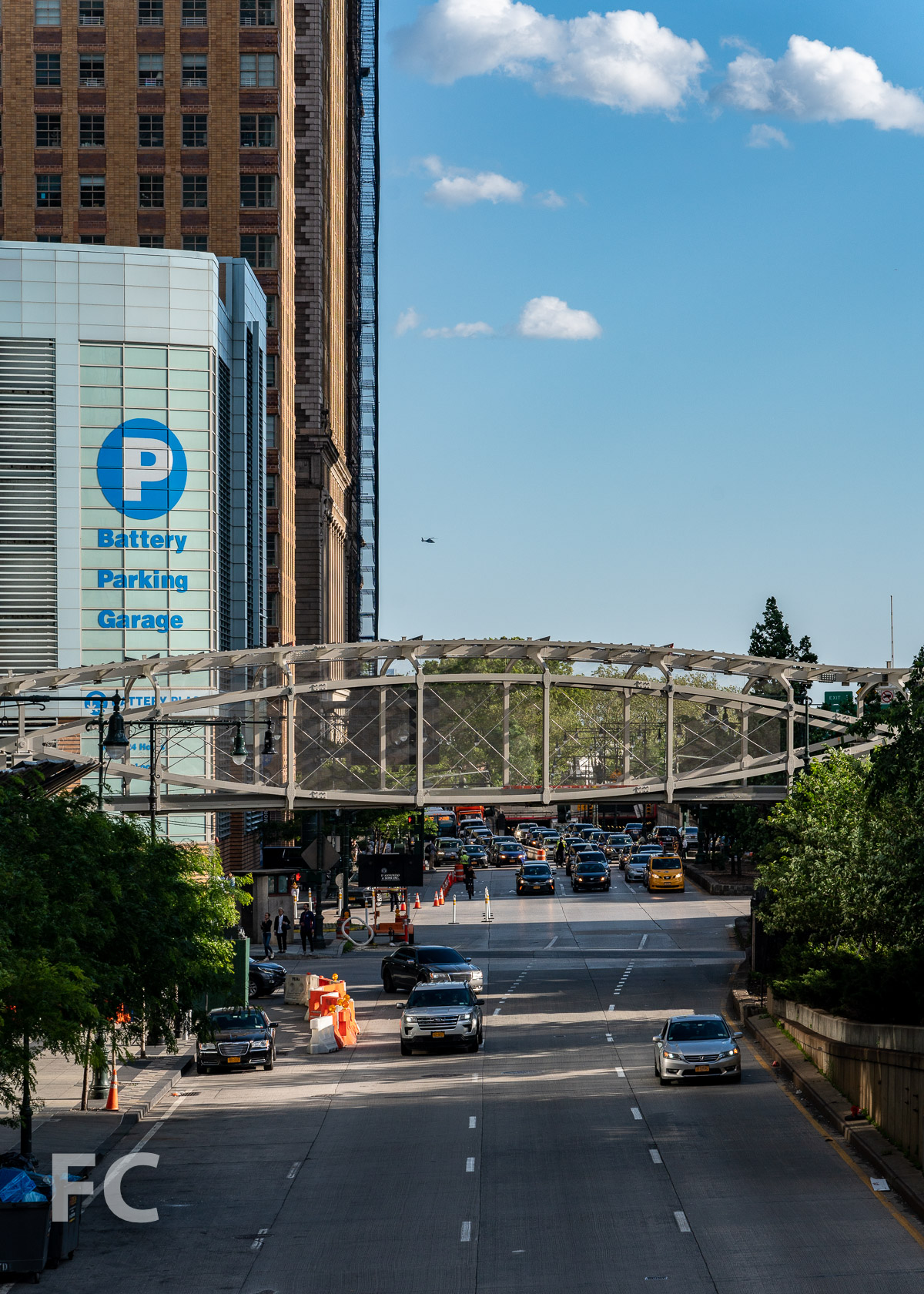
The West Thames Street Pedestrian Bridge, a permanent replacement for the SHoP-designed Rector Street Pedestrian Bridge erected as a temporary bridge after the attacks on September 11, 2001, has officially opened for use. Designed by WXY Architecture and engineers at Weidlinger Associates, the bridge spans 230 feet over West Street to provide a direct pedestrian connection to Battery Park City from the Financial District.
Architect: WXY Architecture; Structural Engineer: Weidlinger Associates; Client: Lower Manhattan Development Corporation and the Battery Park City Authority; Location: Financial District, New York, NY; Completion: 2019.
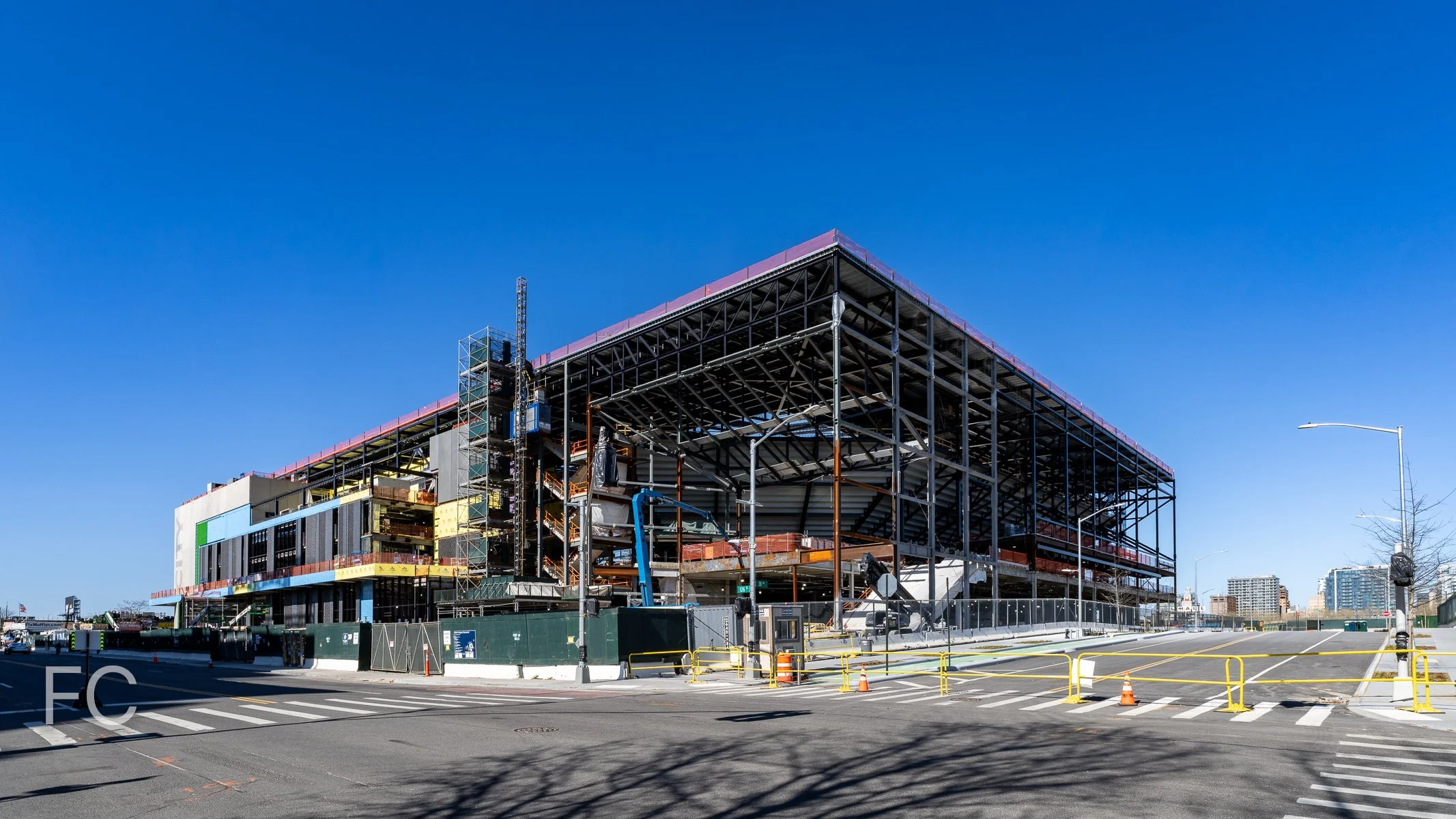
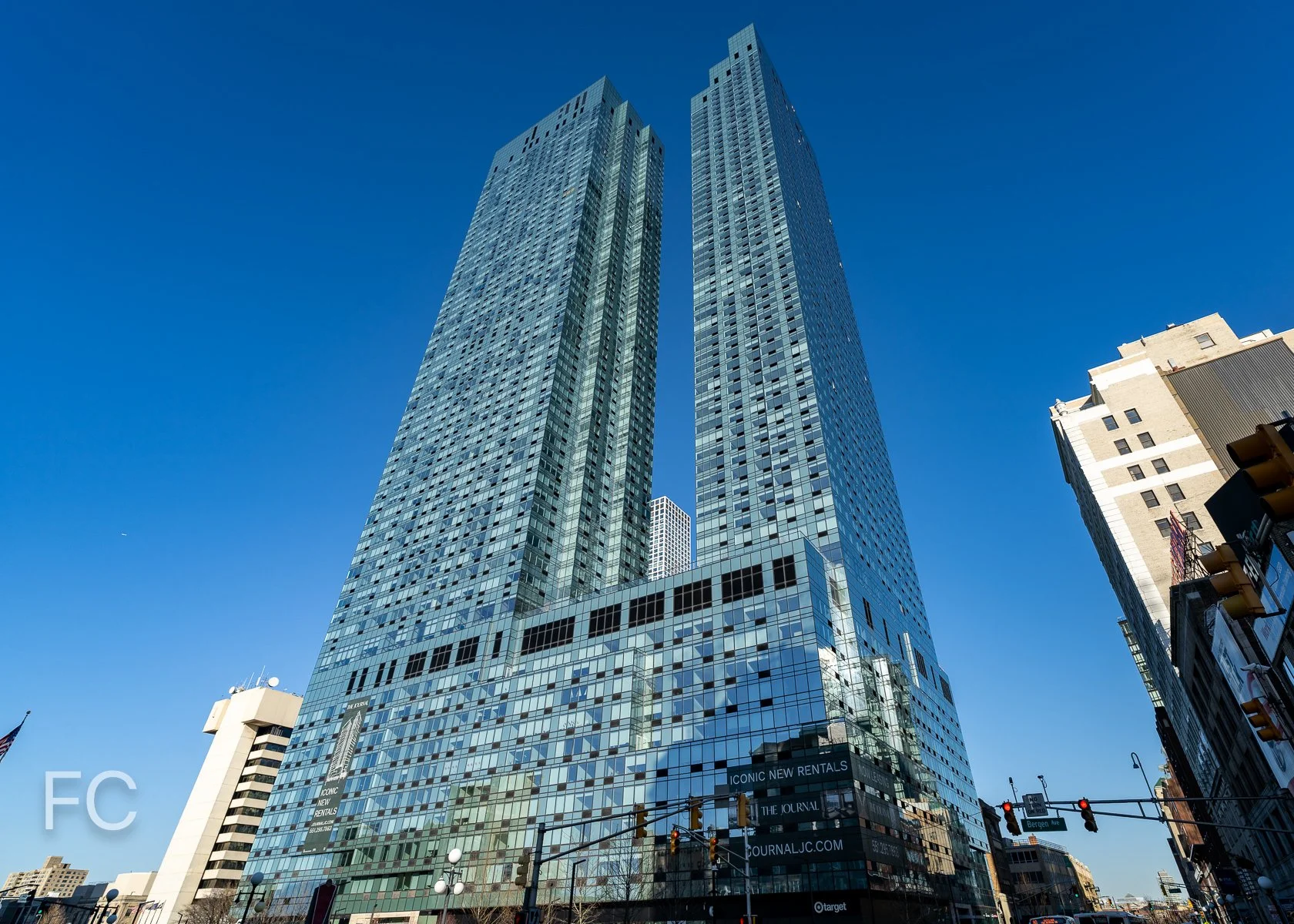
Construction Update: West Thames Street Pedestrian Bridge
The steel structure for the West Thames Street Pedestrian Bridge has been lifted into place next to 50 West Street. This will be the permanent replacement for the SHoP-designed Rector Street Pedestrian Bridge that was erected as a temporary bridge after the attacks on September 11, 2001 . Designed by WXY Architecture and engineers at Weidlinger Associates, the bridge will span 230 feet over West Street to provide a direct pedestrian connection to Battery Park City from the Financial District.
Architect: WXY Architecture; Structural Engineer: Weidlinger Associates; Client: Lower Manhattan Development Corporation and the Battery Park City Authority; Location: Financial District, New York, NY; Completion: 2019.
Transbay Transit Center and Salesforce Tower
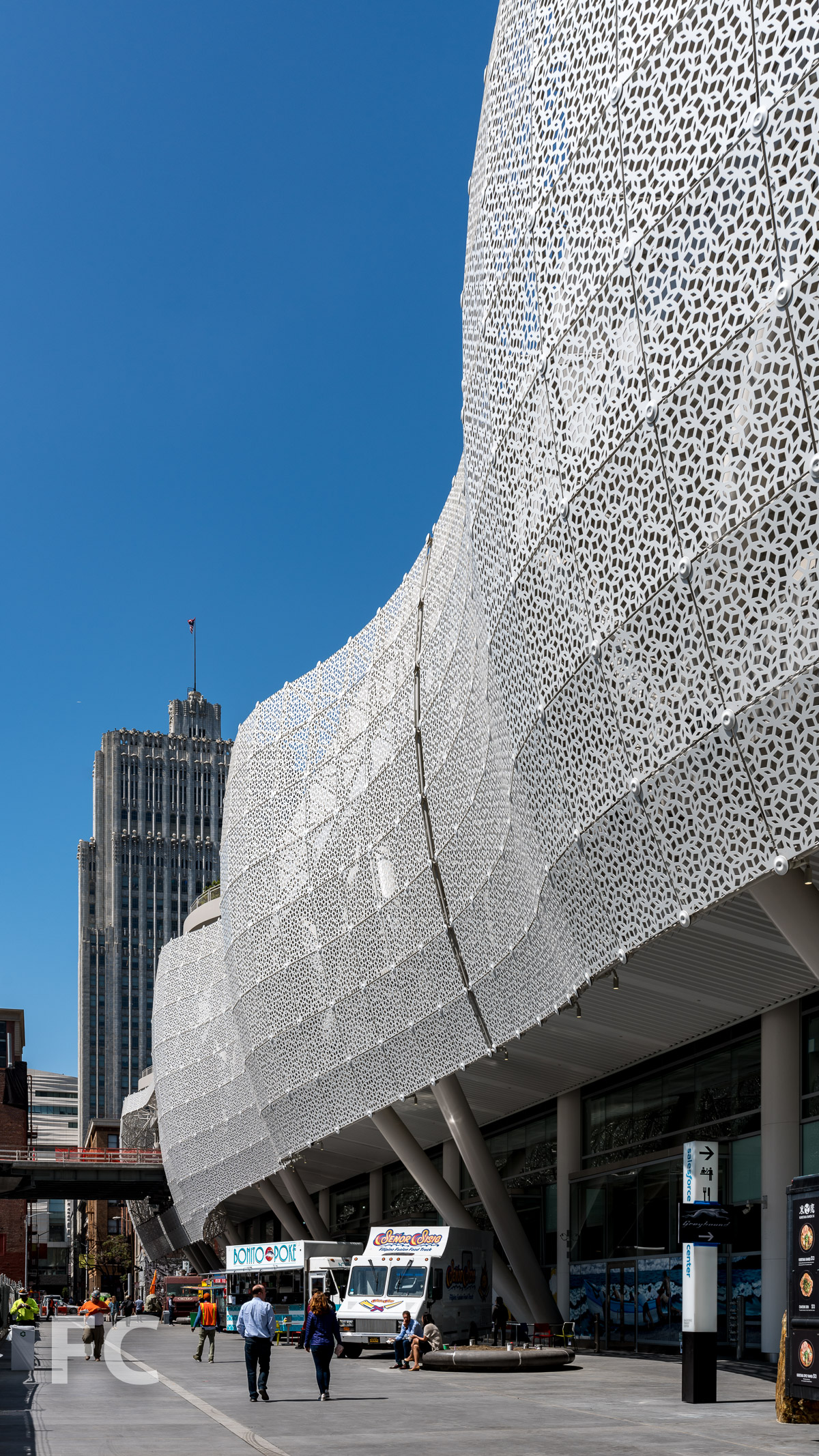
Following the official opening of the Salesforce Tower in May, Pelli Clarke Pelli's adjacent Transbay Transit Center has now officially opened. The 1.5 million square feet multimodal transit hub spans five city blocks and is topped by a 5.4 acre public park. Due to the skyscrapers which flank either side, a stroll on the rooftop park feels similar to the experience of the High Line. A perforated aluminum screen composed of 4,486 conjoined panels clads the exterior above the ground floor, creating a lantern like effect at night.
Seismic joint.
Salesforce Tower.
Salesforce Tower.

Construction Update: Delancey & Essex Street Garage
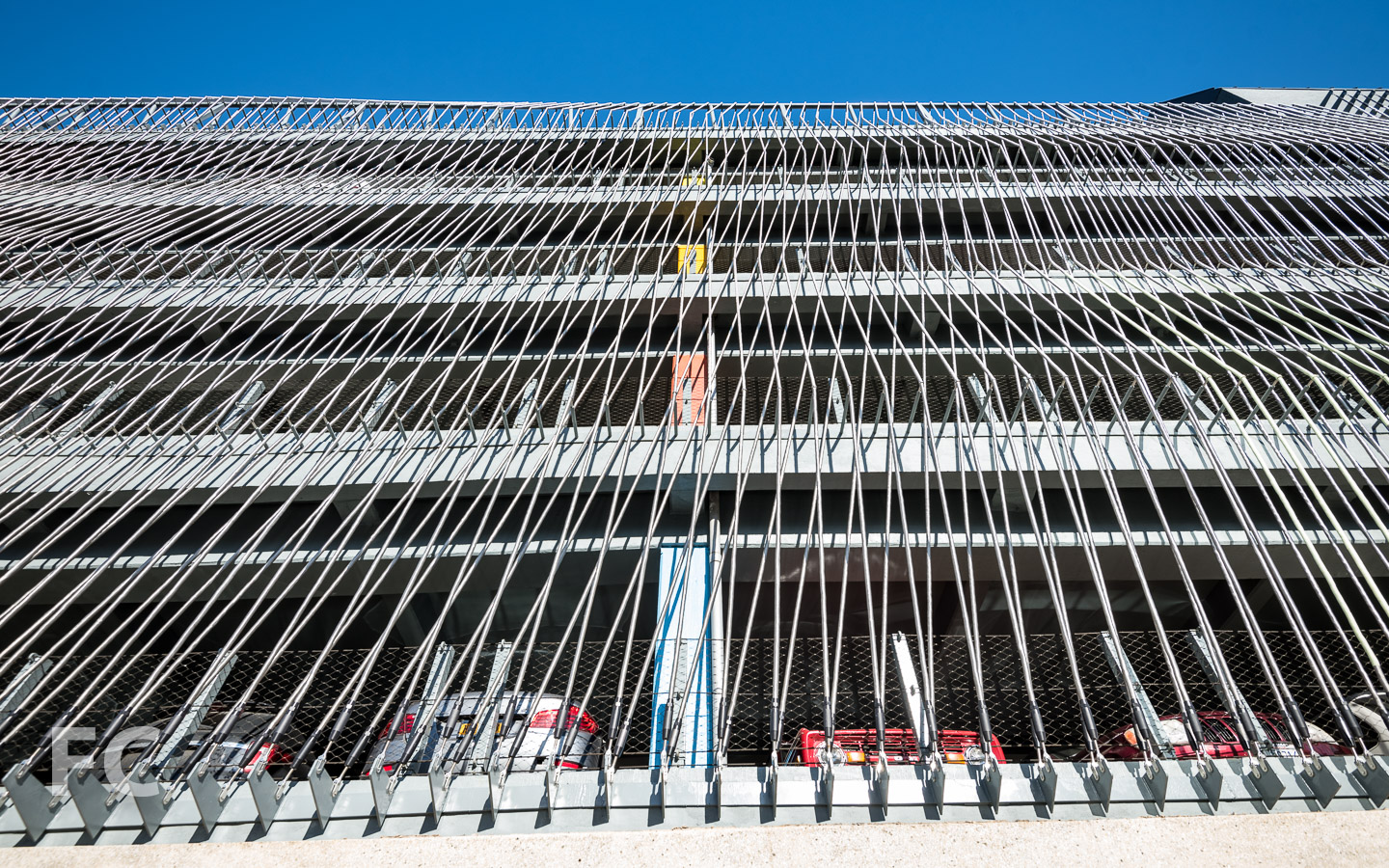
Construction has wrapped up at the renovated Delancey and Essex Municipal Parking Garage, a five-story concrete structure from the late 1970's that spans a mid block site on the Lower East Side. The NYC Department of Transportation project received a new cable façade on the second to fifth floors consisting of two layers of 1/14″ diameter cable in a weave like pattern. A 17-foot-tall DOT super graphic of the word "PARK" has been painted on the main façade at Essex Street using rubberized paint.
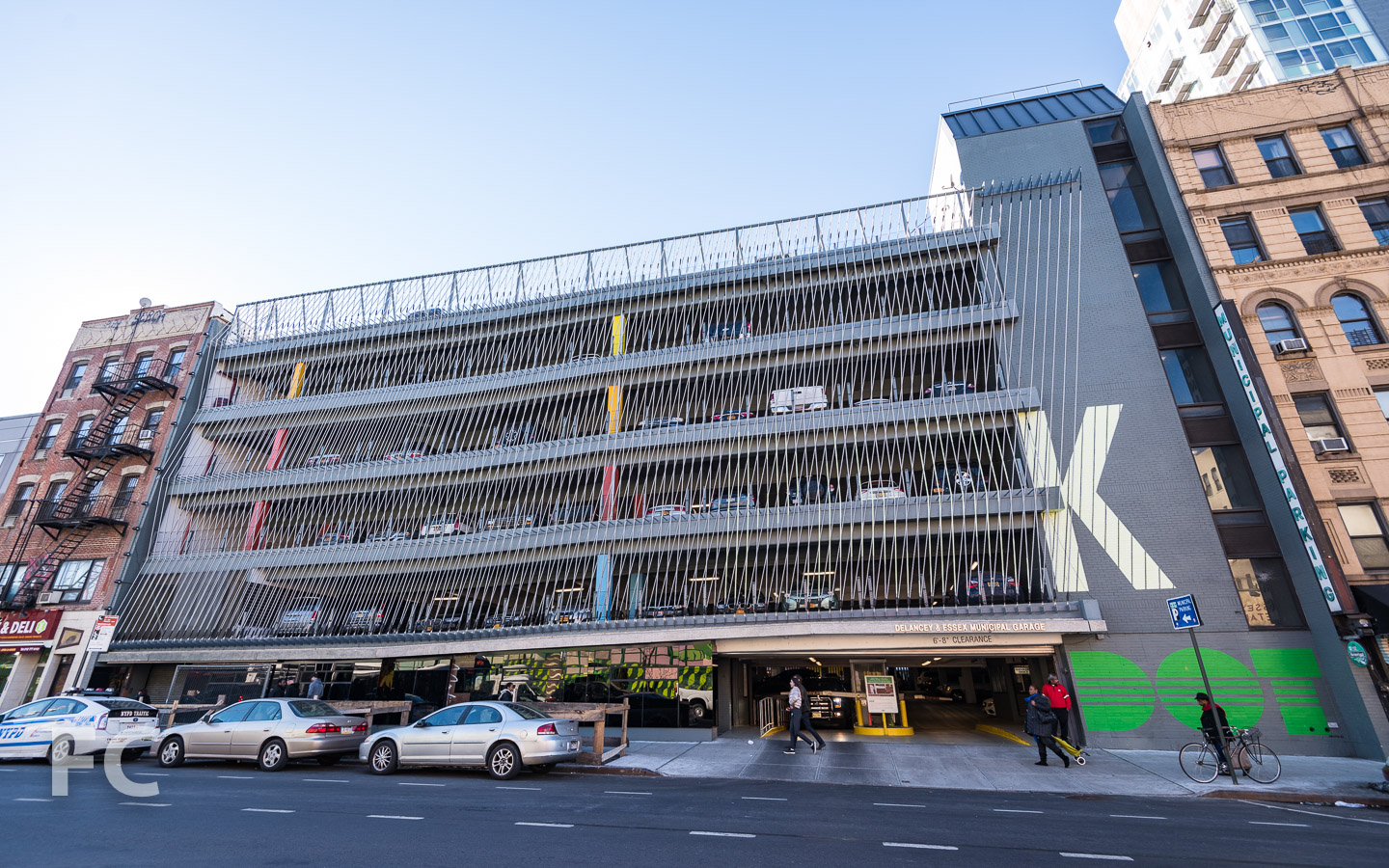
Architect: Michielli + Wyetzner Architects; Client: NYC Department of Transportation; Program: Parking Garage; Location: Lower East Side, New York, NY; Completion: 2016.

World Trade Center
Aerial of the World Trade Center site.
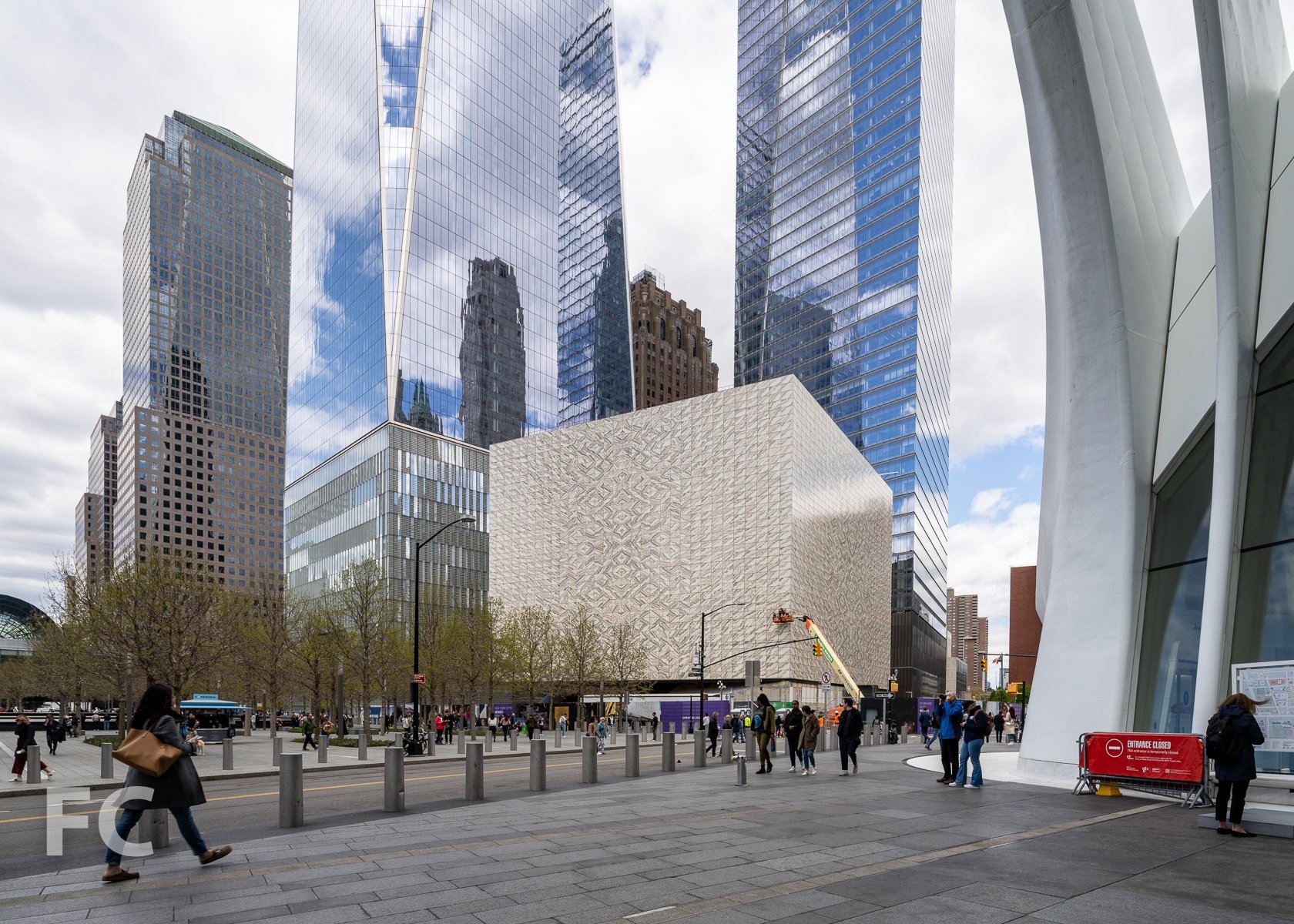
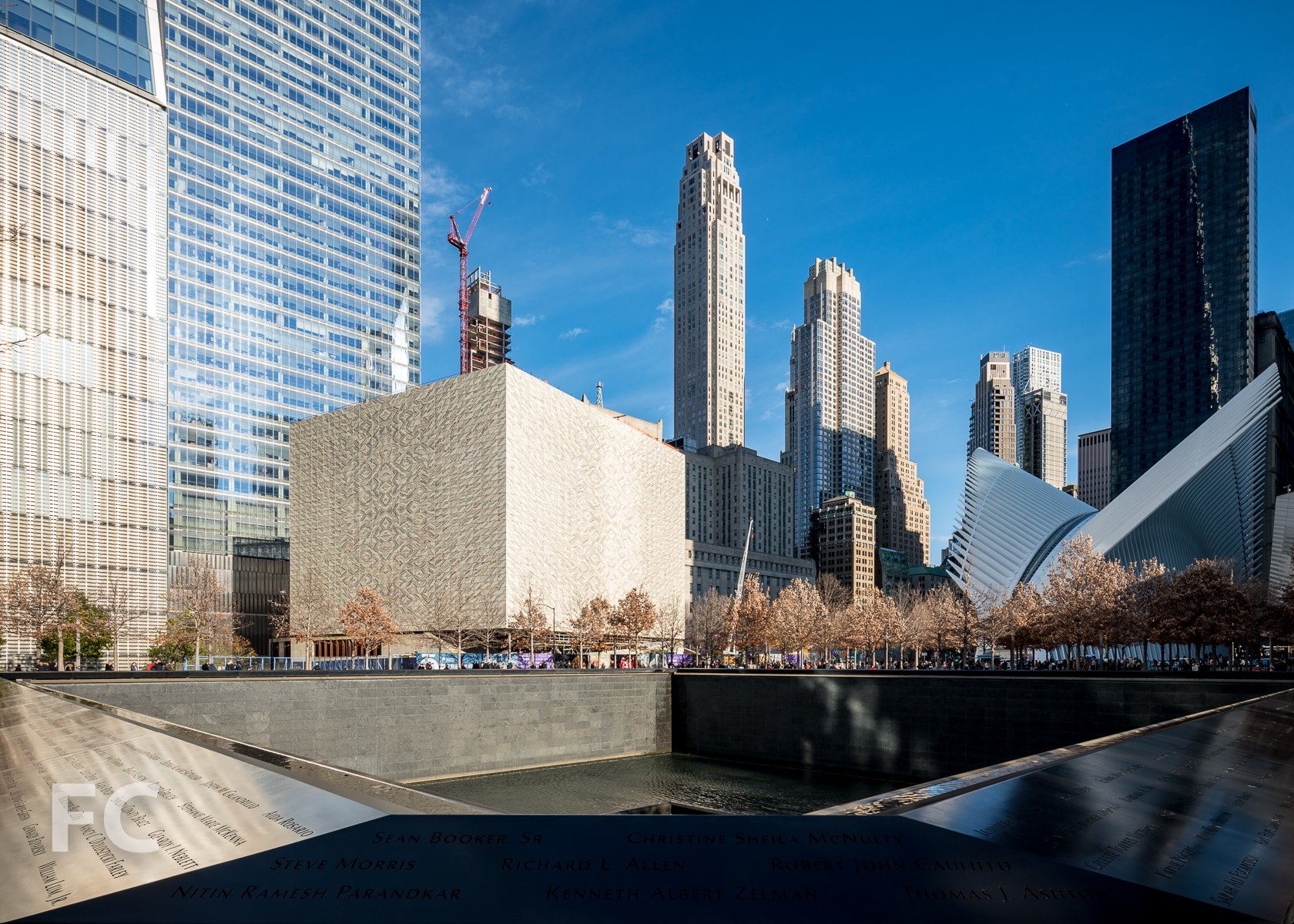
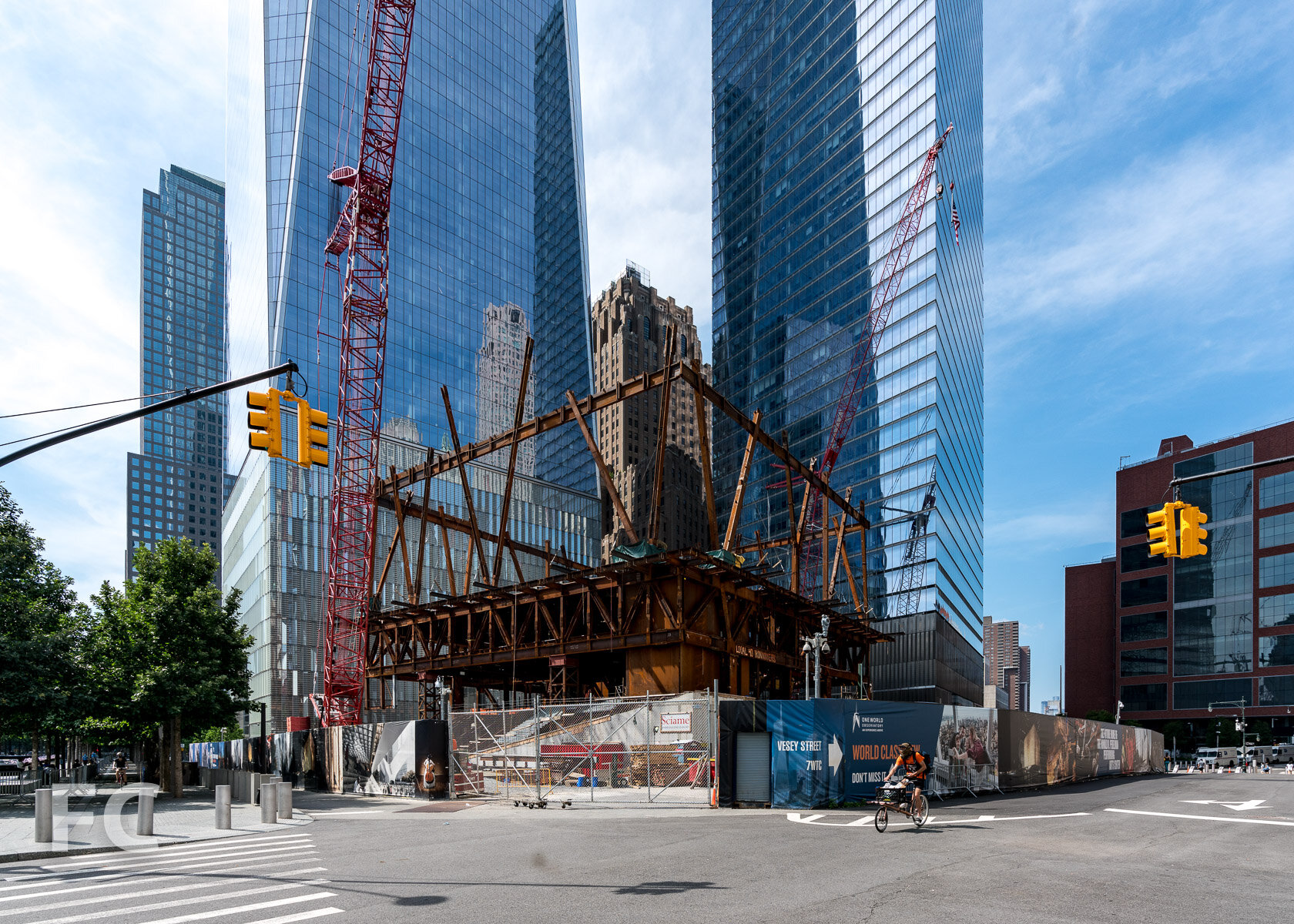
Nearing the 15th anniversary of the tragic events of 9/11, the rebuilding effort at the World Trade Center site has made great strides over the past year towards completing the master plan. In late June, Rogers Stirk Harbour + Partners' tower at 3 World Trade Center topped out at 1,079 feet tall. Santiago Calatrava's World Trade Center Transportation Hub opened in March, while the retail component opened in August, including a massive two-story store from Apple.
World Trade Center Transportation Hub.
World Trade Center Transportation Hub reflected in the facade of 1 World Trade Center.
World Trade Center Transportation Hub (foreground), 3 World Trade Center (center), and 4 World Trade Center (background).
Close-up of the Transportation Hub's fins with 3 World Trade Center beyond.
Close-up of the facade of 3 World Trade Center.
Reflections of 3 and 4 World Trade Center on the facade of 1 World Trade Center.
Southeast corner of 3 World Trade Center.
Close-up of the exposed structure on 3 World Trade Center.
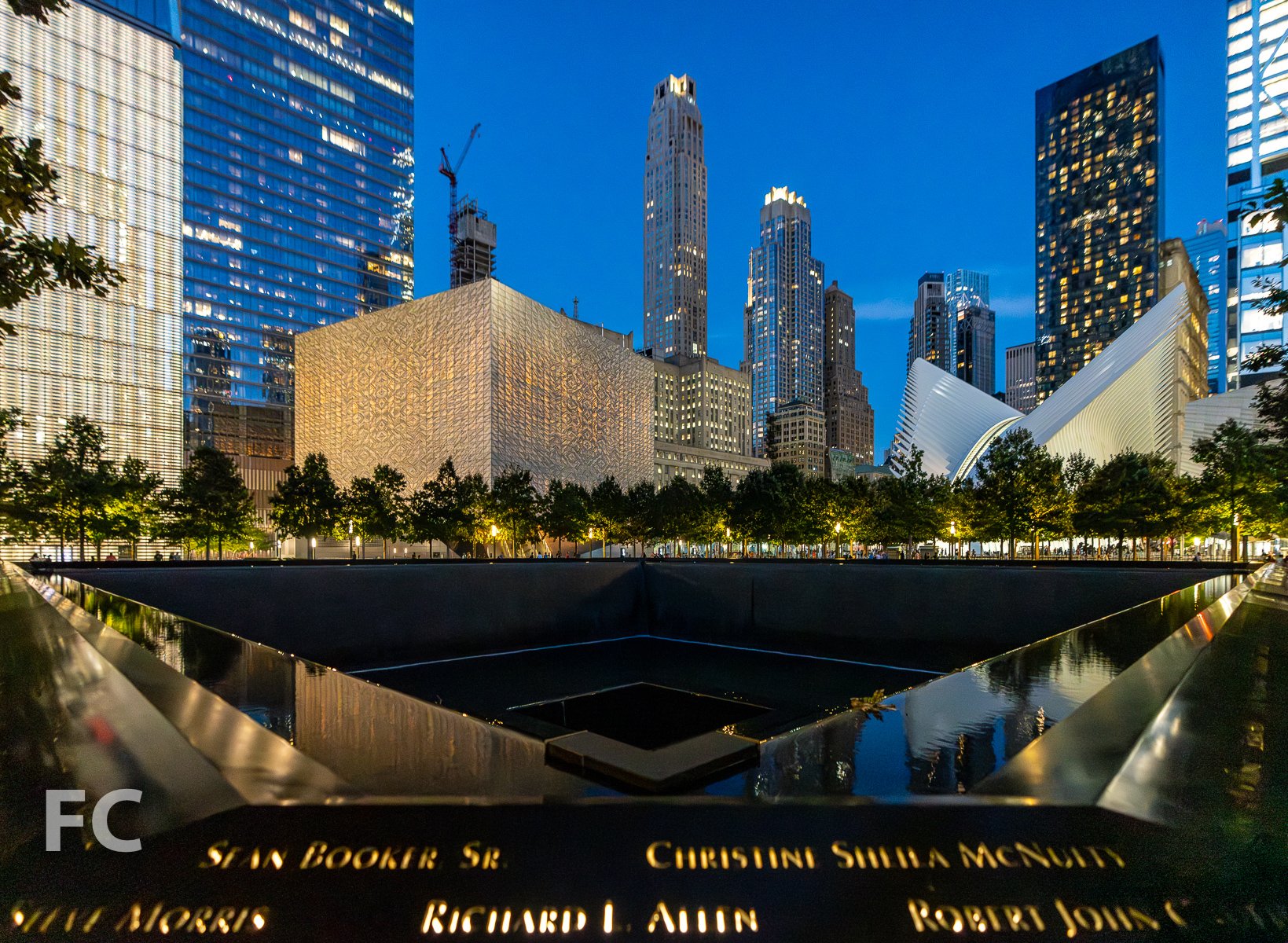
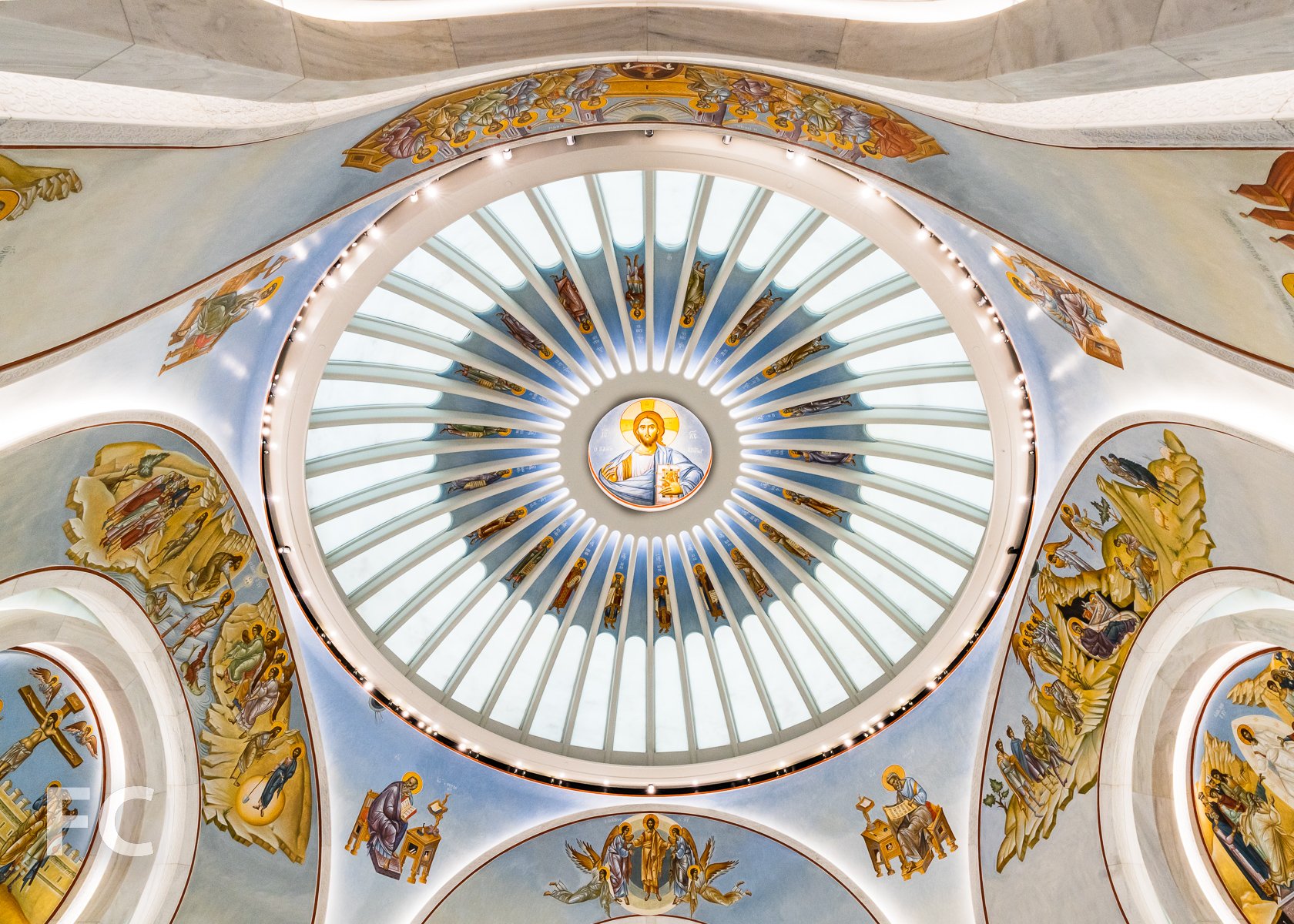
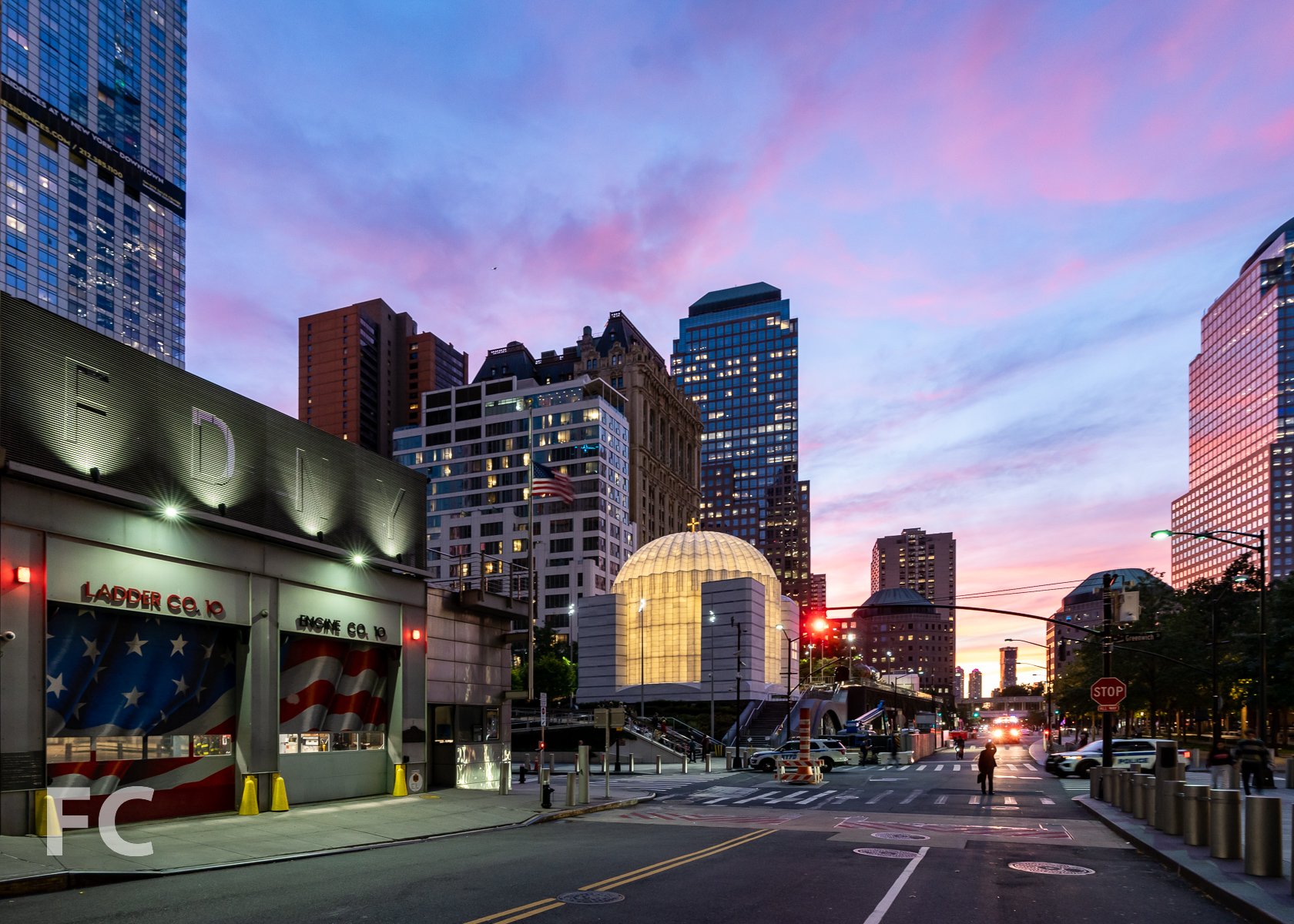
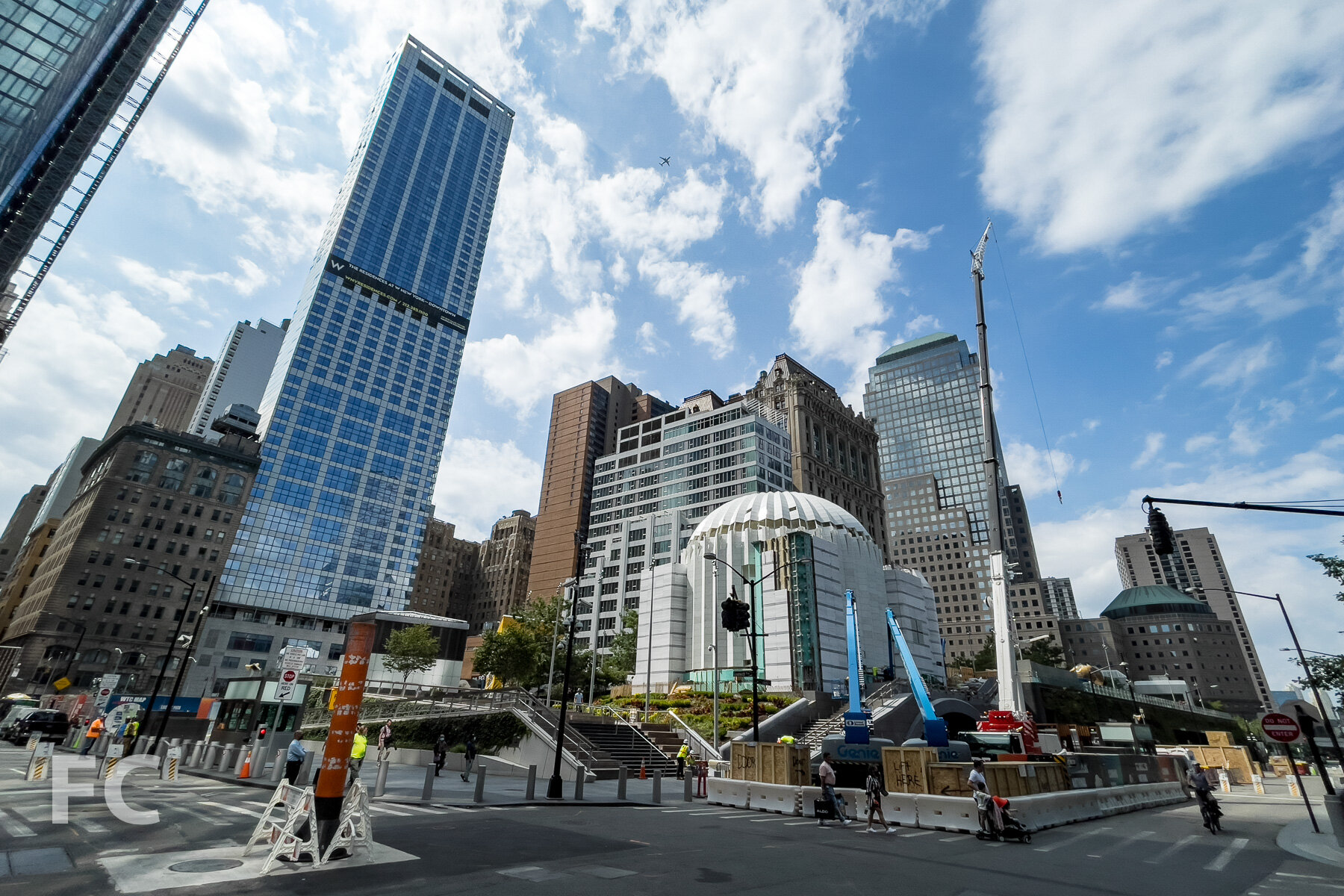
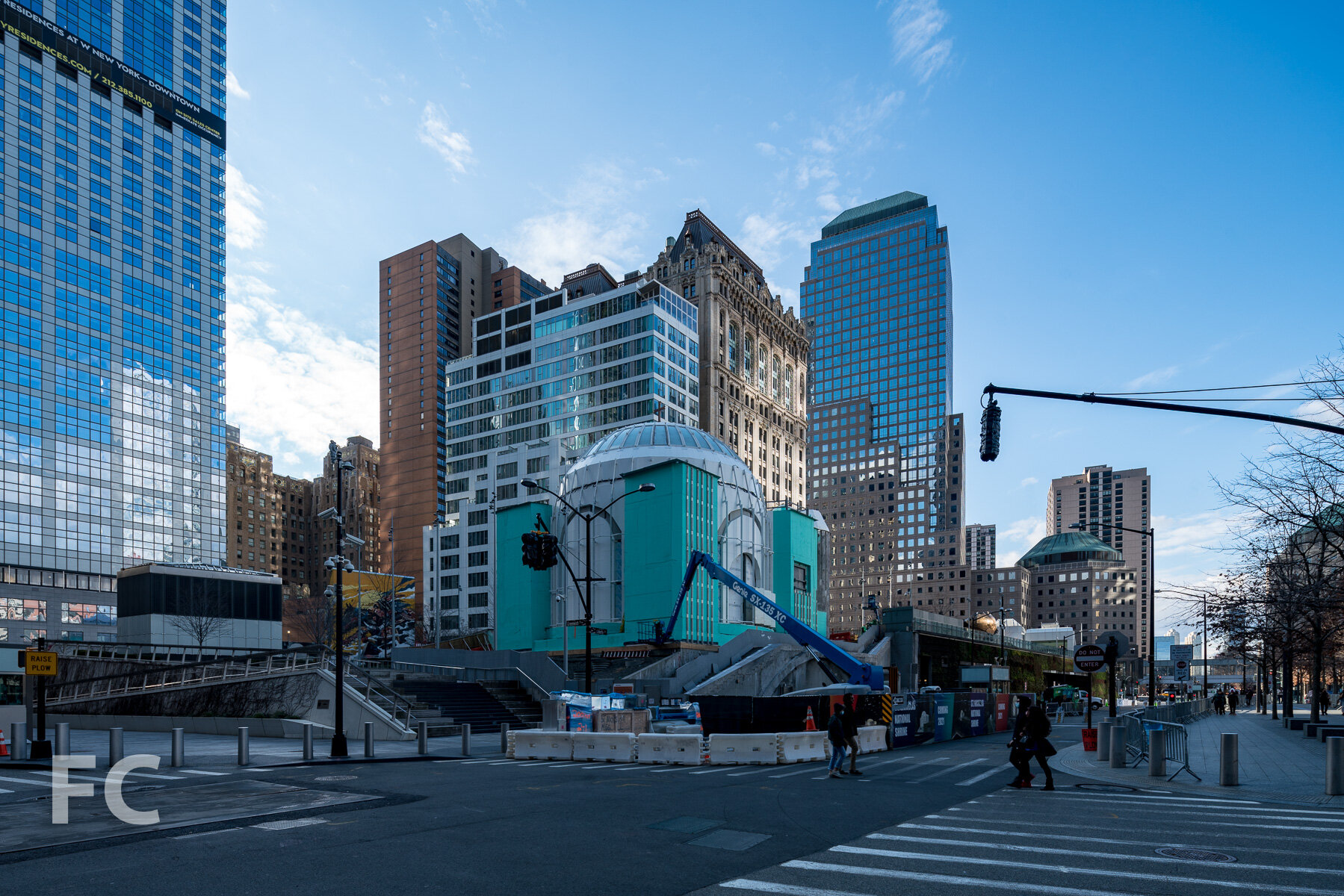
This past June, the elevated Liberty Park opened atop the World Trade Center Vehicular Security Center. Work continues on the adjacent St. Nicholas National Shrine, also designed by Calatrava, which replaces the St. Nicholas Greek Orthodox Church that was destroyed on 9/11.
Liberty Park adjacent to the Memorial.
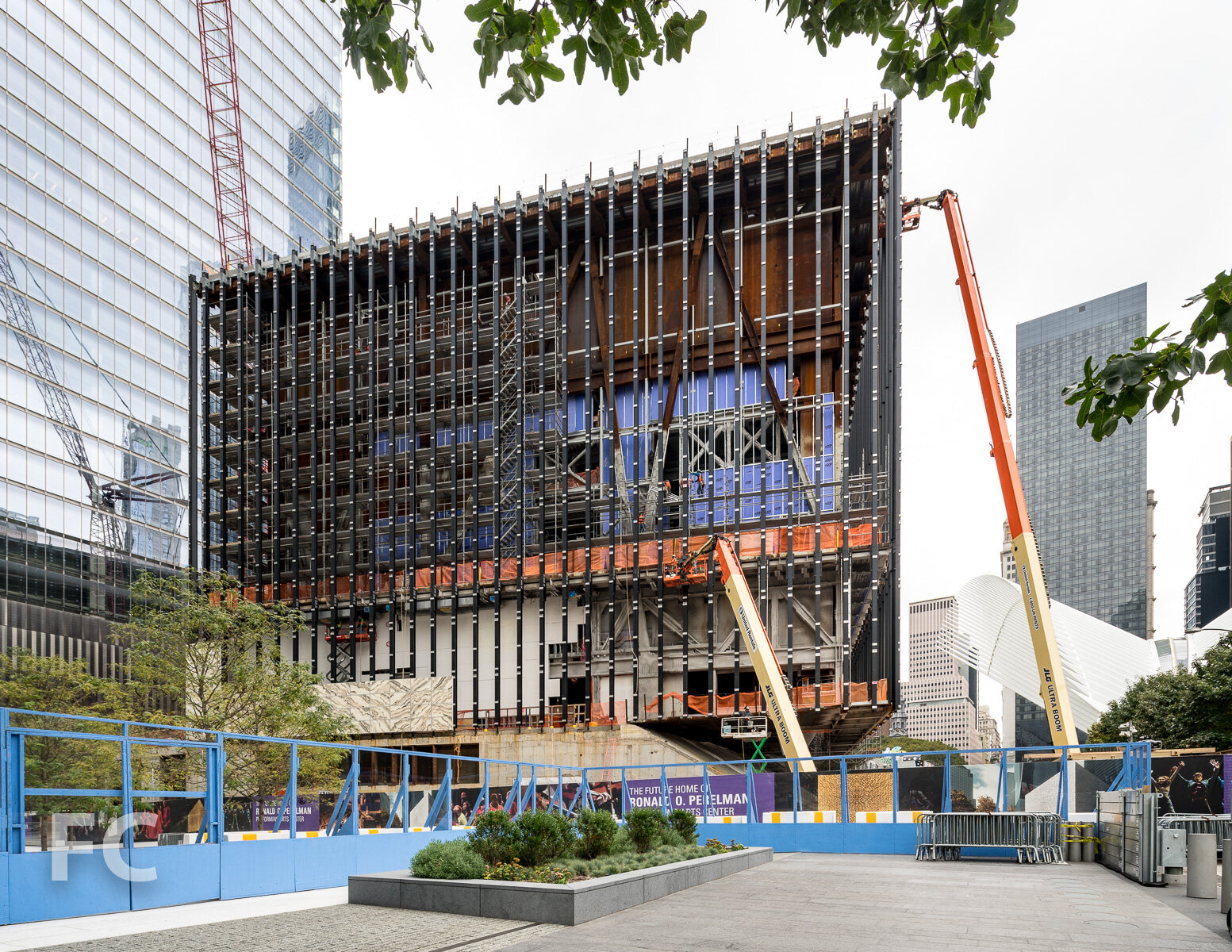
Designs for the final element, the Ronald O. Perelman Performing Arts Center, were announced on September 8th. The REX designed center, set to open in 2020, will feature a glowing façade of translucent, veined marble laminated in a glass curtail wall.
Night Render from the Southeast (Hub) © LUXIGON
Architects: Adamson Associates (2 WTC, 3 WTC, 4 WTC), Davis Brody Bond (WTC Memorial and Museum, Ronald O. Perelman Performing Arts Center), BIG (2 WTC), Maki and Associates (4 WTC), Michael Arad with Peter Walker and Partners (WTC Memorial), REX (Ronald O. Perelman Performing Arts Center), Rogers Stirk Harbour + Partners (3 WTC), Santiago Calatrava (WTC Transit Hub), Snohetta (WTC Museum), SOM (1 WTC, 7 WTC), Studio Daniel Libeskind (WTC master plan);
Engineers: WSP Cantor Seinuk (1 WTC, 2 WTC, 3 WTC);
Developers: Silverstein Properties, Inc. (2 WTC, 3 WTC, 4 WTC, 7 WTC), The Durst Organization (1 WTC), The Port Authority of New York & New Jersey (1 WTC, WTC Transportation Hub, WTC Memorial and Museum, Retail);
Program: Office, Retail, Memorial, Museum, Performing Arts Center, Transit, Park;
Completion: 1 WTC (2015), 2 WTC (TBD), 3 WTC (2018), 4 WTC (2013), 7 WTC (2006), WTC Transit Hub (2016), WTC Memorial (2011), WTC Museum (2014), Ronald O. Perelman Performing Arts Center (2020).

WTC Transportation Hub
The oculus at Santiago Calatrava's $4 billion World Trade Center Transportation Hub has finally opened to the public
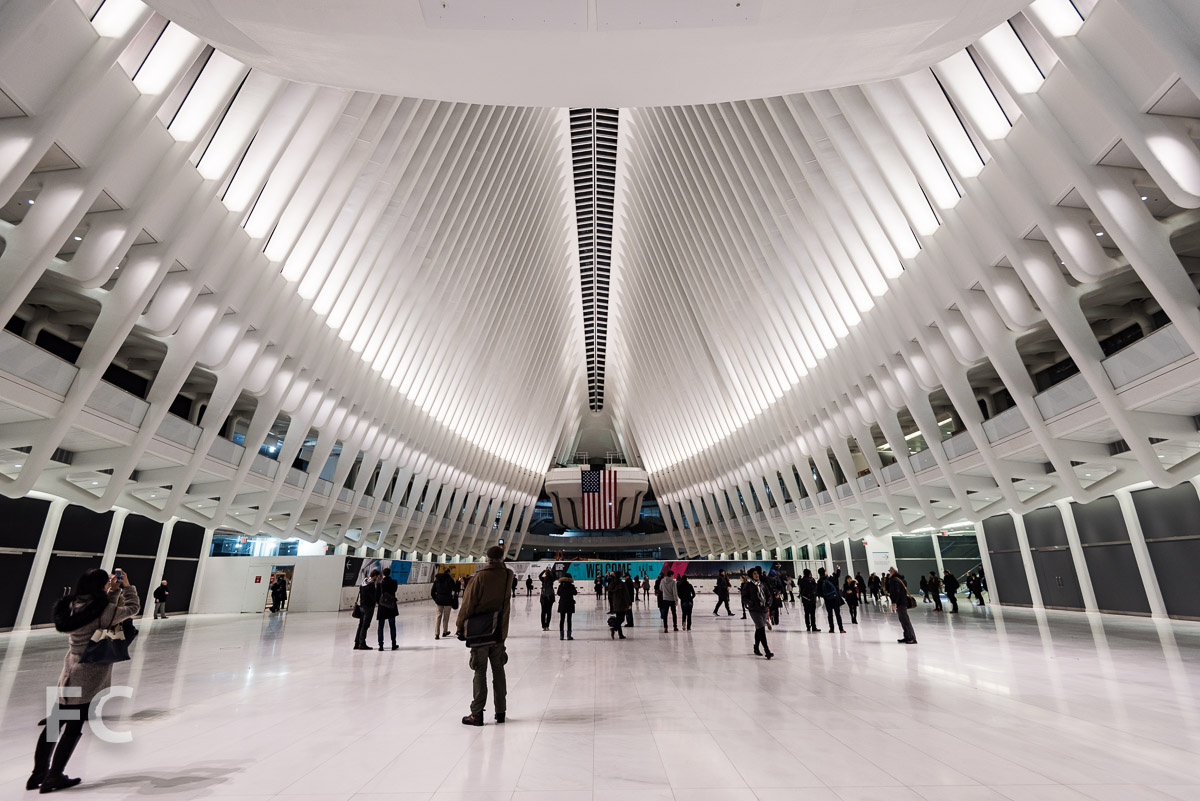
One more component of the rebuilt World Trade Center has reached completion, with the opening of the main transit hall at Santiago Calatrava's Transportation Hub. Known as the Oculus, the 365 foot long transit hall is located between the future WTC 2 and the currently under construction WTC 3. The total price tag has exceeded $4 billion, prompting much public outcry given the city's other transportation needs.
Entry from 4 WTC.
South Concourse.
South Concourse ceiling detail.
Entry to 4 WTC from the Transportation Hub.
South Concourse.
Inside the Transit Hall.
Looking up at the Transit Hall rib structure.
Looking up at the central spine skylight of the Transit Hall.
Transit Hall rib structure detail.
Looking east towards the Transit Hall.
Steps up to the Transit Hall.
Entrance to the Transit Hall from the PATH Hall.
Entrance to the PATH Hall.
PATH Hall.
PATH Hall ceiling detail.
PATH Hall.
Architects: Santiago Calatrava (WTC Transit Hub); Engineers: WSP Cantor Seinuk (1 WTC, 2 WTC, 3 WTC); Developers: The Port Authority of New York & New Jersey; Program: Transit, Retail; Completion: 2016.
Spring Street Salt Shed
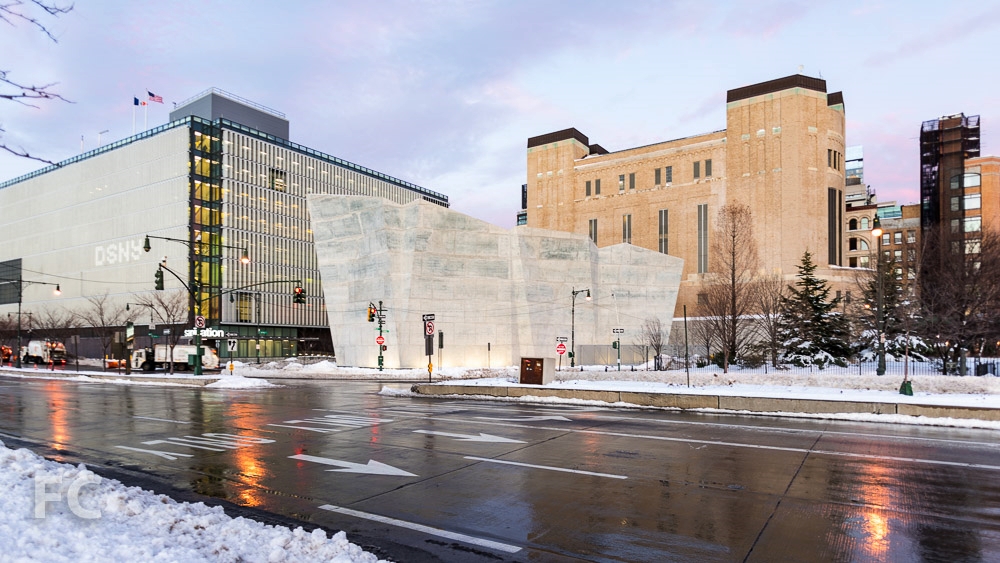
Dattner Architects and WXY's Spring Street Salt Shed had its first real test this past weekend, helping to dig out from New York City's second largest snowfall on record.
The onslaught of snow storm Jonas, New York City's second largest snowfall on record, brought the first real test for the city's new salt shed at Spring Street and the West Side Highway. Designed by Dattner Architects and WXY Architecture + Urban Design, the faceted concrete salt shed houses 4,000 tons of salt to combat the wintry precipitation. The form tapers towards the bottom, with glass pavers and lights installed along the periphery for dramatic uplighting of the structure at night. Entry gates along the Spring and Canal Street access points feature the "DSNY" identifier rendered in twisted vertical metal pickets, providing a graceful touch of design to what is often mundanely treated.
As a companion piece with the recently opened sanitation garage, the salt shed serves as a contemporary precedent for how urban infrastructure can serve to echo the values and aspirations of a city's architectural character.
Sanitation trucks head into the Manhattan Districts 1/2/5 Garage after a long day of plowing the aftermath of snow storm Jonas.
Looking south along the West Side Highway towards the Manhattan Districts 1/2/5 Garage (left) and the Spring Street Salt Shed (right).

The Manhattan Districts 1/2/5 Garage (left) and the Spring Street Salt Shed (right).
The Manhattan Districts 1/2/5 Garage (left) and the Spring Street Salt Shed (right).
Looking north along the West Side Highway towards the Manhattan Districts 1/2/5 Garage (left) and the Spring Street Salt Shed (right).

Southeast corner of the Spring Street Salt Shed.
Southeast corner of the Spring Street Salt Shed.
East facade of the Spring Street Salt Shed.
Close up of the sidewalk uplighting.
North facade of the Spring Street Salt Shed.
Northeast corner of the Spring Street Salt Shed.
Northeast corner of the Spring Street Salt Shed.
Looking west along Spring Street towards the Manhattan Districts 1/2/5 Garage (right) and the Spring Street Salt Shed (left).
Architect: Dattner Architects and WXY Architecture + Urban Design; Client: New York City Department of Sanitation; Program: Infrastructure; Location: Hudson Square, New York, NY; Completion: 2015.
Spring Street Salt Shed
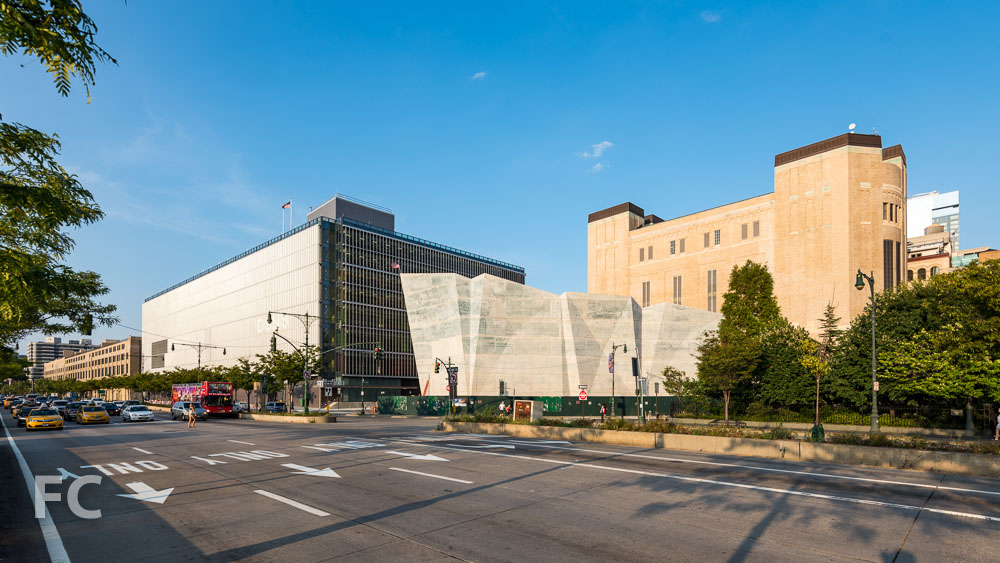
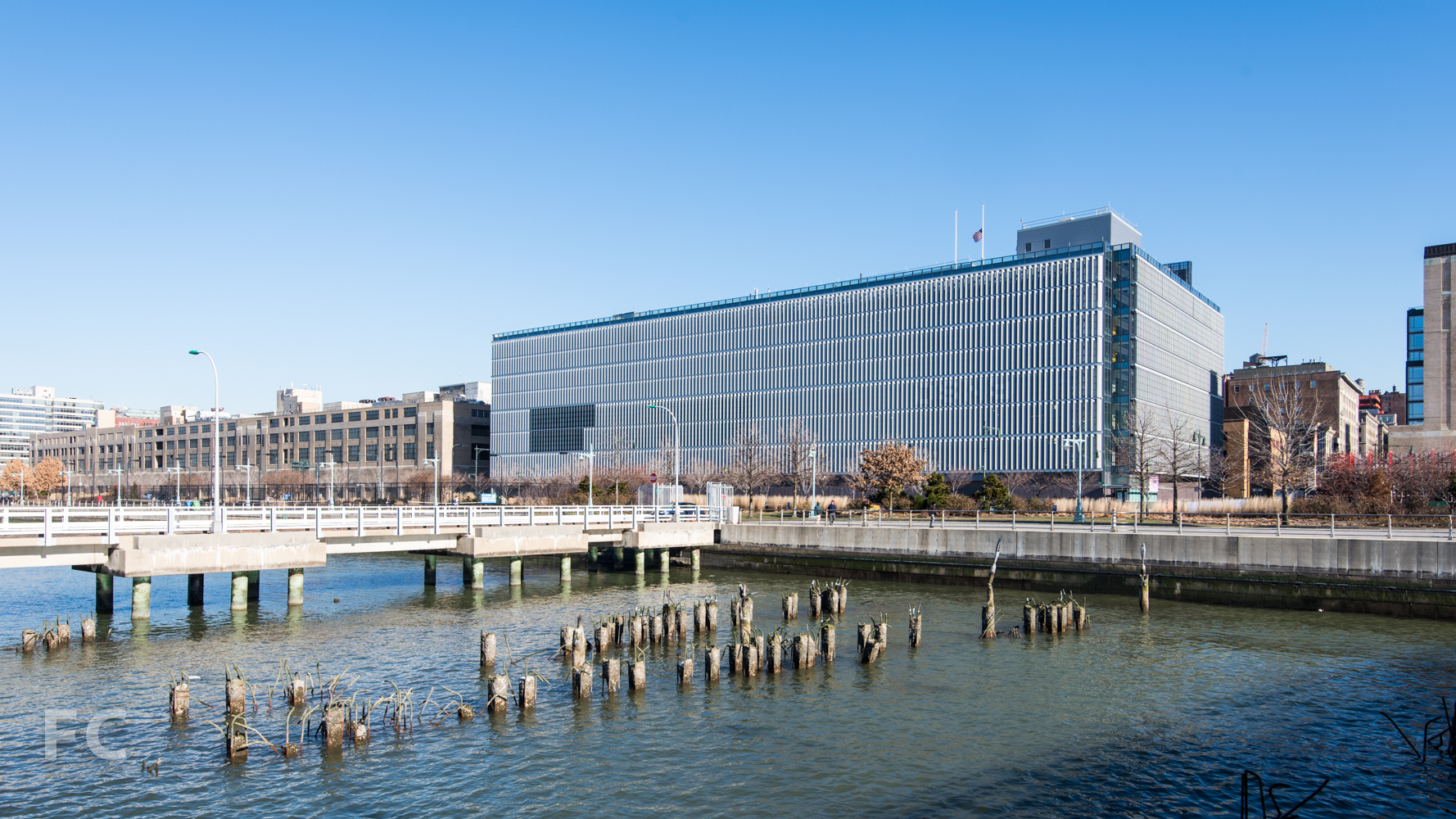
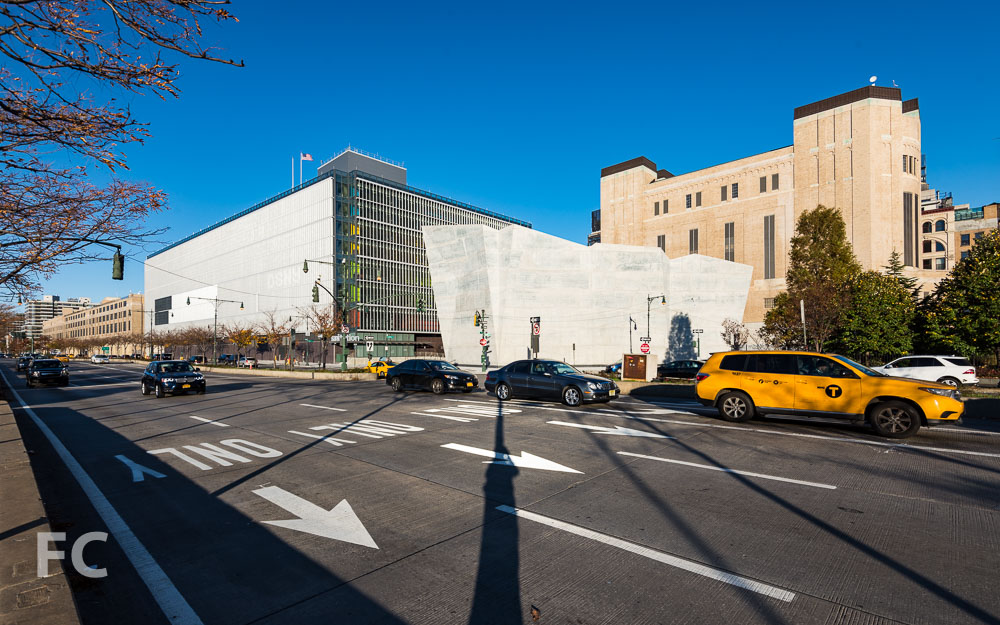
Dattner Architects' Spring Street Salt Shed for the DSNY has been fully revealed after the removal of its construction fence.
With winter quickly approaching, the latest addition to New York's arsenal against the snow looks ready to receive its salt stockpile. Designed by Dattner Architects, the faceted concrete salt shed adjacent to the West Side Highway will house 4,000 tons of salt to combat the inevitable wintry precipitation. Construction fencing has been recently removed and new entry gates have been installed at the Spring and Canal Street access points. Like the adjacent Sanitation Garage from Dattner and WXY Studio, signage for the salt shed is treated as a design exercise to avoid the mundane tendencies of everyday infrastructure projects. Vertical metal elements twist to form the "DSNY" identifier, announcing the agency with whimsy to the trendy neighborhood that surrounds it.
Northeast corner from Spring Street with new entrance gate.
Looking north on West Street towards the Manhattan Districts 1/2/5 Garage (left) and the Salt Shed (right).
Looking north on West Street towards the Manhattan Districts 1/2/5 Garage (left) and the Salt Shed (right).
View of the Manhattan Districts 1/2/5 Garage (left) and the Salt Shed (right) from Hudson River Park.
Looking east toward the Manhattan Districts 1/2/5 Garage (left) and the Salt Shed (right) from Pier 34 at Hudson River Park.
South façade from Canal Street.
Concrete façade detail.
Entry gate detail.
Shadows cast by the entry gate.
Architect: Dattner Architects; Client: New York City Department of Sanitation, New York City Department of Design and Construction; Program: Infrastructure; Location: Hudson Square, New York, NY; Completion: 2015.