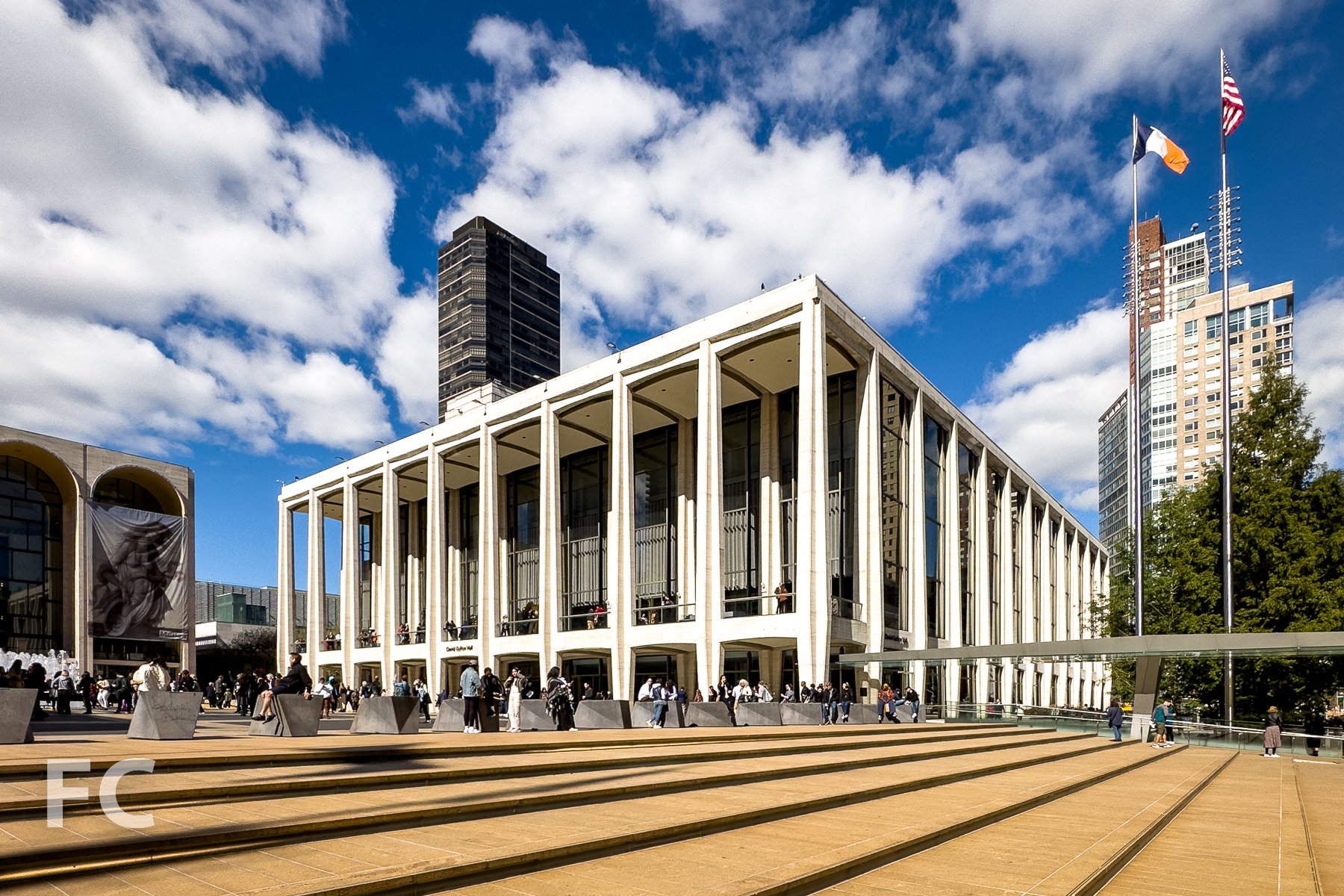
David Geffen Hall at Lincoln Center
Tod Williams Billie Tsien · Lincoln Square · 2022
Construction has wrapped up at the renovated home of the New York Philharmonic in Lincoln Center’s David Geffen Hall (formerly Avery Fisher Hall). Officially opened on October 08, the renovation of the Max Abramovitz structure came in on budget and two years ahead of schedule.
Tod Williams Billie Tsien Architects are responsible for the design of the public spaces, including the ground floor public hall, a Sidewalk Studio public space at the northeast corner, and second floor atrium.
Hauser Digital Wall in the ground floor public hall.
Design of the theater renovation, renamed the Wu Tsai Theater, was led by Diamond Schmitt Architects. This is the third theater to be built inside the 1962 structure and features a design similar to a proposal by Abramovitz. The stage has moved forward by 25 feet and flexible seating has filled in behind. Seating has been reduced by 500 to a total of 2,200 seats and an increase in the rake of the main seating level to 7.5 degrees allows for a more intimate experience.
Architects: Diamond Schmitt Architects, Tod Williams Billie Tsien Architects; Acoustician: Akustiks; Theater Planner: Fisher Dachs Associates; Client: Lincoln Center; Program: Performing Arts; Location: Upper West Side, New York, NY; Completion: 2022.
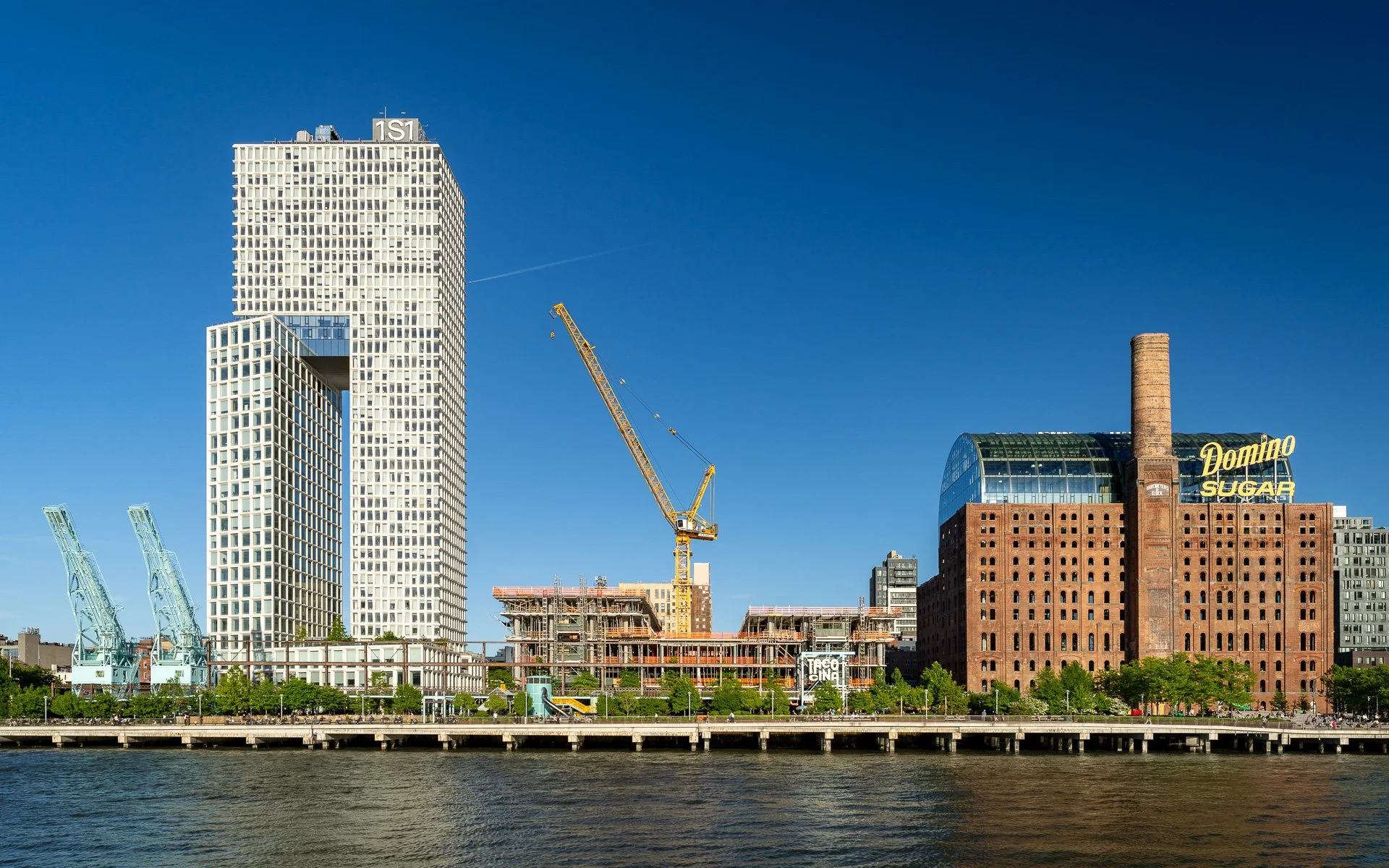
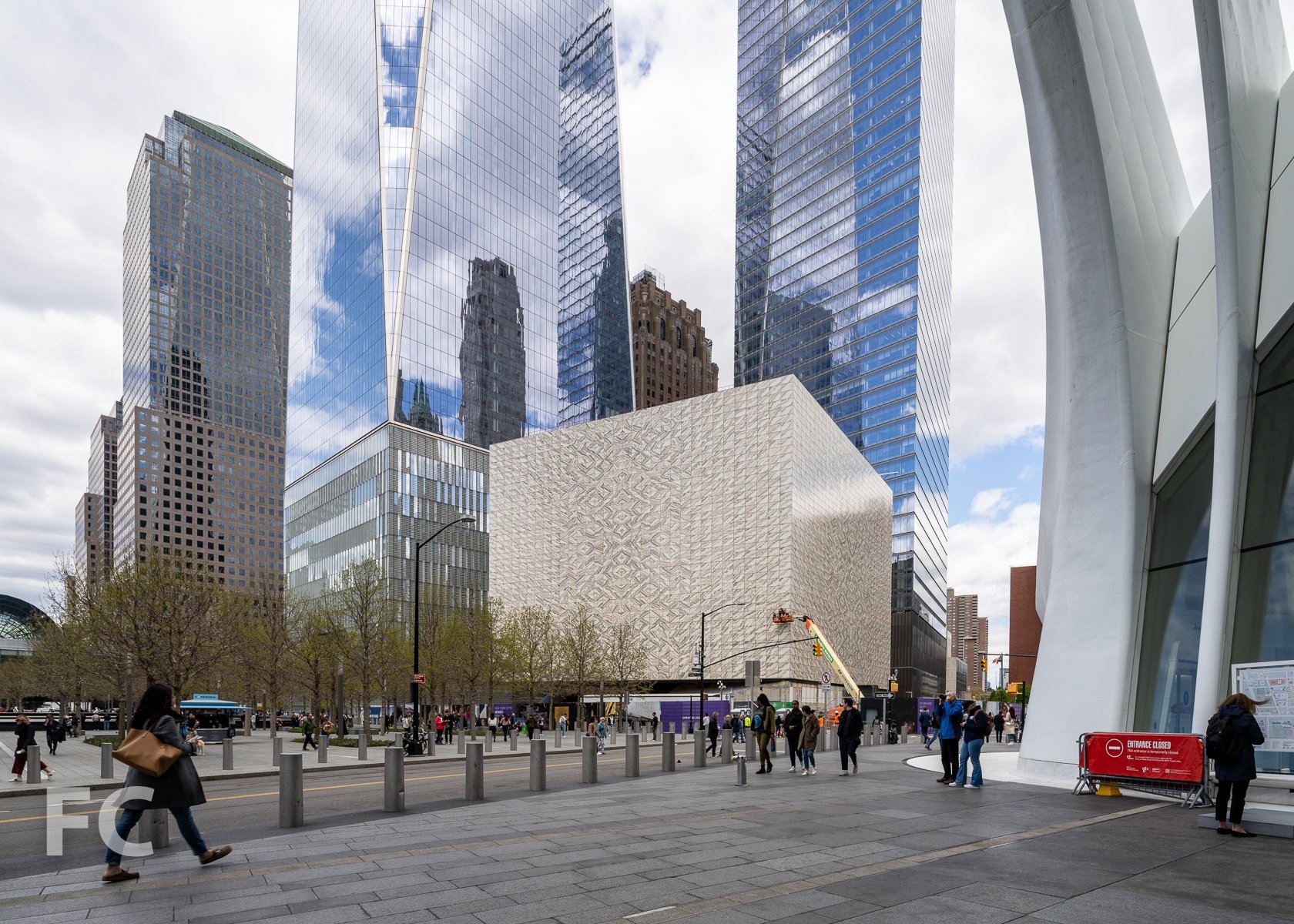
Construction Update: The Perelman Center
Southeast corner with 1 World Trade Center (left) and 7 World Trade Center (right) behind.
Installation of the primary curtain wall facade has wrapped up at the Ronald O. Perelman Performing Arts Center at the World Trade Center. Designed by REX, the massing features a cube that is elevated and rotated above the complexity of program at and below grade. The cube is wrapped in a facade of translucent, veined marble laminated within insulated glass. When completed, the Perelman Center will house three auditoriums to produce and premiere original works of theater, dance, music, film, and opera.
Southeast corner.
East facade.
Northeast corner.
Northeast corner.
East facade.
Southeast corner.
Architect: REX (Design Architect), Davis Brody Bond (Executive Architect); Client: Ronald O. Perelman Performing Arts Center at the World Trade Center; Program: Performing Arts Center; Location: Financial District, New York, NY; Completion: 2023.
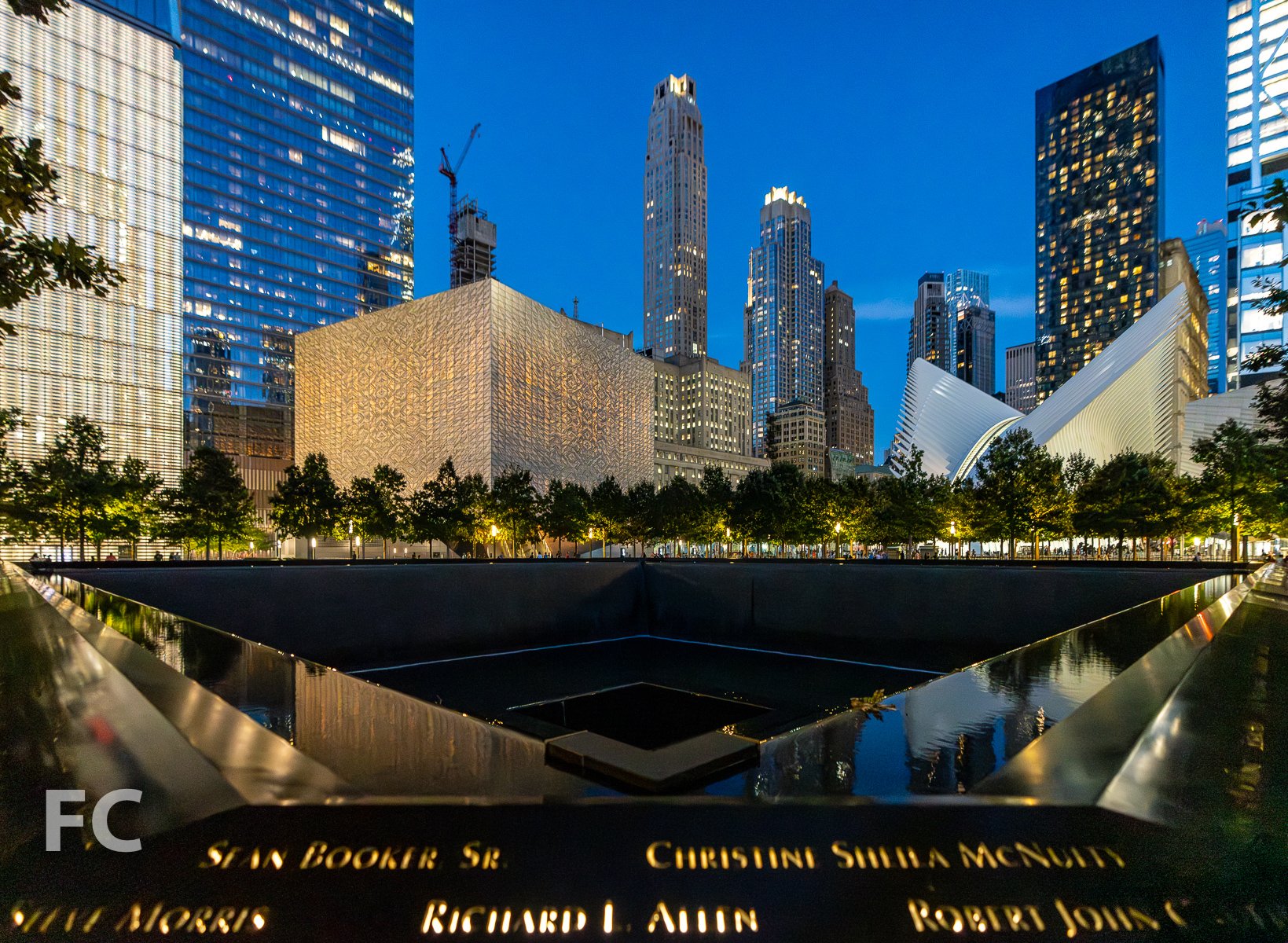
Construction Update: The Perelman Center
Southeast corner with 1 World Trade Center (left) and 7 World Trade Center (right) behind.
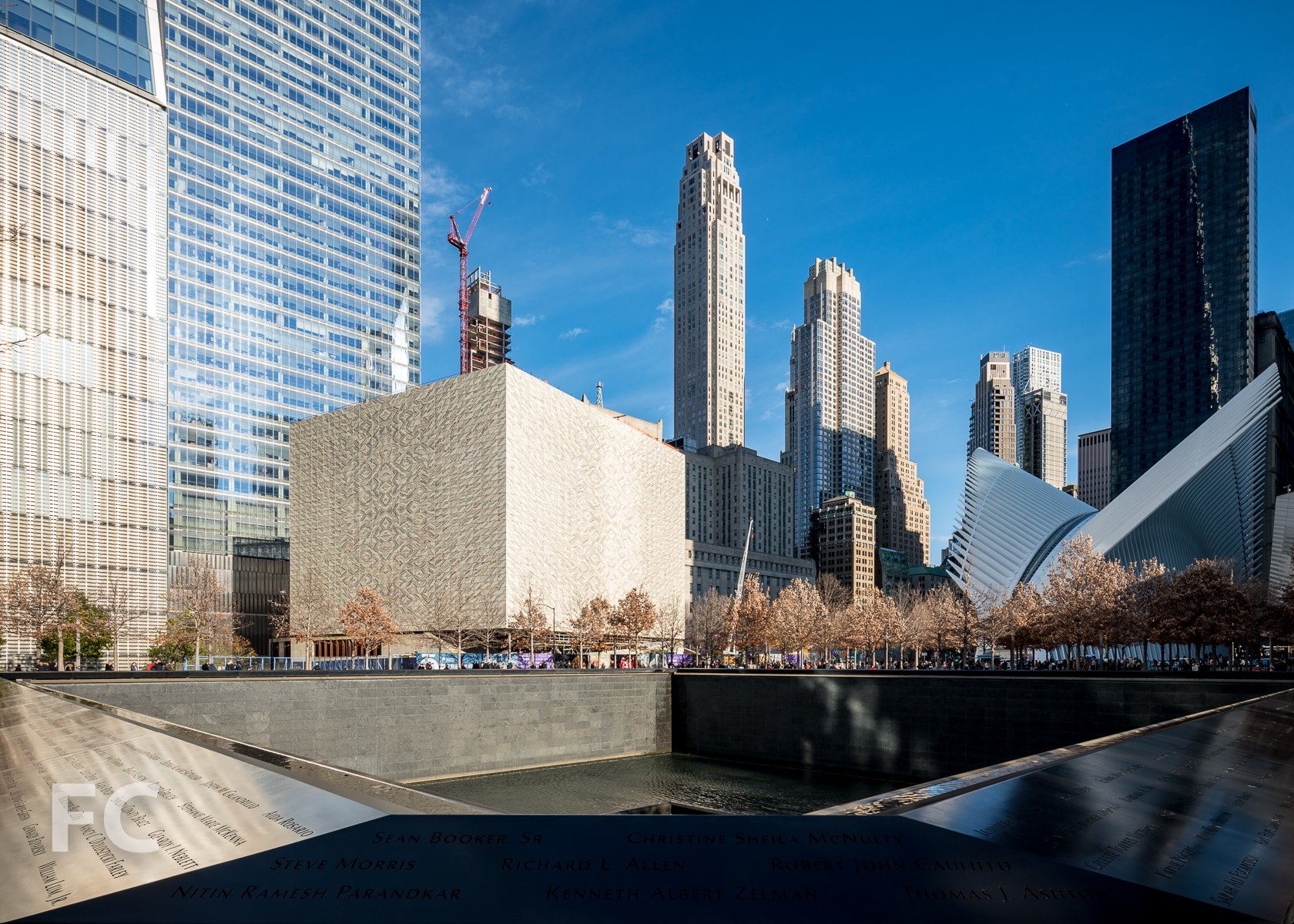
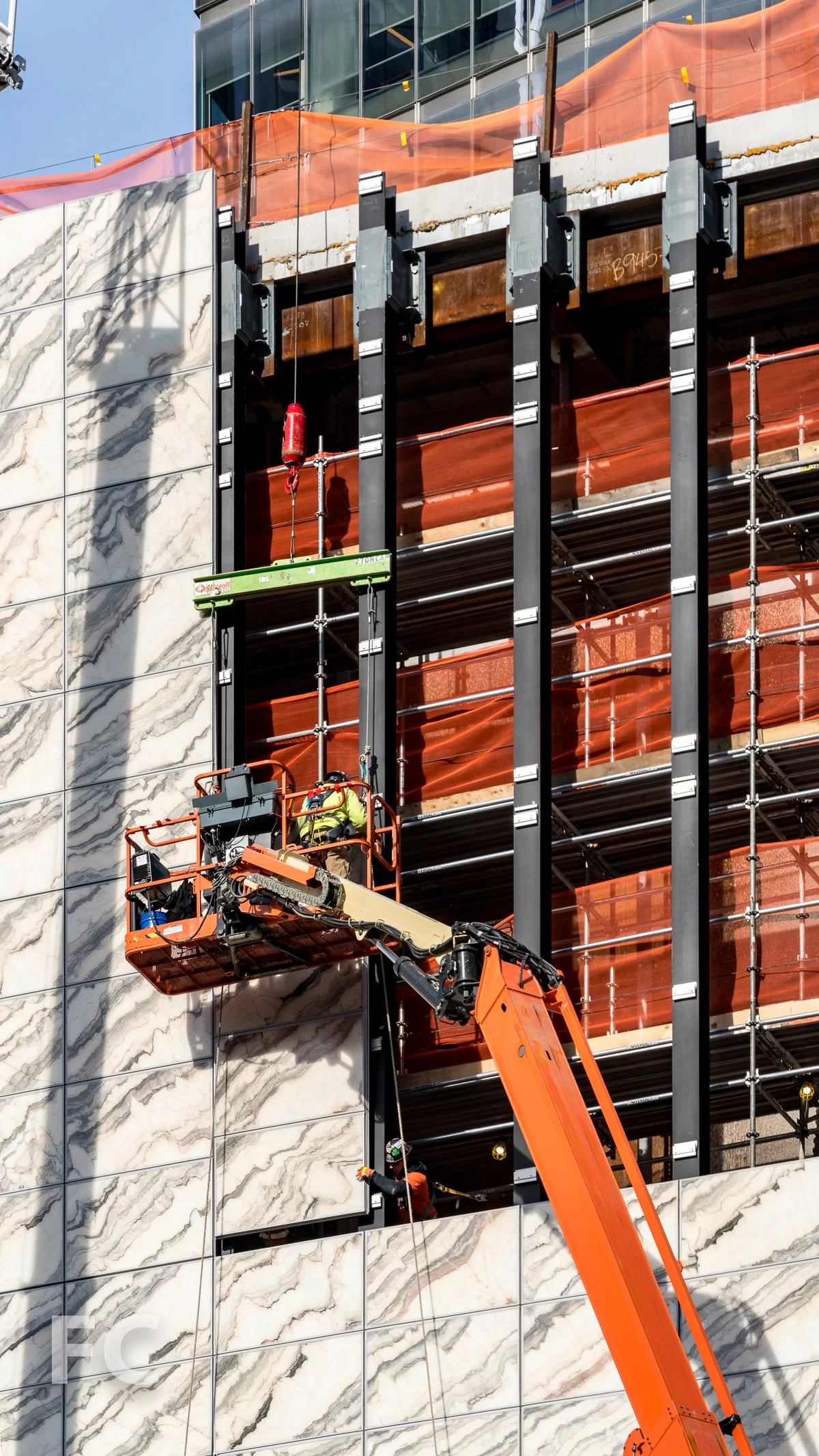
Facade installation is wrapping up at the Ronald O. Perelman Performing Arts Center at the World Trade Center. Designed by REX, the massing features a cube that is elevated and rotated above the complexity of program at and below grade. The cube will be wrapped in a facade of translucent, veined marble laminated within insulated glass. When completed, the Perelman Center will house three auditoriums to produce and premiere original works of theater, dance, music, film, and opera.
Southeast corner.
Southwest corner.
South facade of 1 World Trade Center (left) and The Perelman Center (left) from the 9/11 Memorial.
Southwest corner of The Perelman Center (center left) and the Oculus (right) from the 9/11 Memorial.
West facade.

Northeast corner.

Architect: REX (Design Architect), Davis Brody Bond (Executive Architect); Client: Ronald O. Perelman Performing Arts Center at the World Trade Center; Program: Performing Arts Center; Location: Financial District, New York, NY; Completion: 2023.

Construction Update: The Perelman Center
Southeast corner with 1 World Trade Center (left) and 7 World Trade Center (right) behind.
Facade installation is ongoing at the Ronald O. Perelman Performing Arts Center at the World Trade Center. Designed by REX, the massing features a cube that is elevated and rotated above the complexity of program at and below grade. The cube will be wrapped in a facade of translucent, veined marble laminated within insulated glass. When completed, the Perelman Center will house three auditoriums to produce and premiere original works of theater, dance, music, film, and opera.
Southeast corner.
Southwest corner.
South facade of 1 World Trade Center (left) and The Perelman Center (left) from the 9/11 Memorial.

Southwest corner of The Perelman Center (center left) and the Oculus (right) from the 9/11 Memorial.
West facade.

Architect: REX (Design Architect), Davis Brody Bond (Executive Architect); Client: Ronald O. Perelman Performing Arts Center at the World Trade Center; Program: Performing Arts Center; Location: Financial District, New York, NY; Completion: 2023.
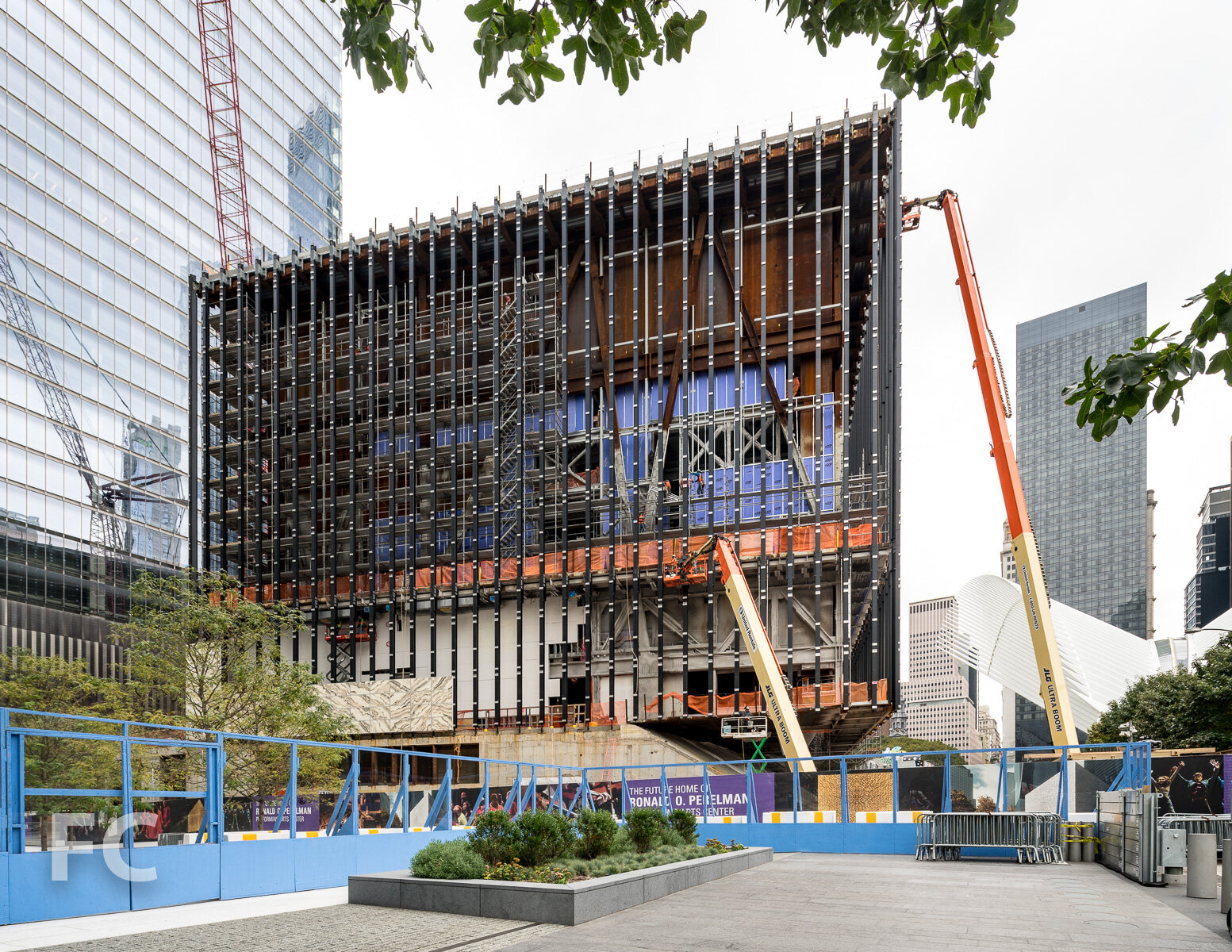
Construction Update: The Perelman Center
West facade.
Facade installation is underway at the Ronald O. Perelman Performing Arts Center at the World Trade Center. Designed by REX, the massing features a cube that is elevated and rotated above the complexity of program at and below grade. The cube will be wrapped in a facade of translucent, veined marble laminated within insulated glass. When completed, the Perelman Center will house three auditoriums to produce and premiere original works of theater, dance, music, film, and opera.
Southwest corner.
Southeast corner with 1 World Trade Center (left) and 7 World Trade Center (right) behind.
Northwest corner.
Architect: REX (Design Architect), Davis Brody Bond (Executive Architect); Client: Ronald O. Perelman Performing Arts Center at the World Trade Center; Program: Performing Arts Center; Location: Financial District, New York, NY; Completion: 2023.
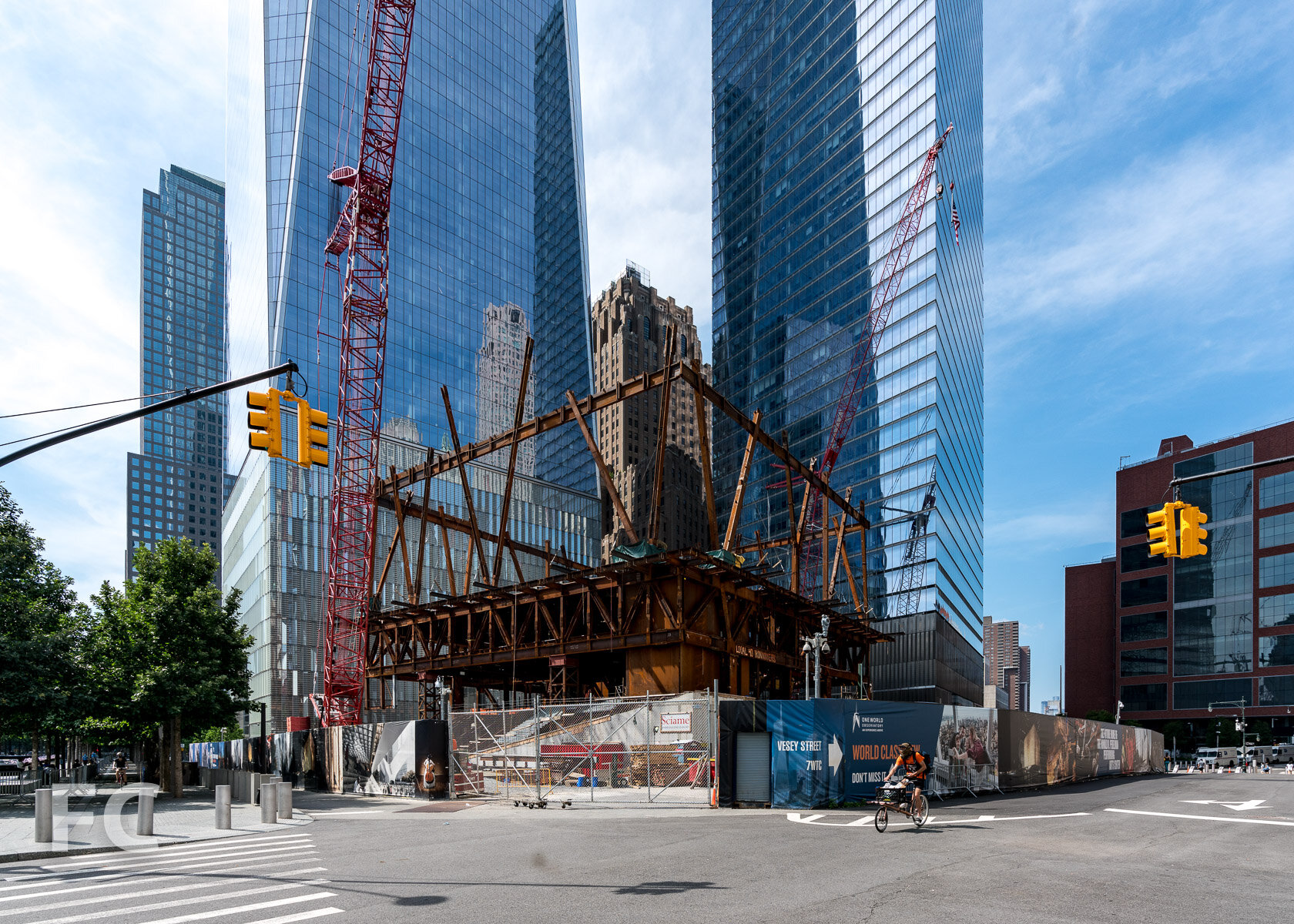
Construction Update: The Perelman Center
Southeast corner with 1 World Trade Center (left) and 7 World Trade Center (right) behind.
Superstructure continues to rise at the Ronald O. Perelman Performing Arts Center at the World Trade Center. Designed by REX, the massing features a cube that is elevated and rotated above the complexity of program at and below grade. The cube will be wrapped in a facade of translucent, veined marble laminated within insulated glass. When completed, the Perelman Center will house three auditoriums to produce and premiere original works of theater, dance, music, film, and opera.
Northeast corner.
East facade.
South facade detail.
Southeast corner detail.
Southwest corner.
Southwest corner from the 9/11 Memorial.
Architect: REX (Design Architect), Davis Brody Bond (Executive Architect); Client: Ronald O. Perelman Performing Arts Center at the World Trade Center; Program: Performing Arts Center; Location: Financial District, New York, NY; Completion: 2021.
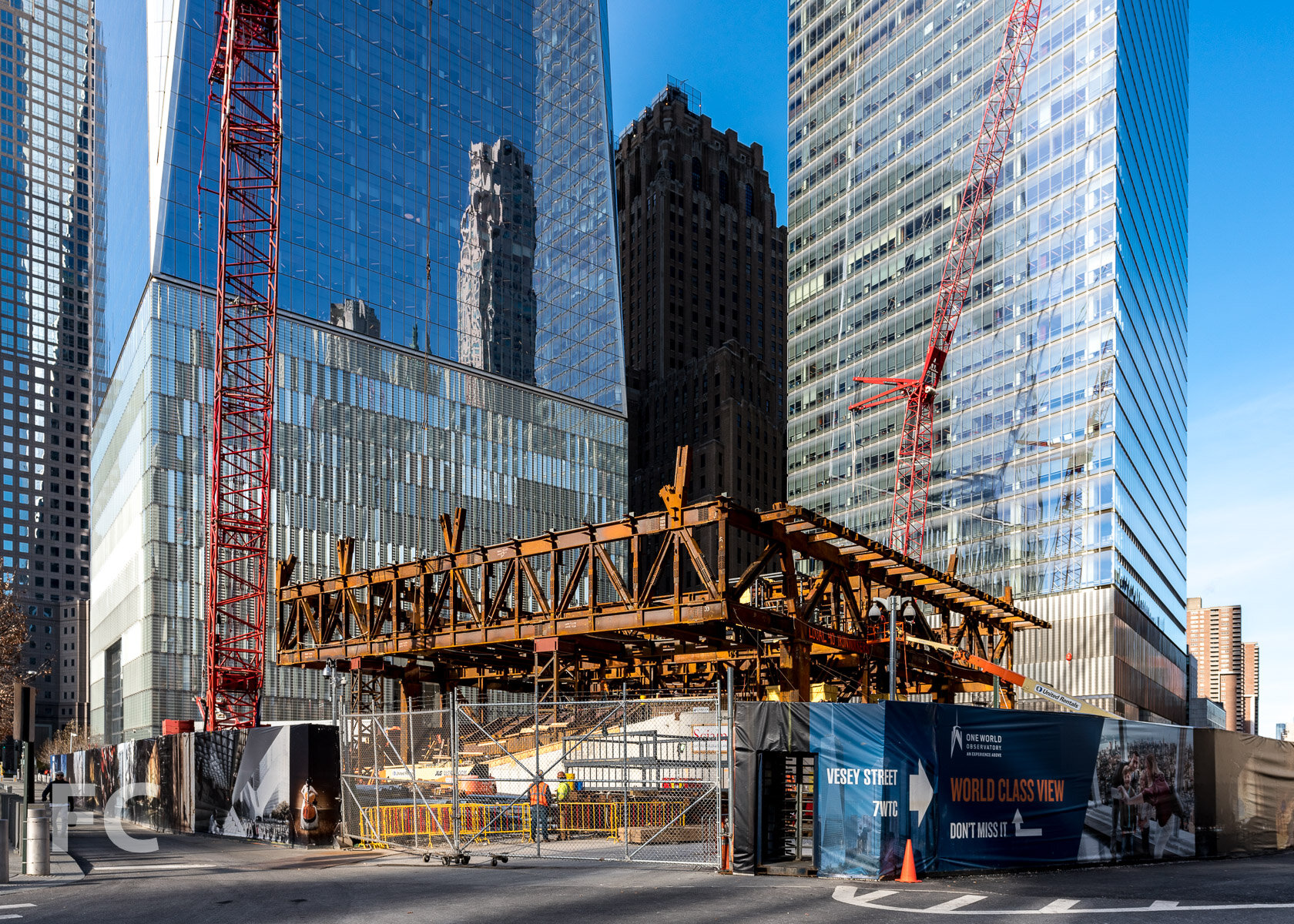
Construction Update: The Perelman Center
Southeast corner with 1 World Trade Center (left) and 7 World Trade Center (right) behind.
Superstructure is rising at the Ronald O. Perelman Performing Arts Center at the World Trade Center. Designed by REX, the massing features a cube that is elevated and rotated above the complexity of program at and below grade. The cube will be wrapped in a facade of translucent, veined marble laminated within insulated glass. When completed, the Perelman Center will house three auditoriums to produce and premiere original works of theater, dance, music, film, and opera.
East facade.
Northeast corner.
Northeast corner detail.
Southeast corner detail.
South facade detail.
Southeast corner detail.
Southwest corner.
Southwest corner from the 9/11 Memorial.
Architect: REX (Design Architect), Davis Brody Bond (Executive Architect); Client: Ronald O. Perelman Performing Arts Center at the World Trade Center; Program: Performing Arts Center; Location: Financial District, New York, NY; Completion: 2021.
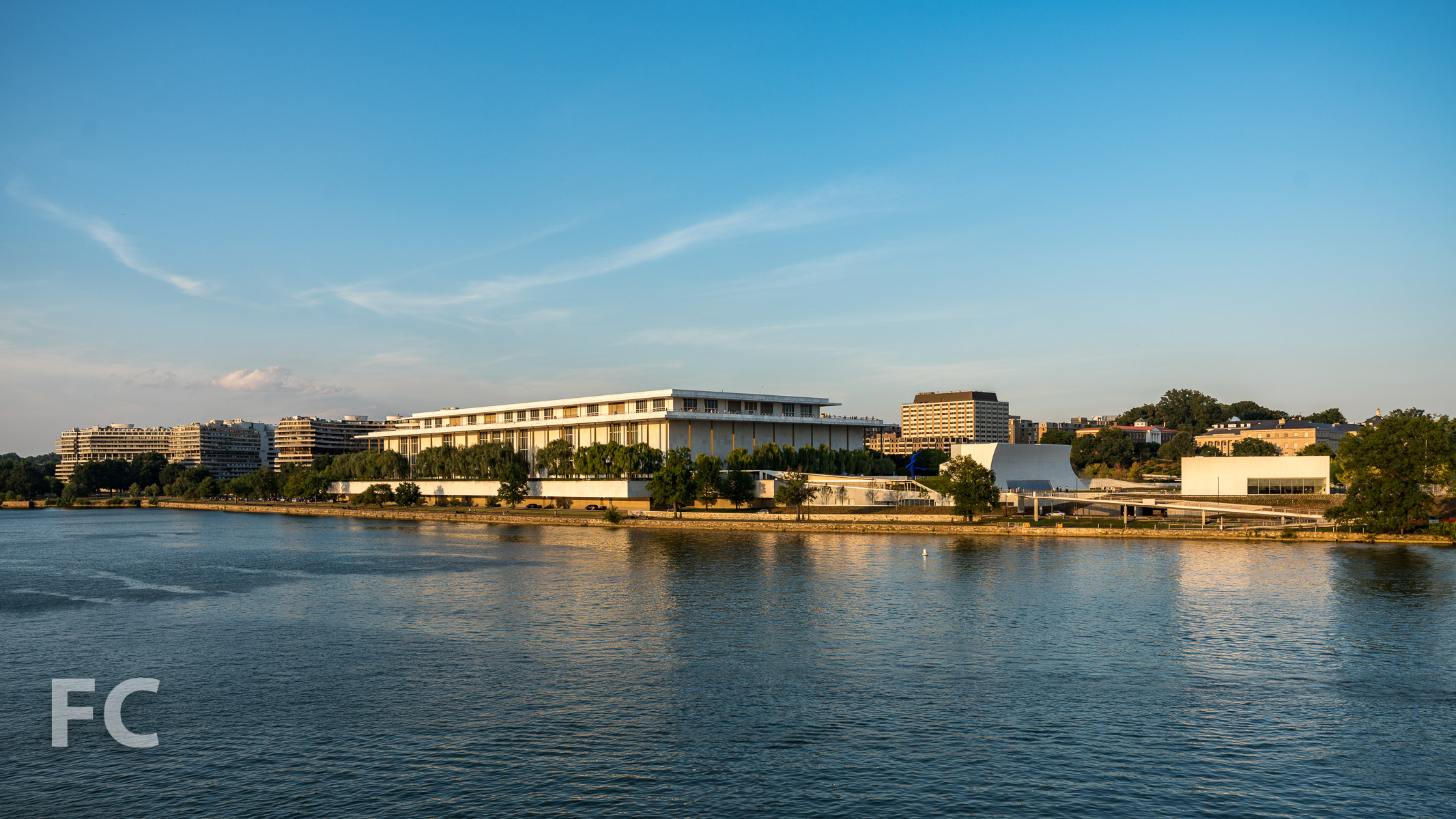
Tour: The Reach at the Kennedy Center for the Performing Arts
Steven Holl Architects’ expansion of the John F. Kennedy Center for the Performing Arts in Washington, D.C. officially opens on September 7. Known as The Reach, the expansion is located on 4.6 acres immediately south of the original 1971 structure by Edward Durell Stone. Rather than build onto the existing structure, the architect has designed a series of pavilions sited on the largest green roof in Washington, DC. The pavilions and connecting underground spaces house rehearsal rooms and classrooms, a lecture hall, multipurpose meeting rooms, and an event space. Holl envisions his design as a means to connect the expansion with the landscape and the adjacent Potomac River.
Holl employs titanium white, board-formed concrete and backlit clear and etched glass windows as the primary exterior materials for the three pavilions.
The pavilions sit within a four season landscape of expansive lawns, wild grasses, sedum varietals, and a ginkgo grove. Pathways are defined by bluestone pavers.
Welcome Pavilion
Welcome Lobby
The entry lobby features a visitors desk, coffee bar, and a Wall of Gratitude recognizing leadership donors.
Justice Forum
The Justice Forum, named after one of the five ideals commonly attributed to President Kennedy, is a 144 seat lecture hall with the capacity for film screenings and small-format performances. Primary finishes include cherry wood and “crinkle concrete” that diffuses sound waves with its faceted shape created by the unique formwork.
Multipurpose Studios
Skylight Pavilion
The Skylight Pavilion serves as a public atrium space that can accommodate special events, seated dinners, and receptions. Acoustic plaster covers the walls and ceiling within the 36-foot tall space, while a large curved glass opening allows for views out to the river, lower lawn, and reflecting pool.

River Pavilion
The River Pavilion serves as a flexible interior and exterior space with dramatic views of the Potomac River, the River Plaza and reflecting pool.
Sculpture
The Bridge
A pedestrian bridge spans Rock Creek and Potomac Parkway, connecting the Kennedy Center campus to the Potomac riverfront.
Construction Tour: The Reach at the Kennedy Center for the Performing Arts
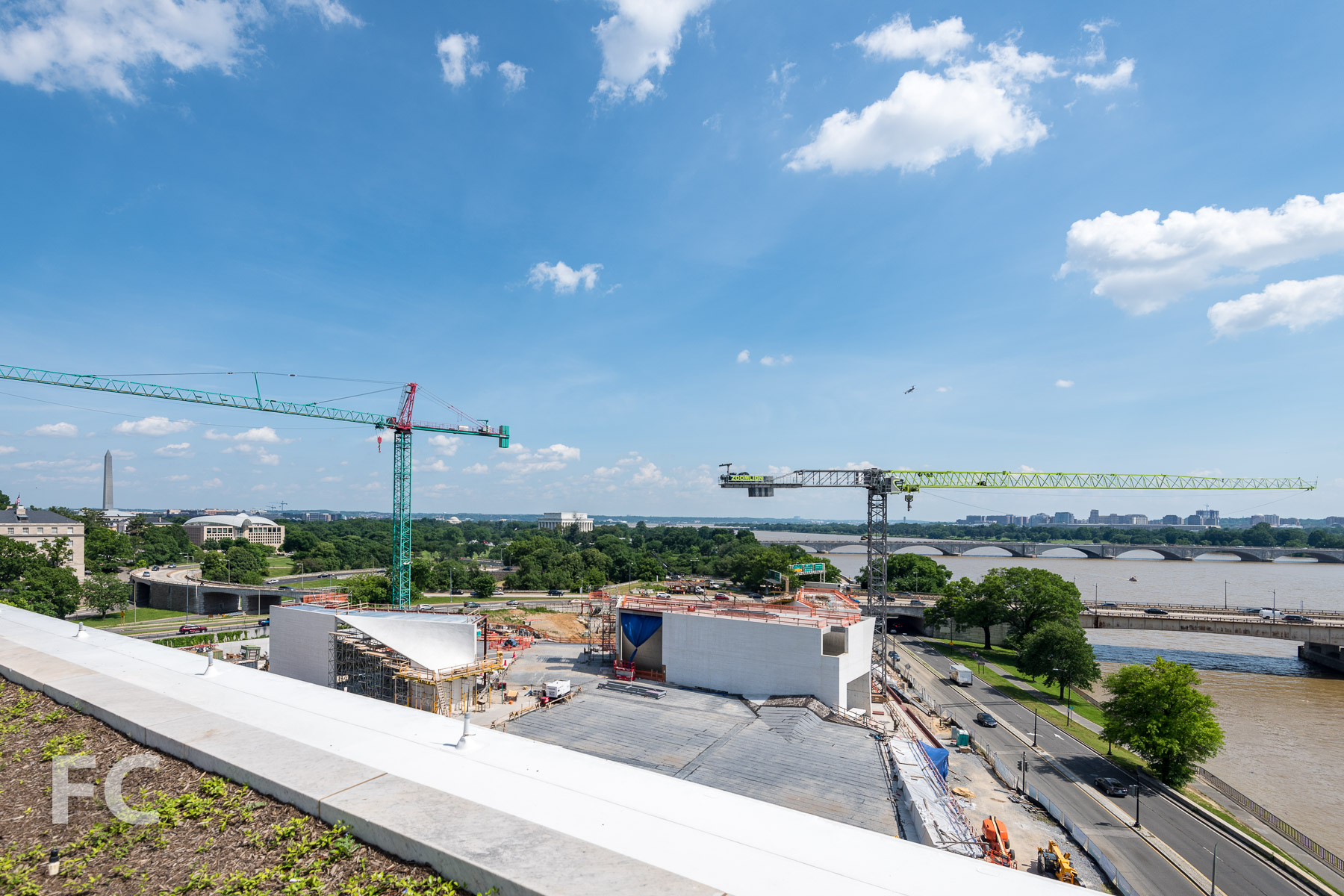
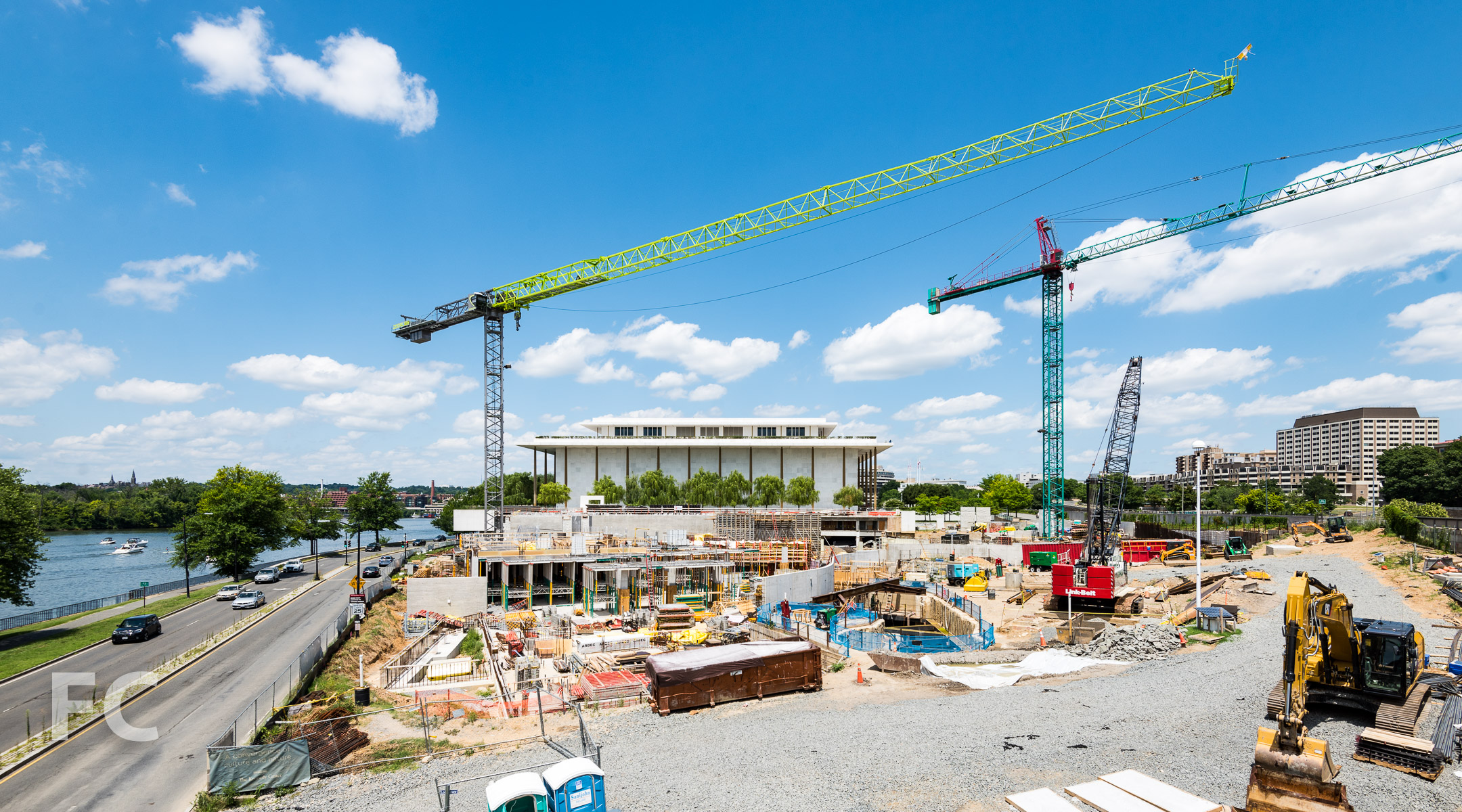
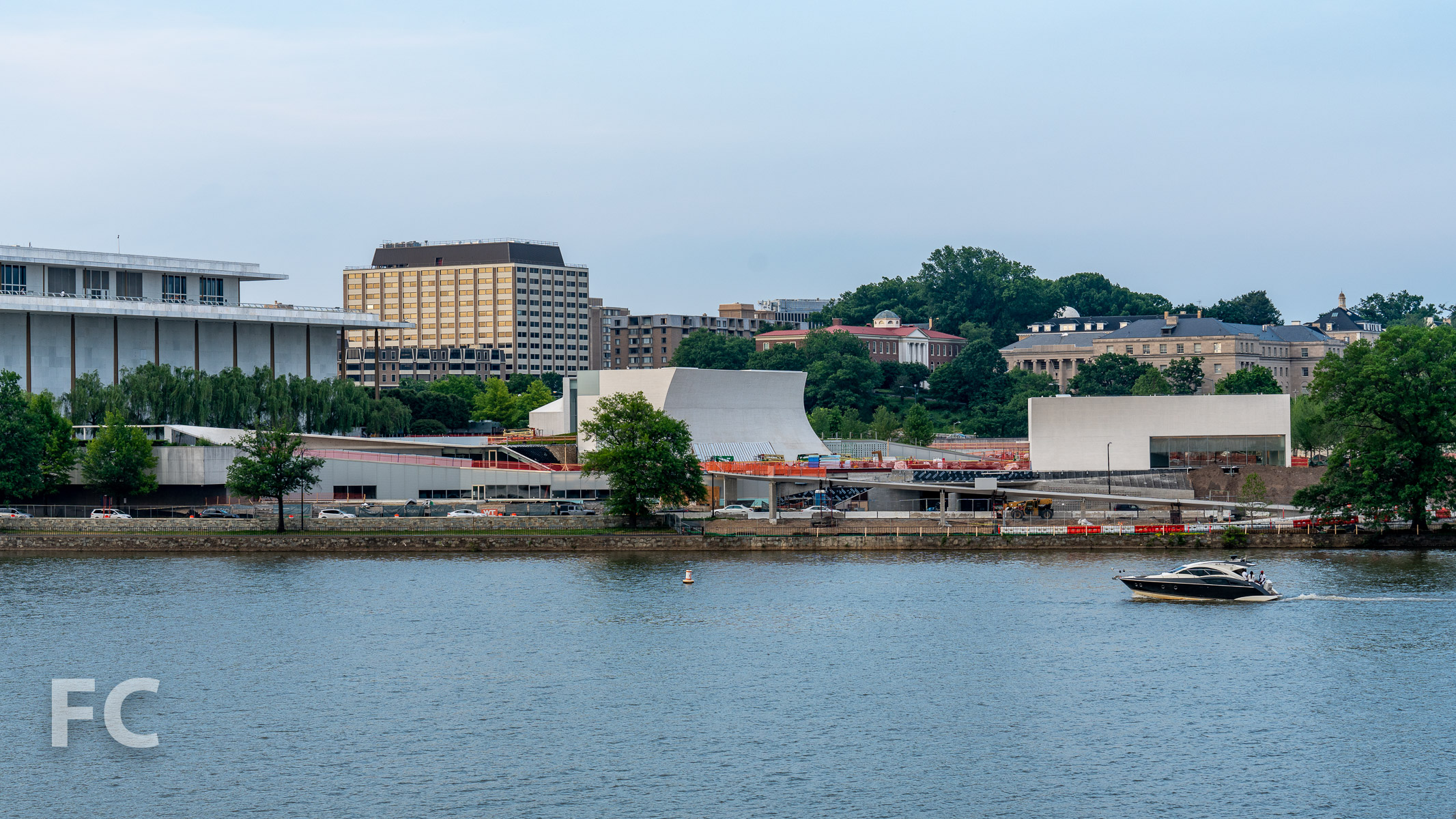
Steven Holl Architects’ expansion of the John F. Kennedy Center for the Performing Arts is nearing completion in Washington, D.C. Known as The Reach, the expansion is located on 4.6 acres immediately south of the original 1971 structure by Edward Durell Stone. Rather than build onto the existing structure, the architect has designed a series of pavilions sited on the largest green roof in Washington, DC. The pavilions and connecting underground spaces house rehearsal rooms and classrooms, a lecture hall, multipurpose meeting rooms, and an event space. Holl envisions his design strategy as a means to connect the expansion with the landscape and the adjacent Potomac River. The Reach is slated to open on September 7, kicking off a 16-day multi-genre, multidisciplinary, free festival.
Holl employs titanium white, board-formed concrete and backlit clear and etched glass windows as the primary exterior materials for the three pavilions.
The three pavilions sit within a four season landscape of expansive lawns, wild grasses, sedum varietals, and a ginkgo grove. Pathways are defined by bluestone pavers.
Welcome Lobby
The entry lobby will feature a visitors desk, coffee bar, and a Wall of Gratitude recognizing leadership donors.
Justice Forum
The Justice Forum, named after one of the five ideals commonly attributed to President Kennedy, is a 144 seat lecture hall with the capacity for film screenings and small-format performances. Primary finishes include cherry wood and “crinkle concrete” that diffuses sound waves with its faceted shape created by the unique formwork.
Skylight Pavilion
The Skylight Pavilion serves as a public atrium space that can accommodate special events, seated dinners, and receptions. Acoustic plaster covers the walls and ceiling within the 36-foot tall space, while a large curved glass opening allows for views out to the river, lower lawn, and reflecting pool.
River Pavilion
The River Pavilion serves as a flexible interior and exterior space with dramatic views of the Potomac River, the River Plaza and reflecting pool.
The Bridge
A pedestrian bridge spans Rock Creek and Potomac Parkway, connecting the Kennedy Center campus to the Potomac riverfront.
Architect: Steven Holl Architects (Design Architect), BNIM (Architect of Record); Structural Engineer: Robert Silman Associates; MEP Engineer: Arup; Landscape Architect: Edmund Hollander Landscape Architects; Envelope Consultant: Thornton Tomasetti; Client: The John F. Kennedy Center for the Performing Arts; Owner’s Representative: Paratus Group; Program: Performing Arts; Location: Washington, D.C.; Completion: Fall 2019.
Construction Update: The JFK Center for the Performing Arts Expansion
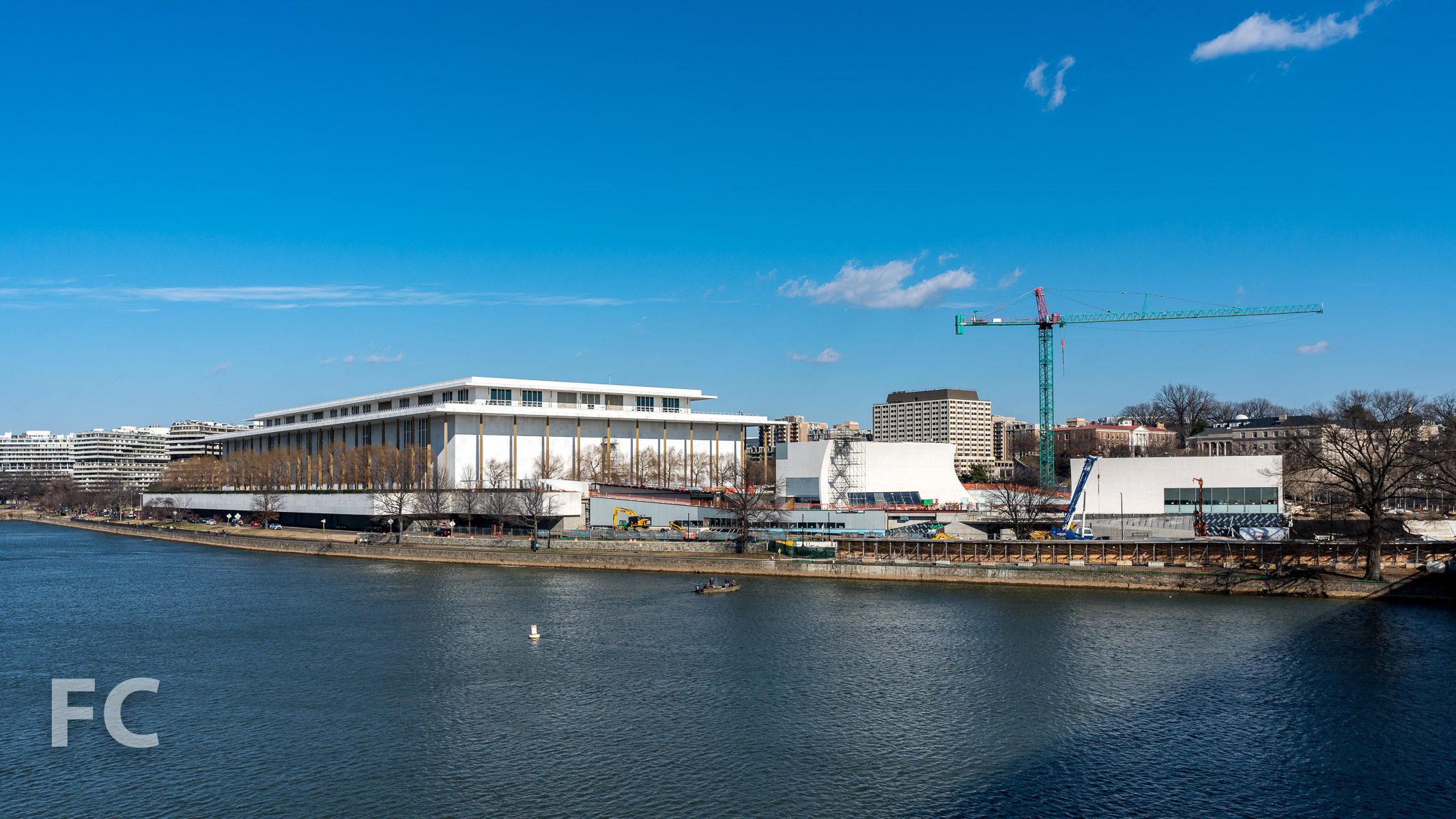
Exterior wall construction is nearing completion at the expansion of the John F. Kennedy Center for the Performing Arts in Washington, D.C. Designed by Steven Holl Architects, the expansion is located immediately south of the original 1971 structure by Edward Durell Stone. Rather than build onto the existing structure, the architect has designed a series of structures that will house rehearsal rooms and classrooms, a lecture hall, multipurpose meeting rooms, and an event space. Holl envisions his design strategy as a means to connect the expansion with the landscape and the adjacent Potomac River.
Architect: Steven Holl Architects (Design Architect), BNIM (Architect of Record); Structural Engineer: Robert Silman Associates; MEP Engineer: Arup; Landscape Architect: Edmund Hollander Landscape Architects; Envelope Consultant: Thornton Tomasetti; Client: The John F. Kennedy Center for the Performing Arts; Program: Performing Arts; Location: Washington, D.C.; Completion: Fall 2019.