New Museum Expansion
OMA NY · Bowery · 2026
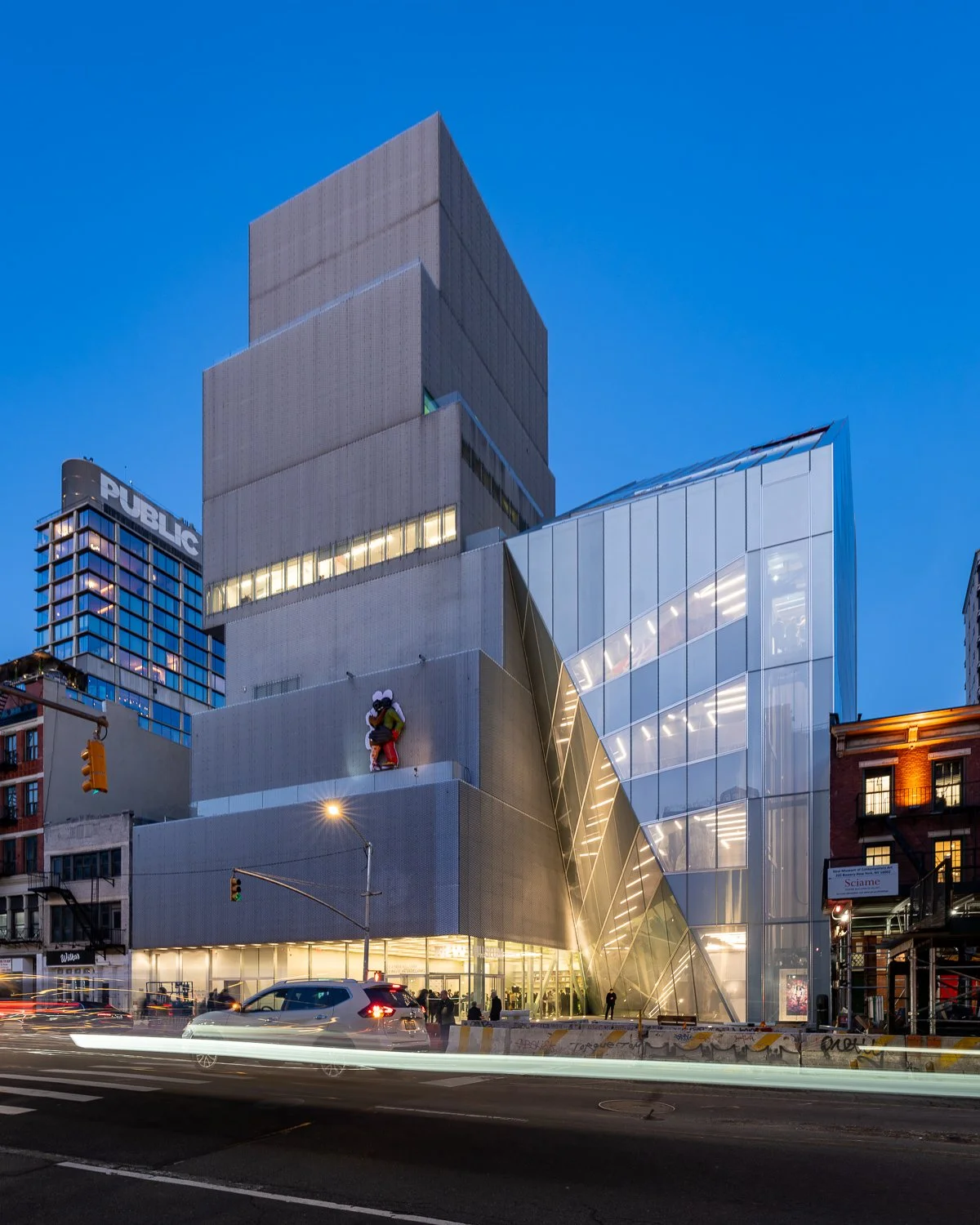
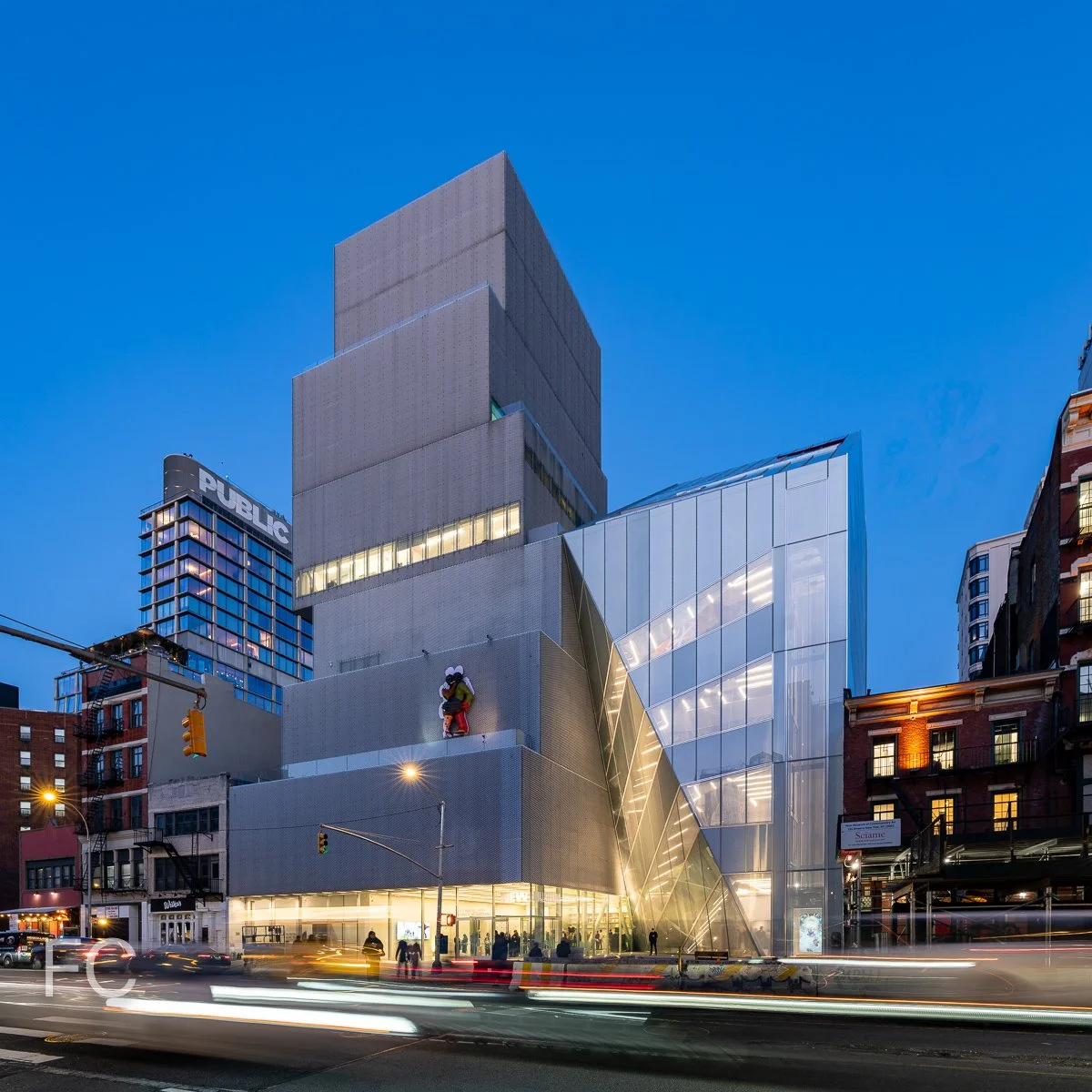
West facade of the flagship building (left) and the extension (right).
Construction has wrapped up at the extension to the New Museum of Contemporary Art on the Lower East Side of Manhattan. Designed by Shohei Shigematsu and Rem Koolhaas of OMA, the seven story structure sits adjacent to the 2007 SANAA flagship building and includes 60,000 square feet of additional program space. The building will include three floors of galleries, additional space for the Museum’s community and education programs, a permanent home for NEW INC, and increased public amenities and improved vertical circulation.
West facade from Prince Street.
West facade from the Bowery.
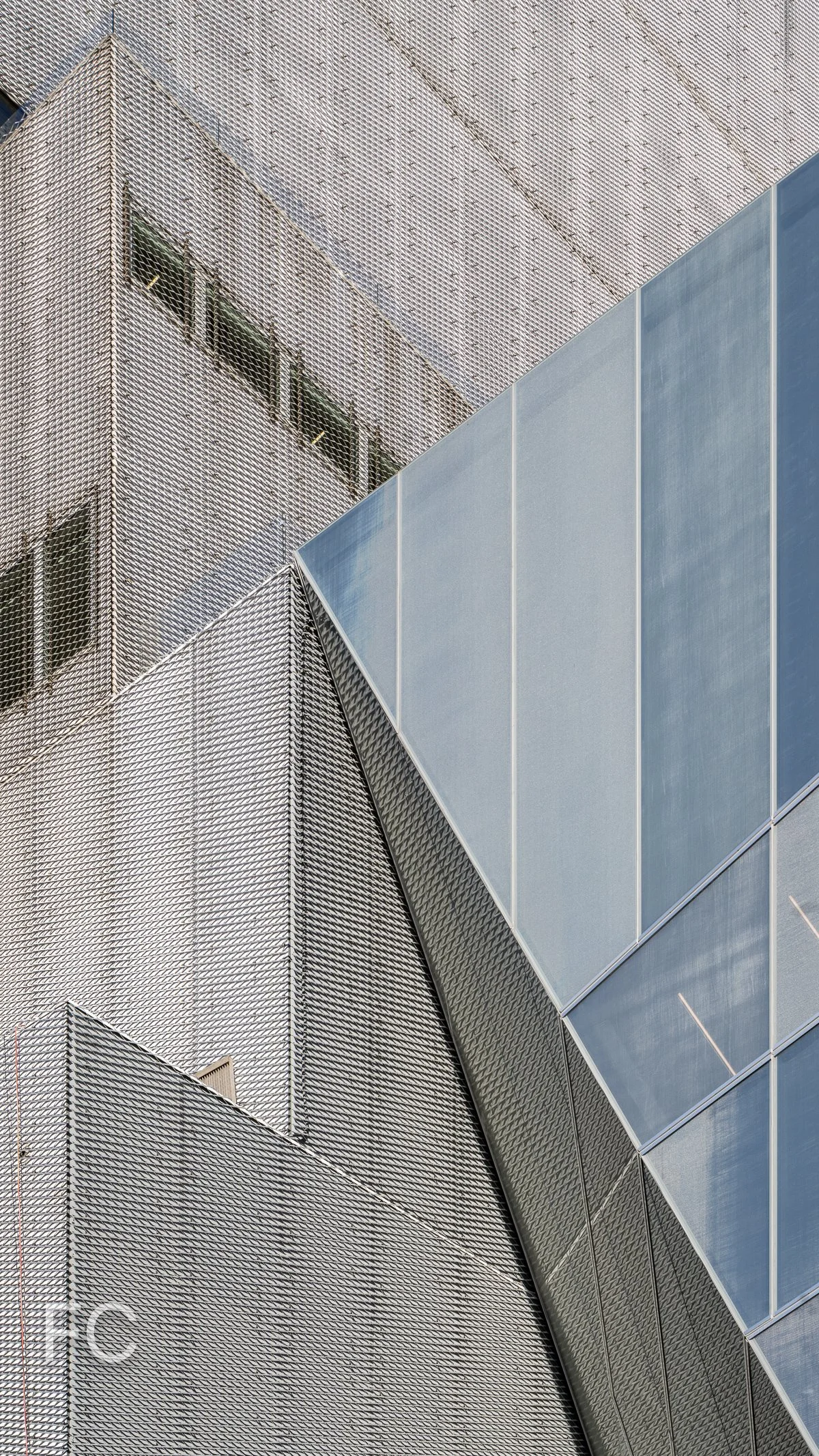
Close-up of the west facade.
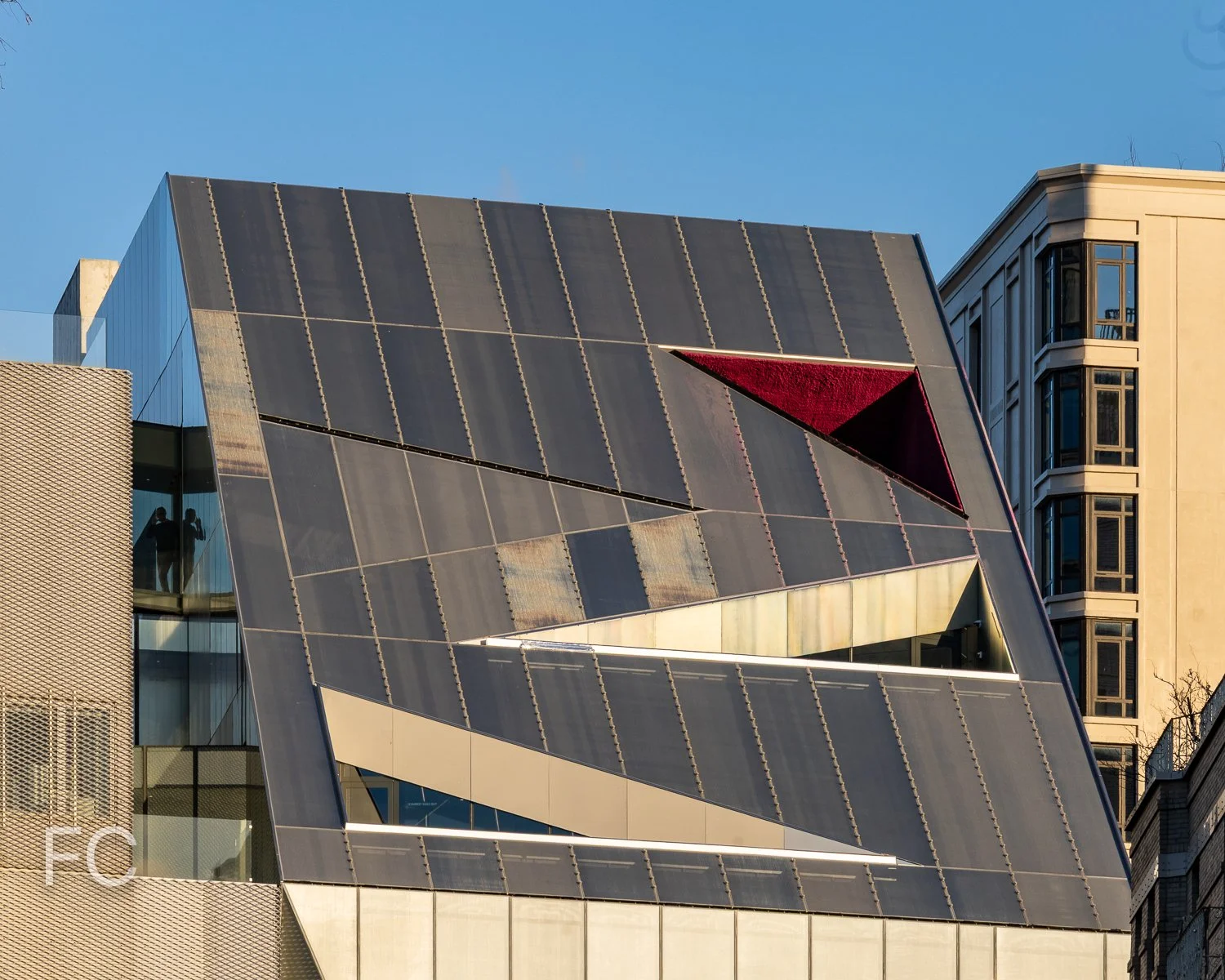
Atrium stair at the ground floor.
Looking up at the atrium stair.
Atrium stair detail.
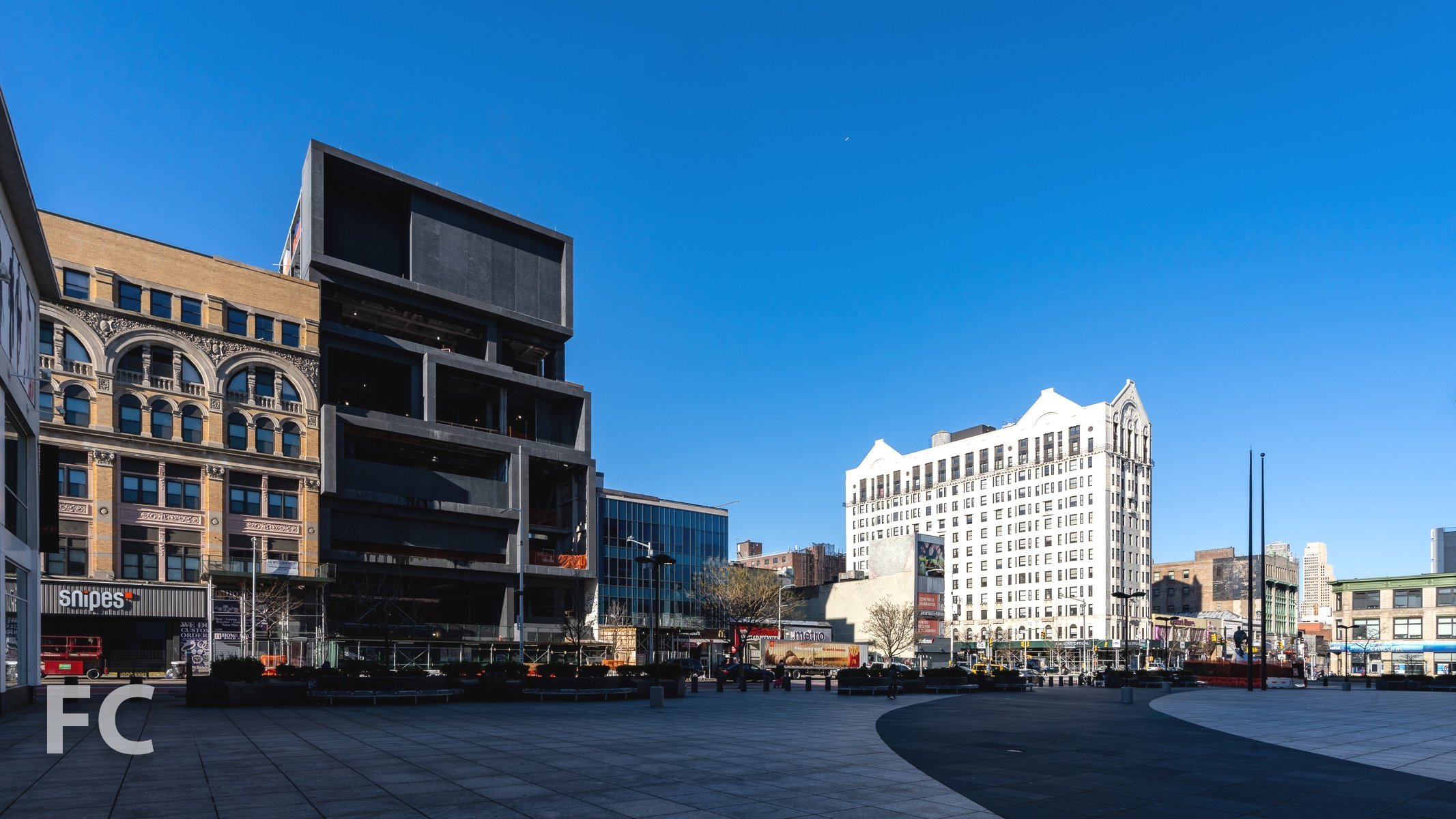
The Studio Museum in Harlem
Adjaye Associates · Harlem · 2025
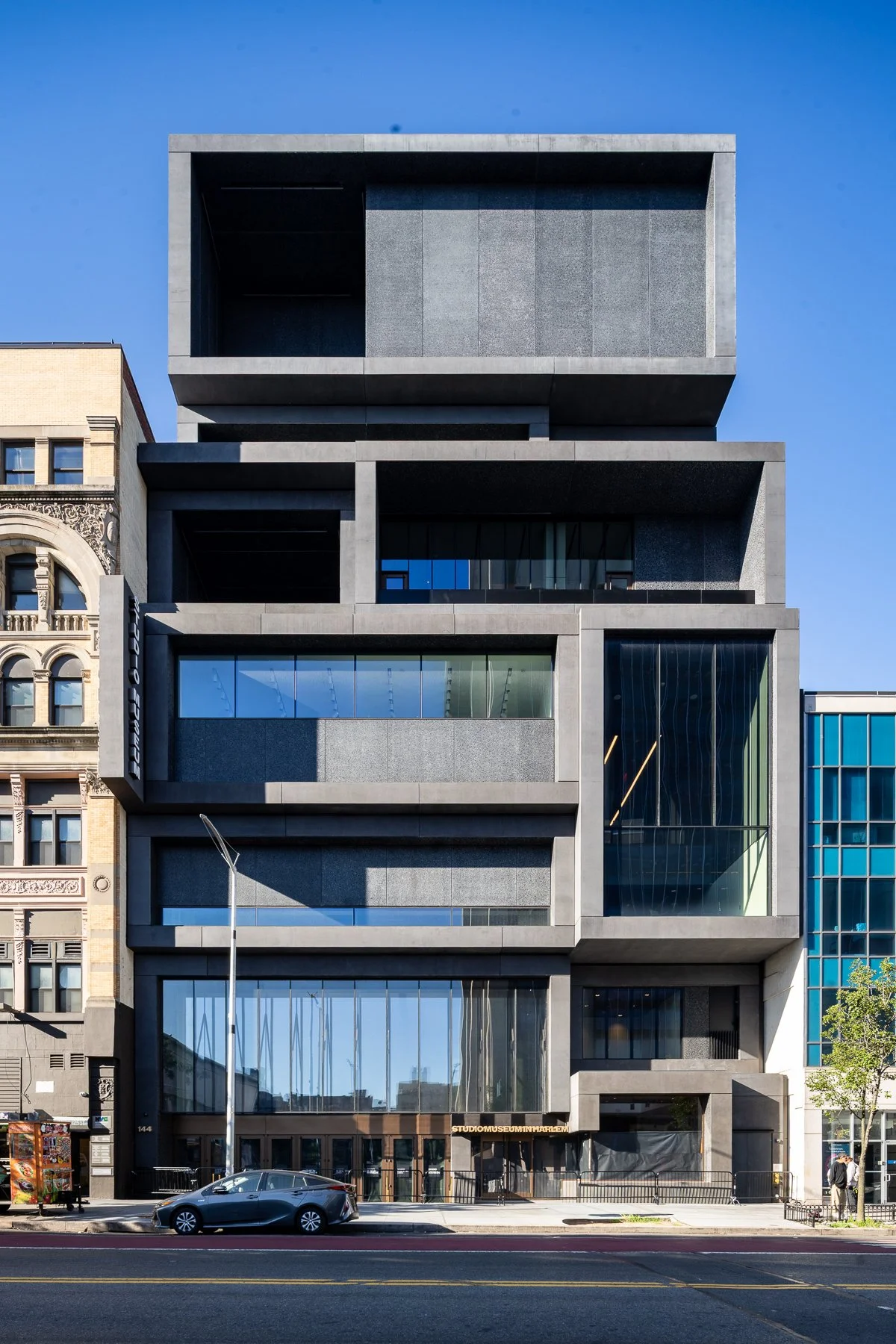
North facade from West 125th Street.
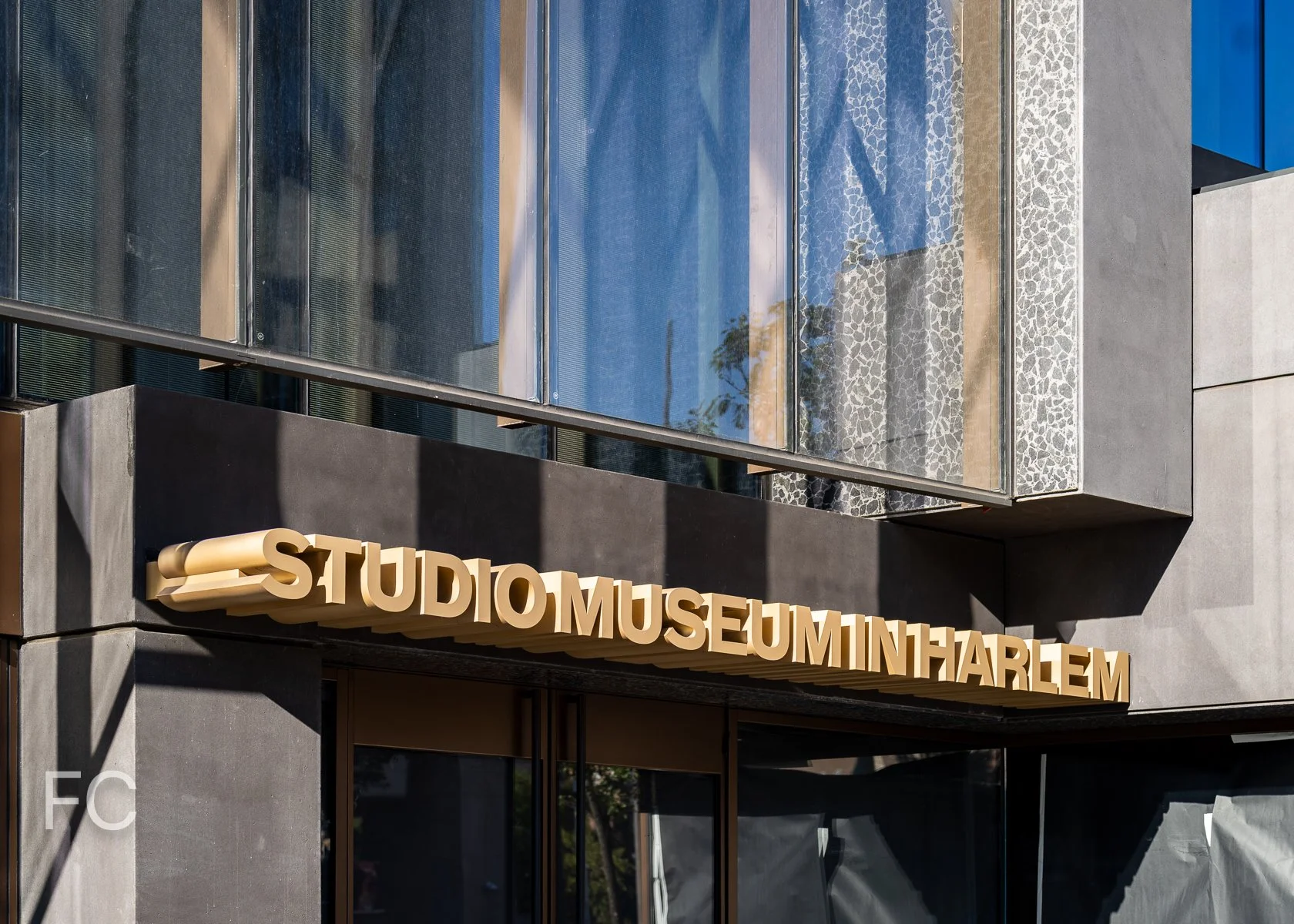
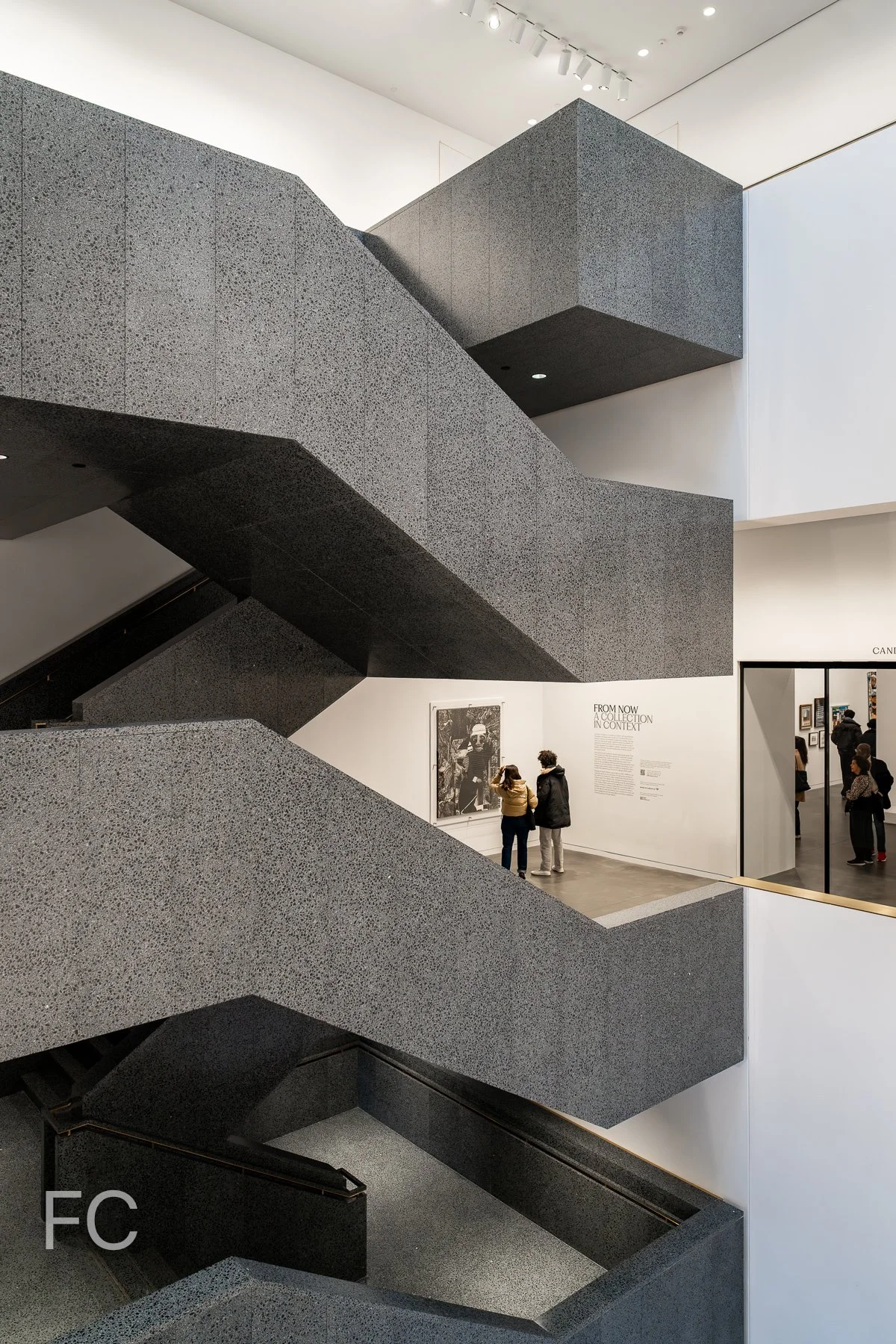
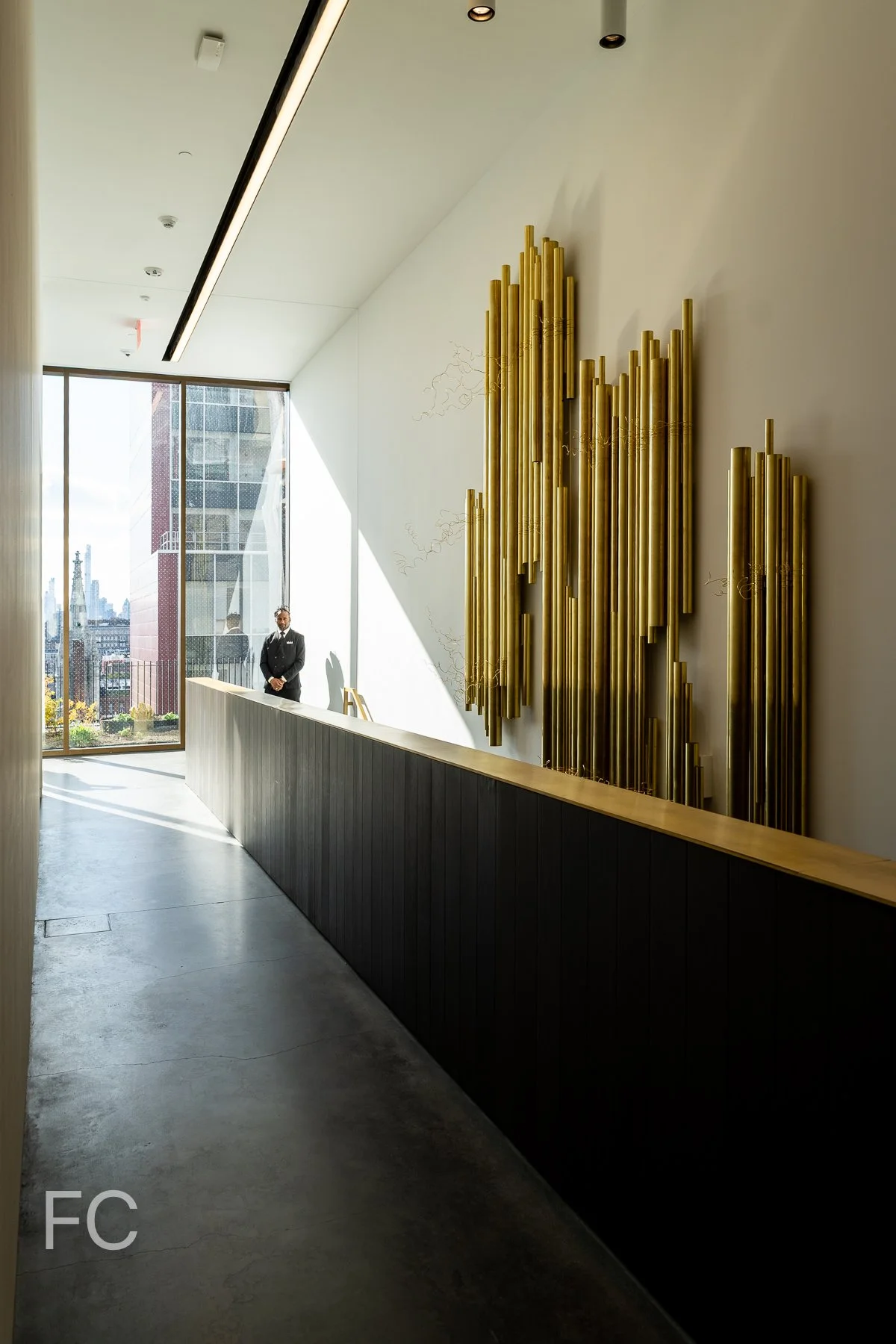
Construction has wrapped up at the new 82,000 square foot home for The Studio Museum in Harlem on 125th Street. The museum, which has existed in a previous structure on the site since 1979, is dedicated to artists of African descent. Designed by Adjaye Associates with Cooper Robertson, the massing of the museum’s new 6-story structure features a stack of one and two-story volumes with large apertures that allow the public to glimpse the activity within. The exterior of the museum is clad in dark grey precast concrete and glass panels. Along with column free galleries, the building also includes an education center, theater, a studio for artists in residence, a cafe, and a rooftop terrace by Studio Zewde.
North facade.
Looking up at the north facade.
Facade detail.

Northwest corner from Adam Clayton Powell Jr. Boulevard.
Close-up of the northwest corner.
Northwest corner from West 125th Street.
Looking up at the south facade from West 124th Street.
Looking up at the north facade from the main entry.
Entry lobby.
Looking down at the ground floor and The Stoop seating area.
Looking up at the dark grey, monolithic terrazzo stair.
Architects: Adjaye Associates (Design Architect), Cooper Robertson (Architect of Record); Construction Manager: Sciame Construction with McKissack & McKissack; Client: The Studio Museum in Harlem; Program: Museum; Location: Harlem, New York, NY; Completion: Fall 2025.

New Museum Expansion
OMA NY · Bowery · 2026
West facade of the flagship building (left) and the extension (right).
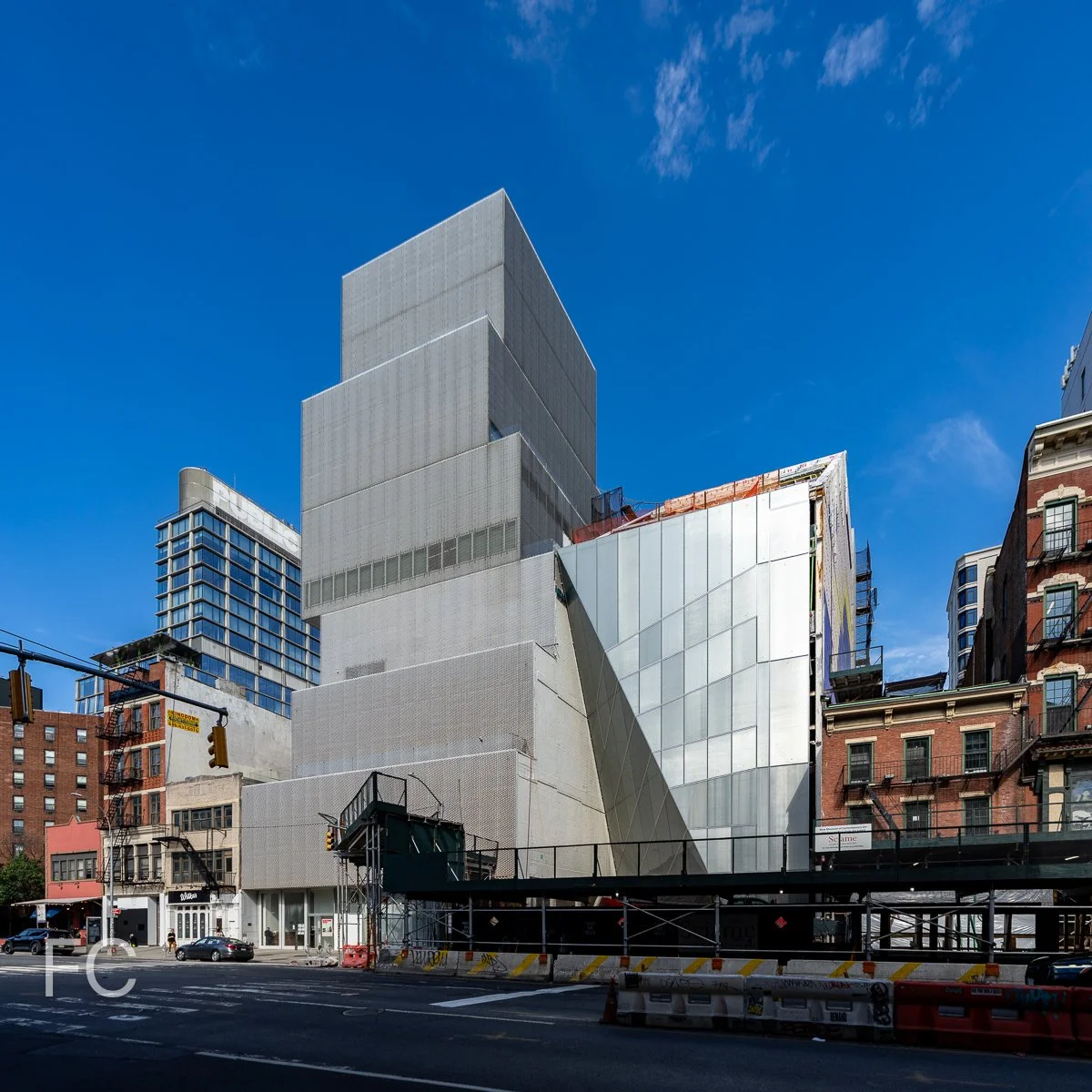
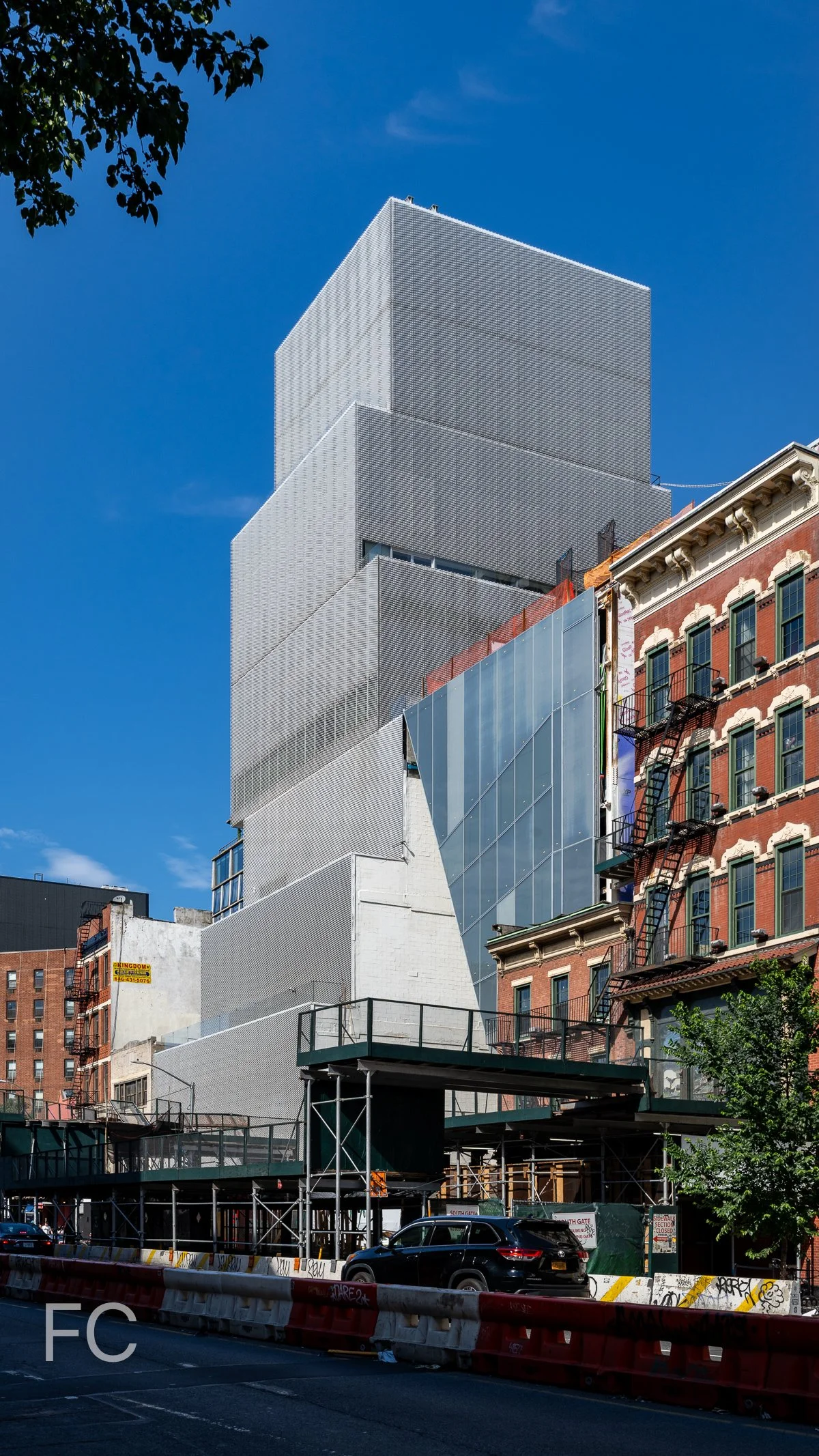
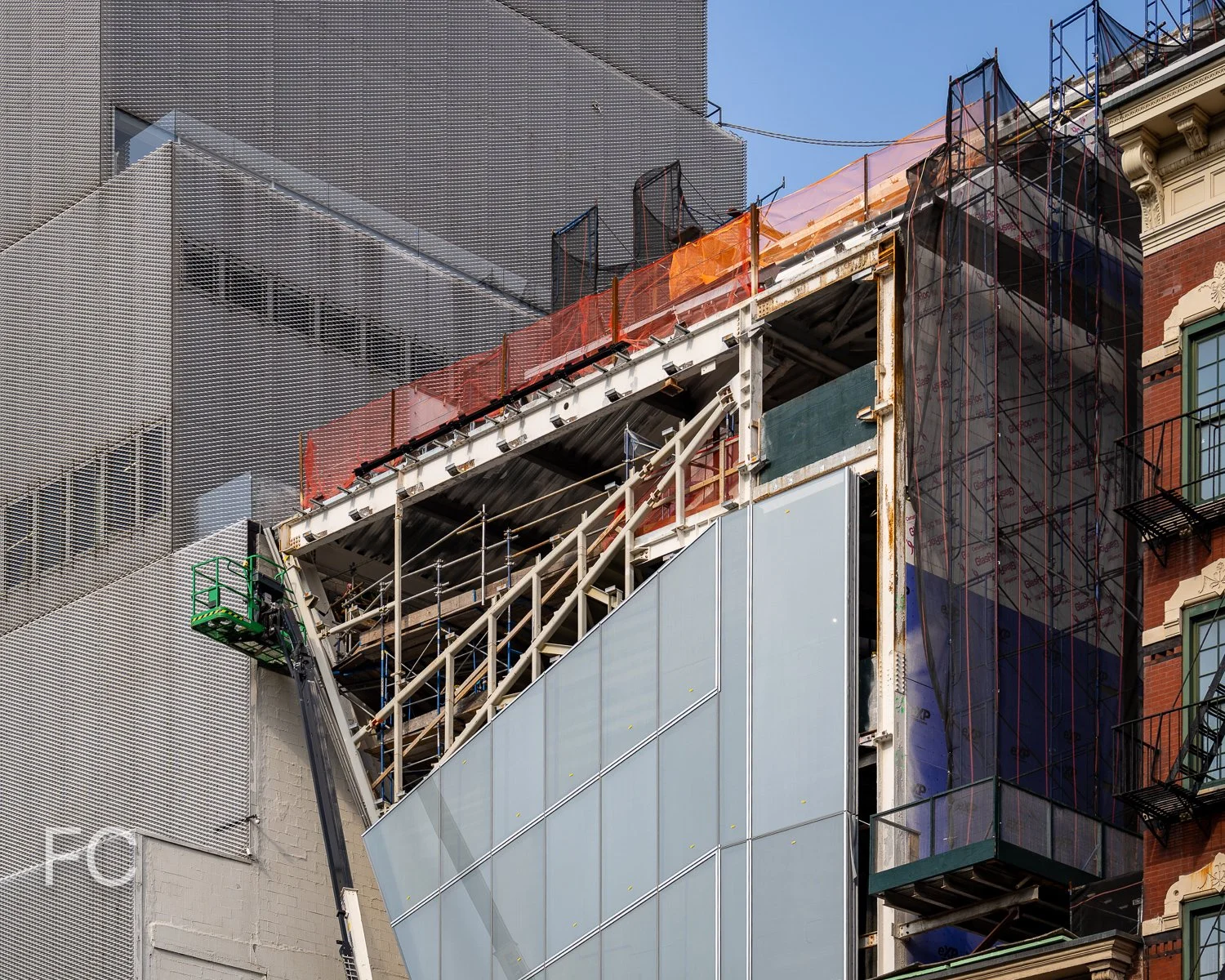
Facade installation is ongoing at the extension to the New Museum of Contemporary Art on the Lower East Side of Manhattan. Designed by Shohei Shigematsu and Rem Koolhaas of OMA, the seven story structure will sit adjacent to the 2007 SANAA flagship building and include 60,000 square feet of additional program space. The building will include three floors of galleries, additional space for the Museum’s community and education programs, a permanent home for NEW INC, and increased public amenities and improved vertical circulation.
West facade from Prince Street.
West facade from the Bowery.
Southwest corner of the flagship building (left) and the extension (right).

Close-up of the west facade.



Architects: OMA NY (Design Architect), Cooper Robertson (Executive Architect); Structural Engineer: Arup; Mechanical Engineer: Arup; Facade: Front; Client: New Museum of Contemporary Art; Program: Museum; Location: Lower East Side, New York, NY; Completion: 2026.

New Museum Expansion
OMA NY · Bowery · 2026
West facade of the flagship building (left) and the extension (right).
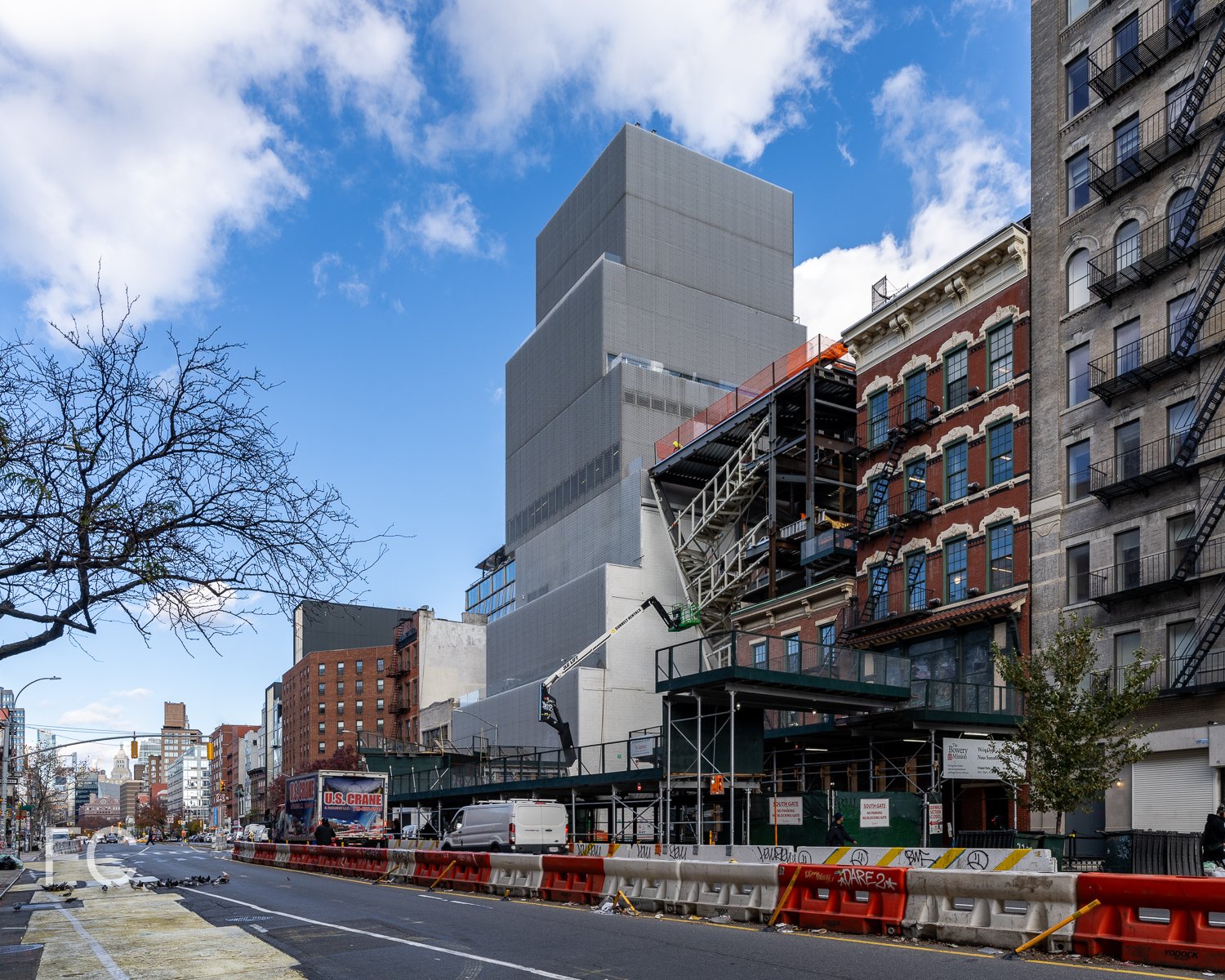
Facade installation is underway at the extension to the New Museum of Contemporary Art on the Lower East Side of Manhattan. Designed by Shohei Shigematsu and Rem Koolhaas of OMA, the seven story structure will sit adjacent to the 2007 SANAA flagship building and include 60,000 square feet of additional program space. The building will include three floors of galleries, additional space for the Museum’s community and education programs, a permanent home for NEW INC, and increased public amenities and improved vertical circulation.
West facade from Prince Street.
Southwest corner of the flagship building (left) and the extension (right).
Close-up of the west facade.
Architects: OMA NY (Design Architect), Cooper Robertson (Executive Architect); Structural Engineer: Arup; Mechanical Engineer: Arup; Facade: Front; Client: New Museum of Contemporary Art; Program: Museum; Location: Lower East Side, New York, NY; Completion: 2026.

The Studio Museum in Harlem
Adjaye Associates · Harlem · 2025

Construction is nearing completion at the new 82,000 square foot home for The Studio Museum in Harlem on 125th Street. The museum, which has existed in a previous structure on the site since 1979, is dedicated to artists of African descent. Designed by Adjaye Associates with Cooper Robertson, the massing of the museum’s new 5-story structure features a stack of one and two-story volumes with large apertures that allow the public to glimpse the activity within. The exterior of the museum is clad in dark grey precast concrete and glass panels, which are now fully installed. Along with column free galleries, the building will also include an education center, theater, a studio for artists in residence, a cafe, and a rooftop terrace by Studio Zewde.
Northwest corner from West 125th Street.

South facade.
Architects: Adjaye Associates (Design Architect), Cooper Robertson (Architect of Record); Construction Manager: Sciame Construction with McKissack & McKissack; Client: The Studio Museum in Harlem; Program: Museum; Location: Harlem, New York, NY; Completion: Fall 2025.
New Museum Expansion
OMA NY · Bowery · 2026
West facade of the flagship building (left) and the extension (right).
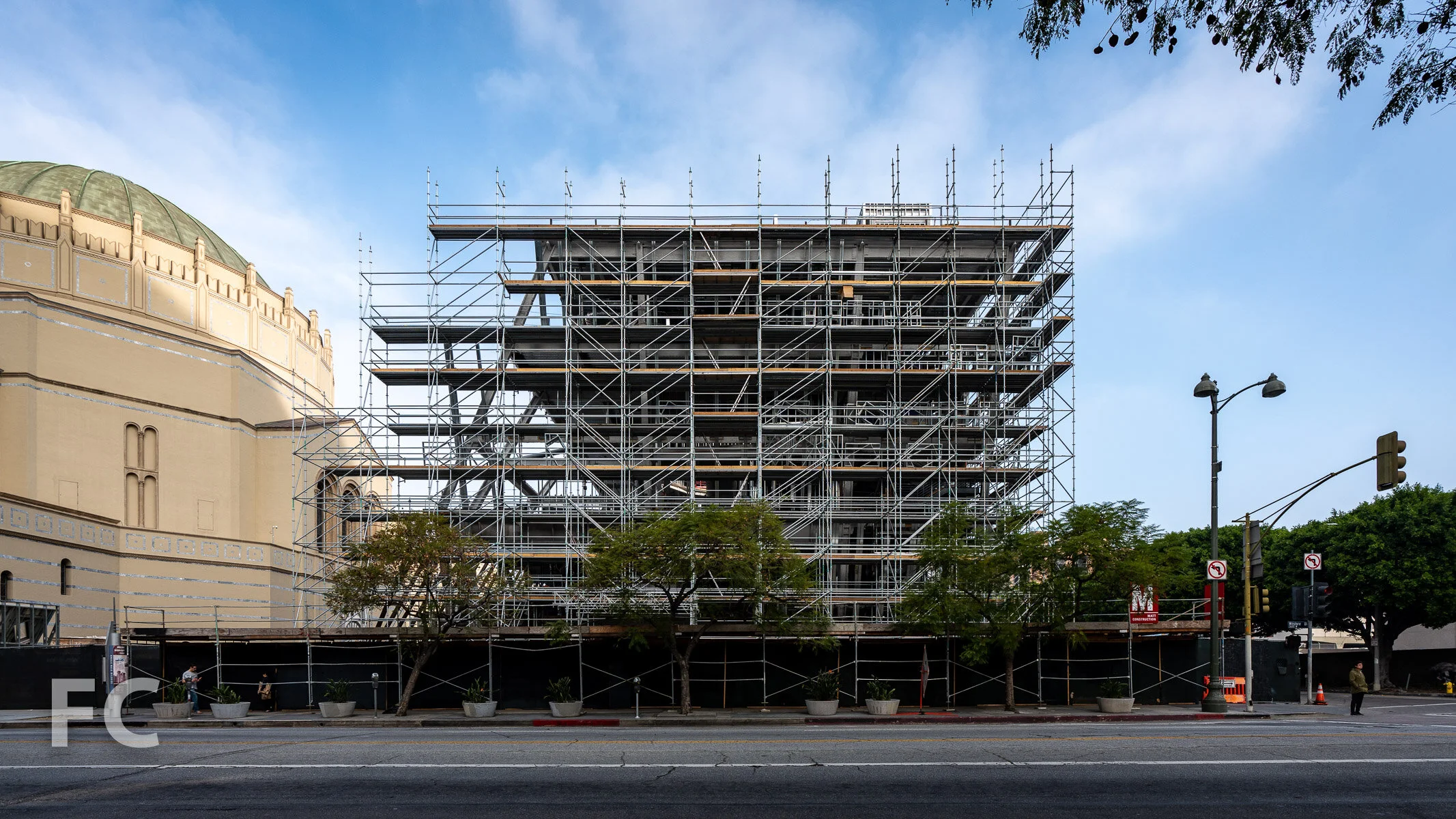
Superstructure has topped out at the extension to the New Museum of Contemporary Art on the Lower East Side of Manhattan. Designed by Shohei Shigematsu and Rem Koolhaas of OMA, the seven story structure will sit adjacent to the 2007 SANAA flagship building and include 60,000 square feet of additional program space. The building will include three floors of galleries, additional space for the Museum’s community and education programs, a permanent home for NEW INC, and increased public amenities and improved vertical circulation.
West facade from Prince Street.

Southwest corner of the flagship building (left) and the extension (right).
Close-up of the west facade.
Southwest corner of the flagship building (left) and the extension (right).
Close-up of the west facade.
Architects: OMA NY (Design Architect), Cooper Robertson (Executive Architect); Structural Engineer: Arup; Mechanical Engineer: Arup; Facade: Front; Client: New Museum of Contemporary Art; Program: Museum; Location: Lower East Side, New York, NY; Completion: 2026.
Whitney Museum of American Art
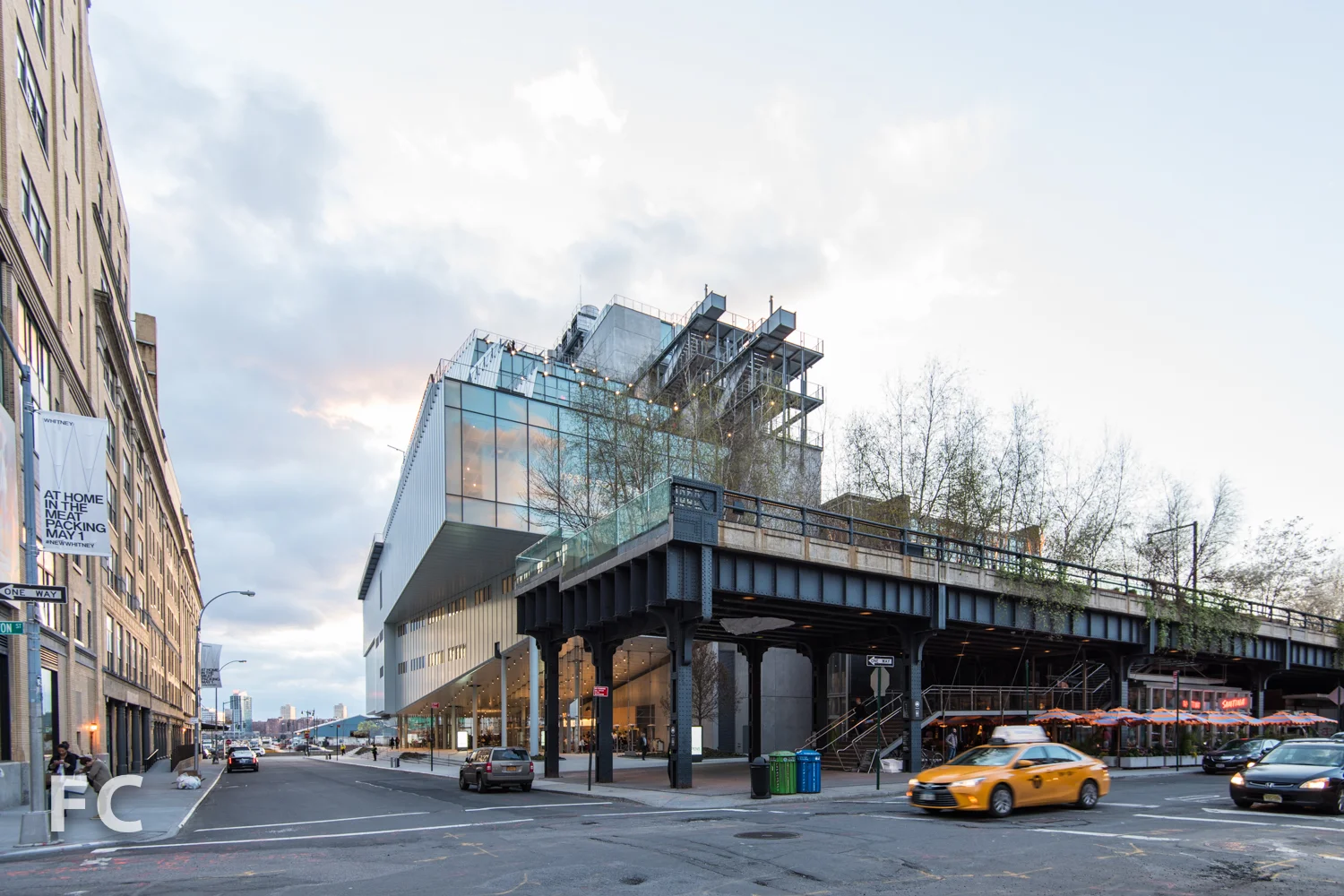
Ungainly and awkward, the Whitney's $422 million, 220,000-square-foot new home asserts its presence at the High Line's southern edge. Renzo Piano's addition to the Meatpacking neighborhood is indicative of the district's decade-long transformation from working class industrial to trendy tourist destination. What started in the previous decade with the conversion of unused elevated train tracks into the High Line elevated park, has culminated in a major new museum for the city in a neighborhood now dominated by buildings from an elite group of architects.
The Whitney Museum of American Art, begun with a collection of artwork amassed by Gertrude Whitney in 1908, has called several places home in its first century of existence. Most recently the museum was located on the Upper East Side, in a building designed by Marcel Breuer in 1966, at the corner of Madison Avenue and East 75th Street. Breuer's building, with its stone clad, inverted ziggurat form, was also considered at its opening to be awkward and panned for its unusual massing. With time, the building gained acceptance but was never able to adequately hold the museum's vast collection.
The Whitney Museum by Marcel Breuer, 1966.
Many attempts were made to expand the museum at its Upper East Side location, with designs from Norman Foster, Michael Graves, OMA, and finally Renzo Piano. Given the scale of the neighborhood and the historic value of buildings on site and adjacent, large scale expansion plans proved too contentious to realize.
With the advent of the High Line in 2009, properties that surrounded the park gained new value and the exodus of industrial businesses in the area left behind many sites ripe for new construction. Realizing the futility of its expansion plans at the Breuer building, the Whitney brokered a deal with the city of New York for a site at the southern entrance to the High Line and occupied by a meatpacking business. While the business has remained on the northern half of the massive site, the Whitney's deal with the city allows them to acquire the remaining half should the business relocate elsewhere.
Program study models.
Massing study models.
Presentation model of final design.
The Whitney Museum by Marcel Breuer, 1966.
Piano's building is arranged with gallery spaces and other public functions in the southern half, while offices for the museum's staff, education programs, and other support spaces occupy the northern half. At the primary public corner, where Gansevoort intersects Washington Street, the Whitney engages the public at both street level and the High Line as the building's form folds skyward at the corner of Gansevoort and Washington Street, creating a multi-story volume enclosed by vast expanses of glass. Piano uses this element in conjunction with the more solidly clad galleries cantilevered above to subtly invoke the Breuer building's iconic massing, a motif that will reoccur throughout. The folded facade also evokes Diller Scofidio + Renfro's overhaul of Lincoln Center's Alice Tully Hull (renovated, 2009), where a double height entry is also formed by peeling up the building's original travertine facade. For the Whitney, this space houses Danny Meyer's latest restaurant, Untitled. Stretching along the restaurant's Gansevoort Street frontage, the open kitchen visually dominates the space. At night, the scene from the street is reminiscent of Edward Hopper's Nighthawks, with the patrons spread out along the bar and the glow of Robert Indiana's illuminated word "EAT" artwork hanging above.
Southeast corner of the Whitney (left) and the southern entrance to the High Line (right).
Untitled restaurant from Gansevoort Street.
Restaurant entrance off of Gansevoort Street.
View of the restaurant bar from Gansevoort Street.
Main museum entrance from Gansevoort Street.
View of the museum shop at the southwest corner from Gansevoort Street.
Museum visitors enter mid-block off of Gansevoort Street into a glass enclosed 6,000 square-foot lobby that is adjacent to a free gallery and a museum shop consisting of open shelving to maintain visual porosity. Galleries on the upper floors can be accessed by a grand stair or by one of four elevators, featuring commissioned artwork in the elevator cab by the artist Richard Artschwager. Glazing above the elevator entry at ground level allows the visitor to see the machinery needed to operate, continuing an oft used theme by Piano. The concrete and steel of the stair serves as another subtle reference to the Breuer building.
Main museum entrance from Gansevoort Street.
Museum lobby.
Museum shop shelving.
Special exhibitions are housed on the eighth floor, which currently features "America is Hard to See." The show serves as a means for the Whitney to reexamine American art since 1900 with works from their vast collection that has long gone unseen. The galleries at this level feature the typical white walls and reclaimed wide-plank pine flooring found throughout the museum. Because of its top floor location, Piano has designed the ceilings as a grid work that allows in light from the sawtooth skylights, resulting in a much brighter and inviting environment to wander the galleries than the Breuer building. There, the dark tones of the stone flooring and the concrete waffle ceiling gave the galleries a heavy and dark atmosphere. Although Piano's galleries are a sharp turn from the previous aesthetic, he continually references the Breuer ceilings with the varying take on grids created at each level of galleries. On some floors the ceiling grid is present but solid while other floors reveal the conduit and ductwork of necessary services in a modern building, a muted and vertical take on Piano's first museum, the Pompidou.
On floors six and seven reside the permanent collection galleries in spaces unmatched by their previous home. Now visitors can peruse the work in vast spaces that give the pieces enough real estate to stand on their own but still create a dialogue with adjacent works. With the added space comes spectacular moments of rest and reflection, where visitors can sit at one of two large walls of glass and take in the High Line in the morning light from the east facade or the setting sun from the west facade's window. Moments of connection to the surrounding neighborhood can even be experienced while in the midst of perusing the galleries, as slots of space cut through gallery walls leading to the facade's glazing.
Not to be outdone, the 13,000-square-feet of outdoor galleries and terraces provide additional opportunities to pause and reflect. Views of the city skyline serve as a backdrop to outdoor cafe seating and several large sculptures. On the fifth floor outdoor gallery, the Whitney has commissioned a site specific work by Mary Heilmann, Mary Heilmann: Sunset, which features colorful chairs scattered about the terrace that visitors can use. Also included is a projected film and panels of colorful shapes that mimic the stepping of the building's terraces.

At the northern half of the building, Piano has located the support space for the Whitney's staff, which has grown steadily in recent years. Like the galleries, these spaces are generous in size and provide ample light and views to the neighborhood.
With the opening of the Whitney, the city has gained another spectacular cultural destination. Yes, it's exterior is a quirky wrapper, more muscle than beauty, but the interior more than compensates with its spot on take on the contemporary museum. Piano expertly crafts a museum that accommodates the visitor with the right mix of galleries and leisure space, allowing the museum to coexist with, rather than be consumed by, the commercial program of contemporary institutions. Like the Breuer building, Piano's structure will likely be embraced by most over time, as visitors forgive its exterior clumsiness for the expertly crafted experience within.
Architect: Renzo Piano Building Workshop (Design Architect), Cooper Robertson (Executive Architect); Structural Engineer: Robert Silman Associates: MEP Engineer: Jaros, Baum & Bolles; Facade Consultant: Heintges; Landscape Architect: Piet Oudolf with Mathews Nielson Landscape Architect; General Contractor: Turner Construction; Client: Whitney Museum of American Art; Program: Museum; Location: Meatpacking District, New York, NY; Completion: 2015.