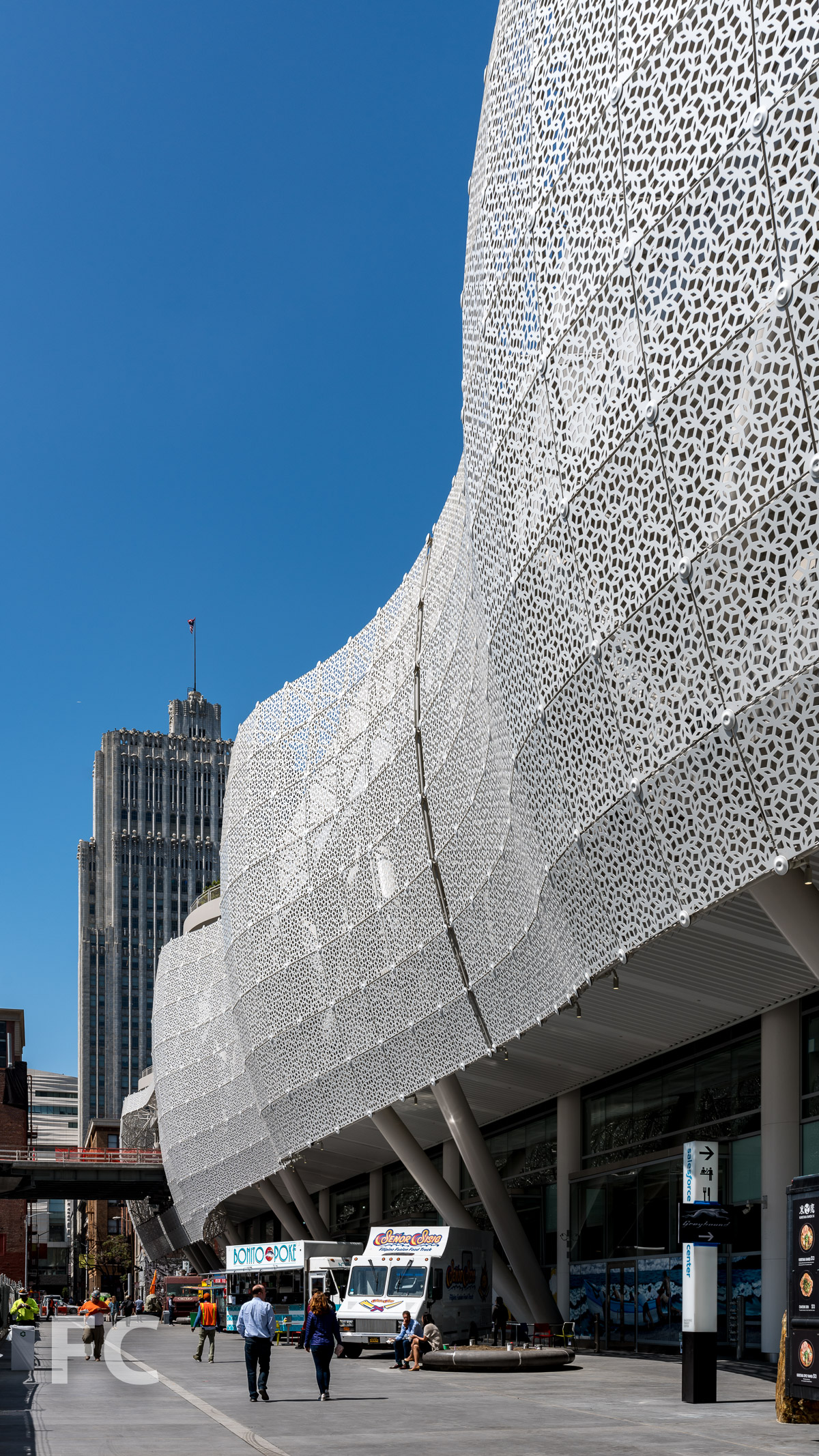
Transbay Transit Center and Salesforce Tower
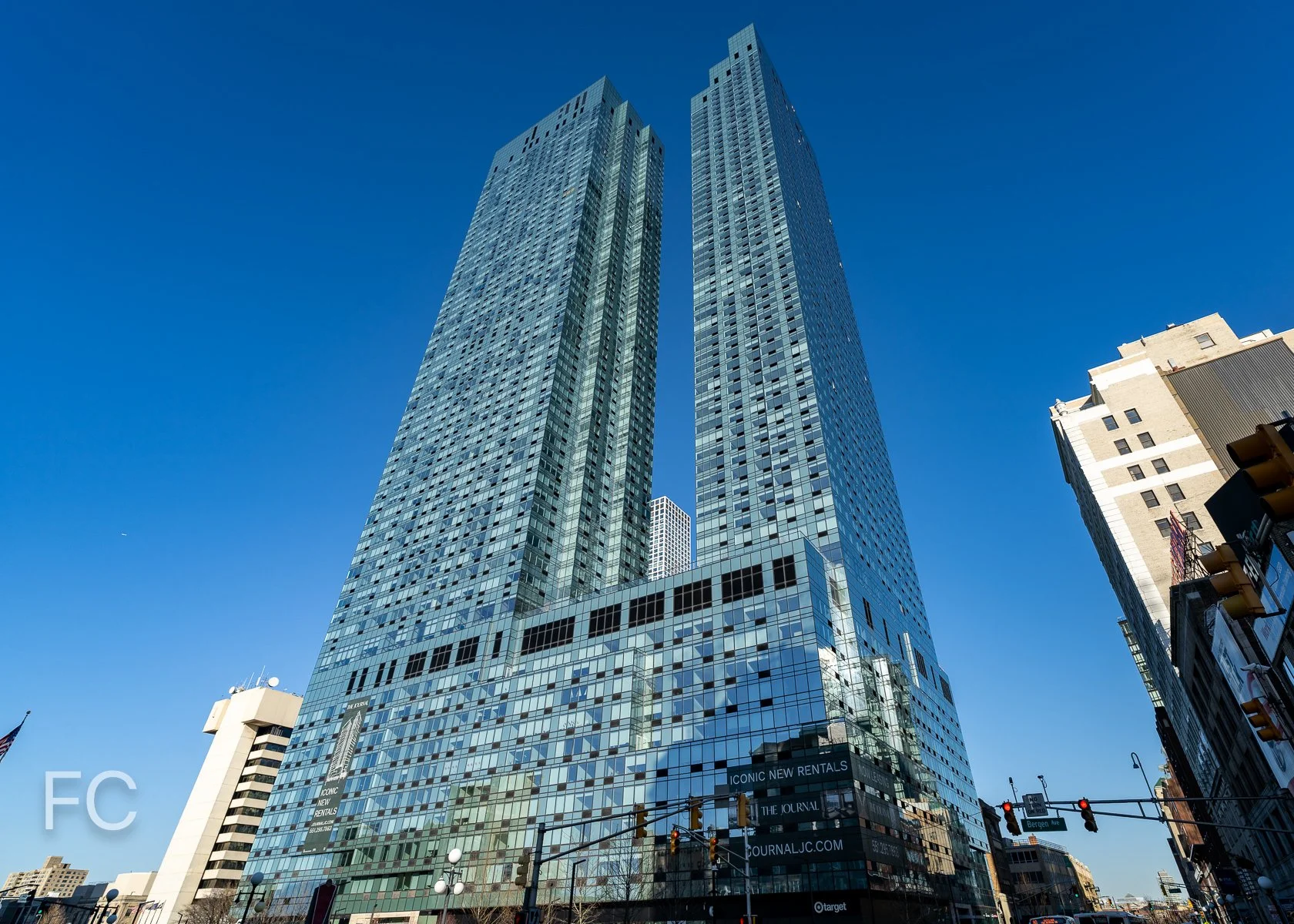
Following the official opening of the Salesforce Tower in May, Pelli Clarke Pelli's adjacent Transbay Transit Center has now officially opened. The 1.5 million square feet multimodal transit hub spans five city blocks and is topped by a 5.4 acre public park. Due to the skyscrapers which flank either side, a stroll on the rooftop park feels similar to the experience of the High Line. A perforated aluminum screen composed of 4,486 conjoined panels clads the exterior above the ground floor, creating a lantern like effect at night.
Seismic joint.
Salesforce Tower.
Salesforce Tower.
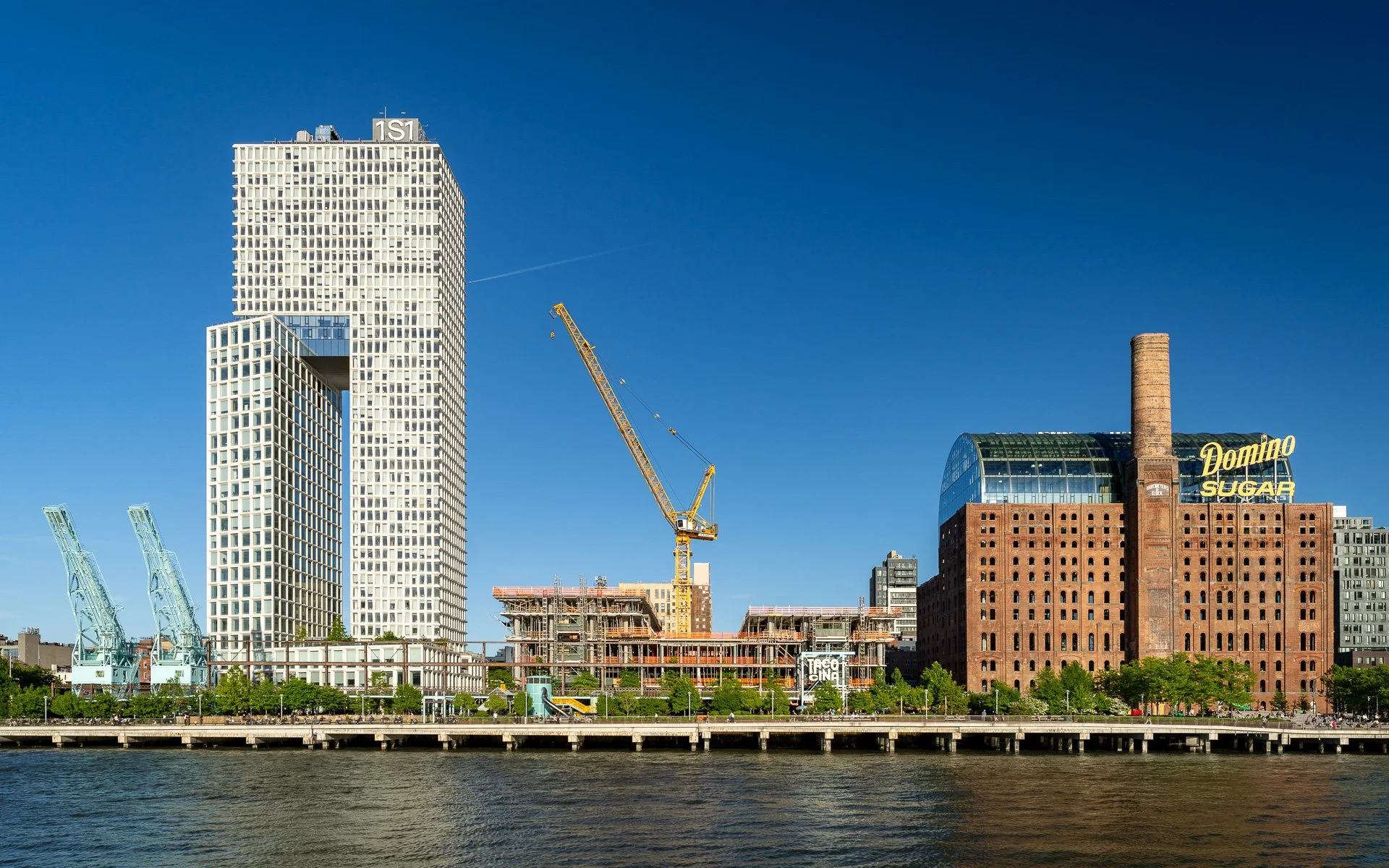
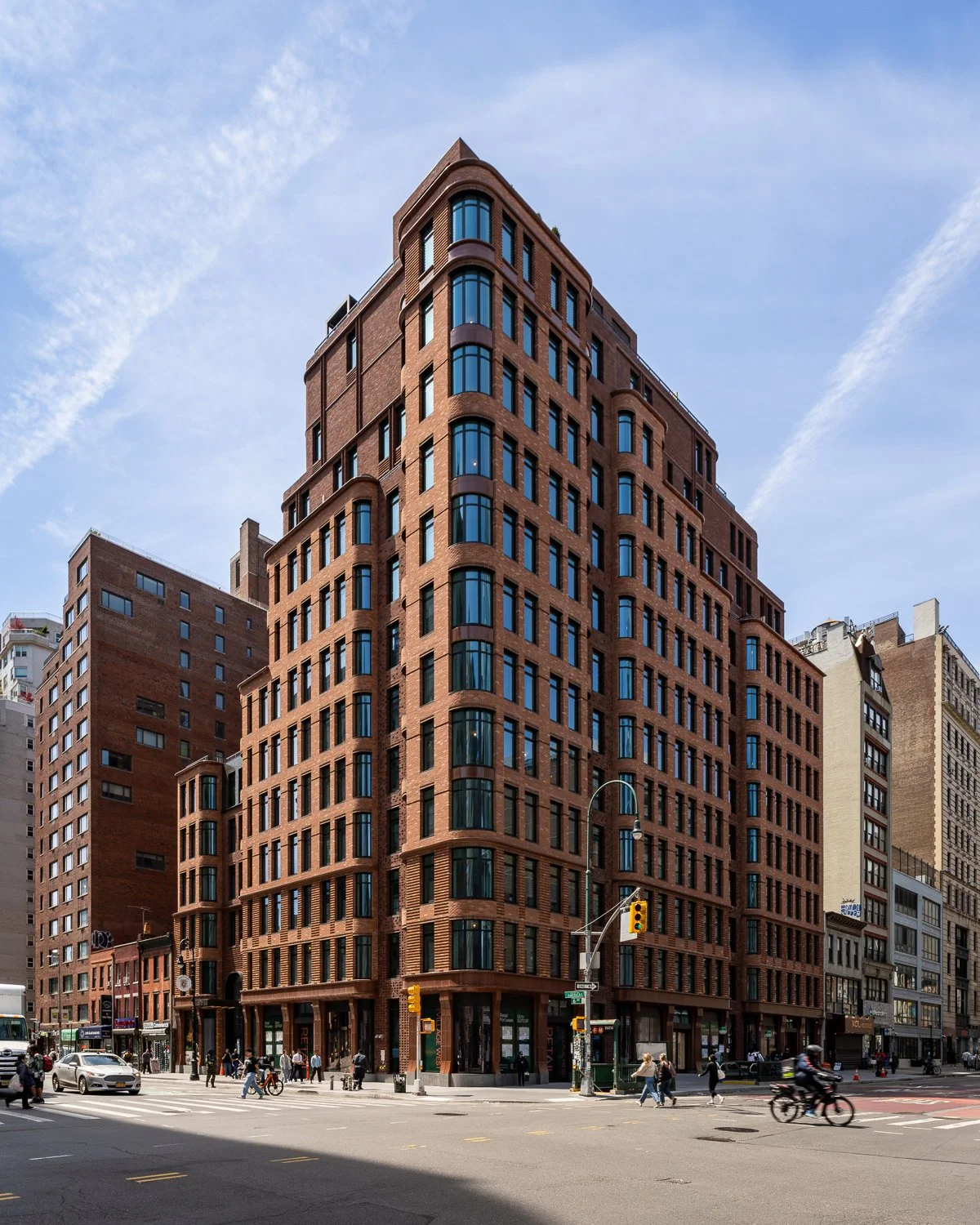
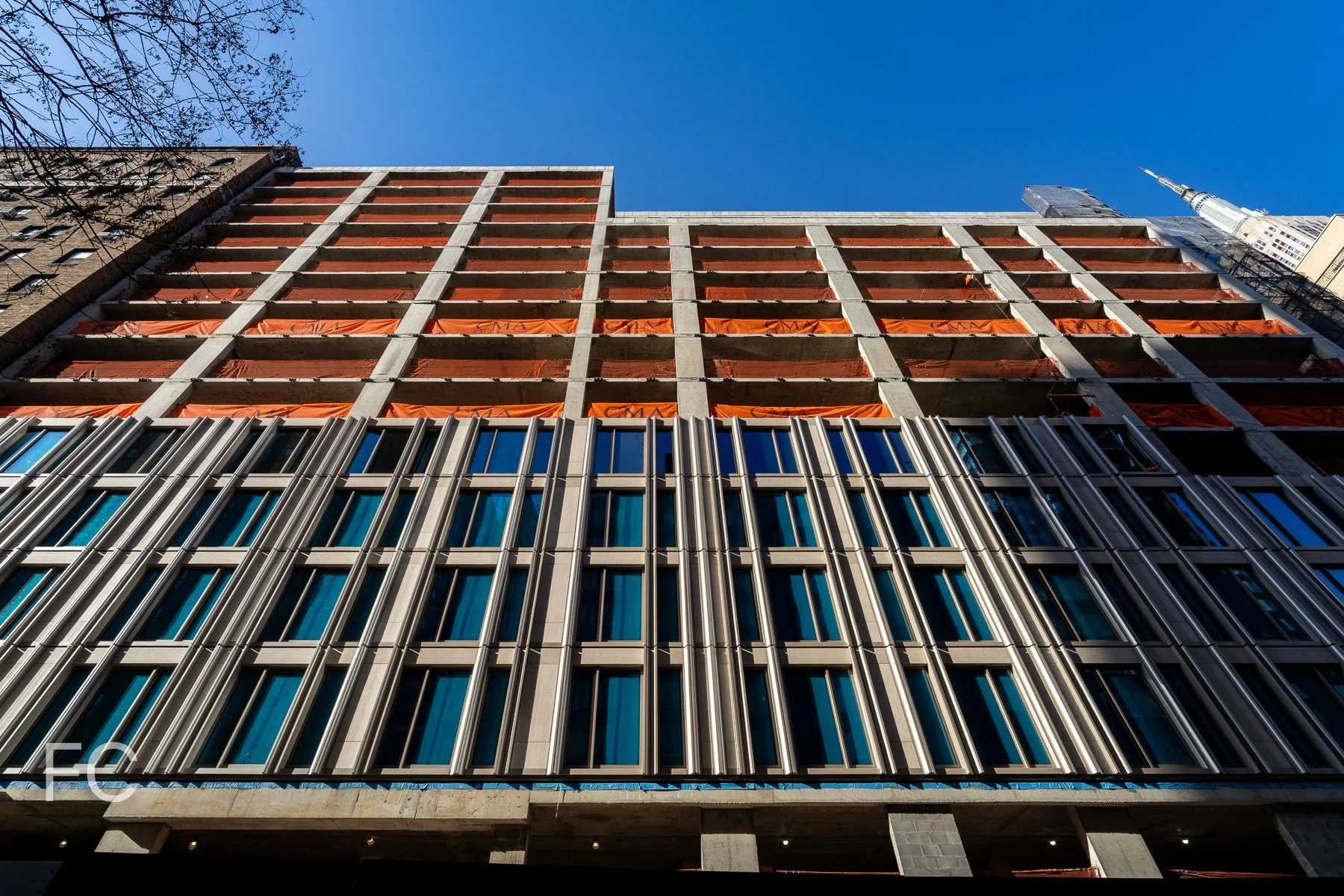
Spring Street Salt Shed
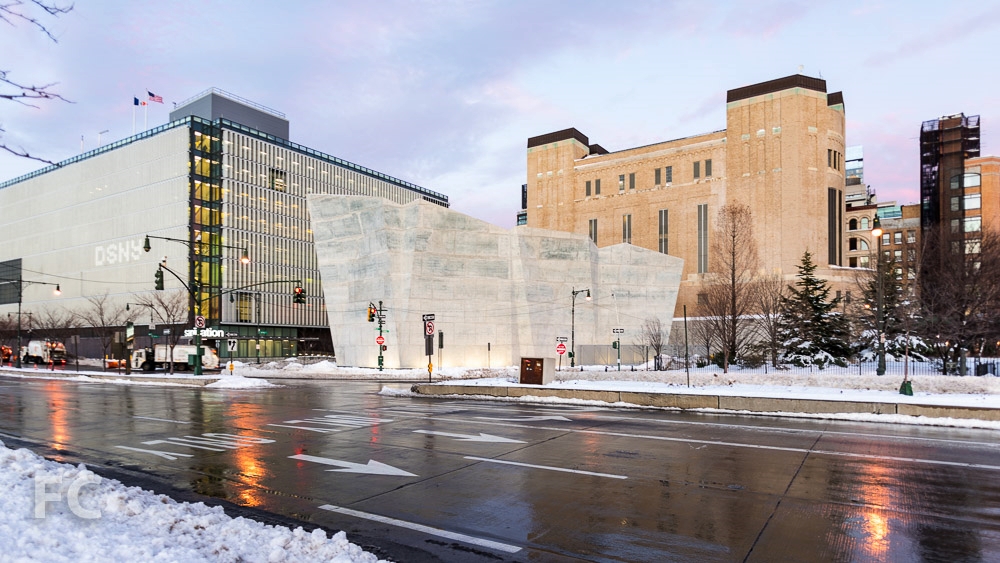
Dattner Architects and WXY's Spring Street Salt Shed had its first real test this past weekend, helping to dig out from New York City's second largest snowfall on record.
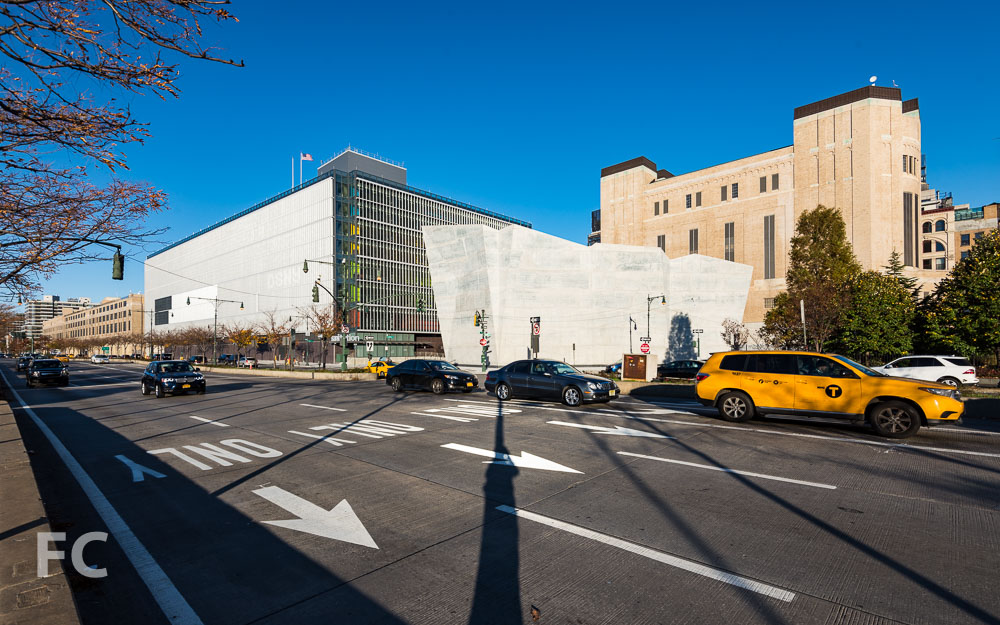
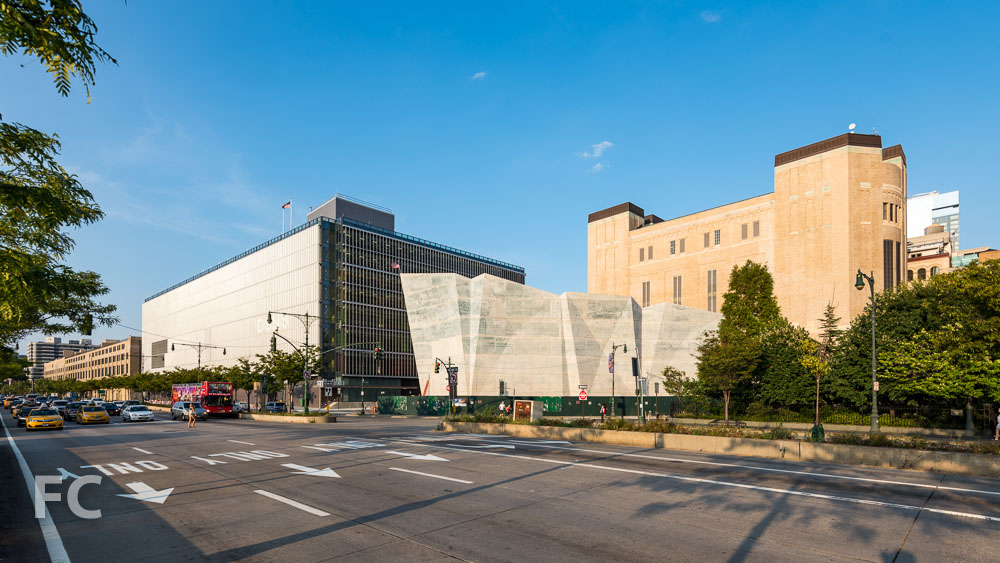
The onslaught of snow storm Jonas, New York City's second largest snowfall on record, brought the first real test for the city's new salt shed at Spring Street and the West Side Highway. Designed by Dattner Architects and WXY Architecture + Urban Design, the faceted concrete salt shed houses 4,000 tons of salt to combat the wintry precipitation. The form tapers towards the bottom, with glass pavers and lights installed along the periphery for dramatic uplighting of the structure at night. Entry gates along the Spring and Canal Street access points feature the "DSNY" identifier rendered in twisted vertical metal pickets, providing a graceful touch of design to what is often mundanely treated.
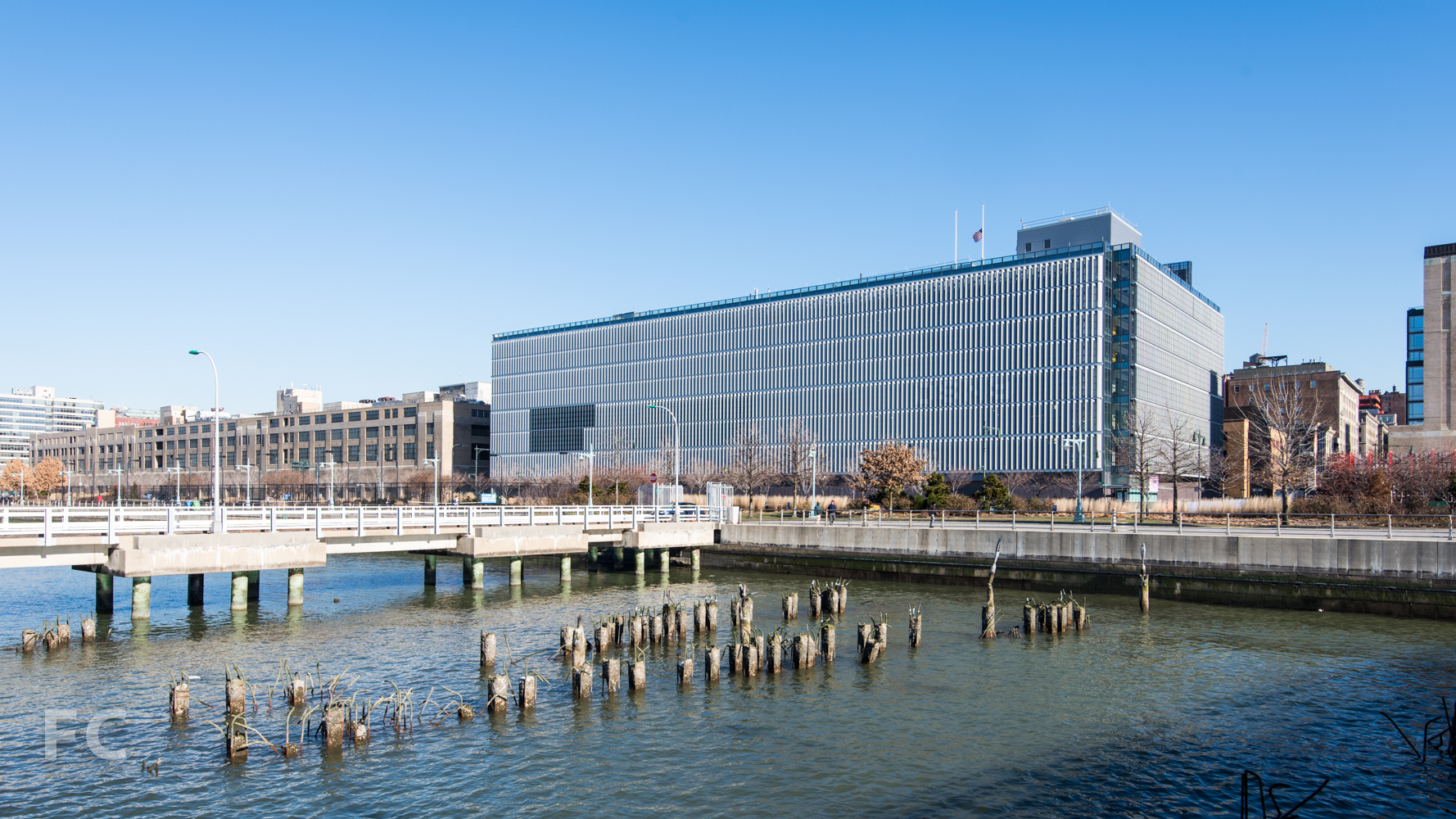
As a companion piece with the recently opened sanitation garage, the salt shed serves as a contemporary precedent for how urban infrastructure can serve to echo the values and aspirations of a city's architectural character.
Sanitation trucks head into the Manhattan Districts 1/2/5 Garage after a long day of plowing the aftermath of snow storm Jonas.
Looking south along the West Side Highway towards the Manhattan Districts 1/2/5 Garage (left) and the Spring Street Salt Shed (right).

The Manhattan Districts 1/2/5 Garage (left) and the Spring Street Salt Shed (right).
The Manhattan Districts 1/2/5 Garage (left) and the Spring Street Salt Shed (right).
Looking north along the West Side Highway towards the Manhattan Districts 1/2/5 Garage (left) and the Spring Street Salt Shed (right).

Southeast corner of the Spring Street Salt Shed.
Southeast corner of the Spring Street Salt Shed.
East facade of the Spring Street Salt Shed.
Close up of the sidewalk uplighting.
North facade of the Spring Street Salt Shed.
Northeast corner of the Spring Street Salt Shed.
Northeast corner of the Spring Street Salt Shed.
Looking west along Spring Street towards the Manhattan Districts 1/2/5 Garage (right) and the Spring Street Salt Shed (left).
Architect: Dattner Architects and WXY Architecture + Urban Design; Client: New York City Department of Sanitation; Program: Infrastructure; Location: Hudson Square, New York, NY; Completion: 2015.

SIMS Sunset Park Material Recovery Facility
Architects: Selldorf Architects; Architects of Record: Steven Gambino Architects; Landscape Architects: Mark Vaccaro; Location: Sunset Park, Brooklyn, NY; Completed: 2013.
Like many cities, New York is built on a vast, often unnoticed network of infrastructure. Its citizens and visitors are more likely to notice the iconic skyscrapers looming overhead than the everyday processes and machinery that keep a city of millions functioning. Last weekend I had the privilege of touring one such facility, the SIMS Sunset Park Material Recovery Facility, as part of the Open House New York Preview Program. Led by Tom Outerbridge, General Manager of Sims Municipal Recycling, and Annabelle Selldorf, Principal of Selldorf Architects, the tour was a fascinating education in the mechanisms of sustainably disposing all of the recyclable waste that such a large city can produce.
The facility is located at the end of the 30th Street pier of the South Brooklyn Marine Terminal (SBMT) in Sunset Park, Brooklyn. Sunset Park was part of New York Harbor's dominant shipping industry, starting in the late 1800's up until the end of World War II. During the war, much of the supplies and troops needed for the war effort were dispatched through the ports of the New York Harbor. With the end of the war and the subsequent decline in manufacturing in the Northeast, the area eventually faded in importance as a shipping port, leaving behind abandoned factory buildings and piers. When the SBMT closed its container terminal business in the 1980's, the NYPD used the 30th Street pier as a parking lot for impounded vehicles until the recycling facility began construction
The facilities are built atop four feet of site fill made from a composite of recycled glass, asphalt, and rock reclaimed from the Second Avenue subway construction. Fortunately, this kept the facilities machinery dry from the storm surge of Hurricane Sandy, which impacted New York City during construction, and elevated the buildings above FEMA's new 100 year flood plane. Besides the forward thinking flood plane strategy, the site features many other sustainable elements. Excessive storm water is handled by a gravity-based system comprised of landscape features, bio-swales and a retention pond. Three artificial reefs are employed to restore a habitat for marine and bird life. Also on site is one of the city's largest solar power installations, producing 600kW of power. A wind turbine is also slated to be installed at the site in the near future.
The public plaza leading to the visitor and administration building is partially paved with a multicolored gravel of recycled glass.
Visitors to the site can explore the exhibits inside the Recycling Education Center to learn about the various processes employed to sort each type of material for recycling and the means of transporting those materials to the facility and on to their next destination. Also within the Center are classrooms, a theater, administrative offices for the 75 full-time employees, and a large outdoor terrace with amazing views of the Hudson River and Lower Manhattan.
Connected by a bridge from the Recycling Education Center is the Tipping Building, the first stop for recyclables arriving to the site by barge from SMR facilities in Queens and the Bronx. Items collected in Brooklyn typically arrive by DSNY collection vehicles. Most materials will leave by barge or rail once they have been sorted and processed. Construction of this building and the others on site are built of 98% recycled steel.
Materials brought to the Tipping Building are then sent to the Processing Building to be sorted by material type (metal, glass, plastic, etc.) in a multi-stage process.